Here's something that might catch you off guard: that chicken breast on your plate is doing far more for your health than building biceps. Every single antibody circulating in your bloodstream, every T cell hunting down infected cells, every cytokine coordinating your immune response — they're all made of protein. Without adequate protein, your immune system is essentially trying to fight a war without ammunition.
And yet, most people think of protein purely in terms of muscles and gym gains. The reality? Protein deficiency — even mild, subclinical deficiency — can quietly erode your body's defenses, leaving you more vulnerable to infections, slower to heal, and less responsive to vaccines.
What's more, the standard RDA of 0.8g/kg body weight may not be enough to keep your immune system running at full capacity. Emerging research suggests that older adults, athletes, and anyone dealing with illness may need significantly more.
In this guide, you'll learn exactly how protein fuels your immune defenses, which amino acids are most critical for immunity, how much protein you actually need for optimal immune health, and the best food sources and strategies to meet your targets.
Related reading: The Ultimate Guide to Immune System Health · Best Immune-Boosting Supplements · Complete Supplements Guide
What Is the Relationship Between Protein and Your Immune System?
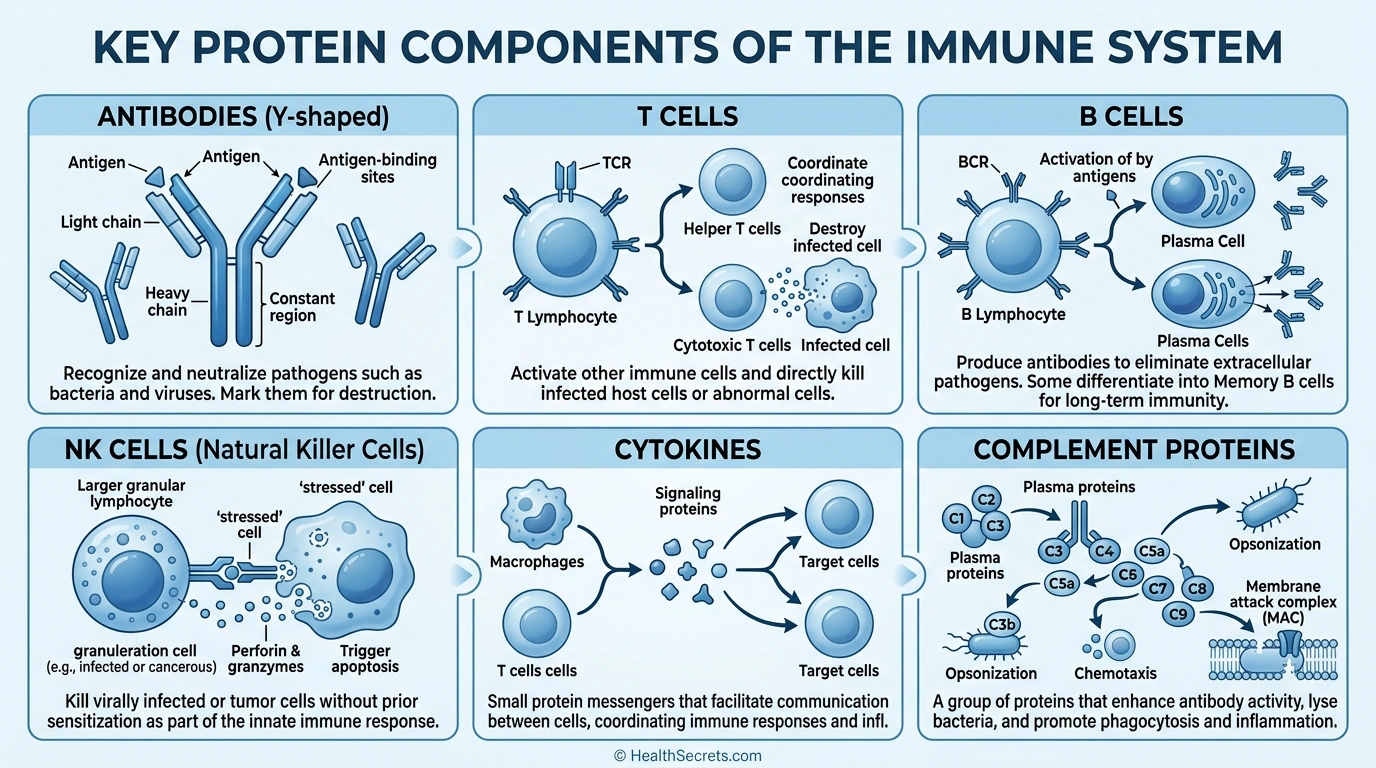
Protein is the primary structural and functional building block of the immune system. Every antibody, immune cell receptor, cytokine, and complement protein your body produces requires amino acids from dietary protein. Without adequate protein intake, your body literally cannot manufacture the tools it needs to fight infections, heal wounds, or respond to vaccines.
This connection runs deeper than most people realize. Your immune system is one of the most protein-hungry systems in your body. Consider what's made of protein:
- Antibodies (immunoglobulins): IgG, IgA, IgM, and IgE — all proteins produced by B cells to neutralize pathogens
- Immune cells: T cells, B cells, natural killer (NK) cells, macrophages, and neutrophils all require protein for their structure, receptors, and enzymes
- Cytokines: Interferons, interleukins, and TNF-alpha — the signaling molecules that coordinate your immune response — are all proteins
- Complement proteins: A cascade of over 30 proteins that directly destroy pathogens
- Acute phase proteins: C-reactive protein (CRP), fibrinogen, and other proteins the liver produces during infection
- Antimicrobial peptides: Defensins and cathelicidins — small proteins that directly kill bacteria, viruses, and fungi
During an active infection, your body's protein demands surge dramatically. The liver ramps up production of acute phase proteins, immune cells proliferate rapidly, and damaged tissues need collagen and other structural proteins for repair. This is why protein-energy malnutrition has long been recognized as the most common cause of secondary immune deficiency worldwide [1].
How Does Protein Power Your Immune Defenses at the Cellular Level?
Protein supports immunity through multiple interconnected mechanisms: providing amino acids for immune cell proliferation, fueling antibody synthesis, enabling cytokine production, and maintaining the gut barrier where 70% of immune tissue resides. These processes are continuous and amino acid–dependent, meaning even short periods of inadequate intake can measurably impair immune function.
How Do Amino Acids Fuel Immune Cell Function?
When your body detects a pathogen, immune cells must rapidly divide — sometimes doubling every 6–8 hours. This explosive proliferation requires a massive supply of amino acids for new DNA, RNA, proteins, and cell membranes. Research shows that amino acid availability directly regulates the activation of T lymphocytes, B lymphocytes, NK cells, and macrophages [1].
Three conditionally essential amino acids play outsized roles:
- Glutamine — The primary fuel source for lymphocytes and macrophages. These immune cells actually prefer glutamine over glucose for energy. Glutamine also maintains gut barrier integrity, protecting the 70% of immune tissue in your intestines. During illness or intense exercise, glutamine demands can exceed your body's production capacity [2].
- Arginine — Essential for T cell proliferation and function, wound healing through collagen synthesis, and nitric oxide production (which has direct antimicrobial activity). Arginine deficiency significantly impairs T cell responses and delays wound healing.
- Cysteine — The rate-limiting precursor for glutathione, your body's master antioxidant. Glutathione protects immune cells from the oxidative damage they generate while killing pathogens. Low cysteine availability means low glutathione, which means impaired T cell function [3].

How Does Protein Deficiency Impair Antibody Production?
Antibodies are literally proteins. When protein intake drops, your body cannot produce sufficient immunoglobulins to neutralize pathogens. Research in animal models has shown that protein-deficient subjects produced roughly one-third the antibodies of well-nourished controls, with corresponding reductions in antibody-forming cells in the spleen.
Protein-energy malnutrition also causes thymic atrophy — the thymus gland shrinks — reducing T cell production and diversity. This creates a vicious cycle: fewer T cells means less help for B cells, which means fewer antibodies, which means greater infection susceptibility [6].
What Are the Key Immune Benefits of Optimal Protein Intake?
Meeting your optimal protein needs — typically 1.0–1.5g/kg depending on age and health status — supports stronger antibody responses, faster immune cell proliferation, better wound healing, and improved vaccine effectiveness. Research consistently shows that adequate protein intake is associated with fewer infections and shorter illness duration across all age groups.
Does Higher Protein Intake Improve Vaccine Response?
Yes. Studies show that protein-deficient individuals produce significantly fewer antibodies after vaccination. Older adults consuming adequate protein (≥1.0g/kg) demonstrate stronger antibody responses to influenza and pneumococcal vaccines compared to those consuming at or below the RDA. This is especially relevant given that older adults are already at higher risk of poor vaccine responses due to immunosenescence.
Can Adequate Protein Reduce Infection Frequency?
Research suggests that maintaining protein intake at 1.0–1.2g/kg daily is associated with fewer upper respiratory infections, faster recovery from illness, and reduced hospitalization risk in older adults. A key mechanism is that adequate protein supports both innate immunity (the rapid first response) and adaptive immunity (the targeted, long-lasting response). Athletes consuming sufficient protein also experience fewer exercise-induced upper respiratory infections compared to those with inadequate intake.
How Does Protein Support Wound Healing and Recovery?
Collagen — the most abundant protein in your body — is essential for tissue repair. Immune cells must also migrate to wound sites and proliferate to prevent infection. Protein deficiency delays wound healing on both fronts: reduced collagen synthesis and impaired immune cell recruitment. For surgical patients and those recovering from injuries, protein intake of 1.5–2.0g/kg daily is often recommended to optimize healing.
Does Protein Intake Affect Gut Immunity?
Glutamine — derived from dietary protein — is the primary fuel for intestinal epithelial cells and gut-associated immune tissue. Adequate protein intake helps maintain gut barrier integrity, preventing bacterial translocation (where gut bacteria cross into the bloodstream). This is particularly important because gut-associated lymphoid tissue (GALT) contains approximately 70% of the body's immune cells. See our Complete Gut Health Guide for more on this connection.
Are There Any Risks or Side Effects of High Protein Intake?
For most healthy adults, protein intakes up to 2.0g/kg daily are safe and well-tolerated. The primary concern is for individuals with pre-existing kidney disease, where excess protein may accelerate kidney function decline. Healthy kidneys handle higher protein loads without issue, but anyone with an estimated GFR below 30 mL/min should consult a nephrologist before increasing intake.

Other considerations include:
- Digestive discomfort: Rapidly increasing protein intake can cause bloating, gas, or constipation. Increase gradually over 1–2 weeks and ensure adequate fiber and water intake.
- Calcium loss (debated): Older research suggested high protein increased urinary calcium excretion, but newer studies show this is offset by improved calcium absorption. High-protein diets do not appear to harm bone health when calcium intake is adequate.
- Kidney stones: People prone to kidney stones should discuss high-protein diets with their doctor, as increased uric acid and oxalate excretion may raise risk.
- Displacement of other nutrients: Excessively high protein intake may reduce intake of fiber, healthy fats, and phytonutrients if protein-rich foods crowd out fruits, vegetables, and whole grains.
The PROT-AGE Study Group specifically notes that older adults with severe kidney disease (eGFR <30) should limit protein, but emphasizes that for the vast majority of older adults, higher protein intake (1.0–1.5g/kg) is safe and beneficial [4].

How Much Protein Do You Actually Need for Optimal Immune Health?
The standard RDA of 0.8g/kg body weight per day was designed to prevent deficiency — not optimize immune function. For robust immunity, most experts now recommend 1.0–1.2g/kg for healthy adults, 1.2–1.5g/kg for adults over 65, and 1.5–2.0g/kg during acute illness. Distribution across 3–4 meals (20–40g per meal) optimizes utilization.
| Population | Protein (g/kg/day) | Example (150 lb / 68 kg) | Rationale |
|---|---|---|---|
| RDA (minimum) | 0.8 | 54g | Prevents deficiency only |
| Healthy adults | 1.0–1.2 | 68–82g | Optimal immune markers |
| Older adults (65+) | 1.2–1.5 | 82–102g | Overcomes anabolic resistance |
| Athletes | 1.4–2.0 | 95–136g | Recovery + immune support |
| During illness | 1.5–2.0 | 102–136g | Acute immune response |
| How to calculate your needs: |
- Convert your weight to kg: weight in lbs ÷ 2.2
- Multiply by your target range (e.g., 1.2g/kg)
- Distribute across 3–4 meals (aim for 20–40g per meal)
Research from the PROT-AGE Study Group confirms that older adults require at least 1.0–1.2g/kg daily to maintain lean body mass and immune function, with higher amounts (1.2–1.5g/kg) for those with acute or chronic illness [4]. A review in PMC found consistent evidence supporting 1.0–1.3g/kg for older adults, particularly when combined with resistance exercise [5].
Protein timing matters: Rather than consuming most protein at dinner (which is typical), distribute intake evenly. Research shows that 20–40g per meal across 3–4 meals stimulates muscle protein synthesis and immune cell production more effectively than the same total in one or two large meals.
What Diet and Lifestyle Changes Best Support Protein-Powered Immunity?
Prioritize complete proteins (containing all 9 essential amino acids) from a mix of animal and plant sources, distribute intake across meals, and combine adequate protein with immune-supporting micronutrients like vitamin D, zinc, and vitamin C. Resistance exercise 2–3 times weekly synergizes with protein to maintain immune-supporting muscle mass.
Top protein sources for immune health:
| Food | Serving | Protein (g) | Immune Bonus |
|---|---|---|---|
| Chicken breast | 3.5 oz | 31g | Complete protein, glutamine |
| Salmon | 3.5 oz | 25g | Omega-3s + complete protein |
| Greek yogurt | 6 oz | 17g | Probiotics + whey protein |
| Eggs | 2 large | 12g | Leucine, cysteine, vitamin D |
| Lentils | 1 cup | 18g | Fiber, iron, folate |
| Practical meal ideas (hitting 80–100g daily): |
- Breakfast: 3 eggs + Greek yogurt with berries = ~29g
- Lunch: 4 oz chicken breast + quinoa + vegetables = ~38g
- Dinner: 5 oz salmon + lentil soup = ~40g
- Snack: Handful of almonds + whey protein shake = ~30g
For vegetarians and vegans: Combine legumes with grains (beans + rice), include soy products (tofu, tempeh, edamame), consider a pea + rice protein blend supplement, and aim for 1.2–1.5g/kg to account for lower plant protein bioavailability.
Lifestyle synergies:
- Resistance exercise 2–3x/week maintains muscle mass (an amino acid reservoir for your immune system) — especially critical for adults over 50
- Vitamin D (1,000–2,000 IU daily) works synergistically with protein for immune function
- Zinc (15–30mg daily) supports immune cell development and pairs well with protein-rich foods
- Adequate sleep (7–9 hours) allows immune cell production and protein synthesis to occur optimally

Action Plan
What Should You Do First to Optimize Protein for Immune Health?
Follow the sequence below, work through each phase in order, and use the checklist as your practical implementation guide.
Start by calculating your personal protein target based on your age and activity level, then track your intake for 3 days to identify gaps. Most people discover they're consuming 20–40% less protein than their immune system needs. From there, implement the phased plan below to systematically close the gap.
Phase 1 — Assess (Days 1–3):
- Calculate your protein target (weight in kg × 1.0–1.5g depending on age/activity)
- Track current intake using an app like Cronometer or MyFitnessPal
- Identify your biggest protein gaps (usually breakfast and snacks)
Phase 2 — Optimize (Days 4–14):
- Add 20–30g protein to breakfast (eggs, Greek yogurt, protein shake)
- Include a protein-rich snack between meals (nuts, cottage cheese, jerky)
- Aim for 20–40g protein per meal, distributed across 3–4 meals
- If plant-based, start combining proteins and consider a supplement
Phase 3 — Sustain (Week 3+):
- Maintain target intake consistently
- Add glutamine supplementation (5–10g) if training intensely or feeling run down
- Combine with resistance exercise 2–3x/week
- Pair with vitamin D, zinc, and vitamin C for comprehensive immune support
- If over 65: prioritize leucine-rich sources (dairy, eggs, meat) at every meal