Zinc is the second most abundant trace mineral in the human body — present in every cell, essential for over 300 enzymes, and absolutely critical for immune function. Yet an estimated 2 billion people worldwide are zinc deficient, and even in developed countries, 12–20% of the population falls short of optimal intake.
What makes zinc unique among minerals is that the body cannot store it. Unlike iron or calcium, there is no zinc reservoir to draw from during times of need. This means daily intake — from food or supplements — is non-negotiable for maintaining immune defense, wound healing, hormone production, taste and smell, and cellular repair.
In this complete guide, you will learn exactly how zinc works in the body, which forms absorb best, how to dose correctly for your goals, why the zinc-copper balance is critical, and which supplements deliver real results backed by clinical research.
What Is Zinc and What Does It Do in Your Body?
Zinc is an essential trace mineral required in small amounts but involved in virtually every biological process. It is the second most abundant trace mineral after iron, present in every cell, and serves as a cofactor for more than 300 enzymes that regulate immune function, protein synthesis, wound healing, DNA replication, and cell division.
Unlike many minerals, zinc is not stored in the body in significant quantities. Approximately 85% resides in muscles and bones, 11% in skin and liver, and the remainder circulates in blood and other tissues. The highest concentrations are found in the prostate, retina, and immune cells. Because there is no dedicated zinc storage system, consistent daily intake is essential to maintain optimal levels.
Zinc acts through several key mechanisms:
- Zinc finger proteins — Zinc is a structural component of over 2,000 transcription factors that regulate gene expression. These "zinc finger" proteins control how cells grow, divide, and differentiate.
- Enzymatic cofactor — Over 300 enzymes require zinc to function, including those involved in metabolism, digestion, nerve function, and antioxidant defense (notably superoxide dismutase/SOD).
- Immune cell development — Zinc is required for the maturation of T cells, B cells, natural killer cells, and neutrophils. Without adequate zinc, the entire immune cascade is compromised.
- Hormone regulation — Zinc plays direct roles in testosterone synthesis, thyroid hormone conversion (T4 to T3), insulin storage and release, and growth hormone production.
How Does Zinc Support Immune Function and Overall Health?
Zinc is one of the most important micronutrients for immune defense, wound repair, and hormonal balance. It supports both innate and adaptive immunity, accelerates tissue healing, regulates critical hormones, and protects cells from oxidative damage through its role in antioxidant enzyme systems.
How Does Zinc Strengthen Your Immune System?
Zinc is essential for virtually every aspect of immune function. It supports the development and activity of neutrophils, natural killer cells, and macrophages in innate immunity, while being critical for T cell and B cell maturation and antibody production in adaptive immunity. A 2024 narrative review in Frontiers in Nutrition confirmed that zinc deficiency impairs immune cell function and increases susceptibility to respiratory infections including pneumonia, influenza, and COVID-19 [1].
Zinc also demonstrates direct antiviral properties — it interferes with viral replication and supports the integrity of skin and mucosal barriers, the body's first line of defense. Research published in the Journal of Trace Elements in Medicine and Biology found that zinc supplementation in hospitalized COVID-19 patients reduced ICU admission and death rates from 23.5% to 5.7% and accelerated recovery from 13.1 to 7.4 days [2].
A 2026 review in Immunity & Ageing highlighted zinc's role in combating immunosenescence — the age-related decline of immune function — showing that supplementation enhanced chemotaxis in neutrophils, cytotoxic activity in NK cells, and responsiveness of T and B cells in elderly populations [3].
How Does Zinc Accelerate Wound Healing?
Zinc is a critical cofactor in collagen synthesis, cell proliferation, and tissue repair. It participates in every phase of wound healing — from hemostasis and inflammation through proliferation and remodeling. A 2024 systematic review and meta-analysis published in BMJ Nutrition found that zinc treatment was significantly associated with improved wound healing outcomes (MD: 1.41, 95% CI 1.04–1.92, p = 0.03) [5].
Zinc supports wound healing through multiple mechanisms: it enables zinc-dependent matrix metalloproteinases (MMPs) that facilitate tissue remodeling, protects epithelial cells from apoptosis through antioxidant metallothionein activity, and supports keratinocyte migration essential for wound closure. Topical zinc oxide also demonstrates independent wound-healing benefits regardless of zinc status.
Can Zinc Improve Hormone Production and Testosterone Levels?
Zinc plays a direct role in testosterone synthesis, and deficiency is consistently linked to low testosterone levels in men. A 2022 systematic review in the Journal of Trace Elements in Medicine and Biology analyzed 38 studies and concluded that zinc deficiency reduces testosterone levels, while supplementation restores them — with effects varying based on baseline zinc status, dosage, and duration [6].
Beyond testosterone, zinc supports thyroid hormone conversion (T4 to active T3), insulin storage and secretion (improving glucose regulation), and growth hormone production. For male fertility specifically, zinc is essential for sperm production and quality, with the prostate containing one of the highest zinc concentrations in the body.

Does Zinc Affect Skin Health, Vision, and Brain Function?
Zinc influences skin integrity, visual acuity, and cognitive performance through distinct but interconnected mechanisms. For skin health, a 2020 meta-analysis in Dermatologic Therapy found that zinc supplementation was effective for treating acne, particularly at decreasing inflammatory papules, and that acne patients had significantly lower serum zinc levels than controls [7].
For eye health, the landmark AREDS and AREDS2 studies conducted by the National Eye Institute demonstrated that zinc (combined with antioxidants) significantly reduced the odds of developing advanced age-related macular degeneration (AMD) [8]. The 10-year AREDS2 follow-up confirmed long-term benefits of the zinc-containing formula.
Zinc also modulates neurotransmitter function — particularly glutamate and GABA — supporting memory, learning, and mood regulation. Deficiency has been linked to depression, impaired concentration, and ADHD-like symptoms, especially in children.
How Well Is Zinc Absorbed and Which Form Is Best?
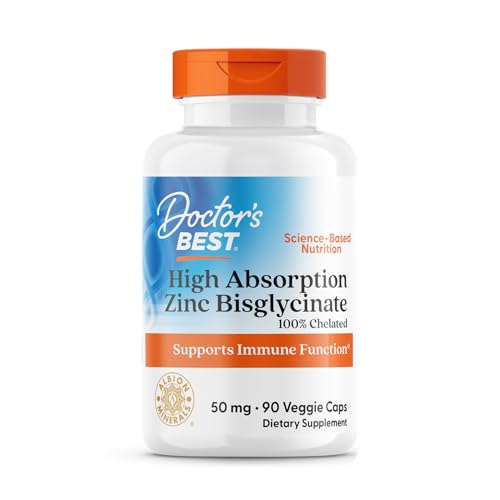
Zinc absorption varies significantly depending on the chemical form, with chelated forms like picolinate and bisglycinate offering superior bioavailability compared to oxide or sulfate. The carrier molecule zinc is bound to determines how efficiently it crosses the intestinal barrier, how well it is tolerated, and its elemental zinc content per dose.
A landmark 1987 study by Barrie et al. compared zinc picolinate, zinc citrate, and zinc gluconate in healthy adults. Results showed that zinc picolinate significantly increased zinc levels in hair, urine, and red blood cells, while citrate and gluconate did not produce significant changes — suggesting picolinate offers superior tissue uptake [9].
A comprehensive 2024 narrative review in Nutrients compared all major zinc forms and found that zinc bisglycinate demonstrated the highest bioaccessibility in in vitro studies, while zinc citrate and gluconate were equally well absorbed and significantly better than zinc oxide orally [10].
| Form | Absorption | Elemental Zinc | Best For | Cost |
|---|---|---|---|---|
| Picolinate | Excellent | ~20% | General use, deficiency | $$$ |
| Bisglycinate | Excellent | ~25% | Sensitive stomachs | $$$ |
| Citrate | Good | ~31% | Daily use, budget | |
| Gluconate | Good | ~13% | Lozenges for colds | $ |
| Acetate | Excellent | ~30% | Cold lozenges | |
| Sulfate | Moderate | ~23% | Medical use only | $ |
| Oxide | Poor (oral) | ~80% | Topical only | $ |
| Absorption enhancers: Animal protein significantly improves zinc absorption. Vitamin C may offer modest benefits. Taking zinc with meals reduces nausea but may slightly reduce absorption for some forms. |
Absorption inhibitors: Phytates (in whole grains, legumes, nuts) bind zinc and reduce absorption by 50% or more. Oxalates, excess calcium, high-dose iron, and excess fiber also interfere. Soaking, sprouting, or fermenting grains and legumes reduces phytate content.

How Much Zinc Should You Take Daily?
The recommended daily allowance (RDA) for zinc is 11 mg for adult men and 8 mg for adult women, but supplemental doses of 15–30 mg are common for those at risk of deficiency. The tolerable upper intake level is 40 mg per day for adults from all sources, and chronic intake above this threshold can cause copper depletion and paradoxical immune suppression.

| Purpose | Daily Dose | Duration | Copper Needed | Notes |
|---|---|---|---|---|
| General maintenance | 15–30 mg | Ongoing | 1–2 mg | Take with food |
| Deficiency correction | 30–50 mg | 3–6 months | 2–3 mg | Retest after 3 months |
| Immune support (seasonal) | 15–25 mg | Cold/flu season | 1–2 mg | Preventive dosing |
| Acute cold treatment | 75–100 mg (lozenges) | 5–7 days max | 3 mg | Start within 24 hours |
| Acne treatment | 30–45 mg | 3–6 months | 2–3 mg | Results in 8–12 weeks |
| Testosterone support | 25–50 mg | 3–6 months | 2–3 mg | Test levels before/after |
| Vegetarians/vegans | 20–30 mg | Ongoing | 2 mg | 50% higher needs |
| Elderly (65+) | 15–30 mg | Ongoing | 1–2 mg | Supports immune aging |
| Critical timing rules: |
- Take with food to minimize nausea (the most common side effect)
- Separate from iron, calcium, and high-fiber meals by at least 2 hours
- Separate from antibiotics (tetracyclines, fluoroquinolones) by 2–3 hours
- Separate from thyroid medication (levothyroxine) by 4 hours
- For cold lozenges: Dissolve slowly in the mouth every 2–3 hours while awake — do not chew or swallow whole
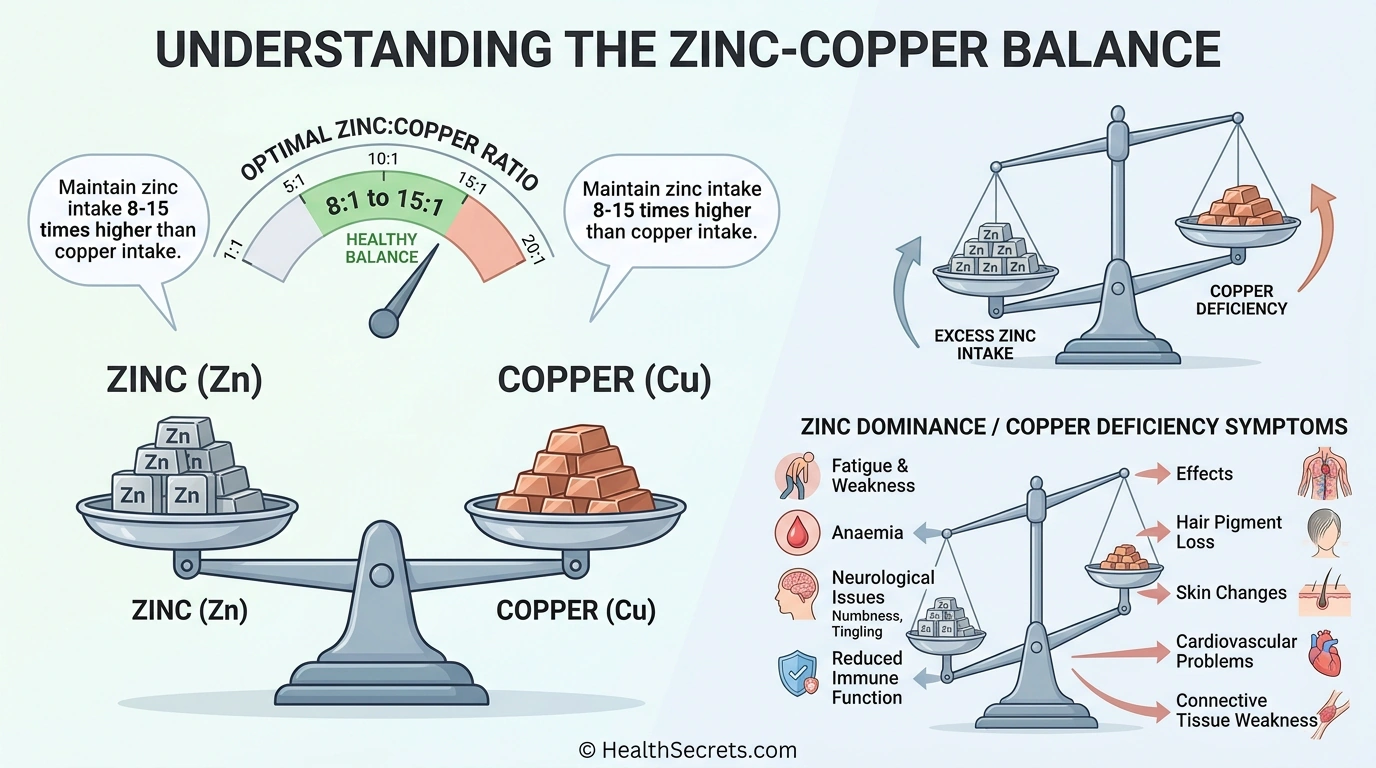
Zinc and copper compete for absorption in the intestines. Chronic zinc intake above 50 mg daily can induce copper deficiency, causing anemia, neutropenia (impaired immunity), neurological problems, and cardiovascular issues. The optimal zinc-to-copper ratio is 8:1 to 15:1. Always include 1–2 mg copper when supplementing 15–30 mg zinc, and 2–3 mg copper for doses above 30 mg.
Can You Get Enough Zinc From Food Alone?
Yes, if you eat a varied diet rich in animal protein, seafood, and dairy, you can meet the RDA for zinc without supplementation. However, vegetarians, vegans, elderly adults, and those with digestive disorders often fall short because plant-based zinc is 50% less bioavailable due to phytates, and absorption declines with age.

| Food | Serving | Zinc (mg) | % RDA (Men) | Bioavailability |
|---|---|---|---|---|
| Oysters | 3 oz | 74 mg | 673% | High |
| Beef chuck roast | 3 oz | 7 mg | 64% | High |
| Alaska king crab | 3 oz | 6.5 mg | 59% | High |
| Lobster | 3 oz | 3.4 mg | 31% | High |
| Pork chop | 3 oz | 2.9 mg | 26% | High |
| Chickpeas (cooked) | 1 cup | 2.5 mg | 23% | Low–Moderate |
| Pumpkin seeds | 1 oz | 2.2 mg | 20% | Moderate |
| Yogurt | 1 cup | 1.3 mg | 12% | Moderate |
| Animal sources provide 20–40% zinc absorption — the best bioavailability. |
Plant sources provide 10–20% absorption due to phytate content. The NIH recommends that vegetarians consume 50% more zinc [18] than meat-eaters to compensate for reduced bioavailability.
Strategies to maximize zinc from plant foods:
- Soak grains and legumes for 12–24 hours before cooking (reduces phytates by 30–50%)
- Sprout seeds, lentils, and beans (further reduces phytate binding)
- Ferment — sourdough bread, tempeh, and miso have significantly lower phytate content
- Combine with animal protein when possible (enhances zinc absorption)
- Include vitamin C-rich foods at meals (may modestly improve uptake)
The food-first approach: Aim for 8–11 mg from dietary sources. If your calculated intake falls below 8 mg daily, or if you have risk factors for deficiency (vegetarian/vegan, elderly, digestive disorders, frequent infections), supplement the gap with 15–30 mg daily plus copper.
Is Zinc Safe and What Are the Side Effects?
Zinc is safe and well-tolerated at recommended doses (15–40 mg daily), but chronic high-dose supplementation above 40 mg can cause copper deficiency, immune suppression, and reduced HDL cholesterol. The most common side effect is nausea, which is easily managed by taking zinc with food and choosing gentler forms like picolinate or bisglycinate.
Common side effects:
- Nausea — the most frequent complaint, especially on an empty stomach or with sulfate form
- Metallic taste — common with lozenges (gluconate, acetate)
- Stomach upset, gas, bloating — take with food and reduce dose or switch forms
- Headache — rare, usually dose-related
Serious concerns with chronic high doses (>40 mg daily):
- Copper deficiency — the most significant risk. Symptoms include anemia, neutropenia (low white blood cells leading to increased infection risk), numbness and tingling, and bone abnormalities. This can develop within weeks to months of high-dose zinc without copper supplementation.
- Immune suppression — paradoxically, very high zinc doses impair the same immunity zinc is meant to support
- Reduced HDL cholesterol — chronic high doses may lower protective "good" cholesterol
Drug interactions to manage:
- Antibiotics (tetracyclines, fluoroquinolones) — separate by 2–3 hours
- Penicillamine (rheumatoid arthritis) — separate by 2 hours
- Levothyroxine (thyroid) — separate by 4 hours
- Iron and calcium supplements — separate by 2 hours at therapeutic doses
- Diuretics — may increase zinc losses (monitor levels)
- ACE inhibitors — may increase zinc excretion
Who should use caution:
- Kidney disease patients (impaired zinc/copper regulation)
- Those with hypercalcemia or Wilson's disease
- Anyone with a history of kidney stones
- Patients on multiple medications that interact with zinc
What Can Zinc Actually Do for You?
Zinc supplementation can meaningfully improve immune function, shorten cold duration, correct deficiency-related symptoms, and support hormonal health — but it is not a cure-all. Results depend heavily on your baseline zinc status, and supplementing when you are already zinc-sufficient provides diminishing returns.

What zinc CAN do (with strong evidence):
- Reduce common cold duration by approximately 2 days when started early (lozenges) — supported by the [4]
- Correct immune dysfunction caused by zinc deficiency
- Improve wound healing in zinc-deficient individuals
- Restore testosterone levels in men with documented zinc deficiency
- Reduce inflammatory acne severity over 8–12 weeks
- Support healthy immune aging in elderly populations
- Slow progression of age-related macular degeneration (as part of AREDS2 formula)
What zinc CANNOT do:
- Prevent colds entirely (evidence for prevention is weak)
- Boost testosterone in men who already have normal zinc levels
- Replace medical treatment for serious conditions
- Overcome a fundamentally poor diet
Realistic timeline:
- Immune benefits: 2–4 weeks of consistent supplementation
- Cold treatment (lozenges): Benefits within 24–48 hours if started early
- Acne improvement: 8–12 weeks minimum
- Testosterone restoration: 1–6 months (deficient individuals only)
- Taste/smell restoration: 2–6 weeks if caused by zinc deficiency
Individual variation matters: Your response to zinc depends on baseline status, dietary intake, absorption capacity, and overall health. Testing serum zinc levels before and after supplementation provides the most objective measure of progress.
Action Plan
What Should You Do First to Optimize Your Zinc Levels?
Follow the sequence below, work through each phase in order, and use the checklist as your practical implementation guide.
Start by assessing your risk for zinc deficiency, then build a targeted supplementation protocol based on your individual needs. This phased approach ensures you get the right form, the right dose, and the critical cofactors — without overdoing it.
Phase 1 — Assess Your Risk (Week 1):
- Calculate your daily zinc intake from food (use a food diary for 3 days)
- Identify risk factors: vegetarian/vegan, elderly, digestive disorders, frequent infections, medications
- Consider testing: serum zinc levels (optimal range: 80–120 μg/dL)
- Note symptoms: frequent colds, slow healing, taste changes, hair loss, low energy
Phase 2 — Choose Your Protocol (Week 1–2):
- Select your zinc form: picolinate (best absorption), citrate (good value), or gluconate (lozenges)
- Determine your dose based on the dosing table above (typically 15–30 mg for maintenance)
- Add copper: 1–2 mg for every 15–30 mg zinc (non-negotiable for long-term use)
- Stock zinc lozenges (gluconate or acetate) for cold season
Phase 3 — Optimize Absorption (Weeks 2–4):
- Take zinc with meals to minimize nausea
- Separate from iron, calcium, and fiber supplements by 2 hours
- Separate from antibiotics and thyroid medications
- If vegetarian/vegan, soak and sprout grains and legumes
Phase 4 — Monitor and Adjust (Months 1–6):
- Track symptom changes (immune health, skin, energy, taste)
- Retest serum zinc at 3 months if correcting deficiency
- Adjust dose based on results (never exceed 40 mg long-term without supervision)
- Maintain consistent daily intake — zinc is not stored in the body