 Pin It
 Vitamin C Complete Guide: Immune and Antioxidant Support
Who This Is For
Best for readers comparing supplements options and trying to avoid hype.
Who Should Be Careful
Not for replacing clinician guidance when symptoms, medications, or lab issues are involved.
Affiliate Disclaimer | This article may contain affiliate links to products we trust. If you choose to buy through them, we may earn a small commission at no extra cost to you. Full disclosure
Medical Disclaimer | For informational purposes only. Not a substitute for professional medical advice. Read full disclaimer
Key Takeaways
NOW Foods Vitamin C-1000 with Bioflavonoids
Best OverallNOW Foods · General daily immune and antioxidant support
LivOn Laboratories Lypo-Spheric Vitamin C
Best AbsorptionLivOn Laboratories · Maximum bioavailability and therapeutic dosing
Doctor's Best Vitamin C with Q-C 1000mg
Best QualityDoctor's Best · Those prioritizing premium-sourced ascorbic acid
American Health Ester-C 1000mg with Citrus Bioflavonoids
Best for Sensitive StomachsAmerican Health · Those who experience GI upset with standard ascorbic acid
Doctor's Best Vitamin C Powder with Q-C
Best PowderDoctor's Best · Flexible dosing and those who prefer mixing in beverages
Nature's Bounty Vitamin C 1000mg
Best BudgetNature's Bounty · Affordable daily vitamin C supplementation
NOW Foods Vitamin C-1000 Sustained Release
Best Time-ReleaseNOW Foods · Sustained blood levels with once-daily convenience
NOW Foods Vitamin C-1000 Veg Capsules with Bioflavonoids
Best with BioflavonoidsNOW Foods · Enhanced vitamin C utilization with citrus bioflavonoids
Read the detailed review cards below before opening any retailer link
Vitamin C is one of the most widely recognized nutrients in the world — and for good reason. This powerful water-soluble vitamin serves as a frontline defender for your immune system, a critical cofactor for collagen production, and one of the body's most important antioxidants. Yet despite its fame, most people don't realize that humans are among the few mammals that cannot synthesize vitamin C internally, making daily dietary or supplemental intake absolutely essential.
The story of vitamin C stretches from 18th-century sailors battling scurvy to Nobel laureate Linus Pauling's controversial megadosing theories. Today, modern research has moved well beyond scurvy prevention, revealing vitamin C's role in cardiovascular health, iron absorption, neurotransmitter synthesis, and even cancer prevention. With forms ranging from basic ascorbic acid to advanced liposomal delivery systems, choosing the right vitamin C supplement can feel overwhelming.
This guide covers everything you need to know about vitamin C supplementation: what it does in your body, which form delivers the best results, how much you actually need, and which products are worth your investment.
What Is Vitamin C and What Does It Do in Your Body?
Vitamin C (L-ascorbic acid) is a water-soluble essential vitamin that functions as a powerful electron donor, supporting immune defense, collagen biosynthesis, antioxidant protection, and iron absorption. Because humans lost the ability to synthesize it approximately 40 million years ago due to a mutation in the L-gulonolactone oxidase gene, daily dietary intake is non-negotiable.
Unlike fat-soluble vitamins that accumulate in tissue, vitamin C is not stored in the body — excess amounts are rapidly excreted through urine. This means consistent daily intake matters far more than occasional megadoses. The vitamin is also highly sensitive to heat, light, and oxygen, which is why raw or minimally cooked foods retain the most vitamin C [1].
Chemical forms of vitamin C include:
- L-ascorbic acid — the natural, biologically active form found in food and most supplements
- Mineral ascorbates (sodium ascorbate, calcium ascorbate) — buffered, pH-neutral forms that are gentler on the stomach
- Ester-C® — a patented calcium ascorbate formula with vitamin C metabolites, claiming enhanced retention
- Liposomal vitamin C — ascorbic acid encapsulated in phospholipid liposomes for superior cellular delivery
- Ascorbyl palmitate — a fat-soluble ester used primarily in topical skincare, not effective for oral supplementation
Interestingly, most mammals produce 3–10 g of vitamin C daily through internal synthesis. This evolutionary context suggests that the current RDA of 75–90 mg — set primarily to prevent scurvy — may be far below the amount needed for optimal health and disease prevention [2].
How Does Vitamin C Work in Your Body?
Vitamin C operates through multiple biochemical pathways simultaneously — it donates electrons to neutralize free radicals, serves as a required cofactor for at least eight enzymatic reactions, and accumulates at high concentrations in immune cells to support pathogen defense. These overlapping mechanisms explain why adequate vitamin C status affects so many aspects of health.
How Does Vitamin C Support Your Immune System?
Vitamin C is arguably the most important nutritional factor for immune defense. It accumulates in phagocytic cells like neutrophils at concentrations 10–100× higher than plasma levels, where it enhances chemotaxis, phagocytosis, and microbial killing. On the adaptive immunity side, vitamin C supports T-cell and B-cell proliferation and modulates cytokine production to regulate the inflammatory response [3].
A landmark Cochrane review found that regular vitamin C supplementation (≥200 mg/day) reduced common cold duration by 8% in adults and 14% in children. The effect was dramatically stronger in athletes and individuals under extreme physical stress, where supplementation cut cold incidence by up to 50% [4]. During acute illness, vitamin C requirements increase substantially as the immune system consumes it rapidly.

How Does Vitamin C Build Collagen and Support Skin Health?
Vitamin C is an indispensable cofactor for prolyl hydroxylase and lysyl hydroxylase — the two enzymes responsible for stabilizing the collagen triple-helix structure. Without adequate vitamin C, collagen molecules cannot fold properly, leading to the connective tissue breakdown that characterizes scurvy [5].
This collagen connection has far-reaching implications for skin elasticity, wound healing, bone matrix formation, blood vessel integrity, and joint cartilage maintenance. Research shows that vitamin C induces a dose-dependent increase in type I collagen production by human fibroblasts, and it works synergistically with collagen supplements to maximize results [6].
How Does Vitamin C Protect Against Oxidative Damage?
As one of the body's primary water-soluble antioxidants, vitamin C donates electrons to neutralize reactive oxygen species (ROS) before they can damage cellular proteins, lipids, and DNA. It also plays a unique recycling role — regenerating oxidized vitamin E back to its active form and helping maintain glutathione levels, effectively amplifying the entire antioxidant network [7].
Higher vitamin C intake is consistently associated with reduced markers of oxidative stress and lower risk of chronic diseases linked to oxidative damage, including cardiovascular disease and neurodegenerative conditions. Vitamin C also protects LDL cholesterol from oxidation — a key early step in atherosclerosis development.
How Does Vitamin C Enhance Iron Absorption?
Vitamin C converts non-heme iron (Fe³⁺) from plant foods into its more absorbable ferrous form (Fe²⁺), increasing absorption by up to 67%. This makes it particularly important for vegetarians, vegans, and anyone with iron deficiency. Taking vitamin C alongside iron-rich plant foods or iron supplements significantly improves iron status [8].
How Well Is Vitamin C Absorbed and Which Form Is Best?
Vitamin C absorption is dose-dependent and varies significantly between forms. At doses of 200 mg or less, your body absorbs approximately 80–90% of standard ascorbic acid. At 500 mg, absorption drops to ~75%, and at 1,000 mg or above, less than 50% is absorbed — with the remainder excreted in urine. This pharmacokinetic reality makes form selection and dosing strategy critical.

Absorption by form:
| Form | Absorption | GI Tolerance | Cost | Best For |
|---|---|---|---|---|
| Ascorbic Acid | Good (dose-dependent) | Moderate (acidic) | $ | General use, budget |
| Buffered (Mineral Ascorbates) | Good | Excellent | Sensitive stomachs | |
| Ester-C® | Good–Excellent | Excellent | $$$ | Premium, sensitive stomachs |
| Liposomal | Excellent (1.3–7.2× better) | Excellent | $$$$ | Maximum absorption |
| Time-Release | Moderate | Good | Convenience | |
| A 2026 scoping review analyzing 10 clinical trials found that liposomal vitamin C consistently outperformed standard ascorbic acid, achieving 1.2–5.4× higher peak plasma concentrations (Cmax) and 1.3–7.2× higher total absorption (AUC) [9]. A separate randomized, double-blind crossover trial confirmed that liposomal vitamin C achieved significantly higher plasma and leukocyte concentrations than standard vitamin C at the same 500 mg dose [10]. |
Key bioavailability strategies:
- Split doses into 2–3 servings throughout the day to maximize absorption
- Take with meals to reduce GI upset and enhance uptake
- Choose liposomal for therapeutic dosing above 500 mg
- Pair with bioflavonoids, which may enhance vitamin C utilization

How Much Vitamin C Should You Take Daily?
The optimal vitamin C dose depends on your health status, lifestyle, and goals. The current RDA of 75–90 mg prevents scurvy but falls well short of levels associated with reduced chronic disease risk. Functional medicine practitioners and current evidence suggest 200–500 mg daily for general health maintenance, with higher doses during illness or for those with increased needs.
| Purpose | Dosage | Frequency | Duration |
|---|---|---|---|
| General maintenance | 200–500 mg | 1–2× daily with meals | Ongoing |
| Immune support | 500–1,000 mg | 2–3× daily | Ongoing |
| During cold/flu | 1,000–3,000 mg | Every 3–4 hours | Until symptoms resolve |
| Smokers | 500–1,000 mg | 2× daily | Ongoing |
| Athletes | 500–1,000 mg | 2× daily | Ongoing |
| The bowel tolerance method, developed by Dr. Robert Cathcart in the 1980s, involves gradually increasing vitamin C intake until loose stools occur, then reducing slightly. During illness, bowel tolerance typically increases from 4–15 g daily — indicating the body is consuming more vitamin C. While not widely accepted by mainstream medicine, this method remains popular in integrative practice [11]. |
Timing tips:
- With meals — reduces stomach upset, enhances iron absorption
- Split doses — 250–500 mg 2–3× daily maintains steady blood levels
- With iron supplements — enhances non-heme iron uptake by 3–4×
- Avoid with aluminum antacids — vitamin C increases aluminum absorption
The Tolerable Upper Intake Level is set at 2,000 mg/day by the Institute of Medicine. Higher doses are generally safe short-term but may cause GI discomfort and, in susceptible individuals, increase kidney stone risk [12].
Can You Get Enough Vitamin C from Food Alone?
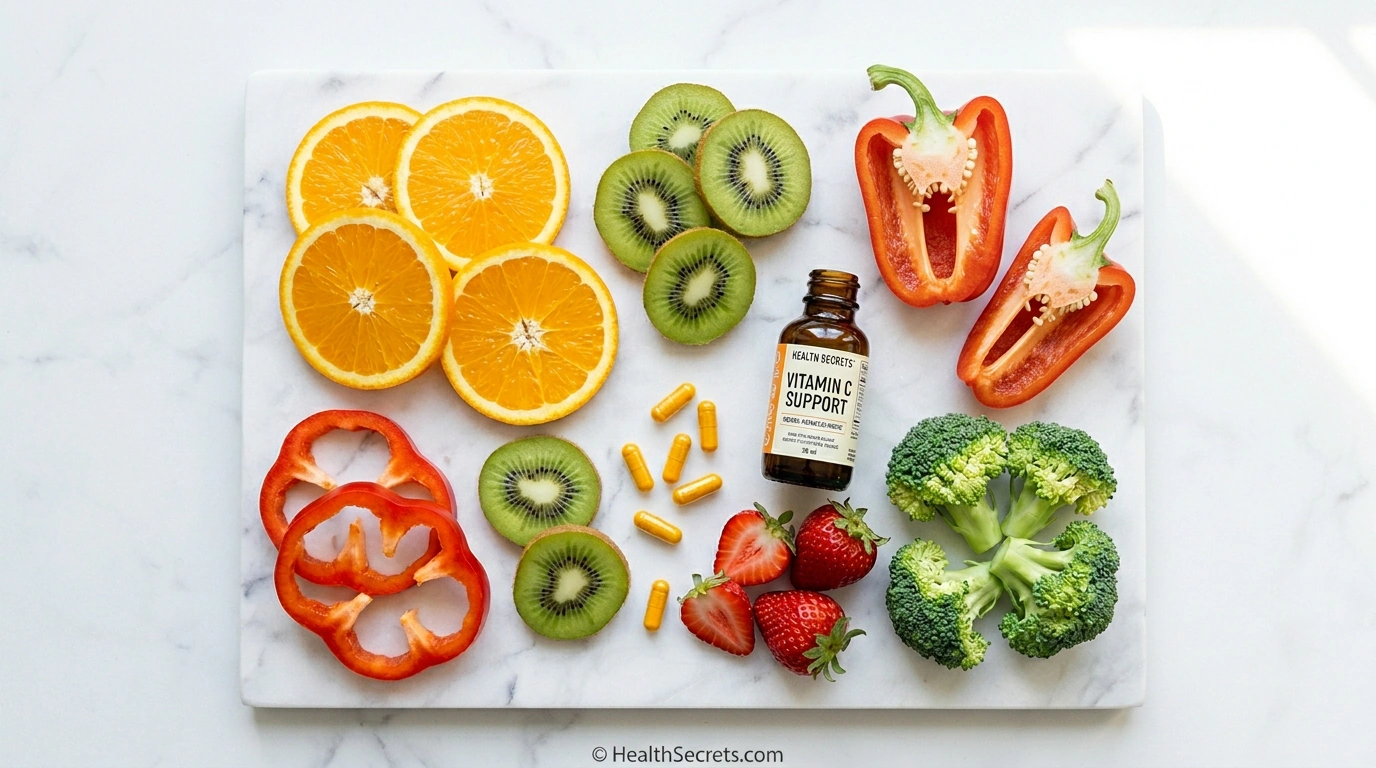
Yes — if you consistently eat 5–9 servings of fruits and vegetables daily, you can achieve 200–500 mg of vitamin C through diet alone. However, many people fall short of this target, and cooking significantly reduces vitamin C content. Supplementation serves as convenient insurance for those with inconsistent produce intake.

| Food | Serving | Vitamin C (mg) | % RDA |
|---|---|---|---|
| Red bell pepper | 1 cup raw | 190 | 211% |
| Guava | 1 cup | 228 | 254% |
| Kiwi | 1 cup | 167 | 186% |
| Strawberries | 1 cup | 89 | 99% |
| Orange | 1 medium | 70 | 78% |
| Cooking considerations: Vitamin C is destroyed by heat, light, and prolonged water exposure. Eat produce raw or lightly steamed. Microwaving preserves more vitamin C than boiling. Store fresh produce properly and consume promptly — vitamin C degrades over time even in refrigerated foods. |

Is Vitamin C Safe and What Are the Side Effects?
Vitamin C is one of the safest supplements available. As a water-soluble vitamin, excess amounts are excreted in urine rather than accumulating in tissue. Toxicity is extremely rare even at high doses. The primary concerns involve GI tolerance and kidney stone risk in specific populations.
Common side effects (dose-dependent):
- Diarrhea and loose stools (most common, resolves with dose reduction)
- Nausea and stomach cramps (especially with ascorbic acid on an empty stomach)
- Heartburn (acidic forms)
Potential concerns at high doses (>1,000 mg/day):
- Kidney stones: Vitamin C is partly metabolized to oxalate, which may increase calcium oxalate stone risk. A large study found supplemental vitamin C significantly increased kidney stone risk in men but not women [13]. Those with a history of kidney stones should limit intake to 1,000 mg daily.
- Iron overload: People with hemochromatosis should avoid high-dose vitamin C, as it enhances iron absorption
- G6PD deficiency: Very high IV doses may cause hemolysis in this rare genetic condition
Drug interactions:
- Chemotherapy — high-dose vitamin C may interfere with certain agents; always consult your oncologist
- Warfarin — doses >1,000 mg may reduce anticoagulant effectiveness
- Statins — vitamin C may modestly reduce statin effectiveness (limited evidence)
- Aluminum antacids — vitamin C increases aluminum absorption; separate by 2+ hours
- Aspirin/NSAIDs — may reduce vitamin C levels with long-term use [14]
What Can Vitamin C Actually Do for You?
Vitamin C is a foundational nutrient with strong evidence for immune support, collagen synthesis, and antioxidant protection — but it is not a miracle cure. Setting realistic expectations based on current evidence helps you get the most from supplementation without disappointment.

What vitamin C reliably does:
- Reduces cold duration by ~8% in general population (more significant in athletes and stressed individuals)
- Supports wound healing and tissue repair through collagen synthesis
- Enhances iron absorption from plant foods by up to 67%
- Provides antioxidant protection against oxidative stress
- Maintains healthy skin, gums, and blood vessels
What vitamin C probably won't do:
- Prevent colds in the general population (regular supplementation doesn't reduce incidence)
- Cure cancer (though research on high-dose IV vitamin C continues)
- Replace a healthy diet rich in fruits and vegetables
- Provide benefits at megadoses beyond what moderate doses achieve for most outcomes
Timeline for results:
- Immune support: Benefits begin within 1–2 weeks of consistent supplementation
- Skin and collagen: Visible improvements may take 4–8 weeks
- Correcting deficiency: Symptoms improve within 1–2 weeks; full repletion takes 1–3 months
- Antioxidant protection: Ongoing benefit with consistent daily intake
Individual variation matters. Smokers, the elderly, athletes, and those under chronic stress will notice more pronounced benefits because their baseline vitamin C status tends to be lower [15].
What Should You Do First to Optimize Your Vitamin C Intake?
Start by assessing your current dietary intake and risk factors, then build a simple, sustainable supplementation strategy. The following phased approach moves you from baseline assessment to optimized vitamin C status within 2–4 weeks.
Phase 1 — Assess (Days 1–3):
- Count your daily fruit and vegetable servings for 3 days
- Identify risk factors: smoking, chronic stress, intense exercise, restricted diet, age >65
- Note any deficiency symptoms: fatigue, easy bruising, slow wound healing, frequent illness
- Review current medications for interactions (warfarin, chemotherapy, antacids)
Phase 2 — Start (Days 4–14):
- Choose your form: ascorbic acid (budget), buffered (sensitive stomach), or liposomal (maximum absorption)
- Begin with 250–500 mg daily with a meal
- Split into 2 doses if taking >500 mg
- Increase fruit and vegetable intake to 5+ servings daily
Phase 3 — Optimize (Weeks 3–4+):
- Adjust dose based on needs: 200–500 mg maintenance, 500–1,000 mg for increased needs
- Pair with vitamin D and zinc for comprehensive immune support
- Take with iron-rich foods if you have low iron status
- During illness, temporarily increase to 1,000–2,000 mg daily in divided doses
- Maintain consistent daily supplementation — vitamin C is not stored

Top Recommended Products
NOW Foods
NOW Foods Vitamin C-1000 with Bioflavonoids
NOW Foods delivers pharmaceutical-grade ascorbic acid enhanced with citrus bioflavonoids at an unbeatable price point, making it the ideal daily vitamin C for most people.
Pros
- + Excellent value per serving
- + includes bioflavonoids for enhanced utilization
- + third-party verified
- + vegan-friendly
Cons
- - Ascorbic acid may cause GI upset in sensitive individuals
- - large capsule size
Why we included it: NOW Foods delivers pharmaceutical-grade ascorbic acid enhanced with citrus bioflavonoids at an unbeatable price point, making it the ideal daily vitamin C for most people.
Retailer link opens on Amazon after the review details above
LivOn Laboratories
LivOn Laboratories Lypo-Spheric Vitamin C
LivOn's patented liposomal delivery is backed by clinical research showing dramatically higher plasma vitamin C levels than any standard oral form, making it the gold standard for those seeking therapeutic doses.
Pros
- + Clinically demonstrated superior absorption (up to 5× standard)
- + bypasses dose-dependent absorption limits
- + gentle on stomach
- + phospholipid bonus
Cons
- - Premium price
- - taste can be unpleasant
- - liquid format less convenient than capsules
Why we included it: LivOn's patented liposomal delivery is backed by clinical research showing dramatically higher plasma vitamin C levels than any standard oral form, making it the gold standard for those seeking therapeutic doses.
Retailer link opens on Amazon after the review details above
Doctor's Best
Doctor's Best Vitamin C with Q-C 1000mg
Doctor's Best uses Quali-C®, a premium European-manufactured vitamin C prized for purity and consistency, in a massive 360-count bottle that delivers exceptional long-term value.
Pros
- + Quali-C sourced from Scotland (highest purity standard)
- + year supply per bottle
- + vegan
- + excellent reviews
Cons
- - Pure ascorbic acid — no bioflavonoids or buffering
- - may cause stomach upset at high doses
Why we included it: Doctor's Best uses Quali-C®, a premium European-manufactured vitamin C prized for purity and consistency, in a massive 360-count bottle that delivers exceptional long-term value.
Retailer link opens on Amazon after the review details above
American Health
American Health Ester-C 1000mg with Citrus Bioflavonoids
Ester-C's non-acidic formula with metabolites makes it the most comfortable option for those who struggle with standard vitamin C, while bioflavonoids provide synergistic antioxidant support.
Pros
- + Non-acidic and gentle on stomach
- + enhanced with citrus bioflavonoids
- + may provide better cellular retention
- + well-tolerated
Cons
- - Premium price vs standard ascorbic acid
- - mixed evidence for retention claims
Why we included it: Ester-C's non-acidic formula with metabolites makes it the most comfortable option for those who struggle with standard vitamin C, while bioflavonoids provide synergistic antioxidant support.
Retailer link opens on Amazon after the review details above
Doctor's Best
Doctor's Best Vitamin C Powder with Q-C
Powder format offers ultimate dosing flexibility — perfect for those who want precise control over their vitamin C intake or who prefer adding it to beverages rather than swallowing capsules.
Pros
- + Fully adjustable dosing
- + easy to mix in water or smoothies
- + Quali-C quality
- + no capsule to swallow
- + cost-effective
Cons
- - Tart/sour taste
- - requires measuring
- - acidic on teeth (use a straw)
Why we included it: Powder format offers ultimate dosing flexibility — perfect for those who want precise control over their vitamin C intake or who prefer adding it to beverages rather than swallowing capsules.
Retailer link opens on Amazon after the review details above
Nature's Bounty
Nature's Bounty Vitamin C 1000mg
Nature's Bounty delivers reliable vitamin C at the lowest price point available, making it ideal for budget-conscious consumers who want straightforward immune support without premium pricing.
Pros
- + Extremely affordable
- + trusted brand
- + widely available
- + simple formula
Cons
- - Large caplet size
- - basic ascorbic acid without bioflavonoids
- - may cause GI upset
Why we included it: Nature's Bounty delivers reliable vitamin C at the lowest price point available, making it ideal for budget-conscious consumers who want straightforward immune support without premium pricing.
Retailer link opens on Amazon after the review details above
NOW Foods
NOW Foods Vitamin C-1000 Sustained Release
For those who realistically will only take one supplement per day, NOW's sustained-release formula provides a practical solution to vitamin C's short half-life without requiring multiple daily doses.
Pros
- + Gradual release maintains steady blood levels
- + includes rose hips
- + reduces dosing frequency
- + excellent value
Cons
- - Tablet may pass before fully releasing
- - large tablet
- - sustained-release not clearly superior to split doses of regular vitamin C
Why we included it: For those who realistically will only take one supplement per day, NOW's sustained-release formula provides a practical solution to vitamin C's short half-life without requiring multiple daily doses.
Retailer link opens on Amazon after the review details above
NOW Foods
NOW Foods Vitamin C-1000 Veg Capsules with Bioflavonoids
The addition of citrus bioflavonoids creates a synergistic formula that mimics the way vitamin C occurs naturally in whole foods, potentially enhancing its antioxidant and anti-inflammatory effects.
Pros
- + Bioflavonoids enhance vitamin C activity
- + clean veg capsule
- + trusted brand
- + versatile
Cons
- - Only 100 count vs 250 in some competitors
- - ascorbic acid may cause GI upset
Why we included it: The addition of citrus bioflavonoids creates a synergistic formula that mimics the way vitamin C occurs naturally in whole foods, potentially enhancing its antioxidant and anti-inflammatory effects.
Retailer link opens on Amazon after the review details above
Further Reading
Further Reading
"Vitamin C: The Real Story"
by Steve Hickey, PhD and Andrew W. Saul, PhD
Complete history from scurvy to megadosing; critical analysis of the Linus Pauling controversy; evidence for therapeutic doses; practical supplementation guidance
Why it adds value here
This is the most comprehensive and balanced book on vitamin C science, covering the contentious history and current evidence with both rigor and accessibility.
Best for: Anyone wanting the full scientific and historical story of vitamin C supplementation
View book detailsFurther Reading
"How Not to Die: Discover the Foods Scientifically Proven to Prevent and Reverse Disease"
by Michael Greger, MD
Evidence-based dietary strategies for disease prevention; detailed coverage of antioxidant-rich foods; practical daily dozen checklist; immune health optimization through whole foods
Why it adds value here
Dr. Greger's bestseller provides the food-first context that complements vitamin C supplementation, showing how dietary patterns rich in vitamin C contribute to disease prevention.
Best for: Readers interested in using nutrition (including vitamin C-rich foods) to prevent chronic disease
View book detailsAEO FAQ
Frequently Asked Questions
12 common questions answered
No — regular vitamin C supplementation does not prevent colds in the general population. However, it consistently reduces cold duration by about 8% in adults and 14% in children, and cuts cold incidence by up to 50% in athletes and people under extreme physical stress. Taking vitamin C at the onset of a cold may also reduce severity.
Ascorbic acid is the standard, affordable form of vitamin C with dose-dependent absorption that decreases as dose increases. Liposomal vitamin C encapsulates ascorbic acid in phospholipid bubbles that bypass normal absorption limits, achieving 1.3–7.2× higher blood levels in clinical studies. Liposomal is best for therapeutic dosing; ascorbic acid is fine for daily maintenance at moderate doses.
Vitamin C is very safe because it is water-soluble and excess is excreted in urine. The Tolerable Upper Intake Level is 2,000 mg daily. Doses above this may cause diarrhea, nausea, and stomach cramps. The main long-term concern is increased kidney stone risk in susceptible individuals (particularly men) at high supplemental doses.
Take vitamin C with food. This reduces the GI side effects common with ascorbic acid and enhances iron absorption from your meal. Buffered and liposomal forms can be taken with or without food, but taking them with meals still provides the iron absorption benefit.
Both are effective. Food provides vitamin C alongside synergistic nutrients like bioflavonoids and fiber. Supplements offer precise dosing and convenience, especially for those who don't eat 5+ servings of fruits and vegetables daily. The ideal approach is a produce-rich diet supplemented with 200–500 mg daily as insurance.
Smokers need at least 35 mg more vitamin C daily than non-smokers according to official guidelines. In practice, functional medicine practitioners recommend 500–1,000 mg daily for smokers. Research shows smoking independently lowers serum vitamin C levels even after adjusting for dietary intake, and smokers face 3× higher risk of severe vitamin C deficiency.
High-dose supplemental vitamin C (typically >1,000 mg daily) may increase kidney stone risk in susceptible individuals because vitamin C is partly metabolized to oxalate. One large study found significantly increased risk in men but not women. If you have a history of calcium oxalate kidney stones, limit supplemental vitamin C to 500–1,000 mg daily and stay well hydrated.
The bowel tolerance method, developed by Dr. Robert Cathcart, involves gradually increasing vitamin C doses until loose stools occur, then reducing slightly. The point just below this threshold is considered your optimal dose. During illness, bowel tolerance increases significantly (from ~4 g to 15+ g daily), suggesting the body uses more vitamin C when fighting infection.
Yes — vitamin C enhances non-heme iron absorption (from plant foods and supplements) by up to 67% by converting poorly absorbed ferric iron (Fe³⁺) to the more bioavailable ferrous form (Fe²⁺). This is particularly important for vegetarians, vegans, and those with iron deficiency. Take vitamin C with iron-rich meals or iron supplements for maximum benefit.
Ester-C is gentler on the stomach than regular ascorbic acid because it is non-acidic (calcium ascorbate with metabolites). Some research suggests improved cellular retention, but overall evidence is mixed — several studies show no significant advantage over standard ascorbic acid. Ester-C is a reasonable choice for sensitive stomachs, but liposomal vitamin C has stronger absorption evidence.
Yes — vitamin C is highly compatible with most supplements. It works synergistically with vitamin E (regenerates its active form), glutathione (supports recycling), zinc (combined immune support), and collagen (required cofactor). The only caution is separating vitamin C from copper supplements and aluminum-containing antacids.
Plasma vitamin C levels increase within hours of supplementation. Immune support benefits become measurable within 1–2 weeks of consistent daily use. Skin and collagen improvements may take 4–8 weeks. Correcting a deficiency typically shows symptom improvement within 1–2 weeks, with full repletion taking 1–3 months.
Was this article helpful?
Written & Reviewed By Experts
Author
Dr. Sarah Chen
Medical Reviewer
Dr. Sarah Chen
All content is evidence-based, peer-reviewed by qualified professionals, and updated regularly. Our editorial team follows strict guidelines for accuracy and transparency.
References & Citations
20 sources cited
Medical Disclaimer
This article is for informational purposes only and does not constitute medical advice. Read the full medical disclaimer. Always consult with a qualified healthcare provider before starting any new supplement, treatment, or major dietary change.