Collagen is the most abundant protein in the human body, making up roughly 30% of your total protein and 70% of the protein in your skin. It's the structural scaffolding that holds together your skin, bones, tendons, ligaments, cartilage, blood vessels, and gut lining — providing the strength, elasticity, and resilience that keeps everything functioning.
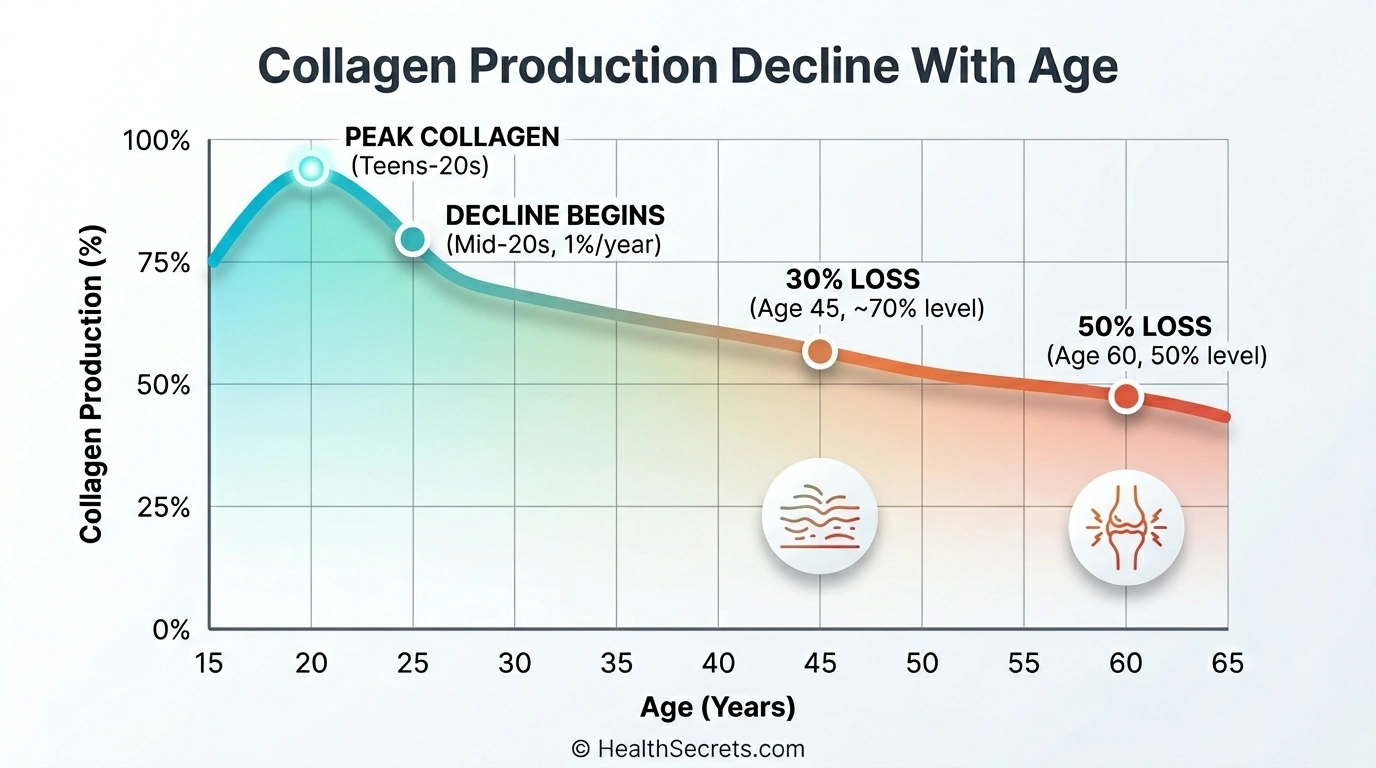
But here's the problem: your body's collagen production peaks in your teens and early twenties, then declines approximately 1% per year starting in your mid-twenties. By age 45, you've lost roughly 30% of your collagen. By 60, that number approaches 50%. The visible signs — wrinkles, sagging skin, joint stiffness, slower wound healing — are all downstream effects of this progressive collagen loss.
The collagen supplement market has exploded into a $4+ billion industry, and unlike many supplement trends, this one actually has substantial clinical evidence behind it. A 2026 umbrella review of 113 trials involving nearly 8,000 participants confirmed that collagen supplements provide legitimate skin and joint benefits when taken consistently [1]. Multiple meta-analyses show improvements in skin hydration, elasticity, wrinkle depth, and joint pain [2][3].
But not all collagen supplements are equal. Source, type, processing method, peptide size, and cofactors all matter significantly. In this guide, we'll cut through the marketing noise and give you the evidence-based framework for choosing the right collagen supplement for your specific goals — whether that's anti-aging skin support, joint pain relief, gut healing, or comprehensive health.
Collagen is the body's most abundant protein (30% of total), declining ~1% per year after age 25 — supplementation can help offset this loss.
A 2026 umbrella review of 113 trials confirmed collagen supplements improve skin elasticity, hydration, and reduce joint pain and stiffness [1].
Type I/III collagen (bovine or marine) is best for skin, bones, and gut;
Type II (chicken-derived UC-II, 40 mg) is best for joint pain specifically.
What Should You Look for When Buying a Collagen Supplement?
The most important factors when choosing a collagen supplement are the collagen type matching your health goal, hydrolyzed processing for maximum absorption, source quality (grass-fed, wild-caught), and third-party testing for purity. Getting these four factors right eliminates 90% of the low-quality products on the market.
Which Collagen Type Do You Need for Your Goal?
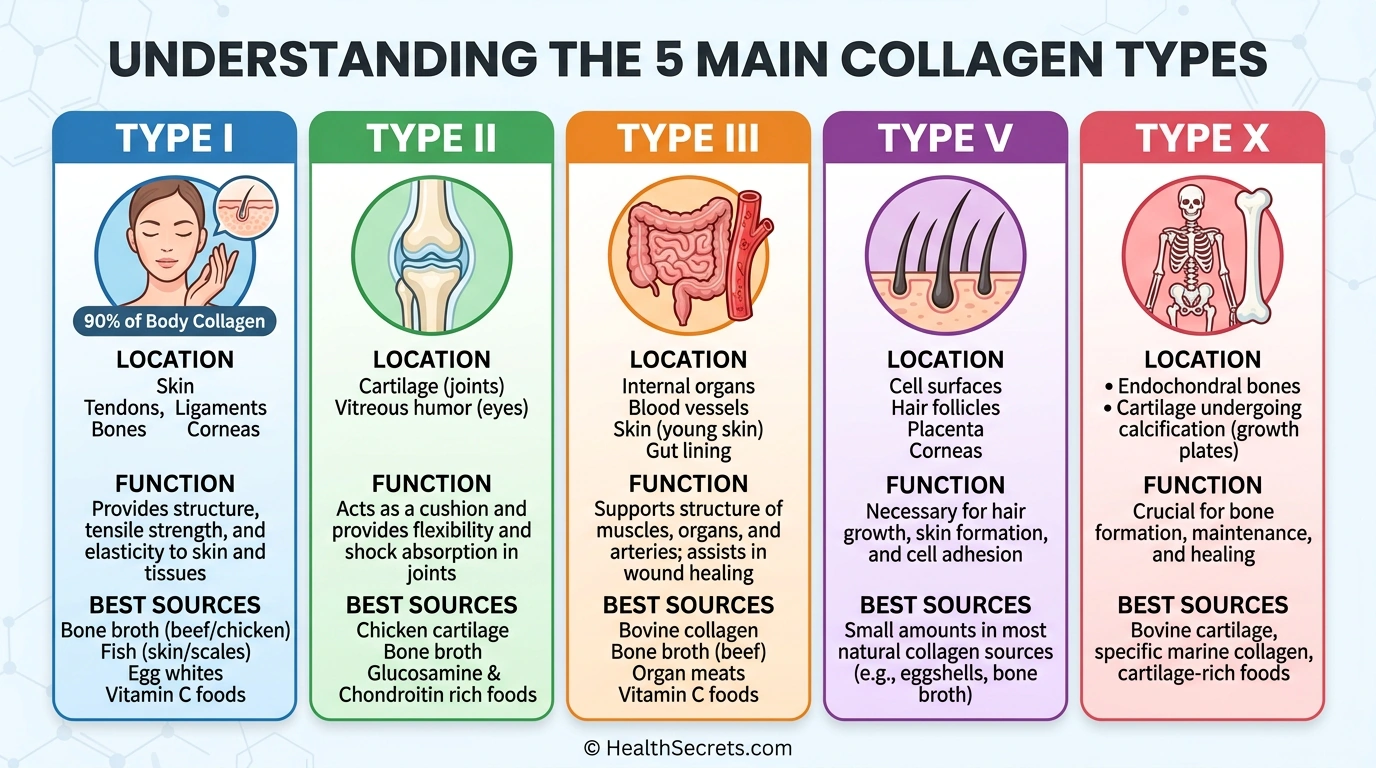
There are 28 identified collagen types, but five matter for supplementation. Choosing the right type for your goal is the single most important decision.
| Type | Location | Best For | Source | Dose |
|---|---|---|---|---|
| Type I (90% of body's collagen) | Skin, bones, tendons, organs | Skin anti-aging, bone density, wound healing | Bovine, marine | 5–10 g/day |
| Type II | Cartilage, joints | Joint pain, osteoarthritis, cartilage | Chicken sternum | 40 mg/day (UC-II) |
| Type III | Skin, blood vessels, gut | Gut health, cardiovascular, skin (with Type I) | Bovine | 5–10 g/day |
| Type V | Hair, placenta, cell surfaces | Hair health | Multi-collagen blends | Part of blend |
| Type X | Growth plates, bone cartilage | Bone formation, fracture healing | Multi-collagen blends | Part of blend |
| Quick decision guide: |
- Skin and anti-aging → Type I (marine or bovine)
- Joint pain → Type II (UC-II undenatured chicken collagen, 40 mg)
- Gut health → Type I + III (bovine)
- Comprehensive → Multi-collagen blend (Types I, II, III, V, X)
- Bones → Type I + vitamin D + calcium
How Do Collagen Sources Compare?
| Source | Types | Best For | Absorption | Cost |
|---|---|---|---|---|
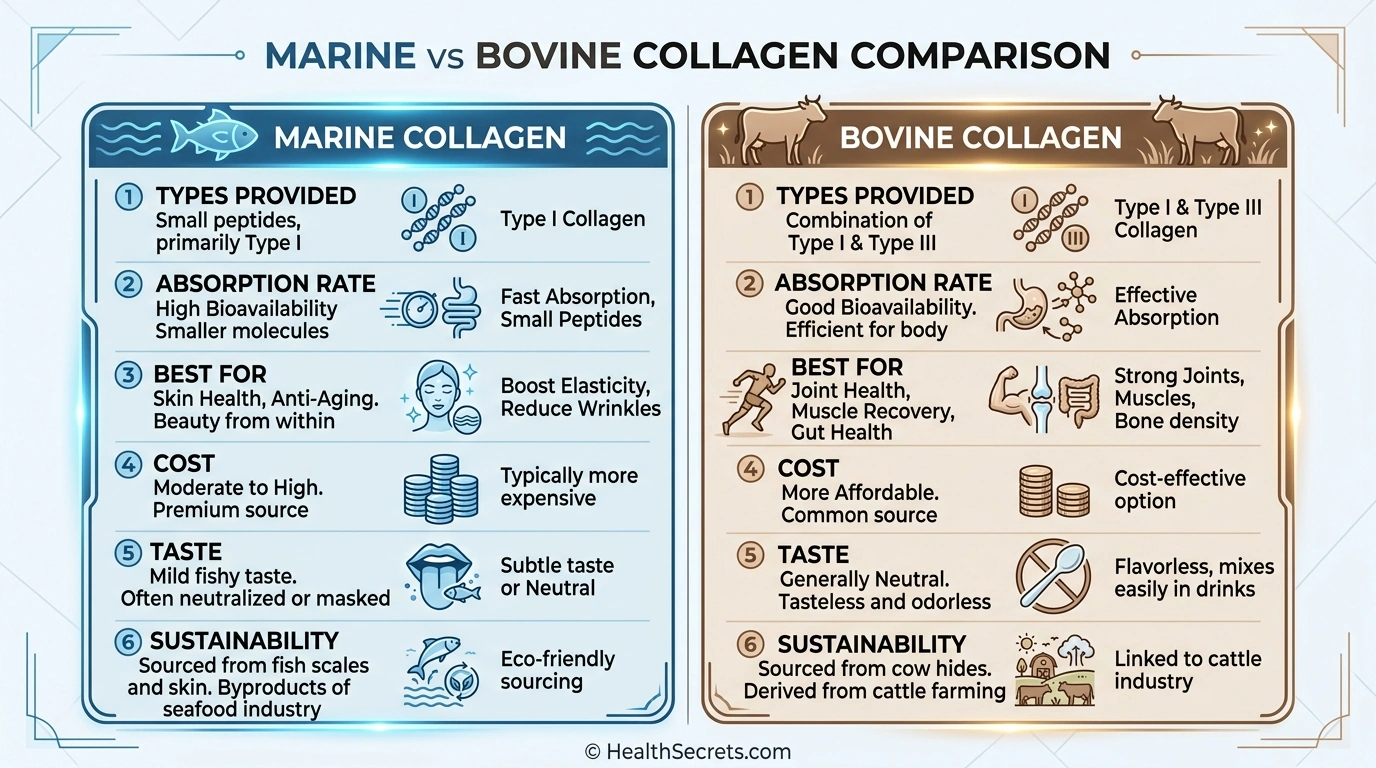
| Marine (fish skin/scales) | I, III | Skin, anti-aging | Excellent (1.5x bovine) | $$$$ |
| Bovine (cow hide/bones) | I, III | General health, gut, skin | Very good (90%+) | |
| Chicken (sternum cartilage) | II | Joints, cartilage | Good | |
| Eggshell membrane | I, V, X | Joints + glucosamine | Good | $$$$ |
| Multi-blend | I, II, III, V, X | Comprehensive | Very good | $$$ |
| Marine collagen has the smallest peptide size and is absorbed up to 1.5 times more efficiently than bovine collagen, making it the premium choice for skin-focused goals [4]. |
Bovine collagen is the most versatile and affordable option, providing both Type I and III.
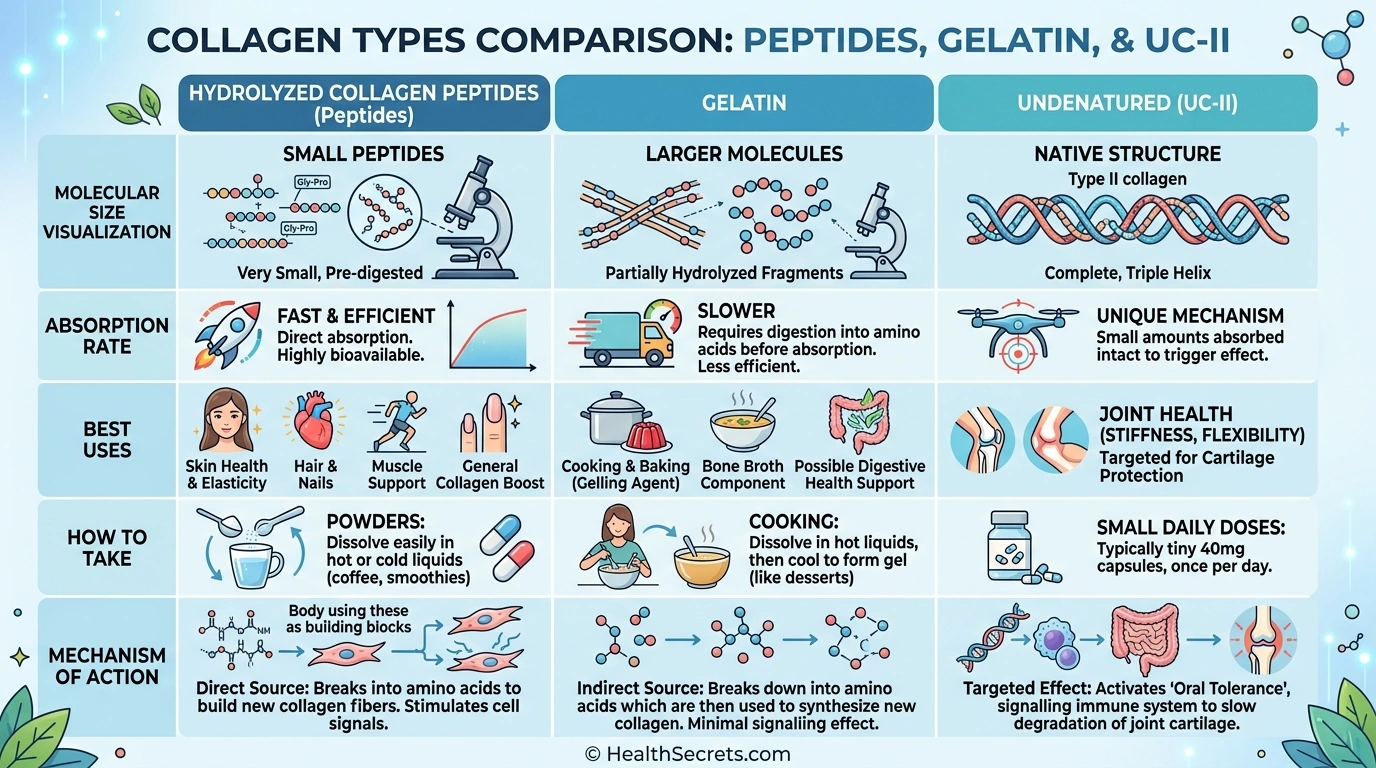
Chicken-derived UC-II works through a completely different mechanism (immune modulation rather than building blocks) and requires only 40 mg daily [5].

What Quality Markers Matter Most?
- Hydrolyzed (peptides): Essential for absorption — molecular weight 2,000–5,000 Daltons
- Source quality: Grass-fed bovine, wild-caught marine, pasture-raised chicken
- Third-party testing: NSF, Informed Choice, or independent lab verification for heavy metals and contaminants
- Transparent labeling: Collagen types, source country, peptide size disclosed
- Minimal additives: Pure collagen peptides; avoid proprietary blends that hide amounts
- Certifications: GMP, Non-GMO, and any relevant dietary certifications (Paleo, Keto, Halal, Kosher)
Red flags to avoid: Very cheap pricing, no source information, unrealistic claims ("reverse aging"), no third-party testing, and proprietary blends.
How Did We Evaluate These Collagen Supplements?
We evaluated collagen supplements using a rigorous methodology that prioritizes clinical evidence, ingredient quality, third-party verification, and real-world value. Our goal was to identify the best product for each specific use case rather than ranking products on a single scale.
Evaluation criteria:
- Clinical evidence (30%): Does the specific collagen type and dose match what clinical trials used? We prioritized products using doses and forms validated in peer-reviewed research.
- Source quality (25%): Grass-fed, pasture-raised, or wild-caught sourcing. Country of origin transparency. Processing method (enzymatic hydrolysis preferred).
- Third-party testing (20%): Independent verification for heavy metals (lead, mercury, cadmium, arsenic), contaminants, and potency. NSF, Informed Choice, or equivalent certifications.
- Value and practicality (15%): Cost per serving, serving size convenience, taste/mixability for powders, capsule count for capsule products.
- Formulation quality (10%): Inclusion of synergistic cofactors (vitamin C, hyaluronic acid), absence of unnecessary fillers, and appropriate peptide size.
We cross-referenced ingredient lists, verified ASINs, checked third-party testing claims, and consulted registered dietitian reviews from multiple independent sources [6].
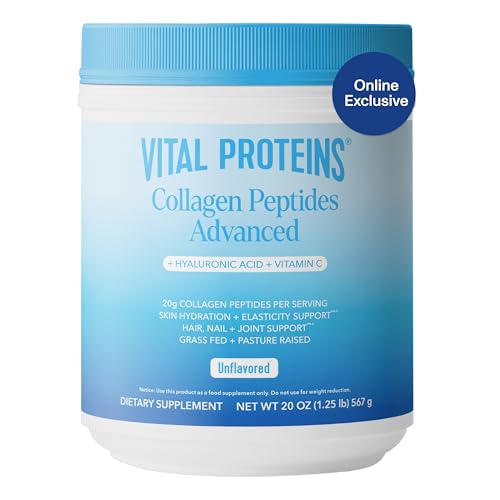
Vital Proteins Collagen Peptides 20 oz
Best OverallVital Proteins · Daily comprehensive collagen support with added vitamin C and hyaluronic acid

Sports Research Collagen Peptides
Best ValueSports Research · Budget-conscious daily users who want certified quality without paying premium

Garden of Life Grass Fed Collagen Peptides
Best OrganicGarden of · People who prioritize organic, sustainably sourced ingredients and clean-label products

Ancient Nutrition Multi Collagen Protein Powder
Best Multi-CollagenAncient Nutrition · People who want all five collagen types (I, II, III, V, X) from multiple sources in one product

Further Food Premium Marine Collagen Peptides
Best Marine CollagenFurther Food · Skin-focused users who want the highest-absorption collagen from sustainable wild-caught fish

Sports Research UC-II Joint Collagen
Best for Joints (UC-II)Sports Research · People with osteoarthritis or exercise-related joint pain who want clinically proven joint support

NeoCell Super Collagen + C
Best with Vitamin CNeoCell Super · People who want collagen and its most essential cofactor (vitamin C) in a single affordable product

Orgain Collagen Peptides (Chocolate)
Best Flavored CollagenOrgain Collagen · People who dislike unflavored supplements and want collagen that tastes good in smoothies or milk

NOW Foods UC-II Type II Collagen
Budget Joint SupportNOW Foods · Cost-conscious users with joint pain seeking the clinically validated UC-II form

Great Lakes Wellness Collagen Hydrolysate
Best Budget PowderGreat Lakes · Long-term daily users who want quality grass-fed collagen at the lowest cost per serving
Read the detailed review cards below before opening any retailer link
Top Recommended Products
Vital Proteins
Vital Proteins Collagen Peptides 20 oz
The added hyaluronic acid and vitamin C make this a complete skin-support formula in one scoop, and the 20 g dose exceeds what most clinical trials used for skin benefits.
Pros
- + Includes vitamin C and hyaluronic acid cofactors
- + dissolves in hot or cold liquids
- + truly neutral taste
- + massive brand trust and transparency
- + 20 g per serving
Cons
- - Premium price point
- - large container size
- - no Type II for joints
Why we included it: The added hyaluronic acid and vitamin C make this a complete skin-support formula in one scoop, and the 20 g dose exceeds what most clinical trials used for skin benefits.
Retailer link opens on Amazon after the review details above
Sports Research
Sports Research Collagen Peptides
The Informed Choice certification provides independent quality verification that many competitors lack, and the cost per serving is among the lowest for a grass-fed product.
Pros
- + Informed Choice certified (third-party tested)
- + excellent cost per serving
- + 41 servings per container
- + dissolves well
- + grass-fed sourcing
Cons
- - 11 g dose is lower than some competitors
- - thin white film in cold liquids
- - no added cofactors
Why we included it: The Informed Choice certification provides independent quality verification that many competitors lack, and the cost per serving is among the lowest for a grass-fed product.
Retailer link opens on Amazon after the review details above
Garden of
Garden of Life Grass Fed Collagen Peptides
The only USDA Organic and NSF double-certified collagen powder we found, making it the gold standard for quality assurance.
Pros
- + USDA Organic certified
- + NSF verified
- + includes probiotics for gut health
- + 20 g per serving
- + clean-label commitment
Cons
- - Premium price
- - probiotics may not survive mixing in hot liquids
- - slightly grainy texture
Why we included it: The only USDA Organic and NSF double-certified collagen powder we found, making it the gold standard for quality assurance.
Retailer link opens on Amazon after the review details above
Ancient Nutrition
Ancient Nutrition Multi Collagen Protein Powder
For people who want comprehensive collagen support without buying multiple products, this is the most convenient all-in-one option available.
Pros
- + All 5 major collagen types
- + multiple sources for comprehensive coverage
- + good serving count
- + includes fermented ingredients
Cons
- - Proprietary blend doesn't disclose amounts of each type
- - contains multiple allergens (fish
- - egg)
- - higher cost
- - 10 g total means lower per-type dosing
Why we included it: For people who want comprehensive collagen support without buying multiple products, this is the most convenient all-in-one option available.
Retailer link opens on Amazon after the review details above
Further Food
Further Food Premium Marine Collagen Peptides
Marine collagen has the highest bioavailability of any collagen source, and Further Food's wild-caught cod sourcing with third-party testing sets the quality bar for this category [4].
Pros
- + Wild-caught sourcing
- + smallest peptide size for maximum absorption (up to 1.5x bovine)
- + Type I focus ideal for skin
- + no fishy taste
- + sustainably sourced
Cons
- - Highest cost per serving
- - lower dose per serving (7 g)
- - smaller container
- - fewer servings
Why we included it: Marine collagen has the highest bioavailability of any collagen source, and Further Food's wild-caught cod sourcing with third-party testing sets the quality bar for this category [4].
Retailer link opens on Amazon after the review details above
Sports Research
Sports Research UC-II Joint Collagen
UC-II at 40 mg daily is the most clinically validated single intervention for osteoarthritis joint pain, with a 2024 meta-analysis of 35 RCTs confirming significant pain reduction and functional improvement [7].
Pros
- + Uses the exact UC-II dose and form validated in clinical trials
- + Informed Choice certified
- + only 1 capsule per day
- + affordable
- + different mechanism than hydrolyzed collagen
Cons
- - Only addresses joints (not skin
- - gut
- - bones)
- - must be taken on empty stomach
- - effects take 3–6 months
Why we included it: UC-II at 40 mg daily is the most clinically validated single intervention for osteoarthritis joint pain, with a 2024 meta-analysis of 35 RCTs confirming significant pain reduction and functional improvement [7].
Retailer link opens on Amazon after the review details above
NeoCell Super
NeoCell Super Collagen + C
The built-in vitamin C removes the need for a separate supplement, and the price point makes this an excellent starter product for people new to collagen.
Pros
- + Includes vitamin C cofactor
- + very affordable
- + well-established brand (25+ years)
- + good for beginners
- + easy to mix
Cons
- - Lower collagen dose (6.6 g) than competitors
- - vitamin C amount is modest (60 mg)
- - not grass-fed certified
- - smaller container
Why we included it: The built-in vitamin C removes the need for a separate supplement, and the price point makes this an excellent starter product for people new to collagen.
Retailer link opens on Amazon after the review details above
Orgain Collagen
Orgain Collagen Peptides (Chocolate)
Taste compliance is the biggest predictor of long-term supplement adherence, and Orgain makes the only organic flavored collagen that doesn't compromise on dose.
Pros
- + Actually tastes good
- + USDA Organic
- + 20 g dose
- + grass-fed
- + mixes well in milk or smoothies
- + organic cocoa provides antioxidants
Cons
- - Fewer servings per container (14)
- - flavored limits versatility (can't add to savory foods)
- - slightly higher cost per serving
Why we included it: Taste compliance is the biggest predictor of long-term supplement adherence, and Orgain makes the only organic flavored collagen that doesn't compromise on dose.
Retailer link opens on Amazon after the review details above
NOW Foods
NOW Foods UC-II Type II Collagen
NOW Foods delivers the exact same UC-II ingredient used in clinical trials at the lowest price point we found, making joint support accessible to budget-conscious users.
Pros
- + Most affordable UC-II option
- + uses branded UC-II ingredient
- + GMP certified
- + trusted NOW Foods brand
- + veg capsule
Cons
- - No third-party sport certification
- - no added cofactors
- - veg capsule may not suit all preferences
Why we included it: NOW Foods delivers the exact same UC-II ingredient used in clinical trials at the lowest price point we found, making joint support accessible to budget-conscious users.
Retailer link opens on Amazon after the review details above
Great Lakes
Great Lakes Wellness Collagen Hydrolysate
Great Lakes has been producing collagen since the 1920s — one of the longest track records in the industry — and their Kosher certification makes this accessible to users with dietary requirements.
Pros
- + Excellent value
- + Kosher certified (rare)
- + 38 servings
- + dissolves well
- + trusted heritage brand
- + clean single-ingredient formula
Cons
- - No added cofactors
- - no third-party sport certification
- - packaging less modern than competitors
- - 12 g dose is mid-range
Why we included it: Great Lakes has been producing collagen since the 1920s — one of the longest track records in the industry — and their Kosher certification makes this accessible to users with dietary requirements.
Retailer link opens on Amazon after the review details above
How Do You Use Collagen Supplements Effectively?
For maximum benefit, take hydrolyzed collagen peptides consistently at the right dose for your goal, paired with vitamin C to support collagen synthesis. Consistency matters far more than timing — the key is taking it daily for at least 8–12 weeks before expecting visible results.
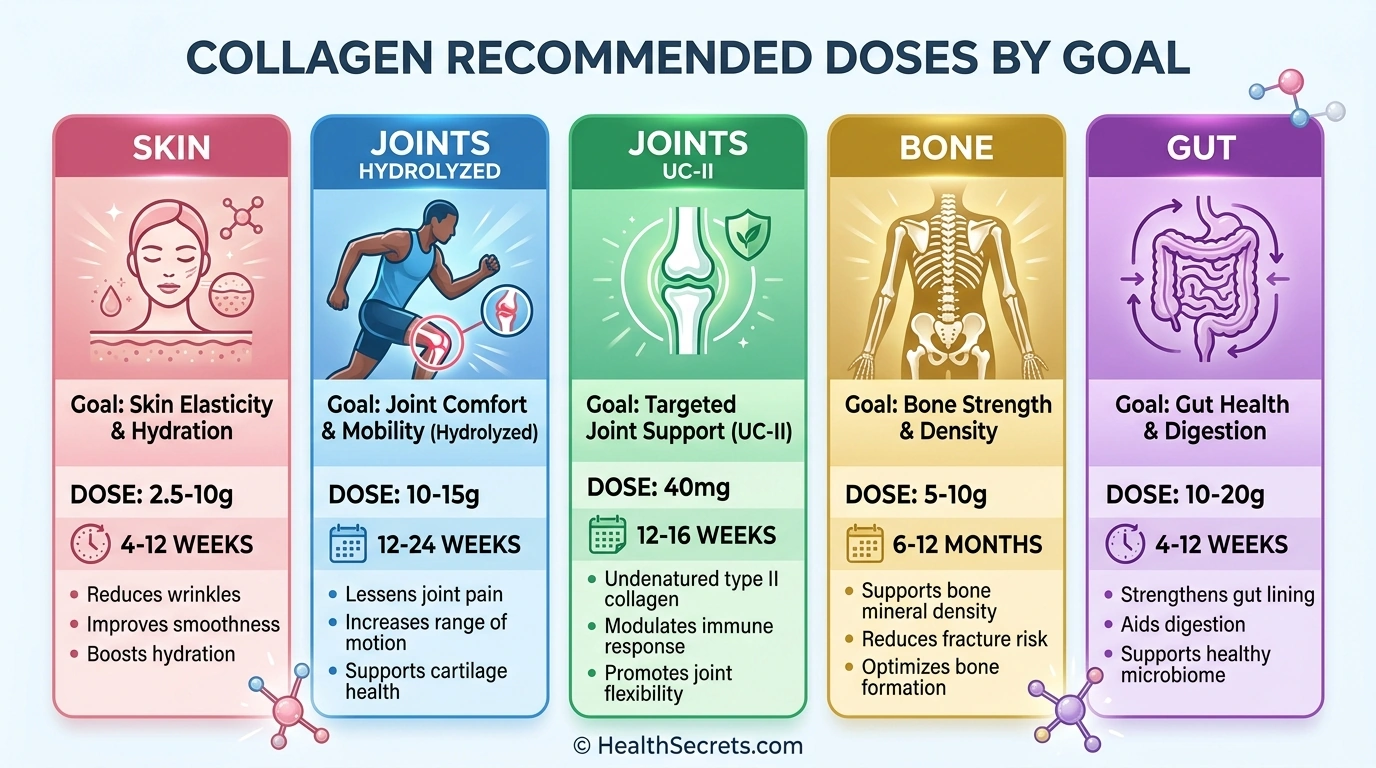
What's the Right Dose for Your Goal?
| Goal | Type | Daily Dose | Duration | Evidence |
|---|---|---|---|---|
| Skin (wrinkles, elasticity) | I/III hydrolyzed | 2.5–10 g | 8–12 weeks | Strong [2][3] |
| Joint pain (OA) | II (UC-II) | 40 mg | 3–6 months | Strong [5][7] |
| Joint pain (general) | I/III hydrolyzed | 10–15 g | 3–6 months | Moderate |
| Bone density | I hydrolyzed | 5–10 g | 12+ months | Moderate [8] |
| Gut health | I/III hydrolyzed | 10–20 g | 8–12 weeks | Emerging [9] |
When and How Should You Take Collagen?
- Hydrolyzed collagen (peptides): Can be taken anytime — with or without food. Mix in coffee, smoothies, water, oatmeal, or soups.
- UC-II (undenatured Type II): Take on an empty stomach for the immune-modulation mechanism to work.
- Best times: Morning coffee, post-workout shake, or before bed (glycine in collagen may support sleep quality).
- Consistency over timing: Daily intake matters more than when you take it.
Why Is Vitamin C Essential for Collagen?
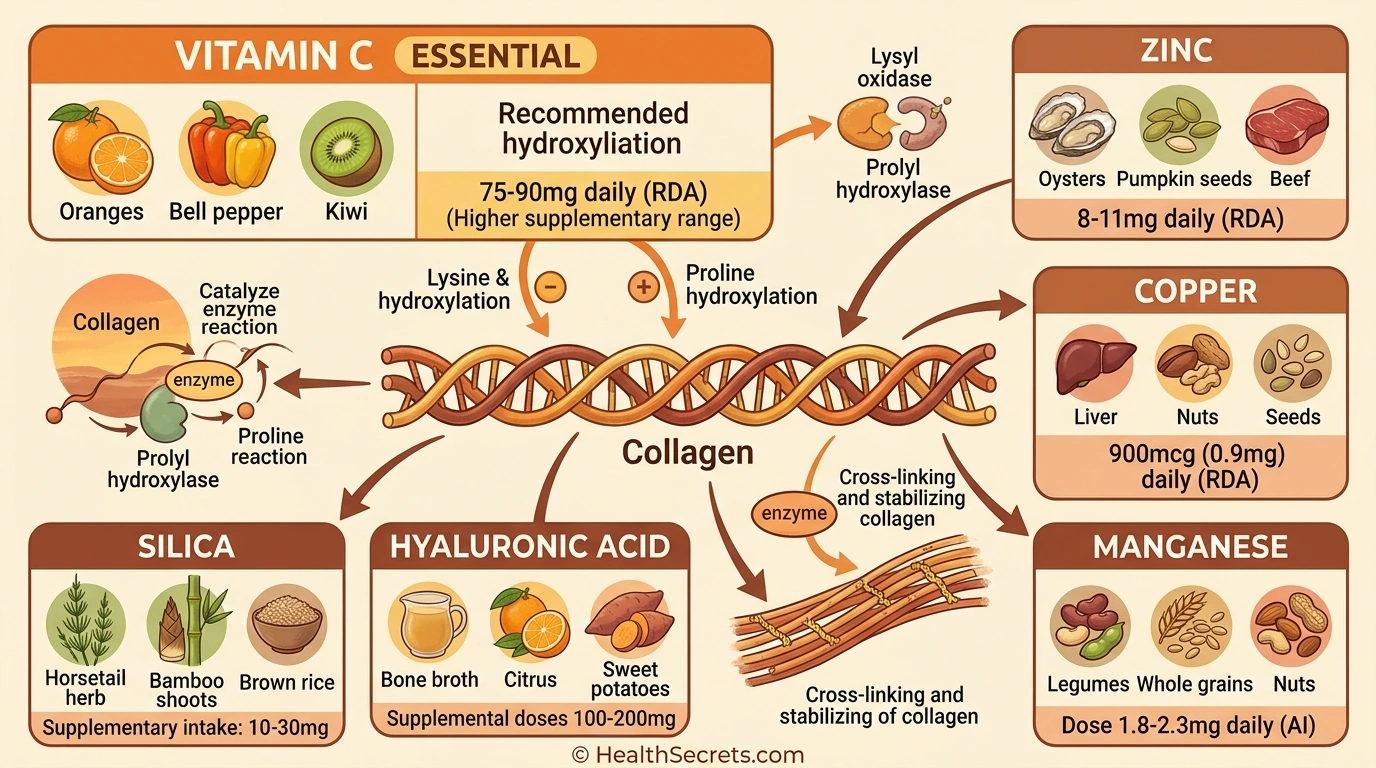
Vitamin C is the required cofactor for the enzymes (prolyl hydroxylase and lysyl hydroxylase) that stabilize collagen's triple-helix structure. Without adequate vitamin C, your body literally cannot form functional collagen — this is the biochemical basis of scurvy [10]. Take 500–1,000 mg of vitamin C daily with your collagen, or eat vitamin C-rich foods (citrus, berries, bell peppers, broccoli).
Other important cofactors:
- Copper (1–2 mg): Required for collagen cross-linking
- Zinc (15–30 mg): Supports collagen synthesis and wound healing
- Silica (10–40 mg): Supports collagen and bone health
- Hyaluronic acid (100–200 mg): Complements collagen for skin hydration
Are There Any Safety Concerns with Collagen Supplements?
Collagen supplements have an excellent safety profile with minimal side effects at standard doses. The most common issues are mild digestive discomfort (bloating, fullness) and a lingering aftertaste with some marine collagen products. Serious adverse events are extremely rare in clinical trials [1][7].
Common side effects (mild, dose-dependent):
- Bloating or feeling of fullness (especially at higher doses)
- Mild digestive discomfort
- Aftertaste (particularly marine collagen)
- Rarely: headache or skin rash
Allergy considerations:
- Fish/shellfish allergy: Avoid marine collagen
- Beef allergy: Avoid bovine collagen
- Egg allergy: Avoid eggshell membrane collagen
- Chicken allergy: Avoid chicken-derived collagen
Who should consult a doctor first:
- People with kidney disease (high protein intake may be contraindicated)
- Those with a history of calcium kidney stones (limited concern)
- Pregnant or breastfeeding individuals (generally considered safe, but consult provider)
- Anyone on medications that affect protein metabolism
Who should NOT worry:
- Collagen supplements do not contain common allergens like gluten, dairy, or soy (check labels)
- No drug interactions have been identified at standard doses
- No hormonal effects have been documented
- Safe for long-term daily use based on current evidence
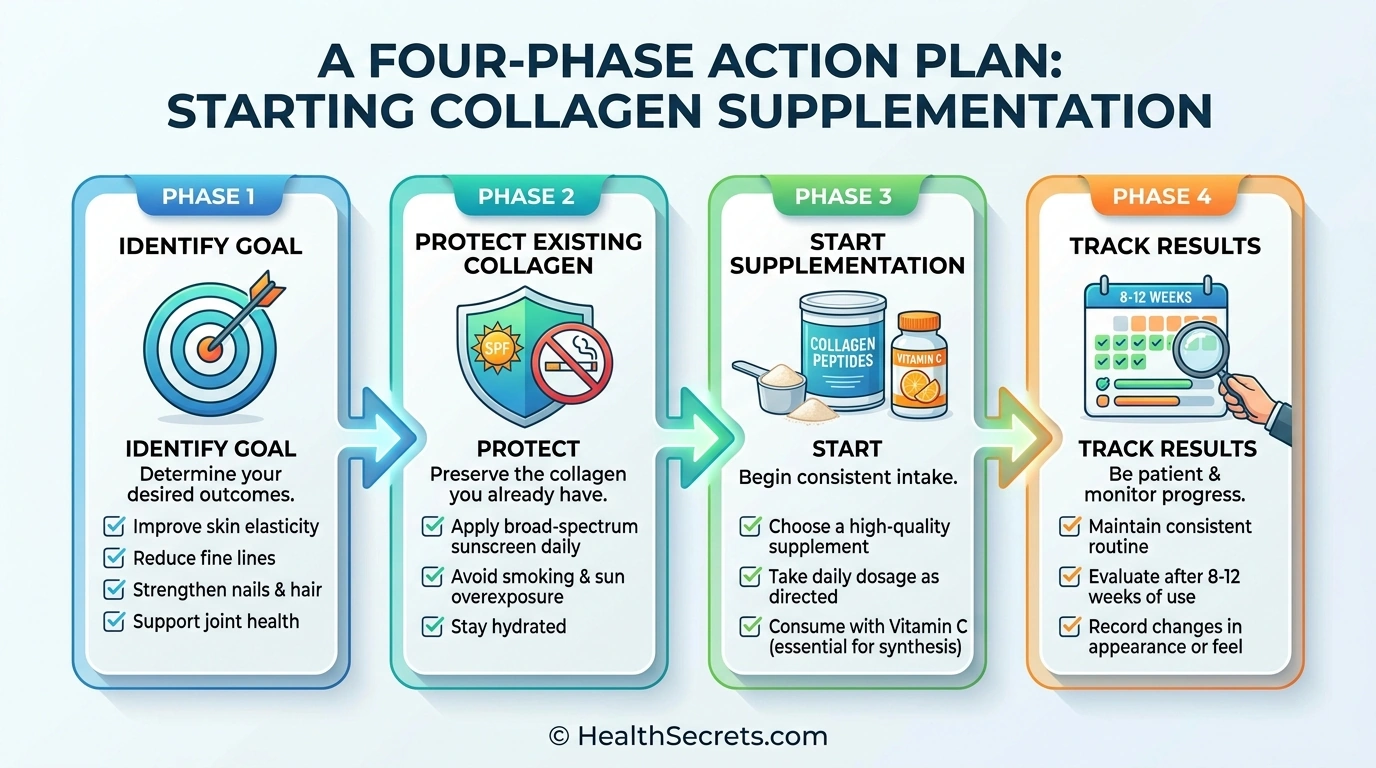
What Should You Do First Before Starting Collagen?
Before investing in collagen supplements, identify your primary goal, choose the right type and source, ensure you have the essential cofactors covered, and commit to consistent daily use for the minimum duration needed to see results.
Phase 1: Identify Your Goal and Choose Your Type
- Determine primary goal: skin, joints, gut, bones, or comprehensive
- Match goal to collagen type: Type I/III (skin/gut/bones) or Type II UC-II (joints)
- Choose source: marine (premium skin), bovine (versatile/affordable), or multi-collagen
- Set your daily dose based on the dosing guide above
Phase 2: Protect Your Existing Collagen
- Use daily SPF 30+ sunscreen (UV radiation is the #1 cause of collagen breakdown)
- Reduce or eliminate smoking (accelerates collagen destruction)
- Minimize high-sugar foods (glycation damages collagen fibers)
- Manage chronic inflammation through diet and lifestyle
Phase 3: Start Supplementation + Cofactors
- Choose a quality collagen product from the recommendations below
- Add vitamin C (500–1,000 mg daily) if not included in your product
- Ensure adequate zinc, copper, and vitamin D intake
- Establish a daily routine (e.g., collagen in morning coffee or smoothie)
Phase 4: Track and Adjust (8–12 Weeks)
- Take baseline photos (skin) or note baseline pain levels (joints)
- Be consistent — daily intake for minimum 8 weeks (skin) or 3 months (joints)
- Reassess at 12 weeks for skin goals, 6 months for joint goals
- If no improvement, try a different source or increase dose within recommended range
- Continue long-term for sustained benefits — collagen gains reverse when you stop