Skip to content
Multivitamin supplements in various forms alongside nutrient-dense whole foods representing food-first supplement philosophy Pin It
💊 Supplements Product Review
10 min

Multivitamin Guide: Do You Need One?

DI
Dr. Isabel Santos
| Dr. Sarah Chen | words | 15 citations
Updated this month Last reviewed: May 27, 2026 Medically reviewed by Dr. Sarah Chen

Who This Is For

Best for readers who want a grounded introduction to supplements.

Who Should Be Careful

Not for emergency decisions or personalized treatment planning.

Affiliate Disclaimer | This article may contain affiliate links to products we trust. If you choose to buy through them, we may earn a small commission at no extra cost to you. Full disclosure

Medical Disclaimer | For informational purposes only. Not a substitute for professional medical advice. Read full disclaimer

M

Key Takeaways

Large-scale studies (390,000+ adults, 20+ years) found no mortality benefit from daily multivitamin use in healthy, well-nourished adults
The COSMOS trial showed multivitamins improved memory and slowed cognitive aging by roughly 2 years in older adults — one of the strongest positive findings
People who genuinely benefit include pregnant individuals, adults 65+, vegans and vegetarians, those with malabsorption conditions, and anyone on restrictive diets
Quality varies enormously — look for methylfolate (not folic acid), methylcobalamin (not cyanocobalamin), chelated minerals (not oxides), and third-party testing (USP, NSF)
Men should avoid multivitamins containing iron; premenopausal women need iron (18 mg); adults 50+ need higher B12 and vitamin D
Multivitamins are an insurance policy, not a replacement for a nutrient-dense diet — food first, supplements second
Gummy vitamins contain less nutrients, more sugar, and often lack iron and key minerals — capsules or tablets are preferable for adults
Always test for specific deficiencies (vitamin D, B12, iron, magnesium) before relying on a multivitamin to guess your way to better health

Top Recommended Products

Comparison shortlist to review before leaving the guide

10 Items
01

Thorne Basic Nutrients 2/Day

Thorne Basic · Health-conscious men and women wanting pharmaceutical-grade quality

Compare
02

Ritual Essential for Women 18+

Ritual Essential · Premenopausal women wanting a clean, traceable multivitamin with iron

Compare
03

Nature Made Multi for Him

Nature Made · Men wanting an affordable, independently verified daily multivitamin

Compare
04

Thorne Women's Multi 50+

Thorne Women's · Postmenopausal women prioritizing bone health and cognitive support

Compare
05

Garden of Life Vitamin Code Men 50+

Garden of · Men over 50 preferring organic, food-based supplementation

Compare
06

Seeking Health Optimal Prenatal

Seeking Health · Pregnant and breastfeeding individuals wanting the most comprehensive prenatal formula

Compare
07

Kirkland Signature Daily Multi

Kirkland Signature · Budget-conscious adults wanting independently verified basics

Compare
08

Pure Encapsulations ONE Multivitamin

Pure Encapsulations · Adults wanting a convenient once-daily formula with premium forms

Compare
09

Garden of Life mykind Organics Women's Multi

Garden of · Women preferring USDA Organic, plant-based supplementation

Compare
10

Klean Athlete Klean Multivitamin

Klean Athlete · Athletes needing a certified sport-safe multivitamin

Compare

Read the detailed review cards below before opening any retailer link

Here's the uncomfortable truth about multivitamins: roughly one in three American adults takes one daily, the global market exceeds $30 billion, and yet the scientific evidence for their most-advertised benefits is… weak. At best. Multiple large-scale analyses — including a 2024 cohort study of nearly 400,000 adults followed for over 20 years — found no association between daily multivitamin use and lower risk of death [1].

So why does anyone take them? Because the picture is more nuanced than the headlines suggest. While multivitamins don't appear to prevent heart disease or cancer in healthy, well-nourished adults, they do serve as a genuine safety net for people with nutrient gaps — and that's a larger group than you might think. Older adults with declining absorption. Pregnant individuals with dramatically increased nutrient needs. Vegans missing critical B12. Anyone on a restrictive diet or dealing with malabsorption.

And then there's the cognitive angle. The landmark COSMOS trial found that daily multivitamin use improved episodic memory and slowed cognitive aging by the equivalent of roughly two years in older adults [2]. That's not nothing.

This guide cuts through the marketing noise. We'll walk you through what the research actually shows, who genuinely benefits from a multivitamin, what separates a quality product from an expensive placebo, and our top-tested picks across every category. Whether you're trying to build a complete supplement strategy or just figure out if you're wasting $30 a month — keep reading.

⚠️ This article is for educational purposes only. Always consult a healthcare provider before starting any supplement regimen, especially if you take medications or have existing health conditions.

What Should You Look for in a Quality Multivitamin?

The difference between a well-formulated multivitamin and a cheap drugstore brand is enormous — and it comes down to nutrient forms, dosing, and independent verification. Most consumers have no idea that the same vitamin can come in forms that differ dramatically in absorption and effectiveness.

Which Vitamin and Mineral Forms Actually Get Absorbed?

Bioavailability — how well your body can absorb and use a nutrient — is the single most important quality factor. A multivitamin packed with poorly absorbed forms is essentially expensive waste.

B vitamins (the biggest differentiator):

  • Folate: Choose methylfolate (5-MTHF) over folic acid. Roughly 40–60% of the population carries MTHFR gene variants that impair folic acid conversion [10]. Methylfolate bypasses this entirely.
  • B12: Choose methylcobalamin or adenosylcobalamin over cyanocobalamin. The active forms don't require conversion and are better retained.

Minerals (chelated vs. oxide):

  • Choose: Magnesium glycinate, zinc picolinate or glycinate, iron bisglycinate, calcium citrate
  • Avoid: Magnesium oxide, zinc oxide, iron sulfate, calcium carbonate — poorly absorbed and more likely to cause GI distress

Fat-soluble vitamins:

Comparison chart of bioavailable versus synthetic vitamin and mineral forms showing which to choose and which to avoid
Comparison of gummy vitamins versus capsule multivitamins showing nutrient content sugar and mineral differences

How Do You Spot Red Flags on a Supplement Label?

Knowing what to avoid is just as important as knowing what to look for. Here's your checklist:

  • Avoid megadoses: More than 100–200% DV of fat-soluble vitamins (A, D, E, K) can accumulate and cause toxicity. Excessive B vitamins (>1,000% DV) are unnecessary — you'll just excrete them.
  • Watch for unnecessary iron: Men and postmenopausal women generally don't need supplemental iron. Excess iron increases oxidative stress and, in rare cases, can contribute to iron overload.
  • Skip proprietary blends: If the label doesn't tell you exactly how much of each nutrient is included, the manufacturer is hiding something.

Demand third-party testing:

  • USP Verified: Tests potency, purity, and dissolution
  • NSF Certified for Sport: Verifies no banned substances
  • ConsumerLab approved: Independent purity and label accuracy testing
Nutrient Avoid This Form Choose This Form Why It Matters
Folate (B9) Folic acid Methylfolate (5-MTHF) 40–60% of people can't convert folic acid efficiently
B12 Cyanocobalamin Methylcobalamin Active form, no conversion needed, better retained
Vitamin D D2 (ergocalciferol) D3 (cholecalciferol) D3 raises blood levels 40–70% more effectively
Magnesium Oxide Glycinate or citrate Oxide has only ~4% absorption; glycinate ~80%
Zinc Oxide Picolinate or glycinate Significantly better absorption, less nausea

How Did We Evaluate These Multivitamins?

We assessed over 40 multivitamin products across six weighted criteria to identify the best options for each population. Our evaluation prioritized what actually matters for your health — not marketing claims or brand recognition.

Gender and age specific multivitamin nutrient needs comparison for men women prenatal and adults over 50

Our evaluation criteria:

  1. Nutrient forms (30% weight): Are B vitamins methylated? Are minerals chelated? Is vitamin D in D3 form? We rejected any product using folic acid instead of methylfolate as a primary folate source.
  2. Dosing appropriateness (20% weight): Are doses within therapeutic ranges without exceeding safe upper limits? We penalized megadoses of fat-soluble vitamins and rewarded formulas that stayed in the 100–200% DV sweet spot.
  3. Third-party testing (20% weight): USP, NSF, or ConsumerLab certification was strongly preferred. Products without any independent verification were ranked lower.
  4. Population-specific formulation (15% weight): Does the men's formula exclude iron? Does the women's formula include adequate iron and folate? Does the 50+ formula boost B12 and D3?
  5. Clean label (10% weight): Minimal artificial colors, flavors, and unnecessary fillers. No proprietary blends.
  6. Value (5% weight): Cost per day relative to quality. Expensive doesn't always mean better.

We cross-referenced our findings with published research, ConsumerLab reports, and NIH Office of Dietary Supplements guidelines [7] to ensure our recommendations align with current evidence.

Third party supplement testing certifications USP Verified NSF Certified for Sport and ConsumerLab Approved logos and descriptions

How Do You Use a Multivitamin Effectively?

Taking a multivitamin correctly can meaningfully affect how well you absorb its nutrients. Most people just pop a pill in the morning without thinking about it — but a few simple habits make a real difference.

  • Take with food containing fat. Fat-soluble vitamins (A, D, E, K) require dietary fat for absorption. Taking your multivitamin with breakfast or lunch that includes some healthy fat — avocado, eggs, olive oil, nuts — significantly boosts uptake.
  • Morning or midday, not evening. B vitamins can be mildly stimulating. Taking your multivitamin in the evening may interfere with sleep for some people.
  • Split doses when possible. If your product is a twice-daily formula, take one serving with breakfast and one with dinner. Smaller amounts of water-soluble vitamins are absorbed more efficiently than one large dose.
  • Separate from certain beverages. Coffee and tea contain tannins and polyphenols that can reduce iron and mineral absorption. If your multivitamin contains iron, separate it from coffee by at least an hour.
  • Be consistent. The benefits of multivitamins come from sustained, daily use over months — not occasional supplementation. Set a reminder if needed.
  • Test, don't guess. Before committing to a multivitamin long-term, consider testing your levels of vitamin D, B12, iron (ferritin), and magnesium. You might discover you only need targeted supplementation rather than a full multivitamin — which is often more effective and less expensive.
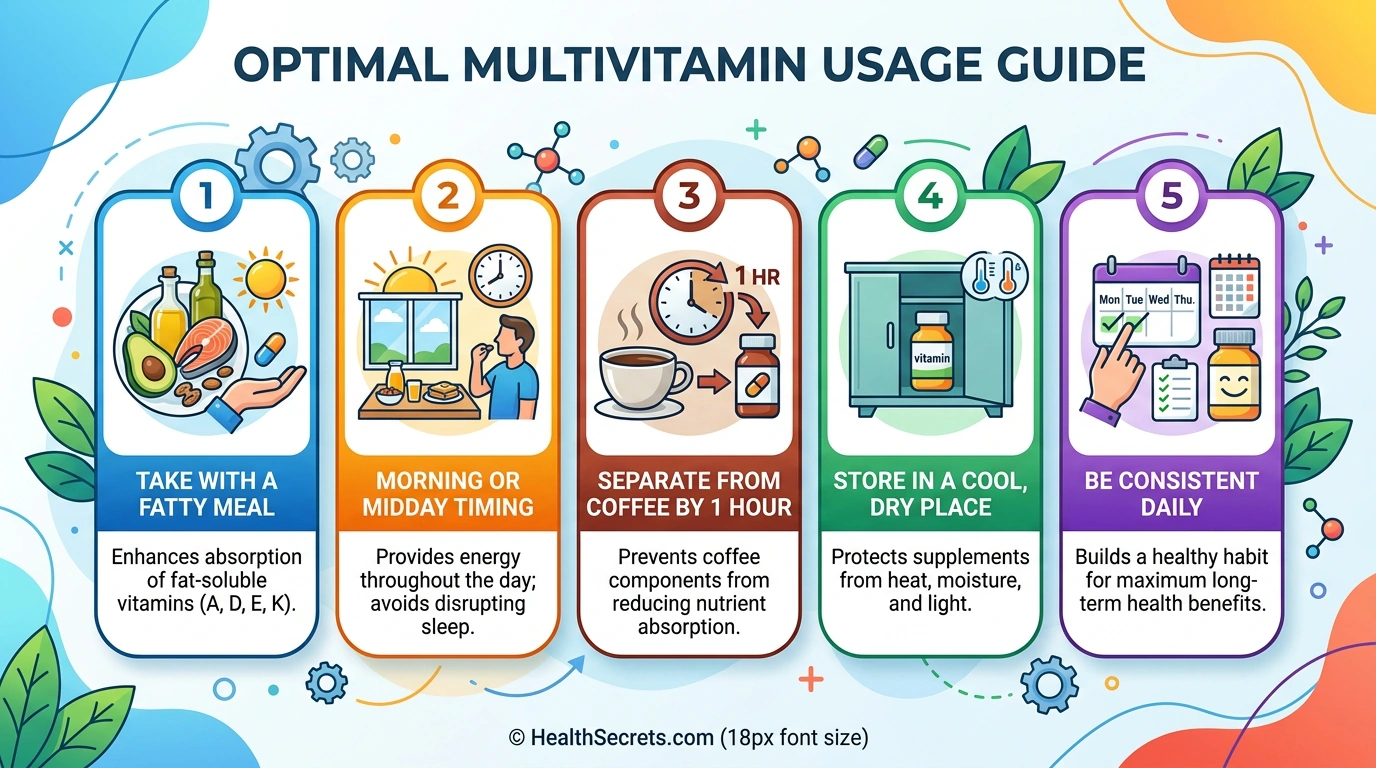
How to take a multivitamin correctly including timing food pairing and storage tips for optimal absorption

Are There Any Safety Concerns with Multivitamins?

For most people at recommended doses, multivitamins are very safe. The USPSTF's 2022 review found insufficient evidence of harm from standard multivitamin use [5]. But "safe" doesn't mean "risk-free for everyone."
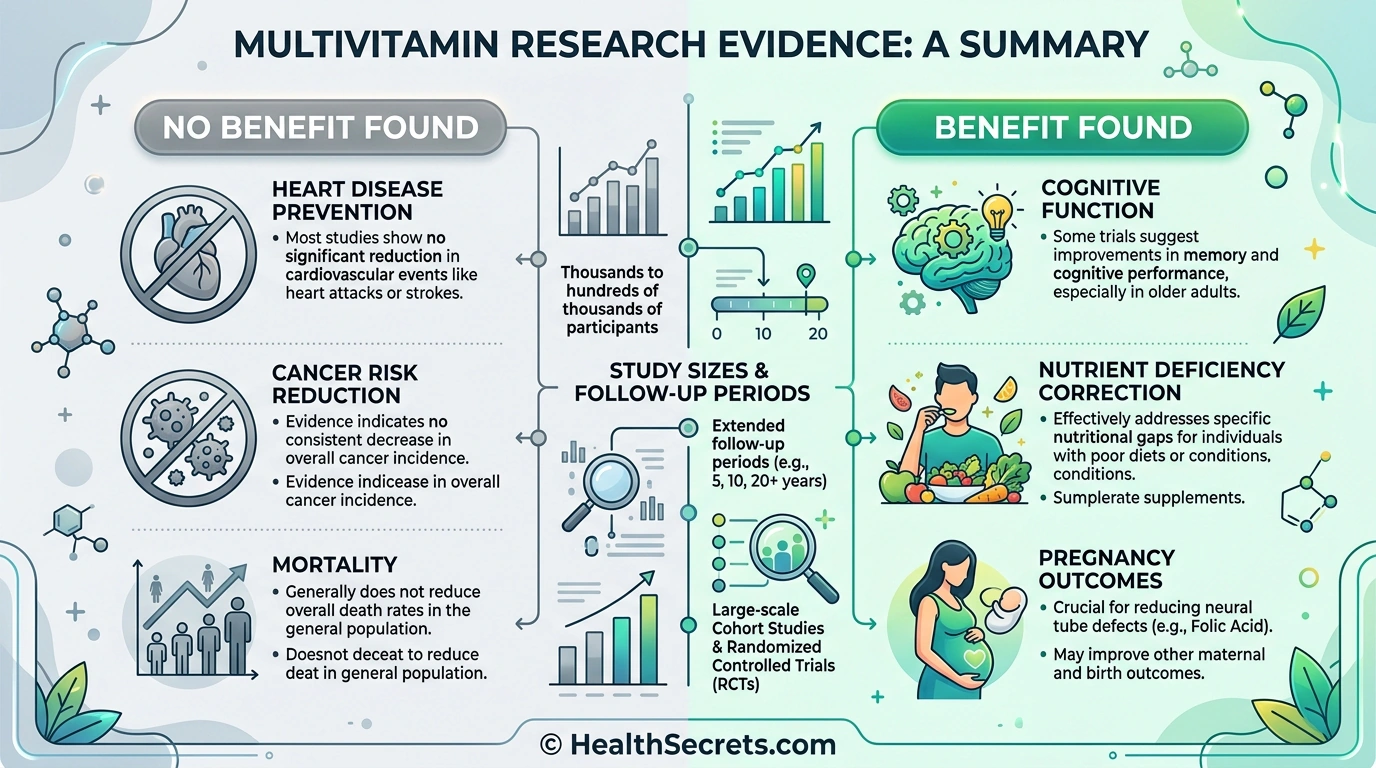
Research evidence summary showing where multivitamins help and where they show no benefit based on large clinical trials

Iron overload risk: Men and postmenopausal women taking iron-containing multivitamins unnecessarily can accumulate excess iron over time. People with hereditary hemochromatosis (iron storage disorder) are at particular risk.

Fat-soluble vitamin accumulation: Vitamins A, D, E, and K are stored in body fat and can accumulate to toxic levels with prolonged megadosing. Vitamin A is the biggest concern — chronic intake above 10,000 IU can cause liver damage.

Drug interactions:

  • Blood thinners (warfarin): Vitamin K in multivitamins can interfere with anticoagulation
  • Thyroid medications (levothyroxine): Calcium and iron reduce absorption — separate by 4 hours
  • Antibiotics (tetracyclines, fluoroquinolones): Minerals reduce antibiotic absorption
  • Levodopa (Parkinson's): Iron and B6 can interfere

Nausea and GI upset: Common with iron-containing formulas, especially on empty stomach. Switch to iron bisglycinate forms or take with food.

The "more is better" trap: Taking multiple supplements alongside a multivitamin risks exceeding upper limits. Audit your total intake from all sources — food, fortified foods, individual supplements, and multivitamin combined.
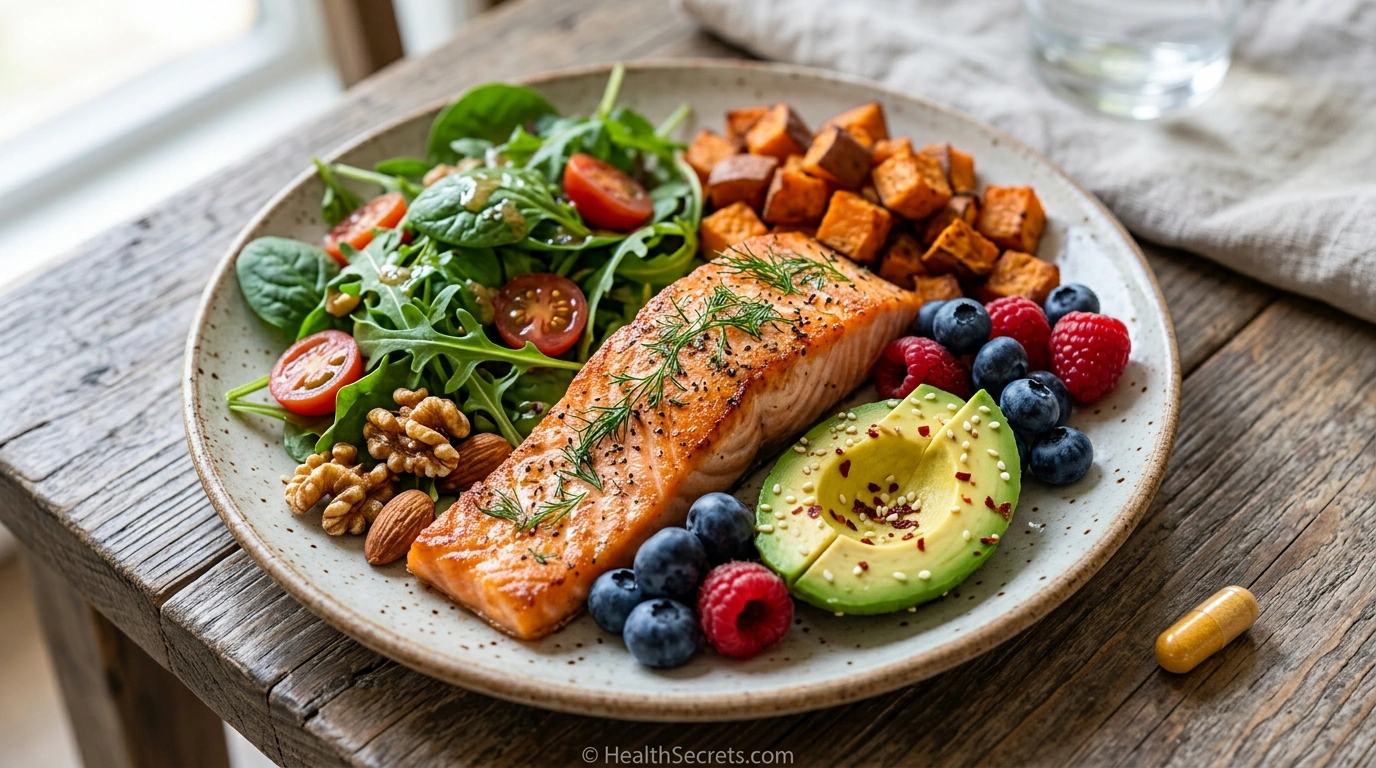
Nutrient dense whole food plate alongside multivitamin capsule illustrating food first supplement second philosophy

What Should You Do First to Decide If You Need a Multivitamin?

Rather than blindly adding a multivitamin to your routine, follow this evidence-based decision framework to determine whether you actually need one — and if so, which type.

Phase 1: Assess Your Actual Need (Week 1)

  • Evaluate your diet honestly: Do you eat 5+ servings of fruits and vegetables daily? Variety of proteins? Whole grains?
  • Identify risk factors: Are you pregnant, 65+, vegan/vegetarian, on a restrictive diet, or taking nutrient-depleting medications?
  • Check: Are you already taking individual supplements (D3, B12, magnesium, iron)? A multivitamin may duplicate what you're already covered on

Phase 2: Test for Deficiencies (Week 1–2)

  • Request blood tests for vitamin D (25-OH-D), B12, ferritin (iron stores), and RBC magnesium
  • Consider a comprehensive metabolic panel for calcium and electrolytes
  • Review results with your healthcare provider

Phase 3: Choose the Right Product (Week 2–3)

  • Match formula to your demographics: gender-specific, age-appropriate, life-stage relevant
  • Verify bioavailable forms: methylfolate, methylcobalamin, chelated minerals, D3
  • Confirm third-party testing (USP, NSF, or ConsumerLab)
  • Check that doses are appropriate (100–200% DV, no megadoses of fat-soluble vitamins)

Phase 4: Optimize and Monitor (Month 1–3)

  • Take consistently with a fat-containing meal
  • Continue prioritizing nutrient-dense whole foods — the multivitamin supplements your diet, not the other way around
  • Retest deficient nutrients after 3 months to confirm improvement
  • Reassess annually: your needs change with age, diet, and health status
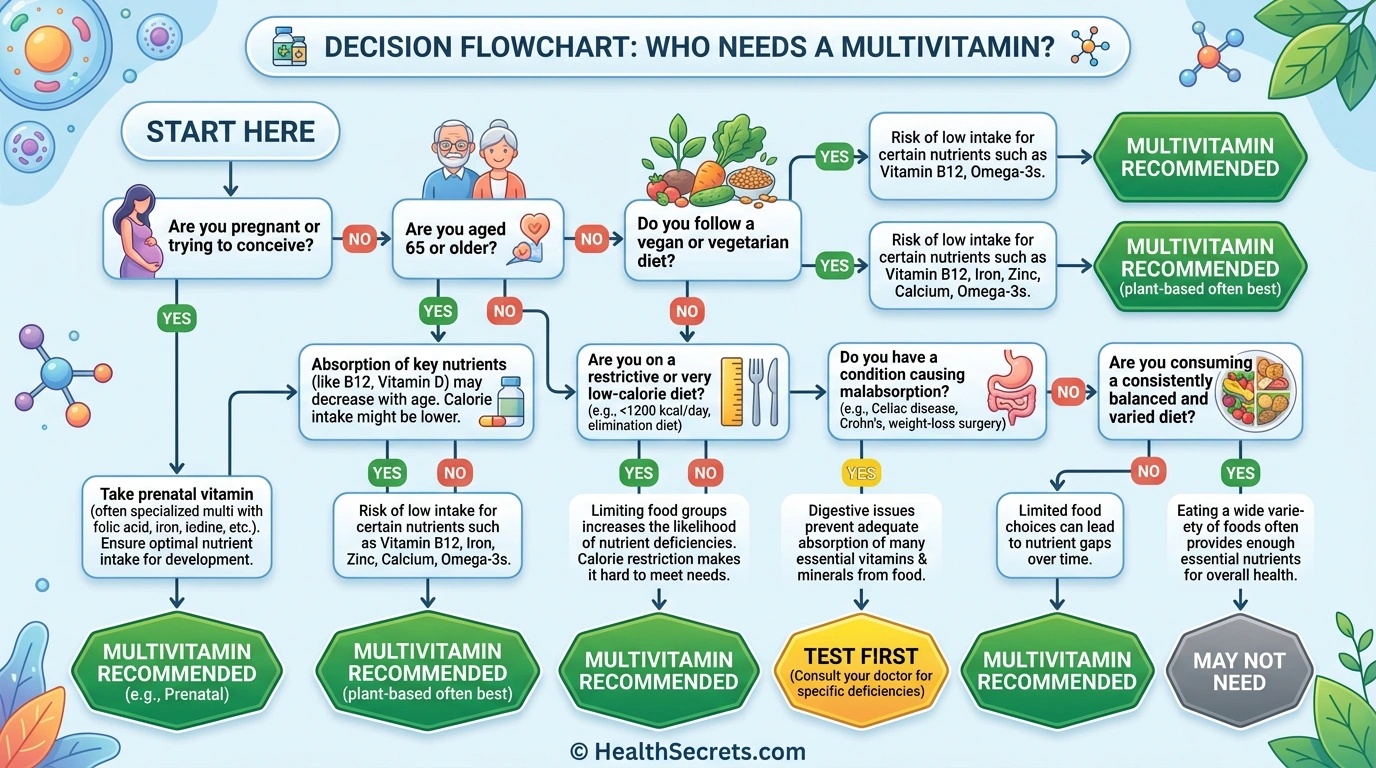
Decision flowchart showing who needs a multivitamin based on age diet pregnancy status and health conditions
Top rated multivitamin supplements including Thorne Ritual Nature Made and Garden of Life products

Top Recommended Products

Best Overall

Thorne Basic

Thorne Basic Nutrients 2/Day

4.5/5 $$
01

Thorne sets the standard for supplement quality — NSF certification, fully methylated B vitamins, and chelated minerals make this the benchmark all other multivitamins should be measured against.

Pros

  • + NSF Certified for Sport (highest testing standard)
  • + methylfolate and methylcobalamin
  • + chelated minerals
  • + no iron (suitable for men)
  • + clean label with no unnecessary additives

Cons

  • - Only 2
  • - 000 IU vitamin D (may need additional)
  • - no iron for premenopausal women
  • - premium price point

Why we included it: Thorne sets the standard for supplement quality — NSF certification, fully methylated B vitamins, and chelated minerals make this the benchmark all other multivitamins should be measured against.

Best for: Health-conscious men and women wanting pharmaceutical-grade quality Dosage: 2 capsules daily
View current price on Amazon

Retailer link opens on Amazon after the review details above

Best for Women (General)

Ritual Essential

Ritual Essential for Women 18+

4.5/5 $$
02

Ritual pioneered the "less is more" approach — focusing on the nutrients women most commonly lack rather than cramming in everything. USP verification and full supply chain transparency set it apart.

Pros

  • + USP Verified
  • + methylfolate (360 mcg)
  • + chelated iron (8 mg as ferrous bisglycinate)
  • + traceable supply chain
  • + minty tab reduces fishy burps
  • + vegan D3

Cons

  • - Subscription-only model
  • - limited mineral coverage
  • - only 9 nutrients (intentionally focused)

Why we included it: Ritual pioneered the "less is more" approach — focusing on the nutrients women most commonly lack rather than cramming in everything. USP verification and full supply chain transparency set it apart.

Best for: Premenopausal women wanting a clean, traceable multivitamin with iron Dosage: 2 capsules daily
View current price on Amazon

Retailer link opens on Amazon after the review details above

Best Budget Men's Multi

Nature Made

Nature Made Multi for Him

4.5/5 $
03

If budget is your primary concern, USP verification ensures you're getting exactly what the label says — and for men who eat a reasonably balanced diet, this covers the basics reliably.

Pros

  • + USP Verified (gold standard)
  • + no iron
  • + affordable at ~$0.15/day
  • + widely available
  • + America's #1 pharmacist recommended vitamin brand

Cons

  • - Uses folic acid instead of methylfolate
  • - some oxide mineral forms
  • - basic formulation without premium nutrient forms

Why we included it: If budget is your primary concern, USP verification ensures you're getting exactly what the label says — and for men who eat a reasonably balanced diet, this covers the basics reliably.

Best for: Men wanting an affordable, independently verified daily multivitamin Dosage: 1 tablet daily
View current price on Amazon

Retailer link opens on Amazon after the review details above

Best for Women 50+

Thorne Women's

Thorne Women's Multi 50+

4.5/5 $$$
04

The most comprehensive, quality-formulated multivitamin for women over 50 — with the higher B12, D3, and K2 doses this age group specifically needs, all in bioavailable forms.

Pros

  • + NSF certified
  • + comprehensive formula with 25+ nutrients
  • + no iron (appropriate for 50+)
  • + enhanced B12 (1
  • + 000 mcg methylcobalamin)
  • + added vitamin K2 for bone-cardiovascular synergy

Cons

  • - 6 capsules per day is a lot
  • - premium price
  • - large bottle

Why we included it: The most comprehensive, quality-formulated multivitamin for women over 50 — with the higher B12, D3, and K2 doses this age group specifically needs, all in bioavailable forms.

Best for: Postmenopausal women prioritizing bone health and cognitive support Dosage: 6 capsules daily
View current price on Amazon

Retailer link opens on Amazon after the review details above

Best Whole-Food Men's 50+

Garden of

Garden of Life Vitamin Code Men 50+

4.5/5 $$
05

For men who prefer their nutrients derived from real food sources rather than isolated synthetics, this is the best whole-food option — with added probiotics and prostate-supportive nutrients.

Pros

  • + Whole-food-based nutrients with cofactors
  • + includes probiotics and enzymes
  • + no iron
  • + prostate-supporting nutrients (lycopene
  • + selenium)
  • + gentle on empty stomach

Cons

  • - 4 capsules/day
  • - more expensive than synthetic
  • - lower standardized doses
  • - not USP/NSF certified

Why we included it: For men who prefer their nutrients derived from real food sources rather than isolated synthetics, this is the best whole-food option — with added probiotics and prostate-supportive nutrients.

Best for: Men over 50 preferring organic, food-based supplementation Dosage: 4 capsules daily
View current price on Amazon

Retailer link opens on Amazon after the review details above

Best Prenatal

Seeking Health

Seeking Health Optimal Prenatal

4.5/5 $$$
06

Most prenatal vitamins use folic acid and skip choline entirely — this formula addresses both gaps with methylfolate and a full 550 mg choline dose, designed by one of the leading experts in methylation genetics.

Pros

  • + 800 mcg methylfolate (not folic acid)
  • + 550 mg choline (most prenatals skip this)
  • + iron bisglycinate (gentler)
  • + comprehensive formula with 25+ nutrients
  • + created by Dr. Ben Lynch (MTHFR expert)

Cons

  • - 6 capsules/day
  • - premium price
  • - no DHA included (need separate fish oil)
  • - large capsules

Why we included it: Most prenatal vitamins use folic acid and skip choline entirely — this formula addresses both gaps with methylfolate and a full 550 mg choline dose, designed by one of the leading experts in methylation genetics.

Best for: Pregnant and breastfeeding individuals wanting the most comprehensive prenatal formula Dosage: 6 capsules daily (can split throughout day)
View current price on Amazon

Retailer link opens on Amazon after the review details above

Best Budget

Kirkland Signature

Kirkland Signature Daily Multi

4.5/5 $
07

If you want the absolute best value with independent quality verification, this Wirecutter-recommended and USP-Verified option proves that effective multivitamins don't need to cost $50 a month.

Pros

  • + USP Verified
  • + extraordinary value at ~$0.04/day
  • + 500-count bottle
  • + covers all essential vitamins and minerals
  • + Wirecutter's top pick for budget multivitamins

Cons

  • - Uses folic acid and cyanocobalamin
  • - oxide mineral forms
  • - basic formulation
  • - only available at Costco
  • - contains iron (not ideal for men)

Why we included it: If you want the absolute best value with independent quality verification, this Wirecutter-recommended and USP-Verified option proves that effective multivitamins don't need to cost $50 a month.

Best for: Budget-conscious adults wanting independently verified basics Dosage: 1 tablet daily
View current price on Amazon

Retailer link opens on Amazon after the review details above

Best Once-Daily Premium

Pure Encapsulations

Pure Encapsulations ONE Multivitamin

4.5/5 $$
08

When compliance is the challenge — because let's be honest, most people won't take 4–6 capsules daily — this delivers the most important bioavailable forms in a single, hypoallergenic capsule.

Pros

  • + True one-capsule formula
  • + methylated B vitamins
  • + chelated minerals
  • + hypoallergenic (free from all major allergens)
  • + trusted by integrative practitioners
  • + iron-free

Cons

  • - Lower doses than multi-capsule formulas (tradeoff for convenience)
  • - no K2
  • - not USP/NSF certified
  • - premium price for a single capsule

Why we included it: When compliance is the challenge — because let's be honest, most people won't take 4–6 capsules daily — this delivers the most important bioavailable forms in a single, hypoallergenic capsule.

Best for: Adults wanting a convenient once-daily formula with premium forms Dosage: 1 capsule daily
View current price on Amazon

Retailer link opens on Amazon after the review details above

Best Whole-Food Women's Multi

Garden of

Garden of Life mykind Organics Women's Multi

4.5/5 $$
09

The cleanest, most certified whole-food multivitamin for women — ideal for those who prioritize organic sourcing and want their supplements to mirror their whole-food dietary philosophy.

Pros

  • + USDA Organic certification
  • + vegan and kosher
  • + food-based nutrients with natural cofactors
  • + includes organic herbal blend (holy basil
  • + turmeric)
  • + gentle on stomach

Cons

  • - Lower standardized doses
  • - more expensive per nutrient than synthetic
  • - no B12 as methylcobalamin
  • - iron content lower than some women's formulas

Why we included it: The cleanest, most certified whole-food multivitamin for women — ideal for those who prioritize organic sourcing and want their supplements to mirror their whole-food dietary philosophy.

Best for: Women preferring USDA Organic, plant-based supplementation Dosage: 2 tablets daily
View current price on Amazon

Retailer link opens on Amazon after the review details above

Best for Athletes

Klean Athlete

Klean Athlete Klean Multivitamin

4.5/5 $$$
10

For competitive athletes, NSF Certified for Sport isn't optional — it's mandatory. This delivers that certification alongside genuinely bioavailable nutrient forms that support the increased metabolic demands of training.

Pros

  • + NSF Certified for Sport (essential for competitive athletes)
  • + methylfolate included
  • + chelated minerals
  • + higher B-vitamin doses for energy metabolism
  • + no banned substances

Cons

  • - Premium price
  • - no iron (may need separate supplement for female athletes)
  • - limited antioxidant doses

Why we included it: For competitive athletes, NSF Certified for Sport isn't optional — it's mandatory. This delivers that certification alongside genuinely bioavailable nutrient forms that support the increased metabolic demands of training.

Best for: Athletes needing a certified sport-safe multivitamin Dosage: 2 tablets daily
View current price on Amazon

Retailer link opens on Amazon after the review details above

Further Reading

Further Reading

"How Not to Die: Discover the Foods Scientifically Proven to Prevent and Reverse Disease"

by Michael Greger, MD, FACLM

Disease-by-disease breakdown of nutritional interventions; practical Daily Dozen checklist; evidence-based argument for nutrient-dense eating over supplement dependence

Why it adds value here

The most comprehensive case for why food should always come first — and helps readers identify when supplements genuinely fill gaps versus when diet optimization is the better investment.

Best for: Anyone wanting to understand the food-first philosophy and evidence-based nutrition

View book details

Further Reading

"The Supplement Handbook: A Trusted Expert's Guide to What Works & What's Worthless for More Than 100 Conditions"

by Mark Moyad, MD, MPH

Over 100 health conditions with supplement recommendations ranked by evidence; dosing protocols; interaction warnings; honest assessment of what works and what doesn't

Why it adds value here

Written by a physician at a top medical center, this is the most balanced, evidence-based supplement reference available — helping you decide what to take (and what to skip) based on your specific health goals.

Best for: Readers wanting an evidence-based, condition-by-condition supplement reference

View book details

AEO FAQ

Frequently Asked Questions

15 common questions answered

It depends on what you mean by "work." Multivitamins do not reduce the risk of heart disease, cancer, or death in healthy, well-nourished adults — multiple large studies confirm this. However, they effectively prevent nutrient deficiencies in at-risk populations, and the COSMOS trial showed cognitive benefits in older adults. They work best as an insurance policy for people with genuine nutrient gaps.

The strongest candidates are pregnant individuals (prenatal vitamins are essential), adults over 65 (declining absorption), vegans and vegetarians (B12, iron, zinc gaps), people on restrictive diets, and those with malabsorption conditions like celiac disease or post-bariatric surgery. Healthy adults eating a varied, balanced diet may not need one.

Approximately 40–60% of the population carries MTHFR gene variants that impair the conversion of synthetic folic acid to its active form. Methylfolate (5-MTHF) is already in the active form your body can use immediately, bypassing this genetic bottleneck entirely. This is especially critical during pregnancy for neural tube defect prevention.

Yes. Men should avoid iron-containing multivitamins because they don't lose blood monthly and excess iron increases oxidative stress risk. Premenopausal women need iron (18 mg daily) to replace menstrual losses. Men may benefit from higher zinc and selenium for prostate health, while women need adequate folate and calcium.

Generally no. Gummy vitamins contain significantly less nutrient content per serving because you can't compress much into a gummy matrix. They also typically contain 2–8 grams of added sugar, often lack iron and key minerals, and cost more per nutrient delivered. Adults should prefer capsules or tablets for better nutritional coverage.

Absolutely not. Food provides thousands of beneficial compounds — fiber, phytonutrients, antioxidants, healthy fats, protein — that no supplement can replicate. A multivitamin supplements your diet; it doesn't replace it. Think of it as nutritional insurance, not a nutritional foundation.

USP (United States Pharmacopeia) Verified means the product has been independently tested to confirm it contains what the label claims, dissolves properly in your body, is free from harmful contaminants, and was manufactured according to good manufacturing practices. It's one of the most rigorous third-party certifications available for supplements.

Yes, this is a real risk. If you take a multivitamin alongside individual supplements (like separate vitamin D, B12, or magnesium), you can exceed safe upper limits — especially for fat-soluble vitamins A, D, E, and K, which accumulate in the body. Always audit your total intake from all sources.

Only if your fatigue is caused by a nutrient deficiency — particularly iron, B12, or vitamin D. If you're well-nourished, a multivitamin won't provide an energy boost. The perceived "energy" many people report is often placebo effect. If you're chronically fatigued, test for specific deficiencies rather than hoping a multivitamin will fix it.

Always take with food, ideally a meal containing some dietary fat. This significantly improves absorption of fat-soluble vitamins (A, D, E, K) and reduces the nausea that iron-containing multivitamins commonly cause on an empty stomach.

If you have actual nutrient deficiencies, blood levels typically improve within 4–8 weeks of consistent supplementation. Subjective improvements in energy, mood, or immunity may take 2–3 months. If you're already well-nourished, you likely won't notice any difference — which doesn't mean it's not working as nutritional insurance.

Not necessarily. Synthetic multivitamins with bioavailable forms (methylfolate, methylcobalamin, chelated minerals) can be equally or more effective than whole-food-based products — and typically cost less. Whole-food multivitamins may offer additional phytonutrients and cofactors, but the research comparing them directly is limited. Quality of nutrient forms matters more than the source.

The COSMOS trial — the largest and most rigorous study on this topic — found that daily multivitamin use significantly improved episodic memory and slowed cognitive aging by approximately 2 years in older adults. This is one of the most promising findings for multivitamins, particularly for people over 60 with subclinical nutrient deficiencies.

Yes — prenatal vitamins are one of the most evidence-backed uses of multivitamins. Folic acid (or preferably methylfolate) reduces neural tube defects by up to 70%. Iron prevents pregnancy anemia. Choline supports fetal brain development. Start a prenatal vitamin at least 3 months before conception if possible, and continue through breastfeeding.

It's physically impossible to fit therapeutic doses of all essential vitamins and minerals into a single capsule — there simply isn't enough space. Multi-capsule formulas allow higher doses of important nutrients like magnesium, calcium, and B vitamins. Single-capsule formulas are more convenient but necessarily contain lower amounts of each nutrient.

Was this article helpful?

Written & Reviewed By Experts

DI

Author

Dr. Isabel Santos

DS

Medical Reviewer

Dr. Sarah Chen

All content is evidence-based, peer-reviewed by qualified professionals, and updated regularly. Our editorial team follows strict guidelines for accuracy and transparency.

References & Citations

15 sources cited

1
Loftfield E, et al. "Multivitamin Use and Mortality Risk in 3 Prospective US Cohorts." JAMA Network Open. 2024;7(6):e2418729. View
2
Yeung LK, et al. "Effect of multivitamin-mineral supplementation versus placebo on cognitive function: results from the clinic subcohort of the COSMOS randomized clinical trial and meta-analysis." American Journal of Clinical Nutrition. 2024;119(3):692-701. View
3
Baker LD, et al. "Effects of cocoa extract and a multivitamin on cognitive function: A randomized clinical trial (COSMOS-Mind)." Alzheimer's & Dementia. 2023;19(4):1308-1317. View
4
Kim J, et al. "Association of Multivitamin and Mineral Supplementation and Risk of Cardiovascular Disease." Circulation: Cardiovascular Quality and Outcomes. 2018;11(7):e004224. View
5
US Preventive Services Task Force. "Vitamin, Mineral, and Multivitamin Supplementation to Prevent Cardiovascular Disease and Cancer." JAMA. 2022;327(23):2326-2333. View

Medical Disclaimer

This article is for informational purposes only and does not constitute medical advice. Read the full medical disclaimer. Always consult with a qualified healthcare provider before starting any new supplement, treatment, or major dietary change.