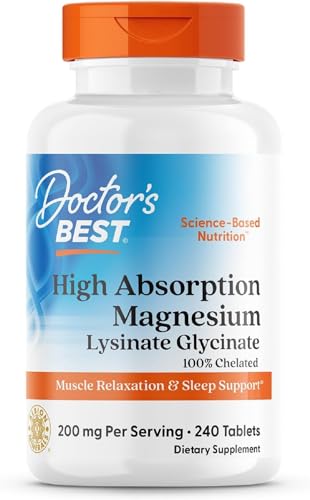
If there's one supplement that deserves a spot in nearly everyone's daily routine, it's magnesium. Known as the "relaxation mineral," magnesium is involved in over 300 enzymatic reactions throughout your body — from producing cellular energy to regulating your heartbeat, calming your nervous system, and building strong bones [1].
Here's the problem: despite magnesium's critical importance, an estimated 2.4 billion people worldwide — roughly 31% of the global population — have inadequate magnesium intake [4]. In the United States alone, 50–70% of adults fail to meet the Recommended Dietary Allowance (RDA) from food sources [2]. Modern farming depletes soil magnesium, food processing strips it away, and chronic stress burns through your reserves faster than you can replenish them.
What makes magnesium supplementation confusing is the sheer number of forms available. Magnesium glycinate, citrate, threonate, oxide, malate, taurate — each behaves differently in your body. Choosing the wrong form can mean poor absorption, unwanted digestive side effects, or simply missing the specific benefit you're after.
In this comprehensive guide, you'll learn exactly what magnesium does in your body, how to recognize deficiency, which forms work best for specific health goals (sleep, cognition, heart health, muscle recovery), evidence-based dosing protocols, and top food sources. Whether you're dealing with muscle cramps, poor sleep, anxiety, or simply want to optimize your health, this guide has you covered.
For related reading, explore our Sleep Optimization Guide for evidence-based rest strategies, our Mental Wellness Complete Guide for stress and mood support, and our Inflammation & Pain Relief Guide for managing chronic inflammation naturally.
What Is Magnesium and Why Is It Called the "Relaxation Mineral"?
Magnesium is the fourth most abundant mineral in the human body and the second most abundant intracellular cation (after potassium). It serves as an essential cofactor in more than 300 enzymatic reactions that govern energy production, protein synthesis, DNA repair, muscle contraction, nerve signaling, blood sugar regulation, and blood pressure control [1].
About 50–60% of your body's magnesium is stored in bones, 25% resides in muscles, and the remainder distributes throughout soft tissues and body fluids. Critically, magnesium is primarily an intracellular mineral — most of it works inside your cells, not in your bloodstream, which is why standard blood tests often miss deficiency [2].
Why Is Magnesium Called the "Relaxation Mineral"?
Magnesium earned this nickname because it directly counterbalances calcium in muscle and nerve tissue. While calcium triggers muscle contraction and nerve excitation, magnesium promotes relaxation and calm. When magnesium levels drop, muscles can't fully relax — leading to cramps, spasms, tension, and restlessness. In the nervous system, magnesium activates GABA receptors (your brain's primary calming neurotransmitter), regulates melatonin production, and reduces cortisol release [3].
Why Is Magnesium Deficiency So Common?
Several factors have created what researchers call a "silent epidemic" of magnesium inadequacy:
- Soil depletion: Modern intensive farming has reduced magnesium content in crops by 25–80% over the past 50 years
- Food processing: Refining grains removes 80–95% of magnesium (white flour and white rice are nearly devoid of it)
- Standard American Diet: Heavy reliance on processed foods with insufficient vegetables, nuts, seeds, and whole grains
- Stress: Chronic stress increases urinary magnesium excretion, creating a vicious cycle — low magnesium amplifies stress, and stress depletes magnesium further
- Medications: Proton pump inhibitors (PPIs), diuretics, certain antibiotics, and bisphosphonates all deplete magnesium [2]
- Aging: Absorption decreases and urinary losses increase with age

Recognizing Magnesium Deficiency
- Early signs include muscle cramps and spasms (especially legs and feet), eyelid twitching, fatigue, poor sleep quality, anxiety, irritability, headaches, constipation, and restless leg syndrome.
- Moderate deficiency can manifest as persistent muscle pain, numbness and tingling, heart palpitations, mood changes (depression, increased anxiety), difficulty concentrating, worsened PMS symptoms, and migraines.
- Severe deficiency (rare) may cause tetany, seizures, severe cardiac arrhythmias, hypocalcemia, and hypokalemia [17].
How Does Magnesium Work in Your Body?
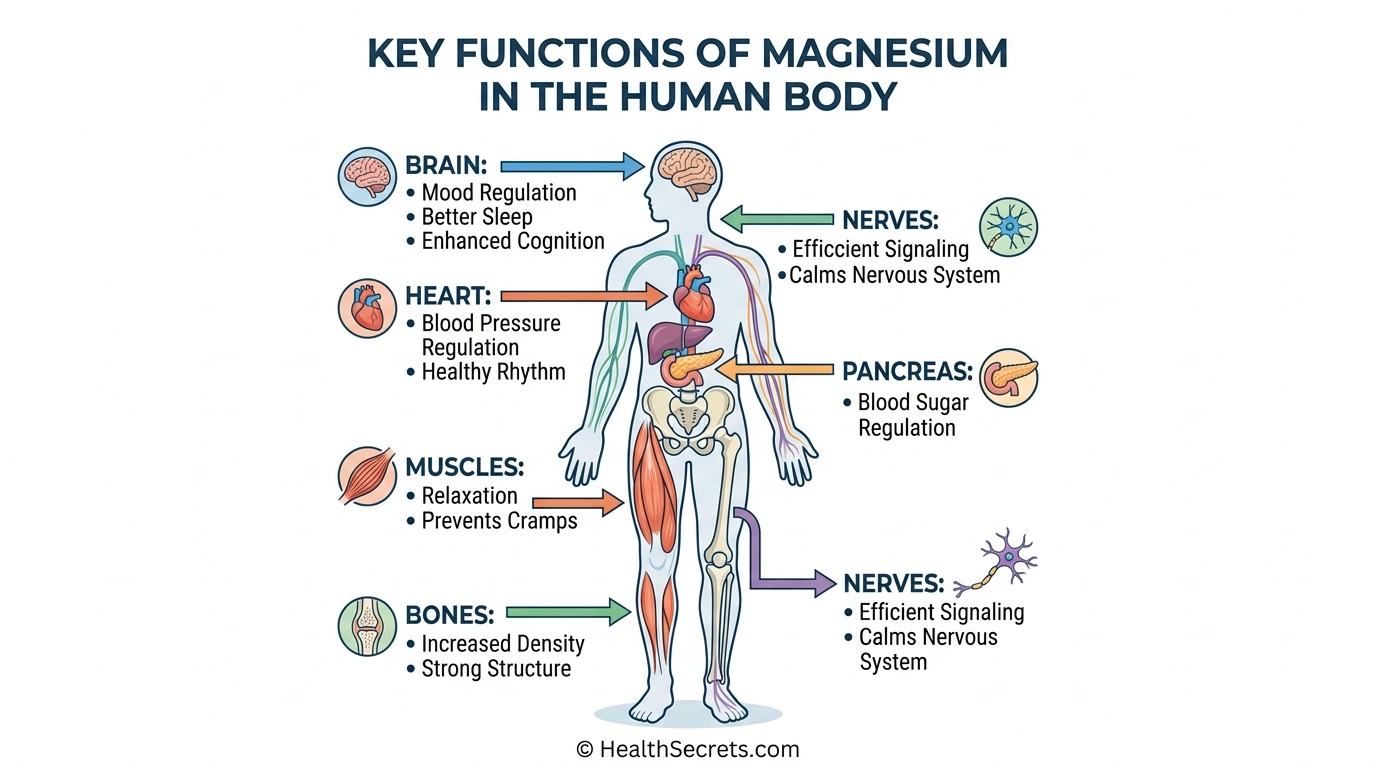
Magnesium's influence spans virtually every organ system. It functions through multiple interconnected mechanisms that affect energy, muscles, nerves, bones, heart, mood, and blood sugar. Here are the primary pathways.
How Does Magnesium Produce Cellular Energy?
Every molecule of ATP — your body's fundamental energy currency — must bind to a magnesium ion to become biologically active (Mg-ATP). Without magnesium, cells simply cannot produce or use energy. Magnesium is required for glycolysis (glucose breakdown), the citric acid cycle, and oxidative phosphorylation in mitochondria. This is why fatigue is one of the earliest and most common signs of magnesium insufficiency [1].
How Does Magnesium Support Sleep and Calm the Nervous System?
Magnesium promotes sleep and relaxation through multiple pathways: it activates GABA-A receptors (the same calming system targeted by sleep medications), helps regulate melatonin synthesis, reduces cortisol (the stress hormone), and relaxes muscles physically. A 2024 randomized, double-blind, placebo-controlled trial found that magnesium supplementation significantly improved sleep quality, mood, and daytime activity compared to placebo [5]. Research from the Mayo Clinic confirms magnesium's role in melatonin production and its potential to reduce sleep disruptions caused by leg cramps and restless legs syndrome [15].
How Does Magnesium Protect Your Heart and Blood Vessels?
Magnesium supports cardiovascular health by relaxing blood vessel walls (vasodilation), stabilizing cardiac electrical activity, reducing inflammation, and improving endothelial function. A landmark 2026 meta-analysis of 38 randomized controlled trials (2,709 participants) published in Hypertension found that magnesium supplementation significantly lowered blood pressure in hypertensive individuals, especially those with documented hypomagnesemia [6]. A separate study in the Journal of the American Heart Association found that long-term magnesium supplement use was associated with a lower risk of heart failure and major adverse cardiac events in patients with diabetes [7].
How Does Magnesium Affect Mood, Anxiety, and Depression?
Magnesium modulates the HPA axis (hypothalamic-pituitary-adrenal stress response), regulates neurotransmitters including serotonin and dopamine, and calms the nervous system via GABA activation. A 2024 comprehensive review confirmed that magnesium supplementation reduced depressive symptoms compared to control groups, with effects particularly strong in individuals with documented deficiency. Researchers have noted that the stress–magnesium depletion cycle can perpetuate both anxiety and depression — supplementing breaks this cycle [1].
Additional critical functions:
- Bone health: 50–60% of body magnesium resides in bones; it's required for vitamin D activation and calcium absorption. Higher magnesium intake is associated with higher bone mineral density [2]
- Blood sugar regulation: Improves insulin sensitivity; higher intake is associated with 15–30% lower type 2 diabetes risk [13]
- Migraine prevention: 400–600 mg daily reduces migraine frequency by 40–50%, particularly effective for menstrual migraines [12]
- DNA repair and antioxidant defense: Required for glutathione synthesis and protection against DNA damage [14]
Which Form of Magnesium Is Best Absorbed?
The form of magnesium you choose dramatically affects how much your body actually absorbs, how well you tolerate it, and which specific benefits you receive. Magnesium must be bound to another molecule (a "salt") for stability — and that carrier molecule makes all the difference.
- Magnesium Glycinate (Bisglycinate) — Magnesium bound to the amino acid glycine. Excellent absorption (chelated form, highly bioavailable), very gentle on the stomach (least likely to cause diarrhea), and glycine itself is a calming neurotransmitter.
- Best for: sleep, anxiety, stress, sensitive stomachs, general daily use.
- Dose: 200–400 mg elemental magnesium.
- Magnesium L-Threonate — Magnesium bound to threonic acid. Uniquely crosses the blood-brain barrier, making it the standout choice for cognitive support. The patented form (Magtein®) has clinical studies showing improved memory and learning.
- Best for: cognitive function, memory, neuroprotection, age-related cognitive decline.
- Dose: 1,500–2,000 mg magnesium threonate (yields ~144–192 mg elemental magnesium) [16].
- Magnesium Citrate — Magnesium bound to citric acid. Good absorption at an affordable price, but has a notable laxative effect.
- Best for: constipation relief, budget-friendly supplementation.
- Dose: 200–400 mg elemental magnesium (start low).
- Magnesium Malate — Magnesium bound to malic acid (involved in energy production). Good absorption, less laxative than citrate. Research suggests benefits for fibromyalgia-related pain and fatigue.
- Best for: energy support, chronic fatigue, fibromyalgia, daytime use.
- Dose: 300–600 mg elemental magnesium.
- Magnesium Taurate — Magnesium bound to taurine (amino acid with cardiovascular benefits). Calming, well-absorbed, and particularly supportive of heart health.
- Best for: cardiovascular support, high blood pressure, heart rhythm, athletes.
- Dose: 250–500 mg elemental magnesium.
- Magnesium Oxide — Magnesium bound to oxygen. Highest elemental magnesium per capsule (60% by weight) but poorest absorption — only 4–10% actually enters your bloodstream. Strong laxative.
- Best for: constipation relief only.
- NOT recommended for correcting deficiency or achieving therapeutic benefits [9].
- Topical Magnesium (Chloride) — Applied to skin as oil, lotion, or bath salts. Bypasses the digestive system entirely — no GI side effects. Helpful for localized muscle soreness.
- Best for: complementing oral supplementation, muscle recovery, relaxation baths.
Magnesium Forms Comparison
| Form | Absorption | Best For | GI Tolerance | Cost |
|---|---|---|---|---|
| Glycinate | Excellent | Sleep, anxiety, general use | Excellent | $$$ |
| Threonate | Excellent (brain) | Cognition, memory | Good | $$$$ |
| Citrate | Good | Constipation, budget | Moderate | $ |
| Malate | Good | Energy, fibromyalgia | Good | $$ |
| Taurate | Good | Heart health, BP | Good | $$$ |
| Oxide | Poor (4–10%) | Constipation only | Poor | $ |
How Much Magnesium Should You Take?
Optimal magnesium dosing depends on your health goals, current status, and the form you choose. Here's an evidence-based guide to getting it right.
RDA (Recommended Dietary Allowance)
- Men 19–30: 400 mg/day | Men 31+: 420 mg/day
- Women 19–30: 310 mg/day | Women 31+: 320 mg/day
- Pregnancy: 350–360 mg/day | Lactation: 310–320 mg/day
Dosing by Health Goal
| Health Goal | Best Form | Daily Dose | Timing | Duration |
|---|---|---|---|---|
| General health | Glycinate or Citrate | 300–400 mg | Anytime | Ongoing |
| Sleep support | Glycinate | 300–500 mg | 30–60 min before bed | Ongoing |
| Anxiety / stress | Glycinate | 300–500 mg | Evening or split doses | 4–8 weeks+ |
| Cognitive support | Threonate | 1,500–2,000 mg* | Morning or split | 8–12 weeks+ |
| Deficiency correction | Glycinate | 400–600 mg | Split doses | 3–6 months |
| *1,500–2,000 mg magnesium threonate = approximately 144–192 mg elemental magnesium |

Key Dosing Tips
- Split doses: If taking more than 400 mg, divide into 2 doses for better absorption and tolerance
- With or without food: Chelated forms (glycinate, malate, taurate) absorb well either way; citrate and oxide are better tolerated with food
- Start low: Begin with 200 mg and increase over 1–2 weeks to assess tolerance
- The diarrhea threshold: If stools become loose, reduce dose or switch to a gentler form (glycinate is best tolerated)
- Upper limit: The FDA sets the supplemental upper limit at 350 mg/day, but most healthy adults tolerate 400–600 mg without issues. Excess is excreted through the kidneys
Can You Get Enough Magnesium from Food Alone?
While food should always be your foundation — and a healthy gut is essential for proper nutrient absorption — most people struggle to consistently reach optimal magnesium levels through diet alone — especially given soil depletion, food processing, and modern eating patterns. That said, prioritizing magnesium-rich foods alongside supplementation is the ideal approach.
Top Magnesium-Rich Foods
| Food | Serving | Magnesium (mg) | % RDA |
|---|---|---|---|
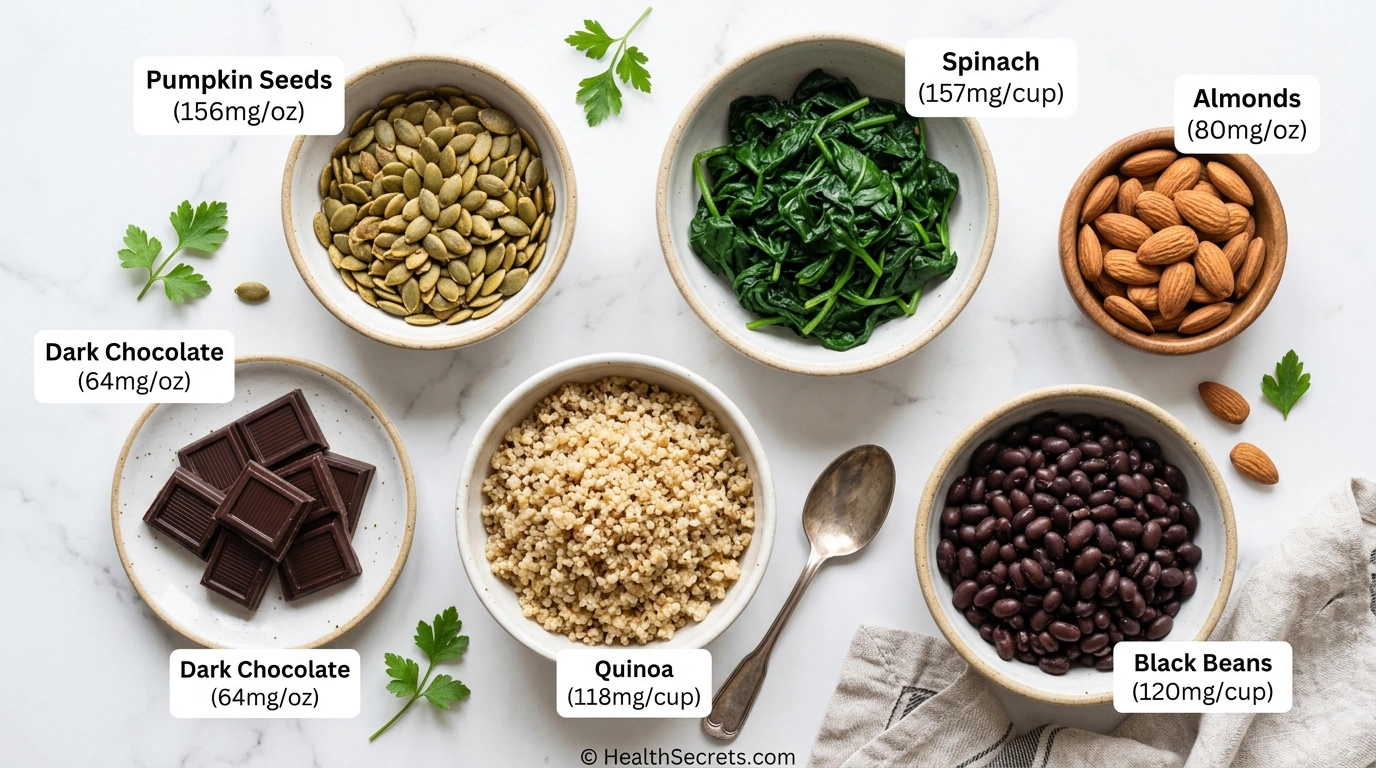
| Pumpkin seeds | 1 oz (28 g) | 156 mg | 39% |
| Spinach (cooked) | 1 cup | 157 mg | 39% |
| Swiss chard (cooked) | 1 cup | 150 mg | 38% |
| Black beans (cooked) | 1 cup | 120 mg | 30% |
| Quinoa (cooked) | 1 cup | 118 mg | 30% |
| Other good sources: almonds (80 mg/oz), cashews (74 mg/oz), dark chocolate 70%+ (64 mg/oz), avocado (58 mg), brown rice (86 mg/cup), halibut (91 mg/3 oz), banana (32 mg). |

The Balanced Approach
- Eat magnesium-rich foods daily — leafy greens, nuts, seeds, legumes, whole grains
- Supplement to fill the gap — 200–400 mg elemental magnesium in the form best matched to your goals
- Reduce magnesium-depleting habits — excess alcohol, high sugar intake, chronic stress all accelerate magnesium loss
Is Magnesium Safe? Side Effects and Interactions to Know
Magnesium is one of the safest supplements available, with a remarkably wide therapeutic window. That said, certain interactions and precautions are worth knowing.

Common Side Effects
The most common side effect is loose stools or diarrhea, especially with citrate and oxide forms or high doses (>400 mg at once). This is actually the body's natural safety mechanism — excess unabsorbed magnesium draws water into the intestines.
Solution: reduce dose, split doses, or switch to glycinate (best GI tolerance). Mild nausea or abdominal cramping may occur initially but typically resolves.
Drug Interactions
| Medication | Interaction | What to Do |
|---|---|---|
| Antibiotics (tetracyclines, fluoroquinolones) | Magnesium binds and reduces absorption | Separate by 2–3 hours |
| Bisphosphonates (alendronate) | Magnesium reduces drug absorption | Separate by 2 hours |
| Diuretics (loop, thiazide) | Increase magnesium loss | May need higher Mg dose |
| PPIs (omeprazole, etc.) | Reduce long-term Mg absorption | Monitor; supplement |
| Blood pressure meds | Mg may enhance BP lowering | Monitor BP |
Nutrient Synergies and Conflicts
- Take together: Vitamin D (magnesium is required for its activation — see our Immune System Guide for more on vitamin D), vitamin B6 (enhances Mg absorption), potassium (Mg helps maintain K levels)
- Separate timing: High-dose calcium (may compete for absorption — take 2 hours apart), high-dose iron or zinc (potential competition)
Who Should Use Caution
- Kidney disease: Reduced magnesium excretion creates risk of accumulation — consult physician and monitor levels
- Heart block: Certain cardiac conduction disorders may worsen
- Myasthenia gravis: Magnesium may worsen muscle weakness
- Pregnancy/breastfeeding: Safe up to 350 mg supplemental; magnesium sulfate is used medically for preeclampsia (IV, supervised)
What Can Magnesium Actually Do for You?
Magnesium is genuinely one of the most impactful supplements for overall health — but setting realistic expectations helps you get the most from it.
What magnesium CAN do:
- Improve sleep quality within 1–2 weeks (especially glycinate before bed)
- Reduce muscle cramps, spasms, and tension within days to weeks
- Lower anxiety and improve stress resilience over 4–8 weeks
- Modestly reduce blood pressure (3–6 mmHg) over several weeks
- Improve migraine frequency by 40–50% over 2–3 months at 400–600 mg/day
- Support bone density and cardiovascular health long-term
- Improve insulin sensitivity and blood sugar regulation
What magnesium WON'T do:
- Replace prescription medications for serious conditions
- Produce dramatic overnight results (most benefits build over weeks)
- Cure insomnia, depression, or chronic pain on its own
- Work well in oxide form for anything except constipation
Realistic timeline:
- Days 1–7: Possible improvement in muscle cramps, mild relaxation effects
- Weeks 2–4: Noticeable sleep improvement, reduced anxiety, fewer cramps
- Weeks 4–8: Full mood and stress benefits, blood pressure improvements
- Months 2–6: Deficiency correction, bone and cardiovascular benefits accumulating
Testing: If you want to check your status, request an
RBC (red blood cell) magnesium test — not standard serum magnesium. Serum only reflects 1% of total body magnesium and can appear normal even with significant intracellular deficiency. Optimal RBC magnesium: 5.0–6.5 mg/dL.

Action Plan
What Should You Do First to Optimize Your Magnesium?
Follow the sequence below, work through each phase in order, and use the checklist as your practical implementation guide.
Start by choosing the right form for your primary health goal, begin with a moderate dose, and build consistency over 4–8 weeks. Most people notice meaningful improvements in sleep, muscle tension, and stress within the first 2–4 weeks.
Phase 1 — Assess and Choose (Week 1)
- Evaluate your risk factors: poor diet, high stress, medications (PPIs, diuretics), symptoms (cramps, poor sleep, anxiety)
- Choose your form: glycinate (sleep/anxiety), threonate (cognition), malate (energy), taurate (heart), citrate (budget/constipation)
- Start at 200 mg elemental magnesium daily
Phase 2 — Build Up (Weeks 2–4)
- Increase to 300–400 mg daily (split doses if >400 mg)
- Time it right: glycinate 30–60 min before bed for sleep; malate in the morning for energy
- Add magnesium-rich foods daily: pumpkin seeds, spinach, almonds, dark chocolate
Phase 3 — Optimize (Months 2–3)
- Assess improvement: better sleep? fewer cramps? less anxiety?
- Adjust dose if needed (up to 600 mg for deficiency correction)
- Consider adding a second form for additional goals (e.g., glycinate at night + threonate in the morning)
- Optional: test RBC magnesium (target 5.0–6.5 mg/dL)
Phase 4 — Maintain (Ongoing)
- Continue 300–400 mg daily for long-term maintenance
- Keep eating magnesium-rich foods
- Manage stress (reduces magnesium depletion)
- Recheck if symptoms return or medications change