Choosing the best probiotics for gut health can feel overwhelming — with thousands of products on the market, each claiming to transform your digestion, it's hard to know which ones actually deliver. The truth is, not all probiotics are created equal. Strain specificity, CFU count, delivery technology, and clinical evidence all matter when selecting a supplement that will genuinely support your microbiome.
We spent over 200 hours researching clinical studies, analyzing third-party lab results, and consulting microbiome experts to identify the 12 best probiotics for gut health in 2026. Whether you're managing IBS, recovering from antibiotics, or simply optimizing your digestive wellness, this guide will help you find the right probiotic for your specific needs.
What Should You Look for When Choosing the Best Probiotics for Gut Health?
The best probiotics for gut health contain clinically studied strains at effective doses, use delivery technology that protects bacteria from stomach acid, and are verified by third-party testing. Focus on strain specificity, CFU count, storage requirements, and the manufacturer's transparency about clinical evidence.
How Important Are Specific Probiotic Strains?
Strain specificity is the single most important factor when choosing a probiotic. Benefits are strain-specific, not species-wide — Lactobacillus rhamnosus GG has over 300 clinical trials supporting digestive health, while other L. rhamnosus strains may have minimal evidence [1]. Look for products that list strains by their full designation (genus, species, and strain identifier).
Key clinically validated strains include:
- Lactobacillus rhamnosus GG — diarrhea prevention, immune support, general gut health [1]
- Bifidobacterium longum BB536 — IBS symptom relief, immune modulation [2]
- Saccharomyces boulardii CNCM I-745 — antibiotic-associated diarrhea, C. difficile prevention [3]
- Lactobacillus plantarum 299v — IBS bloating and abdominal pain relief [4]
- Bifidobacterium lactis HN019 — improved gut transit time, reduced bloating [5]

What CFU Count Do You Actually Need?
For most adults, 10–50 billion CFUs per day provides optimal therapeutic benefit. A 2023 meta-analysis in Nutrients found that doses above 50 billion CFUs did not significantly improve outcomes compared to moderate doses, but did increase the likelihood of initial GI discomfort [6]. More important than raw CFU count is the number of viable organisms that survive transit to the intestines — this is where delivery technology matters.
Why Does Delivery Technology Matter for Probiotics?
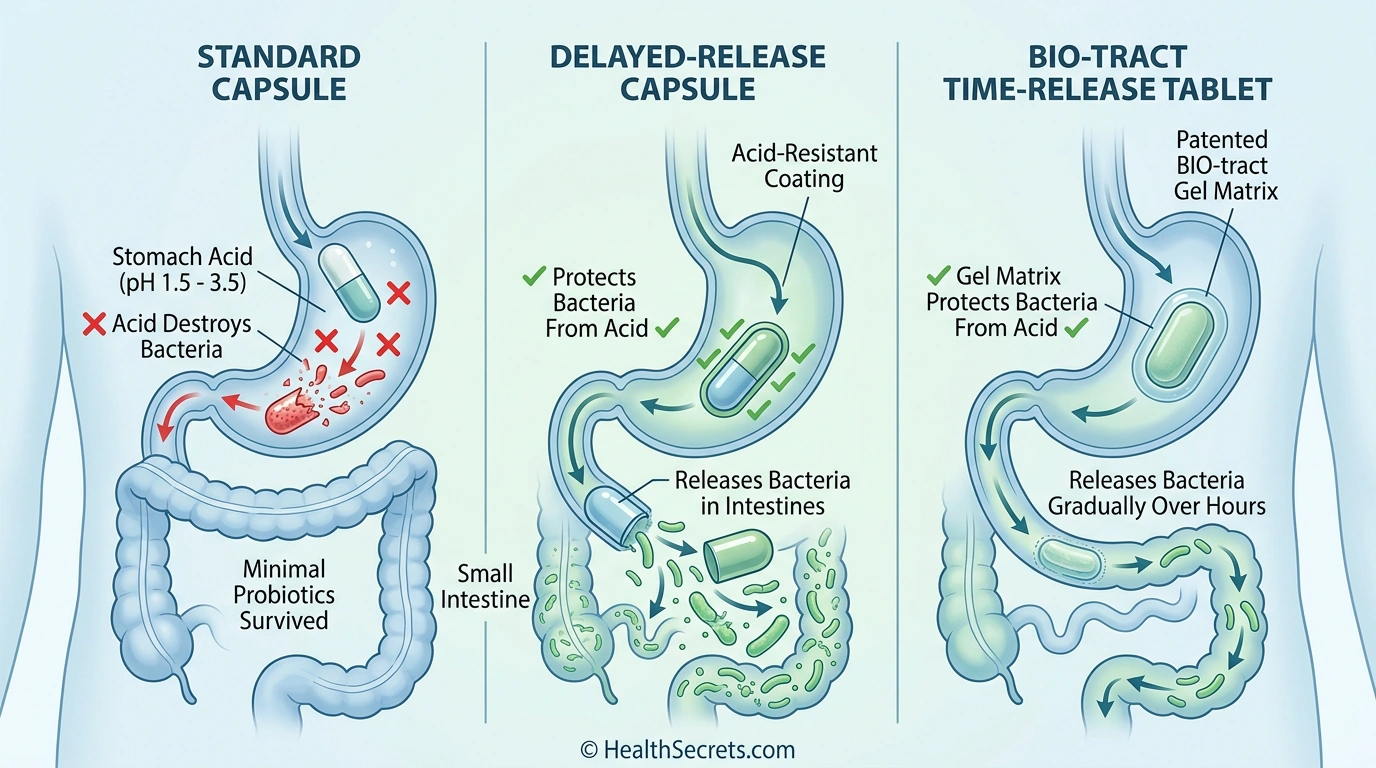
Stomach acid destroys up to 99% of unprotected probiotic bacteria before they reach the intestines [7]. Delayed-release capsules, enteric coating, and microencapsulation technologies dramatically improve survival rates. BIO-tract, DRcaps, and acid-resistant vegetable capsules are among the most effective delivery systems available in consumer probiotics.
Should You Choose Shelf-Stable or Refrigerated Probiotics?
Both can be effective when properly manufactured. Shelf-stable probiotics use freeze-drying and moisture-protective packaging to maintain viability at room temperature. Refrigerated probiotics may contain more fragile strains but can lose potency during shipping. The key is to check for "guaranteed potency through expiration date" on the label — not just "at time of manufacture" [8].
How Did We Evaluate and Rank These Probiotics for Gut Health?
We evaluated over 60 probiotic supplements across eight criteria: clinical evidence for strains, CFU count accuracy, delivery technology, third-party testing, ingredient transparency, value per serving, user reviews, and brand reputation. Products were scored on a 100-point scale with clinical evidence weighted most heavily.
| Criteria | Weight | What We Assessed |
|---|---|---|
| Clinical evidence | 30% | Published studies on specific strains used |
| Strain transparency | 20% | Full strain designations listed on label |
| Delivery technology | 15% | Acid-resistant capsules, enteric coating |
| Third-party testing | 15% | USP, NSF, ConsumerLab verification |
| Value per serving | 10% | Cost per billion CFUs |
| User experience | 10% | Verified reviews, tolerability reports |

How Do You Use Probiotics Effectively for Maximum Gut Health Benefits?
For best results, take your probiotic consistently at the same time each day, ideally 20–30 minutes before a meal or with food containing some fat. Most people experience initial improvements within 2–4 weeks, with full microbiome benefits developing over 8–12 weeks of continuous use [9].

When Is the Best Time to Take Probiotics?
Research published in Beneficial Microbes found that probiotic survival rates were highest when taken 30 minutes before a meal or with food, compared to 30 minutes after eating [10]. The slight increase in stomach pH during a meal creates a more favorable environment for bacterial survival. Consistency matters more than exact timing — choose a time you'll remember daily.
Can You Take Probiotics with Other Supplements?
Yes, probiotics are generally safe to combine with most supplements. Taking them alongside prebiotic fiber (inulin, FOS, or GOS) significantly improves colonization — a 2022 study in Gut Microbes showed a 37% increase in beneficial Bifidobacterium populations when probiotics were paired with prebiotics [11]. However, space probiotics at least 2 hours apart from antibiotics to prevent the antibiotics from killing the probiotic organisms.

How Long Should You Take Probiotics?
Most clinical trials showing significant benefits use 8–12 week protocols. For chronic conditions like IBS, ongoing daily supplementation may be beneficial. For general wellness, some experts recommend cycling between different multi-strain formulas every 3–6 months to expose your gut to diverse bacterial strains and prevent microbiome stagnation [12].
Are There Any Safety Concerns with Probiotic Supplements?
Probiotics are generally recognized as safe (GRAS) for most healthy adults. The most common side effects are temporary gas, bloating, and changes in bowel patterns during the first 1–2 weeks as your microbiome adjusts. However, certain populations should exercise caution or avoid probiotics entirely [13].
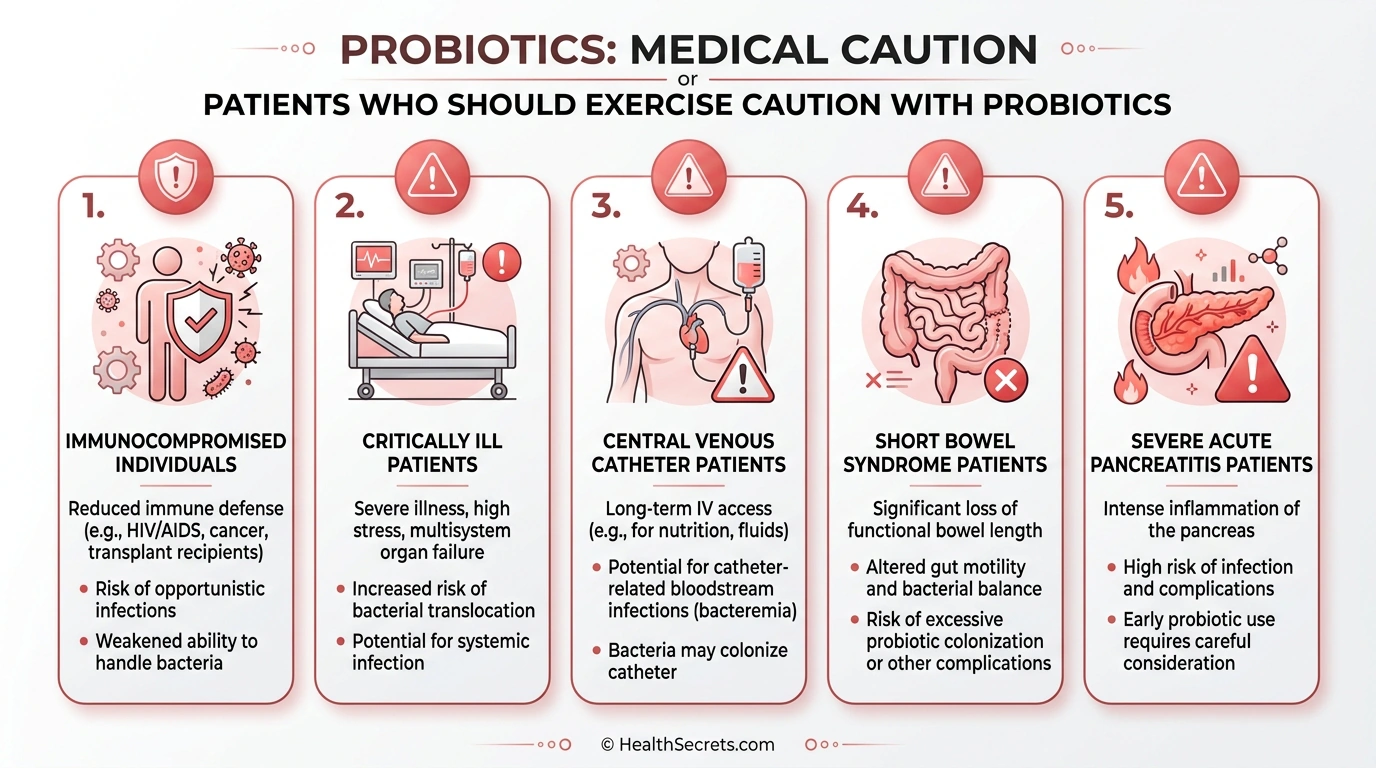
Who Should Avoid or Be Cautious with Probiotics?
- Immunocompromised individuals — risk of bacteremia or fungemia with Saccharomyces species [13]
- Critically ill patients — case reports of probiotic-associated infections in ICU settings
- People with central venous catheters — increased infection risk
- Short bowel syndrome patients — risk of D-lactic acidosis with Lactobacillus species [14]
- Those with severe acute pancreatitis — the PROPATRIA trial showed increased mortality with probiotics [15]
Can Probiotics Cause SIBO or Make It Worse?
This is debated in the literature. A 2018 study in Clinical and Translational Gastroenterology suggested that probiotic use might contribute to D-lactic acidosis and brain fogginess in some patients with SIBO [16]. However, a 2024 systematic review found that specific strains (L. rhamnosus GG, S. boulardii) may actually help manage SIBO when used as adjunct therapy with antibiotics. If you suspect SIBO, work with a gastroenterologist before starting probiotics.
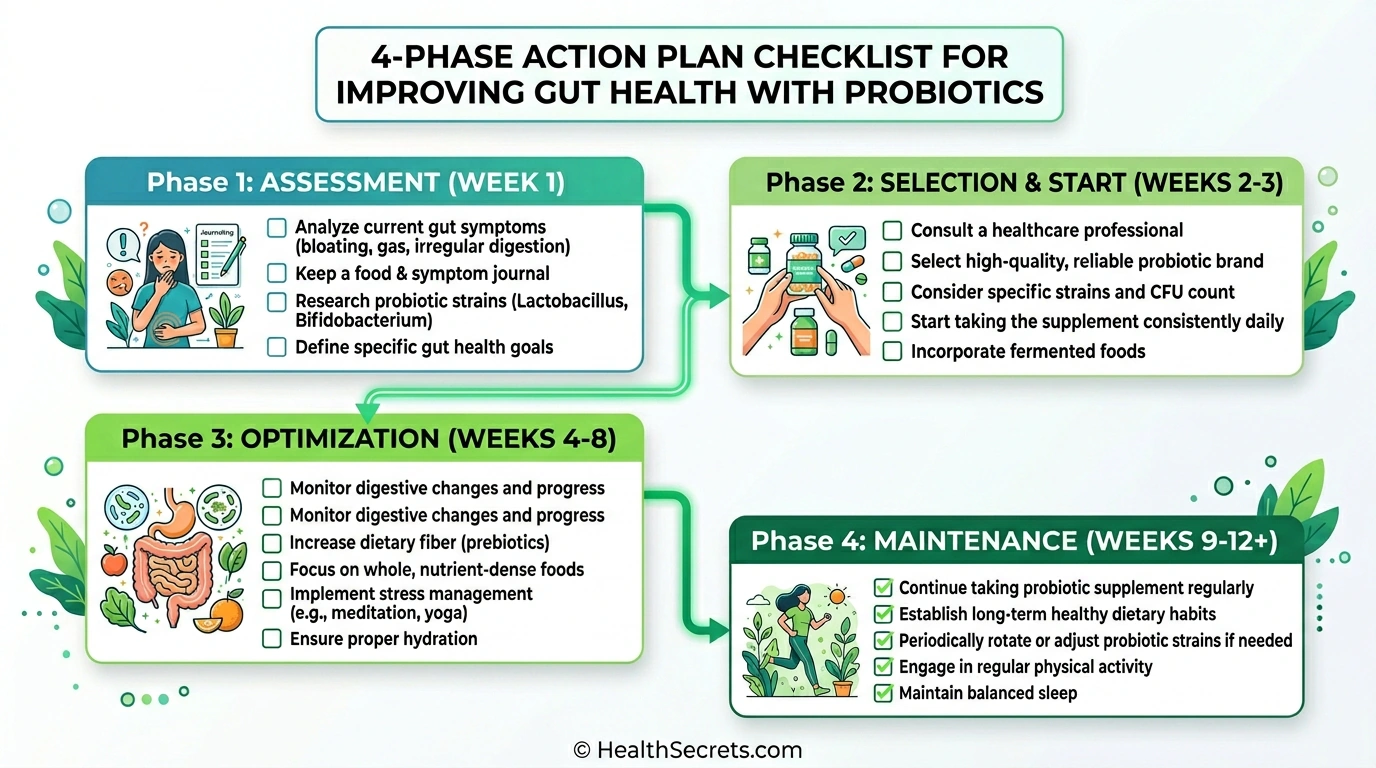
Action Plan
What Steps Should You Take First to Improve Your Gut Health with Probiotics?
Follow the sequence below, work through each phase in order, and use the checklist as your practical implementation guide.
Start by identifying your primary gut health goal (general wellness, IBS relief, post-antibiotic recovery, or immune support), choose a clinically validated probiotic matched to that goal, and commit to a consistent 8–12 week protocol while supporting colonization with prebiotic-rich foods.
Phase 1: Assessment (Week 1)
- Track current digestive symptoms for 7 days (bloating, gas, bowel regularity, energy)
- Identify your primary goal: general wellness, IBS relief, antibiotic recovery, or immune support
- Consult your healthcare provider, especially if you have underlying conditions
- Review our complete guide to gut health for foundational knowledge
Phase 2: Selection & Start (Weeks 2–3)
- Choose a probiotic from our recommendations matched to your goal
- Start at half the recommended dose for 3–5 days to minimize initial GI adjustment
- Take consistently 20–30 minutes before breakfast or with your first meal
- Add 1–2 servings of prebiotic foods daily (garlic, onions, bananas, oats)
Phase 3: Optimization (Weeks 4–8)
- Increase to full recommended dose after initial adjustment period
- Track symptom improvements weekly in a journal or app
- Incorporate fermented foods 3–4 times per week for additional strain diversity
- Maintain adequate hydration (8+ glasses of water daily)
Phase 4: Maintenance (Weeks 9–12+)
- Evaluate progress against your initial symptom baseline
- Consider consulting a gut health specialist if symptoms haven't improved
- Plan strain rotation every 3–6 months for microbiome diversity
- Continue prebiotic and fermented food intake as ongoing support