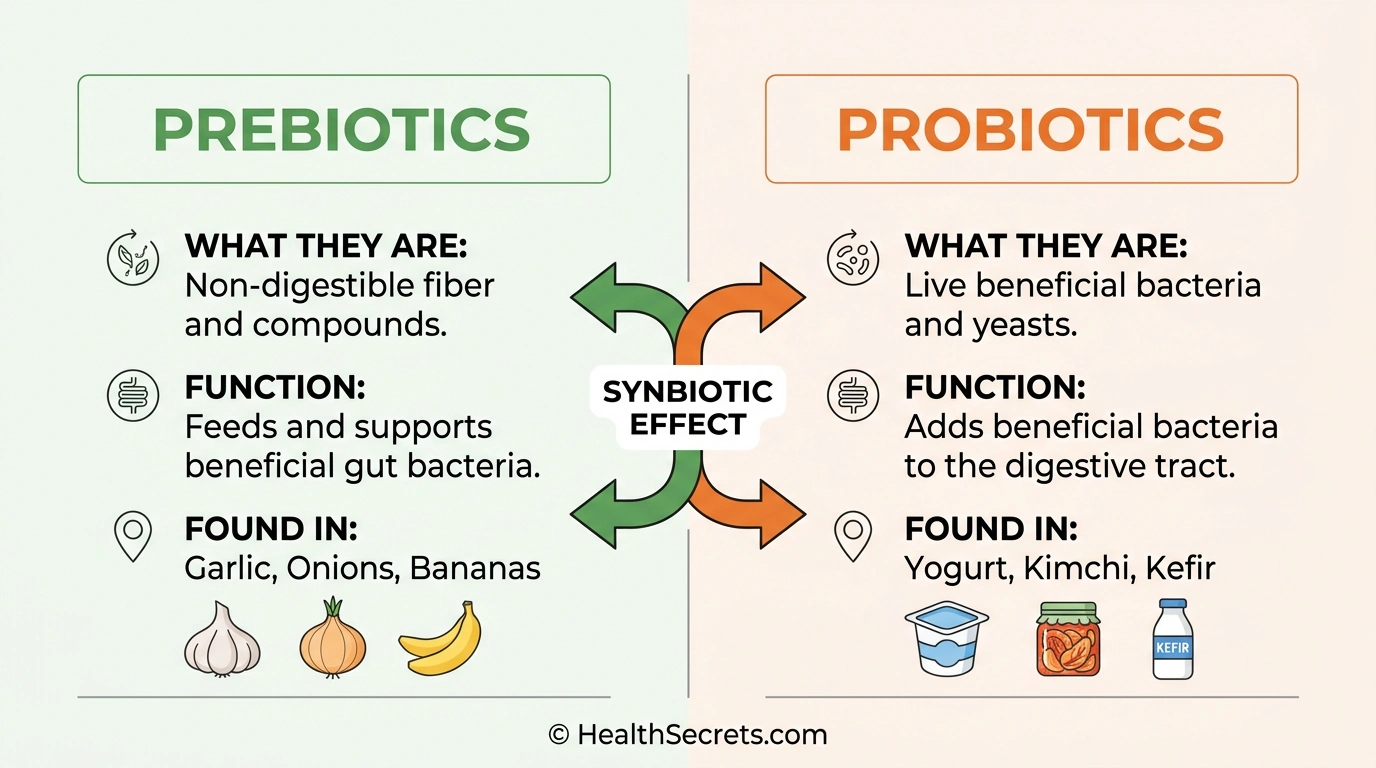
Your gut bacteria are only as healthy as the food you feed them. While probiotics deliver live beneficial bacteria to your digestive tract, prebiotics are the specialized fibers that keep those bacteria thriving. Without adequate prebiotic intake, even the best probiotic supplement cannot sustain a healthy microbiome.
Research from the American Society for Nutrition identified dandelion greens, Jerusalem artichokes, garlic, leeks, and onions as the most prebiotic-dense foods available — yet most Americans consume only 1–4 grams of prebiotic fiber daily, far below the recommended 5–20 grams [1].
In this guide, you will discover the top prebiotic foods ranked by fiber content, the six major types of prebiotic fiber, how to increase your intake without digestive upset, and which prebiotic foods work best for specific health goals. Whether you are building a complete gut health protocol or simply looking to diversify your diet, these foods are the foundation of a thriving microbiome.
How Did We Choose the Best Prebiotic Foods?
We selected these prebiotic foods based on their verified prebiotic fiber content per serving, diversity of fiber types, scientific evidence supporting their gut health benefits, accessibility in grocery stores, and versatility in everyday cooking. Each food contains meaningful amounts of at least one recognized prebiotic fiber — inulin, FOS, GOS, resistant starch, pectin, or beta-glucans — as confirmed by peer-reviewed research.
We prioritized foods with the highest prebiotic density (grams of prebiotic fiber per 100g), cross-referenced against data from the USDA FoodData Central database and published studies in the Journal of Agricultural and Food Chemistry and Nutrients. Foods were also evaluated for additional nutritional benefits beyond prebiotic content, including vitamins, minerals, and polyphenols that support overall gut health.
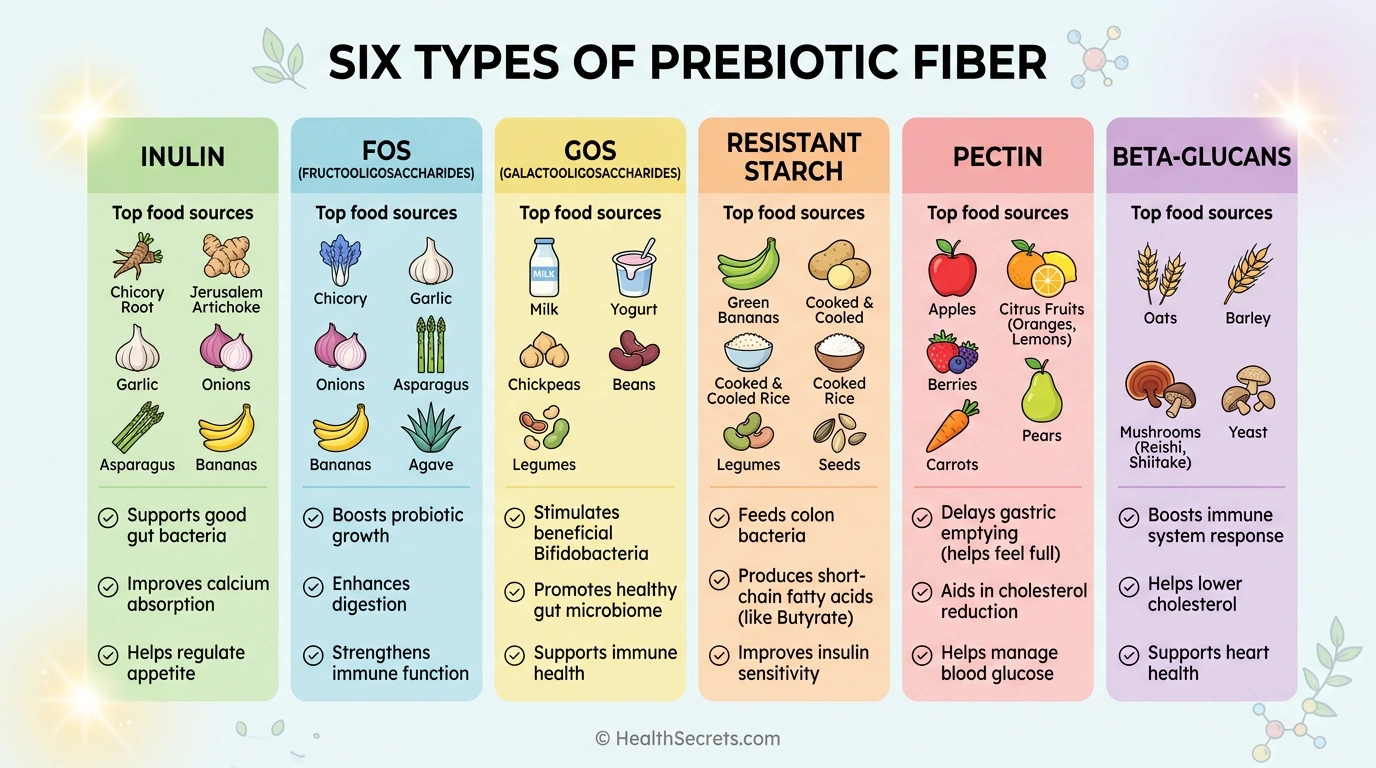
| Fiber Type | Top Food Sources | Key Benefits | Best For |
|---|---|---|---|
| Inulin | Chicory root, Jerusalem artichoke, garlic, onions | Boosts Bifidobacteria, enhances calcium absorption | Overall gut health |
| FOS | Garlic, onions, leeks, asparagus, bananas | Increases SCFA production, supports immunity | Immune support |
| GOS | Legumes, beans, lentils | Promotes Bifidobacteria and Lactobacilli | Digestive regularity |
| Resistant starch | Green bananas, cooked/cooled potatoes, oats | Produces butyrate, improves insulin sensitivity | Blood sugar control |
| Pectin | Apples, citrus fruits, berries | Supports gut barrier, lowers cholesterol | Heart and gut health |
| Beta-glucans | Oats, barley, mushrooms | Modulates immune function, lowers cholesterol | Immune and heart health |
1. Chicory Root: Why Is It the Richest Source of Prebiotic Fiber?
Chicory root contains approximately 64.6% inulin by dry weight, making it the single most concentrated prebiotic food available. Just 1 tablespoon of chicory root powder provides about 9 grams of inulin, which selectively stimulates Bifidobacterium growth and enhances mineral absorption in the colon [5].
Chicory root is most commonly consumed as chicory root coffee — a caffeine-free beverage popular in New Orleans — or as powdered inulin extract added to smoothies and baked goods. It has a mildly sweet, earthy flavor that blends well with coffee. Start with ½ tablespoon daily to assess tolerance, as the high inulin content can cause gas in sensitive individuals.
2. Jerusalem Artichokes: How Do Sunchokes Support Your Microbiome?
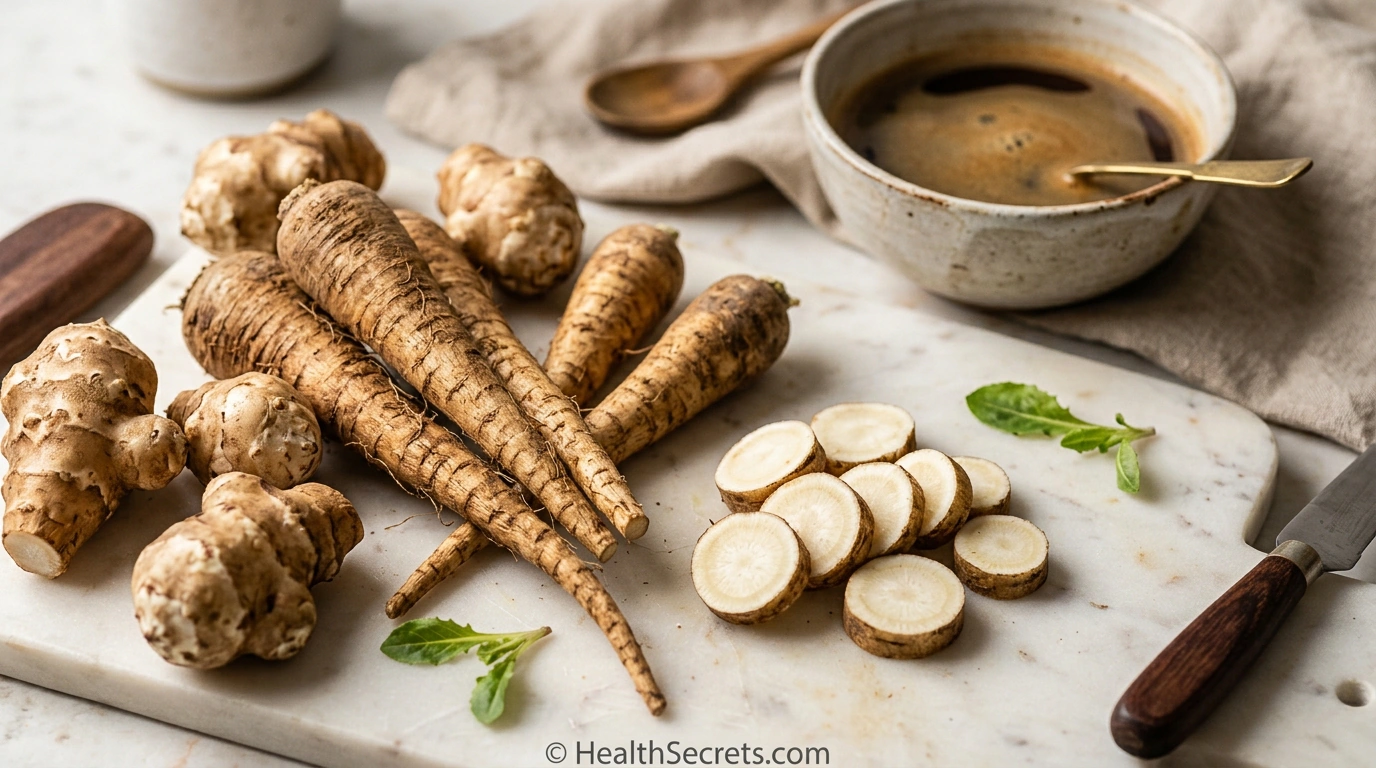
Jerusalem artichokes (sunchokes) contain 31.5% inulin by dry weight and provide 2–3 grams of prebiotic fiber per 100g serving. These tubers are among the top five most prebiotic-dense foods identified by researchers, significantly boosting Bifidobacterium populations in the colon [6].
Roast sunchokes at 400°F for 25–30 minutes for a nutty, slightly sweet side dish, or slice them raw into salads. They are excellent in soups and gratins. Their high inulin content means starting with small portions (½ cup) is advisable.
3. Dandelion Greens: What Makes Them a Prebiotic Powerhouse?
Dandelion greens contain approximately 24.3% inulin by dry weight and are rich in vitamins A, C, and K. A 2023 study ranked dandelion greens as the most prebiotic-dense leafy green available, with significant capacity to promote beneficial gut bacteria growth [1].
Add raw dandelion greens to salads, blend into smoothies, or lightly sauté with garlic and olive oil. Their slightly bitter flavor pairs well with lemon juice and honey. Available at most farmers' markets and many grocery stores.
4. Garlic: How Does Raw Garlic Feed Your Gut Bacteria?
Garlic contains 17.5% FOS and inulin by dry weight — about 2 grams of prebiotic fiber per 3 cloves. Beyond its prebiotic content, garlic's allicin compound provides antimicrobial properties that selectively target harmful bacteria while promoting beneficial Bifidobacteria and Lactobacilli [7].
Raw garlic delivers the most prebiotic benefit — crush and let sit for 10 minutes before consuming to activate allicin. Add to dressings, dips, and salsas. Cooked garlic retains some prebiotic fiber but loses antimicrobial potency. Aim for 2–3 cloves daily.
5. Onions: Why Should You Eat Onions Daily for Gut Health?
Onions provide 8.6% FOS and inulin by weight, delivering approximately 1.7 grams of prebiotic fiber per medium onion. Both raw and cooked onions stimulate Bifidobacterium growth and increase SCFA production, with raw onions providing slightly more prebiotic benefit [4].
Onions are among the most versatile prebiotic foods — use raw in salads, caramelize for soups, or roast as side dishes. All varieties (yellow, red, white, shallots) contain meaningful prebiotic fiber. Pair onions with garlic and leeks for maximum prebiotic diversity.
6. Leeks and Asparagus: How Do These Allium Vegetables Boost Prebiotics?
Leeks contain approximately 11.7% inulin by dry weight and provide 1.6 grams of prebiotic fiber per 100g serving. Asparagus contains 2–3% inulin and FOS by weight, contributing about 1.5 grams of prebiotic fiber per cup. Both vegetables also supply sulfur compounds with anticancer and antimicrobial properties [3].
Use leeks in soups, stews, and quiches — the white and light green portions contain the highest prebiotic content. Steam or roast asparagus lightly to preserve fiber content. Both vegetables pair beautifully with garlic for a triple-prebiotic meal.
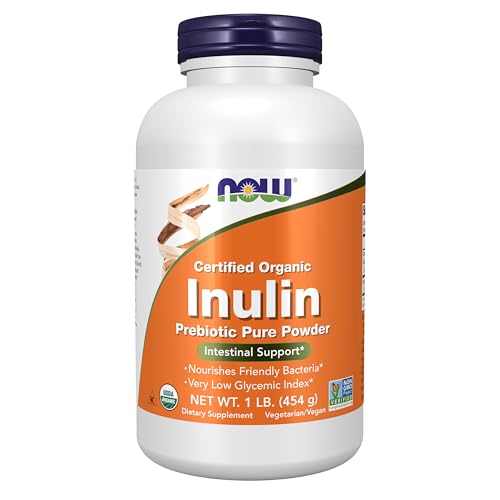
NOW Foods Organic Inulin Prebiotic Powder
Editor's ChoiceNOW Foods · Daily prebiotic fiber supplementation

Vital Proteins Collagen Peptides
Best for Gut LiningVital Proteins · Combining gut barrier repair with prebiotic nutrition

Renew Life Ultimate Flora Extra Care 50 Billion
Best Synbiotic PairingRenew Life · Combining with prebiotic foods for synbiotic gut support
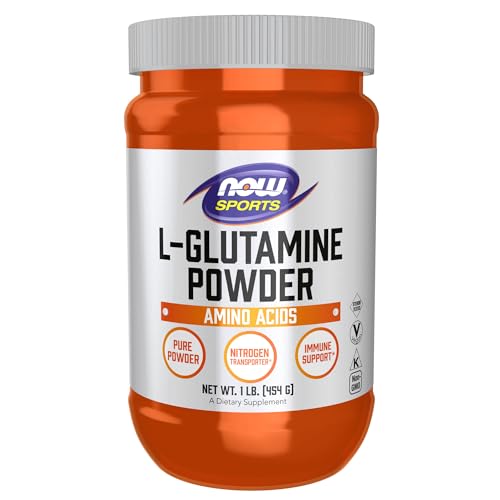
NOW Foods L-Glutamine Powder
Best for Gut RepairNOW Foods · Supporting gut barrier function alongside prebiotic foods
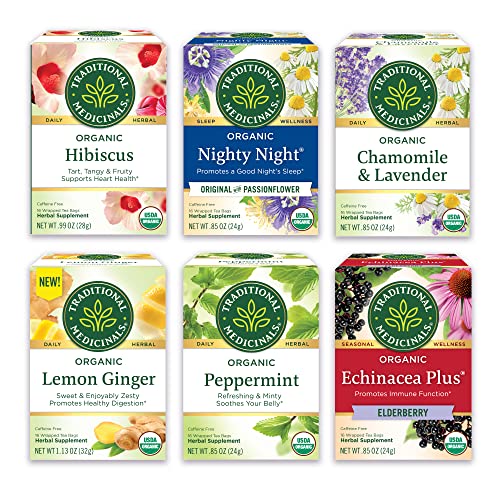
Traditional Medicinals Herbal Tea Variety Pack
Best Digestive SupportTraditional Medicinals · Gentle digestive support alongside prebiotic foods
Read the detailed review cards below before opening any retailer link
Top Recommended Products
NOW Foods
NOW Foods Organic Inulin Prebiotic Powder
NOW's organic inulin powder provides a clinically relevant dose of prebiotic FOS per serving, is USDA Organic certified, and mixes seamlessly into smoothies, coffee, or water — making it the most convenient way to boost daily prebiotic intake.
Pros
- + Certified organic from blue agave
- + dissolves easily in liquids
- + mild sweet taste
- + affordable per serving
Cons
- - May cause gas at higher doses
- - limited to inulin-type fiber only
Why we included it: NOW's organic inulin powder provides a clinically relevant dose of prebiotic FOS per serving, is USDA Organic certified, and mixes seamlessly into smoothies, coffee, or water — making it the most convenient way to boost daily prebiotic intake.
Retailer link opens on Amazon after the review details above
Vital Proteins
Vital Proteins Collagen Peptides
Collagen peptides support the gut lining that prebiotic fibers help maintain — combining Vital Proteins with prebiotic-rich foods creates a comprehensive gut support strategy.
Pros
- + Supports gut lining integrity
- + dissolves in hot or cold liquids
- + flavorless
- + pairs well with prebiotic smoothies
Cons
- - Not a direct prebiotic supplement
- - higher price point
Why we included it: Collagen peptides support the gut lining that prebiotic fibers help maintain — combining Vital Proteins with prebiotic-rich foods creates a comprehensive gut support strategy.
Retailer link opens on Amazon after the review details above
Renew Life
Renew Life Ultimate Flora Extra Care 50 Billion
Prebiotics feed probiotics — pairing Renew Life's diverse 12-strain probiotic with daily prebiotic foods creates the synbiotic combination that research shows maximizes gut health benefits.
Pros
- + 12 probiotic strains
- + delayed-release for survival through stomach acid
- + pairs perfectly with prebiotic foods
Cons
- - Requires refrigeration
- - one strain profile may not suit everyone
Why we included it: Prebiotics feed probiotics — pairing Renew Life's diverse 12-strain probiotic with daily prebiotic foods creates the synbiotic combination that research shows maximizes gut health benefits.
Retailer link opens on Amazon after the review details above
NOW Foods
NOW Foods L-Glutamine Powder
L-Glutamine is the primary fuel source for intestinal cells, supporting the gut barrier that prebiotic-produced SCFAs help maintain — making it an excellent complement to a prebiotic-rich diet.
Pros
- + Supports intestinal lining repair
- + flavorless
- + mixes easily
- + affordable
Cons
- - Not a prebiotic itself
- - benefits are complementary rather than direct
Why we included it: L-Glutamine is the primary fuel source for intestinal cells, supporting the gut barrier that prebiotic-produced SCFAs help maintain — making it an excellent complement to a prebiotic-rich diet.
Retailer link opens on Amazon after the review details above
Traditional Medicinals
Traditional Medicinals Herbal Tea Variety Pack
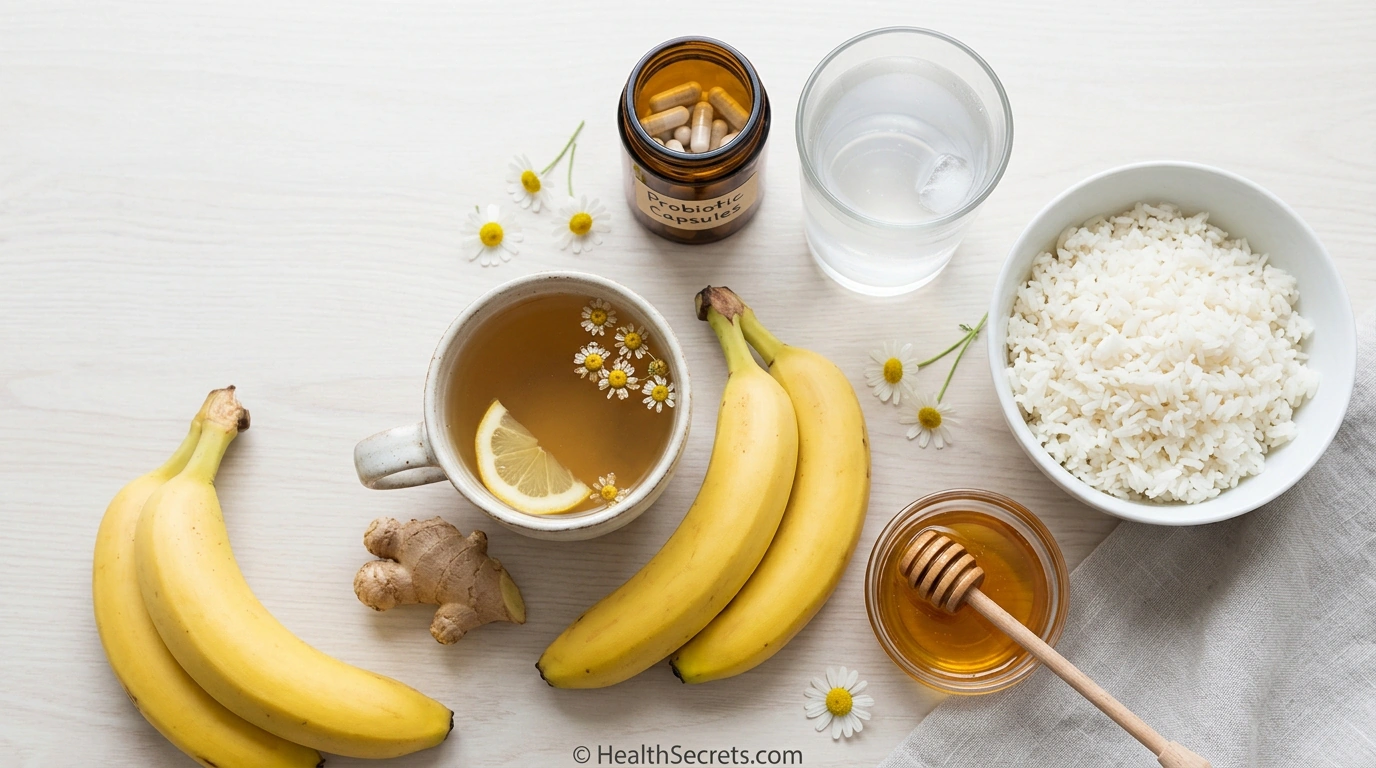
Herbal teas containing ginger, peppermint, and chamomile support the digestive comfort needed when increasing prebiotic fiber intake, helping minimize the gas and bloating that can accompany dietary changes.
Pros
- + Organic herbal blends
- + supports digestion
- + caffeine-free options
- + pleasant taste
Cons
- - Prebiotic content is minimal
- - primarily a digestive comfort aid
Why we included it: Herbal teas containing ginger, peppermint, and chamomile support the digestive comfort needed when increasing prebiotic fiber intake, helping minimize the gas and bloating that can accompany dietary changes.
Retailer link opens on Amazon after the review details above
7. Green Bananas and Resistant Starch: What Makes Unripe Bananas Special?
Green (unripe) bananas contain 20–25 grams of resistant starch per banana, compared to just 1–2 grams in ripe yellow bananas. Resistant starch passes through the small intestine undigested and is fermented in the colon, producing butyrate — the primary fuel source for colonocytes that strengthens gut barrier function [8].
Slice green bananas into smoothies (the starchiness blends well with other fruits), or cook and cool them in slices. As bananas ripen, resistant starch converts to sugar, so consume them while still firm and slightly green for maximum prebiotic benefit.
8. Oats and Barley: How Do Beta-Glucans Function as Prebiotics?
Oats contain 2–6 grams of beta-glucan fiber per cup (cooked), while barley provides 2.5–3 grams per cup. Beta-glucans are soluble prebiotic fibers that stimulate beneficial gut bacteria, modulate immune function, and lower LDL cholesterol by 5–10% [2].
Cook oats and barley, then cool overnight in the refrigerator to increase resistant starch content through retrogradation. Use cooled oats in overnight oat recipes and barley in cold grain salads. This cooking-and-cooling technique can double the resistant starch content.
9. Apples: Why Is Eating Apples with Skin Better for Your Gut?
Apples provide 1–1.5 grams of pectin per medium apple, primarily concentrated in the skin. Pectin is a prebiotic fiber that promotes Bifidobacterium and Faecalibacterium prausnitzii growth — a key butyrate-producing species linked to reduced inflammation and stronger gut barrier function [9].
Eat apples raw with skin for maximum pectin content. Baked apples retain most pectin. Pair with oats and flaxseeds for a triple-prebiotic breakfast. All apple varieties contain pectin, though Granny Smith apples tend to have the highest content.
10. Flaxseeds and Wheat Bran: How Does Insoluble Fiber Support Your Microbiome?
Flaxseeds provide 1.5–2 grams of prebiotic fiber per tablespoon (a mix of soluble mucilage and insoluble fiber), while wheat bran delivers 3 grams of arabinoxylan per ounce — a prebiotic fiber that increases Bifidobacterium populations. Both also supply additional nutrients: flaxseeds are rich in omega-3 ALA, and wheat bran is high in B vitamins and minerals [2].
Grind flaxseeds fresh for best absorption and sprinkle on yogurt, smoothies, or oatmeal. Add wheat bran to baked goods, cereals, and smoothies. Store ground flaxseeds in the refrigerator to prevent oxidation of omega-3 fats.
11. Beans, Legumes, and Cooked-Cooled Starches: Where Do You Find the Most Resistant Starch?
Beans and legumes are among the richest natural sources of both GOS and resistant starch, providing 3–5 grams of prebiotic fiber per ½ cup cooked serving. Lentils, chickpeas, black beans, and white beans all contain significant GOS that selectively promotes Bifidobacteria. Meanwhile, cooked and cooled potatoes and rice develop retrograded resistant starch — cooling for 12–24 hours can increase resistant starch content by 2–3 times [10].
Batch-cook beans and grains at the start of each week, refrigerate overnight, then use in cold salads, reheated side dishes, or soups. Even after reheating, retrograded resistant starch levels remain elevated. This is one of the simplest and most affordable ways to boost daily prebiotic intake.
Additional prebiotic foods worth adding to your rotation:
- Seaweed — Contains unique polysaccharides (alginate, fucoidan) that feed distinct bacterial populations
- Jicama — Provides 4.9 grams of inulin-type fiber per cup, excellent raw in salads and slaws
- Konjac root (glucomannan) — A potent soluble prebiotic fiber used in shirataki noodles
- Cocoa/dark chocolate — Cocoa polyphenols act as prebiotics, increasing Bifidobacteria and Lactobacilli
- Burdock root — Traditional prebiotic-rich root vegetable with 3.5g inulin per 100g
- Yacon root — Contains 40–50% FOS by dry weight; used as a natural sweetener
- Green peas — Provide 1.5g prebiotic fiber plus resistant starch per ½ cup serving

What Should You Do First to Increase Your Prebiotic Intake?
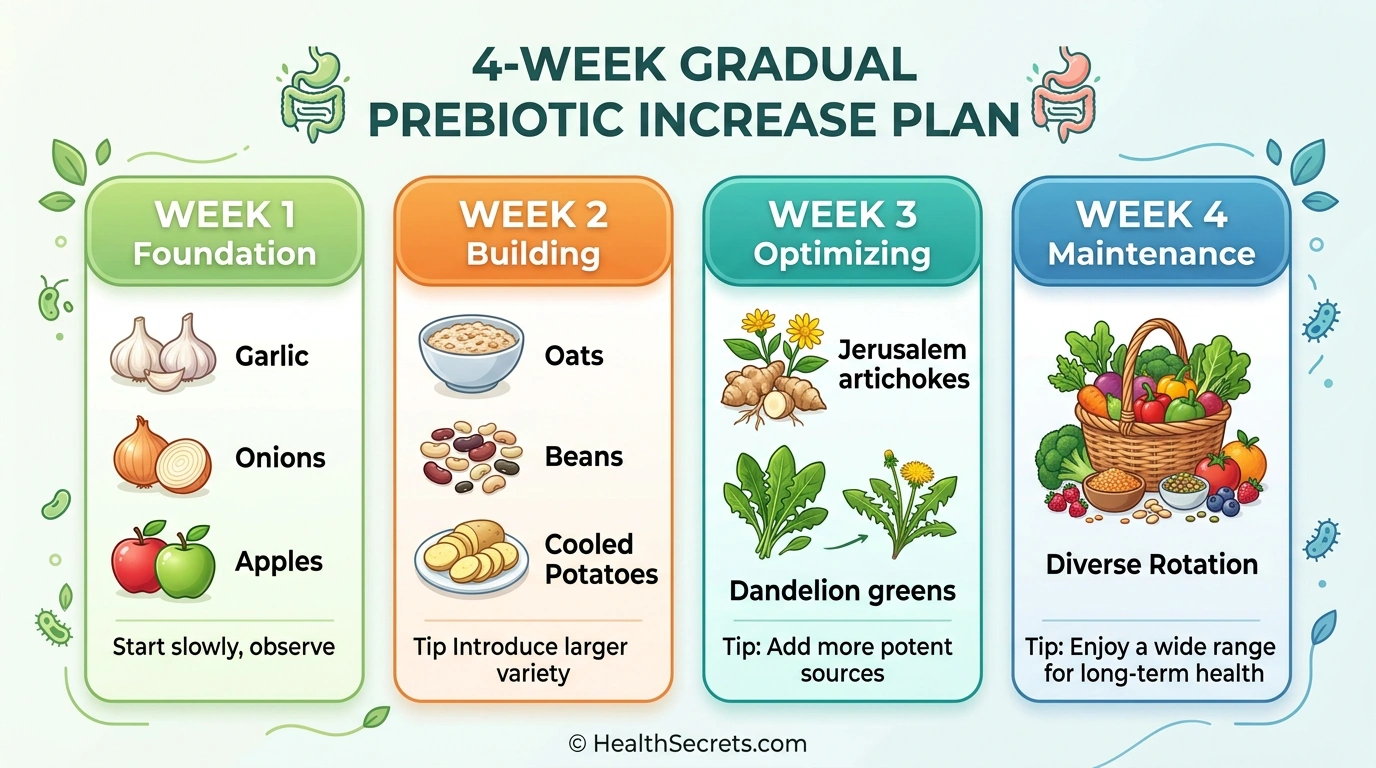
Start by adding 2–3 grams of prebiotic fiber daily from familiar foods like garlic, onions, and bananas, then gradually increase by 1–2 grams every 3–4 days over 2–3 weeks until you reach 5–20 grams daily. This gradual approach minimizes gas and bloating while allowing your gut bacteria to adapt.
Week 1: Foundation (2–3g prebiotic fiber daily)
- Add 2–3 garlic cloves to one daily meal
- Include ½ medium onion in cooking
- Eat one apple with skin as a snack
- Drink 8+ glasses of water (fiber needs hydration)
Week 2: Building (5–8g prebiotic fiber daily)
- Add overnight oats with ground flaxseed to breakfast
- Include ½ cup beans or lentils in one meal
- Cook and cool potatoes or rice overnight before eating
- Try asparagus or leeks as a side dish
Week 3: Optimizing (8–15g prebiotic fiber daily)
- Add Jerusalem artichokes or jicama to your rotation
- Include dandelion greens in salads
- Pair prebiotic foods with fermented foods for synbiotic benefits
- Consider chicory root coffee as a caffeine-free prebiotic boost
Week 4+: Maintenance (10–20g prebiotic fiber daily)
- Rotate through 5–7 different prebiotic foods weekly for fiber diversity
- Batch-cook beans and grains weekly, refrigerate before using
- Monitor digestive comfort and adjust portions as needed
- Combine with a quality probiotic supplement for maximum benefit