 Pin It
 Low FODMAP Diet: Complete Beginner's Guide
Who This Is For
Best for readers who want a practical gut health action plan.
Who Should Be Careful
Not for self-treating severe symptoms without medical review.
Affiliate Disclaimer | This article may contain affiliate links to products we trust. If you choose to buy through them, we may earn a small commission at no extra cost to you. Full disclosure
Medical Disclaimer | For informational purposes only. Not a substitute for professional medical advice. Read full disclaimer
Key Takeaways
FODZYME Digestive Enzymes (60-Dose Home Kit)
Editor's ChoiceFODZYME Digestive · Breaking down fructans, GOS, and lactose at meals
NOW Foods Dairy Digest Complete (90 Capsules)
Best ValueNOW Foods · Lactose digestion support during reintroduction phase
Fody Foods Snack Bars (Almond Coconut, 12-Pack)
Best Low FODMAP SnackFody Foods · Convenient on-the-go snacking during elimination phase
NOW Foods L-Glutamine Powder (1 lb)
Best for Gut RepairNOW Foods · Supporting intestinal lining repair alongside the FODMAP protocol
PrepNaturals Glass Meal Prep Containers (30 oz, 3-Pack)
Best for Meal PrepPrepNaturals Glass · Batch cooking and portioning low FODMAP meals
Read the detailed review cards below before opening any retailer link
If you're one of the estimated 1 in 7 people worldwide living with irritable bowel syndrome, you know how frustrating it can be to figure out which foods trigger your symptoms [1]. Bloating after meals, unpredictable bathroom trips, and chronic abdominal pain can make eating feel like a guessing game.
The low FODMAP diet, developed by researchers at Monash University in Australia, has emerged as the gold standard dietary therapy for IBS. Clinical trials consistently show that approximately 70–86% of IBS patients experience meaningful symptom relief when following this structured approach [2][3]. Unlike restrictive fad diets, the low FODMAP diet is a temporary elimination protocol designed to help you identify your personal trigger foods — not a permanent way of eating.
This guide covers everything you need to know: what FODMAPs are, how the three-phase protocol works, complete food lists organized by FODMAP category, sample meal plans, beginner-friendly recipes, and expert tips for navigating common challenges. Whether you've just been diagnosed with IBS or you're looking for a more systematic approach to managing digestive symptoms, this step-by-step guide will help you implement the low FODMAP diet safely and effectively.
What Do You Need to Know Before Starting the Low FODMAP Diet?
Before beginning the low FODMAP diet, you should have a confirmed IBS diagnosis from a healthcare provider, understand that the diet is a three-phase process (not a permanent restriction), and ideally work with a FODMAP-trained registered dietitian. The diet is most effective for IBS-D, IBS-C, IBS-M, and SIBO when implemented correctly [4].
The low FODMAP diet is not a "one-size-fits-all" elimination diet. It was developed by researchers at Monash University in Melbourne, Australia, who identified that a specific group of short-chain carbohydrates — collectively called FODMAPs — are poorly absorbed in the small intestine [5]. When these carbohydrates reach the large intestine, gut bacteria ferment them, producing gas. The additional gas and water stretch the intestinal wall, triggering pain, bloating, and altered bowel habits in people with visceral hypersensitivity [6].
FODMAP stands for:
- F — Fermentable (process where gut bacteria produce gas)
- O — Oligosaccharides (fructans and galacto-oligosaccharides/GOS)
- D — Disaccharides (lactose)
- M — Monosaccharides (excess fructose)
- A — And
- P — Polyols (sorbitol, mannitol, xylitol, maltitol)
Who benefits most from this diet:
- IBS of all subtypes (IBS-D, IBS-C, IBS-M)
- Small intestinal bacterial overgrowth (SIBO) patients
- Those with unexplained functional digestive symptoms
Who should NOT attempt low FODMAP without professional guidance:
- Anyone with a history of eating disorders
- Underweight individuals
- Children or pregnant women
- Those without a confirmed IBS diagnosis (other conditions must be ruled out first)
Expected timeline: Most people notice symptom improvement within 2–4 weeks of strict elimination. The full protocol (all three phases) takes approximately 3–6 months to complete [7].

Step 1: How Do You Identify Your High FODMAP Triggers?
Identifying your high FODMAP triggers starts with understanding the five FODMAP subgroups and which common foods fall into each category. Each subgroup affects the gut differently — some draw water into the intestine (osmotic effect), while others produce excessive gas through bacterial fermentation [8].
FODMAP Categories and Common Sources
| FODMAP Type | What It Is | Common Sources | Primary Symptom |
|---|---|---|---|
| Oligosaccharides (Fructans & GOS) | Short-chain fibers | Garlic, onions, wheat, legumes, cashews | Gas, bloating |
| Disaccharides (Lactose) | Milk sugar | Cow's milk, yogurt, soft cheeses, ice cream | Bloating, diarrhea |
| Monosaccharides (Excess Fructose) | Fruit sugar (in excess of glucose) | Honey, apples, pears, mango, HFCS | Bloating, pain |
| Polyols (Sorbitol & Mannitol) | Sugar alcohols | Stone fruits, mushrooms, cauliflower, sugar-free gum | Diarrhea, cramping |
| Not everyone reacts to all FODMAP groups equally. Some people may tolerate lactose perfectly well but react strongly to fructans. This is why the reintroduction phase (Step 3) is so critical — it helps you pinpoint your specific triggers rather than unnecessarily restricting entire food groups [9]. |
Before starting elimination, spend 3–5 days keeping a food and symptom diary to establish your baseline. Record everything you eat, portion sizes, and any symptoms (type, severity, timing). This baseline becomes invaluable for comparison during and after elimination.
Step 2: How Do You Start the Low FODMAP Elimination Phase?
The elimination phase involves removing all high FODMAP foods from your diet for 2–6 weeks while eating only confirmed low FODMAP alternatives. The goal is to achieve symptom relief and establish a "clean baseline" before systematically reintroducing FODMAP groups [10]. Up to three-quarters of patients respond within this timeframe [4].
High FODMAP Foods to Avoid During Elimination
Oligosaccharides (Fructans & GOS):
- Wheat, rye, barley (bread, pasta, cereals)
- Garlic, onions, shallots, leeks (the white parts)
- Legumes: chickpeas, lentils, kidney beans, baked beans
- Cashews, pistachios
- Artichokes, asparagus (in large amounts)
Disaccharides (Lactose):
- Cow's milk, goat's milk
- Regular yogurt, ice cream, custard
- Soft cheeses: ricotta, cottage cheese, cream cheese
- Cream, sour cream
Monosaccharides (Excess Fructose):
- Honey, agave nectar
- Apples, pears, mangoes, watermelon, cherries
- High fructose corn syrup
- Concentrated fruit juices
Polyols:
- Stone fruits: peaches, plums, nectarines, apricots
- Sugar-free gum and mints (sorbitol, xylitol, mannitol)
- Mushrooms, cauliflower, snow peas

Low FODMAP Foods You CAN Eat
| Food Category | Low FODMAP Options | High FODMAP to Avoid |
|---|---|---|
| Proteins | All plain meats, poultry, fish, eggs, firm tofu | Marinated meats with garlic/onion |
| Grains | Rice, quinoa, oats, GF bread, corn tortillas | Wheat bread, rye, barley, couscous |
| Vegetables | Carrots, zucchini, bell peppers, spinach, potatoes | Garlic, onions, cauliflower, mushrooms |
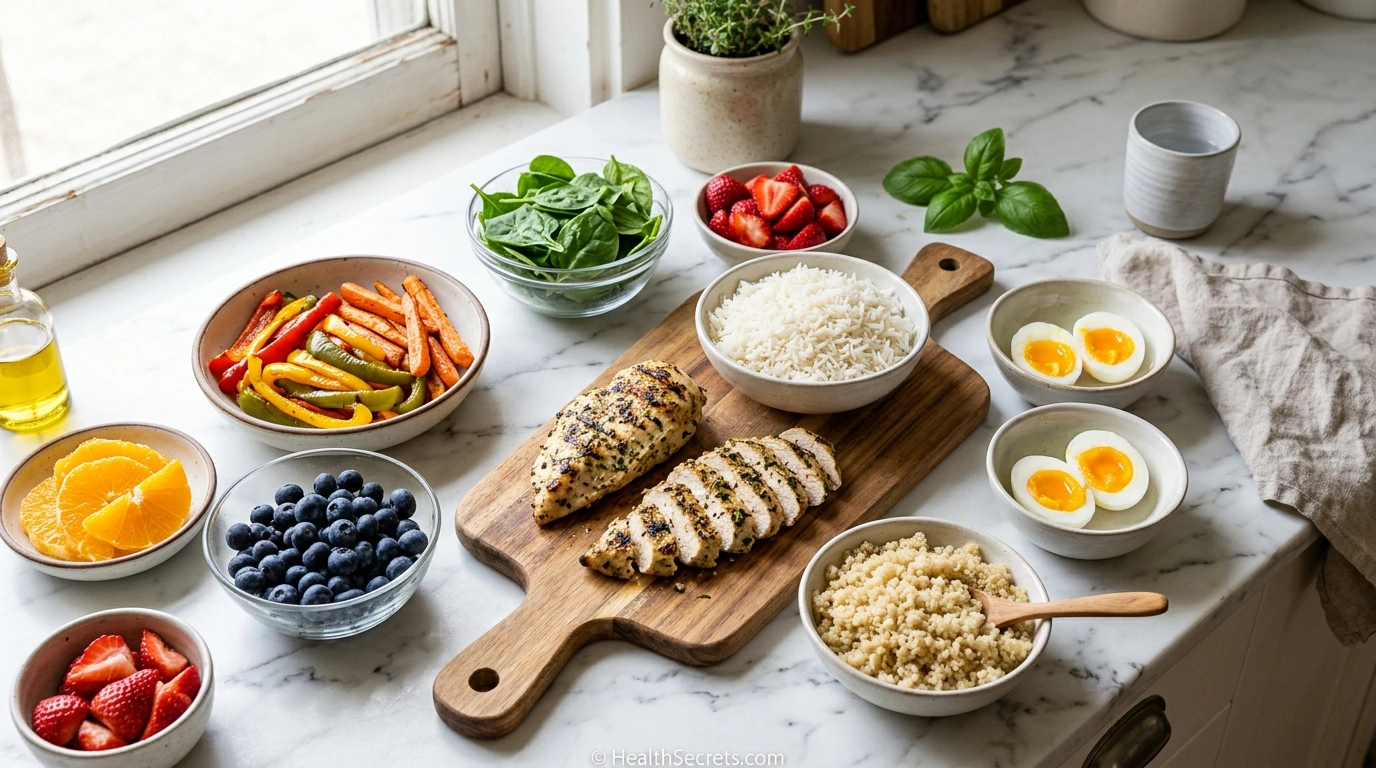
| Fruits | Bananas, blueberries, strawberries, oranges, kiwi | Apples, pears, watermelon, mango |
| Dairy | Lactose-free milk, hard cheeses, almond milk | Regular milk, yogurt, soft cheeses |
| Critical elimination phase tips: |
- Stick to 2–6 weeks maximum — longer restriction can harm your gut microbiome [11]
- Download the Monash University FODMAP app — it's the most accurate and regularly updated FODMAP database
- Read every label carefully — garlic and onion powder are hidden in most sauces, seasonings, and processed foods
- Track your symptoms daily using a food diary or app
- Don't restrict calories — eat adequate amounts of low FODMAP foods
Step 3: How Do You Reintroduce FODMAPs Systematically?
FODMAP reintroduction involves testing one FODMAP subgroup at a time over 3 days while keeping your background diet low FODMAP, then returning to baseline for 2–3 days before testing the next group. This phase typically takes 6–8 weeks and is the most important step for determining your personal tolerances [9][12].
Why reintroduction is critical: Skipping this phase is the most common mistake people make. Staying on strict low FODMAP indefinitely reduces beneficial gut bacteria (particularly Bifidobacteria), can lead to fiber and prebiotic deficiencies, and unnecessarily restricts your diet [11]. Research shows patients who complete both phases are approximately 3.5 times more likely to achieve lasting symptom improvement [13].
Reintroduction Testing Protocol
| Week | FODMAP Group | Test Food | Day 1 → Day 3 Amount |
|---|---|---|---|
| Week 1 | Fructans (grains) | Wheat bread | ½ slice → 1 slice → 2 slices |
| Week 2 | Fructans (vegetables) | Garlic (1 clove) | ¼ clove → ½ clove → 1 clove |
| Week 3 | Lactose | Cow's milk | ¼ cup → ½ cup → 1 cup |
| Week 4 | Excess Fructose | Honey or mango | 1 tsp → 1 tbsp → 2 tbsp |
| Week 5 | GOS | Canned lentils | 2 tbsp → ¼ cup → ½ cup |
| Week 6 | Sorbitol | Avocado | ⅛ → ¼ → ½ avocado |
| Week 7 | Mannitol | Mushrooms | ¼ cup → ½ cup → ¾ cup |
| Reintroduction rules: |
- Test only ONE FODMAP subgroup at a time
- Increase the dose gradually over 3 consecutive days
- Return to strict low FODMAP baseline for 2–3 "washout" days between tests
- If symptoms occur, stop that test, return to baseline, and record your threshold
- A reaction doesn't mean you can never eat that food — it means you have a dose threshold
- If no reaction occurs at the highest dose, that FODMAP group is likely well-tolerated


Step 4: How Do You Build Your Personalized FODMAP Diet?
Building your personalized FODMAP diet means combining your reintroduction results into a sustainable long-term eating plan that includes as many tolerated foods as possible while avoiding or limiting only your confirmed triggers at their threshold doses [12]. This is the phase you'll follow indefinitely.
After completing reintroduction, you should have a clear picture of:
- Well-tolerated FODMAPs — eat these freely
- Partially tolerated FODMAPs — eat within your dose threshold
- Poorly tolerated FODMAPs — avoid or use in very small amounts
Creating your personal plan:
- List your tolerated foods and incorporate them back into daily meals immediately
- Set dose limits for partially tolerated FODMAPs (e.g., "I can handle ¼ cup of mushrooms but not ½ cup")
- Avoid FODMAP stacking — eating multiple moderate-FODMAP foods in one meal can push you over your total threshold
- Retest periodically — tolerance can change over time, especially as gut health improves. Retest failed FODMAPs every 3–6 months
- Prioritize prebiotic foods you can tolerate to support microbiome diversity — even small amounts of garlic-infused oil, canned lentils, or oats help feed beneficial bacteria
Preventing nutritional deficiencies:
- Calcium: If you avoid dairy, use lactose-free milk or fortified almond milk, and include hard cheeses (cheddar, parmesan)
- Fiber: Include tolerated sources like oats, quinoa, chia seeds, carrots, and gut-healing foods
- Prebiotics: Gradually reintroduce prebiotic-rich foods as tolerated to support Bifidobacteria populations
Step 5: How Do You Master Low FODMAP Meal Planning and Cooking?
Mastering low FODMAP meal planning starts with batch cooking 3–4 base proteins and grains on one prep day, keeping garlic-infused olive oil and low FODMAP seasonings stocked, and building meals from a rotating list of safe ingredients. Planning ahead prevents decision fatigue and reduces the risk of accidental FODMAP consumption.
Sample 7-Day Low FODMAP Meal Plan
| Day | Breakfast | Lunch | Dinner |
|---|---|---|---|
| Mon | Oatmeal with blueberries and maple syrup | Quinoa salad with chicken, cucumber, bell pepper | Baked salmon with roasted carrots and rice |
| Tue | Scrambled eggs with spinach and GF toast | Turkey lettuce wraps with carrots and peanut sauce | Stir-fry with firm tofu, zucchini, bok choy, rice |
| Wed | Smoothie: banana, strawberries, almond milk, oats | Baked potato with tuna, chives, and cheddar | Grilled chicken with sweet potato and green beans |
| Thu | Rice cakes with peanut butter and banana slices | Leftover chicken with quinoa and roasted bell peppers | Shrimp tacos (corn tortillas) with slaw and lime |
| Fri | Overnight oats with kiwi and walnuts | Chicken Caesar salad (GF croutons, safe dressing) | Beef stir-fry with carrots, zucchini, rice noodles |
| Sat | Pancakes (GF flour) with blueberries and maple syrup | Leftover beef stir-fry over rice | Baked cod with roasted potatoes and spinach salad |
| Sun | Veggie omelet with bell peppers, spinach, cheddar | Rice paper rolls with shrimp, lettuce, cucumber | Herb-roasted chicken thighs with mashed potato |
| Snack ideas: Rice cakes with peanut butter, hard-boiled eggs, Fody Foods low FODMAP snack bars, lactose-free yogurt with strawberries, trail mix (walnuts, pecans, pumpkin seeds, dark chocolate chips), banana with almond butter. |


Beginner-Friendly Recipes
Low FODMAP Smoothie Bowl (Breakfast, 5 min)
- 1 frozen banana, ½ cup strawberries, ½ cup almond milk, 2 tbsp oats
- Blend until thick. Top with blueberries, chia seeds, shredded coconut
Quinoa Power Salad with Chicken (Lunch, 15 min)
- 1 cup cooked quinoa, 4 oz grilled chicken breast, ½ cup diced cucumber, ½ cup diced bell pepper, handful of spinach
- Dressing: 2 tbsp garlic-infused olive oil, 1 tbsp lemon juice, salt, pepper
Baked Salmon with Roasted Vegetables (Dinner, 30 min)
- 6 oz salmon fillet, 1 cup diced carrots, 1 cup diced zucchini, 1 tbsp garlic-infused olive oil
- Season with salt, pepper, paprika, dried herbs. Bake at 400°F for 20 minutes
Low FODMAP Peanut Butter Energy Balls (Snack, 10 min)
- 1 cup oats, ½ cup peanut butter, ¼ cup maple syrup, 2 tbsp dark chocolate chips
- Mix, roll into balls, refrigerate 30 minutes
Dining out strategies:
- Choose grilled proteins with simple sides (rice, potatoes, safe vegetables)
- Ask for sauces and dressings on the side
- Request garlic-infused oil instead of fresh garlic when possible
- Avoid "mystery" sauces — most contain garlic and onion
- Eat a small low FODMAP snack before events to reduce temptation
What Are the Most Common Low FODMAP Diet Mistakes to Avoid?
The most common mistakes include staying on strict elimination too long (more than 6 weeks), skipping the reintroduction phase entirely, not reading labels for hidden FODMAPs like garlic and onion powder, and attempting the diet without professional guidance. These errors reduce effectiveness and may harm long-term gut health [11][14].
:::info[Mistake 1: Treating it as a permanent diet] The low FODMAP diet is a diagnostic tool, not a lifestyle. Long-term strict restriction reduces beneficial Bifidobacteria and limits fiber intake. Always progress through all three phases [11]. :::
:::info[Mistake 2: Ignoring portion sizes] Many foods are low FODMAP in small portions but become high FODMAP in larger amounts. For example, ¼ avocado is low FODMAP, but a whole avocado is high in polyols. The Monash app provides serving-size guidance. :::
:::info[Mistake 3: FODMAP stacking] Eating multiple moderate-FODMAP foods in one meal can trigger symptoms even if each food individually would be safe. Spread moderate-FODMAP foods across the day. :::
:::info[Mistake 4: Confusing gluten-free with low FODMAP] The low FODMAP diet restricts fructans in wheat, not gluten. Spelt sourdough (low fructan due to fermentation) may be tolerated, while gluten-free products containing onion or garlic powder are not safe [15]. :::
Mistake 5: Forgetting garlic and onion substitutes
- Garlic-infused olive oil (FODMAPs are water-soluble, not fat-soluble — the flavor transfers without the FODMAPs)
- Green onion tops (green parts only — the white bulb is high FODMAP)
- Asafoetida powder (Indian spice with a garlic-onion flavor)
- Chives (safe in normal servings)
Myth-busting:
- Myth: You need to stay low FODMAP forever → False. It's a 3-phase process ending in personalization
- Myth: Low FODMAP is the same as gluten-free → False. It targets fructans, not gluten
- Myth: All fruits and vegetables are off-limits → False. Many fruits and vegetables are low FODMAP
- Myth: Low FODMAP cures IBS → False. It manages symptoms but doesn't address the underlying cause. Combine with IBS management strategies for best results

Is the Low FODMAP Diet Safe and When Should You See a Doctor?
The low FODMAP diet is considered safe when followed correctly as a short-term elimination protocol under professional guidance. However, prolonged strict restriction without reintroduction can lead to nutritional deficiencies, reduced gut microbiome diversity, and disordered eating patterns [11][14]. Always work with a FODMAP-trained dietitian for optimal safety.
Potential risks of improper implementation:
- Reduced calcium, iron, and fiber intake if dairy and wheat are eliminated without adequate substitutes
- Decreased Bifidobacteria populations from lack of prebiotic fiber [11]
- Psychological burden and social isolation from overly restrictive eating
- Development of food anxiety, especially in those predisposed to eating disorders
Red flags — see a doctor immediately if you experience:
- Unintended weight loss
- Blood in your stool
- Fever accompanying digestive symptoms
- Severe or worsening pain despite diet compliance
- Symptoms that started after age 50
- Family history of colorectal cancer, IBD, or celiac disease
:::info[When the diet isn't working:] If symptoms don't improve after 4–6 weeks of strict elimination, the issue may not be FODMAP-related. Consult a gastroenterologist to investigate other causes such as celiac disease, IBD, SIBO, or leaky gut syndrome. Consider complementary approaches like digestive enzyme support or a gut reset protocol. :::
Working with professionals:
- A gastroenterologist should confirm your IBS diagnosis before starting
- A FODMAP-trained registered dietitian ensures nutritional adequacy and guides reintroduction
- The Monash University website maintains a directory of trained dietitians
What Should You Do First to Start the Low FODMAP Diet?
Start by getting a confirmed IBS diagnosis from your doctor, then find a FODMAP-trained registered dietitian, download the Monash University FODMAP app, and spend one week keeping a food and symptom diary before beginning the elimination phase.
Phase 1: Preparation (Week 1)
- Get IBS diagnosis confirmed by your healthcare provider
- Find a FODMAP-trained registered dietitian (check Monash directory)
- Download the Monash University FODMAP app
- Keep a food and symptom diary for 3–5 days to establish your baseline
- Clear your kitchen of high FODMAP staples and stock low FODMAP alternatives
Phase 2: Elimination (Weeks 2–7)
- Remove all high FODMAP foods for 2–6 weeks
- Track symptoms daily
- Follow the complete gut health guide for additional support
- Check in with your dietitian at week 2 and week 4
Phase 3: Reintroduction (Weeks 8–15)
- Test one FODMAP subgroup per week using the 3-day challenge protocol
- Record all reactions with dose and timing
- Return to low FODMAP baseline between each test
Phase 4: Personalization (Ongoing)
- Build your personalized diet based on test results
- Reintroduce all tolerated foods
- Add probiotic support to rebuild gut bacteria
- Retest failed FODMAPs every 3–6 months
- Gradually increase prebiotic-rich foods for long-term gut health
Top Recommended Products
FODZYME Digestive
FODZYME Digestive Enzymes (60-Dose Home Kit)
FODZYME is the only enzyme supplement specifically designed to break down FODMAP carbohydrates before they reach the large intestine. Clinical data shows 84.5% of users report improvement in bloating after 4 weeks of use.
Pros
- + Breaks down 90% of fructan mass in 30 minutes
- + tasteless powder mixes into food
- + allows more dietary freedom
Cons
- - Premium price point
- - must be sprinkled directly on food for best results
Why we included it: FODZYME is the only enzyme supplement specifically designed to break down FODMAP carbohydrates before they reach the large intestine. Clinical data shows 84.5% of users report improvement in bloating after 4 weeks of use.
Retailer link opens on Amazon after the review details above
NOW Foods
NOW Foods Dairy Digest Complete (90 Capsules)
NOW Dairy Digest Complete goes beyond simple lactase supplements by targeting lactose, dairy proteins, and dairy fats simultaneously, making it ideal for the lactose reintroduction phase of the FODMAP protocol.
Pros
- + Affordable
- + combines lactase with dairy protein and fat enzymes
- + well-tolerated
Cons
- - Lower lactase units per capsule than some competitors
- - may need 2 capsules for high-lactose meals
Why we included it: NOW Dairy Digest Complete goes beyond simple lactase supplements by targeting lactose, dairy proteins, and dairy fats simultaneously, making it ideal for the lactose reintroduction phase of the FODMAP protocol.
Retailer link opens on Amazon after the review details above
Fody Foods
Fody Foods Snack Bars (Almond Coconut, 12-Pack)
Fody Foods snack bars are one of the few Monash University-certified low FODMAP snack options available, making them a safe and convenient choice when you need a quick bite during the elimination phase.
Pros
- + Monash certified low FODMAP
- + 6g protein per bar
- + no garlic or onion
- + tastes great
Cons
- - Higher price than standard granola bars
- - limited flavor options
Why we included it: Fody Foods snack bars are one of the few Monash University-certified low FODMAP snack options available, making them a safe and convenient choice when you need a quick bite during the elimination phase.
Retailer link opens on Amazon after the review details above
NOW Foods
NOW Foods L-Glutamine Powder (1 lb)
L-Glutamine is the primary fuel source for intestinal cells and research supports its role in maintaining gut barrier integrity. It complements the FODMAP protocol by supporting gut lining repair during the healing process.
Pros
- + Excellent value per serving
- + unflavored and mixes easily
- + supports gut barrier function
Cons
- - Requires consistent daily use for results
- - unflavored taste may be off-putting
Why we included it: L-Glutamine is the primary fuel source for intestinal cells and research supports its role in maintaining gut barrier integrity. It complements the FODMAP protocol by supporting gut lining repair during the healing process.
Retailer link opens on Amazon after the review details above
PrepNaturals Glass
PrepNaturals Glass Meal Prep Containers (30 oz, 3-Pack)
Successful FODMAP meal planning depends on batch cooking, and high-quality glass containers keep prepped meals fresh for up to 5 days while being safe for reheating — eliminating the temptation to grab FODMAP-heavy convenience foods.
Pros
- + Durable glass doesn't absorb odors
- + safe for reheating
- + leak-proof lids
- + visible portions
Cons
- - Heavier than plastic
- - glass can break if dropped
Why we included it: Successful FODMAP meal planning depends on batch cooking, and high-quality glass containers keep prepped meals fresh for up to 5 days while being safe for reheating — eliminating the temptation to grab FODMAP-heavy convenience foods.
Retailer link opens on Amazon after the review details above
Further Reading
Further Reading
"Monash University Low FODMAP: The Cookbook"
by Monash FODMAP Team
120 recipes using the world's largest FODMAP-tested food database; accurate portion guidance; nutritional information per recipe
Why it adds value here
This is the first and only cookbook created by the team that developed the low FODMAP diet itself. Every recipe has been FODMAP-tested using Monash's proprietary database, making it the most reliable recipe resource available.
Best for: Anyone wanting scientifically verified low FODMAP recipes from the original researchers
View book detailsFurther Reading
"The Low-FODMAP Diet for Beginners: A 7-Day Plan to Beat Bloat and Soothe Your Gut with Recipes for Fast IBS Relief"
by Mollie Tunitsky
7-day kick-start meal plan; over 75 low FODMAP recipes; shopping lists; symptom tracking templates; reintroduction guide
Why it adds value here
This bestselling beginner's guide provides the structured hand-holding that many people need when first starting the low FODMAP diet, with practical meal plans, shopping lists, and simple recipes that minimize overwhelm.
Best for: Complete beginners who need a structured, week-by-week approach with shopping lists
View book detailsAEO FAQ
Frequently Asked Questions
10 common questions answered
Most people notice significant symptom improvement within 2–4 weeks of strict elimination. Research shows up to 75% of patients respond within 6 weeks [4]. If you see no improvement after 6 weeks of careful compliance, consult your gastroenterologist to explore other causes.
Yes, the low FODMAP diet restricts fructans found in wheat, not gluten itself. Small amounts of wheat (such as sourdough bread made with a long fermentation process) may be tolerated because fermentation reduces fructan content. Gluten-free products are often convenient substitutes, but "gluten-free" doesn't automatically mean "low FODMAP" — always check for garlic, onion, and other high FODMAP ingredients.
The low FODMAP diet can be followed during pregnancy, but only under the close guidance of a registered dietitian to ensure adequate nutrient intake. Pregnant women have increased needs for calcium, iron, fiber, and folate — nutrients that can be reduced by FODMAP restriction if not properly managed.
Garlic-infused olive oil is the best substitute because FODMAPs are water-soluble but not fat-soluble, so the garlic flavor transfers to the oil without the FODMAPs. Other options include green onion tops (green parts only), chives, asafoetida powder (hing), and fresh herbs like basil, oregano, and rosemary for depth of flavor.
No, the strict elimination phase should only last 2–6 weeks. The low FODMAP diet is a three-phase diagnostic tool, not a permanent eating plan. Staying on strict low FODMAP long-term can reduce beneficial gut bacteria, lead to nutritional deficiencies, and unnecessarily restrict your diet [11]. The goal is to identify your triggers and build a personalized plan.
Research shows the low FODMAP diet may also help manage functional bloating, SIBO, and some functional gastrointestinal symptoms in inflammatory bowel disease (IBD) patients [14]. A 2026 study also found that a strict 12-week low FODMAP intervention significantly improved fatigue, anxiety, and depression in IBS patients, suggesting gut-brain axis benefits [16].
The main cost is the Monash University FODMAP app (approximately $8–$10 one-time purchase), which is considered essential. Grocery costs may initially increase slightly due to specialty items like gluten-free bread and lactose-free dairy, but many low FODMAP staples (rice, potatoes, eggs, plain meats, many fruits and vegetables) are budget-friendly. Working with a dietitian (often covered by insurance) is the biggest potential expense.
Children can follow a modified low FODMAP diet, but it should always be supervised by a pediatric dietitian experienced in FODMAP management. Children have higher nutritional needs relative to their body size, and unnecessary restriction can impact growth and development. The reintroduction phase is especially important in children to ensure maximum dietary variety.
The Monash University FODMAP app is the most comprehensive and scientifically validated database of FODMAP content in foods, created by the researchers who developed the diet. It uses a traffic light system (green, amber, red) with serving-size guidance. It is widely considered essential by dietitians because FODMAP content varies by portion size, and the app is updated regularly as new foods are tested.
Yes, strict low FODMAP restriction temporarily reduces Bifidobacteria and total bacterial diversity because many high FODMAP foods are also prebiotics that feed beneficial gut bacteria [11]. This is a key reason why the elimination phase should be kept as short as possible (2–6 weeks) and why reintroduction and personalization phases are critical for restoring microbiome balance. Adding a quality probiotic during and after the protocol can help.
Was this article helpful?
Written & Reviewed By Experts
Author
Dr. Emily Foster
Medical Reviewer
Dr. Sarah Chen
All content is evidence-based, peer-reviewed by qualified professionals, and updated regularly. Our editorial team follows strict guidelines for accuracy and transparency.
References & Citations
18 sources cited
Medical Disclaimer
This article is for informational purposes only and does not constitute medical advice. Read the full medical disclaimer. Always consult with a qualified healthcare provider before starting any new supplement, treatment, or major dietary change.