Pin It Probiotics and Prebiotics: Complete Supplement Guide
Who This Is For
Best for readers who want a grounded introduction to supplements.
Who Should Be Careful
Not for emergency decisions or personalized treatment planning.
Affiliate Disclaimer | This article may contain affiliate links to products we trust. If you choose to buy through them, we may earn a small commission at no extra cost to you. Full disclosure
Medical Disclaimer | For informational purposes only. Not a substitute for professional medical advice. Read full disclaimer
Key Takeaways
Garden of Life RAW Probiotics Ultimate Care 100 Billion
Editor's ChoiceGarden of · Maximum potency gut restoration and comprehensive digestive support
Culturelle Digestive Daily Probiotic
Best Single-StrainCulturelle Digestive · Daily digestive regularity with the most clinically studied probiotic strain
Florastor Daily Probiotic Supplement
Best for Antibiotic RecoveryFlorastor Daily · Preventing and managing antibiotic-associated diarrhea
Renew Life Ultimate Flora Extra Care 50 Billion
Best Multi-Strain ValueRenew Life · Balanced digestive and immune support at moderate potency
NOW Foods Probiotic-10 25 Billion
Best Budget PickNOW Foods · Affordable daily probiotic supplementation with multiple strains
Jarrow Formulas Jarro-Dophilus EPS 25 Billion
Best for TravelJarrow Formulas · Shelf-stable probiotic for travel and on-the-go use
NOW Foods Organic Inulin Prebiotic Powder
Best PrebioticNOW Foods · Affordable prebiotic fiber to feed beneficial gut bacteria
Seed DS-01 Daily Synbiotic
Most InnovativeSeed DS-01 · Science-forward consumers wanting the most advanced synbiotic formula
Just Thrive Probiotic and Antioxidant
Best Spore-BasedJust Thrive · Maximum survivability through stomach acid without refrigeration
Garden of Life Dr. Formulated Women's Probiotics 50 Billion
Best for WomenGarden of · Women's digestive health with vaginal microbiome support
Culturelle Kids Daily Probiotic Packets
Best for ChildrenCulturelle Kids · Children's digestive and immune health with the most studied pediatric strain
Read the detailed review cards below before opening any retailer link
Your gut microbiome contains trillions of microorganisms that influence everything from digestion and immunity to mood and metabolic health. Research published in 2024 confirms that targeted probiotic supplementation can measurably shift microbial composition within weeks, while prebiotic fibers provide the fuel these beneficial organisms need to thrive [1]. Yet walking through the supplement aisle — or scrolling through endless Amazon listings — reveals a dizzying landscape of CFU counts, proprietary blends, and marketing claims that make informed decisions genuinely difficult.
The difference between a probiotic that delivers real benefits and one that wastes your money often comes down to strain specificity, colony-forming unit potency, survivability through stomach acid, and whether the product matches your particular health goal. A single-strain Lactobacillus rhamnosus GG supplement works beautifully for digestive regularity, while a high-potency multi-strain formula may better support someone recovering from antibiotic treatment [2]. Prebiotics like inulin and FOS add another dimension by selectively feeding beneficial bacteria already in your gut [8].
We spent over 100 hours researching clinical trials, comparing formulations, and evaluating real-world user outcomes to identify the 11 best probiotic, prebiotic, and synbiotic supplements available in 2026. Whether you need maximum potency for gut restoration, a travel-friendly shelf-stable option, or an affordable prebiotic powder, this guide matches you with the right product backed by the strongest evidence.
If you are new to gut health optimization, start with our Gut Health Complete Guide for foundational concepts. For detox support that complements probiotic use, explore our Gut Detox Protocol. Those interested in timing their supplements for maximum absorption should read our Supplement Timing and Absorption Guide, and anyone combining multiple supplements will benefit from our Supplement Interactions Guide.
What Should You Look for When Choosing a Probiotic or Prebiotic Supplement?
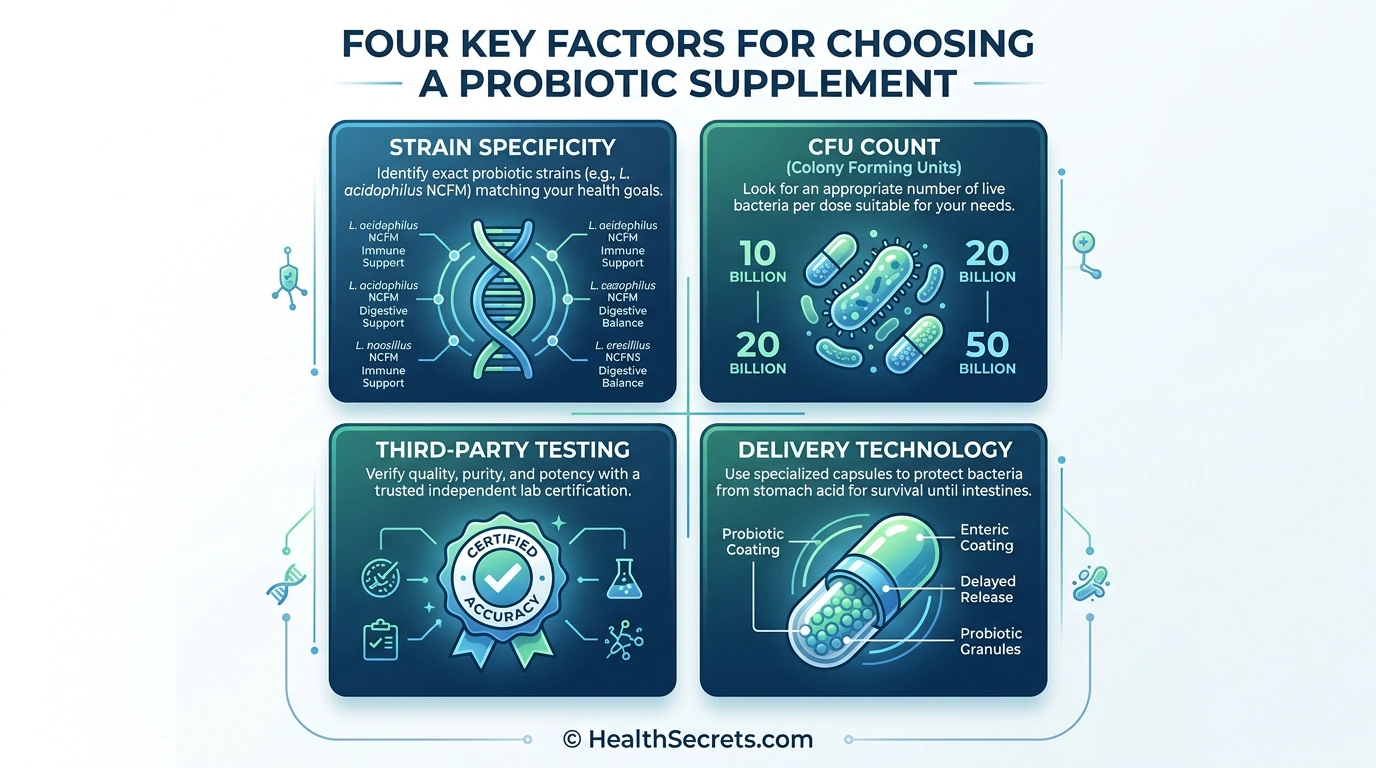
The most important factors in selecting an effective probiotic or prebiotic supplement are strain specificity for your health goal, adequate CFU count with expiration-date guarantees, a delivery mechanism that survives stomach acid, and third-party testing for purity. Understanding these four pillars helps you avoid the majority of ineffective products on the market.
How Do CFU Counts Affect Probiotic Effectiveness?
Colony-forming units measure the number of viable microorganisms per dose. Research indicates that effective therapeutic doses range from 1 billion to 100 billion CFU depending on the condition being addressed [1]. General digestive maintenance typically requires 10–25 billion CFU daily, while acute conditions like antibiotic recovery may benefit from 50–100 billion CFU. Always look for products that guarantee CFU counts at expiration, not just at manufacture, since viability decreases over time.
Why Does Strain Specificity Matter More Than CFU Count?
Not all probiotic strains produce the same health effects. Lactobacillus rhamnosus GG has extensive evidence for digestive and immune health [2][3], while Saccharomyces boulardii specifically prevents antibiotic-associated diarrhea [4][5]. Multi-strain formulas offer broader coverage but may be less targeted. Match the specific strains in a product to your primary health concern rather than simply choosing the highest CFU number.
What Delivery Technologies Ensure Probiotics Survive Stomach Acid?
Standard vegetable capsules expose probiotics to destructive stomach acid, potentially killing 60–70% of organisms before they reach the intestines. Delayed-release capsules, enteric coatings, and microencapsulation technologies significantly improve survival rates. Spore-forming probiotics like Bacillus subtilis naturally resist stomach acid without special delivery technology. Look for products specifying their delivery mechanism on the label.
How Do You Choose Between Probiotics, Prebiotics, and Synbiotics?
Probiotics introduce beneficial bacteria directly, prebiotics feed existing beneficial bacteria, and synbiotics combine both approaches. A 2026 systematic review found that synbiotic supplementation produced greater reductions in inflammatory biomarkers than either probiotics or prebiotics alone [10]. For most people, starting with a quality probiotic and adding a prebiotic fiber supplement provides the flexibility to adjust each component independently.
How Did We Evaluate These Probiotic and Prebiotic Supplements?
We evaluated over 40 probiotic, prebiotic, and synbiotic supplements using a rigorous methodology that assessed clinical evidence for included strains, CFU potency guarantees, delivery technology, third-party testing, ingredient transparency, and real-world user outcomes. Products earning recommendation demonstrated superiority across multiple evaluation criteria.

Strain Research Depth
We cross-referenced every strain in each product against published clinical trials in PubMed and the Cochrane Library. Products containing strains with robust human clinical data — particularly randomized controlled trials — scored highest. We specifically verified that claimed health benefits matched the evidence for the actual strains included, not just the genus or species.
Potency and Stability Verification
We prioritized products guaranteeing CFU counts through expiration date rather than only at manufacture. Products with third-party testing from organizations like NSF International, USP, or ConsumerLab received higher scores. We also evaluated storage requirements and shelf-stability claims against the delivery technology employed.
Delivery Mechanism Assessment
We evaluated each product's capsule technology, coating, or formulation for its ability to protect organisms through gastric transit. Delayed-release capsules, enteric coatings, BIO-tract technology, and spore-forming strains all received credit for addressing this critical survival challenge.
Value and Accessibility Analysis
We calculated cost-per-billion-CFU to normalize pricing across different potency levels. Subscription discounts, availability through major retailers, and transparent labeling all contributed to our accessibility scoring.
How Do You Use Probiotic and Prebiotic Supplements Effectively?
For optimal results, take probiotics on an empty stomach or with a light meal, start with a lower dose and increase gradually over two weeks, store according to label instructions, and pair with prebiotic fiber to support colonization. Consistency matters more than timing — daily use for at least 4–8 weeks produces the most reliable benefits.
What Is the Best Time of Day to Take Probiotics?
Most probiotics perform best when taken 30 minutes before breakfast or at bedtime, when stomach acid levels are lowest. However, delayed-release and enteric-coated capsules can be taken with meals since their delivery technology protects against stomach acid. Saccharomyces boulardii is acid-resistant and can be taken at any time [4]. The most important factor is choosing a consistent time you will not forget.
How Should You Introduce Prebiotic Fiber to Avoid Digestive Discomfort?
Start prebiotic fiber at one-quarter to one-half the recommended dose and increase gradually over 2–3 weeks. Inulin and FOS can cause bloating, gas, and cramping when introduced too quickly because they rapidly increase fermentation in the colon [8]. Mixing prebiotic powder into room-temperature water or smoothies improves tolerability. If symptoms persist beyond two weeks at a given dose, reduce the amount and increase more slowly.
Can You Take Probiotics and Prebiotics Together?
Yes, and research suggests this combination produces superior outcomes. A 2026 systematic review found that synbiotic supplementation significantly reduced inflammatory markers compared to probiotics or prebiotics alone [10]. Take prebiotic fiber at the same time as your probiotic to provide immediate fuel for the incoming beneficial organisms. Alternatively, some people prefer taking prebiotics in the morning and probiotics at bedtime.
Are There Safety Concerns with Probiotic and Prebiotic Supplements?
Probiotics and prebiotics are generally safe for healthy adults, with side effects typically limited to temporary gas, bloating, and digestive changes during the first 1–2 weeks of use. However, immunocompromised individuals, those with central venous catheters, and critically ill patients should avoid probiotics without medical supervision due to rare but serious infection risks [1][13].
Who Should Avoid Probiotic Supplements?
Individuals with severely compromised immune systems, those receiving chemotherapy or immunosuppressive therapy, patients with short bowel syndrome, and people with central venous catheters face elevated risk of probiotic-related bacteremia or fungemia [1]. Premature infants should only receive probiotics under strict medical supervision. If you take immunosuppressive medications, consult your healthcare provider before starting any probiotic supplement.
What Are Common Side Effects and How Long Do They Last?
Initial side effects include increased gas, bloating, mild cramping, and changes in bowel habits. These symptoms reflect the gut microbiome adjusting to new microbial populations and typically resolve within 7–14 days of consistent use. Starting at a lower dose and increasing gradually minimizes these effects. If symptoms persist beyond three weeks or worsen significantly, discontinue use and consult your healthcare provider.
Can Probiotics Interact with Medications?
Probiotics may reduce the effectiveness of certain antifungal medications when using yeast-based probiotics like Saccharomyces boulardii. Antibiotics can kill probiotic bacteria, so separate dosing by at least 2 hours when taking both concurrently [6]. Immunosuppressive drugs create a theoretical risk environment for probiotic use. Always disclose probiotic use to your healthcare provider, especially when starting new medications.
What Is the Best Step-by-Step Plan for Starting Probiotic and Prebiotic Supplements?
Begin with a single moderate-potency probiotic for two weeks, then layer in a prebiotic fiber at a reduced dose, and gradually increase both over 6–8 weeks while monitoring your digestive response. This phased approach minimizes side effects while building toward optimal microbiome support.

Phase 1: Foundation (Weeks 1–2)
- Choose a multi-strain probiotic with 25–50 billion CFU based on your primary health goal
- Take on an empty stomach at a consistent time daily
- Track digestive symptoms in a simple journal
- Store supplement according to label instructions (refrigerate if required)
Phase 2: Integration (Weeks 3–4)
- Add a prebiotic fiber supplement at half the recommended dose
- Continue daily probiotic at the same dose
- Note any changes in bloating, gas, or bowel habits
- Increase prebiotic to full dose if tolerated well by end of week 4
Phase 3: Optimization (Weeks 5–8)
- Consider increasing probiotic potency if symptoms warrant
- Incorporate prebiotic-rich foods (garlic, onions, bananas, asparagus) alongside supplementation
- Evaluate whether a synbiotic formula might simplify your regimen
- Schedule a check-in with your healthcare provider to discuss results
Phase 4: Maintenance (Ongoing)
- Continue daily probiotic and prebiotic supplementation at your optimal dose
- Rotate probiotic strains every 3–6 months for microbial diversity
- Support supplement use with a fiber-rich diet and adequate hydration
- Reassess product quality annually as new research and formulations emerge
Top Recommended Products
Garden of
Garden of Life RAW Probiotics Ultimate Care 100 Billion
Garden of Life RAW Probiotics Ultimate Care delivers an industry-leading 100 billion CFU across 34 clinically studied strains, making it the most comprehensive probiotic for serious gut restoration. The inclusion of prebiotic fiber and digestive enzymes creates a synbiotic effect in a single capsule, supported by Non-GMO Project verification and NSF Gluten-Free certification.
Pros
- + Highest CFU count in our roundup with 34 probiotic strains
- + includes prebiotic fiber and digestive enzymes
- + whole food formula with raw nutrients
- + Non-GMO Project verified
Cons
- - Requires refrigeration which limits portability
Why we included it: Garden of Life RAW Probiotics Ultimate Care delivers an industry-leading 100 billion CFU across 34 clinically studied strains, making it the most comprehensive probiotic for serious gut restoration. The inclusion of prebiotic fiber and digestive enzymes creates a synbiotic effect in a single capsule, supported by Non-GMO Project verification and NSF Gluten-Free certification.
Retailer link opens on Amazon after the review details above
Culturelle Digestive
Culturelle Digestive Daily Probiotic
Culturelle Digestive Daily delivers the world's most clinically validated probiotic strain — Lactobacillus rhamnosus GG — with over 1,000 published studies supporting its benefits for digestive health and immune function [2][3]. Its simplicity is its strength: one well-researched strain at an effective dose, making it ideal for reliable digestive support without the complexity of multi-strain formulas.
Pros
- + Contains LGG with over 1
- + 000 published studies
- + shelf-stable without refrigeration
- + gentle enough for daily use
- + backed by the most clinical evidence of any single strain
Cons
- - Single strain limits coverage for complex gut issues
Why we included it: Culturelle Digestive Daily delivers the world's most clinically validated probiotic strain — Lactobacillus rhamnosus GG — with over 1,000 published studies supporting its benefits for digestive health and immune function [2][3]. Its simplicity is its strength: one well-researched strain at an effective dose, making it ideal for reliable digestive support without the complexity of multi-strain formulas.
Retailer link opens on Amazon after the review details above
Florastor Daily
Florastor Daily Probiotic Supplement
Florastor is the only probiotic that can be taken directly alongside antibiotics because its yeast-based organism is inherently unaffected by antibacterial medications. Meta-analyses confirm that Saccharomyces boulardii significantly reduces the risk of antibiotic-associated diarrhea [5][6], and a 2025 RCT demonstrated enhanced efficacy when combined with vancomycin for recurrent C. difficile infection [7].
Pros
- + Only probiotic that can be taken simultaneously with antibiotics
- + most studied S. boulardii strain worldwide
- + naturally resistant to stomach acid
- + does not contribute to antibiotic resistance
Cons
- - Single-organism formula not ideal for broad gut health goals
Why we included it: Florastor is the only probiotic that can be taken directly alongside antibiotics because its yeast-based organism is inherently unaffected by antibacterial medications. Meta-analyses confirm that Saccharomyces boulardii significantly reduces the risk of antibiotic-associated diarrhea [5][6], and a 2025 RCT demonstrated enhanced efficacy when combined with vancomycin for recurrent C. difficile infection [7].
Retailer link opens on Amazon after the review details above
Renew Life
Renew Life Ultimate Flora Extra Care 50 Billion
Renew Life Ultimate Flora Extra Care strikes an excellent balance between potency, strain diversity, and value. The delayed-release capsule technology protects all 12 strains through stomach acid for targeted intestinal release, while the 50 billion CFU potency provides therapeutic-level support without the intensity of ultra-high-dose formulas. Potency is guaranteed through the expiration date, not just at manufacture.
Pros
- + Delayed-release technology ensures intestinal delivery
- + 12 clinically studied strains
- + potency guaranteed through expiration
- + free from major allergens
Cons
- - Requires refrigeration for optimal potency preservation
Why we included it: Renew Life Ultimate Flora Extra Care strikes an excellent balance between potency, strain diversity, and value. The delayed-release capsule technology protects all 12 strains through stomach acid for targeted intestinal release, while the 50 billion CFU potency provides therapeutic-level support without the intensity of ultra-high-dose formulas. Potency is guaranteed through the expiration date, not just at manufacture.
Retailer link opens on Amazon after the review details above
NOW Foods
NOW Foods Probiotic-10 25 Billion
NOW Foods Probiotic-10 delivers an impressive 25 billion CFU across 10 strains at a fraction of the cost of premium brands. The blister-pack packaging protects individual capsules from moisture degradation, and NOW Foods' GMP-certified manufacturing ensures consistent quality. For budget-conscious consumers who want meaningful strain diversity without premium pricing, this is the clear winner.
Pros
- + Excellent value per CFU
- + 10 diverse probiotic strains
- + shelf-stable without refrigeration
- + NOW Foods GMP manufacturing standards
Cons
- - Standard capsule lacks delayed-release technology
Why we included it: NOW Foods Probiotic-10 delivers an impressive 25 billion CFU across 10 strains at a fraction of the cost of premium brands. The blister-pack packaging protects individual capsules from moisture degradation, and NOW Foods' GMP-certified manufacturing ensures consistent quality. For budget-conscious consumers who want meaningful strain diversity without premium pricing, this is the clear winner.
Retailer link opens on Amazon after the review details above
Jarrow Formulas
Jarrow Formulas Jarro-Dophilus EPS 25 Billion
Jarrow Formulas Jarro-Dophilus EPS solves the biggest challenge with probiotic supplements — maintaining viability outside the refrigerator. The proprietary EnteroGuard enteric coating provides dual protection: room-temperature stability for convenient storage and acid resistance for intestinal delivery. This makes it the ideal choice for travelers, office workers, and anyone who needs a reliable probiotic without cold-chain logistics.
Pros
- + No refrigeration required with true room-temperature stability
- + EnteroGuard coating verified to survive stomach acid
- + 8 clinically documented strains
- + excellent for travel
Cons
- - Enteric coating may delay onset of benefits compared to immediate-release formulas
Why we included it: Jarrow Formulas Jarro-Dophilus EPS solves the biggest challenge with probiotic supplements — maintaining viability outside the refrigerator. The proprietary EnteroGuard enteric coating provides dual protection: room-temperature stability for convenient storage and acid resistance for intestinal delivery. This makes it the ideal choice for travelers, office workers, and anyone who needs a reliable probiotic without cold-chain logistics.
Retailer link opens on Amazon after the review details above
NOW Foods
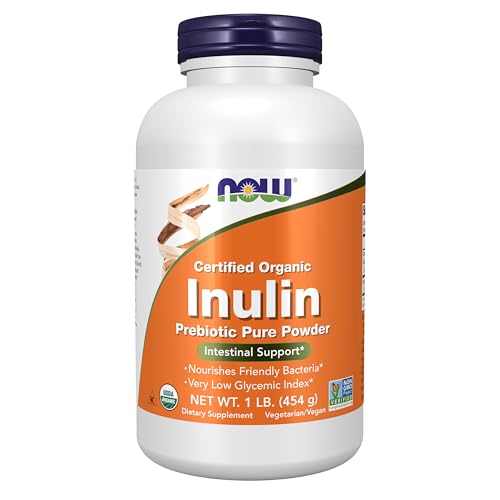
NOW Foods Organic Inulin Prebiotic Powder
NOW Foods Organic Inulin provides the most cost-effective way to add prebiotic fiber to your supplement regimen. Sourced from certified organic blue agave, this inulin powder selectively feeds beneficial Bifidobacteria and Lactobacilli, promoting short-chain fatty acid production that strengthens gut barrier integrity [8]. At approximately 95 servings per container, the cost per serving is remarkably low for an organic prebiotic.
Pros
- + USDA Organic certified
- + dissolves easily in any beverage
- + nearly 100 servings per container
- + mild neutral taste
- + excellent cost per serving
Cons
- - May cause initial bloating if introduced too quickly
Why we included it: NOW Foods Organic Inulin provides the most cost-effective way to add prebiotic fiber to your supplement regimen. Sourced from certified organic blue agave, this inulin powder selectively feeds beneficial Bifidobacteria and Lactobacilli, promoting short-chain fatty acid production that strengthens gut barrier integrity [8]. At approximately 95 servings per container, the cost per serving is remarkably low for an organic prebiotic.
Retailer link opens on Amazon after the review details above
Seed DS-01
Seed DS-01 Daily Synbiotic
Seed DS-01 represents the cutting edge of synbiotic supplementation. Its patented ViaCap capsule-in-capsule technology surrounds a probiotic inner capsule with a prebiotic outer shell, ensuring both components arrive intact in the intestines. The formula contains 24 strains backed by clinical trials, and Seed's use of AFU rather than traditional CFU provides a more accurate measure of viable organisms at the time of consumption.
Pros
- + Innovative ViaCap delivery ensures survival through stomach acid
- + 24 clinically studied strains
- + includes prebiotic outer capsule
- + measures AFU for more accurate viability
Cons
- - Premium subscription price point and only available direct-to-consumer
Why we included it: Seed DS-01 represents the cutting edge of synbiotic supplementation. Its patented ViaCap capsule-in-capsule technology surrounds a probiotic inner capsule with a prebiotic outer shell, ensuring both components arrive intact in the intestines. The formula contains 24 strains backed by clinical trials, and Seed's use of AFU rather than traditional CFU provides a more accurate measure of viable organisms at the time of consumption.
Retailer link opens on Amazon after the review details above
Just Thrive
Just Thrive Probiotic and Antioxidant
Just Thrive Probiotic takes a fundamentally different approach by using spore-forming Bacillus strains that naturally withstand stomach acid, bile salts, and room temperature storage. While the 3 billion CFU count appears modest, virtually 100% of these organisms survive gastric transit — compared to potentially 60–70% loss with standard capsule probiotics. The inclusion of Bacillus indicus HU36, which produces antioxidant carotenoids in the gut, adds a unique functional benefit.
Pros
- + 100% survival through stomach acid guaranteed by spore-forming technology
- + no refrigeration needed
- + includes antioxidant-producing strain
- + DNA-verified strain identity
Cons
- - Lower CFU count than multi-strain competitors
Why we included it: Just Thrive Probiotic takes a fundamentally different approach by using spore-forming Bacillus strains that naturally withstand stomach acid, bile salts, and room temperature storage. While the 3 billion CFU count appears modest, virtually 100% of these organisms survive gastric transit — compared to potentially 60–70% loss with standard capsule probiotics. The inclusion of Bacillus indicus HU36, which produces antioxidant carotenoids in the gut, adds a unique functional benefit.
Retailer link opens on Amazon after the review details above
Garden of
Garden of Life Dr. Formulated Women's Probiotics 50 Billion
Garden of Life Women's Probiotics addresses the specific needs of the female microbiome by including Lactobacillus reuteri and Lactobacillus fermentum — two strains with clinical evidence for supporting vaginal pH and reducing urogenital infections. The 50 billion CFU potency across 16 strains provides comprehensive digestive support alongside these targeted benefits, all in a convenient shelf-stable format.
Pros
- + Includes L. reuteri and L. fermentum strains studied for vaginal health
- + shelf-stable without refrigeration
- + 16 diverse probiotic strains
- + formulated by Dr. David Perlmutter
Cons
- - Higher price point compared to unisex alternatives at similar potency
Why we included it: Garden of Life Women's Probiotics addresses the specific needs of the female microbiome by including Lactobacillus reuteri and Lactobacillus fermentum — two strains with clinical evidence for supporting vaginal pH and reducing urogenital infections. The 50 billion CFU potency across 16 strains provides comprehensive digestive support alongside these targeted benefits, all in a convenient shelf-stable format.
Retailer link opens on Amazon after the review details above
Culturelle Kids
Culturelle Kids Daily Probiotic Packets
Culturelle Kids delivers the same clinically validated Lactobacillus rhamnosus GG strain as the adult formula in a child-friendly powder format. LGG has extensive pediatric clinical evidence for reducing the duration of acute diarrhea and supporting immune function in children [2]. The taste-free powder dissolves invisibly in milk, juice, or food, making it the easiest probiotic to administer to young children.
Pros
- + Contains LGG the most studied pediatric probiotic strain
- + taste-free powder mixes into any food or drink
- + pediatrician-recommended brand
- + gentle for children ages 1 and older
Cons
- - Single strain may not address complex pediatric gut issues
Why we included it: Culturelle Kids delivers the same clinically validated Lactobacillus rhamnosus GG strain as the adult formula in a child-friendly powder format. LGG has extensive pediatric clinical evidence for reducing the duration of acute diarrhea and supporting immune function in children [2]. The taste-free powder dissolves invisibly in milk, juice, or food, making it the easiest probiotic to administer to young children.
Retailer link opens on Amazon after the review details above
Further Reading
Further Reading
"The Good Gut: Taking Control of Your Weight, Your Mood, and Your Long-Term Health"
by Justin Sonnenburg, PhD and Erica Sonnenburg, PhD
Detailed explanation of how gut bacteria influence weight, immunity, and mood; practical dietary strategies for feeding beneficial microbes; evidence-based protocols for improving microbial diversity; clear translation of cutting-edge research into daily habits
Why it adds value here
The Sonnenburgs are among the world's foremost microbiome researchers, and this book distills their Stanford laboratory findings into actionable dietary guidance that perfectly complements probiotic and prebiotic supplementation with food-based strategies.
Best for: Readers who want a scientific yet accessible understanding of how diet shapes the gut microbiome
View book detailsFurther Reading
"Gut: The Inside Story of Our Body's Most Underrated Organ"
by Giulia Enders
Engaging explanation of digestive system anatomy and function; clear description of how gut bacteria interact with the immune system; practical advice on improving digestion; humorous yet scientifically accurate presentation of complex concepts
Why it adds value here
Giulia Enders transforms intimidating digestive science into an engaging, witty narrative that has introduced millions of readers worldwide to the importance of gut health. This book provides the foundational understanding that makes probiotic and prebiotic supplement choices more intuitive and informed.
Best for: Beginners who want an entertaining and accessible introduction to digestive science
View book detailsFurther Reading
"The Microbiome Solution: A Radical New Way to Heal Your Body from the Inside Out"
by Robynne Chutkan, MD
Clinical protocols for restoring gut balance after antibiotics; detailed supplement and dietary recommendations from a practicing gastroenterologist; condition-specific microbiome restoration strategies; practical Live Dirty Eat Clean framework for daily microbiome support
Why it adds value here
Dr. Chutkan brings the perspective of a practicing gastroenterologist who has treated thousands of patients with microbiome-related conditions, offering clinical-grade protocols that bridge the gap between supplement use and comprehensive gut restoration.
Best for: Readers looking for a clinical perspective on using microbiome science to address specific health conditions
View book detailsAEO FAQ
Frequently Asked Questions
13 common questions answered
Probiotics are live beneficial microorganisms that you ingest to add directly to your gut microbiome, while prebiotics are non-digestible fibers that feed the beneficial bacteria already living in your intestines. Probiotics introduce new organisms — such as Lactobacillus and Bifidobacterium strains — while prebiotics like inulin and FOS selectively nourish existing beneficial populations, stimulating their growth and metabolic activity [8]. Synbiotics combine both in a single supplement for complementary benefits.
Most adults benefit from 10–50 billion CFU daily for general health maintenance, while therapeutic applications may require 50–100 billion CFU. The optimal CFU count depends on your specific health goal, the strains included, and the delivery technology. A well-designed 10 billion CFU product with effective acid-resistant delivery may outperform a 100 billion CFU product in a standard capsule that loses most organisms to stomach acid [1].
Yes, and research strongly supports doing so to prevent antibiotic-associated diarrhea. Saccharomyces boulardii is ideal during antibiotic treatment because it is a yeast and inherently resistant to antibacterial medications [5][6]. For bacterial probiotics, separate dosing from your antibiotic by at least 2 hours to minimize direct killing. Continue probiotic supplementation for at least 2–4 weeks after completing your antibiotic course.
Not all probiotics require refrigeration. Shelf-stable formulas using spore-forming strains, enteric coatings, or moisture-resistant packaging maintain viability at room temperature. However, many high-potency multi-strain products do require refrigeration to preserve full CFU counts through the expiration date. Always follow the storage instructions on the product label — improper storage is one of the most common reasons probiotics fail to deliver expected benefits.
Most people notice digestive improvements within 1–2 weeks of consistent daily probiotic use, though full microbiome remodeling can take 4–8 weeks. Initial effects often include more regular bowel movements and reduced bloating. Some individuals experience temporary increased gas during the first week as the gut adjusts. Immune and mood-related benefits typically take 6–12 weeks to become noticeable [1][12].
Neither is universally superior — the best choice depends on your health goal. Single-strain supplements like Culturelle (LGG) offer targeted benefits backed by extensive strain-specific research [2][3]. Multi-strain formulas provide broader coverage across different microbial functions. For general gut health maintenance, multi-strain products are typically preferred. For specific conditions like antibiotic-associated diarrhea, a targeted single-strain product may be more effective.
Yes, mild side effects are common during the first 1–2 weeks, including increased gas, bloating, mild cramping, and changes in bowel habits. These symptoms reflect the gut microbiome adjusting to new organisms and typically resolve as your system adapts. Starting at a lower dose and gradually increasing minimizes discomfort. Serious side effects are rare but possible in immunocompromised individuals, who should consult a healthcare provider before using probiotics [1][13].
Inulin and fructooligosaccharides (FOS) are the most well-studied prebiotic fibers, with strong evidence for selectively promoting Bifidobacterium and Lactobacillus growth [8]. NOW Foods Organic Inulin provides excellent value with USDA Organic certification. Partially hydrolyzed guar gum is another effective option that tends to cause less gas than inulin. The best prebiotic depends on your tolerance — start with a low dose of any prebiotic fiber to assess digestive comfort.
For standard capsule probiotics without enteric coating, taking on an empty stomach 30 minutes before a meal minimizes exposure to stomach acid. Enteric-coated and delayed-release capsules can be taken with food since their delivery technology handles acid protection. Saccharomyces boulardii is naturally acid-resistant and can be taken at any time [4]. Consistency of timing matters more than the specific time of day.
Yes, specific probiotic strains have strong safety and efficacy data in children ages 1 and older. Lactobacillus rhamnosus GG is the most extensively studied pediatric probiotic strain, with evidence supporting its use for acute diarrhea, immune support, and digestive regularity in children [2]. Always choose products specifically formulated for children with age-appropriate dosing. Probiotics are not recommended for premature infants without medical supervision.
Some probiotic strains show modest effects on body weight and composition, but probiotics are not a standalone weight loss solution. Research suggests that certain Lactobacillus and Bifidobacterium strains may support metabolic health by improving insulin sensitivity, reducing inflammation, and modifying appetite hormones [1][11]. The most reliable weight-related benefits come from improving overall gut health as part of a comprehensive diet and exercise program.
Synbiotics offer the convenience of a combined formula and may provide enhanced benefits through synergistic interactions. A 2026 systematic review found that synbiotic supplementation produced significantly greater reductions in inflammatory biomarkers compared to either probiotics or prebiotics alone [10]. However, taking them separately provides more flexibility to adjust dosing of each component independently. For most people, the choice comes down to convenience versus customization.
Follow the label instructions precisely — some probiotics require refrigeration while others are shelf-stable. For refrigerated products, store at 35–45°F and avoid leaving them at room temperature for extended periods. For all probiotics, keep away from moisture, direct sunlight, and heat above 77°F. Blister-packed products maintain potency better than bottles because each capsule is individually sealed from moisture and air exposure.
Was this article helpful?
Written & Reviewed By Experts
Author
Dr. Emily Foster
Medical Reviewer
Dr. Sarah Chen
All content is evidence-based, peer-reviewed by qualified professionals, and updated regularly. Our editorial team follows strict guidelines for accuracy and transparency.
References & Citations
18 sources cited
Medical Disclaimer
This article is for informational purposes only and does not constitute medical advice. Read the full medical disclaimer. Always consult with a qualified healthcare provider before starting any new supplement, treatment, or major dietary change.