Skip to content
Quercetin-rich foods including onions, apples, berries, green tea, and capers arranged on wooden cutting board for natural anti-inflammatory support Pin It
💊 Supplements Supplement Guide
12 min

Quercetin for Inflammation: Flavonoid Anti-Inflammatory

DM
Dr. Marcus Webb
| Dr. Sarah Chen | words | 20 citations
Updated this month Last reviewed: May 27, 2026 Medically reviewed by Dr. Sarah Chen

Who This Is For

Best for readers comparing supplements options and trying to avoid hype.

Who Should Be Careful

Not for replacing clinician guidance when symptoms, medications, or lab issues are involved.

Affiliate Disclaimer | This article may contain affiliate links to products we trust. If you choose to buy through them, we may earn a small commission at no extra cost to you. Full disclosure

Medical Disclaimer | For informational purposes only. Not a substitute for professional medical advice. Read full disclaimer

M

Key Takeaways

Quercetin is a flavonoid polyphenol found in onions (300mg/cup), apples, berries, and green tea with potent anti-inflammatory and antioxidant properties backed by extensive research.
It fights inflammation through multiple pathways simultaneously — inhibiting NF-κB, COX-2, 5-LOX enzymes, and reducing pro-inflammatory cytokines (IL-6, TNF-alpha) by 20–30%.
Quercetin stabilizes mast cells and prevents histamine release, reducing allergic symptoms like sneezing, itching, and congestion by 30–40% in clinical studies.
Regular quercetin has poor bioavailability (less than 5% absorption), but quercetin phytosome — a lecithin-bound form — delivers up to 20x better absorption.
Clinical evidence supports quercetin for seasonal allergies (500–1,000mg phytosome daily), cardiovascular health (lowers blood pressure 5–10 mmHg), and exercise recovery (reduces DOMS 20–30%).
Therapeutic dosing ranges from 500–1,000mg daily for phytosome or 1,000–2,000mg for regular quercetin, taken with meals and vitamin C for optimal absorption.
Quercetin is generally safe with minimal side effects, though high doses above 1,000mg may cause mild GI upset — take with food to minimize.
Allow 4–8 weeks of consistent use for meaningful anti-inflammatory effects; this is not an overnight fix.

Top Recommended Products

Comparison shortlist to review before leaving the guide

8 Items
01

Thorne Quercetin Phytosome

Thorne Quercetin · Maximum absorption and bioavailability

Compare
02

NOW Foods Quercetin with Bromelain

NOW Foods · Seasonal allergy relief and sinus support

Compare
03

Life Extension Bio-Quercetin

Life Extension · Daily anti-inflammatory support with enhanced absorption

Compare
04

Doctor's Best Quercetin Bromelain

Doctor's Best · Budget-friendly quercetin with absorption support

Compare
05

Natural Factors Bioactive Quercetin EMIQ

Natural Factors · Enhanced quercetin with vitamin C and bioflavonoids

Compare
06

Jarrow Formulas Quercetin 500mg

Jarrow Formulas · Simple, high-dose quercetin supplementation

Compare
07

Solaray Quercetin with Vitamin C

Solaray Quercetin · Immune and anti-inflammatory support with synergistic vitamin C

Compare
08

Pure Encapsulations Quercetin

Pure Encapsulations · Hypoallergenic quercetin for those with sensitivities

Compare

Read the detailed review cards below before opening any retailer link

Here's something that caught my attention a few years ago. The same compound that gives onions their yellow color and apples their bite might be one of nature's most versatile anti-inflammatory agents.

Quercetin — a flavonoid polyphenol hiding in plain sight across dozens of fruits, vegetables, and teas — has quietly become one of the most-studied natural compounds in inflammation research. And for good reason. Unlike most supplements that target a single inflammatory pathway, quercetin hits multiple pathways simultaneously. It blocks NF-κB (the master switch for inflammatory gene expression), inhibits COX-2 and 5-LOX enzymes, reduces pro-inflammatory cytokines like IL-6 and TNF-alpha by 20–30%, and stabilizes mast cells to prevent histamine release.

That's a lot of firepower from a single molecule.

But there's a catch — and it's a significant one. Regular quercetin has abysmal bioavailability, with less than 5% actually making it into your bloodstream. Fortunately, newer formulations like quercetin phytosome have solved this problem with up to 20-fold better absorption.

In this guide, we'll break down exactly how quercetin fights chronic inflammation, which forms actually work, how much to take, and whether food sources alone can deliver therapeutic benefits. Whether you're dealing with seasonal allergies, exercise-induced inflammation, or looking for natural cardiovascular support, quercetin deserves a spot on your radar.

Related reading: anti-inflammatory diet guide · omega-3 for inflammation

What Is Quercetin and Why Is It Such a Powerful Anti-Inflammatory?

Quercetin is a flavonoid polyphenol — one of the most abundant and extensively studied plant pigments in the human diet — that delivers potent anti-inflammatory, antioxidant, and mast cell-stabilizing effects through multiple biochemical pathways. Found naturally in onions, apples, berries, green tea, and capers, quercetin has been the subject of thousands of published studies investigating its therapeutic potential.

So what makes it special? Most anti-inflammatory compounds work on one or maybe two pathways. Quercetin targets at least five. It's a flavonol — a subclass of flavonoids — and it belongs to the polyphenol family of plant compounds. The word itself comes from the Latin quercetum (oak forest), where it was first identified.

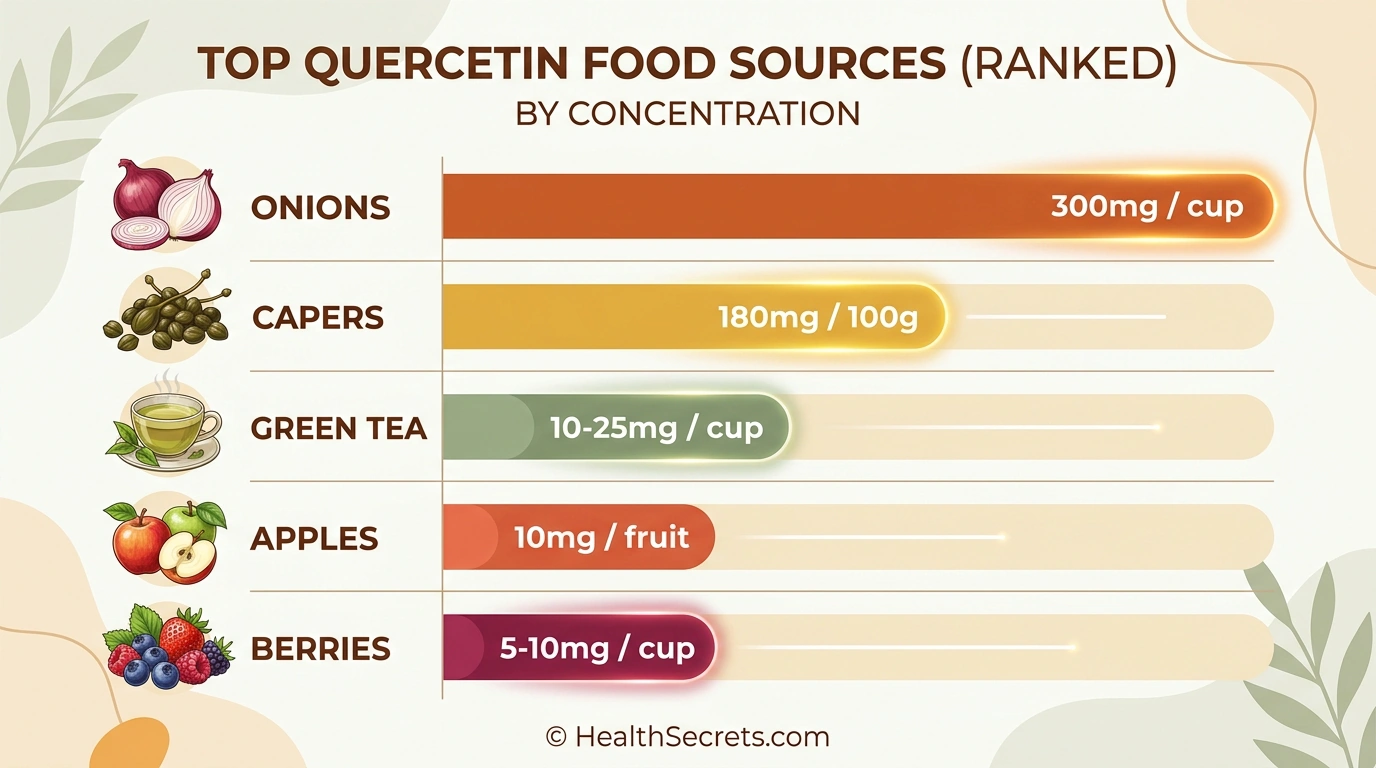
You'll find quercetin in surprisingly high concentrations across common foods:

  • Yellow and red onions — 300mg per cup (the single richest common food source)
  • Capers — 180mg per 100g (highest concentration, but who eats 100g of capers?)
  • Apples — 10mg per medium apple, concentrated in the skin
  • Berries — blueberries and cranberries provide 5–10mg per cup
  • Green tea — 10–25mg per cup, plus synergistic EGCG
  • Red wine — 10–15mg per glass alongside resveratrol
  • Broccoli and kale — 5mg per cup from cruciferous vegetables

What sets quercetin apart from other flavonoids is its dual antioxidant and anti-inflammatory action. It doesn't just neutralize free radicals — it actively shuts down inflammatory signaling at the genetic level.

How Does Quercetin Fight Inflammation in the Body?

Quercetin combats inflammation through at least five distinct mechanisms — inhibiting the NF-κB master switch, blocking COX-2 and 5-LOX enzymes, reducing pro-inflammatory cytokines by 20–30%, and stabilizing mast cells to prevent histamine release. This multi-pathway approach makes it broader in action than many conventional anti-inflammatory agents.

Infographic showing quercetin's five anti-inflammatory mechanisms including NF-κB, COX-2, 5-LOX inhibition, cytokine reduction, and mast cell stabilization

How Does Quercetin Block the NF-κB Inflammatory Master Switch?

NF-κB (Nuclear Factor kappa-B) is essentially the master control switch for inflammatory gene expression. When activated, it turns on genes that produce COX-2 enzymes, inflammatory cytokines, and other mediators. Quercetin blocks NF-κB activation by preventing phosphorylation of IκBα, effectively keeping the inflammatory "faucet" turned off at the source. Research published in European Journal of Pharmacology confirmed that quercetin significantly inhibited NF-κB activation and downstream COX-2 and iNOS expression in human cells.

How Does Quercetin Inhibit COX-2 and 5-LOX Enzymes?

Quercetin suppresses COX-2 (cyclooxygenase-2) — the same enzyme targeted by NSAIDs like ibuprofen — reducing prostaglandin E2 (PGE2) production that drives pain and swelling. But it goes further. Quercetin also inhibits 5-LOX (5-lipoxygenase), reducing leukotrienes (LTB4) involved in allergic inflammation and asthma. This dual COX/LOX inhibition is actually broader than what most NSAIDs achieve, since standard anti-inflammatories typically only target COX.

How Does Quercetin Reduce Inflammatory Cytokines?

Studies show quercetin reduces key pro-inflammatory cytokines — IL-6, TNF-alpha, and IL-1beta — by approximately 20–30%. These cytokines are the chemical messengers that amplify and sustain inflammation throughout the body. By downregulating MAPK signaling pathways alongside NF-κB, quercetin effectively turns down the volume on systemic inflammation.

How Does Quercetin Stabilize Mast Cells and Reduce Histamine?

This is where quercetin really shines for allergy sufferers. Mast cells are immune cells that release histamine and other inflammatory mediators during allergic reactions. Quercetin stabilizes mast cell membranes by blocking calcium influx channels, preventing degranulation — meaning histamine stays inside the cell instead of flooding your tissues. A 2024 study published in Frontiers in Immunology confirmed that quercetin attenuates MRGPRX2-mediated mast cell degranulation, acting as a CLM-1 agonist. Clinical evidence suggests this mechanism reduces allergic symptoms (sneezing, itching, congestion) by 30–40%.

Think of it as nature's antihistamine. But without the drowsiness.

How Well Is Quercetin Absorbed — and Why Does It Matter So Much?

Regular quercetin aglycone has notoriously poor bioavailability — less than 5% of an oral dose reaches the bloodstream — due to low water solubility, rapid metabolism in the liver and intestines, and a short half-life of just 1–2 hours. This means you could swallow 1,000mg and absorb barely 50mg. Fortunately, newer formulations have largely solved this problem.

Why Is Quercetin Phytosome the Gold Standard for Absorption?

Quercetin Phytosome is a lecithin-bound formulation that dramatically improves absorption. A crossover pharmacokinetic study in healthy volunteers found that Quercetin Phytosome delivered approximately 20-fold higher plasma quercetin levels compared to unformulated quercetin. The lecithin coating allows quercetin to cross cell membranes easily (since it becomes lipid-soluble), while also extending its duration in the body.

A 2026 systematic review and meta-analysis of 31 human intervention studies confirmed that lecithin phytosome encapsulation showed a 20.1-fold increase in bioavailability compared to quercetin aglycone — making it one of the most significant absorption improvements available.

What Enhances Quercetin Absorption?

  • Vitamin C — regenerates oxidized quercetin back to its active form and improves uptake (take them together)
  • Bromelain — the pineapple enzyme enhances absorption and adds its own anti-inflammatory effect
  • Dietary fat — quercetin is fat-soluble, so taking it with meals containing fat significantly improves absorption
  • Quercetin glycosides — forms bound to sugar molecules (found in onions) are absorbed better than pure aglycone from supplements

Bottom line? If you're taking standard quercetin powder or capsules, you're probably absorbing very little. Phytosome is worth the extra cost.

How Much Quercetin Should You Take for Inflammation?

For general anti-inflammatory support, take 500–1,000mg of quercetin phytosome daily, or 1,000–2,000mg of regular quercetin (to partially compensate for poor absorption). Take it with meals containing fat and pair with vitamin C for optimal results. Allow 4–8 weeks of consistent use before expecting meaningful improvements.

Quercetin dosing guide infographic showing recommended doses for anti-inflammatory support, allergies, cardiovascular health, and exercise recovery
Goal Phytosome Dose Regular Dose Duration
General anti-inflammatory 500–1,000mg/day 1,000–2,000mg/day Ongoing
Seasonal allergies 500–1,000mg/day 1,000–1,500mg/day Start 4–8 weeks before season
Cardiovascular support 500–1,000mg/day 1,000mg/day Long-term
Exercise recovery 500–1,000mg/day 1,000mg/day Before and after exercise
Timing tips:
  • Take with meals (fat improves absorption)
  • Pair with 500–1,000mg vitamin C (synergistic — regenerates quercetin)
  • Split into 2 doses if taking more than 500mg (morning and evening with food)
  • Consistent daily use beats sporadic high doses
Bar chart comparing quercetin bioavailability showing phytosome form delivers 20 times better absorption than standard quercetin

Can You Get Enough Quercetin From Food Alone?

You can obtain meaningful amounts of quercetin from a diet rich in onions, apples, berries, and green tea — typically 10–300mg daily depending on food choices. However, food sources alone generally can't deliver the 500–1,000mg therapeutic doses shown effective in clinical studies for inflammation, allergies, or cardiovascular support.

Medical illustration showing how quercetin stabilizes mast cells and prevents histamine release to reduce allergy symptoms

That said, food-based quercetin has advantages. Onion quercetin (quercetin glycosides) is actually better absorbed than supplement-form aglycone. And whole foods deliver synergistic compounds — other flavonoids, fiber, vitamins — that isolated supplements miss.

Food Quercetin (mg) Serving Bonus Nutrients
Yellow/red onions ~300 1 cup chopped Prebiotic fiber, sulfur compounds
Capers ~180 100g Rutin, kaempferol
Green tea 10–25 1 cup EGCG, L-theanine
Apples (with skin) ~10 1 medium Fiber, vitamin C
Blueberries 5–10 1 cup Anthocyanins, vitamin C
My recommendation? Eat quercetin-rich foods daily — onions, apples with skin, berries, a few cups of green tea. But if you want therapeutic anti-inflammatory effects, you need supplements. Specifically, the phytosome form.
Chart showing top quercetin food sources ranked by concentration including capers, onions, green tea, apples, and berries

Is Quercetin Safe to Take as a Supplement?

Quercetin is generally well-tolerated with minimal side effects at standard doses of 500–1,000mg daily. It has a long history of safe dietary consumption, and clinical trials consistently report good tolerability. However, high doses above 1,000mg may cause mild gastrointestinal upset, and there are several drug interactions worth knowing about.

Common side effects (rare, dose-dependent):

  • Mild GI upset — nausea or diarrhea, primarily at doses exceeding 1,000mg (take with food to minimize)
  • Headache — uncommon; reduce dose if it occurs
  • Kidney concerns — theoretical at very high doses (>1,000mg) long-term, limited evidence; use caution with existing kidney disease

Drug interactions (mostly theoretical but worth noting):

  • Blood thinners (warfarin) — may increase bleeding risk; monitor INR with your doctor
  • Fluoroquinolone antibiotics — quercetin may reduce effectiveness; separate by 2 hours
  • Cyclosporine — may increase drug levels; consult your doctor if you take immunosuppressants
  • Chemotherapy drugs — antioxidants are controversial during active treatment; consult your oncologist

Who should avoid high-dose quercetin:

  • Pregnant or breastfeeding individuals (insufficient safety data for supplement doses; food sources are fine)
  • Those with kidney disease (consult your doctor before starting)
  • Anyone scheduled for surgery (stop 1–2 weeks beforehand as a precaution)

What Can Quercetin Actually Do for You — and What Can't It Do?

Quercetin can meaningfully reduce systemic inflammation, ease allergy symptoms, support cardiovascular health, and accelerate exercise recovery when taken consistently at therapeutic doses in a bioavailable form. It is not, however, a magic bullet — it works best as part of a comprehensive anti-inflammatory lifestyle, and effects take 4–8 weeks of daily use to become noticeable.
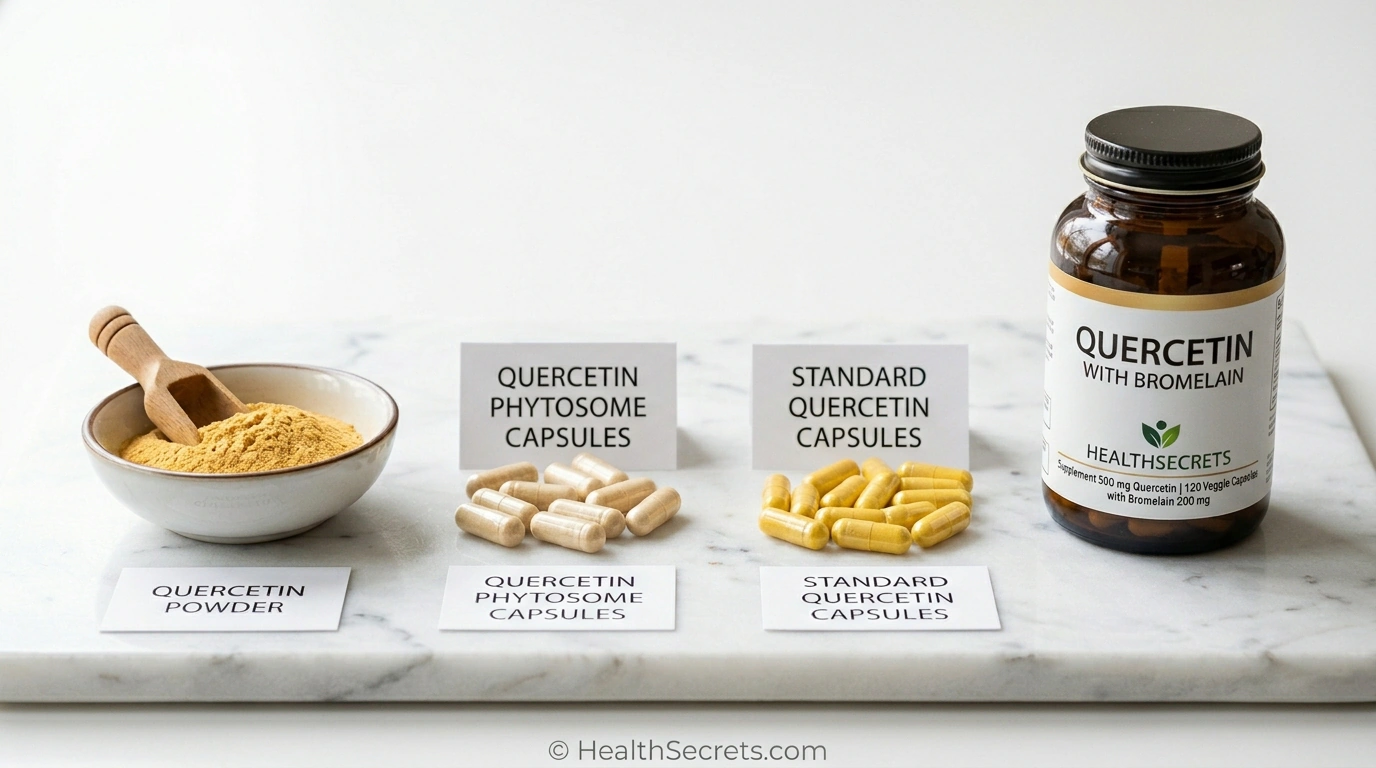
Different forms of quercetin supplements including phytosome capsules, standard capsules, powder, and quercetin with bromelain

Let me be straight with you about expectations.

What quercetin CAN do:

  • Reduce inflammatory markers (IL-6, TNF-alpha, CRP) over 4–8 weeks of consistent use
  • Reduce seasonal allergy symptoms by 30–40% (phytosome form, started before allergy season)
  • Modestly lower blood pressure (5–10 mmHg systolic in some studies)
  • Speed exercise recovery and reduce DOMS by 20–30%
  • Provide broad antioxidant protection against oxidative stress

What quercetin CANNOT do:

  • Replace prescribed anti-inflammatory medications for serious conditions
  • Deliver instant results — this is not ibuprofen; it works through gradual, cumulative mechanisms
  • Overcome terrible bioavailability if you're using cheap, unformulated quercetin aglycone
  • Work in isolation — diet, exercise, sleep, and stress management all matter

The bioavailability factor is everything. If you take regular quercetin, you absorb almost nothing. Quercetin phytosome costs more but actually works. This is not a case where the cheap option saves you money — it wastes it.

What Should You Do First to Start Using Quercetin for Inflammation?

Start by choosing a quercetin phytosome supplement (500mg), take it daily with a meal containing fat and 500mg vitamin C, and commit to at least 8 weeks of consistent use before evaluating results. Add quercetin-rich foods (onions, apples, berries, green tea) to your daily diet for synergistic whole-food benefits.

Phase 1 — Foundation (Weeks 1–2):

  • Choose a quercetin phytosome supplement (500–1,000mg daily)
  • Take with meals containing healthy fat (avocado, olive oil, nuts)
  • Pair with 500–1,000mg vitamin C daily
  • Add onions, apples with skin, and berries to your daily diet

Phase 2 — Optimization (Weeks 3–4):

  • Track symptoms — allergies, inflammation, energy, recovery
  • Adjust dose if needed (stay within 500–1,000mg phytosome range)
  • Add 2–3 cups of green tea daily for additional quercetin and EGCG
  • Consider adding bromelain if targeting allergy relief

Phase 3 — Evaluation (Weeks 5–8):

  • Assess improvements in target symptoms
  • For allergies — start 4–8 weeks before season and continue through
  • Discuss results with your healthcare provider
  • Decide on long-term maintenance protocol
Three-phase quercetin action plan infographic showing weekly checklist for starting quercetin supplementation for inflammation

Top Recommended Products

Editor's Choice

Thorne Quercetin

Thorne Quercetin Phytosome

4.5/5 $$
01

Thorne's phytosome formulation delivers dramatically superior absorption backed by published pharmacokinetic data, making it the single most effective quercetin supplement available.

Pros

  • + Gold-standard phytosome technology
  • + NSF Certified for Sport
  • + trusted clinical-grade brand
  • + well-tolerated

Cons

  • - Premium price point

Why we included it: Thorne's phytosome formulation delivers dramatically superior absorption backed by published pharmacokinetic data, making it the single most effective quercetin supplement available.

Best for: Maximum absorption and bioavailability Dosage: 250mg quercetin phytosome per capsule (equivalent to much higher regular quercetin)
View current price on Amazon

Retailer link opens on Amazon after the review details above

Best for Allergies

NOW Foods

NOW Foods Quercetin with Bromelain

4.5/5 $
02

The quercetin-bromelain combination is specifically studied for allergies, and NOW Foods delivers reliable quality at an accessible price point.

Pros

  • + Proven allergy-relief combination
  • + bromelain enhances absorption
  • + excellent value
  • + trusted brand

Cons

  • - Standard quercetin form (lower bioavailability than phytosome)

Why we included it: The quercetin-bromelain combination is specifically studied for allergies, and NOW Foods delivers reliable quality at an accessible price point.

Best for: Seasonal allergy relief and sinus support Dosage: 500mg quercetin + 100mg bromelain per serving
View current price on Amazon

Retailer link opens on Amazon after the review details above

Best Overall

Life Extension

Life Extension Bio-Quercetin

4.5/5 $
03

Life Extension combines phytosome delivery technology with their rigorous quality standards at a more accessible price than Thorne.

Pros

  • + Phytosome technology for superior absorption
  • + affordable for phytosome
  • + trusted brand with clinical focus

Cons

  • - Only 30 capsules per bottle

Why we included it: Life Extension combines phytosome delivery technology with their rigorous quality standards at a more accessible price than Thorne.

Best for: Daily anti-inflammatory support with enhanced absorption Dosage: 500mg Bio-Quercetin phytosome per capsule
View current price on Amazon

Retailer link opens on Amazon after the review details above

Best Value

Doctor's Best

Doctor's Best Quercetin Bromelain

4.5/5 $
04

For those on a budget who still want quality quercetin with absorption-enhancing bromelain, Doctor's Best offers unbeatable value per capsule.

Pros

  • + Excellent value per serving
  • + generous bromelain dose
  • + vegan-friendly
  • + large bottle

Cons

  • - Standard quercetin (not phytosome)
  • - less absorption than premium forms

Why we included it: For those on a budget who still want quality quercetin with absorption-enhancing bromelain, Doctor's Best offers unbeatable value per capsule.

Best for: Budget-friendly quercetin with absorption support Dosage: 500mg quercetin + 250mg bromelain per serving
View current price on Amazon

Retailer link opens on Amazon after the review details above

Best Synergistic Formula

Natural Factors

Natural Factors Bioactive Quercetin EMIQ

4.5/5 $
05

The EMIQ enzymatic modification technology delivers exceptional bioavailability, and the added vitamin C provides synergistic anti-inflammatory and antioxidant support.

Pros

  • + EMIQ form with 40x higher absorption than standard quercetin
  • + includes vitamin C (synergistic)
  • + ISURA third-party tested

Cons

  • - Moderate price
  • - smaller bottle

Why we included it: The EMIQ enzymatic modification technology delivers exceptional bioavailability, and the added vitamin C provides synergistic anti-inflammatory and antioxidant support.

Best for: Enhanced quercetin with vitamin C and bioflavonoids Dosage: 500mg quercetin complex with vitamin C per serving
View current price on Amazon

Retailer link opens on Amazon after the review details above

Best Standard Quercetin

Jarrow Formulas

Jarrow Formulas Quercetin 500mg

4.5/5 $
06

Jarrow provides straightforward, high-quality quercetin at a competitive price — ideal if you want to customize your own stack with separate vitamin C and bromelain.

Pros

  • + Pure quercetin at full dose
  • + reliable brand
  • + good value
  • + no unnecessary additives

Cons

  • - Standard absorption (no phytosome or bromelain)
  • - requires fat and vitamin C for best results

Why we included it: Jarrow provides straightforward, high-quality quercetin at a competitive price — ideal if you want to customize your own stack with separate vitamin C and bromelain.

Best for: Simple, high-dose quercetin supplementation Dosage: 500mg quercetin per capsule
View current price on Amazon

Retailer link opens on Amazon after the review details above

Best Quercetin + Vitamin C Combo

Solaray Quercetin

Solaray Quercetin with Vitamin C

4.5/5 $
07

Vitamin C and quercetin are synergistic — vitamin C regenerates oxidized quercetin back to its active form, and this formula conveniently combines both at therapeutic doses.

Pros

  • + Vitamin C regenerates quercetin for sustained activity
  • + convenient two-in-one
  • + well-priced

Cons

  • - Standard quercetin form (not phytosome)

Why we included it: Vitamin C and quercetin are synergistic — vitamin C regenerates oxidized quercetin back to its active form, and this formula conveniently combines both at therapeutic doses.

Best for: Immune and anti-inflammatory support with synergistic vitamin C Dosage: 500mg quercetin + 500mg vitamin C per serving
View current price on Amazon

Retailer link opens on Amazon after the review details above

Best for Sensitive Individuals

Pure Encapsulations

Pure Encapsulations Quercetin

4.5/5 $$
08

Pure Encapsulations' hypoallergenic formulation is the go-to choice for individuals with multiple sensitivities who need clean, reliable quercetin without common allergens.

Pros

  • + Free of common allergens (gluten
  • + dairy
  • + soy)
  • + trusted by practitioners
  • + pharmaceutical-grade purity

Cons

  • - Premium price
  • - standard absorption

Why we included it: Pure Encapsulations' hypoallergenic formulation is the go-to choice for individuals with multiple sensitivities who need clean, reliable quercetin without common allergens.

Best for: Hypoallergenic quercetin for those with sensitivities Dosage: 500mg quercetin per capsule
View current price on Amazon

Retailer link opens on Amazon after the review details above

Further Reading

Further Reading

"The Anti-Inflammation Zone"

by Barry Sears

Anti-inflammatory diet framework; role of polyphenols and flavonoids like quercetin; practical meal plans; supplement guidance; connection between diet, inflammation, and chronic disease

Why it adds value here

Sears provides a comprehensive, science-backed framework for fighting inflammation through nutrition and targeted supplementation, with specific coverage of polyphenol compounds including quercetin.

Best for: Anyone wanting to understand the science of dietary inflammation control

View book details

Further Reading

"The Flavonoid Revolution"

by Monica Reinagel

Overview of flavonoid families including quercetin; food sources and absorption science; how flavonoids fight inflammation and oxidative stress; practical dietary recommendations

Why it adds value here

Reinagel translates complex flavonoid science into accessible, actionable advice, making it an ideal companion to this quercetin guide.

Best for: Health-conscious readers wanting practical antioxidant and flavonoid guidance

View book details

AEO FAQ

Frequently Asked Questions

12 common questions answered

Yes — quercetin stabilizes mast cell membranes and prevents histamine release, functioning as a natural antihistamine. Clinical studies show it reduces seasonal allergy symptoms (sneezing, itching, congestion) by 30–40% when taken at 500–1,000mg daily in phytosome form. However, it works preventively over weeks, not as a fast-acting rescue medication like Benadryl.

Expect 4–8 weeks of consistent daily use before noticing meaningful anti-inflammatory effects. Quercetin works through gradual, cumulative mechanisms — reducing inflammatory gene expression, lowering cytokine levels, and stabilizing mast cells over time. It is not a fast-acting pain reliever.

Quercetin phytosome is regular quercetin bound to lecithin (a phospholipid), which dramatically improves absorption — up to 20 times higher plasma levels than standard quercetin. Regular quercetin has less than 5% bioavailability, meaning most of it passes through unabsorbed.

Yes — quercetin pairs well with vitamin C (which regenerates quercetin and enhances absorption), bromelain (improves uptake and adds anti-inflammatory effects), and omega-3 fatty acids. Avoid taking quercetin at the same time as iron or copper supplements, as it may chelate these minerals.

At standard doses of 500–1,000mg daily, quercetin is considered safe for long-term use based on available clinical evidence. It has a long history of dietary consumption. However, very high doses above 1,000mg daily for extended periods warrant caution, particularly for those with kidney concerns.

Cooking does reduce quercetin content somewhat, but it doesn't destroy it entirely. Onions retain significant quercetin after moderate cooking. The bigger factor is that quercetin from cooked foods (especially onions) is actually better absorbed than raw, because heat breaks down cell walls and releases quercetin glycosides.

Yes — a systematic review and meta-analysis of randomized controlled trials found that quercetin supplementation (typically 1,000mg daily) significantly promotes recovery after exercise-induced muscle damage, reducing DOMS and inflammatory markers like CRP and IL-6.

Take quercetin with food — specifically meals containing fat. Quercetin is fat-soluble, and dietary fat significantly improves absorption. Taking it on an empty stomach not only reduces absorption but may also increase the chance of mild GI discomfort at higher doses.

Quercetin should not be viewed as a direct replacement for NSAIDs. While it inhibits COX-2 (the same target as ibuprofen) plus additional pathways like 5-LOX and NF-κB, its effects are gradual and cumulative rather than acute. For chronic low-grade inflammation, quercetin is a promising complementary approach. For acute pain, NSAIDs work faster.

Quercetin may have mild blood pressure-lowering effects (5–10 mmHg systolic in some studies), which could theoretically enhance the effects of blood pressure medications. If you take antihypertensives, inform your doctor before starting quercetin supplements, as dose adjustments may be needed.

There is insufficient safety data on quercetin supplements during pregnancy and breastfeeding. Food sources of quercetin (onions, apples, berries) are perfectly safe. But concentrated supplement doses should be avoided unless specifically approved by your healthcare provider.

Quercetin phytosome is the best form for allergies due to its dramatically superior absorption. Combining quercetin with bromelain is also well-studied for allergy relief. Start 4–8 weeks before allergy season at 500–1,000mg phytosome daily for best preventive results.

Was this article helpful?

Written & Reviewed By Experts

DM

Author

Dr. Marcus Webb

DS

Medical Reviewer

Dr. Sarah Chen

All content is evidence-based, peer-reviewed by qualified professionals, and updated regularly. Our editorial team follows strict guidelines for accuracy and transparency.

References & Citations

20 sources cited

1
Quercetin suppresses cyclooxygenase-2 expression and angiogenesis through inactivation of P300 signaling. Cancer Research, 2011. View
2
Anti-inflammatory potential of quercetin: From chemistry and mechanistic insight to nanoformulations. PMC, 2025. View
3
Quercetin Attenuates MRGPRX2-Mediated Mast Cell Degranulation. Frontiers in Immunology, 2024. View
4
Quercetin and Its Anti-Allergic Immune Response. PMC, 2018. View
5
Improved Oral Absorption of Quercetin from Quercetin Phytosome — a New Delivery System Based on Food Grade Lecithin. European Journal of Drug Metabolism and Pharmacokinetics, 2019. View

Medical Disclaimer

This article is for informational purposes only and does not constitute medical advice. Read the full medical disclaimer. Always consult with a qualified healthcare provider before starting any new supplement, treatment, or major dietary change.