 Pin It
 Omega-3 for Inflammation: EPA and DHA Benefits
Who This Is For
Best for readers comparing supplements options and trying to avoid hype.
Who Should Be Careful
Not for replacing clinician guidance when symptoms, medications, or lab issues are involved.
Affiliate Disclaimer | This article may contain affiliate links to products we trust. If you choose to buy through them, we may earn a small commission at no extra cost to you. Full disclosure
Medical Disclaimer | For informational purposes only. Not a substitute for professional medical advice. Read full disclaimer
Key Takeaways
Nordic Naturals Ultimate Omega
Editor's ChoiceNordic Naturals · Overall best omega-3 for inflammation and general health
Viva Naturals Triple Strength Omega-3
Best High-ConcentrationViva Naturals · Reaching therapeutic anti-inflammatory doses with fewer pills
Carlson The Very Finest Fish Oil Liquid
Best LiquidCarlson The · People who can't swallow capsules or want flexible dosing
Sports Research Triple Strength Omega-3
Best ValueSports Research · Budget-conscious consumers who still want quality and purity
Nordic Naturals EPA Xtra
Best EPA-FocusedNordic Naturals · Depression, rheumatoid arthritis, and targeted anti-inflammatory use
Nordic Naturals Algae Omega
Best VeganNordic Naturals · Vegans, vegetarians, and those with fish allergies
Kori Krill Oil Superior Omega-3
Best Krill OilKori Krill · Those seeking phospholipid-bound omega-3 with astaxanthin
Nature Made Burp-Less Fish Oil
Best BudgetNature Made · Daily maintenance omega-3 on a tight budget
Read the detailed review cards below before opening any retailer link
If you're dealing with chronic joint pain, elevated inflammatory markers, or simply want to give your body its best defense against low-grade inflammation, omega-3 fatty acids deserve a place at the top of your supplement list. These essential fats — found primarily in fatty fish and fish oil supplements — have been studied in thousands of clinical trials, and the evidence is hard to ignore.
The modern Western diet delivers an omega-6 to omega-3 ratio of roughly 15–20:1, when the ideal target is closer to 4:1 or lower. That imbalance fuels chronic inflammation, which is linked to cardiovascular disease, autoimmune conditions, depression, and accelerated aging. An estimated 95% of Americans don't meet even the basic adequate intake of 250–500 mg EPA+DHA daily, according to the National Institutes of Health [4].
The good news? Supplementing with 2–4 g of EPA+DHA daily can significantly reduce key inflammatory markers like CRP, IL-6, and TNF-alpha — and the science behind how they work goes far beyond simple inflammation suppression.
If you're new to the topic of inflammation, start with our chronic inflammation guide for foundational context. For dietary approaches, see our anti-inflammatory diet guide.
What Are Omega-3 Fatty Acids and What Do They Do for Inflammation?
Omega-3 fatty acids are essential polyunsaturated fats that your body cannot produce on its own. The three main types — EPA (eicosapentaenoic acid), DHA (docosahexaenoic acid), and ALA (alpha-linolenic acid) — each play distinct roles in inflammation regulation, with EPA and DHA providing the most direct anti-inflammatory benefits at therapeutic doses of 2–4 g daily.
What Are the Three Types of Omega-3?
- EPA (Eicosapentaenoic acid) is a 20-carbon marine-derived fatty acid and the most potent anti-inflammatory omega-3. It directly competes with pro-inflammatory arachidonic acid (AA) for the same enzymatic pathways and produces E-series resolvins that actively resolve inflammation.
- DHA (Docosahexaenoic acid) is a 22-carbon marine-derived fatty acid that makes up roughly 40% of brain fatty acids. DHA produces D-series resolvins, protectins, and maresins — specialized mediators critical for neuroinflammation resolution and brain health [1].
- ALA (Alpha-linolenic acid) is an 18-carbon plant-based omega-3 found in flaxseed, chia seeds, and walnuts. However, ALA converts to EPA and DHA at only 5–10% efficiency, making it insufficient for therapeutic anti-inflammatory purposes [4].
Why Is the Omega-6 to Omega-3 Ratio So Important?
The modern Western diet delivers an omega-6 to omega-3 ratio of approximately 15–20:1, compared to the ancestral ratio of roughly 1–4:1. Excess omega-6 (primarily arachidonic acid from processed vegetable oils) fuels pro-inflammatory eicosanoid production. Omega-3 supplementation helps restore this balance by replacing arachidonic acid in cell membranes and competing for the same inflammatory enzyme pathways [9].
How Do Omega-3 Fatty Acids Reduce Inflammation in the Body?
Omega-3s fight inflammation through at least five distinct mechanisms: reducing pro-inflammatory cytokines, competing with arachidonic acid for enzymatic pathways, producing specialized pro-resolving mediators, incorporating into cell membranes, and modulating inflammatory gene expression. This multi-pathway approach makes them uniquely effective among natural anti-inflammatory agents.
How Do EPA and DHA Lower Inflammatory Cytokines?
A 2022 umbrella meta-analysis of 32 meta-analyses found that omega-3 supplementation significantly reduced serum CRP (ES = −0.40), TNF-alpha (ES = −0.23), and IL-6 (ES = −0.22) across various health conditions. These three cytokines are among the most important drivers of chronic systemic inflammation [2].

How Do Omega-3s Compete with Arachidonic Acid?
EPA and DHA compete with arachidonic acid (AA) for the COX-2 and 5-LOX enzymes.
When EPA is metabolized by these enzymes instead of AA, the resulting eicosanoids (series-3 prostaglandins, series-5 leukotrienes) have substantially weaker inflammatory activity than their AA-derived counterparts (PGE2, LTB4). Over weeks of supplementation, EPA and DHA progressively replace AA in cell membrane phospholipids, shifting the entire inflammatory balance [3].
What Are Specialized Pro-Resolving Mediators (SPMs)?
Perhaps the most exciting discovery in omega-3 research is that EPA and DHA don't just suppress inflammation — they actively resolve it. EPA produces E-series resolvins, while DHA produces D-series resolvins, protectins (including neuroprotectin D1), and maresins. These SPMs clear cellular debris, promote tissue repair, and prevent the transition from acute to chronic inflammation [8].
How Do Omega-3s Affect Inflammatory Gene Expression?
EPA and DHA inhibit activation of NF-κB, the master transcription factor that controls expression of hundreds of inflammatory genes including COX-2, TNF-alpha, IL-6, and cellular adhesion molecules. They also activate the anti-inflammatory transcription factor PPARγ (peroxisome proliferator-activated receptor gamma), further shifting gene expression toward an anti-inflammatory profile [1].

How Well Are Omega-3 Supplements Absorbed?
Omega-3 bioavailability varies dramatically by supplement form. Triglyceride (TG) and re-esterified triglyceride (rTG) forms offer 70–80% absorption when taken with food, compared to 50–60% for the cheaper ethyl ester (EE) form. Choosing the right form can mean the difference between reaching therapeutic levels and wasting your money.
Which Omega-3 Form Has the Best Absorption?
- Triglyceride (TG) form is the natural form found in fish. It offers superior absorption because digestive lipases efficiently break down the TG structure. Most high-quality supplements use this form.
- Re-esterified triglyceride (rTG) form starts as ethyl ester but is converted back to triglyceride structure. Absorption is comparable to natural TG (70–80%) and this is the form used by many premium brands.
- Ethyl ester (EE) form is the most common and cheapest form. It requires additional enzymatic processing for absorption, resulting in 50–60% bioavailability — roughly 30% less than TG forms.
- Phospholipid form (krill oil) binds omega-3s to phospholipids rather than triglycerides. Some studies suggest enhanced bioavailability, though total EPA+DHA per serving is typically much lower than fish oil.


What Enhances Omega-3 Absorption?
Always take omega-3 supplements with a meal containing fat. A 2019 study showed that taking fish oil with a high-fat meal increased absorption by up to 3x compared to taking it on an empty stomach. Dividing doses (e.g., 1 g morning, 1 g evening with meals) also improves total absorption compared to a single large dose.
How Much Omega-3 Should You Take for Inflammation?
For general health maintenance, 1–2 g of combined EPA+DHA daily is sufficient. For active inflammation reduction in conditions like rheumatoid arthritis, cardiovascular disease, or IBD, clinical trials consistently use 2–4 g EPA+DHA daily. Start with 1 g daily and increase by 1 g every two weeks to assess tolerance.
What Are Condition-Specific Dosing Recommendations?
| Condition | EPA+DHA Dose | Duration | Notes |
|---|---|---|---|
| General health | 1–2 g/day | Ongoing | Maintenance dose |
| Rheumatoid arthritis | 2.7–4 g/day | 12+ weeks | May reduce NSAID use |
| Cardiovascular / triglycerides | 2–4 g/day | Ongoing | AHA-recommended |
| Depression | 1–2 g EPA/day | 8–12 weeks | Higher EPA:DHA ratio |
| IBD (Crohn's/UC) | 2–4 g/day | Ongoing | Supports remission |
| The European Food Safety Authority has stated that omega-3 supplements up to 5 g daily are safe for adults. The American Heart Association recommends 2–4 g EPA+DHA daily for patients with elevated triglycerides [7]. |

When Should You Take Omega-3 and How Should You Ramp Up?
Timing: Take with meals containing dietary fat for optimal absorption. Split into two doses (morning and evening) for therapeutic amounts.
Ramp-up protocol:
- Weeks 1–2: 1 g EPA+DHA daily (assess tolerance)
- Weeks 3–4: 2 g EPA+DHA daily
- Week 5+: Target therapeutic dose (2–4 g daily)
This gradual approach minimizes common side effects like fishy burps and GI discomfort.
Can You Get Enough Omega-3 from Food Alone?
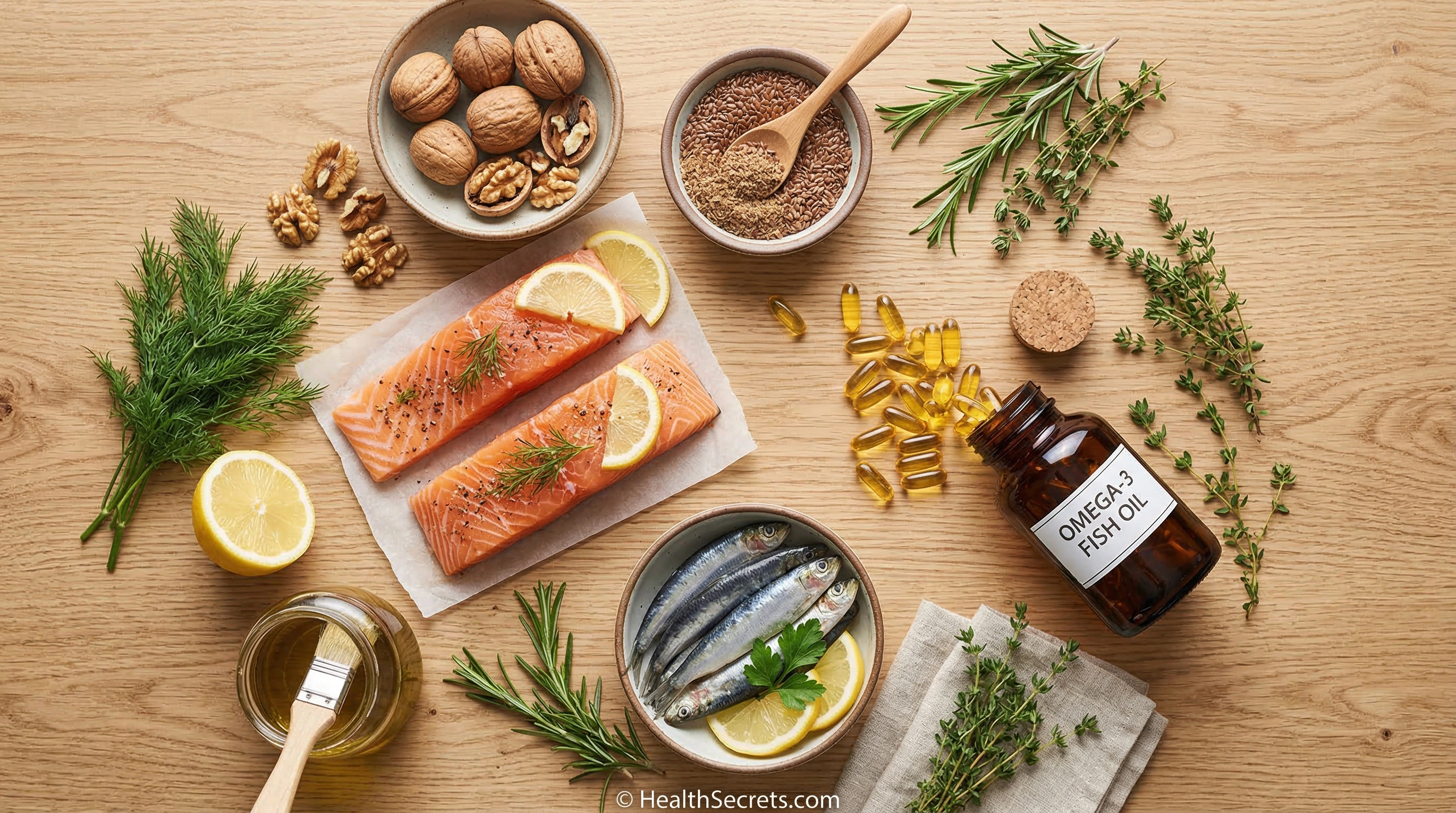
While fatty fish like salmon, sardines, and mackerel provide 1,000–2,000 mg EPA+DHA per 3-ounce serving, reaching therapeutic anti-inflammatory doses (2–4 g daily) through food alone would require eating 2–4 servings of fatty fish every day — impractical for most people. A combination approach of 2–3 fish servings per week plus a quality supplement is the most realistic strategy.

What Are the Best Dietary Sources of EPA and DHA?
| Food Source | EPA+DHA per 3 oz | Mercury Risk |
|---|---|---|
| Wild salmon | 1,500–2,000 mg | Low |
| Atlantic mackerel | 1,500–2,000 mg | Low–moderate |
| Sardines | 1,000–1,500 mg | Very low |
| Anchovies | 1,000–1,500 mg | Very low |
| Herring | 1,200–1,800 mg | Low |
| Plant-based ALA sources (flaxseed, chia seeds, walnuts) provide the precursor ALA at 2,000–2,500 mg per tablespoon, but only 5–10% converts to EPA/DHA — far too inefficient for therapeutic anti-inflammatory needs [4]. |
The practical approach: Eat fatty fish 2–3 times per week for baseline omega-3 intake, then supplement with 1–2 g EPA+DHA daily to reach therapeutic levels.

Is Omega-3 Supplementation Safe?
Omega-3 supplements are generally very safe and well-tolerated at doses up to 5 g daily. The most common side effects are mild GI issues and fishy burps, both of which can be minimized with proper timing and supplement selection. The primary safety concern is increased bleeding risk at high doses, particularly for those on blood-thinning medications.
What Are the Most Common Side Effects?
- Fishy burps are the most frequently reported complaint. Solutions include taking capsules with meals, freezing them before use (so they dissolve in the intestines rather than the stomach), or choosing enteric-coated formulations.
- GI discomfort (nausea, diarrhea) typically occurs at higher doses (>3 g daily) and usually resolves with gradual dose titration and taking supplements with food.
- Blood thinning is a concern at doses exceeding 3 g EPA+DHA daily. If you take warfarin, aspirin, or clopidogrel, consult your doctor before starting omega-3 supplementation. Stop omega-3 supplements 1–2 weeks before scheduled surgery [4].
Who Should Avoid or Use Caution with Omega-3?
- Fish/shellfish allergy: Use algae-based omega-3 instead
- Bleeding disorders: Consult a hematologist before high-dose use
- Pre-surgery patients: Discontinue 1–2 weeks before procedures
- Blood thinner users: Monitor INR and consult prescribing physician
- Diabetes medications: High-dose omega-3 may affect fasting glucose; monitor levels
What Can Omega-3 Supplements Actually Do for You?
Omega-3 supplementation delivers measurable reductions in inflammatory markers and clinical symptoms within 4–12 weeks of consistent use. However, it is not a replacement for an anti-inflammatory lifestyle, and it won't provide instant pain relief like NSAIDs. Think of omega-3s as a foundational tool that works gradually by remodeling your cell membranes and shifting your body's inflammatory balance.
What Does the Clinical Evidence Actually Show?
- Rheumatoid arthritis: Multiple trials show 30–50% improvement in joint pain, morning stiffness, and tender joint count at doses of 2.7–4 g EPA+DHA daily over 12+ weeks. Many patients are able to reduce NSAID use, lowering side effect burden [5].
- Cardiovascular disease: A major 2019 meta-analysis of 13 trials (127,477 participants) found omega-3 supplementation reduces risk of myocardial infarction, coronary heart disease death, and total CVD, with effects appearing dose-related [6].
- Depression: EPA at 1–2 g daily has shown 30–40% symptom improvement in major depressive disorder, with EPA appearing more effective than DHA for mood-related inflammation.
What Omega-3 Won't Do
- Provide immediate pain relief (takes 4–12 weeks)
- Replace prescription medications for serious conditions
- Overcome a poor diet high in processed omega-6 fats
- Work effectively if the supplement is rancid or low-quality
For best results, combine omega-3 supplementation with an anti-inflammatory diet, regular exercise (150 min/week), adequate sleep (7–9 hours), and stress management.
What Should You Do First to Start Using Omega-3 for Inflammation?
Start by assessing your current omega-3 intake from food, choose a high-quality supplement in triglyceride form with third-party testing, and ramp up gradually to your target dose over 4–5 weeks. Combine supplementation with dietary changes to improve your overall omega-6 to omega-3 ratio for maximum anti-inflammatory benefit.
Phase 1: Assessment (Week 1)
- Count your weekly fatty fish servings (target: 2–3)
- Request a hs-CRP blood test to establish your inflammation baseline
- Review current medications for interactions (blood thinners, BP meds)
- Identify your target dose based on your health goals
Phase 2: Select and Start (Weeks 1–2)
- Choose a quality supplement: TG or rTG form, IFOS/USP certified, 500+ mg EPA+DHA per capsule
- Begin at 1 g EPA+DHA daily with your largest meal
- If experiencing fishy burps, freeze capsules or switch to enteric-coated
Phase 3: Ramp Up (Weeks 3–5)
- Increase to 2 g EPA+DHA daily (split AM/PM with meals)
- If targeting inflammation reduction, increase to 3–4 g by week 5
- Simultaneously reduce omega-6 intake: switch from vegetable oils to olive/avocado oil
Phase 4: Monitor and Optimize (Weeks 8–12)
- Retest hs-CRP at 12 weeks to measure improvement
- Track symptom changes: joint pain, stiffness, energy levels
- Adjust dose based on results and tolerance
- Add 2–3 weekly servings of fatty fish for synergistic dietary omega-3


Top Recommended Products
Nordic Naturals
Nordic Naturals Ultimate Omega
Nordic Naturals is the gold standard in fish oil quality with IFOS certification, triglyceride form, and a strong track record of purity testing. The lemon flavor virtually eliminates fishy aftertaste.
Pros
- + IFOS-certified purity
- + triglyceride form
- + lemon-flavored to reduce fishy burps
- + sustainably sourced from anchovies and sardines
Cons
- - Need 2 softgels per serving
- - moderate EPA+DHA concentration compared to ultra-concentrated options
Why we included it: Nordic Naturals is the gold standard in fish oil quality with IFOS certification, triglyceride form, and a strong track record of purity testing. The lemon flavor virtually eliminates fishy aftertaste.
Retailer link opens on Amazon after the review details above
Viva Naturals
Viva Naturals Triple Strength Omega-3
At 2,250 mg omega-3 per serving with a 2.6:1 EPA:DHA ratio, this is one of the most concentrated and cost-effective options for reaching therapeutic anti-inflammatory doses.
Pros
- + Industry-leading 90% omega-3 concentration
- + rTG form for absorption
- + high EPA:DHA ratio ideal for inflammation
- + excellent value per mg
Cons
- - Large softgels may be difficult for some to swallow
Why we included it: At 2,250 mg omega-3 per serving with a 2.6:1 EPA:DHA ratio, this is one of the most concentrated and cost-effective options for reaching therapeutic anti-inflammatory doses.
Retailer link opens on Amazon after the review details above
Carlson The
Carlson The Very Finest Fish Oil Liquid
Carlson liquid fish oil is ideal for anyone who dislikes capsules or needs to fine-tune dosing. The lemon flavor makes it surprisingly palatable, and each teaspoon delivers a solid 1,600 mg of omega-3s.
Pros
- + Easy to dose precisely
- + IFOS-certified
- + natural lemon or orange flavor
- + triglyceride form
- + can be mixed into smoothies
Cons
- - Must be refrigerated after opening
- - requires measuring
Why we included it: Carlson liquid fish oil is ideal for anyone who dislikes capsules or needs to fine-tune dosing. The lemon flavor makes it surprisingly palatable, and each teaspoon delivers a solid 1,600 mg of omega-3s.
Retailer link opens on Amazon after the review details above
Sports Research
Sports Research Triple Strength Omega-3
Excellent quality-to-price ratio with IFOS certification and TG form in a convenient single-softgel serving. A strong everyday option for general anti-inflammatory support.
Pros
- + Single-softgel serving
- + IFOS certified
- + triglyceride form
- + wild Alaskan pollock sourcing
- + great price per serving
Cons
- - Lower total EPA+DHA per serving than ultra-concentrated options
Why we included it: Excellent quality-to-price ratio with IFOS certification and TG form in a convenient single-softgel serving. A strong everyday option for general anti-inflammatory support.
Retailer link opens on Amazon after the review details above
Nordic Naturals
Nordic Naturals EPA Xtra
With nearly a 4:1 EPA:DHA ratio, this is specifically designed for anti-inflammatory applications. Research shows EPA is the more potent anti-inflammatory omega-3, making this the top pick for RA, CVD risk, and mood support.
Pros
- + Very high EPA concentration
- + ideal for inflammatory conditions and depression
- + IFOS certified
- + triglyceride form
Cons
- - Lower DHA content not ideal for brain health
- - smaller bottle size
Why we included it: With nearly a 4:1 EPA:DHA ratio, this is specifically designed for anti-inflammatory applications. Research shows EPA is the more potent anti-inflammatory omega-3, making this the top pick for RA, CVD risk, and mood support.
Retailer link opens on Amazon after the review details above
Nordic Naturals
Nordic Naturals Algae Omega
The best vegan omega-3 option with both EPA and DHA (most algae supplements only provide DHA). Ideal for anyone who avoids fish products but still wants meaningful anti-inflammatory benefits.
Pros
- + 100% plant-based
- + no fish allergens
- + sustainably produced from microalgae
- + IFOS certified
- + no fishy taste
Cons
- - Lower EPA+DHA concentration than fish oil
- - higher cost per mg
Why we included it: The best vegan omega-3 option with both EPA and DHA (most algae supplements only provide DHA). Ideal for anyone who avoids fish products but still wants meaningful anti-inflammatory benefits.
Retailer link opens on Amazon after the review details above
Kori Krill
Kori Krill Oil Superior Omega-3
Krill oil offers a unique phospholipid delivery system plus natural astaxanthin. The small, easy-to-swallow capsules and virtually zero fishy burps make it a great option for those who can't tolerate fish oil.
Pros
- + Phospholipid form may enhance bioavailability
- + includes astaxanthin antioxidant
- + USP verified
- + small softgels easy to swallow
- + no fishy burps
Cons
- - Lower total omega-3 per serving than fish oil
- - higher cost per mg of EPA+DHA
Why we included it: Krill oil offers a unique phospholipid delivery system plus natural astaxanthin. The small, easy-to-swallow capsules and virtually zero fishy burps make it a great option for those who can't tolerate fish oil.
Retailer link opens on Amazon after the review details above
Nature Made
Nature Made Burp-Less Fish Oil
The most accessible and affordable entry point for omega-3 supplementation. USP verification ensures you're getting what the label says, and the burp-less coating solves the most common complaint about fish oil.
Pros
- + Very affordable
- + USP verified for purity and potency
- + enteric coating eliminates burps
- + widely available in stores
Cons
- - Ethyl ester form (lower absorption than TG)
- - need multiple capsules for therapeutic doses
Why we included it: The most accessible and affordable entry point for omega-3 supplementation. USP verification ensures you're getting what the label says, and the burp-less coating solves the most common complaint about fish oil.
Retailer link opens on Amazon after the review details above
Further Reading
Further Reading
"The Omega-3 Connection: The Groundbreaking Antidepression Diet and Brain Program"
by Andrew L. Stoll, MD
Clinical evidence for omega-3 in depression and bipolar disorder; practical dosing guidance; explanation of EPA vs DHA mechanisms; dietary strategies for optimizing omega-3 intake
Why it adds value here
Dr. Stoll's pioneering research at Harvard helped establish the EPA-depression connection that subsequent clinical trials have confirmed. This book makes the science accessible while providing actionable recommendations.
Best for: Anyone interested in the omega-3–brain–inflammation connection, especially for mood disorders
View book detailsFurther Reading
"The Anti-Inflammation Zone: Reversing the Silent Epidemic That's Destroying Our Health"
by Barry Sears, PhD
Comprehensive inflammation science in plain language; the Zone Diet anti-inflammatory approach; omega-3 dosing protocols; practical meal plans and supplement strategies
Why it adds value here
Dr. Sears connects omega-3 supplementation to the bigger picture of dietary inflammation, omega-6 imbalance, and chronic disease. It's an excellent companion to targeted omega-3 supplementation.
Best for: Readers who want to understand the broader anti-inflammatory lifestyle with omega-3 at the center
View book detailsAEO FAQ
Frequently Asked Questions
12 common questions answered
Most clinical studies show measurable reductions in inflammatory markers (CRP, IL-6, TNF-alpha) within 4–12 weeks of consistent supplementation at therapeutic doses of 2–4 g EPA+DHA daily. This timeline reflects the gradual incorporation of EPA and DHA into cell membrane phospholipids, which shifts the body's inflammatory balance over time. Some people notice symptom improvements (reduced joint stiffness, less pain) as early as 4–6 weeks.
EPA is generally considered the more potent anti-inflammatory omega-3 because it directly competes with arachidonic acid for COX-2 and 5-LOX enzymes. However, DHA produces unique brain-specific anti-inflammatory mediators (protectins, maresins). For systemic inflammation, rheumatoid arthritis, or depression, choose a supplement with a higher EPA:DHA ratio (2:1 or 3:1). For brain health or pregnancy, prioritize DHA.
Omega-3 supplements should not replace prescribed medications without medical guidance. However, clinical trials in rheumatoid arthritis show that 2.7–4 g EPA+DHA daily can reduce NSAID use by 30–50% over 12+ weeks. Omega-3s work through different mechanisms than NSAIDs and take weeks to show effects, so they're best viewed as a complementary strategy rather than a direct replacement.
Triglyceride (TG) and re-esterified triglyceride (rTG) forms offer the best absorption at 70–80%, compared to 50–60% for the cheaper ethyl ester (EE) form. Always take omega-3 with a fat-containing meal to further enhance absorption. Look for "triglyceride form" or "TG" on the label.
The European Food Safety Authority has stated that omega-3 supplements up to 5 g EPA+DHA daily are safe for healthy adults. Most clinical studies use 2–4 g daily. At doses above 3 g, consult your doctor due to mild blood-thinning effects — especially if you take anticoagulant medications.
Use caution. Omega-3 fatty acids have mild blood-thinning properties that can enhance the effects of anticoagulants like warfarin, aspirin, or clopidogrel. If you take blood thinners, consult your doctor before starting omega-3 supplementation. Your INR may need more frequent monitoring, and your dosage may need adjustment.
Fishy burps are the most common side effect but are easily managed. Take capsules with meals (food slows digestion), freeze softgels before use (they dissolve in the intestines instead of the stomach), or choose enteric-coated formulations. High-quality, fresh supplements are also less likely to cause burps than oxidized ones.
Krill oil delivers omega-3s in phospholipid form, which may offer slightly better bioavailability per milligram. However, krill oil supplements typically contain much less total EPA+DHA per serving than fish oil. For therapeutic anti-inflammatory doses (2–4 g), fish oil is more practical and cost-effective. Krill oil is a good choice for maintenance doses if you prefer smaller capsules.
Yes, through algae-based omega-3 supplements. Algae oil provides both EPA and DHA without any fish-derived ingredients. However, concentrations tend to be lower than fish oil, so you may need more capsules to reach therapeutic anti-inflammatory doses. Plant-based ALA from flaxseed converts to EPA/DHA at only 5–10%, which is insufficient for inflammation reduction.
IFOS (International Fish Oil Standards) is an independent third-party certification that tests fish oil supplements for purity (heavy metals, PCBs, dioxins), potency (actual EPA/DHA content matches label claims), and freshness (oxidation levels). An IFOS-certified product has passed the most rigorous testing standards in the industry, giving you confidence in quality and safety.
Always take omega-3 with a meal containing dietary fat. Studies show that taking fish oil with a high-fat meal can increase absorption by up to 300% compared to an empty stomach. Fat-soluble nutrients like EPA and DHA require bile salts and lipase enzymes for proper absorption, which are released in response to dietary fat.
SPMs are bioactive molecules produced from EPA and DHA that actively resolve inflammation rather than merely suppressing it. They include E-series resolvins (from EPA), D-series resolvins, protectins, and maresins (from DHA). SPMs promote tissue repair, clear cellular debris, and prevent the transition from acute to chronic inflammation — a unique mechanism not shared by NSAIDs or most other anti-inflammatory agents.
Was this article helpful?
Written & Reviewed By Experts
Author
Dr. Marcus Webb
Medical Reviewer
Dr. Sarah Chen
All content is evidence-based, peer-reviewed by qualified professionals, and updated regularly. Our editorial team follows strict guidelines for accuracy and transparency.
References & Citations
20 sources cited
Medical Disclaimer
This article is for informational purposes only and does not constitute medical advice. Read the full medical disclaimer. Always consult with a qualified healthcare provider before starting any new supplement, treatment, or major dietary change.