
If you've ever stood in the supplement aisle staring at dozens of fish oil bottles — each claiming to be the "best" or "purest" — you're not alone. Omega-3 fatty acids are among the most researched nutrients on the planet, with over 40,000 published studies linking EPA and DHA to benefits ranging from cardiovascular protection to brain health and reduced inflammation. Yet the omega-3 supplement market is also one of the most confusing, with wildly different forms, dosages, purity standards, and price points.
Here's the uncomfortable truth: not all omega-3 supplements are created equal. Research shows that over 70% of fish oil supplements don't contain the EPA/DHA levels stated on their labels, and up to 45% test positive for rancidity [1][2]. The difference between a high-quality omega-3 and a cheap, oxidized product isn't just wasted money — it could mean the difference between protecting your health and potentially causing harm.
For a broader look at supplement quality and selection, see our Complete Supplements Guide. If you're interested in how omega-3s interact with other supplements you may be taking, check out our Supplement Interactions Guide. Those dealing with chronic inflammation may also benefit from our guide on Natural Anti-Inflammatory Remedies.
What Should You Look for When Buying Omega-3 Supplements?
The most important factors when choosing an omega-3 supplement are the molecular form (triglyceride vs. ethyl ester), third-party purity certification (IFOS, NSF, or USP), total EPA+DHA per serving, and freshness indicators like TOTOX values. A supplement that checks all four boxes will deliver meaningful health benefits.
How Does the Molecular Form Affect Omega-3 Absorption?
Omega-3 supplements come in three primary molecular forms, and the form you choose dramatically impacts how much EPA and DHA actually reaches your bloodstream:
- Triglyceride (TG) and re-esterified triglyceride (rTG): The gold standard. These natural forms achieve approximately 70% absorption and are how omega-3s exist in whole fish. The rTG form undergoes additional purification while maintaining the natural triglyceride structure [3].
- Ethyl ester (EE): The most common and cheapest form. Created during the concentration process, EE fish oils achieve only 20–50% absorption. Most budget fish oils use this form [4].
- Phospholipid-bound (krill oil): Omega-3s bound to phospholipids may offer superior cellular uptake at lower doses, particularly for brain health. One RCT showed krill oil outperformed ethyl ester fish oil in raising blood EPA/DHA levels [5].
Why Does Third-Party Testing Matter for Fish Oil Quality?
Third-party testing is non-negotiable for omega-3 supplements because the industry has significant quality control issues. Studies have found that over 70% of fish oil products don't match label claims for EPA/DHA content, and oxidation is rampant [1][2].
Key certifications to look for:
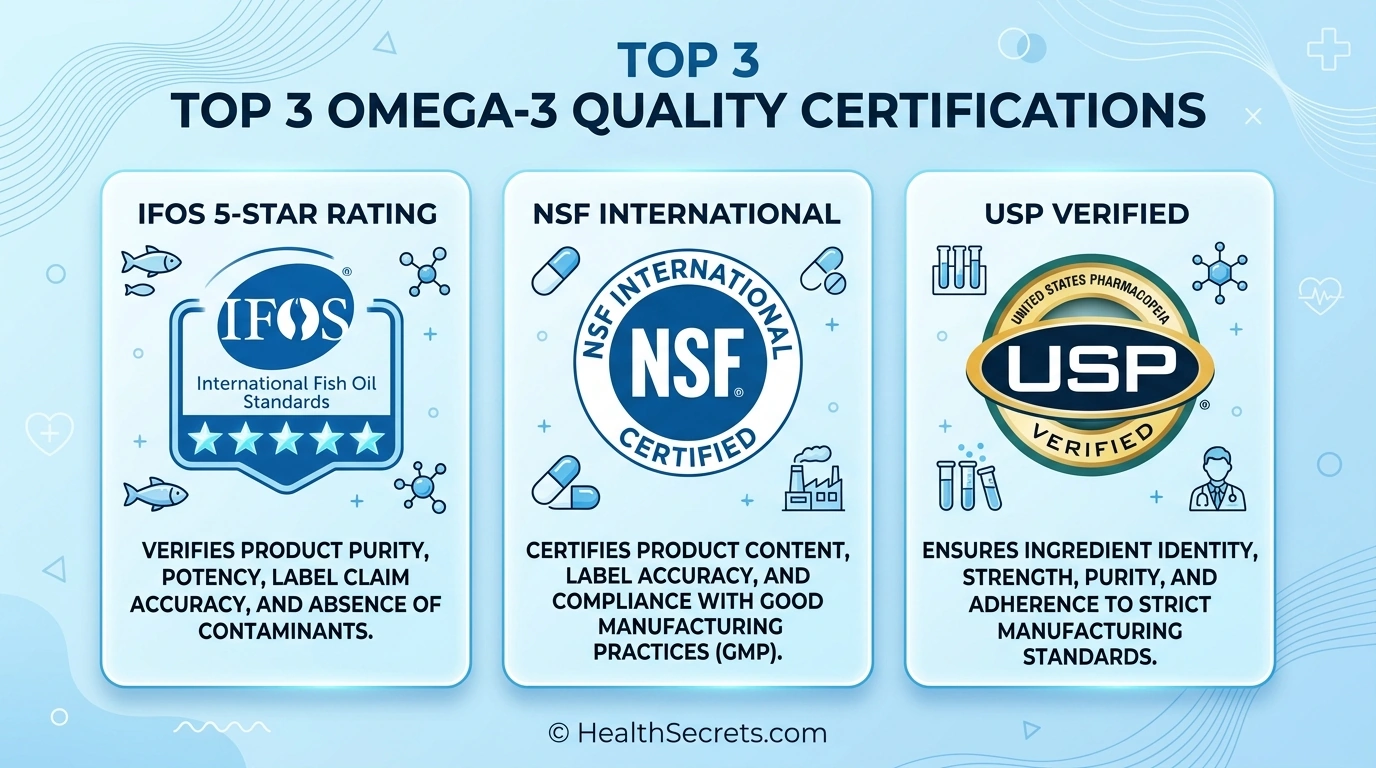
- IFOS (International Fish Oil Standards): The most rigorous program — tests for potency, purity, freshness, and contaminants. A 5-star IFOS rating means the product exceeds all international standards [6].
- NSF International: Verifies product contents match label claims and screens for contaminants.
- USP Verified: Tests for potency, purity, and disintegration.
- TOTOX value: A measure of total oxidation. Look for TOTOX under 26 (the GOED voluntary standard). Some premium brands achieve TOTOX values under 10 [7].
How Much EPA and DHA Do You Actually Need?
Dosage needs vary significantly based on your health goals:
| Health Goal | EPA+DHA Daily | EPA:DHA Ratio | Evidence Level |
|---|---|---|---|
| General health maintenance | 250–500 mg | Balanced | Strong |
| Cardiovascular protection | 1,000–2,000 mg | Higher EPA | Strong |
| Triglyceride reduction | 2,000–4,000 mg | Higher EPA | Strong (AHA) |
| Brain/cognitive support | 1,000+ mg | Higher DHA | Moderate |
| Anti-inflammatory | 2,000–4,000 mg | Higher EPA | Moderate-Strong |
How Did We Evaluate and Rank These Omega-3 Supplements?
We evaluated over 30 omega-3 supplements across six weighted criteria to identify the top products. Each supplement was scored on EPA/DHA potency, molecular form, third-party certifications, value per gram of omega-3, user experience factors, and brand transparency.

What Criteria Did We Use to Score Each Product?
Our evaluation framework weighted each factor based on its importance to supplement effectiveness:
- EPA/DHA potency per serving (25%): Higher concentrations mean fewer capsules and better value. We calculated the actual EPA+DHA content per softgel, not just total fish oil.
- Molecular form and absorption (20%): rTG and TG forms scored highest, followed by phospholipid-bound (krill), with ethyl ester scoring lowest.
- Third-party testing and certifications (20%): IFOS 5-star certification received the highest score. We also evaluated NSF, USP, and brand-published Certificates of Analysis.
- Purity and freshness (15%): We reviewed available TOTOX values, heavy metal testing results, and contaminant screening data.
- Value per gram of EPA+DHA (10%): We calculated the cost per 1,000 mg of combined EPA+DHA to compare value across different forms and concentrations.
- User experience (10%): Capsule size, taste/aftertaste, burp-back reports, and ease of dosing.
How Did We Verify Product Quality Claims?
We cross-referenced manufacturer claims against:
- Published IFOS test results and certificates of analysis
- Independent lab testing data from ConsumerLab and Labdoor
- Peer-reviewed studies on specific branded ingredients (e.g., Superba krill oil, life's OMEGA algae oil)
- User reviews across multiple platforms for real-world experience data
- GOED (Global Organization for EPA and DHA Omega-3s) quality standards compliance

Nordic Naturals Ultimate Omega
Editor's ChoiceNordic Naturals · Overall quality and brand trust with industry-leading transparency

Carlson Elite Omega-3 Gems
Best High PotencyCarlson Elite · Those needing high EPA+DHA per serving for cardiovascular or anti-inflammatory support

Sports Research Triple Strength Omega-3
Best IFOS Certified ValueSports Research · Quality-conscious consumers who want verified purity at a competitive price

Viva Naturals Triple Strength Omega-3
Best ValueViva Naturals · Budget-conscious consumers who want high-dose rTG omega-3s without premium pricing

Nordic Naturals Algal Omega
Best Vegan OptionNordic Naturals · Vegans, vegetarians, and those with fish allergies who need a plant-based omega-3

Sports Research Antarctic Krill Oil
Best Krill OilSports Research · Those who want phospholipid-bound omega-3s with natural astaxanthin for enhanced cellular uptake
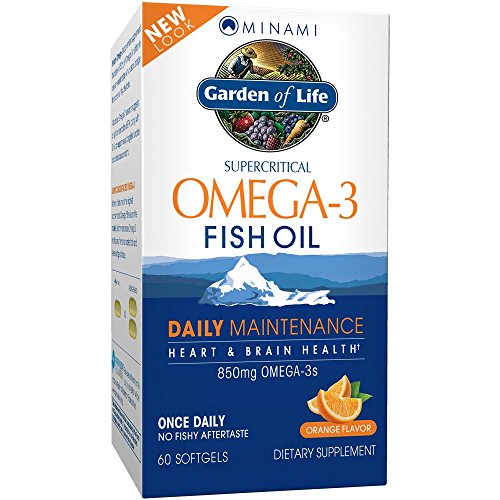
Garden of Life Minami Omega-3 Fish Oil
Best for PurityGarden of · Those who prioritize ultra-pure fish oil with maximum contaminant removal

Life Extension Super Omega-3 EPA/DHA
Best Science-BackedLife Extension · Health-conscious consumers who value research-driven formulations with added benefits
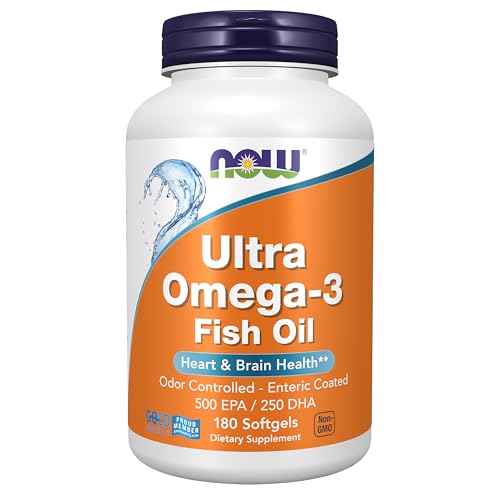
NOW Foods Ultra Omega-3
Best Budget Fish OilNOW Foods · Budget-conscious consumers who want a quality omega-3 at an affordable everyday price
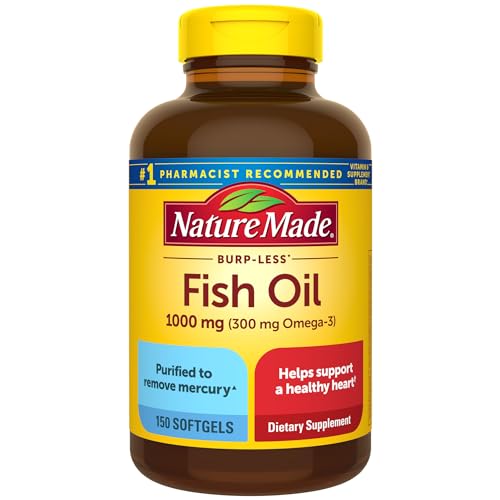
Nature Made Burp-Less Fish Oil 1,200 mg
Best MainstreamNature Made · Those who want a widely available, USP-verified omega-3 from a trusted pharmacy brand

Micro Ingredients Antarctic Krill Oil
Best High-Dose KrillMicro Ingredients · Those who want a high-potency krill oil supplement with maximum astaxanthin
Read the detailed review cards below before opening any retailer link
Top Recommended Products
Nordic Naturals
Nordic Naturals Ultimate Omega
Nordic Naturals sets the industry standard for transparency and quality. Their Ultimate Omega outperformed krill oil, salmon oil, and ethyl ester fish oil in raising blood EPA/DHA levels in a head-to-head RCT (Laidlaw et al., 2014). Every lot is third-party tested with publicly accessible certificates — something few competitors offer.
Pros
- + Industry-leading transparency with publicly available Certificates of Analysis per lot
- + rTG form for superior absorption
- + lemon flavored to reduce fishy aftertaste
- + consistently rated 4.7+ stars across platforms
Cons
- - Higher price per serving compared to some competitors
Why we included it: Nordic Naturals sets the industry standard for transparency and quality. Their Ultimate Omega outperformed krill oil, salmon oil, and ethyl ester fish oil in raising blood EPA/DHA levels in a head-to-head RCT (Laidlaw et al., 2014). Every lot is third-party tested with publicly accessible certificates — something few competitors offer.
Retailer link opens on Amazon after the review details above
Carlson Elite
Carlson Elite Omega-3 Gems
Carlson has been producing fish oil since 1982 and consistently delivers high-potency formulas in the preferred triglyceride form. Their 1,600 mg EPA+DHA per serving means you can reach therapeutic doses with fewer capsules, making it ideal for those following AHA-recommended protocols for cardiovascular health.
Pros
- + One of the highest EPA+DHA per serving on the market
- + natural triglyceride form
- + Norwegian-sourced from deep cold-water fish
- + lemon flavored
Cons
- - Larger softgel size may be difficult for some to swallow
Why we included it: Carlson has been producing fish oil since 1982 and consistently delivers high-potency formulas in the preferred triglyceride form. Their 1,600 mg EPA+DHA per serving means you can reach therapeutic doses with fewer capsules, making it ideal for those following AHA-recommended protocols for cardiovascular health.
Retailer link opens on Amazon after the review details above
Sports Research
Sports Research Triple Strength Omega-3
Sports Research delivers pharmaceutical-grade quality at a mainstream price point. Their use of AlaskOmega — a sustainably sourced Alaskan fish oil — combined with IFOS 5-star certification and MSC sustainability verification makes this a standout for eco-conscious consumers who don't want to compromise on purity.
Pros
- + IFOS 5-star with publicly available test results
- + MSC-certified sustainable sourcing
- + excellent value per serving at 180 count
- + single softgel serving
Cons
- - EPA-heavy ratio may not be ideal for those specifically seeking high DHA for brain support
Why we included it: Sports Research delivers pharmaceutical-grade quality at a mainstream price point. Their use of AlaskOmega — a sustainably sourced Alaskan fish oil — combined with IFOS 5-star certification and MSC sustainability verification makes this a standout for eco-conscious consumers who don't want to compromise on purity.
Retailer link opens on Amazon after the review details above
Viva Naturals
Viva Naturals Triple Strength Omega-3
Viva Naturals packs more omega-3s per serving than almost any competitor — 2,250 mg total including EPA, DHA, and the often-overlooked DPA. At its price point with rTG form and IFOS certification, it offers exceptional value for anyone targeting high-dose protocols without spending premium prices.
Pros
- + Highest total omega-3 content per serving in our review at 2
- + 250 mg
- + includes DPA (a lesser-known beneficial omega-3)
- + rTG form for superior absorption
- + IFOS certified
Cons
- - Requires 2 large softgels per serving
- - fish gelatin capsules not suitable for vegetarians
Why we included it: Viva Naturals packs more omega-3s per serving than almost any competitor — 2,250 mg total including EPA, DHA, and the often-overlooked DPA. At its price point with rTG form and IFOS certification, it offers exceptional value for anyone targeting high-dose protocols without spending premium prices.
Retailer link opens on Amazon after the review details above
Nordic Naturals
Nordic Naturals Algal Omega
Research confirms that algae-derived omega-3s are non-inferior to fish oil for raising plasma DHA and EPA levels (PubMed: 41096614). Nordic Naturals Algal Omega delivers DHA-rich omega-3s in a clean, sustainable, and fish-free format — proving you don't need fish oil to get effective omega-3 supplementation.
Pros
- + 100% plant-based with no fish-derived ingredients
- + triglyceride form for absorption
- + no fishy taste or burps
- + sustainably produced via algae cultivation
- + high DHA content ideal for brain health
Cons
- - Lower total EPA+DHA per serving compared to fish oil options
- - higher cost per gram of omega-3
Why we included it: Research confirms that algae-derived omega-3s are non-inferior to fish oil for raising plasma DHA and EPA levels (PubMed: 41096614). Nordic Naturals Algal Omega delivers DHA-rich omega-3s in a clean, sustainable, and fish-free format — proving you don't need fish oil to get effective omega-3 supplementation.
Retailer link opens on Amazon after the review details above
Sports Research
Sports Research Antarctic Krill Oil
Krill oil's phospholipid-bound omega-3s are absorbed differently than fish oil triglycerides — they integrate directly into cell membranes rather than being stored as body fat. The included astaxanthin provides additional antioxidant protection, and the small, single-capsule serving makes compliance effortless.
Pros
- + Phospholipid-bound omega-3s for superior cellular absorption
- + includes natural astaxanthin antioxidant
- + single small capsule per serving
- + no fishy aftertaste
- + MSC certified sustainable
Cons
- - Lower total EPA+DHA per serving compared to concentrated fish oils
- - higher cost per gram of omega-3
Why we included it: Krill oil's phospholipid-bound omega-3s are absorbed differently than fish oil triglycerides — they integrate directly into cell membranes rather than being stored as body fat. The included astaxanthin provides additional antioxidant protection, and the small, single-capsule serving makes compliance effortless.
Retailer link opens on Amazon after the review details above
Garden of
Garden of Life Minami Omega-3 Fish Oil
Garden of Life's Minami line uses supercritical CO2 extraction — a solvent-free purification method that produces exceptionally clean fish oil. With 840 mg EPA in a single softgel and NSF Sport certification, it's a top choice for athletes and anyone who wants the highest purity standards.
Pros
- + Supercritical CO2 extraction produces ultra-pure oil without chemical solvents
- + high EPA content per single softgel
- + NSF Certified for Sport
- + once-daily dosing
Cons
- - Ethyl ester form has lower absorption than rTG
- - premium price for single-capsule convenience
Why we included it: Garden of Life's Minami line uses supercritical CO2 extraction — a solvent-free purification method that produces exceptionally clean fish oil. With 840 mg EPA in a single softgel and NSF Sport certification, it's a top choice for athletes and anyone who wants the highest purity standards.
Retailer link opens on Amazon after the review details above
Life Extension
Life Extension Super Omega-3 EPA/DHA
Life Extension adds sesame lignans and olive fruit extract to their fish oil — compounds shown in research to provide synergistic cardiovascular and anti-inflammatory benefits. Combined with IFOS 5-star certification and their reputation for science-driven formulations, this is ideal for consumers who want more than just EPA and DHA.
Pros
- + IFOS 5-star certified
- + unique formula adds sesame lignans and olive polyphenols for enhanced cardiovascular benefit
- + well-researched brand
- + good value at 120 count
Cons
- - Requires 2 softgels per serving
- - added ingredients may not be desired by purists
Why we included it: Life Extension adds sesame lignans and olive fruit extract to their fish oil — compounds shown in research to provide synergistic cardiovascular and anti-inflammatory benefits. Combined with IFOS 5-star certification and their reputation for science-driven formulations, this is ideal for consumers who want more than just EPA and DHA.
Retailer link opens on Amazon after the review details above
NOW Foods
NOW Foods Ultra Omega-3
NOW Foods has been a trusted name in supplements since 1968, and their Ultra Omega-3 delivers solid EPA+DHA content at a price point that makes daily omega-3 supplementation accessible to everyone. The enteric coating is a welcome addition that addresses the most common fish oil complaint.
Pros
- + Excellent price point for quality fish oil
- + enteric-coated softgels reduce fishy aftertaste
- + 90 servings per bottle
- + established and trusted brand with decades of history
Cons
- - Ethyl ester form with lower absorption than rTG
- - moderate EPA+DHA per serving requires multiple capsules for therapeutic doses
Why we included it: NOW Foods has been a trusted name in supplements since 1968, and their Ultra Omega-3 delivers solid EPA+DHA content at a price point that makes daily omega-3 supplementation accessible to everyone. The enteric coating is a welcome addition that addresses the most common fish oil complaint.
Retailer link opens on Amazon after the review details above
Nature Made
Nature Made Burp-Less Fish Oil 1,200 mg
Nature Made is the number one pharmacist-recommended supplement brand and one of the few fish oils that carries USP Verification — an independent program that tests for potency, purity, and proper disintegration. For consumers who prefer buying from a trusted mainstream brand available at any pharmacy, this is a reliable daily omega-3.
Pros
- + USP Verified for potency and purity
- + widely available in pharmacies and grocery stores
- + 200-count bottle is excellent value
- + burp-less coating works well for most users
Cons
- - Lower EPA+DHA per softgel requires multiple capsules for therapeutic doses
- - does not disclose molecular form
Why we included it: Nature Made is the number one pharmacist-recommended supplement brand and one of the few fish oils that carries USP Verification — an independent program that tests for potency, purity, and proper disintegration. For consumers who prefer buying from a trusted mainstream brand available at any pharmacy, this is a reliable daily omega-3.
Retailer link opens on Amazon after the review details above
Micro Ingredients
Micro Ingredients Antarctic Krill Oil
For those committed to krill oil but frustrated by the low doses in most products, Micro Ingredients solves the problem with a 2,000 mg per serving formula. This delivers meaningfully higher EPA, DHA, and astaxanthin levels while maintaining the phospholipid-bound absorption advantage that makes krill oil unique.
Pros
- + High 2
- + 000 mg krill oil dose per serving
- + rich in natural astaxanthin
- + phospholipid-bound for cellular absorption
- + 240-count value bottle
Cons
- - Requires 4 softgels per serving
- - shellfish-derived (not suitable for shellfish allergies)
Why we included it: For those committed to krill oil but frustrated by the low doses in most products, Micro Ingredients solves the problem with a 2,000 mg per serving formula. This delivers meaningfully higher EPA, DHA, and astaxanthin levels while maintaining the phospholipid-bound absorption advantage that makes krill oil unique.
Retailer link opens on Amazon after the review details above
How Should You Take Omega-3 Supplements for Maximum Absorption?
Take omega-3 supplements with your largest fat-containing meal of the day — this can increase absorption by up to 300% compared to taking them on an empty stomach. For doses above 2 grams daily, split into two servings with meals to minimize digestive side effects.

When Is the Best Time to Take Fish Oil?
Timing matters more than most people realize:
- With meals: Always take omega-3s with food containing dietary fat. A meal with at least 10–15 grams of fat triggers bile release, which is essential for fat-soluble nutrient absorption [8].
- Split high doses: If taking more than 2g EPA+DHA daily, divide between breakfast and dinner to reduce GI side effects and maintain more consistent blood levels.
- Consistency over timing: Whether you take fish oil in the morning or evening matters less than taking it consistently every day. Choose the meal you're least likely to skip.
- Refrigeration: Store fish oil in the refrigerator after opening to slow oxidation and reduce fishy burps. Some users find frozen softgels release further down the digestive tract, minimizing aftertaste.
How Do You Maximize Omega-3 Absorption From Supplements?
Beyond taking omega-3s with food, several strategies can enhance absorption:
- Pair with high-fat foods: Avocado, nuts, olive oil, or eggs alongside your supplement significantly boost uptake [9].
- Choose rTG or TG forms: These are absorbed 70% more efficiently than ethyl ester forms and don't require as much dietary fat for absorption [3].
- Avoid taking with fiber supplements: High-fiber meals or fiber supplements can reduce fat absorption, potentially lowering omega-3 uptake.
- Consider emulsified formulas: Liquid emulsified fish oils (like smoothie-friendly options) may offer enhanced absorption compared to standard softgels [10].
Are Omega-3 Supplements Safe and What Are the Side Effects?
Omega-3 supplements are generally safe for most adults at doses up to 3 grams of combined EPA+DHA daily. Common side effects include fishy aftertaste, digestive discomfort, and loose stools. At higher doses, omega-3s can thin blood and may increase the risk of atrial fibrillation.

What Are the Most Common Side Effects of Fish Oil?
Most side effects are mild and dose-dependent:
- Fishy burps and aftertaste: The most reported complaint. Minimized by choosing enteric-coated or "burpless" formulations, taking with meals, or refrigerating capsules.
- Digestive issues: Nausea, bloating, diarrhea, or loose stools — especially at higher doses. Splitting doses across meals typically resolves this.
- Increased bleeding time: Omega-3s have mild antiplatelet effects. While clinically significant bleeding is rare, those on blood thinners (warfarin, aspirin, clopidogrel) should consult their doctor before supplementing [11].
Who Should Avoid or Use Caution With Omega-3 Supplements?
Certain populations need medical guidance before supplementing:
- People on blood-thinning medications: Due to additive antiplatelet effects.
- Those with fish or shellfish allergies: Fish oil may trigger reactions in highly sensitive individuals. Algae oil is a safe alternative.
- Pre-surgical patients: Discontinue fish oil 1–2 weeks before scheduled surgery due to bleeding risk.
- People at risk for atrial fibrillation: Meta-analyses show DHA/EPA supplementation at higher doses (above 1g/day) is linked to a 24% higher relative risk of atrial fibrillation [12]. Those with a history of AFib should consult their cardiologist.
- Pregnant and nursing women: Generally safe and recommended (DHA is critical for fetal brain development), but choose products tested for mercury and PCBs. Consult your OB/GYN for appropriate dosing.
What Is the Best Step-by-Step Plan for Starting Omega-3 Supplementation?
Start with a high-quality rTG or TG form omega-3 at 1,000 mg combined EPA+DHA daily, taken with your largest meal. After 2 weeks of tolerance, increase to your target dose based on health goals. Get omega-3 index blood testing at baseline and 3 months.
Phase 1: Assessment and Selection (Week 1)
- Identify your primary health goal (general wellness, heart health, brain support, anti-inflammatory)
- Determine your target EPA+DHA dose using the dosage table in the buying guide section
- Check for contraindications: blood thinners, fish allergies, upcoming surgeries, AFib history
- Select a supplement from our reviewed products that matches your needs and budget
- Consider getting a baseline omega-3 index blood test (target: 8–12%)
Phase 2: Introduction and Tolerance (Weeks 2–3)
- Start at half your target dose for the first week to assess tolerance
- Take with your largest fat-containing meal of the day
- Store opened bottles in the refrigerator
- Monitor for digestive side effects — if present, try splitting the dose or switching to enteric-coated capsules
- Increase to full target dose in week 3 if tolerated
Phase 3: Optimization and Monitoring (Month 2+)
- Maintain consistent daily supplementation — omega-3 benefits are cumulative
- Retest omega-3 index at 3 months to verify you've reached the target range (8–12%)
- Assess subjective improvements: joint comfort, cognitive clarity, skin health, mood
- Adjust dose or product based on blood test results and response
- Review your supplement's freshness — discard any fish oil that smells strongly rancid

