
If you've been dealing with stiff, achy joints — whether from osteoarthritis, exercise, or simply getting older — you've probably heard about MSM. Methylsulfonylmethane is one of the most popular joint health supplements in the world, and for good reason. This naturally occurring sulfur compound plays a critical role in building and maintaining the connective tissue that keeps your joints moving smoothly.
But does the science actually back up the hype? The answer is encouraging. Multiple clinical trials show that MSM supplementation can significantly reduce joint pain, decrease inflammation markers, and improve physical function — especially in people with osteoarthritis. And unlike NSAIDs, MSM does this with a remarkably clean safety profile.
If you're exploring natural approaches to inflammation and pain, check out our comprehensive Inflammation and Pain Relief Guide for a broader perspective. You may also find our guides on Omega-3 for Inflammation and Boswellia for Inflammation helpful companions to this article.
What Is MSM and Why Does It Matter for Joint Health?
MSM (methylsulfonylmethane) is an organic sulfur compound found naturally in the human body, as well as in foods like fresh vegetables, fruits, milk, meat, and seafood. It is the third most abundant mineral compound in the body and serves as a critical building block for connective tissue, cartilage, and joint structures. MSM supplements typically contain a purified synthetic form identical to the natural compound.
Sulfur is sometimes called the "forgotten mineral" because despite being essential for dozens of biological processes, it rarely makes headlines. Yet your body needs sulfur to produce collagen, keratin, glucosamine, and chondroitin sulfate — all compounds critical for healthy joints, skin, hair, and nails. MSM is one of the most bioavailable forms of dietary sulfur, making it an efficient way to support these processes.
MSM's chemical formula is (CH₃)₂SO₂. It is closely related to DMSO (dimethyl sulfoxide), a well-known topical anti-inflammatory, but MSM is a distinct compound with its own unique properties and safety profile. Unlike DMSO, MSM is odorless and suitable for oral supplementation.
How Is MSM Different from Other Sulfur Supplements?
MSM stands apart from other sulfur sources because of its high bioavailability and clean safety record. While sulfur-containing amino acids like methionine and cysteine also provide sulfur, MSM delivers it in a form that the body can readily absorb and distribute to joints, muscles, and connective tissues. MSM is approximately 34% sulfur by weight, making it one of the most concentrated dietary sulfur sources available.
How Does MSM Reduce Joint Pain and Inflammation?
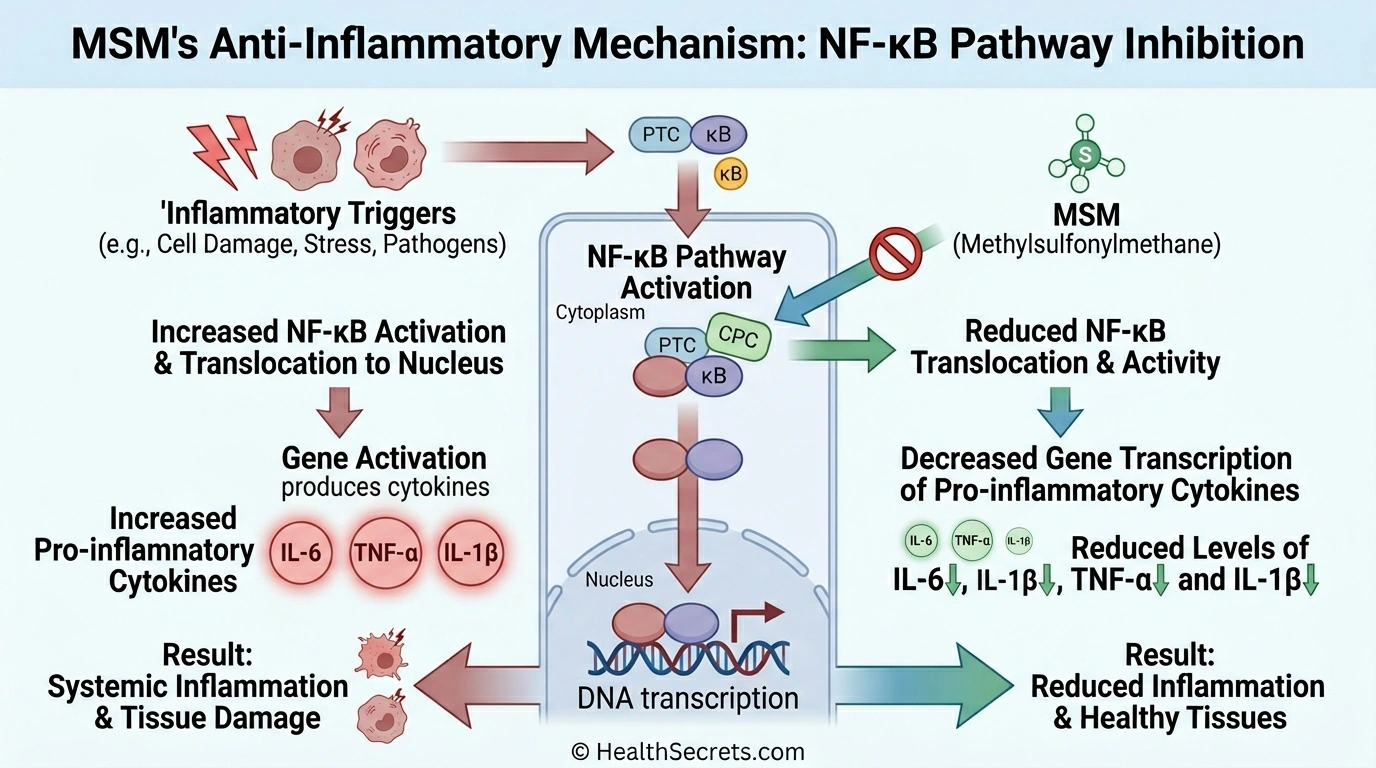
MSM reduces joint pain through multiple mechanisms: it suppresses the NF-κB inflammatory pathway, lowers pro-inflammatory cytokines (IL-6, TNF-α, IL-1β), provides sulfur for cartilage repair, and acts as an antioxidant to reduce oxidative stress in joint tissues. These combined actions make MSM a multi-targeted approach to joint health rather than a single-pathway pain reliever.

Does MSM Block Inflammatory Pathways?
Yes — MSM inhibits the NF-κB signaling pathway, which is a master regulator of inflammation in the body. By blocking NF-κB translocation to the nucleus, MSM reduces the expression of inflammatory enzymes (COX-2, iNOS) and pro-inflammatory cytokines. In vitro studies show MSM significantly reduces IL-6, TNF-α, and IL-1β production in stimulated immune cells. This mechanism is similar to how pharmaceutical anti-inflammatories work, but MSM achieves it without the gastrointestinal side effects associated with NSAIDs.
Can MSM Actually Rebuild Cartilage?
MSM supports cartilage maintenance by providing the sulfur needed to synthesize glycosaminoglycans (GAGs), collagen, and proteoglycans — the structural molecules that give cartilage its strength and resilience. While MSM alone may not "rebuild" severely damaged cartilage, it provides the raw materials that chondrocytes (cartilage cells) need to maintain and repair cartilage tissue. Sulfur is required for disulfide bonds that stabilize collagen's triple-helix structure, making adequate sulfur intake essential for connective tissue integrity.
Does MSM Have Antioxidant Properties?
MSM acts as a potent antioxidant by boosting the body's production of glutathione — often called the "master antioxidant." It also directly scavenges reactive oxygen species (ROS) that contribute to joint tissue damage and inflammation. Research published in Nutrients showed that MSM supplementation improved post-exercise inflammation markers and enhanced innate immune response, suggesting broad antioxidant and immune-modulating benefits.
How Well Does Your Body Absorb MSM Supplements?
MSM has excellent oral bioavailability, with studies showing rapid absorption from the gastrointestinal tract and distribution throughout body tissues including joints, muscles, and skin. Peak blood levels are typically reached within 2–4 hours after oral ingestion, and MSM readily crosses biological membranes due to its small molecular size and water solubility.
MSM is absorbed primarily in the small intestine and distributed throughout the body via the bloodstream. Its relatively small molecular weight (94.13 g/mol) allows it to cross cell membranes efficiently. Studies using radiolabeled MSM have confirmed that it accumulates in joints, skin, nails, and hair — exactly the tissues where sulfur is most needed.
What Factors Affect MSM Absorption?
Several factors can influence how well your body absorbs and utilizes MSM:
- Form matters: Powder and capsule forms are equally well-absorbed, but powder dissolves faster and may reach peak levels slightly sooner
- Food timing: MSM can be taken with or without food, though taking it with a meal may reduce mild stomach sensitivity in some people
- Vitamin C pairing: Some research suggests that vitamin C may enhance sulfur utilization, making it a useful companion nutrient
- Purity: OptiMSM, produced through distillation purification, is the most studied form and has the highest verified purity
- Consistency: Daily supplementation builds steady tissue levels over 2–4 weeks, so consistent use is more important than timing
How Much MSM Should You Take for Joint Pain?
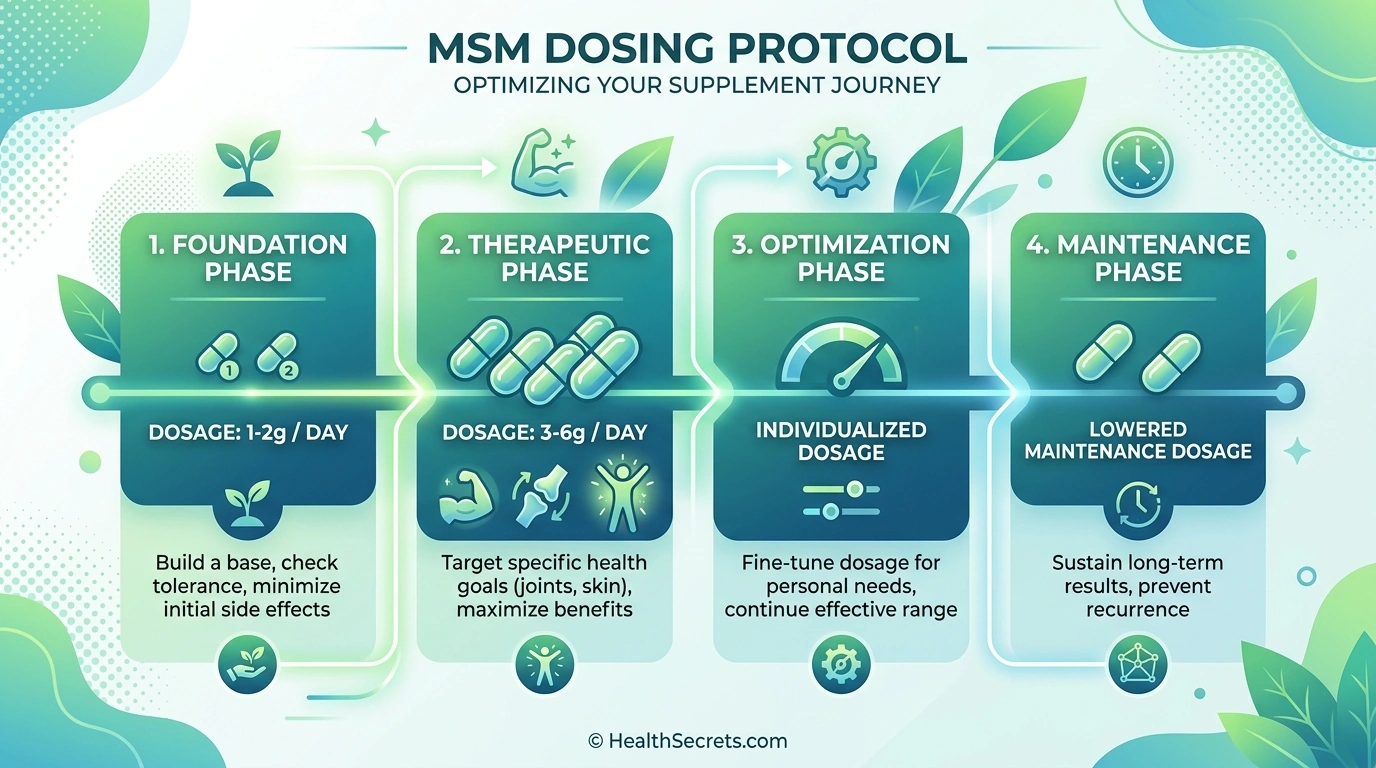
Clinical evidence supports MSM dosing of 2–6 grams per day in 2–3 divided doses for joint health benefits. Most studies showing significant pain reduction and improved function used 3–6 g/day for at least 12 weeks. MSM is classified as GRAS (Generally Recognized As Safe) at doses up to 4 g/day, and doses up to 6 g/day have been used safely in clinical trials.
What Does the Clinical Evidence Say About MSM Dosing?
The most well-known MSM dosing study, published in Osteoarthritis and Cartilage, used 6 g/day (3 g twice daily) for 26 weeks in patients with knee osteoarthritis. Participants experienced significant improvements in pain and physical function compared to placebo. Another landmark study from India used 1.5 g/day (500 mg three times daily) for 12 weeks and found significant reductions in pain and swelling, with even better results when MSM was combined with glucosamine.
Recommended dosing protocol:
- Starting dose: 1–2 g/day for the first week (to assess tolerance)
- Maintenance dose: 3–6 g/day in 2–3 divided doses
- Optimal study dose: 6 g/day (3 g twice daily) based on clinical trials
- Timeline: Allow 4–12 weeks for noticeable benefits
- With food: Optional, but may help if mild GI sensitivity occurs
Is It Better to Take MSM with Glucosamine?
Multiple studies suggest that combining MSM with glucosamine produces additive joint health benefits. A 12-week clinical trial found that patients taking both MSM and glucosamine together experienced greater pain reduction and reduced swelling compared to either supplement alone. The combination makes biological sense: glucosamine provides raw material for cartilage matrix, while MSM provides the sulfur needed to build and stabilize that matrix. If you're taking MSM for osteoarthritis, adding 1,500 mg/day of glucosamine sulfate is a well-supported strategy.

Doctor's Best MSM with OptiMSM 1500mg
Best OverallDoctor's Best · General joint health and osteoarthritis support
NOW Foods MSM Powder
Best PowderNOW Foods · Flexible dosing and those who prefer powder over capsules

Jarrow Formulas MSM 1000mg
Best CapsuleJarrow Formulas · Convenient daily capsule supplementation
Doctor's Best Glucosamine Chondroitin MSM with OptiMSM
Best Combo FormulaDoctor's Best · Comprehensive joint support combining MSM with glucosamine and chondroitin

Kala Health OptiMSM Powder (Pure Distilled)
Purest FormKala Health · Those seeking the highest-purity MSM with no additives

NOW Foods Glucosamine & MSM
Best Value ComboNOW Foods · Budget-friendly combination of MSM and glucosamine

Nature's Way MSM 1000mg
Trusted BrandNature's Way · Those who prefer a well-established supplement brand

Bulk Supplements MSM Powder
Best BudgetBulk Supplements · Cost-conscious supplementers who want pure MSM at the lowest price
Read the detailed review cards below before opening any retailer link
Top Recommended Products
Doctor's Best
Doctor's Best MSM with OptiMSM 1500mg
Doctor's Best uses OptiMSM, the gold-standard purified form of MSM backed by clinical research. The 1,500 mg dose per tablet makes it easy to reach therapeutic levels with just 2–4 tablets daily. Excellent value and trusted brand.
Pros
- + Clinically studied OptiMSM form
- + high 1
- + 500 mg dose per tablet
- + excellent value per serving
- + clean label with no unnecessary additives
Cons
- - Tablets are large and may be difficult for some people to swallow
Why we included it: Doctor's Best uses OptiMSM, the gold-standard purified form of MSM backed by clinical research. The 1,500 mg dose per tablet makes it easy to reach therapeutic levels with just 2–4 tablets daily. Excellent value and trusted brand.
Retailer link opens on Amazon after the review details above
NOW Foods
NOW Foods MSM Powder
NOW Foods MSM Powder is the most economical way to supplement MSM at therapeutic doses. The powder form allows you to start low and gradually increase to your ideal dose. One container lasts several months at standard dosing.
Pros
- + Extremely cost-effective per serving
- + allows precise dose adjustment
- + mixes easily in water or smoothies
- + very long supply per container
Cons
- - Slightly bitter taste
- - requires measuring
Why we included it: NOW Foods MSM Powder is the most economical way to supplement MSM at therapeutic doses. The powder form allows you to start low and gradually increase to your ideal dose. One container lasts several months at standard dosing.
Retailer link opens on Amazon after the review details above
Jarrow Formulas
Jarrow Formulas MSM 1000mg
Jarrow Formulas delivers pharmaceutical-grade OptiMSM in convenient vegan capsules. The 200-count bottle provides excellent value, and the 1,000 mg dose per capsule makes it easy to customize your daily intake.
Pros
- + OptiMSM certified
- + easy-to-swallow veggie capsules
- + good value with 200-count bottle
- + clean formula
Cons
- - Need 3–6 capsules daily for therapeutic dose
Why we included it: Jarrow Formulas delivers pharmaceutical-grade OptiMSM in convenient vegan capsules. The 200-count bottle provides excellent value, and the 1,000 mg dose per capsule makes it easy to customize your daily intake.
Retailer link opens on Amazon after the review details above
Doctor's Best
Doctor's Best Glucosamine Chondroitin MSM with OptiMSM
This combination formula pairs MSM with glucosamine and chondroitin — the three most evidence-backed joint supplements. Research shows MSM and glucosamine together produce additive benefits. The OptiMSM and KD-Pur chondroitin ensure quality ingredients.
Pros
- + Combines three clinically studied joint ingredients
- + OptiMSM and verified chondroitin
- + well-dosed combination
- + additive benefits supported by research
Cons
- - Lower MSM dose per serving than standalone products
- - 2 capsules per serving
Why we included it: This combination formula pairs MSM with glucosamine and chondroitin — the three most evidence-backed joint supplements. Research shows MSM and glucosamine together produce additive benefits. The OptiMSM and KD-Pur chondroitin ensure quality ingredients.
Retailer link opens on Amazon after the review details above
Kala Health
Kala Health OptiMSM Powder (Pure Distilled)
Kala Health offers 100% pure OptiMSM with absolutely nothing else added. For those who want the cleanest possible MSM supplement with verified purity through distillation (not crystallization), this is the gold standard.
Pros
- + Highest purity available (99.9%)
- + no fillers or additives whatsoever
- + distillation-purified
- + dissolves easily
Cons
- - Higher price point than generic MSM powders
Why we included it: Kala Health offers 100% pure OptiMSM with absolutely nothing else added. For those who want the cleanest possible MSM supplement with verified purity through distillation (not crystallization), this is the gold standard.
Retailer link opens on Amazon after the review details above
NOW Foods
NOW Foods Glucosamine & MSM
NOW Foods delivers a reliable glucosamine-MSM combination at an accessible price. While it uses standard MSM rather than OptiMSM, NOW's GMP-certified manufacturing ensures quality. Ideal for budget-conscious shoppers wanting the research-backed MSM-glucosamine combination.
Pros
- + Affordable combination formula
- + well-known trusted brand
- + good capsule count
- + easy dosing
Cons
- - Uses standard MSM rather than OptiMSM
- - glucosamine HCl rather than sulfate form
Why we included it: NOW Foods delivers a reliable glucosamine-MSM combination at an accessible price. While it uses standard MSM rather than OptiMSM, NOW's GMP-certified manufacturing ensures quality. Ideal for budget-conscious shoppers wanting the research-backed MSM-glucosamine combination.
Retailer link opens on Amazon after the review details above
Nature's Way
Nature's Way MSM 1000mg
Nature's Way is one of the most established supplement brands in the US. Their MSM uses OptiMSM and comes in a generous 200-tablet bottle at a very competitive price. A solid choice for anyone prioritizing brand trust and value.
Pros
- + Established brand with long track record
- + OptiMSM form
- + affordable
- + 200 count
Cons
- - Tablets may contain more binders than capsule forms
Why we included it: Nature's Way is one of the most established supplement brands in the US. Their MSM uses OptiMSM and comes in a generous 200-tablet bottle at a very competitive price. A solid choice for anyone prioritizing brand trust and value.
Retailer link opens on Amazon after the review details above
Bulk Supplements
Bulk Supplements MSM Powder
BulkSupplements offers the absolute lowest price per serving of pure MSM powder. While it's not OptiMSM, it's lab-tested and manufactured in a cGMP facility. Perfect for those who prioritize maximum value and go through MSM quickly.
Pros
- + Extremely low cost per serving
- + large quantity
- + no additives or fillers
- + lab-tested for purity
Cons
- - Not OptiMSM certified
- - minimal packaging and branding
- - no included scoop
Why we included it: BulkSupplements offers the absolute lowest price per serving of pure MSM powder. While it's not OptiMSM, it's lab-tested and manufactured in a cGMP facility. Perfect for those who prioritize maximum value and go through MSM quickly.
Retailer link opens on Amazon after the review details above
Which Foods Are Naturally Rich in MSM?
MSM occurs naturally in many whole foods, though concentrations are relatively low compared to supplemental doses. The richest food sources include cruciferous vegetables (broccoli, cauliflower, cabbage, Brussels sprouts), allium vegetables (garlic, onions), eggs, milk, tomatoes, and certain fruits like apples and raspberries. Animal proteins including meat, poultry, and fish also contain meaningful amounts of sulfur compounds.

However, food processing, cooking, and storage significantly reduce MSM content. Raw, fresh foods contain the highest levels, but even a sulfur-rich diet typically provides only a fraction of the 2–6 g/day used in clinical studies. This is why supplementation is generally necessary for therapeutic joint health benefits.
Top MSM food sources:
- Cruciferous vegetables: Broccoli, Brussels sprouts, cabbage, cauliflower, kale
- Allium family: Garlic, onions, leeks, chives
- Protein sources: Eggs, grass-fed beef, wild-caught fish, poultry
- Dairy: Raw milk, cheese (especially aged varieties)
- Fruits: Apples, raspberries, tomatoes
- Beverages: Coffee, tea (small amounts)
Is MSM Safe for Long-Term Use?
MSM has an excellent safety profile and is classified as GRAS (Generally Recognized As Safe) by the FDA. Clinical trials using doses of 1.5–6 g/day for up to 26 weeks have reported only mild, infrequent side effects. No serious adverse events have been attributed to MSM supplementation in published research, and no contraindications have been formally identified.

The most commonly reported side effects are mild and typically resolve within the first few days of use:
- Mild gastrointestinal discomfort (bloating, nausea, diarrhea)
- Headache (usually during the first week)
- Mild fatigue or insomnia (rare)
- Skin reactions (very rare)
Who Should Be Cautious with MSM?
While MSM is very safe for most adults, certain groups should consult a healthcare provider before supplementing:
- Pregnant or breastfeeding women: Insufficient safety data in these populations
- People on blood thinners: MSM may have mild blood-thinning properties; monitor with your doctor
- Those with sulfur sensitivities: Although MSM sulfur is different from sulfa drugs and sulfites, discuss with your provider if you have known sensitivities
- Pre-surgery patients: Discontinue 2 weeks before scheduled surgery due to potential blood-thinning effects
- Children: Limited pediatric research; consult a pediatrician
Does MSM Interact with Medications?
MSM has no well-documented drug interactions, which contributes to its favorable safety profile. However, because of its mild anti-inflammatory and potential blood-thinning properties, caution is warranted when combining MSM with anticoagulants (warfarin, heparin) or high-dose aspirin. Always inform your healthcare provider about all supplements you take.
What Results Can You Realistically Expect from MSM?
Most MSM users can expect gradual, moderate improvements in joint comfort, reduced stiffness, and better mobility over 4–12 weeks of consistent daily supplementation at 3–6 g/day. MSM is not a rapid pain reliever like NSAIDs — it works by supporting the body's natural repair and anti-inflammatory processes, which takes time to produce noticeable results.

Realistic timeline:
- Week 1–2: Most people notice no changes; the body is building tissue levels of sulfur
- Week 3–4: Some users report slight improvements in joint stiffness, especially in the morning
- Week 6–8: Noticeable reduction in joint pain and improved mobility for many users
- Week 12+: Optimal benefits typically reached; continued use maintains improvements
What MSM can do:
- Reduce mild-to-moderate joint pain and stiffness
- Decrease inflammation markers (CRP, cytokines)
- Support cartilage maintenance and connective tissue health
- Improve exercise recovery and reduce post-workout soreness
- Provide additive benefits when combined with glucosamine
What MSM cannot do:
- Replace medical treatment for severe arthritis or joint injury
- Rebuild significantly damaged or destroyed cartilage
- Provide immediate pain relief (this is a slow-acting supplement)
- Cure osteoarthritis or other degenerative joint conditions
- Substitute for physical therapy, exercise, or weight management
The best results are seen when MSM is used as part of a comprehensive joint health strategy that includes appropriate exercise, anti-inflammatory nutrition, weight management, and other evidence-based supplements like omega-3 fatty acids and glucosamine.
What Is the Best Step-by-Step Plan to Start Using MSM for Joint Health?
The most effective approach to MSM supplementation involves a phased protocol: start with a low dose to assess tolerance, gradually increase to a therapeutic dose, combine with synergistic nutrients, and maintain consistency for at least 12 weeks to evaluate results. This structured approach maximizes benefits while minimizing any initial side effects.

Phase 1 — Foundation (Week 1–2):
- Choose a high-quality MSM supplement (look for OptiMSM certification)
- Start with 1–2 g/day in divided doses (morning and evening)
- Take with food if you experience any mild stomach sensitivity
- Keep a simple journal noting joint pain levels (1–10 scale) and stiffness
- Ensure adequate hydration (MSM increases sulfur metabolism)
Phase 2 — Therapeutic Dose (Week 3–6):
- Increase to 3–6 g/day in 2–3 divided doses
- Consider adding glucosamine sulfate (1,500 mg/day) for additive benefits
- Add vitamin C (500–1,000 mg/day) to support collagen synthesis
- Continue your pain/stiffness journal for comparison
- Incorporate gentle joint-friendly exercise (walking, swimming, yoga)
Phase 3 — Optimization (Week 7–12):
- Evaluate progress against your baseline journal entries
- Adjust dose within the 3–6 g/day range based on response
- Add anti-inflammatory foods: fatty fish, turmeric, ginger, leafy greens
- Review with your healthcare provider at the 12-week mark
- Consider adding omega-3 supplementation for comprehensive anti-inflammatory support
Phase 4 — Maintenance (Ongoing):
- Continue effective dose long-term (MSM benefits require ongoing supplementation)
- Reassess every 3–6 months with your healthcare provider
- Maintain joint-supporting lifestyle habits: regular movement, healthy weight, anti-inflammatory diet
