Here's something most people don't realize about cold sores: roughly 67% of the global population carries herpes simplex virus type 1 (HSV-1), the virus responsible for those painful lip blisters. Most carriers don't even know they're infected. And if you're among the unlucky ones who get regular outbreaks, you already know the drill — that telltale tingle, then blisters, then a week or more of discomfort and self-consciousness.
The conventional approach usually involves prescription antivirals like acyclovir or valacyclovir. They work. But what if you could catch an outbreak early with natural remedies for cold sores and either prevent it entirely or cut healing time in half?
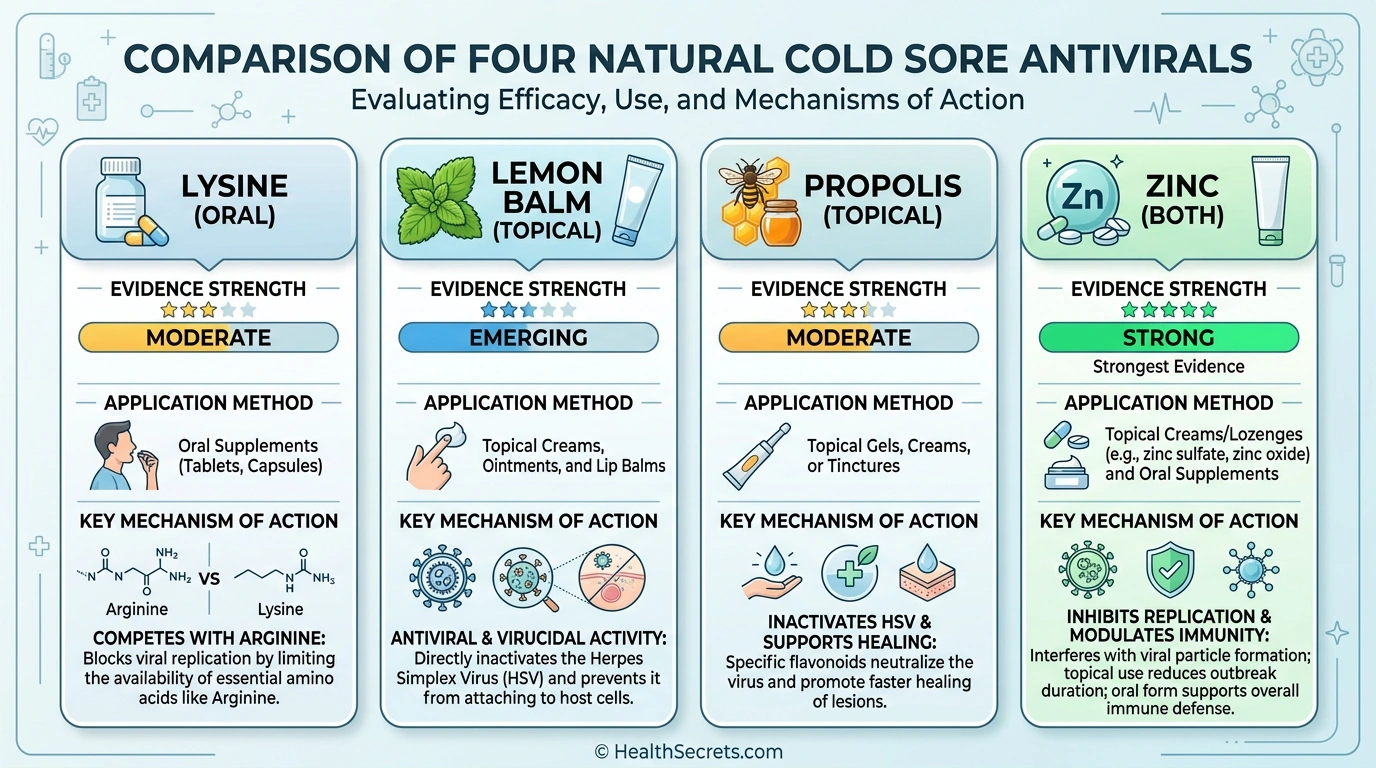
That's not wishful thinking. Research shows that lysine supplementation at doses above 3g daily can improve the subjective experience of herpes outbreaks significantly. Topical lemon balm cream has demonstrated up to 98.8% plaque reduction against HSV-1 in laboratory studies. And propolis — the resinous substance bees produce — has actually outperformed acyclovir cream in clinical trials for healing speed.
The catch? Timing matters enormously. The first 24–48 hours after that initial tingle determine whether you'll deal with a minor inconvenience or a full-blown two-week ordeal.
In this guide, you'll learn exactly which natural cold sore remedies have real evidence behind them, how to use them at each stage of an outbreak, and — most importantly — how to build a prevention protocol that reduces outbreak frequency long-term.
Related reading: evidence-based natural remedies guide | boost your immune system naturally | best immune-boosting supplements
What Exactly Are Cold Sores and Why Do They Keep Coming Back?
Cold sores are painful, fluid-filled blisters caused by herpes simplex virus type 1 (HSV-1) that typically appear on or around the lips. The virus infects roughly 3.7 billion people under age 50 worldwide, lies dormant in nerve ganglia between outbreaks, and reactivates when triggered by stress, sun exposure, illness, or immune suppression.
Once you contract HSV-1 — usually during childhood through kissing or sharing utensils — the virus travels to the trigeminal ganglion, a nerve cluster near your ear, where it remains for life. Your immune system normally keeps it suppressed. But when immunity dips or triggers accumulate, the virus reactivates, travels down the nerve to the skin surface, and produces a cold sore.
What Are the Stages of a Cold Sore Outbreak?
Every cold sore follows a predictable five-stage pattern, and knowing these stages helps you target treatment effectively:
| Stage | Timeline | What Happens | Treatment Goal |
|---|---|---|---|
| Prodrome | Day 0–1 | Tingling, itching, burning sensation | Stop outbreak before blisters form |
| Blister | Day 1–2 | Fluid-filled blisters appear | Reduce viral replication |
| Weeping | Day 3–4 | Blisters burst and ooze (most contagious) | Prevent infection, promote drying |
| Crusting | Day 5–8 | Scab forms over the sore | Promote healing, prevent cracking |
| Healing | Day 9–14 | Scab falls off, skin regenerates | Complete healing, reduce scarring |
What Triggers Cold Sore Outbreaks?
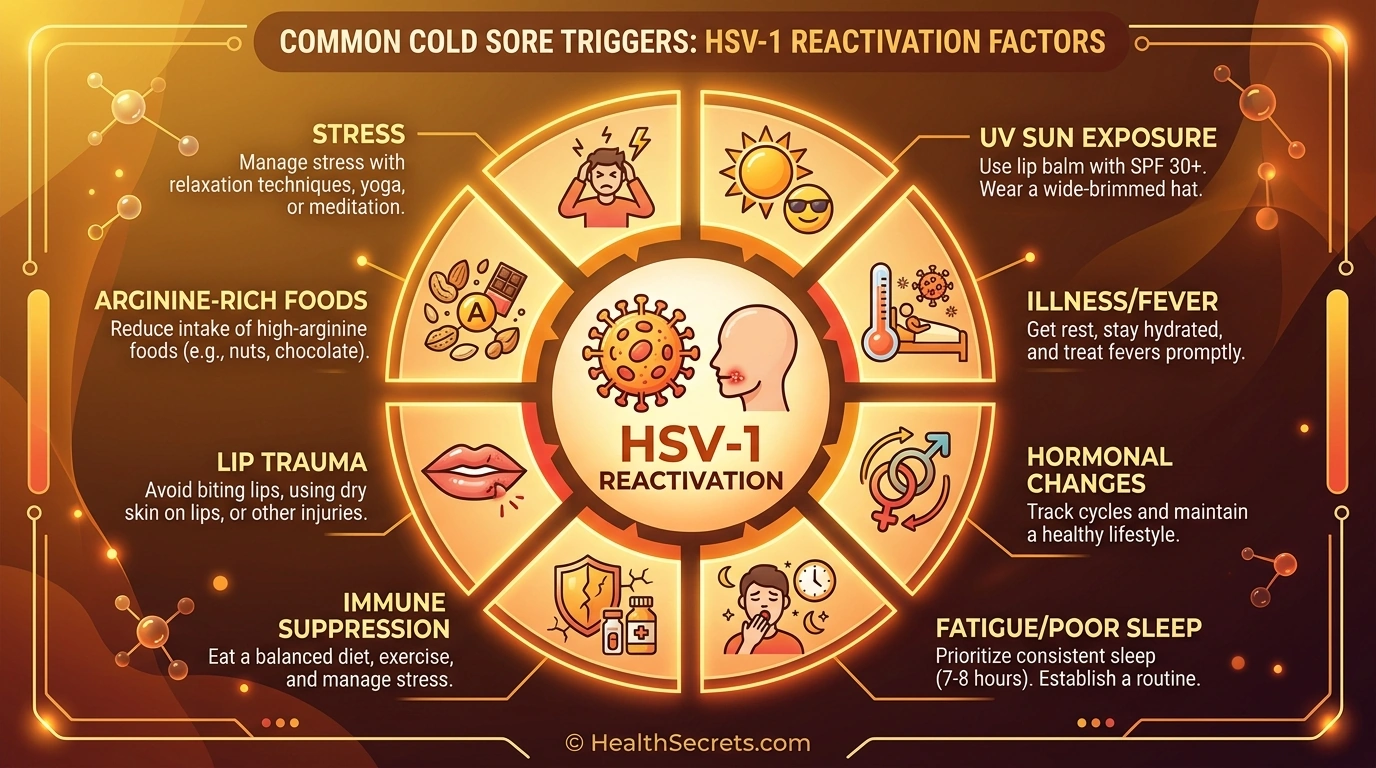
The most common reactivation triggers include stress (physical or emotional), UV sun exposure, illness or fever, hormonal changes (menstruation, pregnancy), fatigue and poor sleep, immune suppression, lip trauma from dental work, and consumption of arginine-rich foods like nuts, chocolate, and seeds. Identifying your personal triggers is the first step toward effective prevention.
How Does Lysine Help Fight Cold Sores Naturally?
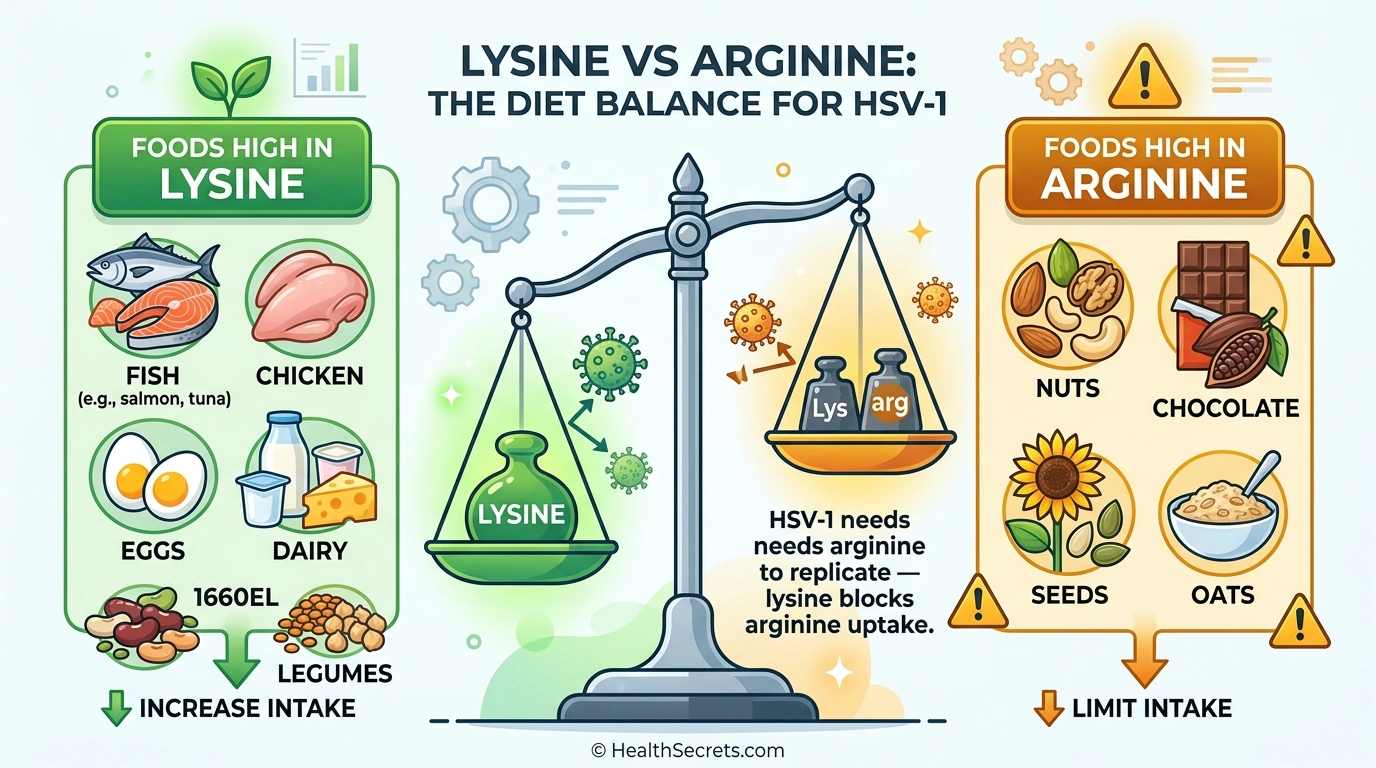
Lysine is an essential amino acid that directly competes with arginine — another amino acid that HSV-1 absolutely requires to replicate. By increasing your lysine intake and reducing arginine, you effectively starve the virus of its building material. A 2019 review in the Journal of the American Academy of Nurse Practitioners found that lysine supplementation at doses exceeding 3g daily appears to improve patients' subjective experience of herpes outbreaks.
An earlier large-scale survey of 1,543 subjects found that 84% reported lysine supplementation prevented recurrence or decreased the frequency of herpes infection. Without lysine, 90% said healing took 6–15 days; with lysine, 83% said lesions healed in five days or less.
How Should You Dose Lysine for Cold Sores?
- For prevention: Take 500–1,000mg of L-lysine daily to reduce outbreak frequency and maintain a favorable lysine-to-arginine ratio.
- During outbreaks: Increase to 3,000mg daily (1,000mg three times daily with meals) at the very first sign of tingling. Start immediately — early intervention is critical.
- Food sources high in lysine: Fish, chicken, beef, eggs, dairy products, and legumes. During outbreaks, favor these foods while temporarily limiting arginine-rich foods like almonds, peanuts, walnuts, chocolate, sunflower seeds, and oats.
Can Lemon Balm Cream Really Speed Up Cold Sore Healing?
Lemon balm (Melissa officinalis) contains rosmarinic acid and caffeic acid — compounds that directly inhibit HSV-1 by preventing the virus from attaching to and penetrating host cells. Laboratory research demonstrated that lemon balm essential oil reduced HSV-1 plaque formation by 98.8% at non-cytotoxic concentrations, and the antiviral effect occurred before the virus could penetrate cells.
A double-blind, placebo-controlled trial of 66 patients with recurrent herpes labialis found that standardized lemon balm cream (1% dried extract) applied four times daily over five days produced significant improvement in the combined symptom score compared to placebo. A 2026 systematic review in the Journal of Integrative and Complementary Medicine confirmed that lemon balm preparations consistently reduced pain intensity and swelling in herpes labialis patients.
How Do You Use Lemon Balm for Cold Sores?
Commercial cream (most effective): Apply 1% lemon balm extract cream to the affected area 4–5 times daily. Start at the very first tingle for maximum benefit. Continue application until completely healed.
DIY option: Brew strong lemon balm tea, cool it, and apply with a clean cotton ball several times daily. Less concentrated than commercial preparations but still beneficial as a supplementary measure.
Is Propolis More Effective Than Acyclovir for Cold Sores?
Propolis — the resinous substance bees collect from tree buds to seal their hives — has demonstrated remarkable antiviral activity against HSV-1. A 2022 systematic review and meta-analysis published in the Journal of Ethnopharmacology found that propolis showed superior healing properties compared to acyclovir for herpes simplex virus-induced lesions (95% CI: 2.70 to 8.25; p = 0.0001).
In a comparative study of 379 patients, a lip balm containing 0.5% propolis special extract GH 2002 was found superior to 5% acyclovir cream for treating herpes labialis when applied during the early papular/erythematous stage. Patients using propolis ointment also became pain-free significantly earlier than those using placebo (p = 0.00671).
How Should You Apply Propolis for Cold Sores?
Propolis tincture or ointment: Apply a thin layer to the cold sore 3–4 times daily, starting at the first sign of an outbreak. Alcohol-based tinctures may sting briefly on application. Use a clean cotton swab for each application to prevent contamination.
Important caution: Propolis is a bee product. If you have a known allergy to bee stings, bee products, or pollen, test on a small area of skin first or avoid entirely.
What Role Do Zinc and Other Supplements Play in Cold Sore Treatment?
Zinc serves dual purposes against cold sores — topical zinc oxide acts as a direct antiviral that inhibits HSV-1 replication and reduces viral shedding, while oral zinc supports overall immune function to keep the virus dormant between outbreaks. Topical zinc oxide cream applied 3–4 times daily can reduce cold sore duration and symptoms.
Beyond zinc, several other nutrients form the foundation of cold sore immune support:
- Vitamin C (1,000–2,000mg daily): Supports immune cell function and has demonstrated antiviral activity against herpes simplex virus. During outbreaks, increase to 1,000–2,000mg taken 2–3 times daily. One study found topical vitamin C solution sped healing of oral herpes outbreaks. See: vitamin C complete guide
- Vitamin D (1,000–2,000 IU daily): Essential for immune regulation. Vitamin D deficiency has been associated with more frequent HSV-1 reactivation. Test your levels and aim for 40–60 ng/mL. See: vitamin D complete guide
- Oral zinc (15–30mg daily): Supports immune function broadly. Zinc complete guide covers dosing and form selection in detail.
- Vitamin E oil (topical, during healing stage): Apply to the cold sore after crusting begins to promote tissue repair and reduce scarring.
Action Plan
How Can You Prevent Cold Sore Outbreaks Long-Term?
Follow the sequence below, work through each phase in order, and use the checklist as your practical implementation guide.
Prevention is far more effective than treatment — and a consistent daily protocol can reduce outbreak frequency dramatically. The key is addressing multiple trigger categories simultaneously rather than relying on any single strategy.
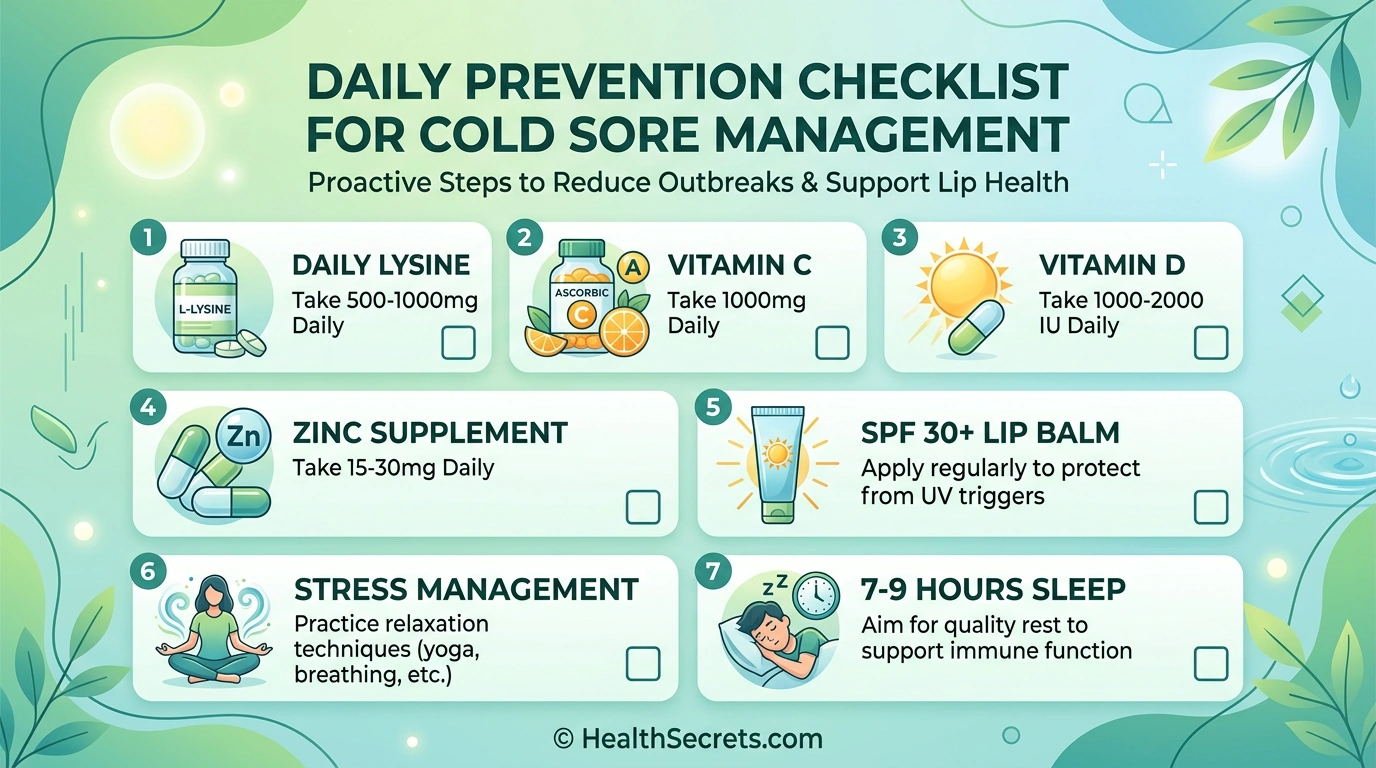
Daily supplement protocol for prevention:
Lysine: 500–1,000mg daily
Vitamin C: 1,000mg daily
Vitamin D: 1,000–2,000 IU daily
Zinc: 15–30mg daily
Probiotics: 10–50 billion CFU daily (70% of immune function resides in the gut)
Sun protection: UV exposure is one of the strongest outbreak triggers. Apply SPF 30+ lip balm before any sun exposure and reapply every two hours outdoors. This single habit prevents a significant percentage of outbreaks.
Stress management: Chronic stress suppresses immunity and is the most commonly reported trigger. Incorporate daily practices — meditation, deep breathing, yoga, adequate exercise — and prioritize 7–9 hours of sleep nightly.
Dietary awareness: Maintain a favorable lysine-to-arginine ratio. You don't need to eliminate arginine-rich foods entirely, but moderate consumption of nuts, chocolate, and seeds during high-stress periods or when you feel an outbreak approaching.
Hygiene practices: Don't share lip balm, utensils, towels, or razors. Replace your toothbrush after every outbreak (the virus can survive on bristles).
What Is the Best Early Intervention Protocol for Cold Sores?
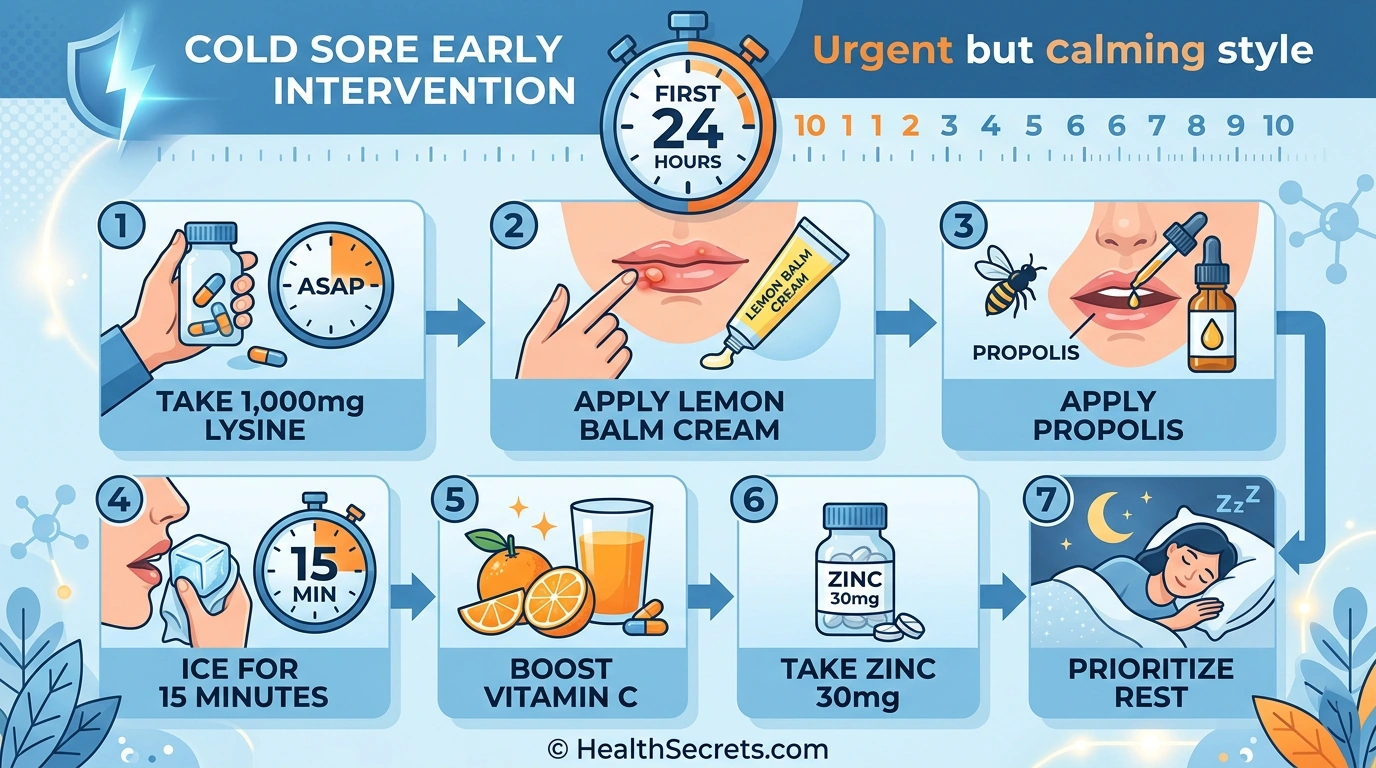
The first 24–48 hours after the prodrome (tingling stage) determine the entire course of an outbreak. Here is your rapid-response protocol when you feel that first tingle:
Immediately (within minutes of first tingle):
- Take 1,000mg lysine (then repeat 3x daily for 3,000mg total)
- Apply lemon balm cream to the area
- Apply propolis tincture (alternate with lemon balm every 2 hours)
- Apply ice for 10–15 minutes to reduce inflammation and potentially slow viral replication
Within the first 24 hours:
- Increase vitamin C to 1,000–2,000mg taken 2–3 times daily
- Take 30mg zinc (immune boost)
- Prioritize rest — aim for 8+ hours of sleep
- Reduce stress immediately (cancel non-essential obligations if possible)
Continue throughout the outbreak:
- Lysine 3,000mg daily until completely healed
- Lemon balm cream 4–5 times daily
- Propolis 3–4 times daily
- Zinc oxide cream topically 3–4 times daily (during blister and weeping stages)
- Vitamin E oil during crusting and healing stages
- Clean hands before and after every application — use disposable cotton swabs
Critical mistakes to avoid: Never pop blisters (spreads virus, risks bacterial infection). Never touch the cold sore then touch your eyes or other body areas. Don't use corticosteroid creams (they suppress local immunity). Don't stop treatment early — continue until completely healed.
When Should You Use Prescription Antivirals Instead of Natural Remedies?
Natural cold sore remedies work best for mild-to-moderate outbreaks, prevention, and early intervention. However, certain situations warrant prescription antiviral medication, and natural remedies should complement rather than replace medical treatment in these cases.
Consider prescription antivirals (acyclovir, valacyclovir, famciclovir) if you experience:
- Frequent outbreaks: More than 6 per year
- Severe outbreaks: Large, very painful, or lasting longer than 14 days
- Immunocompromised status: HIV, cancer treatment, organ transplant
- Eye involvement: Herpes keratitis can threaten vision — seek immediate medical care
- Eczema herpeticum: HSV spreading to eczematous skin — medical emergency
- Outbreaks not responding to natural treatment within 48 hours
Combining natural and prescription approaches is generally safe and potentially synergistic. Lysine, lemon balm, and propolis can be used alongside prescription antivirals. The natural remedies support immune function and provide direct antiviral activity through different mechanisms than pharmaceutical antivirals. Always inform your healthcare provider about all supplements you're taking.
Safety notes for natural cold sore remedies:
- Lysine is generally well-tolerated; high doses (>3g) may cause digestive discomfort in some people. Those with cardiovascular or gallbladder disease should consult their doctor before supplementing
- Lemon balm cream has no significant reported side effects when used topically
- Propolis may cause allergic reactions in people allergic to bee products
- Tea tree oil and peppermint oil must always be diluted in a carrier oil before skin application
Action Plan
What's the Complete Natural Cold Sore Management Action Plan?
Follow the sequence below, work through each phase in order, and use the checklist as your practical implementation guide.
Managing cold sores naturally requires a three-phase approach — daily prevention, rapid outbreak response, and stage-specific treatment. Following this structured plan consistently gives you the best chance of reducing both outbreak frequency and severity.
Phase 1 — Daily Prevention (ongoing):
- Lysine 500–1,000mg daily with food
- Vitamin C 1,000mg daily
- Vitamin D 1,000–2,000 IU daily (test levels, aim for 40–60 ng/mL)
- Zinc 15–30mg daily
- Probiotics 10–50 billion CFU daily
- SPF 30+ lip balm before any sun exposure
- Stress management practice daily (meditation, deep breathing, yoga)
- Sleep 7–9 hours nightly
- Identify and track personal triggers
Phase 2 — Rapid Response (at first tingle):
- Lysine: increase to 3,000mg daily (1,000mg 3x daily)
- Lemon balm cream: apply immediately, then 4–5x daily
- Propolis tincture: apply 3–4x daily
- Ice: 10–15 minutes every 2–3 hours (first 24 hours only)
- Vitamin C: increase to 2,000–4,000mg daily (divided doses)
- Zinc: increase to 30mg daily
- Prioritize rest and stress reduction
Phase 3 — Stage-Specific Treatment:
- Blister stage: zinc oxide cream 3–4x daily, keep area dry
- Weeping stage: gentle cleansing, zinc oxide, avoid touching
- Crusting stage: vitamin E oil to prevent cracking, keep moist
- Healing stage: vitamin E oil 2–3x daily, replace toothbrush
- Continue all treatments until completely healed
Phase 4 — Medical Escalation (if needed):
- See doctor if outbreaks exceed 6 per year
- Seek care for eye involvement, severe spread, or non-healing sores
- Discuss suppressive antiviral therapy for frequent outbreaks