
Caloric restriction longevity research has been around for nearly a century now—and honestly, the results are kind of wild. We're talking about a single dietary intervention that extends lifespan in virtually every organism scientists have thrown it at. Yeast. Worms. Flies. Mice. Even some primates.
The concept is deceptively simple: eat less (but not too little), and you might live longer. Way longer, in some cases.
But—and this is a substantial but—there's a massive gap between "works in lab mice" and "practical for actual humans." The hunger alone would make most people tap out within weeks. And we still don't know if CR genuinely extends human lifespan, because running an 80-year controlled trial isn't exactly feasible.
In this guide, we'll break down the evidence—from decades of animal studies to the landmark CALERIE human trial—explore the biological mechanisms driving CR's effects, and honestly assess whether the trade-offs make sense. We'll also cover intermittent fasting and CR mimetics as potentially more practical alternatives.
What Is Caloric Restriction and Why Does It Matter for Longevity?
Caloric restriction is the deliberate reduction of calorie intake by 20–40% below normal maintenance levels—without causing malnutrition. It's the most consistently replicated longevity intervention in biomedical research, with nearly 90 years of data showing lifespan extension across species from yeast to mammals. The key distinction: this is restriction with optimal nutrition, not starvation.
Here's what most people get wrong about CR. They hear "eat less" and think dieting. It's not dieting. It's a fundamentally different approach called CRON—Calorie Restriction with Optimal Nutrition—where every calorie must deliver maximum nutritional value.
The discovery dates back to 1935, when researcher Clive McCay found that rats fed fewer calories lived significantly longer than their freely-fed counterparts. Since then, thousands of studies have confirmed the effect across species.
Typical CR protocols reduce calorie intake by 20–40%. If your maintenance is 2,000 calories, that means eating 1,200–1,600 calories daily—chronically, for years or decades. Not intermittent fasting (that's time-restricted). Not a temporary weight-loss diet. Continuous, sustained restriction.
And the math gets real: at 25% restriction, a 2,000-calorie person drops to 1,500 daily. That's tight. Every meal needs to be nutrient-dense—think leafy greens, fatty fish, legumes, berries—with zero room for empty calories.
This is not the same as intermittent fasting, fasting-mimicking diets, or typical weight-loss dieting. CR is chronic calorie reduction with meticulous nutritional optimization.
How Does Caloric Restriction Slow Aging at the Cellular Level?
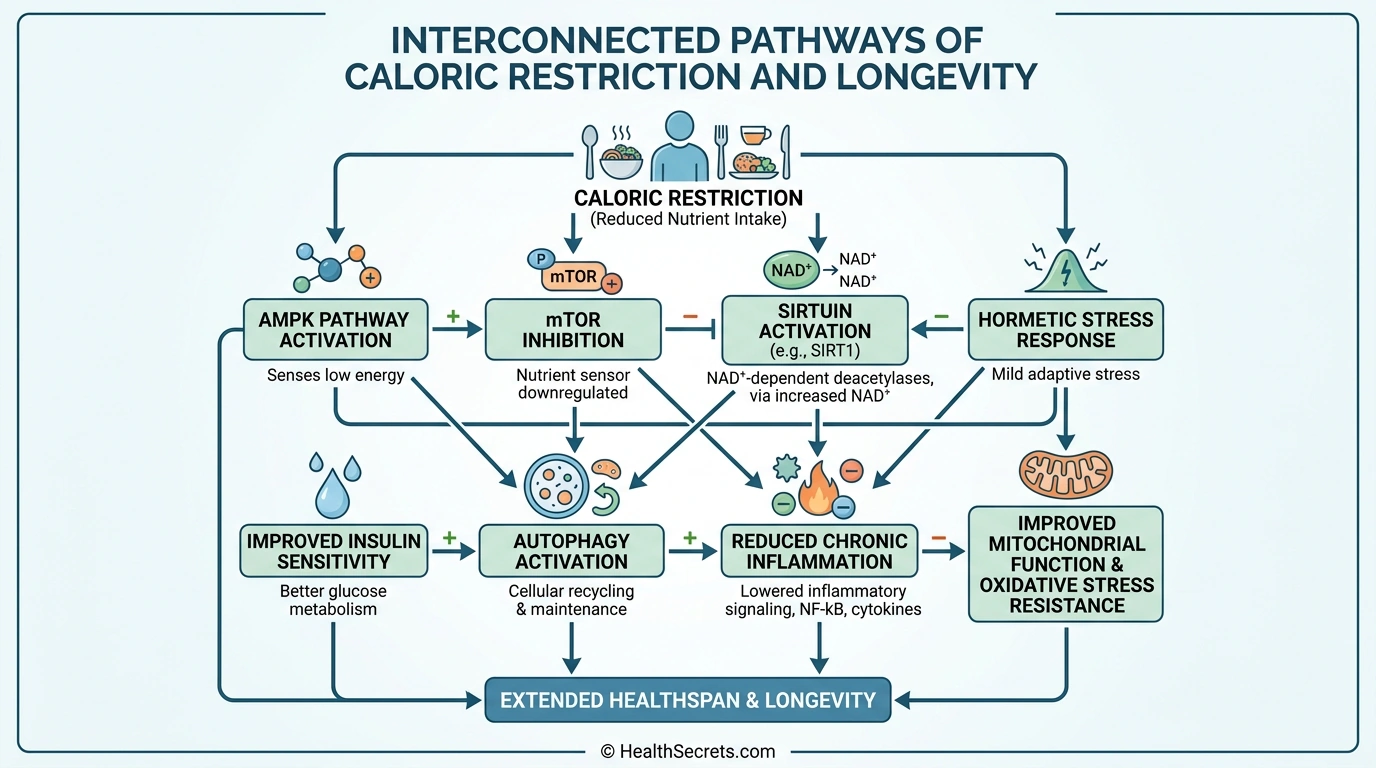
Caloric restriction activates multiple interconnected longevity pathways: it inhibits mTOR (the growth-promoting nutrient sensor), triggers autophagy (cellular cleanup), reduces chronic inflammation, improves insulin sensitivity, and induces hormetic stress responses through sirtuins and AMPK. These mechanisms are evolutionarily conserved across species, which explains CR's universal effects.
How Does mTOR Inhibition Contribute to Longevity?
mTOR—mechanistic target of rapamycin—is your body's nutrient-sensing growth switch. When food is abundant, mTOR stays active, promoting cell growth and protein synthesis. The problem? Chronic mTOR activation accelerates aging ([14]).
CR naturally dials down mTOR activity. Less nutrient signaling means the body shifts from growth mode to maintenance mode—repairing cells rather than building new ones. This is the same pathway that rapamycin targets pharmacologically.
How Does Autophagy Activation Clean Up Aging Cells?
When nutrients are scarce, cells activate autophagy—a recycling process that breaks down damaged proteins and malfunctioning organelles ([13]). Think of it as cellular spring cleaning.
Autophagy declines naturally with age. CR restores it, clearing the accumulated cellular debris that contributes to age-related disease. A 2024 PNAS study confirmed that both CR and CR mimetics activate chaperone-mediated autophagy in multiple tissues.
Why Does Reducing Inflammation Matter for Longevity?
CR dramatically reduces inflammatory markers—CRP, IL-6, TNF-alpha—that drive "inflammaging," the chronic low-grade inflammation underlying most age-related diseases ([8]). The CALERIE trial confirmed these reductions in human participants.
How Does Improved Insulin Sensitivity Extend Healthspan?
CR improves how cells respond to insulin, reducing insulin resistance and protecting against metabolic syndrome—a foundational driver of accelerated aging ([4]). A 2024 Nature Communications study showed CR promotes beta cell homeostasis and longevity through improved insulin signaling.
The hormetic stress response ties everything together. CR acts as a mild stressor that activates protective mechanisms—sirtuins (longevity genes), AMPK (the energy sensor exercise also activates), and heat shock proteins. It's adaptation through beneficial stress.
What Are the Proven Benefits of Caloric Restriction for Aging?
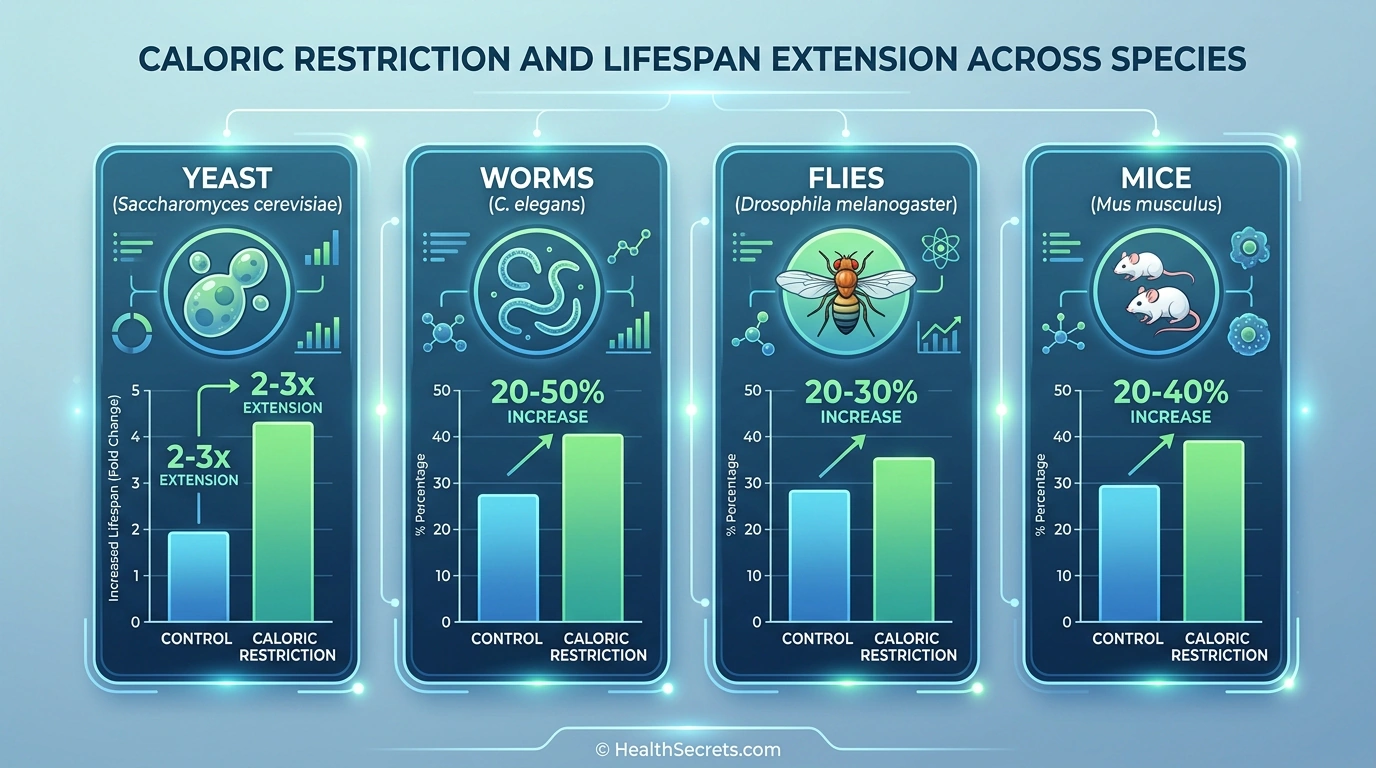
The animal evidence for CR extending lifespan is overwhelming—it works in nearly every organism tested, from single-celled yeast to mammals. In rodents, 20–40% caloric restriction extends lifespan by 20–40%, with parallel improvements in healthspan. Human trials show clear metabolic benefits, though lifespan effects remain unproven.
What Do Animal Studies Show About CR and Lifespan Extension?
The data across species is remarkably consistent. Yeast on CR live 2–3 times longer. C. elegans worms gain 20–50% more lifespan. Fruit flies see 20–30% extension. In rodents—where the bulk of CR research exists—CR reduced age-related diseases and prolonged lifespan by up to 30% in rats and 15% in mice ([10]).
A landmark 2024 Nature study using 960 genetically diverse mice confirmed that both caloric restriction and intermittent fasting extend lifespan in proportion to the degree of restriction ([2]). Surprisingly, mice that maintained body weight despite eating less lived longest—suggesting metabolic resilience, not just weight loss, matters.
A 2022 Science study added another layer: timing matters. Mice on calorie-restricted diets eaten only during their active period lived nearly 35% longer than unrestricted eaters, compared to just 10% for those given restricted calories around the clock ([7]).
What Did the CALERIE Human Trial Actually Prove?
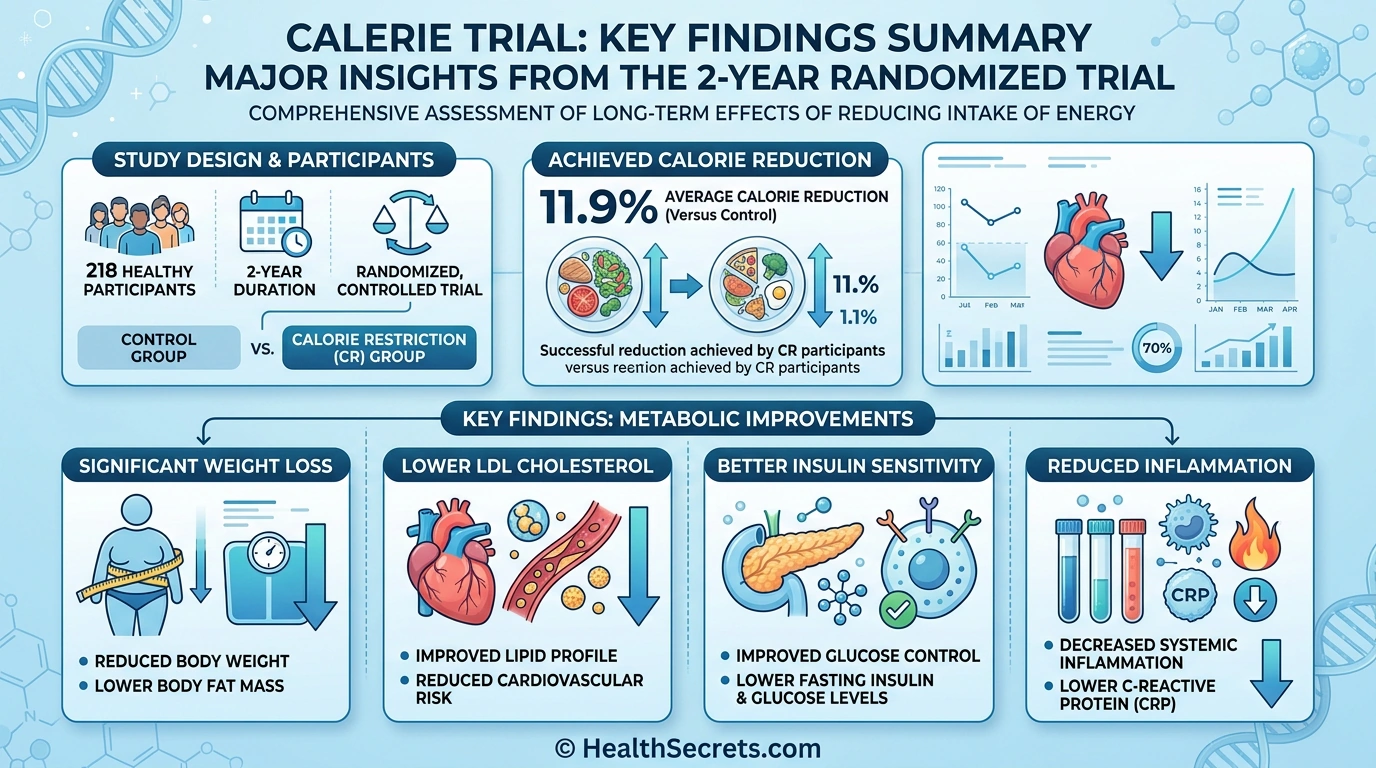
CALERIE—the Comprehensive Assessment of Long-term Effects of Reducing Intake of Energy—is the most rigorous human CR study ever conducted. Phase 2 randomized 218 healthy, non-obese adults to 25% caloric restriction or normal eating for two years ([3]).
Results were significant: participants achieved an average 11.9% calorie reduction (less than the 25% target—adherence is hard), lost about 10% body weight, and showed improved insulin sensitivity, lower LDL cholesterol, reduced blood pressure, and decreased inflammatory markers ([4]).
A 2023 NIH analysis found CR modulated genes related to stress response and longevity in human muscle tissue—suggesting the same biological mechanisms seen in animals operate in humans.
A 2024 study confirmed CR participants maintained diet quality and nutritional adequacy despite eating 12% fewer calories—validating the CRON approach.
The critical limitation? No lifespan data. Two years isn't enough to measure that.
What Are the Primate Study Results?
Primate studies have produced mixed results. The Wisconsin study showed survival benefits, while the NIA study showed minimal lifespan effects. The difference likely comes down to diet composition—the Wisconsin controls ate a higher-sugar purified diet ([9]). This highlights that diet quality—not just quantity—matters significantly.

Thorne Basic Nutrients 2/Day
Best OverallThorne Basic · Comprehensive micronutrient coverage during caloric restriction

NOW Foods Natural Resveratrol 200mg
Best CR Mimetic SupplementNOW Foods · Sirtuin activation and antioxidant support

Doctor's Best High Absorption Magnesium Glycinate 200mg
Best ValueDoctor's Best · Addressing magnesium deficiency common in calorie-restricted diets

Thorne Zinc Picolinate 30mg
Best for Immune SupportThorne Zinc · Zinc supplementation during caloric restriction
Read the detailed review cards below before opening any retailer link
Top Recommended Products
Thorne Basic
Thorne Basic Nutrients 2/Day
When eating fewer calories, micronutrient gaps are almost inevitable. Thorne's formulation uses highly bioavailable nutrient forms and is third-party tested—critical for CR practitioners who can't afford nutritional gaps.
Pros
- + Covers key CR-deficient nutrients
- + NSF certified
- + bioavailable forms
- + no unnecessary fillers
Cons
- - Premium price compared to budget multivitamins
Why we included it: When eating fewer calories, micronutrient gaps are almost inevitable. Thorne's formulation uses highly bioavailable nutrient forms and is third-party tested—critical for CR practitioners who can't afford nutritional gaps.
Retailer link opens on Amazon after the review details above
NOW Foods
NOW Foods Natural Resveratrol 200mg
While resveratrol's human longevity evidence is still limited, it activates sirtuins—the same longevity genes CR activates—and provides antioxidant support at an affordable price point.
Pros
- + Affordable CR mimetic
- + good value per capsule
- + reputable brand
- + includes red wine polyphenols
Cons
- - Human longevity evidence limited
- - bioavailability concerns without fat
Why we included it: While resveratrol's human longevity evidence is still limited, it activates sirtuins—the same longevity genes CR activates—and provides antioxidant support at an affordable price point.
Retailer link opens on Amazon after the review details above
Doctor's Best
Doctor's Best High Absorption Magnesium Glycinate 200mg
Magnesium is one of the most commonly deficient minerals during caloric restriction. The glycinate form is gentle on the stomach and well-absorbed—important when every nutrient counts.
Pros
- + Highly bioavailable glycinate form
- + gentle on stomach
- + excellent value
- + addresses common CR gap
Cons
- - Requires 2 tablets per serving
Why we included it: Magnesium is one of the most commonly deficient minerals during caloric restriction. The glycinate form is gentle on the stomach and well-absorbed—important when every nutrient counts.
Retailer link opens on Amazon after the review details above
Thorne Zinc
Thorne Zinc Picolinate 30mg
Zinc is critical for immune function and commonly insufficient on calorie-restricted diets. Thorne's picolinate form is well-absorbed and third-party verified.
Pros
- + Highly absorbable picolinate form
- + NSF certified
- + essential for immune function on CR
Cons
- - Single-mineral supplement
- - requires separate purchase
Why we included it: Zinc is critical for immune function and commonly insufficient on calorie-restricted diets. Thorne's picolinate form is well-absorbed and third-party verified.
Retailer link opens on Amazon after the review details above
Are There Serious Risks and Downsides to Caloric Restriction?
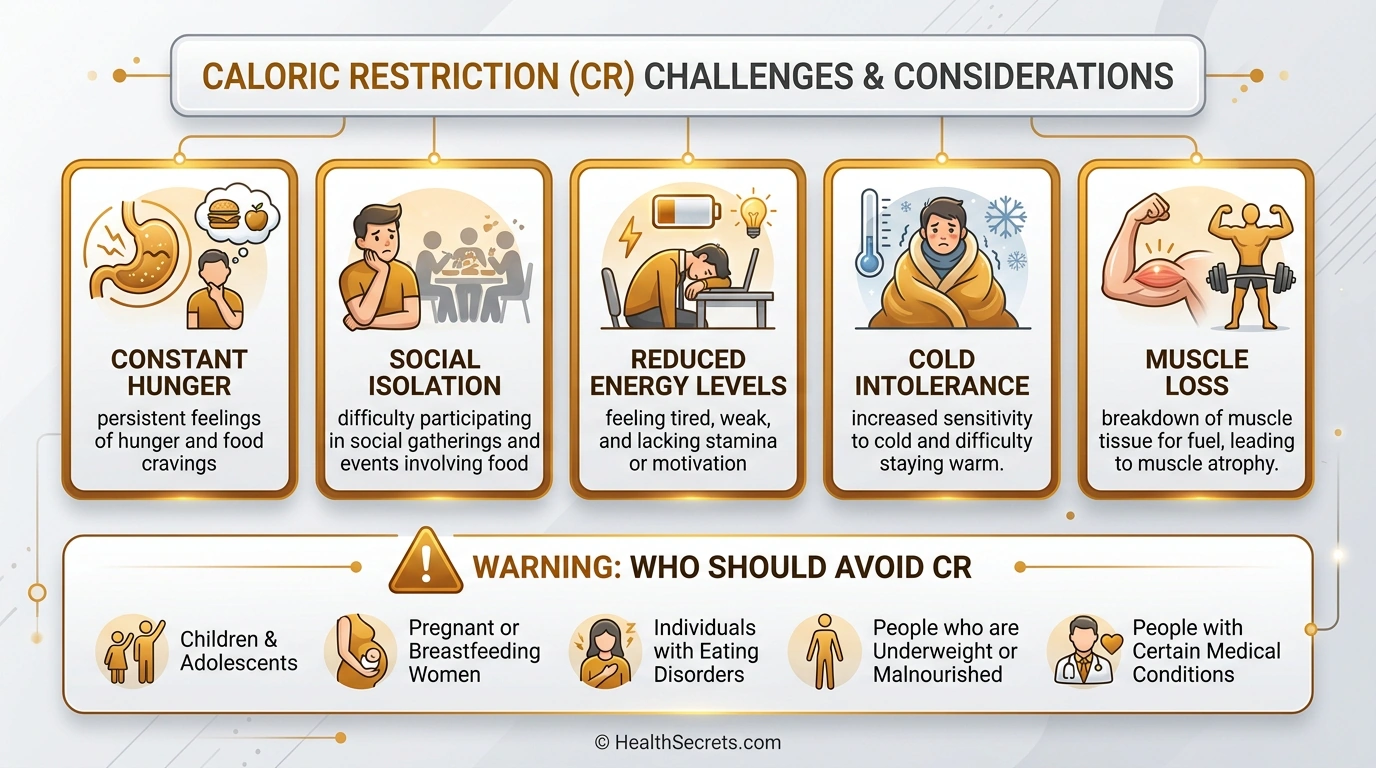
Yes—the practical challenges and health risks of sustained caloric restriction are substantial. Constant hunger, reduced energy, muscle loss, cold intolerance, social isolation, psychological stress, and reduced libido are commonly reported. CR is contraindicated for underweight individuals, those over 65, people with eating disorder history, athletes, and pregnant or breastfeeding individuals.
The science is compelling. The reality? Brutal.
- Constant hunger is the dominant complaint. Your body fights calorie deficit with relentless hunger signals, food obsession, and metabolic adaptation. CALERIE participants identified hunger as the most challenging aspect—and they only achieved half the target restriction ([5]).
- Muscle loss occurs even with adequate protein intake. For older adults, this accelerates sarcopenia risk—the age-related muscle wasting that increases fall risk and frailty.
- Reduced energy and cold intolerance result from metabolic adaptation—your body conserves energy by lowering metabolic rate and body temperature. Exercise performance declines.
- Psychological and social costs are real. Food restriction is mentally exhausting. Social eating—restaurants, celebrations, family dinners—becomes complicated. For some individuals, CR can trigger disordered eating patterns.
- Bone health concerns emerged from CALERIE—small but measurable effects on bone density require monitoring.
Who should absolutely avoid CR:
- Underweight individuals (BMI under 18.5)
- Adults over 65 (muscle loss and frailty risk)
- Anyone with eating disorder history
- Athletes with high energy demands
- Pregnant or breastfeeding individuals
- Children and adolescents
- Those with chronic illness without medical supervision
The honest question: even if CR adds years to life, does it add life to years? Decades of hunger and restriction versus potential lifespan extension—for most people, that trade-off doesn't make sense.
How Can You Get Caloric Restriction Benefits Without Extreme Restriction?
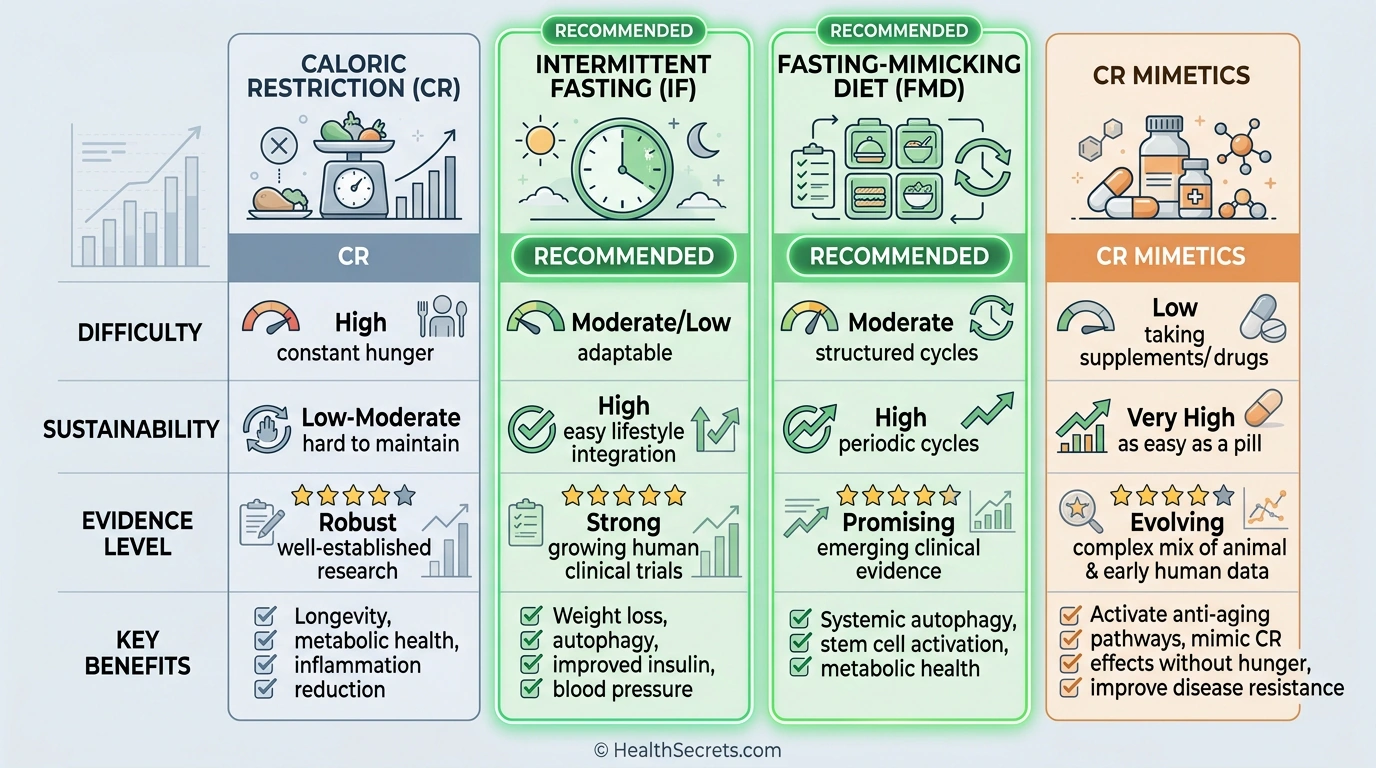
Modified approaches capture meaningful CR benefits with better sustainability: intermittent fasting (16:8 or 18:6), fasting-mimicking diets (5-day low-calorie protocols quarterly), moderate calorie reduction (10–15%), and CR mimetics like metformin. A combination of moderate calorie awareness, time-restricted eating, and nutrient-dense food selection offers the most practical approach for most people.
Is Intermittent Fasting a Better Alternative to CR?
Time-restricted eating (16:8, 18:6) creates fasting windows that activate similar pathways—autophagy, improved insulin sensitivity, reduced inflammation, mTOR modulation—without requiring the same degree of chronic calorie deficit ([12]). It's substantially easier to sustain and less socially disruptive.
The 2024 Nature mouse study confirmed intermittent fasting extends lifespan in proportion to restriction degree—though caloric restriction had a greater impact than periodic fasting alone.
What Are Calorie Restriction Mimetics and Do They Work?
CR mimetics are compounds that activate the same longevity pathways without actual food restriction—the holy grail of longevity research.
- Metformin activates AMPK (the same pathway CR activates), improves insulin sensitivity, and reduces inflammation. A 2024 study in cynomolgous monkeys showed metformin slowed biological aging over three years. It's the most accessible CR mimetic—prescription, cheap, and well-studied.
- Rapamycin is a potent mTOR inhibitor. A 2026 meta-analysis in Aging Cell found rapamycin mirrors dietary restriction-driven lifespan extension in vertebrates more closely than metformin ([16]). However, it's an immunosuppressant with significant side effects.
- Resveratrol activates sirtuins but has weak human evidence and bioavailability issues ([11]).
- Spermidine induces autophagy and shows epidemiological promise.
- NAD+ boosters (NMN, NR) support sirtuin activity but lack human longevity data.
No single CR mimetic perfectly replicates all CR benefits. But lifestyle optimization—exercise, quality sleep, nutrient-dense eating—remains proven and free.
What Is the CRON Approach to Caloric Restriction?
If you're going to attempt CR, CRON (Calorie Restriction with Optimal Nutrition) is non-negotiable. Every calorie must deliver maximum nutrients. Focus on leafy greens, cruciferous vegetables, berries, legumes, fatty fish, nuts, and seeds. Eliminate all empty calories. Track meticulously with apps like Cronometer.
The CRON community demonstrates it's possible to sustain CR while maintaining nutritional adequacy ([15]). But it requires planning and commitment most people can't maintain.
What Diet and Lifestyle Changes Support Caloric Restriction Benefits?
The practical approach combines moderate calorie awareness with nutrient-dense eating, time-restricted feeding, regular exercise, adequate sleep, and stress management. Even without extreme restriction, applying CRON principles—maximizing nutrients per calorie—alongside intermittent fasting and exercise can activate many of the same longevity pathways that make caloric restriction effective.

For most people, the optimal strategy combines several elements:
- Moderate calorie awareness — Don't overeat, but don't severely restrict. Even 10–15% reduction provides measurable metabolic benefit.
- Time-restricted eating — Compress your eating window to 8–10 hours daily, aligned with your active period (the 2022 Science study showed timing dramatically amplifies CR benefits).
- Nutrient density focus — Apply CRON principles: every calorie delivers vitamins, minerals, and beneficial compounds.
- Adequate protein — 0.7–1.0g per pound body weight to preserve muscle mass.
- Regular exercise — 150+ minutes weekly. Activates AMPK and many overlapping pathways with CR.
- **Quality **sleep — 7–9 hours nightly. Sleep deprivation increases inflammation and impairs metabolic health.
- Micronutrient insurance — Consider supplementing vitamin D, B12, magnesium, and omega-3s when eating fewer calories.
- Stress management — Chronic stress accelerates aging through cortisol and inflammation.
The realistic bottom line: CR is the most proven longevity intervention in animals. But for humans, a combination of moderate calorie awareness, intermittent fasting, nutrient-dense eating, exercise, and potentially CR mimetics offers a far better balance between longevity benefits and quality of life.
Action Plan
What Should You Do First If You're Interested in Caloric Restriction for Longevity?
Follow the sequence below, work through each phase in order, and use the checklist as your practical implementation guide.
Start with the least restrictive approaches and work upward only if needed. Most people will get meaningful longevity benefits from moderate dietary changes without extreme caloric restriction. Here's a phased action plan.
Phase 1 — Foundation (Weeks 1–4):
- Assess current calorie intake using a tracking app (Cronometer recommended for nutrient density)
- Eliminate empty calories: refined sugars, processed foods, alcohol
- Increase nutrient density: more vegetables, berries, legumes, fatty fish
- Begin time-restricted eating (12-hour eating window to start)
Phase 2 — Optimization (Weeks 5–8):
- Narrow eating window to 8–10 hours (16:8 or 14:10 intermittent fasting)
- Aim for moderate 10–15% calorie reduction through food quality improvements
- Ensure adequate protein (0.7–1.0g per pound body weight)
- Add regular exercise (150+ minutes weekly—activates similar pathways to CR)
Phase 3 — Advanced (Optional, with medical supervision):
- Consider deeper CR (20–25%) only with healthcare provider monitoring
- Discuss CR mimetics (metformin) with your doctor if appropriate
- Track biomarkers: fasting glucose, insulin, CRP, lipid panel
- Monitor for adverse effects: muscle loss, fatigue, mood changes, cold intolerance
Phase 4 — Long-Term Maintenance:
- Find your sustainable sweet spot (most people thrive at 10–15% restriction with IF)
- Reassess quarterly: are benefits outweighing quality-of-life trade-offs?
- Stay current on CR mimetic research—the field is evolving rapidly


