
Here's something that caught me off guard when I first dug into the research: chronic stress and aging are so tightly linked that stressed-out caregivers can have telomeres equivalent to someone 9–17 years older than their actual age. Not five years. Not a rough estimate. Up to seventeen biological years—from stress alone ([1]).
And that's not some fringe finding. Population-level data suggests chronic stress can shave roughly 2.8 years off your lifespan—comparable to the damage from smoking or obesity ([4]). The mechanisms behind it—telomere shortening, cortisol toxicity, chronic inflammation, oxidative damage—are well-documented across hundreds of studies ([2]; [3]).
But here's the part that actually matters: stress-induced aging is modifiable. Meditation, exercise, social connection, and sleep have all been shown to slow—and in some cases partially reverse—cellular aging markers ([10]; [11]).
This guide breaks down exactly how chronic stress accelerates aging, which biological mechanisms are involved, and—most importantly—what actually works to protect yourself. We'll cover telomeres, cortisol, inflammaging, practical interventions ranked by evidence, and honest limitations.
For a broader look at longevity science, see our complete longevity and anti-aging guide. You may also want to explore how inflammation drives aging and why sleep optimization matters for longevity.
What Is the Connection Between Stress and Aging?
Chronic stress accelerates biological aging through multiple overlapping mechanisms, including telomere shortening, elevated cortisol, chronic inflammation, and oxidative damage. Research consistently shows that people under prolonged stress age faster at the cellular level—and this damage is measurable with modern biomarkers ([2]; [3]).
But not all stress is bad. And that distinction is actually pretty important.
What Is the Difference Between Acute and Chronic Stress?
Acute stress is short-term—a deadline, a hard workout, a challenging conversation. Your hypothalamic-pituitary-adrenal (HPA) axis fires up, cortisol spikes, you handle the situation, and your body recovers. This type of stress is adaptive. It sharpens focus, builds resilience, and promotes hormesis—the biological process where mild stress makes you stronger.
Chronic stress is a different animal entirely. It's the toxic job you can't leave. The financial worry that never resolves. Years of caregiving without a break. Your HPA axis stays activated, cortisol remains elevated, and recovery never happens.
The pathway looks something like this:
- Acute: Challenge → Response → Recovery →
Adaptation (you get stronger)
- Chronic: Challenge → Response → No Recovery → Dysregulation → Damage (you break down)
Recovery is the dividing line. Without it, stress shifts from beneficial to destructive ([6]).

How Do Telomeres Reveal Stress-Related Aging?
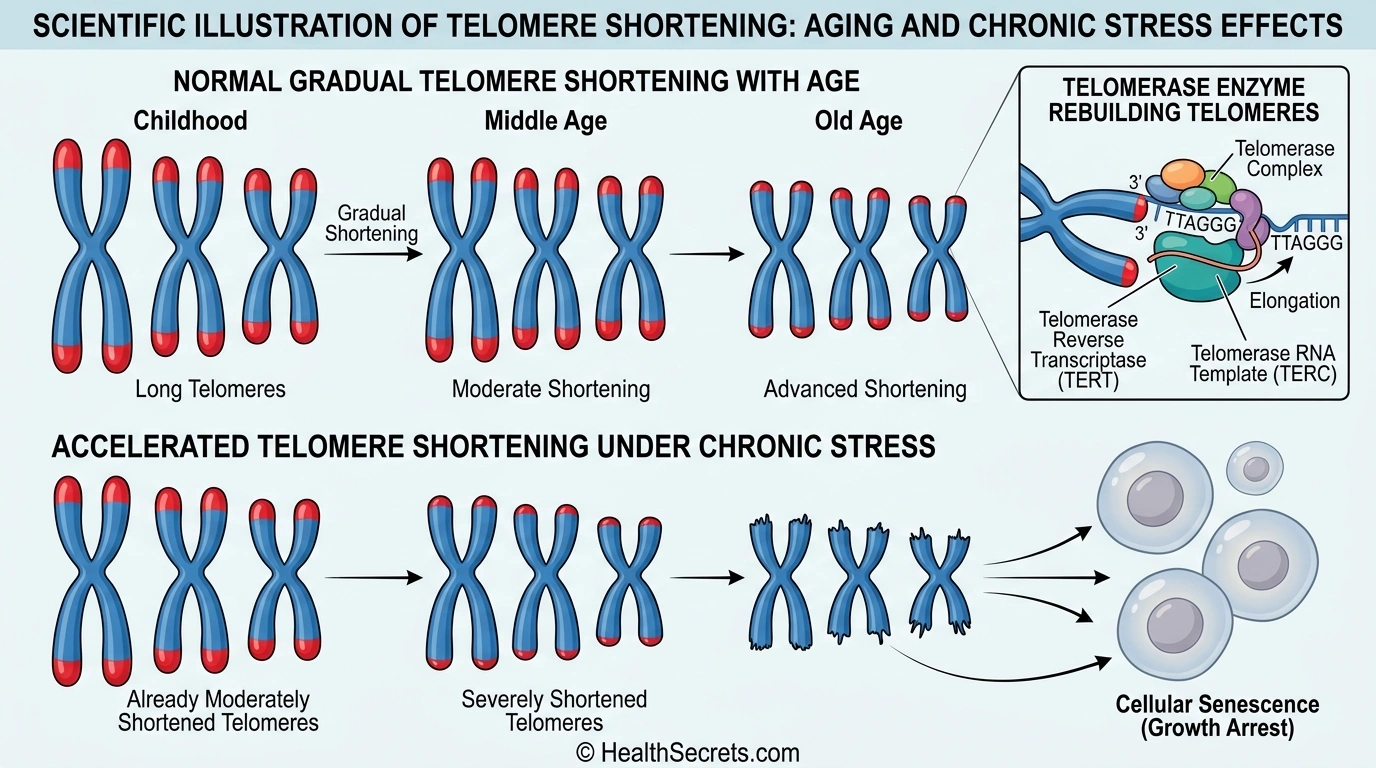
Telomeres are protective caps on your chromosomes—think of them like the plastic tips on shoelaces that prevent fraying. Every time a cell divides, telomeres shorten slightly. When they get too short, the cell either stops dividing (becomes senescent) or dies. Shorter telomeres equal older biological age.
The groundbreaking 2004 study by Epel and Blackburn examined mothers caring for chronically ill children. The longer they'd been caregiving, the shorter their telomeres. The most stressed mothers showed telomere shortening equivalent to 9–17 additional years of aging ([1]).
Critically, psychological stress shortens telomeres just as effectively as physical stress. Your body doesn't care whether the threat is a bear chasing you or a mortgage you can't pay—chronic activation of the stress response damages cells regardless ([5]).
The good news? An enzyme called telomerase can rebuild telomeres, and stress management interventions—particularly meditation—appear to increase telomerase activity ([10]).
How Does Chronic Stress Accelerate Aging in the Body?
Chronic stress accelerates aging through at least four interconnected biological pathways: cortisol toxicity (especially to the brain), systemic inflammation, oxidative damage to cells and DNA, and epigenetic changes that make you biologically older than your years. These mechanisms overlap and amplify each other, creating a cascading cycle of damage ([2]).
How Does Cortisol Damage the Brain and Body?
Cortisol is your primary stress hormone. In short bursts, it's essential—mobilizing energy, sharpening focus, preparing you for action. The problem is chronic elevation.
The hippocampus—your brain's memory center—is especially vulnerable to sustained cortisol exposure. Chronic stress causes hippocampal atrophy (measurable shrinkage on MRI), reduced neurogenesis, impaired memory and learning, and increased dementia risk ([8]).
Beyond the brain, chronic cortisol drives immune suppression (you get sick more often and heal slower), metabolic dysfunction (increased visceral fat, insulin resistance), sleep disruption (flattened diurnal rhythm), bone loss, and cardiovascular damage ([7]).
With prolonged stress, the HPA axis itself becomes dysregulated—the cortisol awakening response flattens, your diurnal rhythm breaks down, and your system can't mount appropriate stress responses anymore. That's burnout at the biological level.
What Is Inflammaging and How Does Stress Cause It?
Chronic stress elevates inflammatory markers—CRP, IL-6, TNF-alpha—creating a persistent, low-grade inflammatory state researchers call "inflammaging." This chronic inflammation doesn't just come with aging; stress actively accelerates it ([2]; [3]).
Here's the paradox: chronic stress simultaneously suppresses adaptive immunity (making you more infection-prone) while increasing innate inflammation. You get the worst of both worlds.
This chronic inflammation drives cardiovascular disease, neurodegeneration, metabolic syndrome, cancer progression, and autoimmune conditions—basically the full spectrum of age-related disease.
How Does Oxidative Stress from Chronic Stress Damage Cells?
Chronic stress increases production of reactive oxygen species (ROS)—unstable molecules that damage DNA, proteins, cell membranes, and mitochondria. Your body has antioxidant defenses (SOD, catalase, glutathione), but chronic stress overwhelms them ([2]).
Mitochondria are especially vulnerable. Stress damages these cellular powerhouses, reducing energy production and generating more oxidative stress—a vicious cycle that accelerates cellular senescence and tissue dysfunction ([6]).
What Are the Benefits of Managing Stress for Longevity?
Effective stress management can slow biological aging, protect brain structure and function, reduce chronic inflammation, improve immune resilience, and potentially extend lifespan by several years. The research supporting these benefits is robust, spanning telomere biology, epigenetics, and cardiovascular outcomes ([10]; [11]).
Can Stress Management Actually Slow Telomere Shortening?
Yes—and this is one of the most compelling findings. Meditation, exercise, and comprehensive stress-reduction programs have been shown to maintain and even lengthen telomeres. An 8-week MBSR (Mindfulness-Based Stress Reduction) program produces measurable improvements in telomerase activity, the enzyme that rebuilds telomeres ([10]).
Long-term meditators (40+ years of practice) show reduced biomarkers of chronic stress and biological aging compared to non-meditators of the same chronological age ([12]).
Does Exercise Protect Against Stress-Induced Aging?
Exercise is one of the most powerful stress buffers available. It reduces chronic cortisol levels, increases endorphins and BDNF (brain-derived neurotrophic factor, which protects the hippocampus), lowers inflammation, and improves heart rate variability—a marker of stress resilience. People who exercise regularly show longer telomeres and slower biological aging even when exposed to significant life stress ([11]).
How Do Social Connections Buffer Against Stress-Aging?
Strong relationships reduce cortisol, increase oxytocin (a bonding hormone that directly counteracts stress), and provide emotional support during difficult periods. Loneliness and social isolation, by contrast, accelerate aging as much as smoking 15 cigarettes daily. Quality matters more than quantity—a few close, supportive relationships outperform a large superficial network.
Can Good Sleep Reverse Stress Damage?
The stress-sleep relationship runs both directions. Stress disrupts sleep, and sleep deprivation amplifies stress responses. Prioritizing 7–9 hours of quality sleep gives your body time to repair stress-induced cellular damage, normalize cortisol rhythms, and restore immune function.
KSM-66 Ashwagandha by NaturaLife Labs
Editor's ChoiceKSM-66 Ashwagandha · Daily cortisol reduction and stress resilience
Rhodiola Rosea by NOW Foods
Best ValueRhodiola Rosea · Mental fatigue and stress resilience during demanding periods
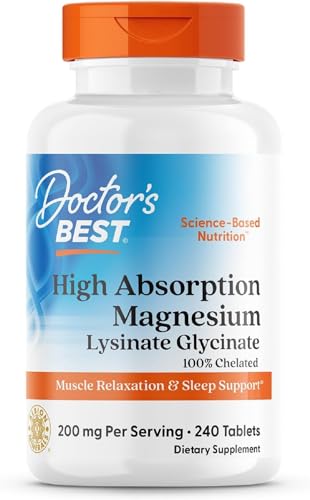
Doctor's Best High Absorption Magnesium Glycinate
Best For SleepDoctor's Best · Stress-related sleep disruption and muscle relaxation
NOW Foods L-Theanine 200mg
Best For FocusNOW Foods · Calm alertness without drowsiness during stressful work
Oura Ring Generation 3
Best TrackerOura Ring · Objective stress and recovery tracking via HRV and sleep metrics
Read the detailed review cards below before opening any retailer link
Top Recommended Products
KSM-66 Ashwagandha
KSM-66 Ashwagandha by NaturaLife Labs
KSM-66 is the most clinically studied ashwagandha extract, with multiple human trials demonstrating meaningful cortisol reduction—making it the best-supported adaptogen for stress-related aging.
Pros
- + Clinically studied KSM-66 extract
- + shown to reduce cortisol in multiple trials
- + organic certified
- + good value per serving
Cons
- - Effects take 4–8 weeks to notice
Why we included it: KSM-66 is the most clinically studied ashwagandha extract, with multiple human trials demonstrating meaningful cortisol reduction—making it the best-supported adaptogen for stress-related aging.
Retailer link opens on Amazon after the review details above
Rhodiola Rosea
Rhodiola Rosea by NOW Foods
Rhodiola is a solid second-tier adaptogen with evidence for improving stress resilience and reducing mental fatigue—a practical complement to ashwagandha.
Pros
- + Well-standardized extract
- + affordable
- + supported by adaptogen research
- + good for acute stress periods
Cons
- - Less human research than ashwagandha for cortisol specifically
Why we included it: Rhodiola is a solid second-tier adaptogen with evidence for improving stress resilience and reducing mental fatigue—a practical complement to ashwagandha.
Retailer link opens on Amazon after the review details above
Doctor's Best
Doctor's Best High Absorption Magnesium Glycinate
Magnesium deficiency worsens stress responses, and glycinate is the best-absorbed form that also promotes calm and sleep—addressing two major stress-aging pathways simultaneously.
Pros
- + Highly bioavailable glycinate form
- + gentle on stomach
- + supports sleep and relaxation
- + well-priced for quantity
Cons
- - Requires 2 tablets per serving
Why we included it: Magnesium deficiency worsens stress responses, and glycinate is the best-absorbed form that also promotes calm and sleep—addressing two major stress-aging pathways simultaneously.
Retailer link opens on Amazon after the review details above
NOW Foods
NOW Foods L-Theanine 200mg
L-Theanine promotes the calm-but-alert state that counteracts stress without sedation—ideal for managing daily work stress that contributes to accelerated aging.
Pros
- + Promotes alpha brain waves (calm focus)
- + no drowsiness
- + pairs well with caffeine
- + fast-acting within 30–60 minutes
Cons
- - Effects subtle
- - not sufficient for severe anxiety
Why we included it: L-Theanine promotes the calm-but-alert state that counteracts stress without sedation—ideal for managing daily work stress that contributes to accelerated aging.
Retailer link opens on Amazon after the review details above
Oura Ring
Oura Ring Generation 3
HRV is the most accessible objective biomarker for stress resilience, and the Oura Ring tracks it continuously—giving you real data on whether your stress management interventions are actually working.
Pros
- + Tracks HRV continuously (key stress resilience metric)
- + detailed sleep staging
- + comfortable 24/7 wear
- + actionable readiness scores
Cons
- - Requires monthly subscription ($5.99/month) for full features
- - higher upfront cost
Why we included it: HRV is the most accessible objective biomarker for stress resilience, and the Oura Ring tracks it continuously—giving you real data on whether your stress management interventions are actually working.
Retailer link opens on Amazon after the review details above
What Happens If You Ignore Chronic Stress?
Untreated chronic stress can reduce lifespan by approximately 2.8 years, accelerate the onset of cardiovascular disease, neurodegeneration, and metabolic disorders, and make you biologically years older than your chronological age. The damage compounds over time, and certain approaches people commonly use to cope actually make things worse ([4]).
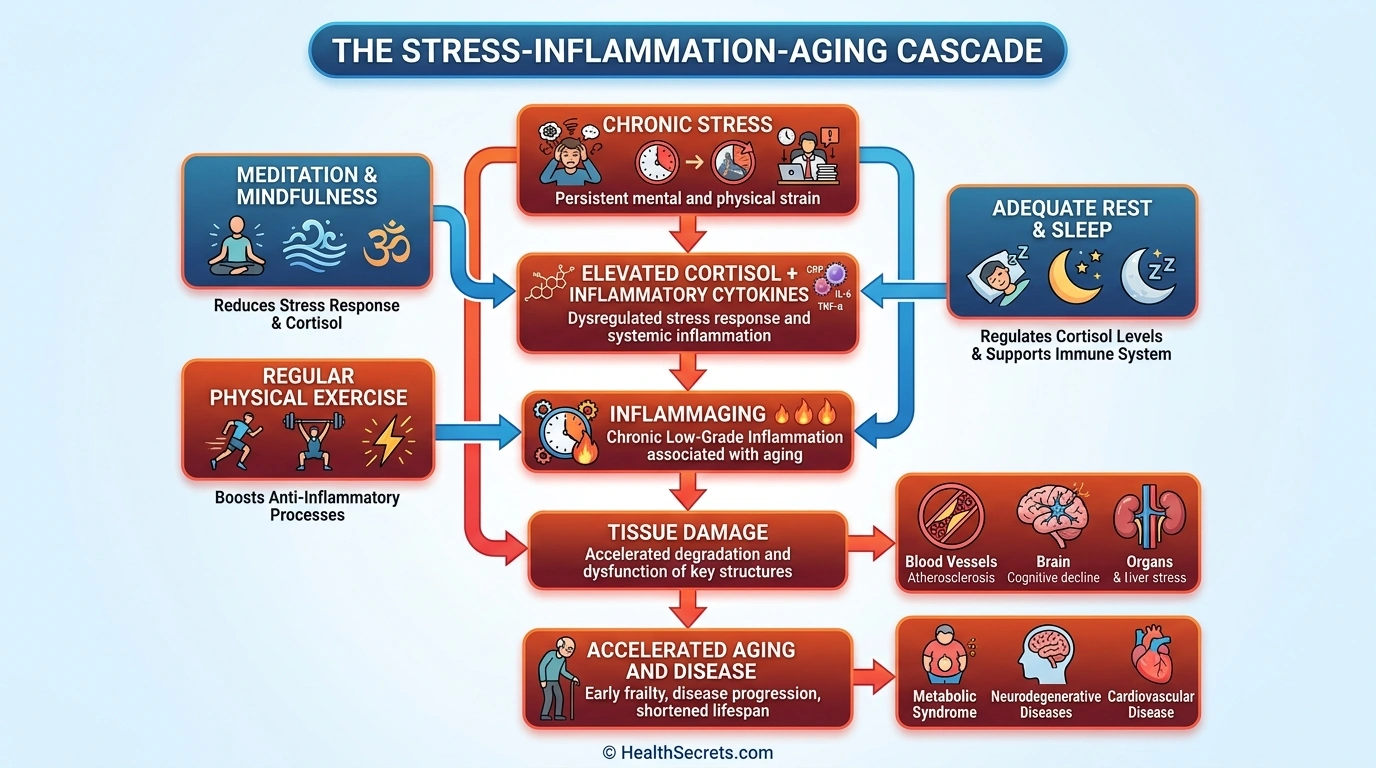
Population studies consistently link chronic stress to increased all-cause mortality, higher cardiovascular and cancer mortality, and accelerated biological aging measured by epigenetic clocks. A chronologically 50-year-old with severe chronic stress might be biologically 55–60.
What makes stress worse (not better):
- Alcohol — Disrupts sleep quality, increases inflammation, impairs stress resilience, and can lead to dependence. Using alcohol to "de-stress" is counterproductive.
- Chronic overwork — "Powering through" without recovery leads to burnout, not resilience. Rest isn't weakness; it's biological necessity.
- Social media — Often amplifies stress through comparison, information overload, and doom-scrolling.
- Ignoring the problem — Chronic stress doesn't resolve itself. Damage accumulates silently.
- Perfectionism — Self-imposed unrealistic standards create their own chronic stress cycle.
The dose-response relationship is clear: the more severe and prolonged the stress, the greater the aging impact. Severe caregiving stress, war trauma, and chronic poverty show the most dramatic effects.
How Do You Manage Stress to Protect Against Accelerated Aging?
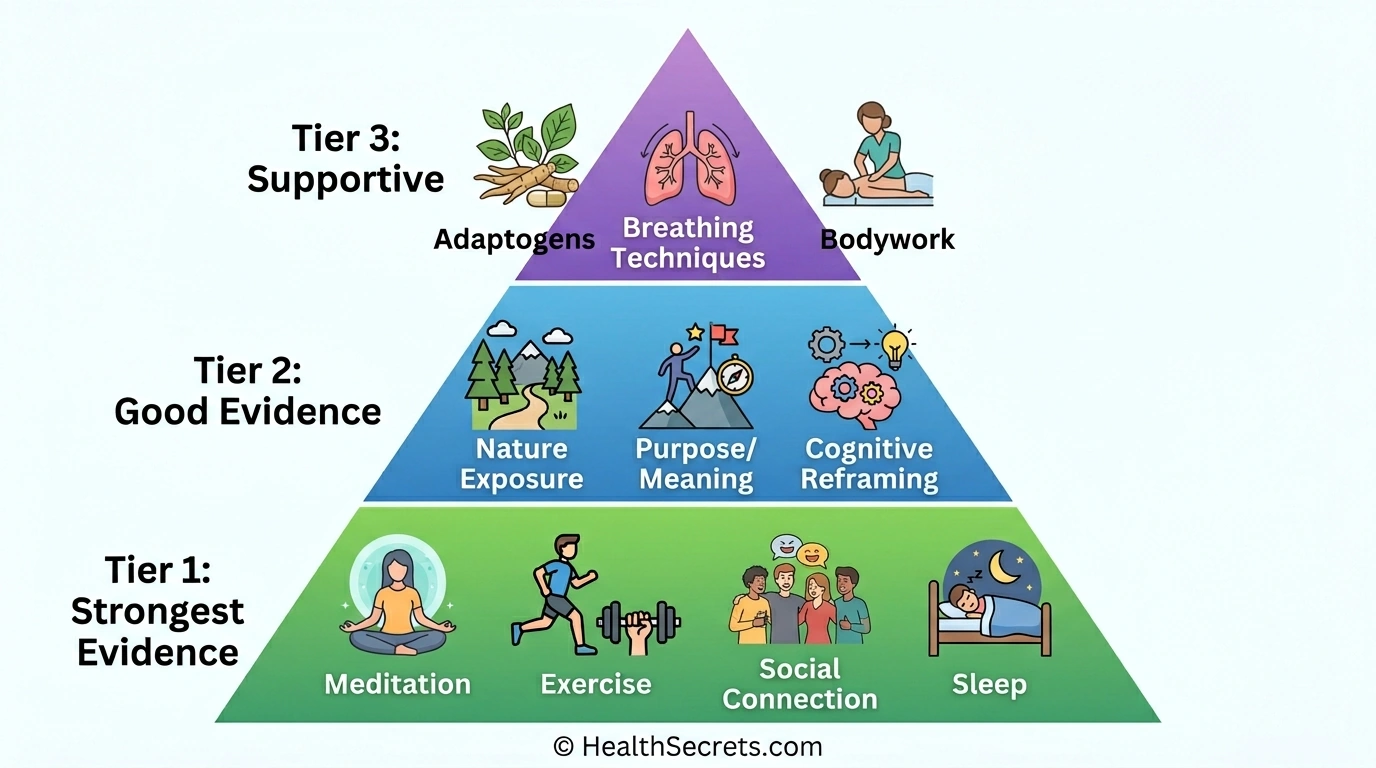
The most effective approach combines daily stress management habits (meditation, exercise, sleep, social connection) with periodic assessment of stress levels using validated tools and, when needed, professional support. Start with Tier 1 interventions backed by strong evidence, then layer in additional strategies based on your situation and preferences.
Tier 1: Strongest Evidence
- Meditation and Mindfulness — The most studied stress-aging intervention. Reduces cortisol and inflammatory markers, slows telomere shortening, increases hippocampal gray matter. An 8-week MBSR program shows significant benefits; even 10–20 minutes daily helps. Try Headspace, Calm, Insight Timer, or Ten Percent Happier to get started ([10]).
- Exercise — 150–300 minutes of moderate aerobic activity per week plus 2–3 strength sessions. Reduces chronic cortisol, increases BDNF, improves HRV. Consistency matters far more than intensity. Check out our guide on exercise and healthy aging.
- Social Connection — Nurture a few close, supportive relationships. Loneliness is as harmful as smoking for accelerated aging. Quality over quantity, always.
- Sleep — Prioritize 7–9 hours nightly. Sleep is when your body repairs stress damage. Poor sleep amplifies every other stress pathway. See our sleep optimization guide.
Tier 2: Good Evidence
- Nature exposure — 20–30 minutes in green spaces several times weekly. Forest bathing (shinrin-yoku) measurably lowers cortisol.
- Purpose and meaning — Ikigai (Japanese "reason for being") buffers stress impact and reduces mortality risk. Volunteer, mentor, engage in meaningful work.
- Cognitive reframing and therapy — CBT is effective for stress management. How you perceive stress matters—a "stress-is-enhancing" mindset produces better outcomes.
Tier 3: Supportive (Modest Evidence)
- Adaptogens — Ashwagandha has the best evidence for cortisol reduction. Rhodiola rosea may improve resilience. Not magic bullets, but may provide modest support.
- Breathing techniques — Box breathing (4-4-4-4) and physiological sighs activate the parasympathetic nervous system.
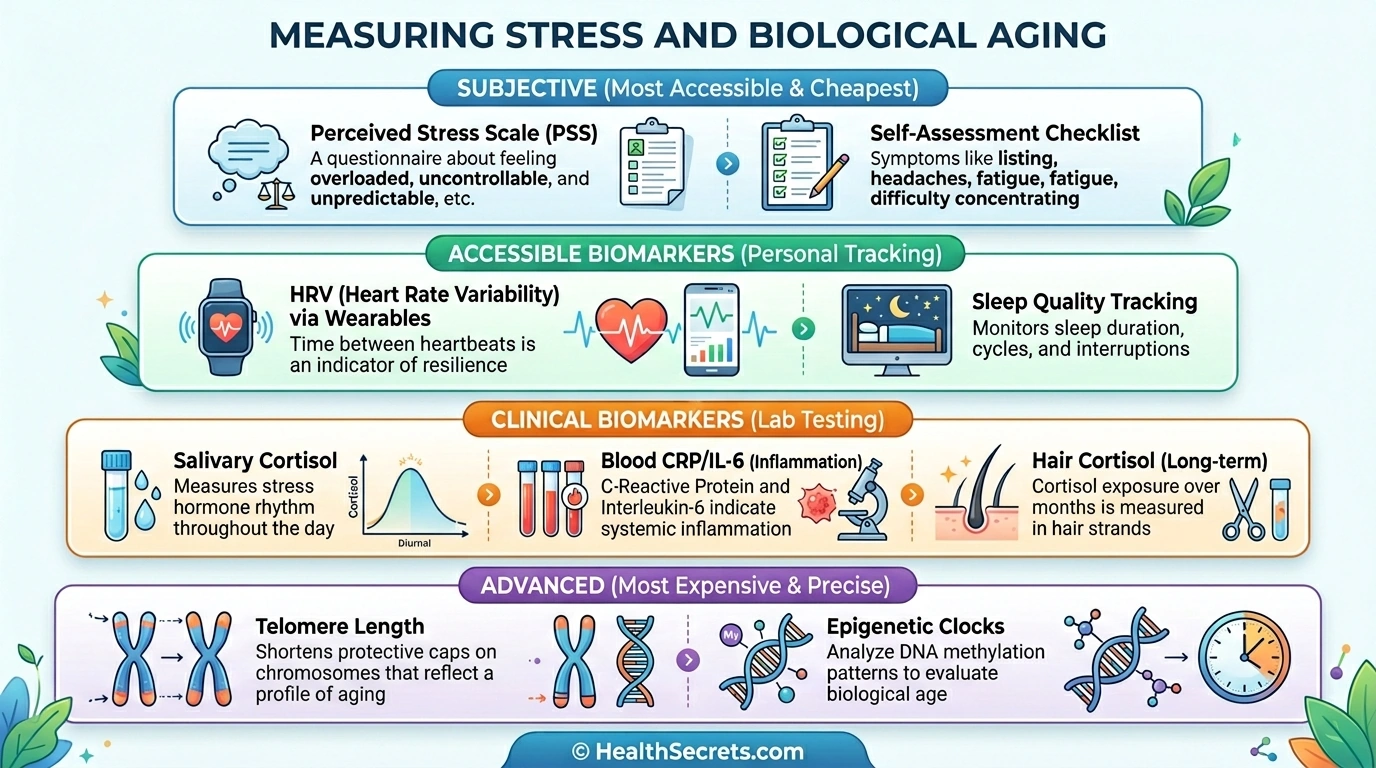
How Do You Measure Whether Stress Is Aging You?
Subjective: The Perceived Stress Scale (PSS) is a validated, free questionnaire. Track your sleep quality, energy, mood, and physical symptoms.
Objective biomarkers: Salivary cortisol (diurnal rhythm), hair cortisol (long-term average), blood inflammatory markers (CRP, IL-6), heart rate variability via wearables (Oura Ring, Whoop, Apple Watch), telomere length testing, and epigenetic clocks (GrimAge, PhenoAge).
Seek professional evaluation for severe or persistent anxiety/depression, panic attacks, inability to function, or physical symptoms like chest pain.

What Diet and Lifestyle Changes Help Reduce Stress-Related Aging?
An anti-inflammatory Mediterranean-style diet rich in vegetables, fruits, omega-3 fatty acids, and antioxidants provides the nutritional foundation for stress resilience. Combined with consistent movement, adequate sleep, and intentional social engagement, these lifestyle factors address the root biological pathways through which stress accelerates aging.
Anti-inflammatory eating patterns:
- Mediterranean diet (vegetables, fruits, whole grains, olive oil, fish, nuts)
- Omega-3 fatty acids from fatty fish, walnuts, and flaxseeds reduce inflammatory markers
- Antioxidant-rich foods (berries, dark leafy greens, green tea) support cellular defense
- Magnesium-rich foods (dark chocolate, spinach, pumpkin seeds) support stress resilience and sleep
- Minimize processed foods, excess sugar, and seed oils that amplify inflammation
Lifestyle architecture for stress resilience:
- Build natural movement into your day (walking meetings, gardening, standing desk)
- Create daily "downshift" rituals—a short meditation, an afternoon walk in nature, an evening without screens
- Protect your sleep window fiercely; no caffeine after 2 PM, dim lights after sunset, cool bedroom
- Schedule social connection intentionally; it doesn't happen by accident in modern life
- Limit social media to defined windows; never scroll before bed
Adaptogens like ashwagandha (300–600mg daily of root extract) and rhodiola rosea (200–400mg daily) may offer modest cortisol-lowering support, but they're supplements to a foundation of diet, movement, sleep, and connection—not replacements for it.
Action Plan
What Should You Do First to Protect Against Stress-Induced Aging?
Follow the sequence below, work through each phase in order, and use the checklist as your practical implementation guide.
Start by honestly assessing your current stress level using the free Perceived Stress Scale, then implement one Tier 1 intervention (meditation or exercise) this week. Build gradually over 8–12 weeks, adding sleep optimization and social connection. Address root causes of chronic stress when possible.
Phase 1 (Weeks 1–2): Assess and Start
- Take the Perceived Stress Scale (PSS)—free online, 5 minutes
- Begin 10 minutes daily meditation (Headspace or Insight Timer free tiers)
- Set a consistent sleep schedule (same bedtime/wake time, 7–9 hours)
Phase 2 (Weeks 3–6): Build the Foundation
- Add 150 minutes weekly moderate exercise (walking counts)
- Schedule 2–3 social connections weekly (coffee, walk, phone call)
- Add 20 minutes nature exposure 3x weekly
- Try magnesium glycinate (200mg) before bed for sleep support
Phase 3 (Weeks 7–12): Optimize and Sustain
- Increase meditation to 20 minutes daily
- Add strength training 2x weekly
- Consider adaptogen supplementation (ashwagandha 300mg daily)
- Explore cognitive reframing or therapy if chronic stressors persist
- Optional: baseline biomarker testing (cortisol, CRP, HRV)
Phase 4 (Ongoing): Maintain and Address Root Causes
- Maintain all Tier 1 habits as non-negotiable daily practices
- Address toxic stressors at the source when possible (job, relationships, finances)
- Seek professional help for persistent anxiety, depression, or burnout
- Retest biomarkers every 6–12 months if tracking interventions


