
In 2016, Japanese scientist Yoshinori Ohsumi won the Nobel Prize in Physiology or Medicine for discovering the mechanisms of autophagy — a cellular "self-eating" process that may hold the key to longevity, disease prevention, and healthy aging. The word comes from the Greek auto (self) and phagy (eating), and it describes one of the most fundamental biological processes in your body: the ability of cells to break down and recycle their own damaged components.
Every cell in your body accumulates damaged proteins, dysfunctional mitochondria, and other cellular debris over time. Without an efficient cleanup system, this molecular junk builds up, contributing to aging, neurodegeneration, cancer, and metabolic disease. Autophagy is that cleanup system — and the exciting news is that you can actively enhance it through specific lifestyle strategies.
This guide covers the science of how autophagy works, its remarkable health benefits, and evidence-based methods to activate it — from intermittent fasting and exercise to compounds like spermidine and resveratrol. Whether you're new to autophagy or looking to optimize your cellular health protocol, you'll find practical, research-backed strategies to put into practice today.
What Is Autophagy and Why Does It Matter for Longevity?
Autophagy is a highly conserved cellular process in which cells degrade and recycle their own damaged or unnecessary components — including misfolded proteins, dysfunctional mitochondria, and invasive pathogens — to maintain homeostasis and generate energy during stress. Research consistently shows that autophagic activity declines with age, contributing directly to the progression of aging and age-related diseases [1].
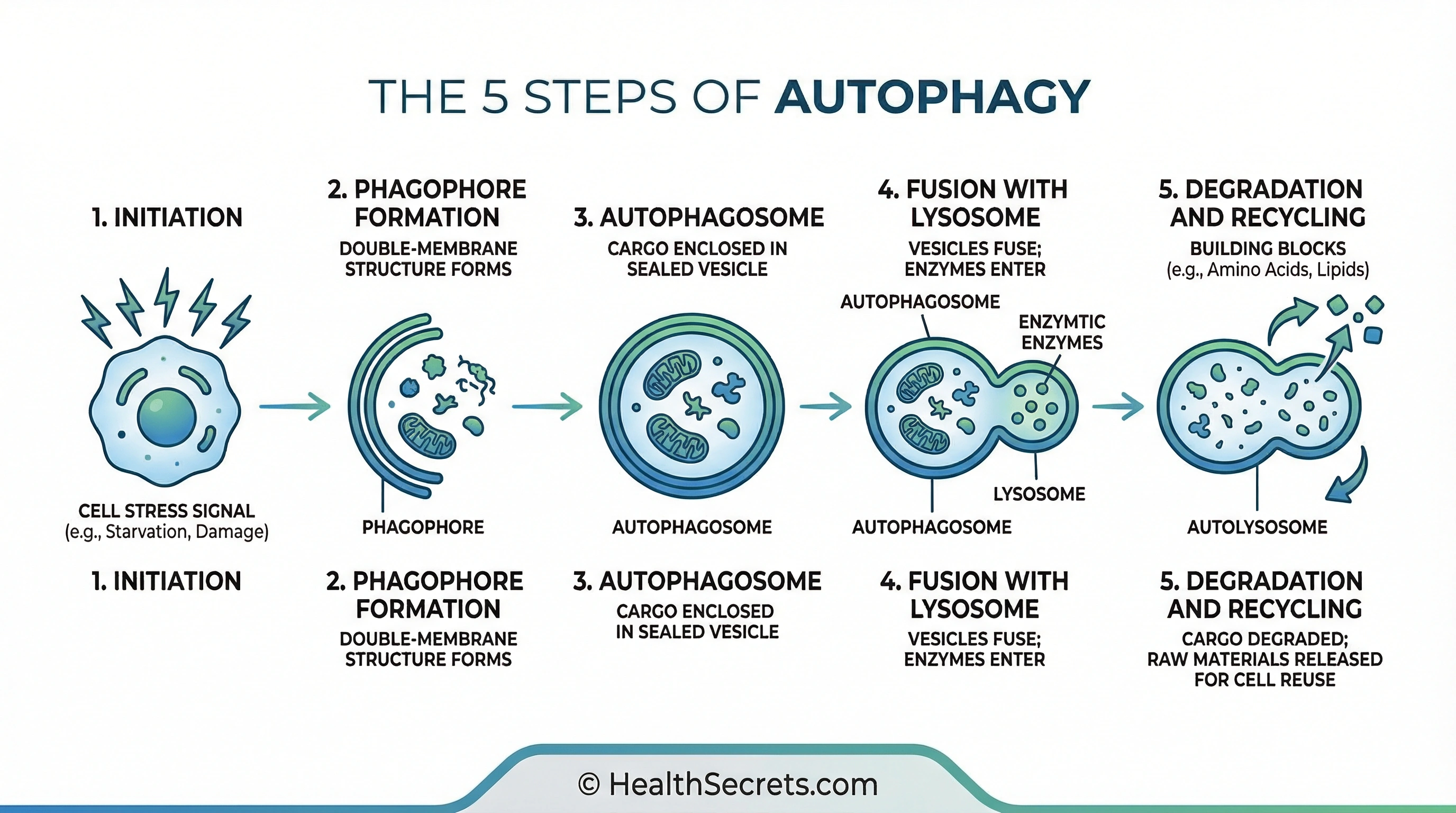
The process works through a remarkable five-step cycle. First, cellular stress signals (nutrient deprivation, damage, or infection) trigger initiation by inhibiting the mTOR pathway and activating AMPK. A double-membrane structure called a phagophore forms and begins engulfing target cargo. This closes to become an autophagosome — a sealed vesicle containing the cellular debris. The autophagosome then fuses with a lysosome (the cell's digestive compartment), creating an autolysosome where acidic enzymes break down the contents. Finally, the resulting amino acids, lipids, and nucleotides are recycled into building blocks for new cellular structures [2].
There are several types of autophagy, each targeting different cellular components:
- Macroautophagy — the most studied form, involving bulk degradation of cytoplasmic components via autophagosome formation
- Mitophagy — selective removal of damaged mitochondria, critical for energy production and aging
- Chaperone-mediated autophagy (CMA) — selective protein degradation using chaperone proteins for direct lysosomal transport
- Xenophagy — elimination of intracellular pathogens including bacteria and viruses
Autophagic decline with age is now recognized as one of the hallmarks of cellular aging. Studies in yeast, worms, flies, and mice all demonstrate that enhanced autophagy extends lifespan, while autophagy impairment accelerates aging [3].
How Does Autophagy Work at the Molecular Level?
Autophagy is regulated by two master molecular switches — mTOR and AMPK — that function as a seesaw system sensing your body's nutrient and energy status. Understanding this mechanism reveals exactly why fasting, exercise, and certain compounds are so effective at activating cellular cleanup [4].
What Is the mTOR Pathway and How Does It Control Autophagy?
The mechanistic target of rapamycin (mTOR) is a master regulator of cellular metabolism that promotes cell growth when nutrients are abundant and permits autophagy when they're scarce. mTORC1 directly inhibits ULK1 — the kinase responsible for autophagy initiation — through phosphorylation [5]. In the fed state, when amino acids, glucose, and insulin are plentiful, mTOR is highly active: it drives protein synthesis, cell growth, and cell division while suppressing autophagy. In the fasted state, mTOR activity drops, releasing the brake on autophagy and allowing cellular cleanup to proceed.
This creates a fundamental biological trade-off: your cells cannot simultaneously be in growth mode and cleanup mode. Periods of both are needed for optimal health — growth to build and repair tissues, and autophagy to remove accumulated damage.

How Does AMPK Activate the Cellular Cleanup Process?
AMP-activated protein kinase (AMPK) is the cell's primary energy sensor. When cellular energy drops (high AMP-to-ATP ratio), AMPK activates and triggers autophagy through two mechanisms: directly phosphorylating ULK1 to initiate autophagosome formation, and inhibiting mTORC1 to lift its suppression of autophagy [6]. A 2026 study in American Journal of Physiology confirmed that AMPK activates autophagy both post-translationally and transcriptionally, driving autophagosome-lysosome fusion and expression of autophagy-related genes [7].
AMPK is activated by fasting, exercise (especially endurance and HIIT), cold exposure, and compounds like berberine and metformin — explaining why these interventions are such potent autophagy triggers.
What Are the Key Benefits of Autophagy for Health and Longevity?
Autophagy is far more than cellular housekeeping — it's fundamental to longevity, neuroprotection, metabolic health, immune function, and disease prevention. Here are the most significant evidence-based benefits.

Does Autophagy Slow Aging and Extend Lifespan?
Multiple lines of evidence demonstrate that enhanced autophagy extends lifespan across species — from yeast and nematodes to flies and mice — while impaired autophagy accelerates aging [8]. Caloric restriction, the most robust longevity intervention known, extends life largely through autophagy activation. Rapamycin, a direct mTOR inhibitor, extends mouse lifespan by 20–30% via the same mechanism [9]. The age-related decline in autophagic capacity leads to accumulation of damaged organelles, oxidative stress, and loss of stem cell function — all hallmarks of aging. Strategies that restore youthful autophagy levels may effectively slow biological aging.
Can Autophagy Protect Against Neurodegenerative Diseases?
Autophagy is critical for brain health because neurons are particularly vulnerable to protein aggregate accumulation. Impaired autophagy is directly implicated in Alzheimer's disease (beta-amyloid and tau accumulation), Parkinson's disease (alpha-synuclein aggregates), Huntington's disease, and ALS [10]. Enhanced autophagy clears these misfolded proteins, removes damaged mitochondria from neurons, reduces neuroinflammation, and supports neuroplasticity and cognitive function throughout life.
How Does Autophagy Improve Metabolic Health?
Autophagy enhances insulin sensitivity, improves glucose regulation, promotes fat burning through lipophagy (selective degradation of lipid droplets), and removes damaged mitochondria to improve energy production [11]. These mechanisms provide protection against type 2 diabetes, metabolic syndrome, obesity, and non-alcoholic fatty liver disease — conditions that are fundamentally driven by the accumulation of cellular damage that autophagy clears.
What Role Does Autophagy Play in Cancer Prevention?
Autophagy has a complex, dual role in cancer. In healthy cells, autophagy acts as a tumor suppressor by removing damaged cells before they become cancerous, eliminating DNA damage, and maintaining genomic stability. However, in established tumors, cancer cells can hijack autophagy to survive metabolic stress [12]. This means autophagy activation is primarily beneficial for cancer prevention, while its role in cancer treatment requires careful medical guidance.

spermidineLIFE Dietary Supplement
Editor's ChoicespermidineLIFE Dietary · Daily autophagy activation, longevity support, cellular renewal

Thorne ResveraCel
Best for LongevityThorne ResveraCel · SIRT1 activation, NAD+ support, comprehensive longevity protocol

NOW Foods EGCg Green Tea Extract 400mg
Best ValueNOW Foods · AMPK activation, antioxidant support, affordable autophagy enhancement

Thorne Berberine 500mg
Best for Metabolic HealthThorne Berberine · AMPK activation, blood sugar regulation, autophagy support
Doctor's Best Ubiquinol 200mg (Kaneka)
Best for Mitochondrial SupportDoctor's Best · Mitochondrial health, mitophagy support, cellular energy production
Read the detailed review cards below before opening any retailer link
Top Recommended Products
spermidineLIFE Dietary
spermidineLIFE Dietary Supplement
Spermidine is the only supplement proven essential for fasting-mediated autophagy in a landmark 2024 Nature Cell Biology study, making it the most evidence-backed autophagy supplement available.
Pros
- + Clinically studied compound
- + published in Nature Cell Biology
- + directly induces autophagy
- + well-tolerated
Cons
- - Premium price
- - limited long-term human trials
- - wheat-derived (not for wheat allergy)
Why we included it: Spermidine is the only supplement proven essential for fasting-mediated autophagy in a landmark 2024 Nature Cell Biology study, making it the most evidence-backed autophagy supplement available.
Retailer link opens on Amazon after the review details above
Thorne ResveraCel
Thorne ResveraCel
Combines resveratrol (mTOR inhibition, SIRT1 activation) with nicotinamide riboside (NAD+ precursor) and quercetin (senolytic) for a multi-target longevity approach.
Pros
- + Multi-pathway longevity formula
- + NSF certified
- + Thorne quality
- + activates SIRT1 and supports NAD+
Cons
- - Higher price
- - requires 4 capsules daily
- - resveratrol bioavailability remains a challenge
Why we included it: Combines resveratrol (mTOR inhibition, SIRT1 activation) with nicotinamide riboside (NAD+ precursor) and quercetin (senolytic) for a multi-target longevity approach.
Retailer link opens on Amazon after the review details above
NOW Foods
NOW Foods EGCg Green Tea Extract 400mg
EGCG is one of the most accessible and affordable autophagy-supporting compounds with robust evidence for AMPK activation and mTOR inhibition.
Pros
- + Highly affordable
- + well-researched AMPK activator
- + large supply
- + few side effects
Cons
- - May cause stomach upset on empty stomach
- - caffeine-free but contains trace amounts
- - liver concerns at very high doses
Why we included it: EGCG is one of the most accessible and affordable autophagy-supporting compounds with robust evidence for AMPK activation and mTOR inhibition.
Retailer link opens on Amazon after the review details above
Thorne Berberine
Thorne Berberine 500mg
Berberine is one of the most potent natural AMPK activators available, with metabolic benefits comparable to metformin and strong evidence for autophagy induction.
Pros
- + Potent AMPK activator
- + similar effects to metformin
- + well-studied for metabolic health
- + Thorne quality
Cons
- - GI upset possible
- - may interact with medications
- - requires multiple daily doses
Why we included it: Berberine is one of the most potent natural AMPK activators available, with metabolic benefits comparable to metformin and strong evidence for autophagy induction.
Retailer link opens on Amazon after the review details above
Doctor's Best
Doctor's Best Ubiquinol 200mg (Kaneka)
Healthy mitochondria are essential for effective mitophagy, and ubiquinol supports mitochondrial function and energy production — the foundation for all autophagy processes.
Pros
- + Superior absorption vs CoQ10
- + supports mitochondrial function
- + Kaneka quality
- + well-tolerated
Cons
- - Requires fat for absorption
- - premium vs CoQ10
- - one-month supply at recommended dose
Why we included it: Healthy mitochondria are essential for effective mitophagy, and ubiquinol supports mitochondrial function and energy production — the foundation for all autophagy processes.
Retailer link opens on Amazon after the review details above
Are There Any Risks or Side Effects of Activating Autophagy?
While autophagy activation is generally beneficial, there are important considerations and risks to be aware of. Excessive or prolonged autophagy — particularly through extended fasting — can lead to muscle wasting, hormonal disruption, and metabolic adaptation if not properly balanced with periods of nutrient intake and mTOR activation for growth and repair.
Key risks and cautions:
- Chronic caloric restriction without adequate nutrition can cause muscle loss, bone density reduction, and hormonal imbalance
- Extended fasting (>24 hours) should be done under medical supervision, especially for those with diabetes, on medications, or with a history of eating disorders
- Excessive protein restriction aimed at mTOR inhibition can impair muscle protein synthesis and recovery
- In established cancers, autophagy may support tumor survival — cancer patients should consult their oncologist before any autophagy-enhancing protocol
- Pregnancy, breastfeeding, underweight individuals, and children should avoid fasting-based autophagy strategies
The key principle is cycling: alternate periods of autophagy activation (fasting, exercise) with periods of growth signaling (adequate nutrition, protein intake) for optimal health.
How Do You Activate Autophagy Naturally?
You don't need a prescription to activate autophagy — specific lifestyle strategies can powerfully upregulate this cellular cleanup process. Here are the most effective, evidence-based methods organized from most to least potent.

Fasting: The Most Powerful Autophagy Trigger
Fasting is the single most effective way to activate autophagy. When you stop eating, glucose and glycogen stores deplete, mTOR is inhibited (no incoming amino acids), AMPK activates (low energy state), and your cells shift from growth mode to recycling mode. A 2026 study confirmed that short-term fasting induces autophagy through the AMPK/mTOR pathway, with autophagy levels positively correlated with fasting intensity [13].
| Fasting Duration | Autophagy Level | What Happens | Sustainability |
|---|---|---|---|
| 12–16 hours | Moderate | Autophagy begins increasing; glycogen depleting | High (daily) |
| 18–24 hours | Significant | Strong autophagy activation; ketosis begins | Moderate |
| 24–48 hours | High | Peak autophagy; deep cellular cleanup | Low (monthly) |
| 48–72 hours | Maximum | Maximum autophagy; stem cell regeneration | Very low (quarterly) |
- 16:8 Intermittent Fasting — 16 hours fasting, 8-hour eating window. Best for daily autophagy maintenance. Most sustainable long-term.
- OMAD (One Meal a Day) — ~23-hour fast. Deeper autophagy activation. Requires adaptation.
- Fasting-Mimicking Diet (FMD) — 5 days at ~800–1,100 calories. Developed by Dr. Valter Longo. Clinically studied. Monthly or quarterly use.
- Extended Water Fast (48–72 hours) — Maximum autophagy. Medical supervision recommended. Quarterly at most.
Stay hydrated during fasts with water, black coffee (caffeine enhances autophagy), and unsweetened green tea (EGCG activates AMPK).
Exercise: Movement-Induced Cellular Cleanup
Exercise activates autophagy by creating beneficial cellular stress, depleting glycogen, activating AMPK, and increasing NAD+.
Fasted exercise amplifies the effect — exercising before breaking your fast combines two potent autophagy triggers simultaneously.
Most effective exercise types for autophagy:
- HIIT (High-Intensity Interval Training) — 20–30 minutes, potent AMPK activator
- Endurance exercise — 30–60 minutes running, cycling, or swimming
- Resistance training — triggers autophagy for muscle repair and quality control
Research shows that spermidine coupled with exercise rescues skeletal muscle atrophy through enhanced autophagy via the AMPK-FOXO3a signaling pathway [14].
Sleep, Cold Exposure, and Heat Stress
- Sleep is when brain autophagy peaks — the glymphatic system activates during deep sleep to clear neural waste. Aim for 7–9 hours, and stop eating 3 hours before bed to extend your overnight fast.
- Cold exposure (cold showers, ice baths) activates AMPK and promotes mitochondrial biogenesis. Start with 2–5 minute cold showers, 2–4 times per week.
- Sauna use induces heat shock proteins (HSPs) that promote protein quality control and autophagy. Sessions of 15–20 minutes at 170–200°F, 2–4 times weekly.
Autophagy-Supporting Supplements
| Supplement | Mechanism | Dosage | Evidence Level |
|---|---|---|---|
| Spermidine | Direct autophagy induction; mimics CR | 1–10 mg/day | Strong (human + animal) |
| Resveratrol | SIRT1 activation; mTOR inhibition | 250–500 mg/day | Moderate (bioavailability issue) |
| EGCG (Green Tea) | AMPK activation; mTOR inhibition | 400–600 mg/day | Moderate-Strong |
| Berberine | Potent AMPK activator | 500 mg 2–3x/day | Strong (metabolic) |
| Quercetin | Autophagy + senolytic | 500–1,000 mg/day | Moderate |
| A landmark 2024 study in Nature Cell Biology demonstrated that spermidine is essential for fasting-mediated autophagy and longevity — spermidine levels increased during fasting across yeast, flies, mice, and human volunteers, and blocking spermidine synthesis reduced fasting-induced autophagy [15]. |
Autophagy-Supporting Foods
When you do eat, prioritize foods that support autophagy pathways:
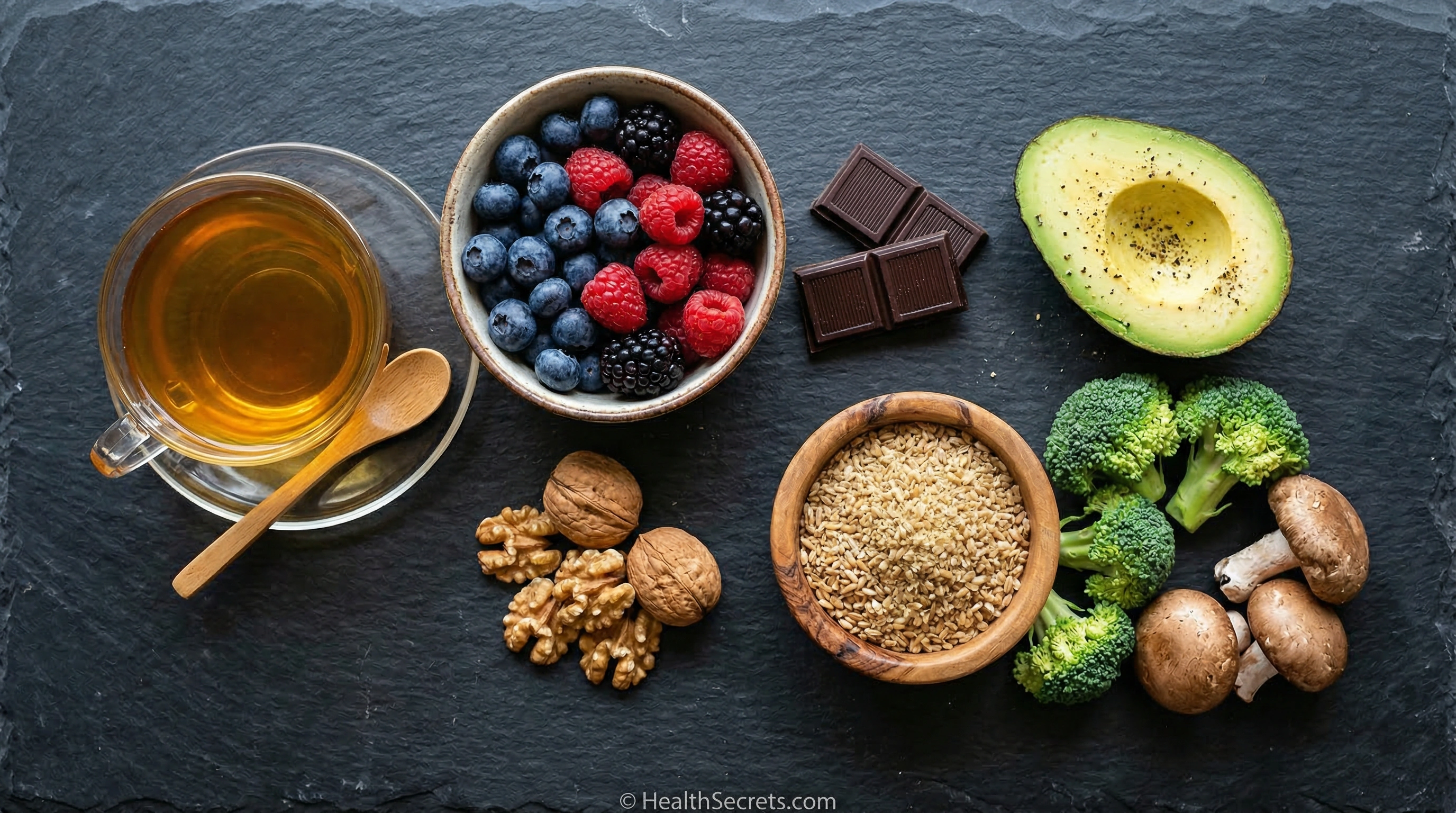
- Polyphenol-rich: Berries, green tea, coffee, dark chocolate
- Spermidine sources: Wheat germ (highest), mushrooms, aged cheese, soybeans
- Cruciferous vegetables: Broccoli, cauliflower, Brussels sprouts
- Healthy fats: Olive oil, avocados, nuts
- Moderate protein: Avoid excessive protein that overactivates mTOR
Action Plan
What Diet and Lifestyle Changes Best Support Autophagy?
Follow the sequence below, work through each phase in order, and use the checklist as your practical implementation guide.
Optimizing autophagy requires a comprehensive approach that balances activation periods with recovery. Here is a practical daily and weekly protocol combining the most effective strategies for sustained cellular health.
Daily Autophagy Protocol:
- Morning: Wake at a consistent time → morning sunlight (10–30 min) → black coffee or green tea → fasted exercise (30–60 min) → continue fast until 12–2 PM (16–18 hour fast)
- Afternoon: Break fast with nutrient-dense, polyphenol-rich meal → moderate protein (don't overactivate mTOR) → autophagy-supporting supplements
- Evening: Light dinner finished 3 hours before bed → herbal tea (no calories) → begin overnight fast
- Sleep: Cool, dark room → 7–9 hours quality sleep (brain autophagy peaks)
Weekly Protocol:
- Daily: 16:8 intermittent fasting minimum + 7–9 hours sleep
- 4–6 days: Exercise (mix of HIIT, endurance, resistance)
- 2–3x per week: Cold exposure and/or sauna
- 1x per week (optional): 24-hour fast for deeper autophagy
- Monthly or quarterly: 3–5 day FMD or 48–72 hour water fast (with medical clearance)
Common Mistakes to Avoid:
- Constant fasting without allowing mTOR activation → muscle loss, hormonal issues
- Overeating protein → excessive mTOR activation suppresses autophagy
- Ignoring sleep → impairs brain autophagy and glymphatic clearance
- Expecting immediate results → autophagy benefits accumulate over weeks and months
- "More fasting = better" mindset → balance is essential; excessive fasting is counterproductive
Tracking Autophagy (Indirect Markers):
- Ketone levels — blood BHB >0.5 mmol/L correlates with autophagy activation
- Fasting duration — track with apps like Zero or Life Fasting Tracker
- Subjective signs — mental clarity, increased energy, reduced hunger during fasts, improved recovery
- Long-term biomarkers — hsCRP, HbA1c, fasting insulin, biological age testing

Action Plan
What Should You Do First to Start Activating Autophagy?
Follow the sequence below, work through each phase in order, and use the checklist as your practical implementation guide.
Begin with the most accessible strategies and gradually add more advanced methods as your body adapts. The most effective approach combines time-restricted eating with fasted exercise, quality sleep, and autophagy-supporting foods — building each habit incrementally over 8–12 weeks. Consistency matters more than intensity, and small daily actions compound into powerful cellular benefits over time.
Phase 1 — Foundation (Weeks 1–2):
- Start with 14:10 intermittent fasting, progress to 16:8 by week 2
- Drink black coffee or green tea during your fasting window
- Prioritize 7–9 hours of quality sleep nightly
- Stop eating 3 hours before bedtime
Phase 2 — Activation (Weeks 3–4):
- Add fasted exercise 2–3x per week (walking, then HIIT or endurance)
- Introduce autophagy-supporting foods (berries, green tea, wheat germ, cruciferous vegetables)
- Begin cold showers (30 seconds, gradually extending to 2–5 minutes)
- Track fasting windows with a fasting app
Phase 3 — Optimization (Months 2–3):
- Consider autophagy-supporting supplements (spermidine, EGCG, or berberine)
- Try a monthly 24-hour fast or fasting-mimicking diet
- Add sauna sessions if available (2–3x per week)
- Monitor ketone levels during fasts (optional but informative)
- Track long-term health markers (annual blood work)

