
Here's something that keeps cardiologists up at night: roughly 116 million Americans walk around with high blood pressure, and a staggering number of them have no idea. They call it the "silent killer" for a reason — your blood pressure can quietly damage your heart, kidneys, brain, and blood vessels for years before you notice anything wrong. And by then? The damage is already done.
Now, if you're reading this looking for natural remedies for high blood pressure, I want to be upfront about something important. These approaches are complementary — they work alongside your doctor's treatment plan, not instead of it. Nobody should ever stop their blood pressure medications without medical supervision. That said, the research on certain natural approaches is genuinely impressive. CoQ10 has shown systolic blood pressure reductions of 4–17 mmHg in clinical trials. Aged garlic extract? Comparable to some conventional medications, with 6–9 mmHg reductions. Even something as simple as hibiscus tea dropped systolic pressure by 7.2 points in a controlled study.
This guide walks you through seven evidence-based steps — from targeted supplements like CoQ10 and magnesium, to dietary powerhouses like the DASH diet, to lifestyle shifts that can lower your numbers by 5–20 mmHg. Each step includes specific dosing, timelines, and the research behind it.
For more on cardiovascular health, check out our complete guide to natural heart health and our detox and cleansing guide.
What Do You Need to Know Before Starting Natural Blood Pressure Support?
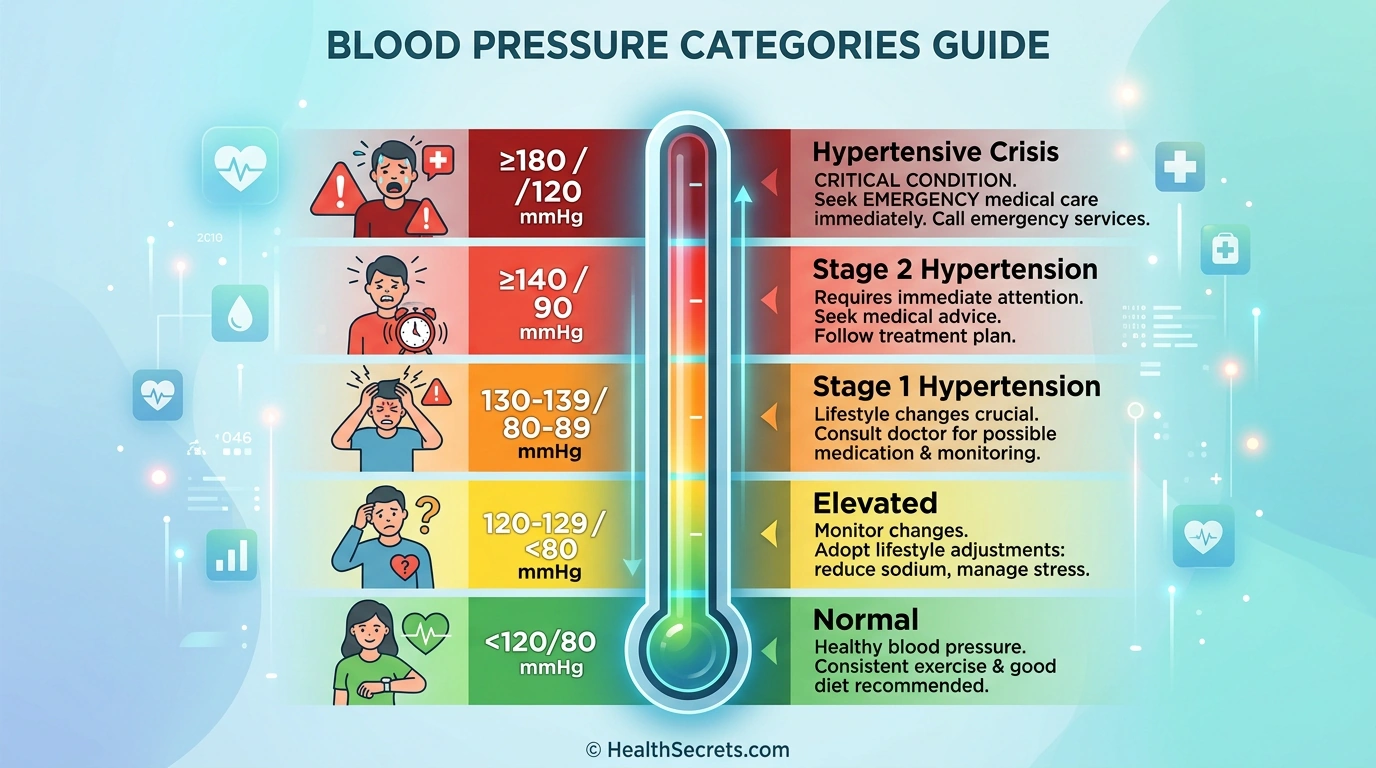
Before adding any natural remedy to your routine, understanding the basics of blood pressure and your own health status is essential. Normal blood pressure sits below 120/80 mmHg, elevated is 120–129/<80, Stage 1 hypertension is 130–139/80–89, and Stage 2 is 140/90 or higher. Hypertensive crisis — anything at or above 180/120 — demands emergency medical attention.
Who Should Use These Approaches?
These natural strategies work best for people with elevated blood pressure or Stage 1 hypertension who are already working with a doctor. If you're on blood pressure medications, these approaches may help your doctor reduce dosages over time — but that's a medical decision, not yours to make alone.
What's the Expected Timeline?
Most natural blood pressure interventions take 4–12 weeks to show measurable results. CoQ10 needs 4–12 weeks. Garlic extract takes 8–12 weeks. Hibiscus tea can show effects in 2–6 weeks. The DASH diet often produces results within 2 weeks. Exercise benefits begin within days but accumulate over months.
Critical Safety Prerequisites
- Get a baseline blood pressure reading from your doctor
- Purchase a validated home blood pressure monitor
- Never stop prescribed medications without medical supervision
- Inform your doctor about every supplement you plan to take
- Monitor for symptoms of excessive blood pressure lowering: dizziness, lightheadedness, fainting
- If you have kidney disease, diabetes, or take blood thinners, extra caution is required
How Do You Use CoQ10 to Lower Blood Pressure?
Coenzyme Q10 (ubiquinol) is a naturally occurring antioxidant that supports cellular energy production and blood vessel function. Meta-analyses of randomized controlled trials show CoQ10 supplementation can reduce systolic blood pressure by 4–17 mmHg, with the most significant effects at doses below 200 mg/day over 12+ weeks.
How Does CoQ10 Lower Blood Pressure?
CoQ10 works through several mechanisms: it improves endothelial function (the lining of blood vessels), increases nitric oxide production which dilates blood vessels, and reduces oxidative stress that damages arterial walls. A 2022 GRADE-assessed meta-analysis of 17 RCTs found CoQ10 significantly reduced systolic blood pressure by 4.77 mmHg in patients with cardiometabolic diseases, with a U-shaped dose-response relationship showing 100–200 mg/day as the optimal range [1].
An earlier meta-analysis by Rosenfeldt et al. analyzing 12 clinical trials (362 patients) concluded CoQ10 has the potential to lower systolic blood pressure by up to 17 mmHg and diastolic by up to 10 mmHg without significant side effects [2]. A 2026 systematic review confirmed these findings, noting that longer treatment durations produced more pronounced effects [3].

CoQ10 Dosing Protocol
- Dose: 100–200 mg daily (ubiquinol form for better absorption)
- Timing: Take with a meal containing fat (CoQ10 is fat-soluble)
- Duration: Allow 4–12 weeks for full effects
- Special note: If you take statin medications, CoQ10 supplementation is especially important — statins deplete CoQ10 levels
- Side effects: Generally well-tolerated; occasional mild digestive upset
How Does Magnesium Supplementation Help Lower Blood Pressure?
Magnesium is a critical mineral involved in over 300 enzymatic reactions, including blood vessel relaxation. Clinical evidence shows magnesium supplementation reduces systolic blood pressure by 2–3 mmHg and diastolic by about 2 mmHg, with greater effects at doses of 400 mg/day or higher — particularly in people who are magnesium-deficient.
What Does the Research Say About Magnesium and Blood Pressure?
A 2026 systematic review and meta-analysis published in Hypertension (38 RCTs, 2,709 participants) found that magnesium significantly lowers blood pressure in individuals with hypertension and hypomagnesemia, especially those already on antihypertensive medication [4]. An umbrella meta-analysis including 8,610 subjects confirmed the blood pressure-lowering effect, finding it particularly effective at doses ≥400 mg/day for ≥12 weeks [5].
A clinical trial at Indiana University is testing magnesium glycinate at 480 mg/day for 12 weeks in adults with elevated blood pressure, reflecting the growing clinical interest in this approach [6].
Magnesium deficiency is remarkably common — roughly 60% of U.S. adults don't meet the recommended daily intake. Since deficiency itself worsens blood pressure, correcting it often produces outsized benefits.
Magnesium Dosing Protocol
- Dose: 300–500 mg daily (magnesium glycinate, citrate, or taurate for best absorption)
- Timing: Evening dosing may support sleep (an additional cardiovascular benefit)
- Duration: 8–12 weeks minimum for blood pressure effects
- Side effects: High doses may cause loose stools (especially magnesium citrate); start at 200 mg and increase gradually
- Interactions: May interact with certain antibiotics and bisphosphonates — space 2 hours apart
Can Aged Garlic Extract Really Lower Your Blood Pressure?
Aged garlic extract (AGE) is one of the most impressive natural blood pressure remedies available. Multiple clinical trials show systolic blood pressure reductions of 6–9 mmHg — a magnitude comparable to some first-line antihypertensive medications. Unlike raw garlic, aged garlic extract is standardized, odor-reduced, and backed by rigorous research.
What's the Evidence for Garlic and Blood Pressure?
A 2016 randomized controlled trial (the AGE at Heart trial) found aged garlic extract effective in reducing both peripheral and central blood pressure in patients with uncontrolled hypertension, with additional benefits for arterial stiffness and inflammation [7]. A dose-response trial showed that two capsules daily reduced systolic blood pressure by 11.8 mmHg over 12 weeks compared to placebo [8].
A 2024 systematic review and meta-analysis of 9 RCTs (584 participants) confirmed that AGE supplementation reduces systolic blood pressure, with significant effects observed at doses over 1,200 mg/day [9]. A 2023 trial found that even 1.2 mg of aged garlic extract daily for 12 weeks decreased systolic blood pressure in patients with treated but uncontrolled hypertension [10].
Garlic's active compounds — particularly S-allyl cysteine in aged garlic extract — increase nitric oxide production, reduce arterial stiffness, and provide antioxidant and anti-inflammatory effects [11].
Aged Garlic Extract Dosing Protocol
- Dose: 600–1,200 mg aged garlic extract daily (or 1–2 fresh cloves daily)
- Timing: With meals to reduce digestive discomfort
- Duration: 8–12 weeks for measurable effects
- Side effects: Garlic breath/odor (less with aged extract), mild digestive upset
- Caution: May increase bleeding risk — use caution with blood thinners (warfarin, aspirin, clopidogrel) and stop 2 weeks before surgery

How Much Can Hibiscus Tea Lower Your Blood Pressure?
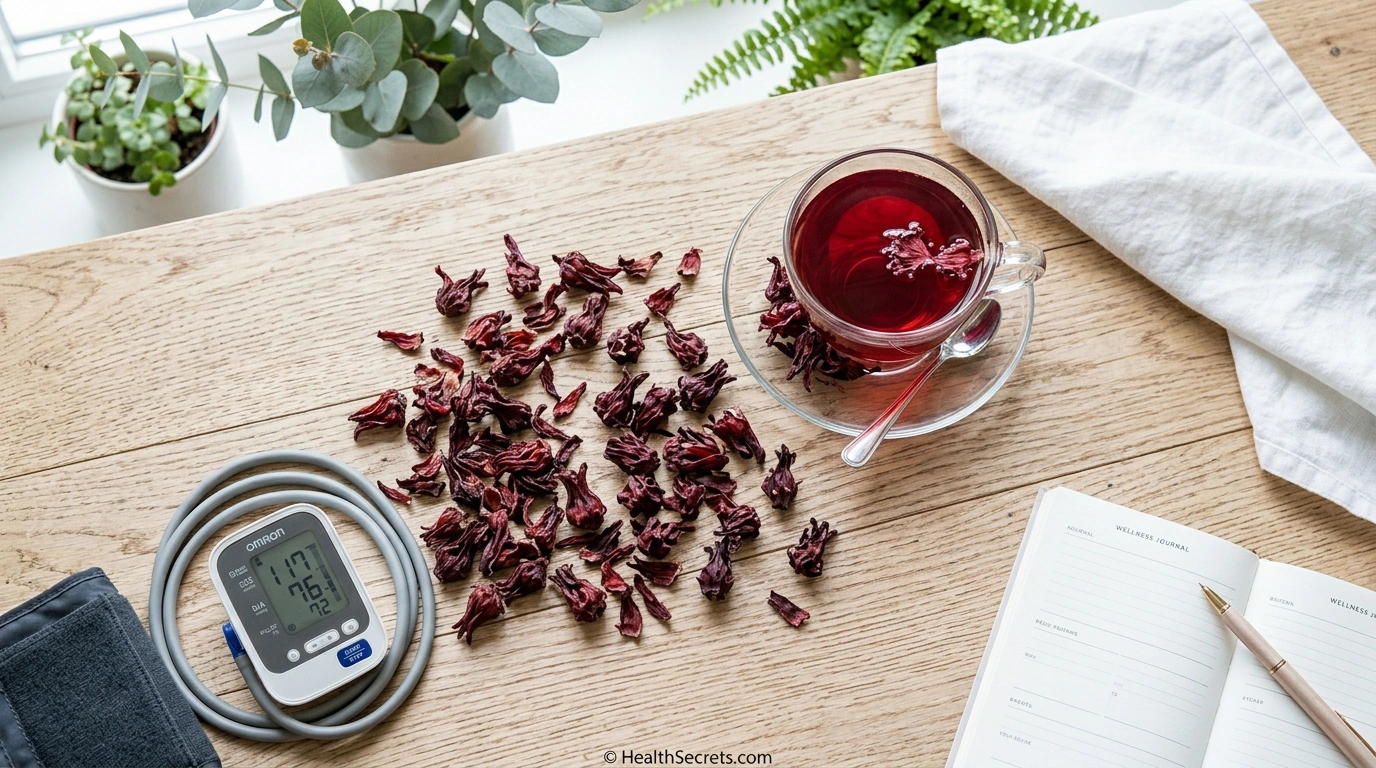
Hibiscus tea (made from Hibiscus sabdariffa) is a surprisingly potent natural blood pressure remedy. A randomized, double-blind, placebo-controlled trial found that drinking three cups daily for six weeks produced a 7.2 mmHg drop in systolic blood pressure — a clinically meaningful reduction comparable to some antihypertensive drugs.
What Does the Research Show About Hibiscus and Blood Pressure?
The landmark USDA-funded study by McKay et al. randomized adults with prehypertension or mild hypertension to either three cups of hibiscus tea daily or a placebo beverage. The hibiscus group saw a 7.2-point systolic drop versus 1.3 points for placebo [12]. A systematic review and meta-analysis confirmed hibiscus significantly lowered systolic blood pressure by approximately 7.9% from baseline [13].
A study on patients with Stage 1 hypertension found that sour tea (hibiscus) effectively lowered blood pressure [14]. The mechanisms include ACE-inhibitor-like effects (similar to certain blood pressure medications), diuretic properties, and antioxidant activity that improves endothelial function [15].
Hibiscus Tea Protocol
- Dose: 3 cups daily (steep 1–2 teaspoons dried hibiscus flowers in hot water for 5–10 minutes)
- Timing: Morning, afternoon, and evening (distribute throughout the day)
- Duration: 2–6 weeks for initial effects
- Side effects: Generally very safe; may cause temporary blood pressure drop (stand up slowly)
- Caution: May interact with hydrochlorothiazide (a common diuretic medication) — consult doctor
- Tip: Can be enjoyed hot or cold; add honey or a squeeze of lemon to taste
How Does the DASH Diet Lower Blood Pressure Naturally?
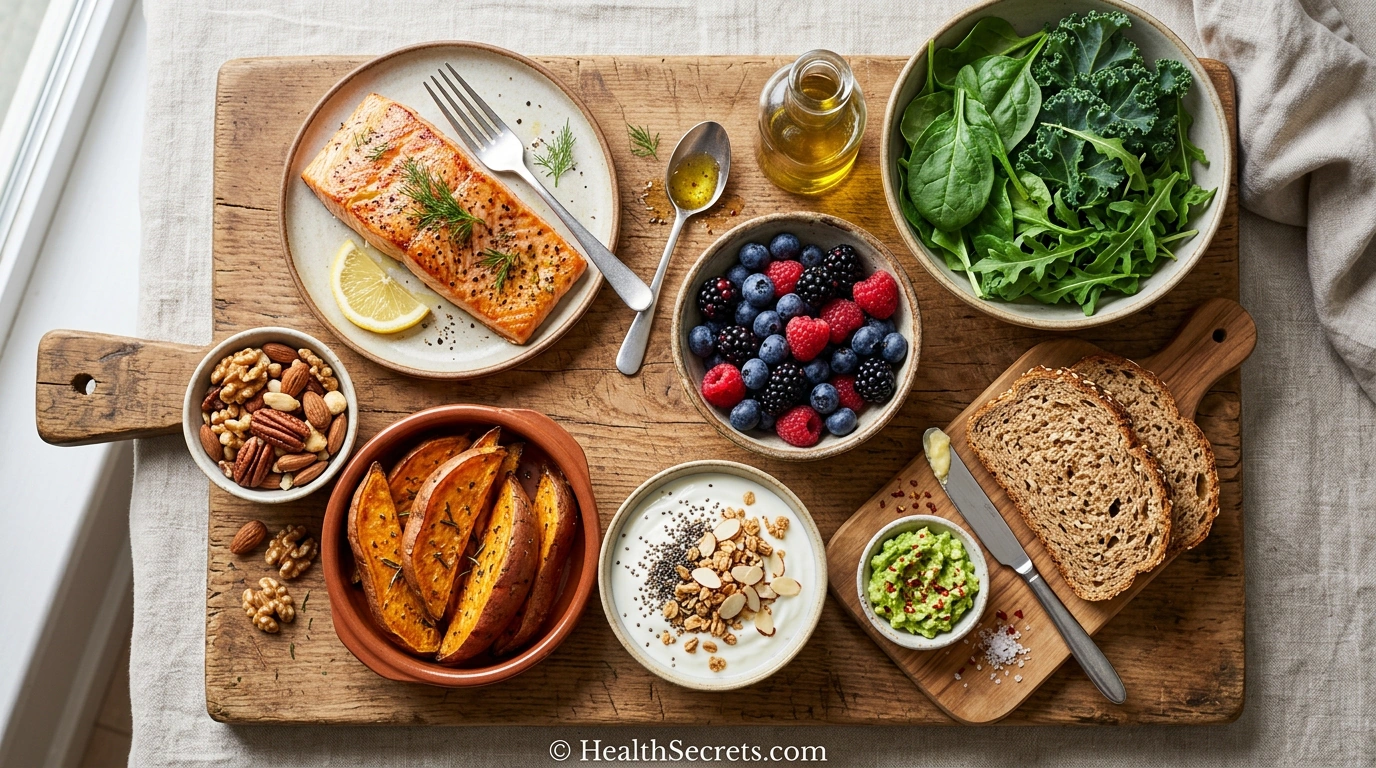
The Dietary Approaches to Stop Hypertension (DASH) diet is arguably the single most powerful non-pharmacological blood pressure intervention available. Research shows it can reduce systolic blood pressure by 8–14 mmHg — as effective as many medications. When combined with sodium reduction, the effect can reach up to 20 mmHg.
What Does the DASH Diet Include?
The DASH diet emphasizes:
- Fruits and vegetables: 8–10 servings daily (rich in potassium, magnesium, fiber)
- Whole grains: 6–8 servings daily
- Lean protein: Fish, poultry, beans, nuts
- Low-fat dairy: 2–3 servings daily (calcium source)
- Nuts, seeds, legumes: 4–5 servings per week
- Healthy fats: Olive oil, avocados
The DASH diet limits:
- Sodium: Less than 2,300 mg daily (ideally less than 1,500 mg for greater effect)
- Saturated fat and red meat: Minimize
- Sweets and sugary beverages: Limit to 5 or fewer per week
- Alcohol: No more than 2 drinks/day for men, 1 for women
Key DASH Nutrients for Blood Pressure
- Potassium (3,500–4,700 mg daily from food): Counteracts sodium, relaxes blood vessels. Sources: bananas, potatoes, spinach, beans, avocados
- Magnesium: Relaxes blood vessels, improves endothelial function
- Calcium: Supports vascular smooth muscle function
- Fiber (25–35 g daily): Improves metabolic health and blood pressure
The Mediterranean diet offers similar benefits, emphasizing olive oil, fish, and whole grains.
Doctor's Best High Absorption CoQ10 with BioPerine (Ubiquinol 200mg)
Editor's ChoiceDoctor's Best · Statin users and adults seeking cardiovascular and blood pressure support
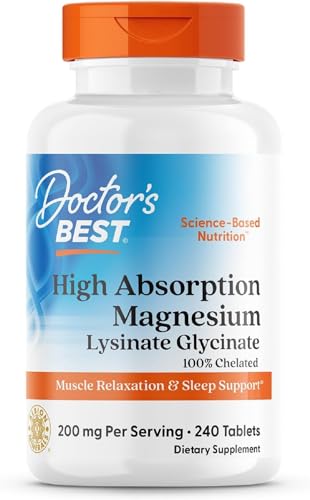
Doctor's Best High Absorption Magnesium Glycinate 200mg
Best for AbsorptionDoctor's Best · Adults with magnesium deficiency seeking blood pressure and sleep support
Kyolic Aged Garlic Extract Formula 100
Best Clinical EvidenceKyolic Aged · Adults with uncontrolled hypertension seeking adjunctive therapy
Traditional Medicinals Organic Hibiscus Tea
Best Natural BeverageTraditional Medicinals · Adults seeking a pleasant daily beverage for mild blood pressure support
NOW Foods Omega-3 Fish Oil 1000mg
Best Complementary SupportNOW Foods · Adults seeking anti-inflammatory cardiovascular support alongside blood pressure management
Organic Beetroot Powder (BeetElite or equivalent)
Best Nitric Oxide BoosterOrganic Beetroot · Adults seeking natural nitrate-based blood pressure support through diet
Omron Platinum Blood Pressure Monitor (BP5450)
Best Home MonitorOmron Platinum · Anyone tracking blood pressure at home for natural or medical management
NOW Foods Potassium Citrate 99mg
Best Mineral SupportNOW Foods · Adults whose dietary potassium intake falls short of the 3,500–4,700 mg daily target
Read the detailed review cards below before opening any retailer link
Top Recommended Products
Doctor's Best
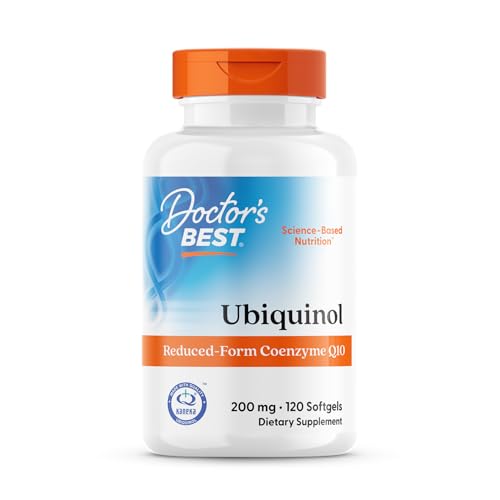
Doctor's Best High Absorption CoQ10 with BioPerine (Ubiquinol 200mg)
Doctor's Best uses Kaneka ubiquinol, the most bioavailable form of CoQ10, at 200 mg — the dose range shown to reduce systolic blood pressure in meta-analyses. Ideal for statin users who need CoQ10 replenishment.
Ưu điểm
- + Clinically studied dose for BP
- + Kaneka ubiquinol for superior absorption
- + Excellent value per serving
Nhược điểm
- - Softgel size may be large for some
Tại sao chúng tôi đưa vào: Doctor's Best uses Kaneka ubiquinol, the most bioavailable form of CoQ10, at 200 mg — the dose range shown to reduce systolic blood pressure in meta-analyses. Ideal for statin users who need CoQ10 replenishment.
Liên kết nhà bán lẻ sẽ mở trên Amazon sau phần chi tiết đánh giá ở trên
Doctor's Best
Doctor's Best High Absorption Magnesium Glycinate 200mg
Magnesium glycinate is the best-tolerated form with minimal digestive side effects. At 200 mg per serving, it's easy to titrate up to the 400+ mg dose shown to be most effective for blood pressure in clinical trials.
Ưu điểm
- + Gentle on stomach
- + Well-absorbed glycinate form
- + Supports BP
- + sleep
- + and muscle relaxation
Nhược điểm
- - Requires 2 tablets per serving for 200 mg
Tại sao chúng tôi đưa vào: Magnesium glycinate is the best-tolerated form with minimal digestive side effects. At 200 mg per serving, it's easy to titrate up to the 400+ mg dose shown to be most effective for blood pressure in clinical trials.
Liên kết nhà bán lẻ sẽ mở trên Amazon sau phần chi tiết đánh giá ở trên
Kyolic Aged
Kyolic Aged Garlic Extract Formula 100
Kyolic is the exact brand used in multiple landmark clinical trials — including the AGE at Heart trial — demonstrating significant blood pressure reductions. The cold-aging process converts harsh compounds into beneficial S-allyl cysteine.
Ưu điểm
- + Most clinically studied garlic brand for BP
- + Odor-reduced
- + Well-tolerated
Nhược điểm
- - Requires 4 capsules daily for 1
- - 200 mg clinical dose
Tại sao chúng tôi đưa vào: Kyolic is the exact brand used in multiple landmark clinical trials — including the AGE at Heart trial — demonstrating significant blood pressure reductions. The cold-aging process converts harsh compounds into beneficial S-allyl cysteine.
Liên kết nhà bán lẻ sẽ mở trên Amazon sau phần chi tiết đánh giá ở trên
Traditional Medicinals
Traditional Medicinals Organic Hibiscus Tea
Traditional Medicinals uses pharmacopoeial-grade hibiscus that aligns with the clinical study protocols showing 7.2 mmHg systolic reduction. An easy, enjoyable addition to any blood pressure management routine.
Ưu điểm
- + Delicious hot or cold
- + Clinically supported
- + Affordable
- + No pills needed
Nhược điểm
- - Requires 3 cups daily for studied effect
- - Goes through boxes quickly
Tại sao chúng tôi đưa vào: Traditional Medicinals uses pharmacopoeial-grade hibiscus that aligns with the clinical study protocols showing 7.2 mmHg systolic reduction. An easy, enjoyable addition to any blood pressure management routine.
Liên kết nhà bán lẻ sẽ mở trên Amazon sau phần chi tiết đánh giá ở trên
NOW Foods
NOW Foods Omega-3 Fish Oil 1000mg
Omega-3 fatty acids provide complementary cardiovascular benefits including anti-inflammatory effects, improved endothelial function, and modest blood pressure reduction of 2–3 mmHg at therapeutic doses.
Ưu điểm
- + Supports endothelial function
- + Reduces inflammation
- + Well-tolerated
- + Affordable
Nhược điểm
- - Multiple softgels needed for therapeutic 2–3g EPA/DHA dose
Tại sao chúng tôi đưa vào: Omega-3 fatty acids provide complementary cardiovascular benefits including anti-inflammatory effects, improved endothelial function, and modest blood pressure reduction of 2–3 mmHg at therapeutic doses.
Liên kết nhà bán lẻ sẽ mở trên Amazon sau phần chi tiết đánh giá ở trên
Organic Beetroot
Organic Beetroot Powder (BeetElite or equivalent)
Beetroot is rich in dietary nitrates that convert to nitric oxide in the body, dilating blood vessels and reducing systolic blood pressure by 4–5 mmHg in clinical studies. A convenient powder form makes daily use practical.
Ưu điểm
- + Rapid nitric oxide boost
- + Reduces systolic BP 4–5 mmHg
- + Easy to mix into smoothies
Nhược điểm
- - Earthy taste
- - May cause red urine (harmless)
Tại sao chúng tôi đưa vào: Beetroot is rich in dietary nitrates that convert to nitric oxide in the body, dilating blood vessels and reducing systolic blood pressure by 4–5 mmHg in clinical studies. A convenient powder form makes daily use practical.
Liên kết nhà bán lẻ sẽ mở trên Amazon sau phần chi tiết đánh giá ở trên
Omron Platinum
Omron Platinum Blood Pressure Monitor (BP5450)
Accurate home monitoring is the cornerstone of natural blood pressure management. Omron is the most recommended brand by cardiologists, and the Platinum model's TruRead technology automatically takes three readings and averages them — exactly what guidelines recommend.
Ưu điểm
- + Clinical-grade accuracy
- + Stores unlimited readings via app
- + TruRead auto-averages 3 readings
Nhược điểm
- - Premium price point
- - Requires compatible smartphone for app features
Tại sao chúng tôi đưa vào: Accurate home monitoring is the cornerstone of natural blood pressure management. Omron is the most recommended brand by cardiologists, and the Platinum model's TruRead technology automatically takes three readings and averages them — exactly what guidelines recommend.
Liên kết nhà bán lẻ sẽ mở trên Amazon sau phần chi tiết đánh giá ở trên
NOW Foods
NOW Foods Potassium Citrate 99mg
Potassium counteracts sodium's blood-pressure-raising effects. While food sources are preferable and more potent, a low-dose supplement can help bridge gaps. Critical: people with kidney disease or on ACE inhibitors/ARBs should NOT supplement potassium without medical supervision.
Ưu điểm
- + Supports sodium-potassium balance
- + Affordable
- + Well-tolerated
Nhược điểm
- - Very low dose per capsule (99 mg)
- - Food sources far more effective
- - Caution with kidney disease
Tại sao chúng tôi đưa vào: Potassium counteracts sodium's blood-pressure-raising effects. While food sources are preferable and more potent, a low-dose supplement can help bridge gaps. Critical: people with kidney disease or on ACE inhibitors/ARBs should NOT supplement potassium without medical supervision.
Liên kết nhà bán lẻ sẽ mở trên Amazon sau phần chi tiết đánh giá ở trên
What Exercise and Lifestyle Changes Lower Blood Pressure Most Effectively?
Regular physical activity and key lifestyle modifications form the foundation of natural blood pressure management. Exercise alone can reduce blood pressure by 5–8 mmHg, and weight loss may deliver the single largest effect — up to 20 mmHg for significant weight reduction.
Exercise for Blood Pressure
- Aerobic exercise: 150 minutes of moderate-intensity activity weekly (brisk walking, cycling, swimming) — reduces blood pressure by 5–8 mmHg
- Resistance training: 2 days per week (improves vascular function)
- Combination: Aerobic plus resistance training produces the best results
- Immediate effect: Blood pressure drops during and after exercise
- Long-term effect: Sustained reductions with consistent training
Critical Lifestyle Modifications
- Weight loss: Losing just 5–10 pounds can reduce blood pressure by 5–20 mmHg (approximately 1 mmHg per kilogram lost)
- Sodium reduction: Cutting to less than 2,300 mg daily (ideally 1,500 mg) reduces blood pressure by 5–6 mmHg
- Stress management: Chronic stress raises blood pressure — meditation, yoga, deep breathing, and therapy help
- Sleep: 7–9 hours nightly; poor sleep worsens hypertension, and sleep apnea should be treated
- Quit smoking: Smoking acutely raises blood pressure and damages blood vessels long-term
- Limit alcohol: Excessive alcohol raises blood pressure significantly
How Do You Monitor Blood Pressure Effectively at Home?
Home blood pressure monitoring is essential for anyone using natural approaches to manage hypertension. It helps you track progress, detect problems early, and provide your doctor with actionable data that office visits alone can't capture.
Proper Monitoring Technique
- Sit quietly for 5 minutes before measuring
- Feet flat on floor, back supported, arm at heart level
- Don't talk during measurement
- Take 2–3 readings 1 minute apart; record the average
- Measure at the same times daily — morning (before medications) and evening
- Keep a log tracking blood pressure, medications, supplements, exercise, and diet

Understanding Your Numbers
- Target: Less than 130/80 mmHg (your doctor may set a different goal)
- White coat hypertension: Blood pressure elevated at the doctor's office but normal at home
- Masked hypertension: Normal at the office but elevated at home (more dangerous — home monitoring catches this)
When to Contact Your Doctor
- Blood pressure consistently at or above 130/80 mmHg despite lifestyle changes
- Sudden blood pressure increase
- Symptoms: severe headache, chest pain, shortness of breath, vision changes
- Before starting any new supplement
Hypertensive Crisis — Call 911
Blood pressure at or above 180/120 mmHg with symptoms (chest pain, shortness of breath, severe headache, vision changes, confusion) is a medical emergency. Call 911 immediately.
What Are the Most Common Mistakes When Managing Blood Pressure Naturally?
Even well-intentioned people make errors that undermine their results. Avoiding these common pitfalls can mean the difference between success and frustration — or worse, a dangerous health situation.
- Stopping medications without doctor approval: This is the single most dangerous mistake. Abruptly stopping blood pressure medications can cause rebound hypertension, stroke, or heart attack. Natural remedies may allow dose reduction over time, but only under medical supervision.
- Expecting overnight results: Most natural interventions take 4–12 weeks. Consistency matters far more than intensity.
- Ignoring sodium intake: Even with supplements and exercise, a high-sodium diet can negate your progress. Track your sodium for a week — most people are shocked at how much they actually consume.
- Taking too many supplements at once: Combining multiple blood-pressure-lowering supplements with medications can cause excessive blood pressure drops. Add one supplement at a time, monitor your numbers, and inform your doctor.
- Inconsistent monitoring: You can't manage what you don't measure. Check blood pressure at least twice daily when starting new interventions.
- Neglecting potassium: Potassium counteracts sodium's blood-pressure-raising effects. Aim for 3,500–4,700 mg daily from food (not supplements, which can be dangerous for people with kidney problems).
- Skipping the basics: Supplements can't compensate for a poor diet, sedentary lifestyle, or inadequate sleep. The DASH diet and regular exercise are the foundation — supplements are the enhancement.
Is It Safe to Use Natural Remedies for High Blood Pressure? When Should You Stop?
Natural blood pressure remedies are generally safe when used appropriately, but they carry real risks — especially when combined with prescription medications. The primary danger is excessive blood pressure lowering (hypotension), which can cause dizziness, fainting, falls, and in severe cases, organ damage.
Medication Interaction Risks
- All supplements listed here may enhance the effects of blood pressure medications — monitor closely and inform your doctor
- Garlic extract + blood thinners: Increased bleeding risk (stop 2 weeks before surgery)
- Magnesium + certain antibiotics: Reduced antibiotic absorption (space 2 hours apart)
- Hibiscus + hydrochlorothiazide: May enhance diuretic effects
- CoQ10 + statins: Beneficial interaction — CoQ10 helps replenish what statins deplete
Signs You Should Stop and See Your Doctor
- Persistent dizziness, lightheadedness, or fainting
- Blood pressure dropping below 90/60 mmHg
- Unusual bruising or bleeding (especially with garlic)
- Persistent digestive issues
- Any new or worsening symptoms
Who Should Be Extra Cautious
- People with kidney disease (potassium and magnesium require careful monitoring)
- People on multiple blood pressure medications
- People with diabetes (some supplements affect blood sugar)
- Pregnant or breastfeeding women
- Anyone scheduled for surgery within 2 weeks
Action Plan
What Should You Do First to Lower Blood Pressure Naturally?
Follow the sequence below, work through each phase in order, and use the checklist as your practical implementation guide.
Start with the highest-impact, lowest-risk interventions and build systematically. This phased approach lets you track what works while minimizing the risk of excessive blood pressure lowering. Always keep your doctor informed at every phase.
Phase 1: Foundation (Weeks 1–2)
- Schedule a doctor visit to discuss your plan
- Purchase a validated home blood pressure monitor
- Begin daily blood pressure logging (morning and evening)
- Start the DASH diet — focus on increasing fruits, vegetables, and whole grains while reducing sodium below 2,300 mg
- Begin walking 30 minutes daily, 5 days per week
- Start drinking 3 cups of hibiscus tea daily
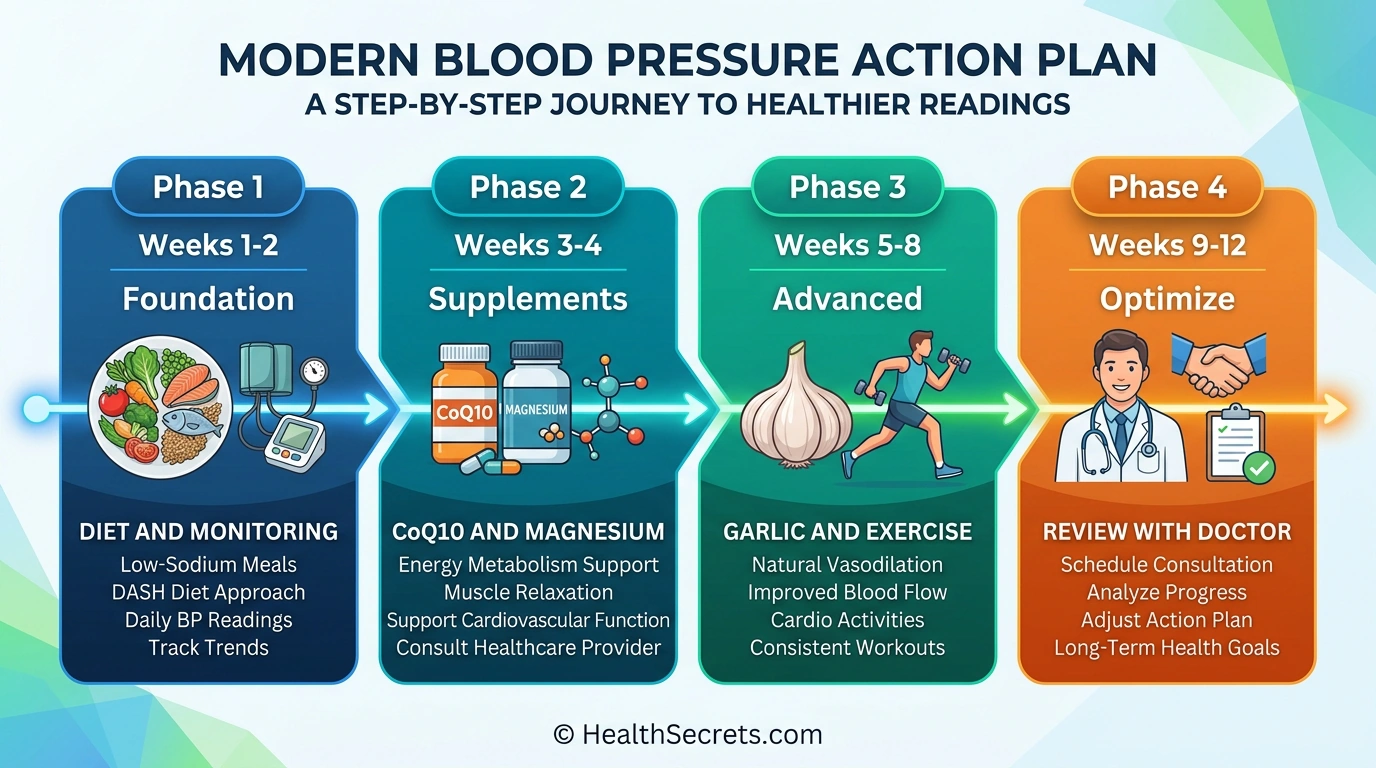
Phase 2: Targeted Supplements (Weeks 3–4)
- Add CoQ10 100–200 mg daily with a fatty meal (especially if on statins)
- Add magnesium glycinate 300–400 mg daily in the evening
- Monitor blood pressure closely for excessive drops
- Adjust sodium intake toward 1,500 mg daily
Phase 3: Advanced Support (Weeks 5–8)
- Add aged garlic extract 600–1,200 mg daily (after confirming no blood thinner conflicts)
- Increase exercise to 150 minutes weekly of moderate aerobic activity + 2 days resistance training
- Focus on stress management: add 10 minutes daily meditation or deep breathing
- Prioritize 7–9 hours of quality sleep
Phase 4: Assess and Optimize (Weeks 9–12)
- Review blood pressure logs with your doctor
- Discuss whether medication adjustments are appropriate
- Identify which interventions produced the biggest effects for you
- Establish a sustainable long-term maintenance routine

