
Walk into any supplement aisle and you'll face dozens of probiotic bottles, each promising to transform your gut health. But here's what most labels won't tell you: the specific strain matters far more than the total CFU count printed on the front. A probiotic containing Lactobacillus rhamnosus GG does something fundamentally different in your body than one containing Bifidobacterium infantis 35624 — even though both are "probiotics."
This distinction isn't marketing hype. It's backed by decades of clinical research showing that probiotic benefits are strain-specific. The wrong strain for your condition may do nothing, while the right strain — at the right dose — can deliver measurable improvements in as little as two weeks. Understanding which strains do what is the difference between wasting money and getting real results.
For a broader foundation, explore our complete guide to gut health and our comprehensive best probiotics for gut health guide. If you're interested in how probiotics affect mood, see our guide on the gut-mental health connection.
What Are Probiotic Strains and Why Do They Matter?
Probiotic strains are genetically distinct variants within a probiotic species, identified by unique alphanumeric designations (like GG, BB-12, or 35624) that link the organism to specific clinical research and health benefits. Strain specificity matters because two organisms from the same species can have completely different effects on your body — one may reduce anxiety while another has zero mental health impact.
The probiotic naming system follows a three-level hierarchy:
- Genus (the broad family, like Lactobacillus),
- Species (the specific type, like rhamnosus), and
- Strain (the unique organism, like GG). When you see "Lactobacillus rhamnosus GG" on a label, each level tells you something important: the genus tells you the general category, the species narrows the function, and the strain links to the exact clinical evidence.
This matters because research proving that L. rhamnosus GG prevents antibiotic-associated diarrhea does not mean that a different L. rhamnosus strain will do the same. The International Scientific Association for Probiotics and Prebiotics (ISAPP) emphasizes that health benefits cannot be extrapolated from one strain to another, even within the same species.
Important note on taxonomy: In 2020, many Lactobacillus species were reclassified into new genera. For example, L. rhamnosus became Lacticaseibacillus rhamnosus, and L. plantarum became Lactiplantibacillus plantarum. Most product labels still use the original names, and both are scientifically valid. This guide uses the traditional names for clarity.
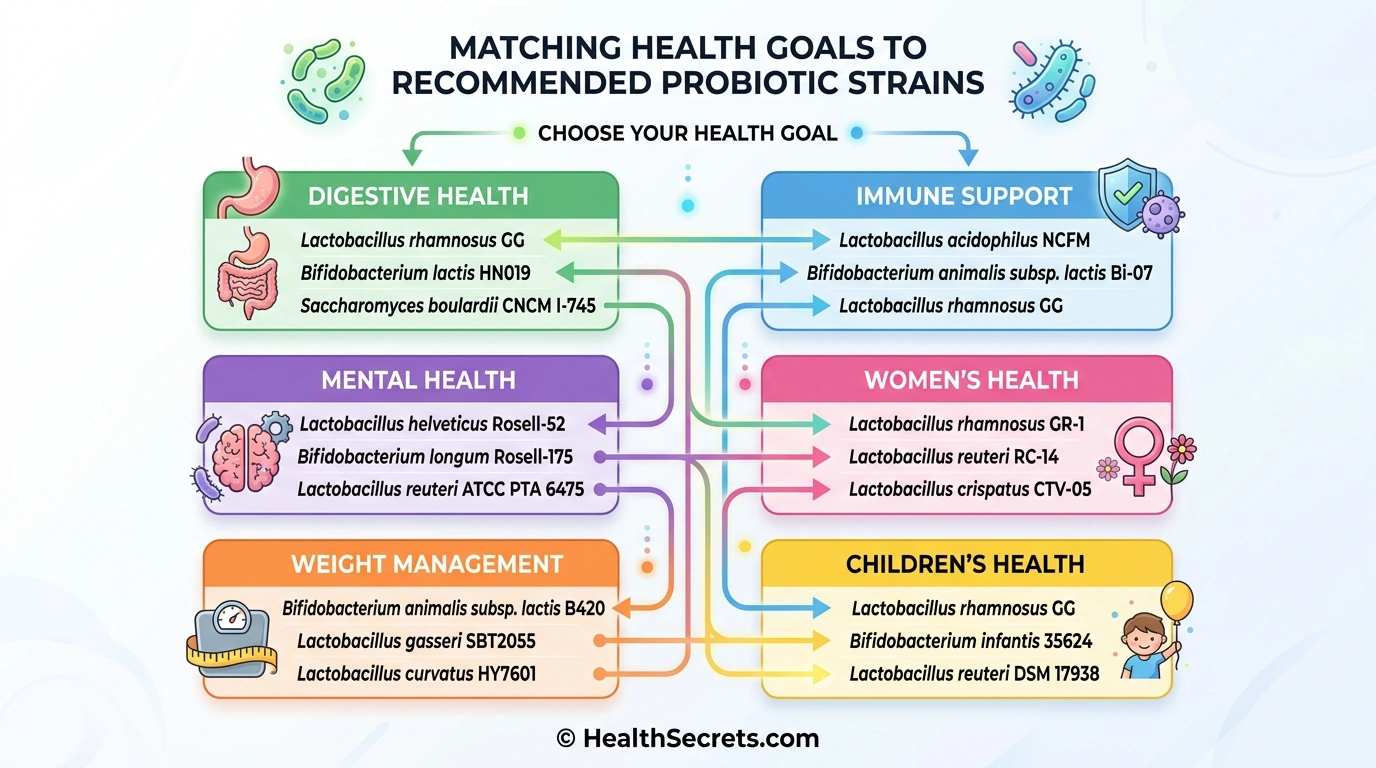
How Do Different Probiotic Strains Work in Your Body?
Different probiotic strains work through distinct mechanisms: some produce antimicrobial compounds that inhibit pathogens, others strengthen the intestinal barrier, some modulate immune cell activity, and certain strains produce neurotransmitters that influence mood and cognition. Each strain's unique genetic makeup determines which mechanisms it activates.
How Do Lactobacillus Strains Support Your Health?
Lactobacillus strains primarily colonize the small intestine and produce lactic acid, which lowers intestinal pH and creates an inhospitable environment for pathogens. Key strains and their mechanisms:
- L. rhamnosus** GG** — The most clinically studied probiotic strain in the world. Adheres strongly to intestinal mucosa, produces antimicrobial substances, and modulates immune responses. Proven to prevent antibiotic-associated and traveler's diarrhea, reduce eczema risk in children, and support immune function.
Recommended: 5–10 billion CFU.
- L. plantarum** 299v** — Produces antimicrobial compounds, reduces intestinal permeability, and decreases kynurenine levels (linked to depression). Effective for IBS symptoms, bloating, and cognitive function. Recommended: 1–10 billion CFU.
- L. helveticus** R0052** — A psychobiotic strain that, combined with B. longum R0175, significantly reduces anxiety and depression scores. Influences serotonin and cortisol pathways. Recommended: 3–6 billion CFU.
- L. reuteri** DSM 17938** — Uniquely effective for infant colic (reduces crying time by 50% in clinical trials), oral health, and bone density. Stimulates oxytocin production. Recommended: 100 million–1 billion CFU.
- L. gasseri** SBT2055** — Targets abdominal fat and metabolic health. Clinical trials show reduced visceral fat, BMI, and waist circumference over 12 weeks. Recommended: 1–10 billion CFU.
- L. acidophilus** NCFM** — Classic strain for vaginal health, lactose digestion, and immune support. Produces hydrogen peroxide to inhibit yeast overgrowth. Recommended: 1–10 billion CFU.

How Do Bifidobacterium Strains Benefit Your Gut?
Bifidobacterium strains primarily colonize the large intestine (colon) and produce both lactic acid and acetic acid, providing broad-spectrum antimicrobial activity. They're especially important for immune modulation and are the dominant beneficial bacteria in infant guts.
- B. longum** subsp. infantis 35624** — The gold-standard IBS probiotic. Clinically proven to reduce bloating, abdominal pain, and bowel irregularity across all IBS subtypes. Powerful anti-inflammatory through IL-10 production. Recommended: 1 billion CFU.
- B. longum** R0175** — Psychobiotic strain that pairs with L. helveticus R0052 for anxiety and depression relief. Anti-inflammatory and stress-reducing. Recommended: 1–10 billion CFU.
- B. lactis** BB-12** — One of the most clinically documented Bifidobacterium strains. Improves bowel regularity (especially constipation), reduces duration of respiratory infections, and survives digestion exceptionally well. Recommended: 1–10 billion CFU.
- B. breve** M-16V** — Critical for infant gut colonization, allergy prevention, and eczema. Increasingly studied for adult skin health and constipation. Recommended: 1–10 billion CFU.
- B. bifidum** Rosell-71** — Supports mucosal immunity, colonizes both colon and vaginal tract, and helps with IBS and ulcerative colitis symptoms. Recommended: 1–10 billion CFU.

What Makes Saccharomyces Boulardii Unique Among Probiotics?
Saccharomyces boulardii is a beneficial yeast — not a bacterium — which gives it a critical advantage: it is completely unaffected by antibiotics. This makes it the only probiotic that can be taken safely during antibiotic therapy to prevent antibiotic-associated diarrhea. It's also the most effective probiotic for Clostridioides difficile infection prevention. S. boulardii works by producing proteins that neutralize bacterial toxins, stimulating secretory IgA production, and directly inhibiting pathogen adhesion. Recommended: 5–10 billion CFU (250–500mg).
How Do Soil-Based (Bacillus) Probiotics Differ?
Soil-based probiotics form protective endospores that survive stomach acid, antibiotics, and heat without refrigeration.
Bacillus coagulans (often marketed as GBI-30, 6086) is particularly effective for IBS-D, protein absorption, and immune support.
Bacillus subtilis produces antimicrobial compounds and increases microbial diversity post-antibiotics. These spore-forming strains are ideal for people who need exceptionally stable probiotics or have had poor results with traditional bacterial strains. Recommended: 1–6 billion CFU.
What Are the Key Benefits of Choosing Strain-Specific Probiotics?
Choosing strain-specific probiotics delivers targeted, clinically validated benefits rather than generic "gut health support." Research shows that matching the right strain to your health goal produces significantly better outcomes than using random multi-strain formulas, with some strain-specific interventions achieving 60–70% response rates in conditions like IBS.
Which Probiotic Strains Work Best for Digestive Issues?
For
IBS (all subtypes): B. infantis 35624 is the most validated strain, with multiple large-scale trials showing significant reduction in global IBS symptoms. For
IBS-D specifically: add S. boulardii and L. plantarum. For constipation: B. lactis BB-12 increases bowel movement frequency by 1–2 per week in clinical trials. For bloating: L. plantarum 299v and B. infantis 35624. For antibiotic-associated diarrhea: L. rhamnosus GG and S. boulardii (the latter during antibiotic use). For a comprehensive approach to IBS, see our natural IBS relief guide.
Which Probiotic Strains Support Mental Health?
The combination of L. helveticus R0052 + B. longum R0175 is the most researched psychobiotic formula, with multiple RCTs showing reduced depression, anxiety, and psychological distress scores. L. rhamnosus JB-1 influences GABA receptor expression (though results in human trials have been mixed). L. plantarum 299v reduces kynurenine — a metabolite linked to depression — in patients with major depressive disorder.
Which Strains Are Best for Immune Support?
L. rhamnosus GG is the most evidence-backed immune strain, reducing the incidence and duration of upper respiratory infections in both adults and children. B. lactis BB-12 enhances antibody responses to vaccination. L. acidophilus NCFM stimulates natural killer cell activity. B. lactis HN019 improves immune function in elderly populations. For best results, combine 2–3 immune-supporting strains.
Which Strains Support Women's Health?
For vaginal health and UTI prevention: L. rhamnosus GR-1 and L. reuteri RC-14 are the most clinically validated combination, restoring healthy vaginal flora and reducing BV and yeast recurrence. L. acidophilus La-14 and L. gasseri SBT2055 also support vaginal health.
For metabolic and weight management: L. gasseri SBT2055 is the standout strain with clinical evidence for visceral fat reduction.
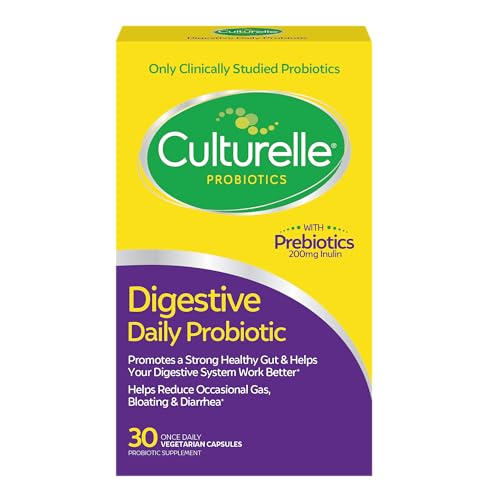
Culturelle Digestive Daily Probiotic
Editor's ChoiceCulturelle Digestive · Immune support, antibiotic-associated diarrhea prevention, and general digestive health
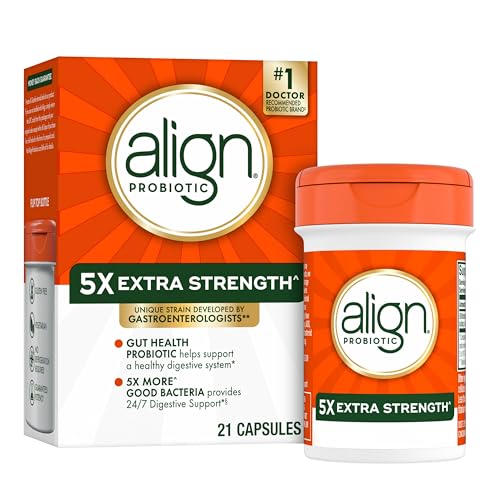
Align Probiotic Extra Strength
Best for IBSAlign Probiotic · IBS symptom relief including bloating, abdominal pain, and bowel irregularity

Florastor Daily Probiotic
Best Probiotic YeastFlorastor Daily · Diarrhea prevention and treatment, safe use during antibiotic therapy

Seed DS-01 Daily Synbiotic
Best Multi-StrainSeed DS-01 · Comprehensive gut health, bloating relief, and whole-body benefits
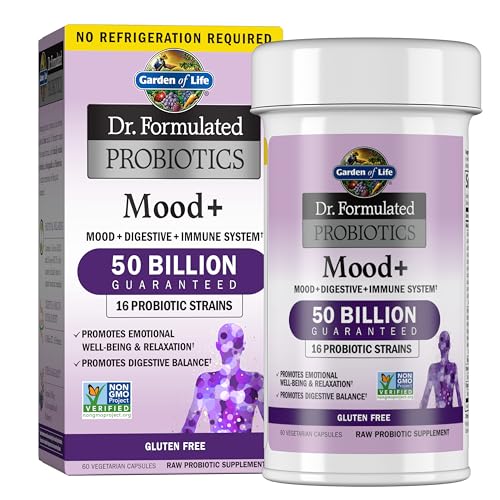
Garden of Life Dr. Formulated Probiotics Mood+
Best PsychobioticGarden of · Mood support, anxiety and stress relief through the gut-brain axis
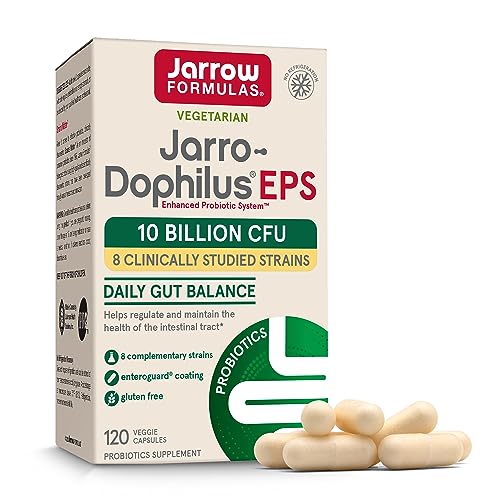
Jarrow Formulas Jarro-Dophilus EPS
Best ValueJarrow Formulas · General gut microbiome rebalancing with broad-spectrum strain coverage
Read the detailed review cards below before opening any retailer link
Top Recommended Products
Culturelle Digestive
Culturelle Digestive Daily Probiotic
Culturelle contains the exact strain — L. rhamnosus GG — used in the vast majority of clinical trials on immune support and diarrhea prevention, making it the gold standard for those specific goals.
ప్రయోజనాలు
- + Contains the world's most clinically studied probiotic strain
- + backed by 1
- + 000+ scientific studies
- + pharmacist recommended
- + affordable price point
లోపాలు
- - Single-strain formula limits scope
- - no enteric coating
దీనిని మేము ఎందుకు చేర్చాము: Culturelle contains the exact strain — L. rhamnosus GG — used in the vast majority of clinical trials on immune support and diarrhea prevention, making it the gold standard for those specific goals.
రిటైలర్ లింక్ పైన ఉన్న రివ్యూ వివరాల తర్వాత Amazonలో తెరుచుకుంటుంది
Align Probiotic
Align Probiotic Extra Strength
B. infantis 35624 is the only probiotic strain with robust clinical evidence across all IBS subtypes (IBS-D, IBS-C, and IBS-M), making Align the top choice for anyone whose primary concern is irritable bowel syndrome.
ప్రయోజనాలు
- + Contains the single most clinically validated strain for IBS relief
- + developed by gastroenterologists
- + 20+ years of research backing
- + effective at relatively low CFU
లోపాలు
- - Shorter supply per box (21 days)
- - premium price per capsule
దీనిని మేము ఎందుకు చేర్చాము: B. infantis 35624 is the only probiotic strain with robust clinical evidence across all IBS subtypes (IBS-D, IBS-C, and IBS-M), making Align the top choice for anyone whose primary concern is irritable bowel syndrome.
రిటైలర్ లింక్ పైన ఉన్న రివ్యూ వివరాల తర్వాత Amazonలో తెరుచుకుంటుంది
Florastor Daily
Florastor Daily Probiotic
Florastor is irreplaceable for anyone taking antibiotics — as a yeast, S. boulardii CNCM I-745 is naturally resistant to all antibiotics, allowing it to protect gut health during treatment when bacterial probiotics would be destroyed.
ప్రయోజనాలు
- + Only probiotic safe to take during antibiotic therapy
- + 70+ years of safe use
- + 1
- + 000+ publications on this specific strain
- + effective for C. difficile prevention
లోపాలు
- - Contains trace lactose
- - higher price point
దీనిని మేము ఎందుకు చేర్చాము: Florastor is irreplaceable for anyone taking antibiotics — as a yeast, S. boulardii CNCM I-745 is naturally resistant to all antibiotics, allowing it to protect gut health during treatment when bacterial probiotics would be destroyed.
రిటైలర్ లింక్ పైన ఉన్న రివ్యూ వివరాల తర్వాత Amazonలో తెరుచుకుంటుంది
Seed DS-01
Seed DS-01 Daily Synbiotic
Seed is the rare multi-strain probiotic that has been clinically tested as a complete formula, not just a collection of individually studied strains, with published human trials showing improvements in digestive regularity, bloating, and stool consistency.
ప్రయోజనాలు
- + Clinically tested as a complete formula (not just individual strains)
- + innovative delivery technology
- + includes prebiotic for synbiotic effect
- + broad-spectrum coverage
లోపాలు
- - Premium price
- - subscription-based pricing works best for ongoing use
దీనిని మేము ఎందుకు చేర్చాము: Seed is the rare multi-strain probiotic that has been clinically tested as a complete formula, not just a collection of individually studied strains, with published human trials showing improvements in digestive regularity, bloating, and stool consistency.
రిటైలర్ లింక్ పైన ఉన్న రివ్యూ వివరాల తర్వాత Amazonలో తెరుచుకుంటుంది
Garden of
Garden of Life Dr. Formulated Probiotics Mood+
This is the only widely available probiotic containing the L. helveticus R0052 + B. longum R0175 combination shown in multiple clinical trials to significantly reduce anxiety and depression scores.
ప్రయోజనాలు
- + Contains the most researched psychobiotic strain combination
- + includes organic ashwagandha for additional stress support
- + organic blueberries and prebiotic fiber
లోపాలు
- - Higher CFU count than psychobiotic research requires
- - premium pricing
దీనిని మేము ఎందుకు చేర్చాము: This is the only widely available probiotic containing the L. helveticus R0052 + B. longum R0175 combination shown in multiple clinical trials to significantly reduce anxiety and depression scores.
రిటైలర్ లింక్ పైన ఉన్న రివ్యూ వివరాల తర్వాత Amazonలో తెరుచుకుంటుంది
Jarrow Formulas
Jarrow Formulas Jarro-Dophilus EPS
Jarro-Dophilus EPS offers the best value per day of any quality multi-strain probiotic, with all 8 strains identified by their clinical designations and protected by patented enteric coating technology.
ప్రయోజనాలు
- + Clinically documented strains with full strain designations
- + excellent price per day
- + enteric coating ensures intestinal delivery
- + room temperature stable
లోపాలు
- - Lower CFU count than premium formulas
- - requires 2 capsules per serving
దీనిని మేము ఎందుకు చేర్చాము: Jarro-Dophilus EPS offers the best value per day of any quality multi-strain probiotic, with all 8 strains identified by their clinical designations and protected by patented enteric coating technology.
రిటైలర్ లింక్ పైన ఉన్న రివ్యూ వివరాల తర్వాత Amazonలో తెరుచుకుంటుంది
Are There Any Risks or Side Effects of Probiotic Strains?
Probiotic strains are generally safe for healthy adults, but potential risks include initial gas and bloating (typically resolving within 1–2 weeks), rare cases of bacteremia in immunocompromised individuals, and the possibility of antibiotic resistance gene transfer. Certain populations should exercise caution or avoid specific strains.
- Initial adjustment: Gas, bloating, and mild digestive changes are common when starting probiotics. Start with a lower dose and increase gradually.
- Immunocompromised individuals: Those with central venous catheters, critically ill patients, and severely immunocompromised individuals should consult their physician before taking any probiotic, as rare cases of fungemia with S. boulardii and bacteremia with Lactobacillus have been reported.
- Histamine considerations: Some strains (particularly L. casei and L. reuteri) produce histamine, which may worsen symptoms in individuals with histamine intolerance. B. infantis and L. rhamnosus are considered histamine-neutral or histamine-degrading.
- CFU misconceptions: More isn't always better. Many strain-specific benefits are documented at moderate CFU counts (1–10 billion). Excessively high doses can cause more digestive discomfort without additional benefit.
How Do You Choose the Right Probiotic Strain for Your Goals?
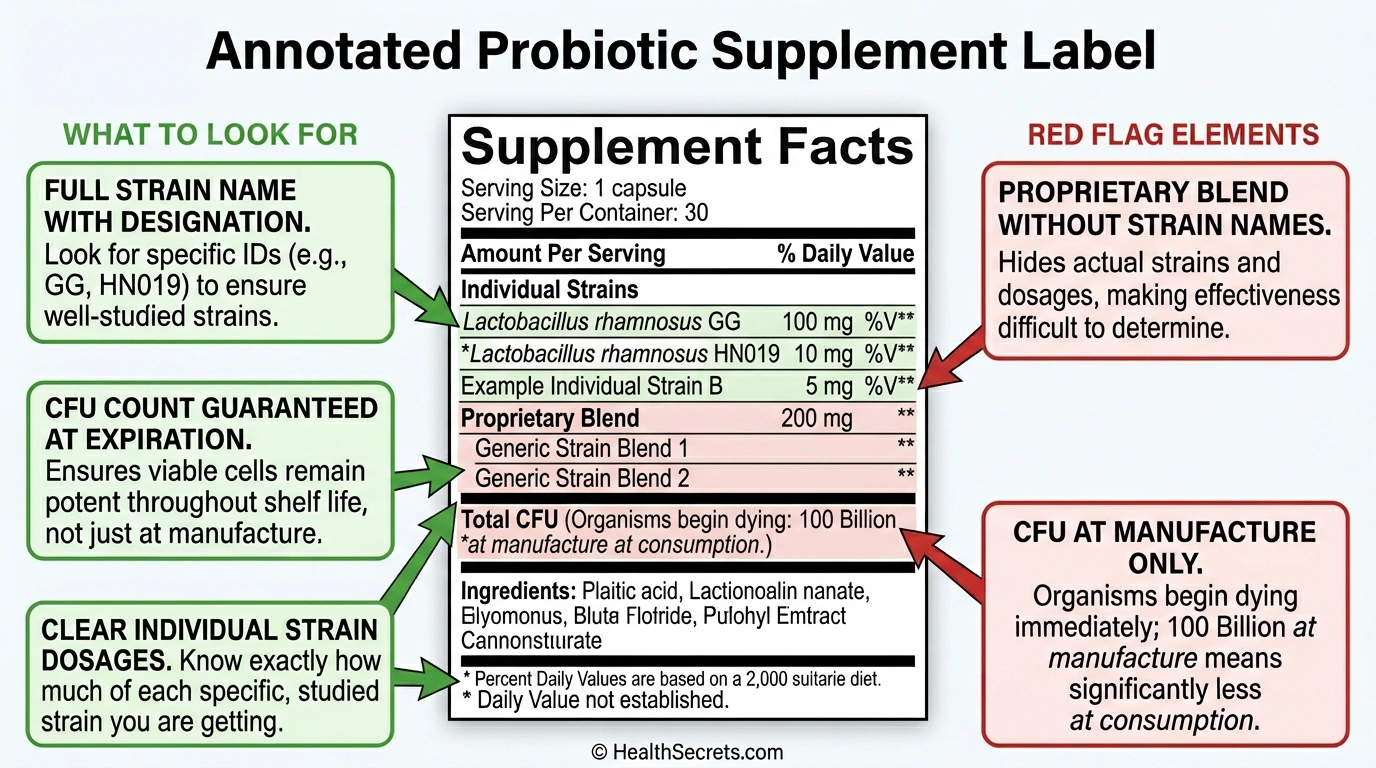
Choosing the right probiotic strain starts with identifying your primary health goal, then selecting strains with clinical evidence for that specific outcome, verifying the product lists strains by their full name (including strain designation), and confirming the CFU count matches research-backed doses. Quality labels always identify strains by genus, species, and strain designation.
How Do You Read a Probiotic Label Correctly?
Look for these five elements: 1) Full strain names with designations (e.g., L. rhamnosus GG, not just "Lactobacillus"). 2) CFU count guaranteed at expiration, not just at manufacture. 3) Specific strain amounts, not hidden in "proprietary blends." 4) Storage requirements clearly stated. 5) Third-party testing or certifications (NSF, ConsumerLab, USP).
Red flags: Products that list only genus and species without strain designations, use "proprietary blends" that hide individual strain amounts, or guarantee CFU only at time of manufacture (not expiration) should be avoided.
Should You Choose Multi-Strain or Single-Strain Probiotics?
For targeted conditions (IBS, diarrhea, anxiety): single-strain or researched combinations (like L. helveticus + B. longum for mood) are usually more effective because the clinical evidence is strain-specific. For general gut health and diversity: multi-strain formulas provide broader microbial diversity and support multiple pathways simultaneously. The ideal approach is often a research-backed multi-strain formula as a foundation, plus a targeted single-strain probiotic for your specific concern.

What CFU Count Do You Actually Need?
CFU (Colony Forming Units) requirements are strain-dependent. L. reuteri for infant colic works at just 100 million CFU. B. infantis 35624 for IBS is effective at 1 billion CFU. General multi-strain formulas typically show benefits at 5–50 billion CFU. The research consistently shows that strain selection and delivery technology (enteric coating, microencapsulation) matter more than raw CFU count.
What Diet and Lifestyle Practices Maximize Probiotic Strain Benefits?
Maximizing probiotic strain benefits requires pairing supplementation with prebiotic fiber that feeds specific beneficial bacteria, diverse fermented food consumption that introduces wild strains, adequate sleep for circadian microbiome regulation, and regular exercise that increases overall microbial diversity.
Which Foods Contain Specific Probiotic Strains?
Fermented foods deliver live probiotic organisms, though the specific strains vary by product and batch. Yogurt typically contains S. thermophilus and L. bulgaricus (plus added strains like L. acidophilus or B. lactis in some brands). Kefir provides the broadest strain diversity of any single food (20–50+ species). Sauerkraut and kimchi contain various Lactobacillus species. Kombucha contains Acetobacter and yeasts. For strain-specific benefits at clinical doses, supplementation is usually necessary.
How Do Prebiotics Enhance Probiotic Strain Effectiveness?
Prebiotics are non-digestible fibers that selectively feed beneficial bacteria.
- Inulin and FOS (fructooligosaccharides) from garlic, onions, and asparagus preferentially feed Bifidobacterium species.
- GOS (galactooligosaccharides) support both Lactobacillus and Bifidobacterium growth.
- Resistant starch from cooled potatoes, green bananas, and oats feeds butyrate-producing bacteria. Taking probiotics with a prebiotic (called a "synbiotic" approach) significantly improves colonization and clinical outcomes.
What Lifestyle Factors Affect Probiotic Colonization?
- Sleep quality directly impacts microbiome composition — disrupted circadian rhythms reduce Bifidobacterium and Lactobacillus populations.
- Regular exercise increases microbiome diversity by 20–40% in studies.
- Chronic stress elevates cortisol, which damages the intestinal barrier and reduces beneficial bacterial adherence.
- Antibiotic use devastates microbial diversity — always follow with targeted probiotic recovery (starting with S. boulardii during treatment, then adding L. rhamnosus GG and a multi-strain formula afterward).
Action Plan
What Should You Do First to Find Your Ideal Probiotic Strain?
Follow the sequence below, work through each phase in order, and use the checklist as your practical implementation guide.
Start by identifying your primary health concern, then match it to the most clinically studied strain for that condition using the strain-goal matching guide below. Purchase a product that lists the full strain designation, guarantees CFU at expiration, and provides the research-backed dose. Give the strain 4–8 weeks of consistent daily use before evaluating results.
Phase 1 — Identify Your Goal (Day 1)
- Write down your top 1–2 health concerns (e.g., IBS, immune support, anxiety, general gut health)
- Cross-reference with the strain-goal guide in this article
- Note the recommended strain(s) and CFU range
Phase 2 — Select Your Product (Days 1–3)
- Look for products listing the exact strain designation (e.g., GG, BB-12, 35624)
- Verify CFU is guaranteed at expiration, not manufacture
- Check for third-party testing and no "proprietary blend" hiding
- Ensure the product meets the research-backed CFU dose
Phase 3 — Start and Monitor (Weeks 1–8)
- Begin with a lower dose for the first week if prone to digestive sensitivity
- Take consistently at the same time daily (with or without food per label directions)
- Track symptoms in a journal (digestive, mood, energy, sleep)
- Allow 4–8 weeks for full effect before changing strains
Phase 4 — Optimize
- Add prebiotic foods to support colonization
- Consider rotating or combining strains for broader coverage
- Consult a healthcare provider if symptoms don't improve after 8 weeks

