Pin It Bentonite Clay for Detox: Internal Cleansing Clay
Who This Is For
Best for readers comparing supplements options and trying to avoid hype.
Who Should Be Careful
Not for replacing clinician guidance when symptoms, medications, or lab issues are involved.
Affiliate Disclaimer | This article may contain affiliate links to products we trust. If you choose to buy through them, we may earn a small commission at no extra cost to you. Full disclosure
Medical Disclaimer | For informational purposes only. Not a substitute for professional medical advice. Read full disclaimer
Key Takeaways
Fossil Power Bentonite Clay Food Grade Powder (2 lb)
Editor's ChoiceFossil Power · Versatile internal and external use with food-grade certification
Aztec Secret Indian Healing Clay (1 lb)
Best for SkinAztec Secret · Face masks and external skin treatments
Yerba Prima Great Plains Bentonite Detox (16 oz)
Best Liquid FormulaYerba Prima · Convenient liquid bentonite for internal GI cleansing
Sonne's #7 Detoxificant Bentonite Clay (32 oz)
Best Traditional FormulaSonne's #7 · Traditional bentonite internal cleansing protocol
NOW Foods Bentonite Clay Powder (1 lb)
Best BudgetNOW Foods · Affordable external use (face masks, baths)
Belle Chemical Food Grade Sodium Bentonite Clay (1 lb)
Best for BeginnersBelle Chemical · First-time internal users wanting clear food-grade labeling
Redmond Clay Bentonite Healing Clay (10 oz)
Best Natural BrandRedmond Clay · Multi-purpose healing clay from a trusted natural brand
Molivera Organics Bentonite Clay (16 oz)
Best ValueMolivera Organics · External detox masks and body wraps at great value
Read the detailed review cards below before opening any retailer link
If you've spent any time exploring natural detox methods, you've probably come across bentonite clay. This ancient remedy — used for centuries by Native American and African cultures — has surged in popularity as a "toxin magnet" that supposedly draws heavy metals and impurities from your body. But how much of that is backed by real science?
The truth is more nuanced than most wellness blogs suggest. Bentonite clay does have genuinely impressive binding properties, and animal studies show it can sequester certain toxins in the gastrointestinal tract. But when it comes to internal detoxification in humans, the evidence is surprisingly thin. External applications for skin health, on the other hand, are much better supported.
If you're interested in evidence-based approaches to supporting your body's natural detox pathways, check out our complete detox and cleanse guide and learn about activated charcoal for detox, another popular toxin binder with a similar evidence profile.
What Is Bentonite Clay and What Does It Do?
Bentonite clay is a naturally occurring montmorillonite clay formed from the weathering of volcanic ash over millions of years. Named after Fort Benton, Wyoming — where major deposits are found — this mineral-rich clay has a unique negatively charged surface that attracts and binds positively charged substances, including certain toxins, heavy metals, and bacteria.
Bentonite belongs to the smectite family of clay minerals and is composed primarily of aluminum silicate along with trace minerals including calcium, magnesium, potassium, and iron. Two main types exist: calcium bentonite (preferred for internal and external use) and sodium bentonite (primarily industrial use — not for ingestion).
What makes bentonite clay different from other clays?
Unlike other clays, bentonite swells 12–15 times its dry volume when mixed with water, forming a thick gel. This swelling capacity, combined with its large surface area and electrical charge, gives it exceptional binding properties. A comprehensive review in the Iranian Journal of Public Health confirmed that bentonite has a "broad range of action on different parts of the body," though noted that more research is needed for many applications ([1]).
Traditional uses span cultures worldwide — from Native American medicine for digestive issues and wound care, to African geophagy (clay eating) for mineral supplementation, to animals that instinctively lick clay deposits. Modern interest focuses on its potential as a toxin binder, skin treatment, and gastrointestinal support.
How Does Bentonite Clay Work in the Body?
Bentonite clay works through three primary mechanisms: ion exchange, adsorption, and its swelling capacity. These mechanisms are well-characterized in laboratory and animal studies, though human clinical data remains limited. The clay acts locally in the gastrointestinal tract without systemic absorption, forming inert complexes with bound substances that are excreted in stool.
How does ion exchange remove toxins?
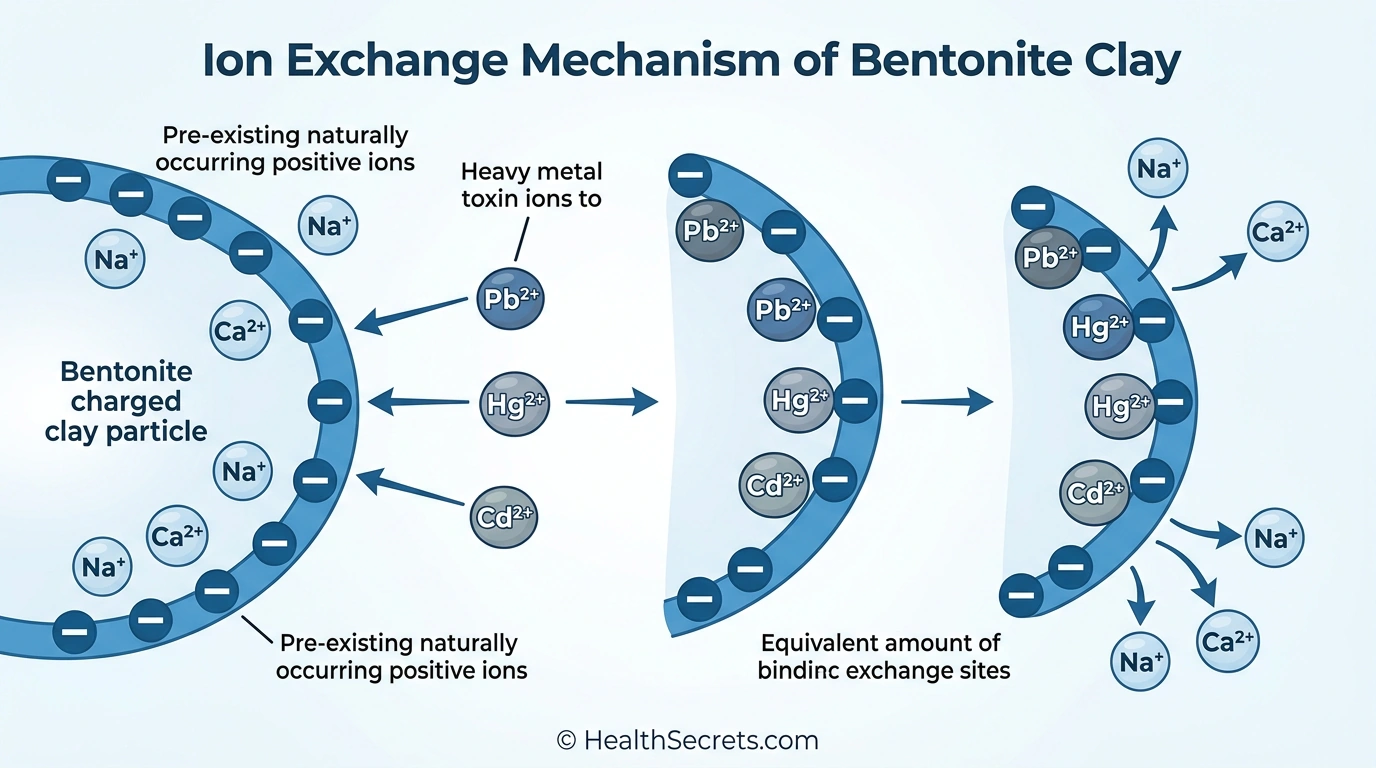
Bentonite's negatively charged clay surface attracts positively charged ions (cations) including sodium, potassium, calcium, and heavy metals like lead, mercury, and cadmium. The clay releases its loosely held cations and binds the heavy metal ions in their place — effectively swapping harmless minerals for harmful ones. Research confirms bentonite's effectiveness at removing heavy metal ions from contaminated water through this ion exchange mechanism ([5]).
How does adsorption bind toxins in the gut?
Adsorption (not absorption) occurs when toxins physically bind to the clay's porous surface. Bentonite's enormous surface area — estimated at 750 square meters per gram — provides extensive binding sites. In the GI tract, this means toxins bound to clay surfaces pass through the intestines and are eliminated in stool rather than being absorbed into the bloodstream. Studies have demonstrated bentonite's ability to adsorb aflatoxins, certain pesticides, and bacterial toxins in vitro and in animal models ([1]).
Does the swelling capacity matter for detox?
Bentonite absorbs water and expands 12–15 times its volume, forming a gel-like substance in the intestines. This swelling action may help trap water-soluble and fat-soluble toxins within the gel matrix. However, this same property can cause constipation if you don't drink adequate water — which is why hydration is critical during any internal use.
How Well Is Bentonite Clay Absorbed?
Bentonite clay is not absorbed into the bloodstream — it acts entirely within the gastrointestinal tract as a locally acting, non-systemic agent. This is actually a key safety feature: the clay binds substances in the gut and is excreted in stool without entering systemic circulation. A 2026 systems-based review confirmed that calcium montmorillonite "exerts its effects without systemic absorption, acting locally within the gastrointestinal tract or at the skin surface" ([2]).
Does the form of bentonite matter?
Yes — calcium bentonite is preferred for human use because it has greater structural stability and superior binding affinity for toxins compared to sodium bentonite. Food-grade designation is essential for any internal use. Powder form mixed in water is the most common preparation, though capsules offer convenience with pre-measured doses.
Importantly, a human safety study (NovaSil clay trial) demonstrated that dietary calcium montmorillonite did not affect serum concentrations of important vitamins or nutrient minerals during short-term use, suggesting it does not significantly interfere with overall nutrient absorption when used appropriately ([3]).
What enhances or reduces bentonite's effectiveness?
Acidic environments (like the stomach) may affect binding capacity — some research suggests that the stomach's acidic pH could potentially release certain bound metals from the clay. Taking bentonite on an empty stomach or between meals optimizes its binding action in the intestines. Using glass or ceramic containers (rather than metal) when mixing is recommended, as metal may theoretically interfere with ion exchange — though this concern is largely anecdotal.
How Much Bentonite Clay Should You Take?
If you choose to use bentonite clay internally, conservative dosing with strict time limits is essential. There is no standardized medical dosing, so the following guidelines are based on traditional use and limited clinical data. Internal use should always be discussed with a healthcare provider first.
| Purpose | Dose | Frequency | Duration |
|---|---|---|---|
| Short-term internal cleanse | ½–1 tsp powder in 8 oz water | 1–2x daily | 1–2 weeks max |
| Face mask (external) | 1–2 tbsp + water/ACV | 1–2x per week | Ongoing |
| Detox bath (external) | 1–2 cups in warm bath | 1–2x per week | Ongoing |
| Wound care (external) | Paste (clay + water) | 1–2x daily | Until healed |
When should you take bentonite clay?
For internal use, take on an empty stomach — at least 1 hour before meals or 2 hours after eating. This optimizes binding in the intestines.
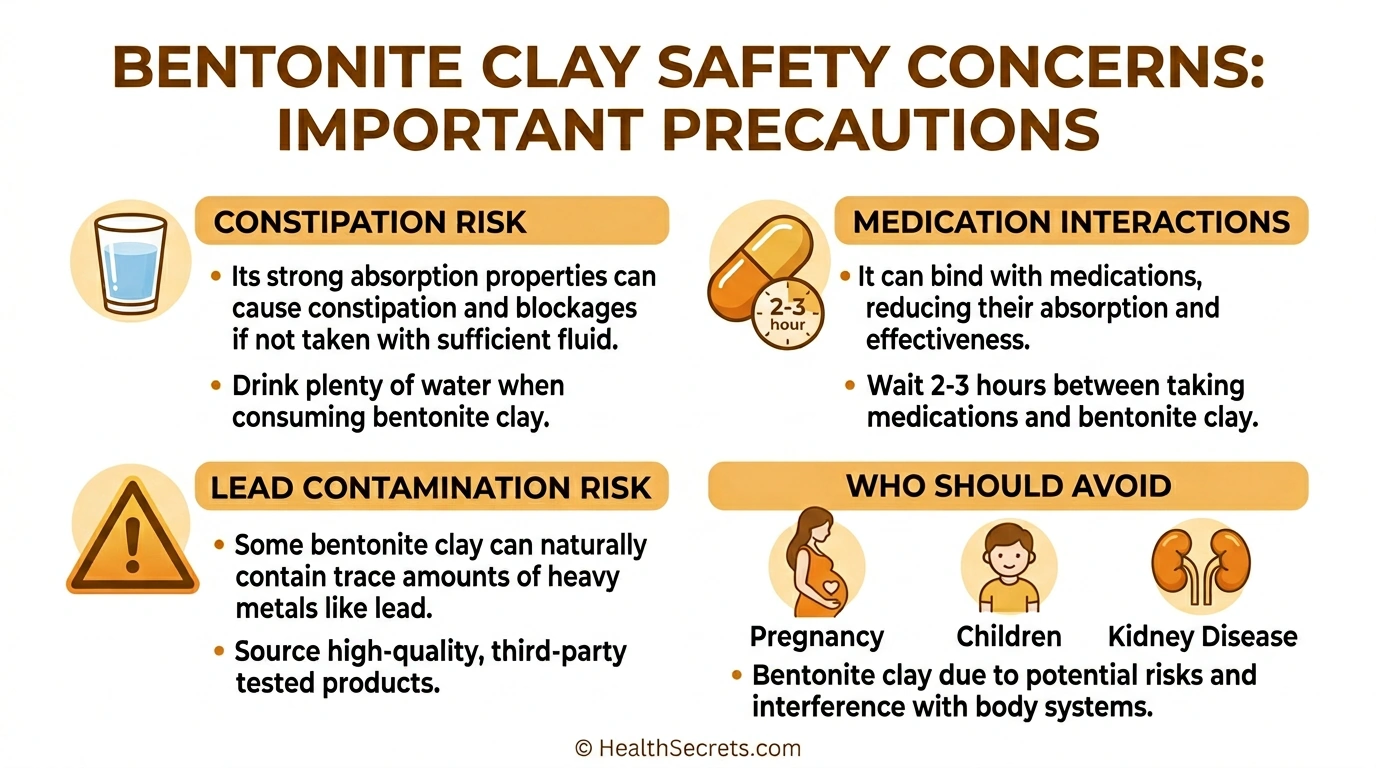
:::warning[Safety Warning] Take bentonite clay at least 2–3 hours away from all medications and supplements, as the clay will bind them and reduce their effectiveness. :::
Why is hydration so important?
Bentonite absorbs significant amounts of water. Without adequate hydration (8–10 cups daily), the clay can harden stool and cause constipation — the most common side effect. Increasing fiber intake to 25–35g daily alongside clay use further supports healthy elimination. If constipation develops, discontinue use immediately and increase water intake.
Remember: Internal use is short-term only (1–2 weeks maximum). Long-term daily use can deplete essential nutrients and cause chronic constipation. Periodic use (1–2 weeks every few months) is the maximum recommended approach — but even this lacks strong clinical evidence.
Can You Get Bentonite Clay's Benefits from Food?
Bentonite clay is not a food and does not occur naturally in the diet. Unlike vitamins or minerals that you can obtain from dietary sources, bentonite is a mineral supplement that must be intentionally consumed or applied. However, you can support the same detoxification pathways that bentonite clay targets through strategic food choices — and this approach has far stronger scientific backing.
Foods that support your body's natural detoxification include cruciferous vegetables (broccoli, Brussels sprouts, cabbage) which contain sulforaphane that supports phase II liver detoxification, high-fiber foods (vegetables, fruits, legumes, whole grains) that bind toxins in the gut and support elimination, and foods rich in glutathione precursors (garlic, onions, avocados) that fuel the liver's master antioxidant system.
For targeted supplement support of liver detoxification, NAC (N-acetyl cysteine) and milk thistle have substantially more human clinical evidence than bentonite clay. If gut health is your primary concern, our gut detox protocol outlines an evidence-based approach using probiotics, prebiotics, and dietary changes.
Is Bentonite Clay Safe?
Bentonite clay has a generally favorable safety profile for external use and short-term internal use when using food-grade products from reputable sources. However, significant safety concerns exist that require careful attention. A 2017 review concluded bentonite is safe for chronic oral consumption based on available literature, but acknowledged that "like any other drug, big doses of bentonite can have some side effects" ([1]).
What are the main side effects?
- Constipation is the most common side effect. Bentonite absorbs water in the intestines, hardening stool. Prevention requires drinking 8–10 cups of water daily during use. A case of severe hypokalemia (dangerously low potassium) was reported in a 3-year-old treated with oral and rectal bentonite — caused by gastrointestinal binding of essential electrolytes ([11]).
- Medication interactions are a serious concern. Bentonite binds medications in the GI tract, reducing their absorption and effectiveness. This includes antibiotics, thyroid medications, blood pressure drugs, and birth control pills. Always maintain a 2–3 hour gap between clay and any medication.
- Lead contamination is a real risk with some products.
The FDA has specifically warned consumers about certain bentonite clay products containing elevated lead levels ([10]). Always choose third-party tested products.
Who should NOT use bentonite clay internally?
- People with intestinal obstruction or recent GI surgery
- Those with chronic constipation
- Pregnant or breastfeeding individuals (insufficient safety data)
- Anyone taking medications without consulting their doctor first
- People with kidney disease (impaired excretion)
- Children (unless under medical supervision)
What Can Bentonite Clay Actually Do for You?
Bentonite clay has genuine benefits, but they're often exaggerated by the wellness industry. Setting realistic expectations helps you make informed decisions about whether this supplement fits your health goals. The strongest evidence supports external use, while internal detoxification claims remain largely unproven in humans.
What bentonite clay CAN do (well-established):
- Treat skin conditions externally — acne, diaper dermatitis, poison ivy, wound healing (supported by multiple clinical trials)
- Bind aflatoxins in the GI tract — demonstrated in both animal and human studies, particularly in populations exposed to contaminated food
- Act as a broad-spectrum antibacterial agent — killing a range of bacteria when applied topically
What bentonite clay MIGHT do (limited evidence):
- Bind some heavy metals in the GI tract (animal studies only — no well-designed human trials)
- Support IBS symptoms — one RCT showed benefit for constipation-predominant IBS specifically ([6])
- Modulate gut microbiota favorably (preclinical data only)
What bentonite clay CANNOT do:
- Replace medical treatment for heavy metal toxicity (requires chelation therapy — EDTA, DMSA)
- "Detox" your entire body (your liver and kidneys handle this 24/7)
- Remove toxins stored in fat tissue, bones, or organs
- Cure or treat any disease
For a truly evidence-based approach to reducing your toxin burden, focus on reducing environmental toxin exposure — this is far more effective than any supplement.
What Should You Do First if You Want to Try Bentonite Clay?
If you're interested in bentonite clay, start with external applications where the evidence is strongest, and approach internal use cautiously with medical guidance. The most effective "detox" strategy is always reducing toxin exposure first, then supporting your body's natural detoxification organs through diet and lifestyle.
Phase 1 — Start with External Use (Week 1–2):
- Purchase food-grade calcium bentonite clay from a reputable, third-party tested source
- Try a face mask: Mix 1–2 tbsp clay with water or apple cider vinegar, apply 10–20 minutes, rinse
- Try a detox bath: Add 1–2 cups clay to warm bath, soak 20–30 minutes
- Assess skin tolerance before considering internal use
Phase 2 — Consider Internal Use (If Desired, Week 3–4):
- Consult your healthcare provider, especially if taking any medications
- Start low: ½ tsp food-grade calcium bentonite in 8 oz water, once daily
- Take on empty stomach, 2–3 hours away from all medications and supplements
- Drink 8–10 cups of water daily (non-negotiable)
- Monitor bowel movements — discontinue immediately if constipation develops
- Limit internal use to 1–2 weeks maximum
Phase 3 — Focus on What Actually Works (Ongoing):
- Reduce toxin exposure: clean personal care products, air/water filters, organic produce (EWG Dirty Dozen)
- Support liver: cruciferous vegetables daily, consider NAC 600mg or milk thistle
- Support gut: 25–35g fiber daily, probiotic foods or supplements
- Hydrate: 8–10 cups water daily
- Sleep: 7–9 hours nightly (liver detoxifies during sleep)
Top Recommended Products
Fossil Power
Fossil Power Bentonite Clay Food Grade Powder (2 lb)
This food-grade calcium bentonite clay is one of the most popular options for both internal and external use. The fine powder texture mixes smoothly in water without clumping, and the 2 lb container provides excellent value for regular use.
Pros
- + Food-grade certified for internal use
- + fine powder mixes easily
- + large 2 lb container good value
- + versatile for masks
- + baths
- + and internal use
Cons
- - No third-party heavy metal testing certificate publicly listed
Why we included it: This food-grade calcium bentonite clay is one of the most popular options for both internal and external use. The fine powder texture mixes smoothly in water without clumping, and the 2 lb container provides excellent value for regular use.
Retailer link opens on Amazon after the review details above
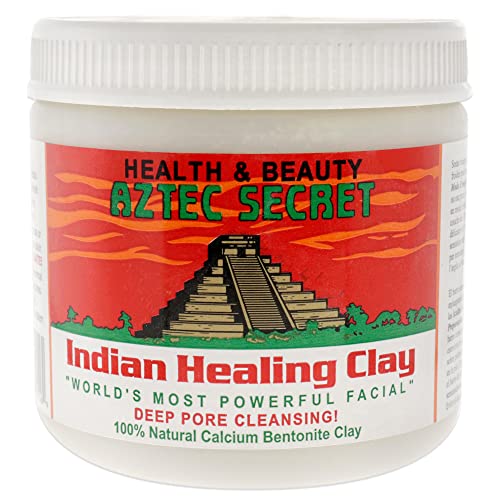
Aztec Secret
Aztec Secret Indian Healing Clay (1 lb)
The gold standard for clay face masks with millions of satisfied users worldwide. If your primary interest is skin health — acne, oil control, pore cleansing — this is the most proven and affordable option available.
Pros
- + World's most popular clay mask
- + pure calcium bentonite
- + no additives or fragrances
- + affordable
- + excellent for acne and oily skin
Cons
- - Marketed primarily for external use
- - not specifically labeled food-grade for internal use
Why we included it: The gold standard for clay face masks with millions of satisfied users worldwide. If your primary interest is skin health — acne, oil control, pore cleansing — this is the most proven and affordable option available.
Retailer link opens on Amazon after the review details above
Yerba Prima
Yerba Prima Great Plains Bentonite Detox (16 oz)
If mixing powder in water sounds unappealing, this pre-dispersed liquid formula makes daily use effortless. Yerba Prima has been a trusted name in natural digestive health for decades.
Pros
- + Pre-dispersed liquid form
- + no mixing required
- + easy to take
- + established brand in natural health
- + convenient dosing
Cons
- - More expensive per serving than powder
- - smaller quantity
- - contains water as primary ingredient
Why we included it: If mixing powder in water sounds unappealing, this pre-dispersed liquid formula makes daily use effortless. Yerba Prima has been a trusted name in natural digestive health for decades.
Retailer link opens on Amazon after the review details above
Sonne's #7
Sonne's #7 Detoxificant Bentonite Clay (32 oz)
One of the oldest and most respected bentonite clay products on the market, Sonne's has been used by natural health practitioners for over 75 years. The hydrated formula is ready to drink without mixing.
Pros
- + Long-established brand since 1946
- + trusted by natural health practitioners
- + larger bottle size
- + hydrated form ready to use
Cons
- - ASIN may vary
- - limited certifications listed
- - pricier than powder options
Why we included it: One of the oldest and most respected bentonite clay products on the market, Sonne's has been used by natural health practitioners for over 75 years. The hydrated formula is ready to drink without mixing.
Retailer link opens on Amazon after the review details above
NOW Foods
NOW Foods Bentonite Clay Powder (1 lb)
NOW Foods is one of the most trusted names in supplements with rigorous GMP manufacturing standards. For those interested primarily in external clay applications at an affordable price, this is a reliable choice.
Pros
- + Affordable
- + trusted supplement brand
- + GMP manufactured
- + good for face masks and baths
- + consistent quality
Cons
- - Primarily marketed for external use
- - may not be labeled food-grade
Why we included it: NOW Foods is one of the most trusted names in supplements with rigorous GMP manufacturing standards. For those interested primarily in external clay applications at an affordable price, this is a reliable choice.
Retailer link opens on Amazon after the review details above
Belle Chemical
Belle Chemical Food Grade Sodium Bentonite Clay (1 lb)
With clear food-grade labeling and internal use directions printed right on the package, this is a straightforward option for beginners. Sourced from Wyoming volcanic ash deposits — one of the most reputable bentonite sources.
Pros
- + Clearly labeled food-grade
- + mined in Wyoming (high-quality source)
- + fine powder
- + clear internal use directions on label
- + affordable
Cons
- - Sodium bentonite (calcium bentonite preferred for internal use)
- - smaller container
Why we included it: With clear food-grade labeling and internal use directions printed right on the package, this is a straightforward option for beginners. Sourced from Wyoming volcanic ash deposits — one of the most reputable bentonite sources.
Retailer link opens on Amazon after the review details above
Redmond Clay
Redmond Clay Bentonite Healing Clay (10 oz)
Redmond Clay is sourced from a unique volcanic ash deposit near Redmond, Utah, and has built a loyal following in the natural health community. The clay contains a broad mineral profile and is popular for both internal and topical applications.
Pros
- + Sourced from a specific Utah volcanic ash deposit
- + no additives
- + popular among natural health community
- + multipurpose use
- + trusted brand
Cons
- - Smaller container
- - higher cost per ounce
- - limited third-party testing details
Why we included it: Redmond Clay is sourced from a unique volcanic ash deposit near Redmond, Utah, and has built a loyal following in the natural health community. The clay contains a broad mineral profile and is popular for both internal and topical applications.
Retailer link opens on Amazon after the review details above
Molivera Organics
Molivera Organics Bentonite Clay (16 oz)
An affordable entry point for those wanting to try bentonite clay masks and external treatments without a large investment. The fine powder texture makes smooth, easy-to-apply paste.
Pros
- + Affordable price point
- + good for face masks and body treatments
- + fine texture
- + comes in resealable bag
- + pure bentonite clay
Cons
- - Not specifically labeled food-grade
- - limited brand recognition
- - external use primarily
Why we included it: An affordable entry point for those wanting to try bentonite clay masks and external treatments without a large investment. The fine powder texture makes smooth, easy-to-apply paste.
Retailer link opens on Amazon after the review details above
Further Reading
Further Reading
"The Complete Guide to Detox: Your Body's Natural Healing Power"
by Dr. Max Gerson (foundational), various modern authors
Comprehensive detox physiology overview; evidence-based cleansing protocols; dietary detox strategies; understanding liver and kidney pathways; practical meal plans
Why it adds value here
Provides the scientific foundation for understanding what detoxification actually means at a biological level — helping readers evaluate claims about products like bentonite clay within a proper evidence framework.
Best for: Anyone wanting to understand the full science behind natural detoxification approaches
View book detailsFurther Reading
"Living Clay: Nature's Own Miracle Cure"
by Perry A~
History of clay therapy across cultures; practical clay application methods; internal and external protocols; safety guidelines; real-world case studies of clay use
Why it adds value here
The most comprehensive book specifically about therapeutic clay use, covering both traditional knowledge and modern applications. Offers practical protocols for various health conditions using bentonite and other healing clays.
Best for: Readers specifically interested in the history and therapeutic applications of healing clays
View book detailsAEO FAQ
Frequently Asked Questions
10 common questions answered
Food-grade calcium bentonite clay is generally considered safe for short-term internal use (1–2 weeks) when mixed with adequate water. However, the FDA has not approved bentonite clay for internal detoxification claims. Always choose products specifically labeled "food-grade" and drink 8–10 cups of water daily to prevent constipation. Consult your healthcare provider before internal use, especially if you take medications.
Animal studies show bentonite can bind heavy metals like lead, mercury, and cadmium in the gastrointestinal tract, potentially reducing absorption. However, well-designed human clinical trials are lacking. Bentonite is not a treatment for heavy metal toxicity — that requires chelation therapy under medical supervision. The clay may help reduce ongoing dietary exposure to certain metals, but it cannot remove metals already stored in tissues.
Internal use should be limited to 1–2 weeks maximum. Long-term daily use can deplete essential nutrients (vitamins and minerals), cause chronic constipation, and potentially lead to electrolyte imbalances. Some practitioners suggest periodic short-term use (1–2 weeks every few months), but even this approach lacks clinical validation. Always take breaks between use periods.
Yes — bentonite clay binds medications in the gastrointestinal tract, significantly reducing their absorption and effectiveness. This includes antibiotics, thyroid medications, blood pressure drugs, birth control pills, and virtually any oral medication. Always take bentonite clay at least 2–3 hours before or after any medications or supplements. Consult your doctor before combining clay with any prescription drugs.
Calcium bentonite is preferred for internal and external human use due to its greater structural stability and better toxin-binding properties. Sodium bentonite swells more dramatically and is primarily used for industrial purposes (drilling, cat litter, pond sealing). Never ingest sodium bentonite products intended for industrial use. For skin applications, both types can be effective, but calcium bentonite is gentler.
Yes — this is one of bentonite clay's most well-supported applications. A 2023 clinical study found that bentonite clay masks significantly improved acne, reduced sebum content, and improved skin hydration in people with oily/acne-prone skin. Clinical trials also support its effectiveness for diaper dermatitis, chronic hand dermatitis, and poison ivy prevention. For skin use, mix clay with water or apple cider vinegar and apply for 10–20 minutes, 1–2 times per week.
Internal use of bentonite clay during pregnancy is not recommended due to insufficient safety data. The potential for constipation, electrolyte imbalances, and nutrient binding makes it particularly risky during pregnancy. External use (face masks, baths) is likely safe but should still be discussed with your OB/GYN. Some traditional cultures practice geophagy during pregnancy, but this is not medically endorsed.
Bentonite clay naturally contains 10–20% aluminum as aluminum silicate — a structural component of the clay mineral itself. This form of aluminum is not bioavailable and does not enter the bloodstream when the clay passes through the GI tract. The bigger safety concern is lead contamination: the FDA has warned about specific bentonite products with elevated lead levels. Always choose third-party tested products.
Both bentonite clay and activated charcoal are adsorbent substances that bind toxins in the GI tract. Activated charcoal has broader binding capacity and is used in emergency medicine for certain poisonings — giving it stronger medical validation. Bentonite clay works through both ion exchange and adsorption, potentially offering more selective binding of charged particles like heavy metals. Neither is proven for routine "detox" in healthy people. Learn more in our activated charcoal detox guide.
Bentonite clay absorbs significant amounts of water — swelling up to 12–15 times its dry volume. In the intestines, this water absorption can dry out stool, making it hard and difficult to pass. This is why drinking 8–10 cups of water daily is absolutely essential during any internal use. Starting with a low dose (½ tsp) and increasing fiber intake also helps prevent constipation. If constipation persists for more than 2 days, stop taking the clay immediately.
Was this article helpful?
Written & Reviewed By Experts
Author
Dr. Sophia Laurent
Medical Reviewer
Dr. Sarah Chen
All content is evidence-based, peer-reviewed by qualified professionals, and updated regularly. Our editorial team follows strict guidelines for accuracy and transparency.
References & Citations
20 sources cited
Medical Disclaimer
This article is for informational purposes only and does not constitute medical advice. Read the full medical disclaimer. Always consult with a qualified healthcare provider before starting any new supplement, treatment, or major dietary change.