Skip to content
B vitamin-rich foods including eggs, salmon, spinach, legumes, and whole grains with B complex supplement capsules Pin It
💊 Supplements Supplement Guide
16 min

B Vitamins Complete Guide: Energy and Nervous System

DS
Dr. Sarah Chen
| Dr. Sarah Chen | words | 22 citations
Updated this month Last reviewed: May 27, 2026 Medically reviewed by Dr. Sarah Chen

Who This Is For

Best for readers comparing supplements options and trying to avoid hype.

Who Should Be Careful

Not for replacing clinician guidance when symptoms, medications, or lab issues are involved.

Affiliate Disclaimer | This article may contain affiliate links to products we trust. If you choose to buy through them, we may earn a small commission at no extra cost to you. Full disclosure

Medical Disclaimer | For informational purposes only. Not a substitute for professional medical advice. Read full disclaimer

M

Key Takeaways

Eight essential B vitamins (B1, B2, B3, B5, B6, B7, B9, B12) are water-soluble and must be consumed daily — the body does not store them, so deficiency can develop quickly with inadequate intake [1]
B vitamins serve as cofactors for energy metabolism (converting carbohydrates, fats, and proteins into ATP), nervous system function (myelin synthesis, neurotransmitter production), DNA synthesis, red blood cell formation, and homocysteine metabolism for cardiovascular health [2][3]
B12 deficiency affects 10–40% of older adults depending on diagnostic criteria, causing fatigue, neuropathy, cognitive impairment, and megaloblastic anemia — absorption declines with age due to reduced stomach acid and intrinsic factor [6][7]
The MTHFR polymorphism (C677T and A1298C variants) affects roughly 40% of the population, impairing folate metabolism and elevating homocysteine — methylated forms (methylfolate, methylcobalamin, P5P) bypass this genetic bottleneck [8][21]
B complex supplements outperform individual B vitamins for most people because the eight vitamins work synergistically — taking one in isolation can create imbalances in the others [2]
A 2026 systematic review and meta-analysis found that B6, B9, and B12 supplementation benefits global cognitive function in older adults, with greater effects in those with elevated homocysteine [11]
B6 doses above 100 mg daily long-term can cause peripheral neuropathy — this is the most important safety concern among all B vitamins [4]
Bright yellow urine after taking a B complex is harmless — it's simply excess riboflavin (B2) being excreted, and is actually a sign the supplement is being absorbed

Top Recommended Products

Comparison shortlist to review before leaving the guide

8 Items
01

Thorne Basic B Complex

Thorne Basic · MTHFR polymorphism, optimal absorption, comprehensive methylated B complex

Compare
02

NOW Foods B-100 Sustained Release

NOW Foods · General B vitamin supplementation, comprehensive coverage, value

Compare
03

Jarrow Formulas Methyl B-12 5000 mcg

Jarrow Formulas · B12 deficiency, vegans, vegetarians, elderly, PPI users

Compare
04

Thorne 5-MTHF 1 mg

Thorne 5-MTHF · MTHFR polymorphism, pregnancy support, elevated homocysteine, mood support

Compare
05

NOW Foods P-5-P 50 mg

NOW Foods · Neurotransmitter support, mood, PMS relief, those needing active B6

Compare
06

Sports Research Biotin 5000 mcg

Sports Research · Hair, skin, and nail support, biotin deficiency

Compare
07

NOW Foods Niacinamide 500 mg

NOW Foods · Energy support, skin health, those who want niacin without flushing

Compare
08

Garden of Life Vitamin B Complex

Garden of · Those preferring whole food-sourced supplements, organic, clean-label

Compare

Read the detailed review cards below before opening any retailer link

If fatigue, brain fog, or frayed nerves have become your daily companions, there's a good chance a group of overlooked nutrients deserves a closer look. B vitamins are the unsung workhorses of human metabolism — eight distinct compounds that your body cannot store and must replenish every single day. They convert the food on your plate into usable energy, build the insulation around your nerves, produce the neurotransmitters that regulate your mood, and keep a cardiovascular risk marker called homocysteine in check [1].

Here's the uncomfortable reality: deficiency is far more common than most people assume. An estimated 10–15% of adults over 60 have clinically low vitamin B12 levels, and that figure may reach 40% when subclinical deficiency is included [6][7]. Vegetarians, vegans, anyone on proton pump inhibitors, and the roughly 40% of the population carrying an MTHFR gene polymorphism face even steeper odds [8][21]. Meanwhile, chronic stress, alcohol, and processed-food diets quietly drain B vitamin reserves faster than most diets can replace them.

What makes B vitamins particularly confusing is the alphabet soup of forms — cyanocobalamin versus methylcobalamin, folic acid versus methylfolate, pyridoxine versus P5P. Choosing the wrong form can mean poor absorption, wasted money, or missing the specific benefit you need. In this guide, you'll learn what each B vitamin does, which forms actually work, evidence-based dosing for different goals, food sources, and how to choose the right supplement for your situation.

For related reading, explore our Sleep Optimization Guide for how B vitamins support rest, our Mental Wellness Complete Guide for mood and cognitive support, and our Immune System Ultimate Guide for immune function and nutrient synergies.

What Are B Vitamins and Why Does Your Body Need All Eight?

B vitamins are a family of eight water-soluble nutrients that function primarily as coenzymes — molecular helpers that activate the enzymes driving energy production, nervous system function, DNA synthesis, and dozens of other critical processes. Because they are water-soluble, your body excretes excess amounts rather than storing them, making daily intake essential [1].

The eight B vitamins and their primary roles:

B1 (Thiamine) — The Energy Vitamin

Thiamine is a cofactor for glucose metabolism, converting carbohydrates into ATP. It also supports nerve function and cardiac muscle health. Deficiency causes beriberi (heart failure or neuropathy) and Wernicke-Korsakoff syndrome in alcoholics [3][4]. RDA: 1.1–1.2 mg daily.

Infographic showing all eight essential B vitamins with icons representing their primary functions in energy, nervous system, DNA synthesis, and blood cell formation

B2 (Riboflavin) — The Antioxidant Activator

Riboflavin forms the coenzymes FAD and FMN, essential for the Krebs cycle and electron transport chain. It also regenerates glutathione (your master antioxidant) and at 400 mg daily reduces migraine frequency by approximately 50% [1][2]. RDA: 1.1–1.3 mg daily.

B3 (Niacin) — The NAD+ Builder

Niacin forms NAD+ and NADP+, coenzymes required for over 400 enzymatic reactions including energy metabolism and DNA repair. At prescription doses (1–3 g), nicotinic acid raises HDL and lowers LDL cholesterol. The nicotinamide form avoids the flushing side effect [1]. RDA: 14–16 mg daily.

B5 (Pantothenic Acid) — The CoA Maker

Pantothenic acid is a precursor to Coenzyme A (CoA), essential for fatty acid synthesis, the Krebs cycle, and adrenal hormone production. Deficiency is rare because B5 is widespread in foods — its name literally means "from everywhere" [1]. RDA: 5 mg daily.

B6 (Pyridoxine) — The Neurotransmitter Synthesizer

B6 is required for producing serotonin, dopamine, GABA, and norepinephrine. It also converts homocysteine to cysteine, supports immune function, and synthesizes hemoglobin. The active form is pyridoxal-5-phosphate (P5P) [3][4]. RDA: 1.3–1.7 mg daily.

B7 (Biotin) — The Beauty Vitamin

Biotin supports fatty acid synthesis, glucose metabolism, and gene expression. It is popular for hair, skin, and nail health, though benefits are primarily documented in deficient individuals. Raw egg whites contain avidin, which blocks biotin absorption [1]. RDA: 30 mcg daily.

B9 (Folate) — The DNA Builder

Folate is critical for DNA synthesis, cell division, neural tube development in pregnancy, and homocysteine metabolism. The MTHFR polymorphism impairs conversion of folic acid to its active form (methylfolate), affecting approximately 40% of the population [8][15]. RDA: 400–800 mcg daily (600 mcg in pregnancy).

B12 (Cobalamin) — The Nerve Protector

B12 synthesizes myelin (the insulation around nerves), forms red blood cells, produces DNA, and metabolizes homocysteine. It is found exclusively in animal products. Absorption requires intrinsic factor from the stomach, which declines with age [5][6]. RDA: 2.4 mcg daily.

How Do B Vitamins Power Your Energy and Nervous System?

B vitamins drive cellular energy production by forming the coenzymes (FAD, NAD+, CoA, TPP) required at every stage of ATP synthesis — from glycolysis through the Krebs cycle to the electron transport chain. They simultaneously support the nervous system through myelin synthesis, neurotransmitter production, and homocysteine regulation [1][2].

How Do B Vitamins Produce Cellular Energy?

Every calorie you consume must pass through B vitamin-dependent enzymes to become usable ATP. Thiamine (B1) drives pyruvate decarboxylation, riboflavin (B2) and niacin (B3) form FAD and NAD+ for the Krebs cycle and electron transport, pantothenic acid (B5) builds Coenzyme A for fatty acid oxidation, and B6 supports amino acid catabolism. Without adequate B vitamins, energy production stalls — which is why fatigue is the single most common deficiency symptom across all eight vitamins [1][22].
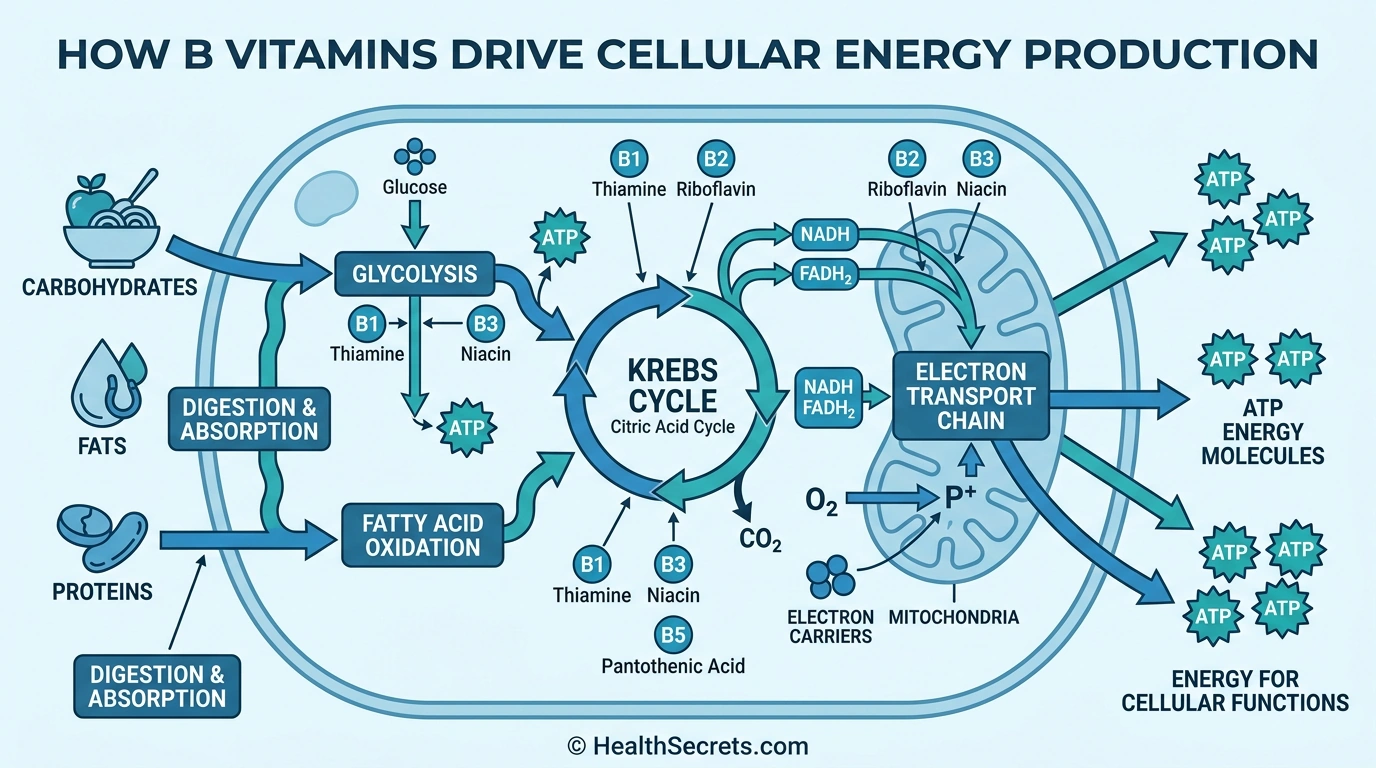
Diagram showing how B vitamins convert food into ATP energy through glycolysis, the Krebs cycle, and electron transport chain

How Do B Vitamins Support the Nervous System?

Three B vitamins are especially critical for nerve health. B12 synthesizes the myelin sheath that insulates neurons and speeds signal transmission — deficiency causes irreversible neuropathy if prolonged [3][16]. B6 produces serotonin, dopamine, GABA, and norepinephrine — the neurotransmitters governing mood, sleep, motivation, and calm [4]. B1 maintains nerve cell membrane integrity and supports acetylcholine synthesis. A 2020 review confirmed that B1, B6, and B12 work synergistically in the nervous system, with combined supplementation outperforming individual vitamins for neurological outcomes [3].

How Do B Vitamins Protect Your Heart?

B6, B9, and B12 convert homocysteine — a toxic amino acid metabolite — into the harmless amino acid methionine. Elevated homocysteine (>15 µmol/L) is an established risk factor for cardiovascular disease, stroke, and dementia. Folic acid supplementation alone typically lowers homocysteine by approximately 25%, and adding B12 and B6 enhances this effect further [10][21]. A 2024 randomized controlled trial demonstrated that methylated B vitamins (methylfolate, methylcobalamin, and P5P) significantly reduced homocysteine in patients with MTHFR polymorphisms [9].

How Do B Vitamins Build DNA and Blood Cells?

Folate (B9) and B12 are essential for DNA synthesis — every cell division in your body depends on them. When either is deficient, rapidly dividing cells (bone marrow, GI lining, developing fetus) are hit first. This causes megaloblastic anemia (large, immature red blood cells), fatigue, and in pregnancy, potentially devastating neural tube defects like spina bifida [1][15].

Which Forms of B Vitamins Are Best Absorbed?

The form of each B vitamin you choose determines how efficiently your body can use it. "Methylated" or "active" forms bypass genetic conversion steps, making them superior choices for anyone with the MTHFR polymorphism, older adults with declining enzyme efficiency, and those seeking optimal bioavailability [8][9].
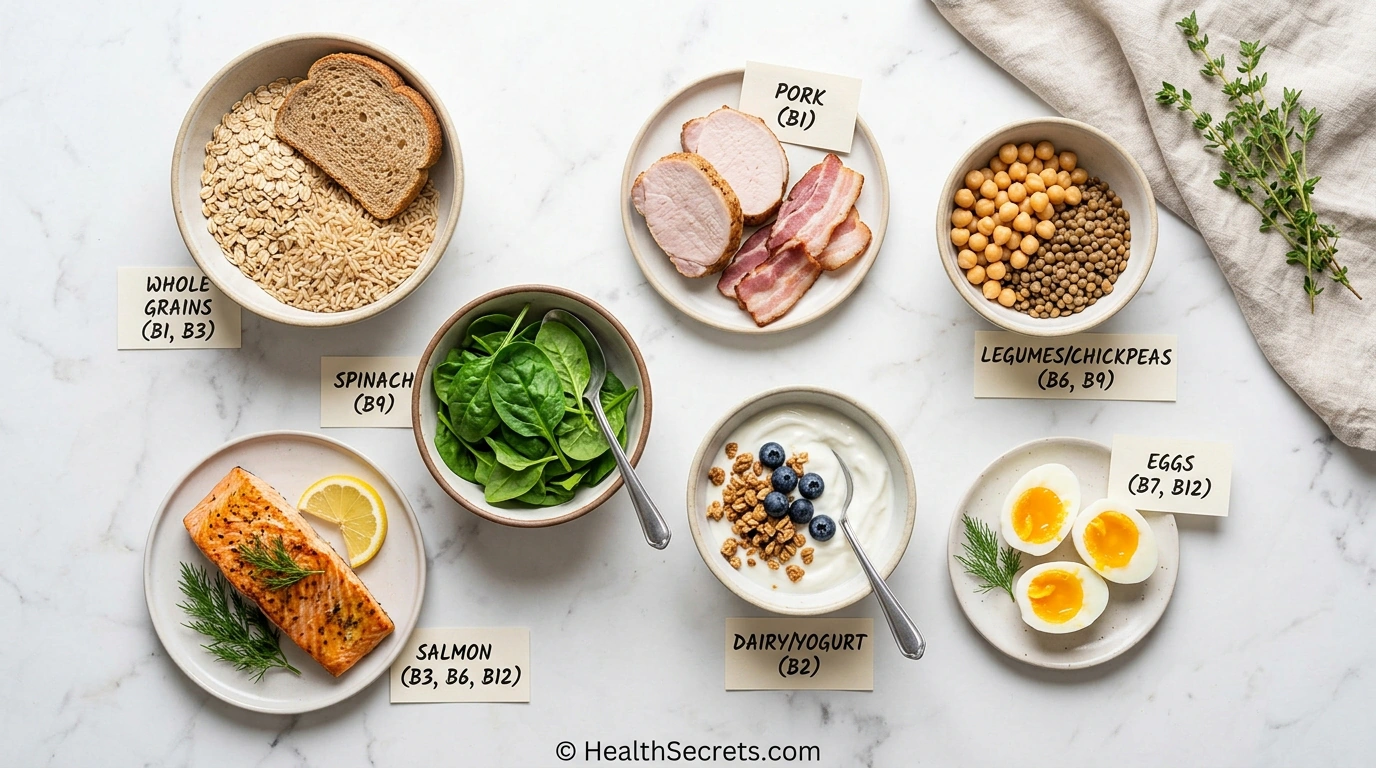
Top B vitamin food sources including eggs, salmon, spinach, legumes, whole grains, and dairy with labels showing which B vitamins each provides

Why Do Methylated Forms Matter?

Your body must convert standard supplement forms (cyanocobalamin, folic acid, pyridoxine) into their active coenzyme forms before they can function. This conversion requires specific enzymes — and genetic polymorphisms like MTHFR C677T and A1298C can reduce enzyme efficiency by 30–70% [8][21]. Methylated forms skip this bottleneck entirely.

Key Form Comparisons

Vitamin Standard Form Active Form Key Advantage Who Needs Active
B12 Cyanocobalamin Methylcobalamin Bypasses conversion, methyl donor MTHFR, elderly, vegans
B9 Folic acid Methylfolate (5-MTHF) Bypasses MTHFR enzyme MTHFR (40% of population)
B6 Pyridoxine HCl P5P (pyridoxal-5-phosphate) Already activated, better absorbed Liver issues, elderly
B2 Riboflavin Riboflavin-5-phosphate (R5P) Pre-activated form Migraines, MTHFR support

The MTHFR Polymorphism: Who Needs Methylated Forms?

The MTHFR gene encodes an enzyme that converts folic acid into methylfolate — the active form your body uses for homocysteine metabolism, DNA synthesis, and neurotransmitter production. Two common variants (C677T and A1298C) affect approximately 40% of the population worldwide [8][21]. People who are homozygous for C677T have up to 70% reduced enzyme activity, leading to elevated homocysteine, impaired methylation, and increased risk of cardiovascular disease, depression, and pregnancy complications [15]. For these individuals, methylated B complex supplements are not optional — they are essential.

A 2024 randomized controlled trial confirmed that supplementation with methylfolate, P5P, and methylcobalamin significantly lowered homocysteine levels in patients with MTHFR polymorphisms compared to standard forms [9].

Comparison of standard versus methylated B vitamin forms showing how active forms bypass MTHFR enzyme conversion

How Much of Each B Vitamin Should You Take?

Optimal B vitamin dosing depends on your specific needs, genetic profile, and whether you are addressing a deficiency or maintaining general health. A quality B complex covers most people's needs, with individual supplementation reserved for specific goals or documented deficiencies [1][2].

B Complex Standard Dosing

Vitamin RDA B Complex Dose Therapeutic Dose Upper Limit
B1 (Thiamine) 1.1–1.2 mg 25–100 mg 100–300 mg No UL established
B2 (Riboflavin) 1.1–1.3 mg 25–100 mg 400 mg (migraines) No UL established
B3 (Niacin) 14–16 mg 25–50 mg 500–1,000 mg 35 mg (flush form)
B5 (Pantothenic) 5 mg 25–100 mg 500–1,000 mg No UL established
B6 (Pyridoxine) 1.3–1.7 mg 25–50 mg 50–100 mg 100 mg (neuropathy)
Note: B7 (biotin) is dosed in mcg (30–5,000 mcg), B9 (folate) in mcg (400–800 mcg), and B12 in mcg (250–5,000 mcg). These do not fit the mg range of other B vitamins.
B vitamin dosing guide showing RDA and therapeutic doses for all eight B vitamins

Individual Dosing for Specific Goals

  • B12 deficiency/vegans/elderly: 1,000–2,000 mcg methylcobalamin sublingual daily
  • MTHFR/elevated homocysteine: 400–800 mcg methylfolate + 1,000 mcg methylcobalamin + 50 mg P5P
  • Pregnancy: 600 mcg methylfolate (prevents neural tube defects) + prenatal B complex
  • Migraines: 400 mg riboflavin (B2) daily — shown to reduce frequency by ~50% [2]
  • Hair/skin/nails: 2,500–5,000 mcg biotin daily (benefits mainly in deficient individuals)
  • Mood support: Methylated B complex with emphasis on B6, B9, B12 for neurotransmitter synthesis

Timing and Practical Tips

  • Take in the morning with food — B vitamins are energizing and may interfere with sleep if taken in the evening
  • With meals — improves absorption and reduces GI upset
  • Sublingual B12 dissolves under the tongue, bypassing GI absorption issues common in elderly and PPI users
  • Don't panic about yellow urine — it's just riboflavin (B2) being excreted, completely harmless

Can You Get Enough B Vitamins from Food Alone?

A balanced, whole-food diet can provide adequate amounts of most B vitamins — with one critical exception: B12, which is found exclusively in animal products. Vegetarians, vegans, and anyone with absorption issues will need supplementation regardless of diet quality [5][14].

Top Food Sources by B Vitamin

Vitamin Top Sources Serving Amount
B1 (Thiamine) Pork loin 3 oz 0.8 mg (67% RDA)
B2 (Riboflavin) Yogurt 1 cup 0.6 mg (46% RDA)
B3 (Niacin) Turkey breast 3 oz 10 mg (63% RDA)
B6 (Pyridoxine) Chickpeas 1 cup 1.1 mg (65% RDA)
B9 (Folate) Spinach (cooked) 1 cup 263 mcg (66% RDA)
Additional key sources: B5 is widespread (liver, sunflower seeds, avocado). B7 is richest in egg yolks, liver, and almonds. B12 is highest in clams (84 mcg/3 oz), liver (70 mcg/3 oz), and salmon (4.8 mcg/3 oz).

The Balanced Approach

  1. Eat B-rich foods daily — eggs, leafy greens, legumes, whole grains, lean meats, fish
  2. Supplement to fill gaps — a quality B complex covers what diet misses
  3. B12 is non-negotiable for vegans — no plant food naturally contains B12; fortified foods alone are rarely sufficient [14]
  4. **Support your **gut health — a healthy gut absorbs B vitamins more efficiently

Are B Vitamins Safe? Side Effects and Interactions to Know

B vitamins are among the safest supplements available because they are water-soluble — excess amounts are excreted in urine rather than accumulating in tissue. However, a few specific concerns are worth knowing [1].
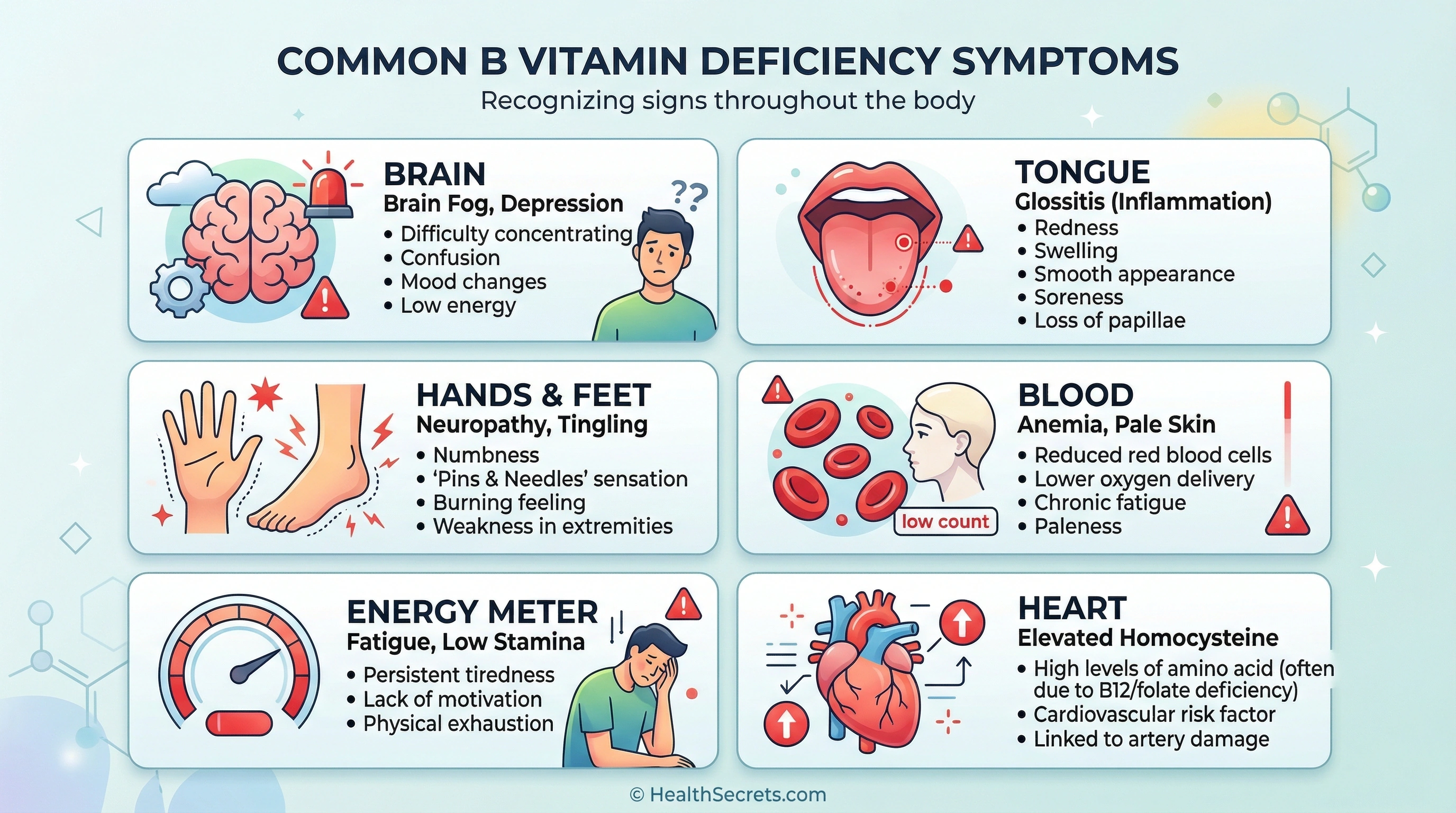
Infographic showing B vitamin deficiency symptoms including fatigue, brain fog, neuropathy, anemia, glossitis, and elevated homocysteine

Specific Safety Concerns

:::info[B6 (Pyridoxine) — The One to Watch:] Doses above 100 mg daily taken long-term can cause peripheral neuropathy — tingling, numbness, and burning in the hands and feet. This is reversible if caught early and the supplement is stopped, but it is the most important safety concern among all B vitamins. Stay below 100 mg daily for long-term use [4]. :::

:::warning[B3 (Niacin) — Flushing:] Nicotinic acid at doses above 50 mg causes vasodilation (flushing) — a harmless but uncomfortable warmth and redness of the skin. Use niacinamide (nicotinamide) to avoid this entirely. Very high doses (>3 g daily) can cause liver toxicity [1]. :::

:::info[B9 (Folate) — Masks B12 Deficiency:] High-dose folate (>1,000 mcg) can correct the anemia caused by B12 deficiency while the underlying neurological damage progresses undetected. Always check B12 status when supplementing folate at high doses [2]. :::

:::info[B12 — Extremely Safe:] No upper limit has been established. Doses of 1,000–5,000 mcg daily are common for deficiency correction and are well-tolerated [6]. :::

Drug Interactions

  • Metformin: Reduces B12 absorption — supplement with sublingual B12 [17]
  • PPIs (omeprazole, lansoprazole): Reduce stomach acid, impairing B12 release from food proteins
  • Levodopa: B6 can reduce effectiveness — use only under medical guidance
  • Anticonvulsants (phenytoin, carbamazepine): Deplete folate and biotin
  • Methotrexate: Depletes folate — supplementation often required

Who Should Use Caution

  • Kidney disease: Reduced excretion capacity — consult physician
  • Active cancer treatment: Some cancers may be stimulated by folate — discuss with oncologist
  • Anyone on blood thinners: High-dose niacin may affect clotting

What Can B Vitamin Supplementation Actually Do for You?

B vitamins are genuinely essential — but supplementation produces the most dramatic results in people who are actually deficient. For well-nourished individuals eating a balanced diet, the benefits are more subtle and supportive.

What B vitamins CAN do:

  • Resolve fatigue, brain fog, and low energy within 2–4 weeks if caused by deficiency
  • Correct megaloblastic anemia (B12, folate) within weeks of adequate dosing
  • Reverse early-stage neuropathy (B12) if caught before permanent damage
  • Lower elevated homocysteine by approximately 25–30% (cardiovascular protection) [10]
  • Reduce migraine frequency by ~50% at 400 mg riboflavin daily [2]
  • Support mood and reduce depressive symptoms, especially in those with low B6/B9/B12 or MTHFR variants [4][9]
  • Slow cognitive decline in older adults with elevated homocysteine [11][12][13]

What B vitamins WON'T do:

  • Provide an energy "boost" if you are not deficient — they enable energy production, they don't create it
  • Cure depression, anxiety, or insomnia on their own
  • Replace medical treatment for serious neurological or cardiovascular conditions
  • Grow thicker hair or stronger nails unless you are biotin-deficient

Realistic timeline:

  • Days 1–7: Bright yellow urine (riboflavin), possibly slight energy lift
  • Weeks 2–4: Noticeable improvement in energy and mental clarity if deficient
  • Weeks 4–8: Mood stabilization, reduced inflammation, better stress resilience
  • Months 2–6: Homocysteine normalization, neuropathy improvement (B12), anemia correction

Testing recommendations:

  • Serum B12: >400 pg/mL optimal (>200 pg/mL is "sufficient" but subclinical deficiency is possible)
  • Methylmalonic acid (MMA): Elevated = B12 deficiency (more sensitive than serum B12)
  • Homocysteine: <10 µmol/L optimal; >15 µmol/L = high cardiovascular risk
  • RBC folate: More accurate than serum folate for long-term status

What Should You Do First to Optimize Your B Vitamin Status?

Start with a quality methylated B complex, assess your risk factors, and add individual B vitamins only if needed for specific goals. Most people notice meaningful improvements in energy and mental clarity within 2–4 weeks if they were previously deficient.

Phase 1 — Assess and Start (Week 1)

  • Evaluate risk factors: vegetarian/vegan diet, age >50, PPI use, chronic stress, alcohol, MTHFR family history
  • Choose a methylated B complex (methylcobalamin, methylfolate, P5P) — best for broadest coverage
  • Take with breakfast daily — B vitamins are energizing
  • If vegan/vegetarian: add sublingual B12 1,000 mcg methylcobalamin

Phase 2 — Optimize (Weeks 2–4)

  • Increase B-rich foods: eggs, leafy greens, legumes, whole grains, salmon
  • Note improvements: energy, mental clarity, mood, sleep quality
  • If migraines: add riboflavin 400 mg daily (separate from B complex)
  • If elevated homocysteine or known MTHFR: ensure methylated forms at therapeutic doses

Phase 3 — Test and Refine (Months 2–3)

  • Optional testing: serum B12, MMA, homocysteine, RBC folate
  • Adjust dosing based on results (target B12 >400 pg/mL, homocysteine <10 µmol/L)
  • Consider MTHFR genetic testing if homocysteine remains elevated despite supplementation

Phase 4 — Maintain (Ongoing)

  • Continue daily B complex for long-term maintenance
  • Recheck labs annually if at-risk
  • Adjust if medications change (new PPI, metformin, anticonvulsants)
Four-phase B vitamin optimization plan from assessment through long-term maintenance with action items for each phase

Top Recommended Products

Editor's Choice

Thorne Basic

Thorne Basic B Complex

4.5/5 $
01

Thorne is one of the most trusted supplement brands among healthcare professionals. Their Basic B Complex uses all active/methylated forms, making it the best choice for anyone with MTHFR concerns or seeking optimal bioavailability.

Pros

  • + All methylated/active forms
  • + NSF Certified for Sport
  • + trusted by practitioners
  • + bypasses MTHFR
  • + clean formula no fillers

Cons

  • - Lower doses than some B-100 complexes
  • - more expensive than standard B complex
  • - one capsule serving may not be therapeutic for severe deficiency

Why we included it: Thorne is one of the most trusted supplement brands among healthcare professionals. Their Basic B Complex uses all active/methylated forms, making it the best choice for anyone with MTHFR concerns or seeking optimal bioavailability.

Best for: MTHFR polymorphism, optimal absorption, comprehensive methylated B complex Dosage: Full spectrum B complex per capsule (methylcobalamin 400 mcg, 5-MTHF 400 mcg, P5P 10 mg)
View current price on Amazon

Retailer link opens on Amazon after the review details above

Best Budget

NOW Foods

NOW Foods B-100 Sustained Release

4.5/5 $
02

NOW Foods B-100 provides the most B vitamins per dollar with reliable quality. Ideal for those without MTHFR concerns who want comprehensive B coverage at a budget-friendly price.

Pros

  • + Excellent value
  • + comprehensive coverage
  • + sustained release
  • + well-known brand
  • + high doses

Cons

  • - Uses standard forms (cyanocobalamin
  • - folic acid
  • - pyridoxine) not methylated
  • - tablets are large
  • - not ideal for MTHFR

Why we included it: NOW Foods B-100 provides the most B vitamins per dollar with reliable quality. Ideal for those without MTHFR concerns who want comprehensive B coverage at a budget-friendly price.

Best for: General B vitamin supplementation, comprehensive coverage, value Dosage: 100 mg most B vitamins, 100 mcg B12, 400 mcg folic acid per tablet
View current price on Amazon

Retailer link opens on Amazon after the review details above

Best B12 Sublingual

Jarrow Formulas

Jarrow Formulas Methyl B-12 5000 mcg

4.5/5 $
03

Jarrow's sublingual methylcobalamin is the gold standard for B12 supplementation when GI absorption is compromised — particularly for vegans, elderly adults, and PPI users who cannot efficiently absorb B12 from food or standard oral supplements.

Pros

  • + Active methylcobalamin form
  • + sublingual delivery bypasses GI issues
  • + high therapeutic dose
  • + pleasant cherry flavor
  • + affordable

Cons

  • - Very high dose may not be needed for maintenance
  • - cherry flavor contains natural flavoring
  • - B12 only (no other B vitamins)

Why we included it: Jarrow's sublingual methylcobalamin is the gold standard for B12 supplementation when GI absorption is compromised — particularly for vegans, elderly adults, and PPI users who cannot efficiently absorb B12 from food or standard oral supplements.

Best for: B12 deficiency, vegans, vegetarians, elderly, PPI users Dosage: 5,000 mcg methylcobalamin per lozenge
View current price on Amazon

Retailer link opens on Amazon after the review details above

Best Methylfolate

Thorne 5-MTHF

Thorne 5-MTHF 1 mg

4.5/5 $
04

For anyone with MTHFR polymorphisms, Thorne's 5-MTHF provides the exact form of folate your body needs — bypassing the impaired enzyme entirely. The Quatrefolic brand is the most researched and bioavailable methylfolate available.

Pros

  • + Gold-standard active folate form
  • + NSF certified
  • + bypasses all MTHFR variants
  • + pharmaceutical-grade purity
  • + ideal dose for MTHFR

Cons

  • - Higher cost than folic acid
  • - 1 mg may be more than needed for maintenance without MTHFR
  • - does not include other B vitamins

Why we included it: For anyone with MTHFR polymorphisms, Thorne's 5-MTHF provides the exact form of folate your body needs — bypassing the impaired enzyme entirely. The Quatrefolic brand is the most researched and bioavailable methylfolate available.

Best for: MTHFR polymorphism, pregnancy support, elevated homocysteine, mood support Dosage: 1 mg (1,000 mcg) L-5-Methyltetrahydrofolate per capsule
View current price on Amazon

Retailer link opens on Amazon after the review details above

Best Active B6

NOW Foods

NOW Foods P-5-P 50 mg

4.5/5 $
05

NOW Foods P-5-P provides the active form of B6 at a safe, effective dose — ideal for those seeking targeted neurotransmitter support without the conversion step required by standard pyridoxine.

Pros

  • + Active P5P form
  • + safe dose (well under 100 mg neuropathy threshold)
  • + affordable
  • + supports serotonin/dopamine/GABA synthesis
  • + good for PMS

Cons

  • - Single vitamin (not a complex)
  • - may need additional B vitamins
  • - capsules are small but some prefer liquid

Why we included it: NOW Foods P-5-P provides the active form of B6 at a safe, effective dose — ideal for those seeking targeted neurotransmitter support without the conversion step required by standard pyridoxine.

Best for: Neurotransmitter support, mood, PMS relief, those needing active B6 Dosage: 50 mg pyridoxal-5-phosphate per capsule
View current price on Amazon

Retailer link opens on Amazon after the review details above

Best Biotin

Sports Research

Sports Research Biotin 5000 mcg

4.5/5 $
06

Sports Research Biotin is USP Verified — the highest standard of third-party testing — and the coconut oil carrier optimizes absorption. Ideal for those with documented biotin needs or seeking hair and nail support.

Pros

  • + USP Verified (gold standard testing)
  • + coconut oil carrier improves absorption
  • + popular therapeutic dose for hair/skin/nails
  • + excellent value
  • + small softgels

Cons

  • - Benefits primarily documented in deficient individuals
  • - 5
  • - 000 mcg far exceeds RDA (30 mcg)
  • - may interfere with certain lab tests (thyroid
  • - troponin)

Why we included it: Sports Research Biotin is USP Verified — the highest standard of third-party testing — and the coconut oil carrier optimizes absorption. Ideal for those with documented biotin needs or seeking hair and nail support.

Best for: Hair, skin, and nail support, biotin deficiency Dosage: 5,000 mcg D-biotin per softgel
View current price on Amazon

Retailer link opens on Amazon after the review details above

Best Flush-Free Niacin

NOW Foods

NOW Foods Niacinamide 500 mg

4.5/5 $
07

NOW Foods Niacinamide delivers the energy-metabolism and skin-health benefits of vitamin B3 without the uncomfortable flushing caused by nicotinic acid — making it the practical choice for daily niacin supplementation.

Pros

  • + No flushing
  • + supports NAD+ production
  • + good for skin health
  • + affordable
  • + well-tolerated

Cons

  • - Does not provide cholesterol-lowering benefits of nicotinic acid
  • - moderate dose
  • - single vitamin only

Why we included it: NOW Foods Niacinamide delivers the energy-metabolism and skin-health benefits of vitamin B3 without the uncomfortable flushing caused by nicotinic acid — making it the practical choice for daily niacin supplementation.

Best for: Energy support, skin health, those who want niacin without flushing Dosage: 500 mg niacinamide (nicotinamide) per capsule
View current price on Amazon

Retailer link opens on Amazon after the review details above

Best Whole Food

Garden of

Garden of Life Vitamin B Complex

4.5/5 $
08

Garden of Life offers the cleanest, most natural B complex available — whole food-sourced, USDA Organic, and vegan. Ideal for those who prefer food-based supplements and want to avoid synthetic vitamin forms.

Pros

  • + USDA Organic certified
  • + whole food-sourced
  • + includes methylcobalamin B12
  • + vegan
  • + includes probiotics and enzymes
  • + clean label

Cons

  • - Lower doses than synthetic B complexes
  • - 2 capsules per serving
  • - more expensive per serving
  • - standard folate form in some versions

Why we included it: Garden of Life offers the cleanest, most natural B complex available — whole food-sourced, USDA Organic, and vegan. Ideal for those who prefer food-based supplements and want to avoid synthetic vitamin forms.

Best for: Those preferring whole food-sourced supplements, organic, clean-label Dosage: Full spectrum B complex from organic whole foods per capsule
View current price on Amazon

Retailer link opens on Amazon after the review details above

Further Reading

Further Reading

"Dirty Genes: A Breakthrough Program to Treat the Root Cause of Illness"

by Ben Lynch, ND

Detailed explanation of MTHFR and other gene variants; practical protocols for optimizing methylation; B vitamin form guidance; diet and lifestyle strategies; genetic testing interpretation

Why it adds value here

Dr. Lynch is the leading authority on MTHFR and methylation — this book translates complex genetics into actionable supplement and lifestyle strategies, making it essential reading for anyone whose B vitamin needs are shaped by their genes.

Best for: Anyone with MTHFR polymorphisms, elevated homocysteine, or wanting to understand how genes affect B vitamin needs

View book details

Further Reading

"The Vitamin Solution: Two Doctors Clear the Confusion About Vitamins and Your Health"

by Romy Block, MD and Arielle Levitan, MD

Evidence-based vitamin guide; personalized assessment approach; B vitamin deep dive; deficiency recognition; practical supplementation protocols; myth-busting

Why it adds value here

Written by two physicians who specialize in identifying and treating vitamin deficiencies, this book provides a credible, balanced perspective on B vitamins within the context of overall nutritional health.

Best for: Anyone wanting a clear, physician-authored guide to understanding which vitamins they actually need and which are overhyped

View book details

AEO FAQ

Frequently Asked Questions

12 common questions answered

A methylated B complex containing methylcobalamin (B12), methylfolate/5-MTHF (B9), and pyridoxal-5-phosphate/P5P (B6) is essential for MTHFR carriers. These active forms bypass the impaired enzyme, ensuring proper folate metabolism and homocysteine regulation. Thorne Basic B Complex is our top pick for MTHFR support.

Bright yellow urine is caused by excess riboflavin (vitamin B2) being excreted. This is completely harmless and actually a sign that your supplement is being absorbed. Because B2 is water-soluble, any amount beyond what your body immediately needs is safely eliminated through urine.

No. Vitamin B12 is found exclusively in animal products — there are no reliable plant-based sources. Fortified foods (nutritional yeast, plant milks) provide some B12 but rarely enough for optimal levels. Studies show 50–90% of unsupplemented vegans become B12 deficient. A sublingual methylcobalamin supplement (1,000–2,000 mcg daily) is essential.

Take B vitamins in the morning with breakfast. B vitamins support energy metabolism and neurotransmitter production, which can be stimulating. Taking them in the evening may interfere with sleep quality. The one exception: if you take B6 specifically for dream recall or mood, some people tolerate evening dosing well.

Oral B12 toxicity is virtually impossible in healthy individuals — no upper limit has been established because excess is safely excreted in urine. Doses of 1,000–5,000 mcg daily are commonly used for deficiency correction and are well-tolerated. People with kidney disease should consult their doctor, as reduced excretion capacity could theoretically allow accumulation.

Common signs include persistent fatigue, brain fog, mood changes (depression, irritability), tingling or numbness in hands and feet (neuropathy), sore tongue (glossitis), pale skin, and frequent infections. For confirmation, request blood tests: serum B12 (optimal >400 pg/mL), methylmalonic acid (MMA), and homocysteine (<10 µmol/L optimal).

A B complex is better for most people because the eight B vitamins work synergistically — they share metabolic pathways, and supplementing one in isolation can increase the need for others. Individual B vitamins are appropriate only for specific therapeutic goals (e.g., B12 for vegans, riboflavin 400 mg for migraines, methylfolate for MTHFR).

Yes, but only at high doses taken long-term. Supplemental B6 (pyridoxine) above 100 mg daily for extended periods can cause peripheral neuropathy — tingling, numbness, and burning in hands and feet. This is reversible if caught early. Stay below 100 mg daily for long-term use, and consider the active P5P form which may carry lower neuropathy risk.

MTHFR (methylenetetrahydrofolate reductase) is an enzyme that converts folic acid into methylfolate — the active form your body uses. Gene variants (C677T and A1298C) affect about 40% of people, reducing enzyme function by 30–70%. This impairs folate metabolism, elevates homocysteine, and increases cardiovascular and mood disorder risk. Methylated B vitamin forms bypass this genetic bottleneck.

B vitamins — particularly B6, B9 (folate), and B12 — are required for producing serotonin, dopamine, and GABA. Deficiency in any of these can contribute to depression and anxiety. Supplementation is most effective in those with documented deficiency or MTHFR polymorphisms. A methylated B complex provides foundational support but should complement, not replace, professional mental health treatment.

It depends on your starting status. If you are deficient, energy and mood improvements often appear within 2–4 weeks. B12 deficiency anemia typically improves within 6–8 weeks. Neuropathy may take 3–6 months to resolve (and may be permanent if severe). Homocysteine typically normalizes within 4–8 weeks of adequate B6/B9/B12 supplementation.

Yes, several important interactions exist. Metformin reduces B12 absorption. PPIs (omeprazole) impair B12 release from food. Levodopa effectiveness can be reduced by B6. Anticonvulsants deplete folate and biotin. Methotrexate depletes folate. Always inform your healthcare provider about B vitamin supplementation if you take prescription medications.

Was this article helpful?

Written & Reviewed By Experts

DS

Author

Dr. Sarah Chen

DS

Medical Reviewer

Dr. Sarah Chen

All content is evidence-based, peer-reviewed by qualified professionals, and updated regularly. Our editorial team follows strict guidelines for accuracy and transparency.

References & Citations

22 sources cited

1
Hanna, M. et al. (2022). B Vitamins: Functions and Uses in Medicine. PMC. View
2
Kennedy, D.O. (2016). B Vitamins and the Brain: Mechanisms, Dose and Efficacy — A Review. Nutrients, PMC. View
3
Calderón-Ospina, C.A. & Nava-Mesa, M.O. (2020). B Vitamins in the nervous system: Current knowledge of the biochemical modes of action and synergies of thiamine, pyridoxine, and cobalamin. CNS Neuroscience & Therapeutics, PMC. View
4
Frontiers (2025). Exploring neuropsychiatric manifestations of vitamin B complex deficiencies. Frontiers in Psychiatry. View
5
Moore, E. et al. (2012). Vitamin B12 and older adults. PMC. View

Medical Disclaimer

This article is for informational purposes only and does not constitute medical advice. Read the full medical disclaimer. Always consult with a qualified healthcare provider before starting any new supplement, treatment, or major dietary change.