

Renew Life Ultimate Flora Extra Care 50 Billion
Editor's ChoiceRenew Life · Comprehensive microbiome restoration during gut detox
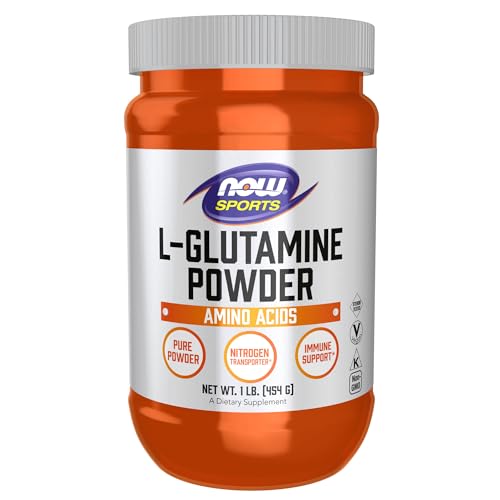
NOW Foods L-Glutamine Powder (1 lb)
Best ValueNOW Foods · Gut barrier repair and intestinal lining support
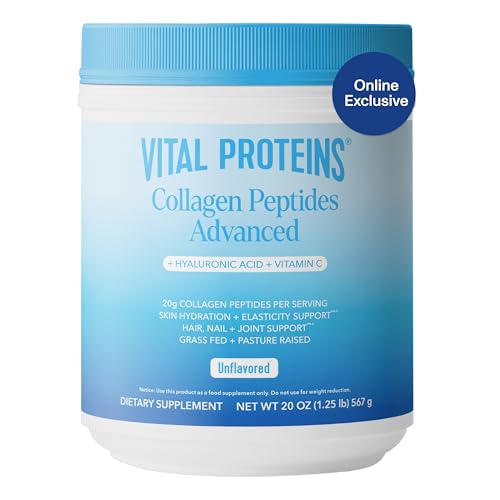
Vital Proteins Collagen Peptides (20 oz)
Best for Gut LiningVital Proteins · Daily gut lining support and digestive symptom reduction
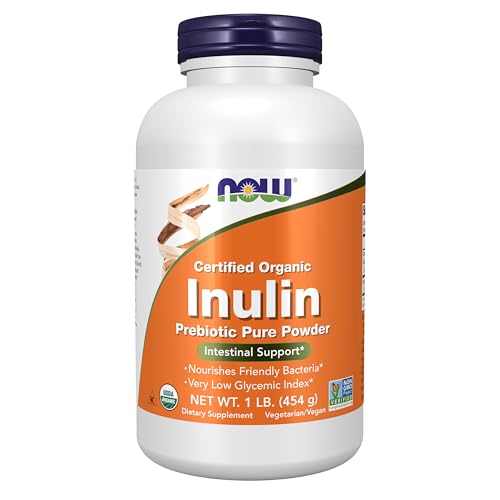
NOW Foods Organic Inulin Prebiotic Powder (1 lb)
Best PrebioticNOW Foods · Feeding beneficial gut bacteria during microbiome restoration
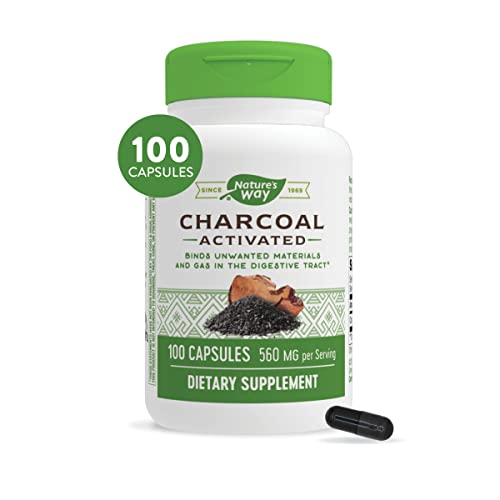
Nature's Way Activated Charcoal (560 mg)
Best for Short-Term Bloating ReliefNature's Way · Temporary toxin binding and bloating reduction (3–7 days max)
Oregano Oil Softgels (for SIBO/Dysbiosis — Medical Supervision Required)
Best Antimicrobial (If Diagnosed)Oregano Oil · Targeted antimicrobial support for diagnosed SIBO or dysbiosis
Read the detailed review cards below before opening any retailer link
Top Recommended Products
Renew Life
Renew Life Ultimate Flora Extra Care 50 Billion
This is one of the most trusted multi-strain probiotics with delayed-release technology ensuring the bacteria actually reach your intestines alive — critical for gut detox protocols.
Avantaje
- + 12 clinically studied strains
- + high CFU count
- + delayed-release for survival past stomach acid
- + shelf-stable
Dezavantaje
- - Higher price point than basic probiotics
- - may cause temporary bloating when starting
De ce am inclus acest element: This is one of the most trusted multi-strain probiotics with delayed-release technology ensuring the bacteria actually reach your intestines alive — critical for gut detox protocols.
Link-ul de retail deschide Amazon după detaliile de revizuire de mai sus
NOW Foods
NOW Foods L-Glutamine Powder (1 lb)
L-glutamine is the single most important supplement for gut lining repair, and NOW Foods delivers pharmaceutical-grade quality at an unbeatable price per serving.
Avantaje
- + Pure L-glutamine with no additives
- + excellent value per serving
- + flavorless and mixes easily
- + clinically studied dosage
Dezavantaje
- - Requires measuring (no pre-portioned servings)
- - plain powder format
De ce am inclus acest element: L-glutamine is the single most important supplement for gut lining repair, and NOW Foods delivers pharmaceutical-grade quality at an unbeatable price per serving.
Link-ul de retail deschide Amazon după detaliile de revizuire de mai sus
Vital Proteins
Vital Proteins Collagen Peptides (20 oz)
Studies show 93% of participants experienced reduced bloating with daily collagen peptide supplementation — Vital Proteins is the gold standard for quality and sourcing.
Avantaje
- + Grass-fed and pasture-raised bovine
- + dissolves in hot or cold liquids
- + flavorless
- + clinically backed for digestive symptom reduction
Dezavantaje
- - Higher cost per serving than some collagen brands
- - bovine source only (not marine)
De ce am inclus acest element: Studies show 93% of participants experienced reduced bloating with daily collagen peptide supplementation — Vital Proteins is the gold standard for quality and sourcing.
Link-ul de retail deschide Amazon după detaliile de revizuire de mai sus
NOW Foods
NOW Foods Organic Inulin Prebiotic Powder (1 lb)
Inulin is one of the best-studied prebiotics for selectively feeding Bifidobacterium and Lactobacillus species — exactly the bacteria you're trying to cultivate during a gut detox.
Avantaje
- + Organic inulin from chicory root
- + excellent value
- + supports SCFA production
- + mixes easily into drinks
Dezavantaje
- - Can cause gas and bloating if dose is increased too fast
- - mild sweet taste
De ce am inclus acest element: Inulin is one of the best-studied prebiotics for selectively feeding Bifidobacterium and Lactobacillus species — exactly the bacteria you're trying to cultivate during a gut detox.
Link-ul de retail deschide Amazon după detaliile de revizuire de mai sus
Nature's Way
Nature's Way Activated Charcoal (560 mg)
For short-term relief during the initial phase of a gut detox, activated charcoal can reduce bloating and gas — just remember it's a temporary tool, not a daily supplement.
Avantaje
- + Affordable
- + effective short-term binder
- + easy dosing
- + well-known brand
Dezavantaje
- - Must take 2 hours apart from medications and supplements
- - short-term use only
- - can cause constipation
De ce am inclus acest element: For short-term relief during the initial phase of a gut detox, activated charcoal can reduce bloating and gas — just remember it's a temporary tool, not a daily supplement.
Link-ul de retail deschide Amazon după detaliile de revizuire de mai sus
Oregano Oil
Oregano Oil Softgels (for SIBO/Dysbiosis — Medical Supervision Required)
Oregano oil is one of the most effective natural antimicrobials for SIBO — but only use it under medical supervision with a confirmed diagnosis.
Avantaje
- + Clinically studied antimicrobial
- + effective against bacterial overgrowth
- + natural alternative to rifaximin
Dezavantaje
- - Requires medical diagnosis before use
- - can disrupt beneficial bacteria
- - not for long-term use
- - strong taste if liquid form
De ce am inclus acest element: Oregano oil is one of the most effective natural antimicrobials for SIBO — but only use it under medical supervision with a confirmed diagnosis.
Link-ul de retail deschide Amazon după detaliile de revizuire de mai sus
Here's something most people don't realize: roughly 70% of your immune system lives in your gut. That's not a wellness talking point — it's established immunology. Your gastrointestinal tract houses around 100 trillion microorganisms, collectively called the gut detox microbiome, and they do far more than help you digest last night's dinner. They produce neurotransmitters, regulate inflammation, synthesize vitamins, and essentially run a significant chunk of your metabolic machinery.
So when things go sideways — bloating after every meal, brain fog that won't lift, skin breakouts that seem disconnected from everything, fatigue you can't explain — your gut is often the place to look first. That's where a gut detox protocol comes in. And no, I'm not talking about juice cleanses or colon flushes. Those are... not it.
What I am talking about is a structured, evidence-based approach to resetting your digestive system: identifying food triggers through elimination, restoring beneficial bacteria with targeted probiotics, and repairing your intestinal lining with specific nutrients. This guide walks you through every step — what to do, when to do it, and what to absolutely avoid.
- An elimination diet is the single most effective gut detox strategy, identifying food sensitivities in up to 70% of cases within 3–4 weeks
- Multi-strain probiotics (10–50 billion CFU) with Lactobacillus and Bifidobacterium strains help restore microbial diversity after disruption
- L-glutamine (5–10 g daily) is the preferred fuel for intestinal cells and supports gut barrier repair according to a 2024 meta-analysis
- Fiber intake should reach 25–35 g daily, but increase gradually — jumping too fast causes the bloating you're trying to fix
- Activated charcoal and binders are short-term tools only (3–7 days max) — they deplete nutrients and bind medications with prolonged use
- Harsh cleanses, colonics, detox teas, and extended juice fasts are unnecessary and can disrupt your microbiome further
- Antimicrobials like oregano oil or berberine require a medical diagnosis (SIBO, candida) — do not self-prescribe
- Lifestyle factors — stress management, 7–9 hours of sleep, and 150 minutes of weekly exercise — are as important as any supplement
What Do You Need to Know Before Starting a Gut Detox Protocol?
A gut detox protocol is a structured 6–8 week approach to removing dietary irritants, restoring beneficial bacteria, and repairing your intestinal lining. It's appropriate for anyone experiencing persistent bloating, food sensitivities, skin issues, or unexplained fatigue — but it requires patience and a step-by-step approach rather than aggressive cleansing.
Who this protocol is for:
- People with chronic bloating, gas, or irregular bowel movements
- Anyone experiencing brain fog, fatigue, or skin problems potentially linked to gut health
- Those recovering from antibiotic use (which disrupts beneficial bacteria)
- Anyone who suspects food sensitivities but hasn't identified triggers
Who should see a doctor first:
- Blood in stool, severe abdominal pain, unexplained weight loss, or fever — these need immediate medical evaluation
- Suspected SIBO, candida overgrowth, IBD, or celiac disease — these require proper diagnosis
Expected timeline: The full protocol runs approximately 8 weeks — 3–4 weeks of elimination, followed by 4+ weeks of strategic reintroduction and restoration. Most people notice initial improvements within the first 2 weeks.
What you'll need: A food diary, a quality multi-strain probiotic, L-glutamine powder, collagen peptides, and a commitment to cooking whole foods. No expensive kits or dramatic cleanses required.
Step 1: How Do You Start an Elimination Diet to Identify Gut Triggers?
The elimination diet is the foundation of any evidence-based gut detox. Research shows it identifies food sensitivities in approximately 70% of cases — making it the single most effective strategy for pinpointing what's causing your symptoms (StatPearls, Elimination Diets [1]).
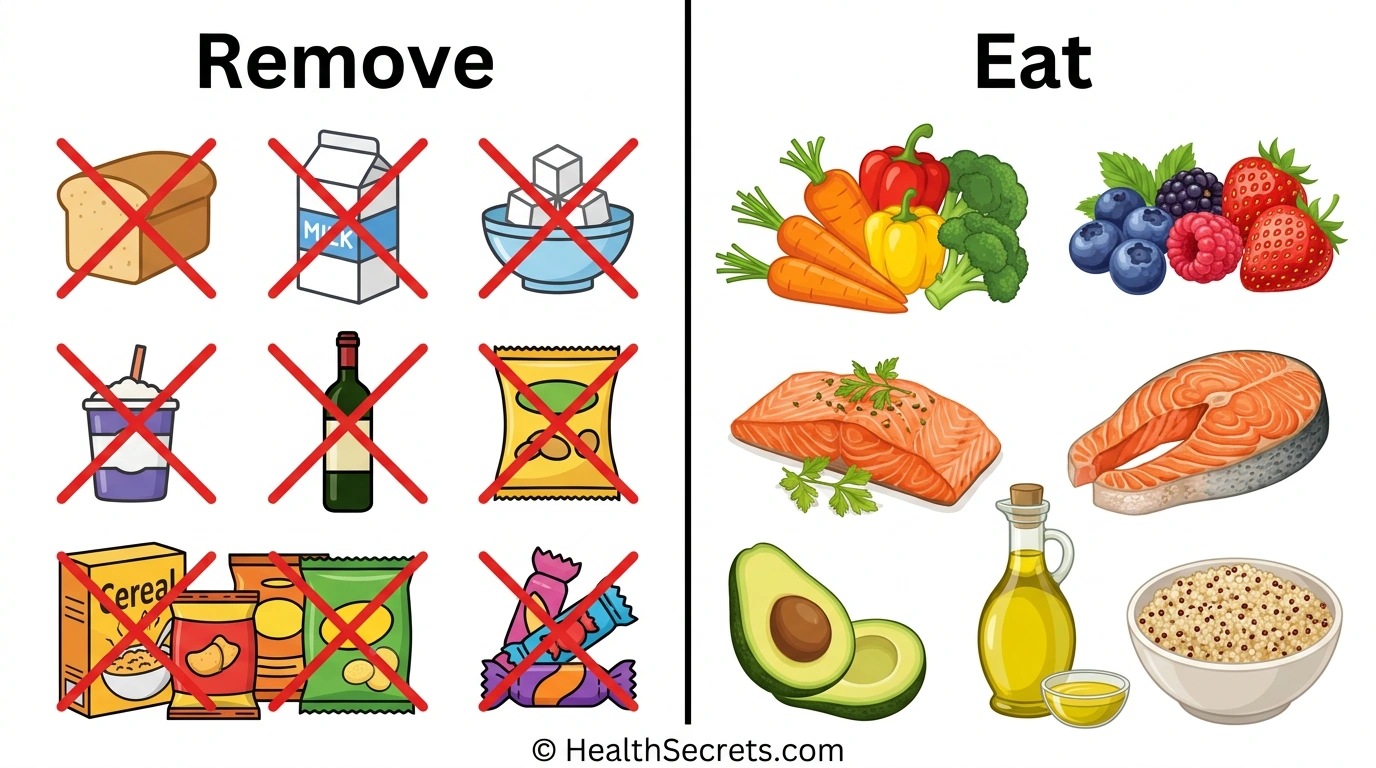
Phase 1 — Remove Common Triggers (3–4 Weeks)
Strip your diet down to foods that rarely cause reactions:
Remove these foods completely:
- Gluten: wheat, barley, rye (bread, pasta, baked goods)
- Dairy: milk, cheese, yogurt (lactose and casein are common irritants)
- Refined sugar and alcohol: both feed harmful bacteria and damage gut lining
- Processed foods: additives and preservatives disrupt microbial balance
- Soy, eggs, corn, nightshades: less common but significant triggers for some
Eat these instead:
- Vegetables (leafy greens, cruciferous, root vegetables — skip nightshades initially)
- Low-sugar fruits (berries, apples, pears)
- Clean proteins (grass-fed meat, wild-caught fish, poultry)
- Healthy fats (olive oil, avocado, coconut oil, nuts, seeds)
- Gluten-free grains (rice, quinoa, millet, buckwheat)
Keep a detailed food diary. Track everything you eat alongside symptoms — bloating, energy levels, skin changes, mood, bowel movements. Patterns become obvious surprisingly quickly (Ohio State, Elimination Diets).
Step 2: How Do You Restore Your Gut Microbiome with Probiotics and Fermented Foods?
Probiotics introduce beneficial bacteria directly into your digestive tract, helping rebalance a microbiome disrupted by poor diet, stress, or antibiotics. Multi-strain formulas containing Lactobacillus and Bifidobacterium species are the most well-studied for gut restoration ([2]).

Choosing the right probiotic:
- CFU count: 10–50 billion CFU daily (start at the lower end if you're sensitive)
- Strain diversity: Look for 5–15 strains including L. rhamnosus GG, L. plantarum, L. acidophilus, B. longum, and B. lactis
- Specific benefits: L. rhamnosus GG supports immune function and diarrhea recovery; L. plantarum strengthens tight junctions; B. longum reduces anxiety and inflammation
Prebiotics are non-digestible fibers that feed your beneficial bacteria — think of probiotics as planting seeds and prebiotics as the fertilizer. Sources include chicory root, garlic, onions, leeks, asparagus, and bananas. A dedicated prebiotic supplement can also help.
- Sauerkraut and kimchi (raw, unpasteurized — pasteurized versions lack live cultures)
- Kombucha, miso, tempeh
- Kefir (if dairy is tolerated — try coconut kefir as an alternative)
Duration: Continue probiotics for a minimum of 4–8 weeks, then transition to a maintenance dose of 10–20 billion CFU daily ongoing.
Step 3: How Do You Repair Your Gut Lining with Healing Nutrients?
Repair is where you actively rebuild intestinal barrier integrity — the tight junctions that keep toxins, undigested food particles, and bacteria from leaking into your bloodstream. A compromised barrier drives systemic inflammation, food sensitivities, and immune dysfunction.
- L-Glutamine (5–10 g daily): The preferred fuel source for enterocytes (intestinal lining cells). A 2024 systematic review and meta-analysis confirmed that glutamine supplementation significantly reduces intestinal permeability ([6]). Take as powder dissolved in water, ideally on an empty stomach.
- Bone Broth (1–2 cups daily): Contains collagen, gelatin, glycine, proline, and glutamine — amino acids that support intestinal lining repair. A 2026 review from Mayo Clinic researchers documented its anti-inflammatory properties and gut barrier-strengthening effects ([8]).
- Collagen Peptides (10–20 g daily): A clinical study found that 93% of participants experienced reduced digestive symptoms — including bloating — after daily collagen supplementation ([9]). Mix into smoothies, coffee, or water.
Additional support:
- Omega-3 (2–4 g EPA+DHA) — reduces gut inflammation (omega-3 guide)
- Zinc (15–30 mg daily) — supports tight junction integrity
- Vitamin D (2,000–4,000 IU daily) — immune modulation and gut barrier support
- Aloe vera juice (¼ cup daily, inner leaf gel) — soothes inflamed gut lining
Step 4: How Do You Increase Fiber for Better Gut Elimination?
Fiber is essential for regular elimination, feeding beneficial bacteria, and producing short-chain fatty acids (SCFAs) like butyrate — the primary energy source for colon cells. Your target is 25–35 g daily, but getting there requires a gradual approach to avoid worsening symptoms.

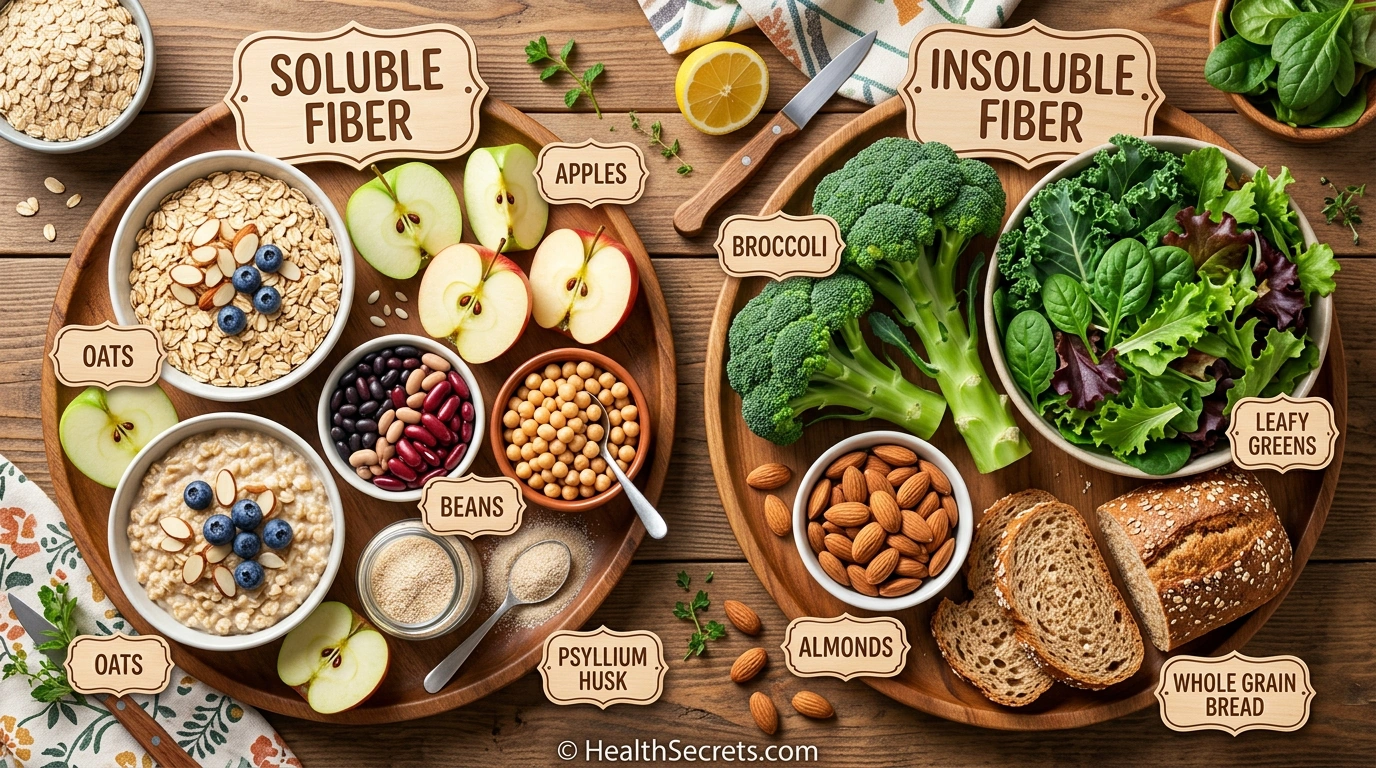
Soluble fiber (10–15 g daily): Dissolves in water, forms a gel, and gets fermented by gut bacteria into SCFAs. Sources: oats, apples, beans, psyllium husk, sweet potatoes.
Insoluble fiber (15–20 g daily): Bulks stool and prevents constipation. Sources: vegetables, whole grains, nuts, seeds, leafy greens.
The critical rule — increase gradually:
- Week 1–2: 15–20 g daily (if currently eating low fiber)
- Week 3–4: Add 5 g per week
- Week 5+: Reach and maintain 25–35 g daily
Jumping straight to 35 g when you've been eating 12 g will cause the exact bloating and gas you're trying to eliminate. Your gut bacteria need time to adjust. And hydration is non-negotiable — drink 8–10 cups of water daily. Fiber absorbs water; without adequate hydration, constipation follows.
Step 5: How Do Hydration and Lifestyle Changes Support Your Gut Detox?
Supplements and diet get the spotlight, but lifestyle factors are equally critical for gut restoration. Chronic stress, poor sleep, and sedentary behavior directly impair digestive function and microbial diversity ([15]).

- Hydration (8–10 cups daily): Supports elimination, prevents constipation, and helps flush metabolic waste. Herbal teas — ginger, peppermint, chamomile — soothe the digestive tract. Minimize caffeine and alcohol during the protocol.
- Stress management: Chronic stress reduces gastric acid, slows gut motility, and increases inflammation. Practice meditation (20 min daily), yoga (3–5x/week), or breathwork (4-7-8 technique) to activate the parasympathetic "rest-and-digest" response.
- Sleep (7–9 hours nightly): Your gut repairs during deep sleep — cellular regeneration and immune function peak overnight. Circadian rhythm disruption directly alters microbiome composition.
- Exercise (150 min/week): Moderate aerobic exercise improves gut motility, reduces constipation, and increases microbial diversity. Walking, cycling, or swimming are ideal.
- Chew thoroughly (20–30 chews per bite): Mechanical breakdown aids digestion, reduces bloating, and stimulates salivary enzymes. This sounds basic, but it's one of the most underrated digestive interventions.
Step 6: Should You Use Antimicrobials or Binders During a Gut Detox?
Antimicrobials and binders are powerful but situational tools — they are NOT for everyone. Using them without proper testing can do more harm than good by disrupting your existing microbial balance. This step is conditional.
Antimicrobials (Only If Medically Diagnosed)
These target bacterial or fungal overgrowth in specific, diagnosed conditions:
- Oregano oil: 200 mg 3x daily (standardized to 70–80% carvacrol), 2–4 weeks — for SIBO, dysbiosis
- Berberine: 500 mg 3x daily, 2–4 weeks — antimicrobial plus blood sugar support
- Caprylic acid: 1,000 mg 3x daily — antifungal specifically for candida overgrowth
Requires: Breath test for SIBO, comprehensive stool analysis for dysbiosis/candida. Do NOT self-diagnose — symptoms overlap significantly between conditions.
Binders (Short-Term Only — 3–7 Days Max)
- Activated charcoal: 500–1,000 mg as needed for severe bloating or gas
- Bentonite clay: 1–2 tsp in water, 1–2x daily ([7])
Critical safety rules:
- Take binders 2 hours apart from all medications and supplements (they bind everything)
- Short-term use ONLY — long-term use depletes essential nutrients
- Drink extra water (binders absorb it and can cause constipation)
- Most people do NOT need binders — your liver and kidneys handle detoxification naturally
Step 7: How Do You Reintroduce Foods After an Elimination Diet?
Reintroduction is where you identify your personal triggers with precision. After 3–4 weeks of elimination, your body has had time to calm down — now you systematically test one food at a time to see what provokes a reaction.

Reintroduction protocol:
- Choose one food (start with least likely triggers)
- Eat moderate amounts — 2–3 servings in one day
- Monitor for 3–5 days — bloating, gas, fatigue, skin changes, mood shifts, bowel changes
- No symptoms? That food is likely tolerated — add it back
- Symptoms return? That's a trigger — remove it long-term or rotate occasionally
- Wait 3–5 days with clean eating before testing the next food
Suggested reintroduction order (least to most likely triggers):
- Eggs → 2. Legumes → 3. Gluten-free grains → 4. Nightshades → 5. Soy → 6. Corn → 7. Dairy → 8. Gluten → 9. Refined sugar (last — most inflammatory)
Continue probiotics, gut-healing foods, fiber, and hydration throughout reintroduction. This phase typically takes 4–6 weeks to complete thoroughly.
What Are the Most Common Gut Detox Mistakes to Avoid?
The biggest gut detox mistakes aren't about what you forget to add — they're about what you shouldn't be doing in the first place. Avoiding these pitfalls can mean the difference between genuine healing and making things worse.
- Mistake 1: Using harsh cleanses. Colonics, enemas, and stimulant laxatives flush out beneficial bacteria, cause electrolyte imbalances, and create bowel dependency. Your colon eliminates waste naturally — it doesn't need power-washing ([18]).
- Mistake 2: Relying on juice cleanses. Inadequate protein, massive blood sugar spikes from fruit juice, and zero fiber. A whole-foods elimination diet provides complete nutrition and identifies triggers.
- Mistake 3: Detox teas with senna or cascara sagrada. These are stimulant laxatives that cause dependency and electrolyte depletion. Hard pass.
- Mistake 4: Self-prescribing antimicrobials. Oregano oil and berberine are powerful — using them without a proper diagnosis can wipe out beneficial bacteria you're trying to protect.
- Mistake 5: Increasing fiber too fast. Going from 12 g to 35 g overnight guarantees bloating and gas. Increase by 5 g per week.
- Mistake 6: Skipping the food diary. Without tracking, reintroduction is guesswork. Write everything down — it takes 2 minutes per meal.
- Mistake 7: Expecting overnight results. Gut healing takes 6–8 weeks minimum. The microbiome didn't get disrupted overnight, and it won't recover overnight either.
Is a Gut Detox Protocol Safe? When Should You Stop and See a Doctor?
When done correctly — focusing on elimination, probiotics, and gut-healing nutrients — a gut detox protocol is very safe for most adults. The approach outlined here uses well-researched, food-based strategies rather than aggressive interventions. That said, there are clear situations that require medical attention.
Stop the protocol and see a doctor if:
- Symptoms worsen significantly after starting (may indicate an underlying condition)
- You experience blood in your stool (bright red or black tarry — seek immediate care)
- Severe abdominal pain that doesn't resolve
- Unexplained weight loss greater than 5% of body weight
- Fever accompanying digestive symptoms
- Symptoms persist beyond 4 weeks despite following the protocol
Conditions that require medical diagnosis first:
- IBD (Crohn's disease, ulcerative colitis) — chronic inflammation requiring medication
- IBS — requires specific treatment protocols like low-FODMAP
- SIBO — needs breath test confirmation before antimicrobials
- Celiac disease — requires blood test and endoscopy with biopsy
- Candida overgrowth — needs stool test confirmation
Pregnancy and nursing: Use culinary amounts of gut-healing foods (bone broth, fermented foods) but consult your provider before supplementing with L-glutamine, berberine, or high-dose anything.
Medication interactions: Activated charcoal and bentonite clay bind medications — always take 2+ hours apart. Berberine can interact with blood sugar and blood pressure medications.
What Should You Do First to Start Your Gut Detox Protocol?
The most effective first step is beginning the elimination diet this week — remove the top triggers (gluten, dairy, sugar, alcohol, processed foods) and start your food diary. From there, layer in probiotics and gut-healing nutrients gradually over the first two weeks.
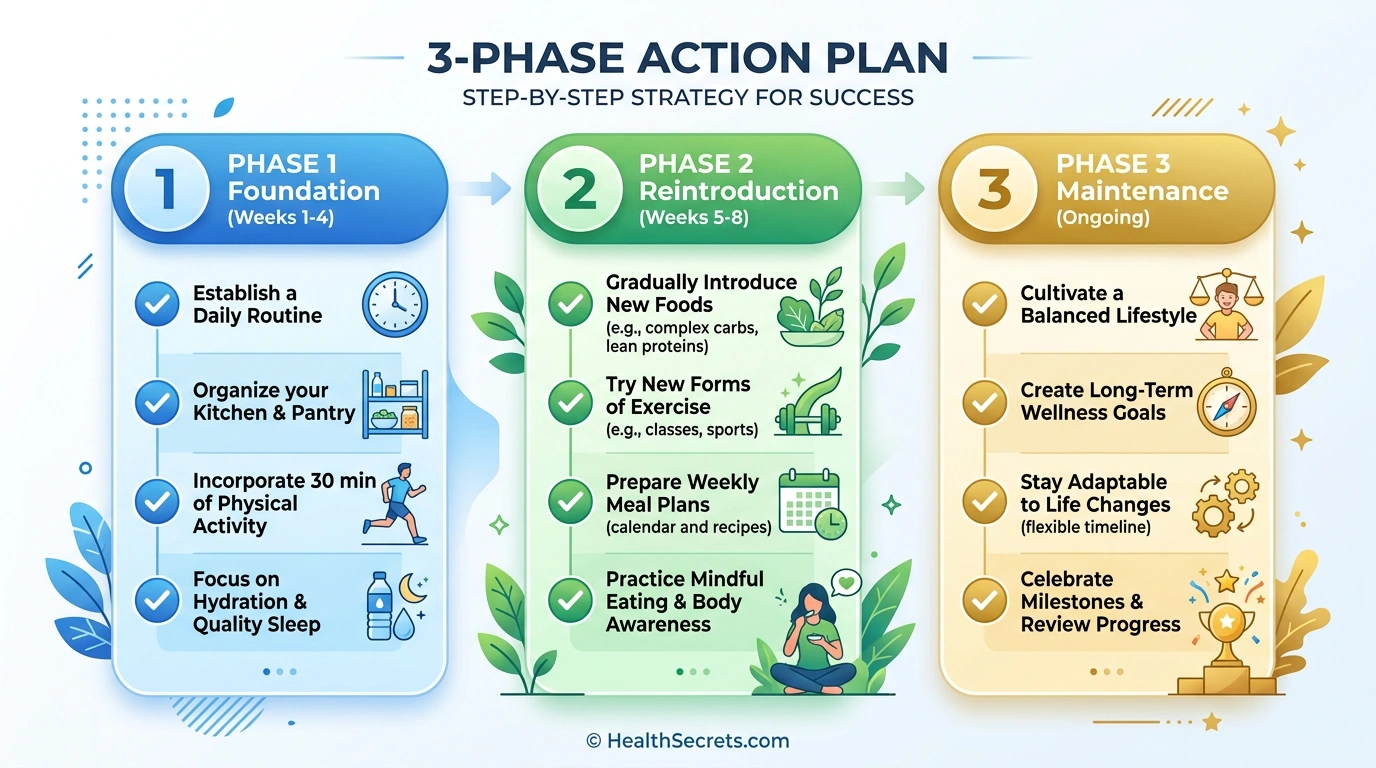
Phase 1: Foundation (Week 1–4)
- Remove gluten, dairy, sugar, alcohol, processed foods, soy, eggs, corn, nightshades
- Start food diary — track meals and symptoms daily
- Begin probiotic (10–50 billion CFU multi-strain daily)
- Add L-glutamine (5–10 g daily) and bone broth (1–2 cups daily)
- Start collagen peptides (10–20 g daily)
- Gradually increase fiber toward 25–35 g daily
- Hydrate: 8–10 cups water daily
Phase 2: Reintroduction (Week 5–8)
- Reintroduce one food every 3–5 days in order: eggs → legumes → grains → nightshades → soy → corn → dairy → gluten → sugar
- Monitor and record symptoms for each food
- Continue all supplements and gut-healing foods
- Identify and eliminate personal trigger foods
Phase 3: Maintenance (Ongoing)
- Continue probiotics at maintenance dose (10–20 billion CFU daily)
- Maintain fiber at 25–35 g daily with adequate hydration
- Include fermented foods daily (sauerkraut, kimchi, kefir)
- Keep gut-healing foods in regular rotation (bone broth, collagen, omega-3)
- Manage stress, sleep 7–9 hours, exercise 150 min/week
- Consider periodic gut reset 1–2x per year if needed

