 Pin It
 Postbiotics: The Next Frontier in Gut Health
Who This Is For
Best for readers who want a grounded introduction to gut health.
Who Should Be Careful
Not for emergency decisions or personalized treatment planning.
Affiliate Disclaimer | This article may contain affiliate links to products we trust. If you choose to buy through them, we may earn a small commission at no extra cost to you. Full disclosure
Medical Disclaimer | For informational purposes only. Not a substitute for professional medical advice. Read full disclaimer
Key Takeaways
BodyBio Sodium Butyrate 100ct
Best OverallBodyBio Sodium · Direct butyrate supplementation for gut barrier repair and inflammation reduction
BodyBio Cal-Mag Butyrate 100ct
Best for Sensitive StomachsBodyBio Cal-Mag · People who experience digestive sensitivity with sodium butyrate
Healthy Gut Tributyrin-X 90ct
Best BioavailabilityHealthy Gut · Maximum butyrate delivery to the colon with superior absorption
NOW Foods Organic Inulin Prebiotic 1lb
Best Prebiotic SCFA BoosterNOW Foods · Naturally increasing butyrate production by feeding beneficial bacteria
NOW Foods L-Glutamine Powder 1lb
Best Complementary SupplementNOW Foods · Supporting gut barrier repair alongside postbiotic supplementation
Read the detailed review cards below before opening any retailer link
You've probably heard of probiotics and prebiotics. But there's a third category of gut health compounds that scientists are calling the most exciting development in microbiome research in decades: postbiotics.
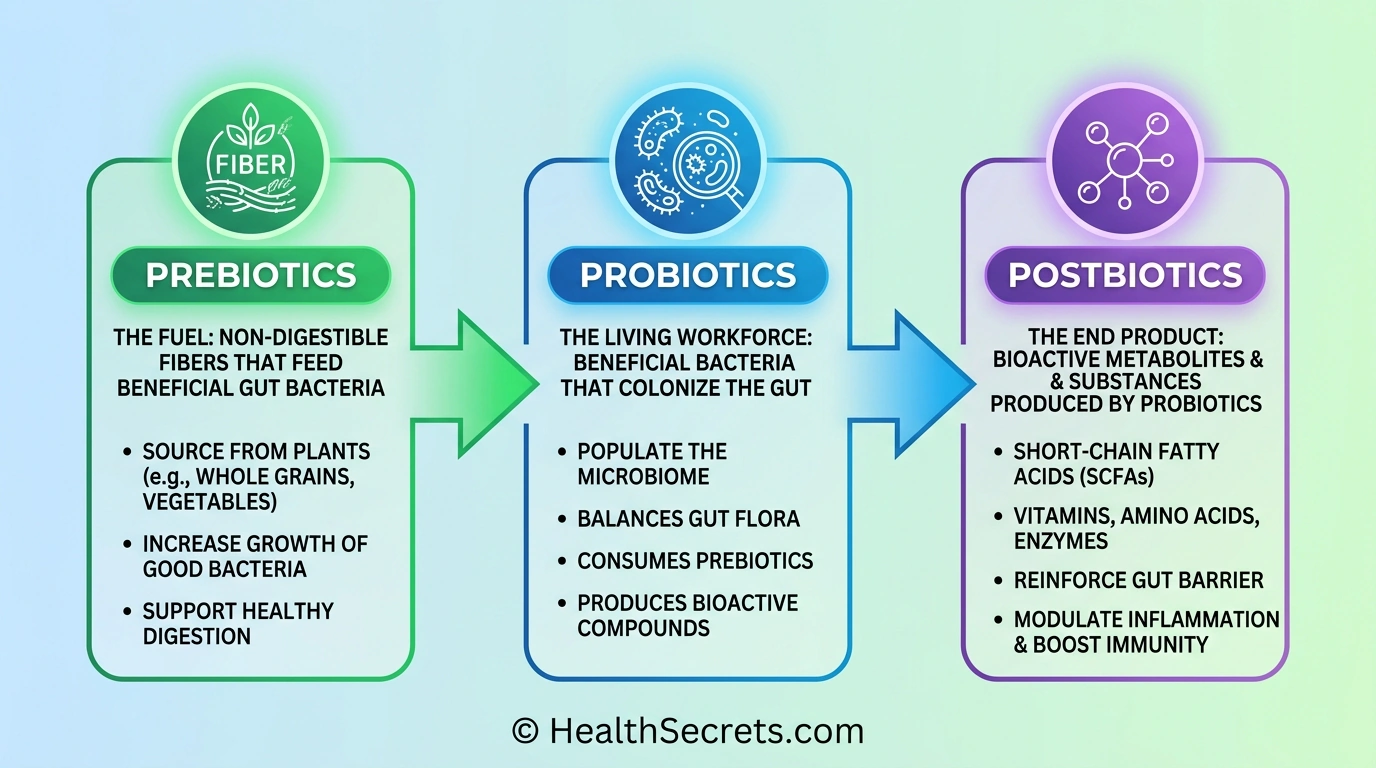
Here's the twist — postbiotics aren't alive. They're the beneficial byproducts that your gut bacteria produce when they ferment dietary fiber. Think of probiotics as the factory workers, prebiotics as the raw materials, and postbiotics as the finished products that actually do the work inside your body. And it turns out, many of the health benefits we've been attributing to probiotics may actually come from the postbiotics they produce.
For foundational context, you may want to read our complete guide to gut health, our guide on probiotics for gut health, and our article on prebiotics vs probiotics.
What Are Postbiotics and Why Are They Considered the Future of Gut Health?
Postbiotics are bioactive compounds — including metabolites, cell wall fragments, and inactivated microorganisms — produced by beneficial gut bacteria that deliver measurable health benefits without requiring live organisms. They represent a paradigm shift in microbiome science because they offer the therapeutic benefits of probiotics with greater stability, consistency, and safety.
The International Scientific Association for Probiotics and Prebiotics (ISAPP) published a consensus definition in 2021 defining postbiotics as "a preparation of inanimate microorganisms and/or their components that confers a health benefit on the host." This definition requires that dead microbes or microbial cell structures be present, with or without metabolic end products.
How Do Postbiotics Fit Into the Gut Health Ecosystem?
The gut health ecosystem works as a chain: prebiotics (dietary fiber) feed probiotics (beneficial bacteria), which produce postbiotics (bioactive compounds). This means postbiotics are the final functional output of a healthy microbiome. When you eat fiber-rich foods, your gut bacteria ferment that fiber and produce short-chain fatty acids, vitamins, antimicrobial peptides, and other compounds that directly benefit your health.
What Are the Main Types of Postbiotics?
| Postbiotic Type | Examples | Primary Benefits |
|---|---|---|
| Short-chain fatty acids | Butyrate, acetate, propionate | Gut barrier, anti-inflammatory, energy |
| Cell wall components | Peptidoglycan, lipoteichoic acids | Immune modulation |
| Bacterial enzymes | Lactase, proteases, lipases | Digestive support |
| Metabolites | Vitamins (B12, K2), bacteriocins, GABA | Nutrition, antimicrobial, neurological |
| Heat-killed bacteria | Inactivated Lactobacillus, Bifidobacterium | Immune training, gut barrier support |
How Do Postbiotics Work Inside Your Body?
Postbiotics work through multiple mechanisms including direct interaction with intestinal cells, immune system modulation, metabolic regulation, and gut-brain axis signaling. Unlike probiotics, which must survive stomach acid and colonize the gut to function, postbiotics are immediately bioactive upon consumption.
How Does Butyrate Fuel and Protect the Colon?
Butyrate is the primary energy source for colonocytes, providing approximately 70% of their energy needs. It strengthens tight junctions between intestinal cells, stimulates mucus production, reduces inflammation by inhibiting NF-κB signaling, and acts as a histone deacetylase (HDAC) inhibitor — a mechanism that regulates gene expression involved in cell growth, immune function, and cancer prevention. Research published in Gut Microbes (2024) confirmed that butyrate-producing bacteria play a critical role in maintaining intestinal homeostasis.
How Do Postbiotics Modulate the Immune System?
Postbiotics interact with immune cells in the gut-associated lymphoid tissue (GALT), which houses approximately 70% of your immune system. Cell wall components like peptidoglycan bind to pattern recognition receptors on immune cells, training the immune system to distinguish between harmful pathogens and beneficial microbes. This helps balance Th1/Th2 immune responses and promotes regulatory T-cell development — reducing both autoimmune overreaction and infection susceptibility.

What Makes Postbiotics More Stable Than Probiotics?
| Feature | Probiotics | Postbiotics |
|---|---|---|
| Alive? | Yes (must be viable) | No (inactivated) |
| Refrigeration | Often required | Not required |
| Stomach acid survival | Variable (strain-dependent) | Not applicable (already processed) |
| Shelf stability | Limited | Excellent |
| Dosing consistency | Viability varies over time | Consistent and predictable |
What Are the Key Health Benefits of Postbiotics?
Postbiotics deliver a wide range of health benefits including gut barrier repair, systemic inflammation reduction, immune regulation, metabolic optimization, and neuroprotective effects. The evidence is strongest for butyrate and other SCFAs, with growing research supporting heat-killed probiotics and bacterial metabolites.
Can Postbiotics Help Repair Leaky Gut?
Yes. Butyrate directly strengthens the intestinal barrier by upregulating tight junction proteins (claudin-1, occludin, ZO-1) and stimulating mucus-producing goblet cells. A 2023 systematic review found that butyrate supplementation significantly improved markers of intestinal permeability in both animal models and human trials. This makes postbiotics particularly relevant for people with leaky gut syndrome.
Do Postbiotics Reduce Chronic Inflammation?
SCFAs — especially butyrate — are potent anti-inflammatory agents. They inhibit NF-κB activation, reduce pro-inflammatory cytokines (TNF-α, IL-6, IL-1β), and promote anti-inflammatory IL-10 production. This systemic anti-inflammatory effect extends beyond the gut to cardiovascular, metabolic, and neurological health.
Can Postbiotics Support Mental Health Through the Gut-Brain Axis?
Emerging research suggests SCFAs influence brain function through the vagus nerve and by modulating neurotransmitter production. Gut bacteria produce precursors to serotonin, GABA, and dopamine — all of which are postbiotic metabolites. A 2024 clinical trial found that butyrate supplementation improved symptoms of depression in adults with mild-to-moderate depressive disorder.
Are Postbiotics Safer Than Probiotics for Immunocompromised People?
Yes. Because postbiotics contain no live organisms, there is zero risk of bacterial translocation — a rare but serious complication where live probiotic bacteria cross the intestinal barrier and enter the bloodstream. This makes postbiotics a safer option for people with compromised immune systems, critically ill patients, and those with central venous catheters.
Are There Any Risks or Side Effects of Postbiotics?
Postbiotics are generally well-tolerated with a favorable safety profile. Side effects are rare and typically mild — primarily initial digestive adjustment symptoms like mild gas or bloating that resolve within days. The main risk is assuming postbiotics can replace medical treatment for serious conditions.

- Mild digestive changes — temporary gas or bloating when starting butyrate supplements (usually resolves within 3–5 days)
- Dose-dependent effects — very high doses of SCFAs may cause loose stools; start low and increase gradually
- Drug interactions — butyrate may enhance the effects of certain anti-inflammatory medications; consult your healthcare provider
- Quality variability — the postbiotic supplement market is less regulated than pharmaceuticals; choose products with third-party testing
- Limited long-term data — while short-term safety is well-established, some applications are still being researched
People with severe inflammatory bowel disease, those who are pregnant or breastfeeding, and anyone on immunosuppressive therapy should consult a healthcare provider before starting postbiotic supplements.
How Should You Use Postbiotic Supplements for Best Results?
Start with a low dose of butyrate (300–600mg daily) and gradually increase over 2–4 weeks to your target dose (up to 1,200mg daily). Take postbiotic supplements with meals for optimal absorption, maintain consistency, and allow 4–8 weeks to evaluate benefits. Combine with a high-fiber diet for synergistic effects.
What Dose of Butyrate Should You Take?
Most clinical studies use 300–1,200mg of butyrate daily. Sodium butyrate and tributyrin are the two main supplemental forms. Tributyrin (a triglyceride form) offers superior bioavailability because it survives stomach acid and delivers butyrate directly to the colon. Start with the lower end of the dosing range and increase based on tolerance.
When Should You Take Postbiotic Supplements?
Unlike probiotics, which may be sensitive to meal timing and stomach acid, postbiotics can be taken with or without food. However, taking them with meals may improve tolerability and provide digestive support benefits. Consistency matters more than timing — take them at the same time daily.
How Long Do Postbiotics Take to Work?
Most people notice digestive improvements within 1–2 weeks, with full benefits developing over 4–8 weeks. Because postbiotics are immediately bioactive (no colonization period needed), they may work faster than probiotics for some applications.
What Diet and Lifestyle Changes Boost Your Natural Postbiotic Production?
The most effective strategy for increasing postbiotic levels is eating a diverse, fiber-rich diet that feeds butyrate-producing bacteria. Aim for 25–35g of fiber daily from varied plant sources, include resistant starch foods, consume fermented foods regularly, and support your microbiome through stress management, exercise, and adequate sleep.
Which Foods Are the Best Natural Sources of Postbiotics?
Fermented foods contain both probiotics and postbiotics produced during fermentation: yogurt, kefir, sauerkraut, kimchi, miso, tempeh, and kombucha. Regularly consuming fermented foods provides a natural postbiotic boost.

Which Foods Boost Butyrate Production Most Effectively?
Resistant starch is the most potent butyrate booster. Cooked and cooled potatoes, rice, and pasta develop resistant starch through retrogradation. Other top butyrate-boosting foods include legumes, oats, green bananas, Jerusalem artichokes, garlic, and onions. Including gut-healing foods rich in both soluble and insoluble fiber creates the ideal environment for SCFA production.

What Lifestyle Habits Support Postbiotic Production?
- Exercise regularly — moderate exercise increases butyrate-producing bacteria (Faecalibacterium, Roseburia)
- Manage stress — chronic stress reduces microbial diversity and SCFA production
- Sleep 7–9 hours — sleep deprivation disrupts the microbiome within 48 hours
- Avoid unnecessary antibiotics — antibiotics decimate butyrate-producing populations
- Eat diverse plant foods — aim for 30+ different plant species per week to support microbial diversity
What Is the Best Step-by-Step Plan for Optimizing Your Postbiotic Levels?
Begin by increasing dietary fiber and fermented foods to boost natural SCFA production, then consider targeted supplementation if you have specific gut health concerns. This phased approach builds a sustainable foundation before adding supplements.
Phase 1 — Foundation (Weeks 1–2):
- Increase fiber intake to 25–35g daily from diverse plant sources
- Add one serving of fermented food daily (yogurt, kefir, sauerkraut)
- Include resistant starch foods 3–4 times per week (cooled potatoes, oats, legumes)
- Start a food and symptom journal to track changes
Phase 2 — Optimization (Weeks 3–4):
- Add a prebiotic supplement if fiber intake is difficult through diet alone
- Increase fermented food variety (add kimchi, miso, kombucha)
- Begin moderate exercise routine (30 minutes, 5x per week) if not already active
- Prioritize 7–9 hours of quality sleep
Phase 3 — Targeted Supplementation (Weeks 5–8):
- Consider butyrate supplement (start at 300–600mg daily)
- Gradually increase dose based on tolerance over 2 weeks
- Evaluate digestive symptoms, energy, and overall wellbeing
- Consult healthcare provider if managing a specific condition
Phase 4 — Maintenance (Ongoing):
- Maintain high-fiber, fermented food-rich diet
- Continue supplementation if beneficial
- Reassess every 3 months with your healthcare provider
- Track progress and adjust as needed


Top Recommended Products
BodyBio Sodium
BodyBio Sodium Butyrate 100ct
BodyBio is the most established butyrate supplement brand on the market. Sodium butyrate is the most clinically studied form, with evidence supporting gut barrier repair, anti-inflammatory effects, and microbiome support. The straightforward formulation delivers a therapeutic dose without unnecessary additives.
Pros
- + Most researched butyrate form
- + clean ingredients
- + no fillers
- + established brand with 5
- + 000+ studies cited
- + vegan-friendly
Cons
- - Characteristic butyrate odor when opening bottle
Why we included it: BodyBio is the most established butyrate supplement brand on the market. Sodium butyrate is the most clinically studied form, with evidence supporting gut barrier repair, anti-inflammatory effects, and microbiome support. The straightforward formulation delivers a therapeutic dose without unnecessary additives.
Retailer link opens on Amazon after the review details above
BodyBio Cal-Mag
BodyBio Cal-Mag Butyrate 100ct
The calcium/magnesium butyrate form is ideal for people who experience sensitivity with sodium butyrate or who want to avoid excess sodium. The mineral salts provide a buffering effect that makes this formula gentler while delivering the same butyrate benefits.
Pros
- + Gentler on digestion than sodium form
- + adds beneficial minerals
- + same therapeutic butyrate dose
- + well-tolerated
Cons
- - Slightly higher price than sodium form
Why we included it: The calcium/magnesium butyrate form is ideal for people who experience sensitivity with sodium butyrate or who want to avoid excess sodium. The mineral salts provide a buffering effect that makes this formula gentler while delivering the same butyrate benefits.
Retailer link opens on Amazon after the review details above
Healthy Gut
Healthy Gut Tributyrin-X 90ct
Tributyrin is a triglyceride form of butyrate that offers 3–5x greater bioavailability than sodium butyrate. It survives stomach acid intact and delivers butyrate directly where it's needed most — the colon. This is the premium choice for people who want maximum therapeutic impact.
Pros
- + Superior bioavailability over sodium butyrate
- + odorless
- + survives stomach acid
- + targeted colon delivery
- + 99% purity
Cons
- - Premium price point
- - softgel form not suitable for vegans
Why we included it: Tributyrin is a triglyceride form of butyrate that offers 3–5x greater bioavailability than sodium butyrate. It survives stomach acid intact and delivers butyrate directly where it's needed most — the colon. This is the premium choice for people who want maximum therapeutic impact.
Retailer link opens on Amazon after the review details above
NOW Foods
NOW Foods Organic Inulin Prebiotic 1lb
Rather than supplementing butyrate directly, inulin feeds your butyrate-producing bacteria so they manufacture SCFAs naturally. This is the most physiologically aligned approach and provides additional prebiotic benefits for microbiome diversity. Start with half a teaspoon and increase gradually.
Pros
- + Boosts natural SCFA production
- + organic certified
- + excellent value per serving
- + mild sweet taste
- + versatile mixing
Cons
- - May cause gas in sensitive individuals when starting
- - indirect postbiotic delivery
Why we included it: Rather than supplementing butyrate directly, inulin feeds your butyrate-producing bacteria so they manufacture SCFAs naturally. This is the most physiologically aligned approach and provides additional prebiotic benefits for microbiome diversity. Start with half a teaspoon and increase gradually.
Retailer link opens on Amazon after the review details above
NOW Foods
NOW Foods L-Glutamine Powder 1lb
L-glutamine and butyrate work synergistically for gut barrier repair. Butyrate fuels colonocytes while glutamine fuels small intestinal enterocytes. Together they provide comprehensive intestinal lining support — making this an ideal complement to any postbiotic protocol.
Pros
- + Primary fuel for enterocytes
- + synergistic with butyrate for gut healing
- + flexible dosing
- + excellent value
Cons
- - Not a postbiotic itself
- - complementary rather than primary
Why we included it: L-glutamine and butyrate work synergistically for gut barrier repair. Butyrate fuels colonocytes while glutamine fuels small intestinal enterocytes. Together they provide comprehensive intestinal lining support — making this an ideal complement to any postbiotic protocol.
Retailer link opens on Amazon after the review details above
Further Reading
Further Reading
"The Good Gut: Taking Control of Your Weight, Your Mood, and Your Long-Term Health"
by Justin Sonnenburg, PhD, and Erica Sonnenburg, PhD
Deep dive into SCFA science and how bacterial metabolites shape health; practical dietary strategies for microbiome optimization; evidence-based fiber recommendations; latest research on the gut-brain connection
Why it adds value here
The Sonnenburgs are leading microbiome researchers whose work on microbial-accessible carbohydrates (MACs) directly relates to postbiotic production. This book bridges the gap between cutting-edge SCFA research and everyday dietary choices.
Best for: Anyone wanting to understand how gut bacteria and their metabolites influence whole-body health
View book detailsFurther Reading
"Gut: The Inside Story of Our Body's Most Underrated Organ"
by Giulia Enders, PhD
Entertaining and scientifically accurate overview of digestive physiology; accessible explanation of gut bacteria and their products; practical tips for gut health; understanding of the gut-brain connection
Why it adds value here
This international bestseller makes complex gut microbiome science accessible without dumbing it down. It provides the foundational understanding needed to appreciate why postbiotics matter.
Best for: General readers seeking an engaging, accessible introduction to gut science and microbial metabolites
View book detailsAEO FAQ
Frequently Asked Questions
12 common questions answered
Postbiotics are the beneficial compounds that your gut bacteria produce when they digest fiber — including short-chain fatty acids, vitamins, enzymes, and antimicrobial substances. They also include heat-killed bacteria and bacterial cell components that retain health benefits. Think of them as the useful products your gut bacteria manufacture.
Prebiotics are fiber and other compounds that feed beneficial gut bacteria. Probiotics are the live beneficial bacteria themselves. Postbiotics are the bioactive compounds produced by those bacteria. They work as a chain: prebiotics fuel probiotics, which produce postbiotics.
Not necessarily better, but different. Postbiotics offer advantages in stability, safety, and dosing consistency. They don't require refrigeration, survive stomach acid, and are safer for immunocompromised individuals. However, probiotics provide unique benefits like colonization and microbiome diversity. The best approach often combines both.
Butyrate (butyric acid) is a short-chain fatty acid and the primary energy source for colon cells. It strengthens the gut barrier, reduces inflammation, supports immune function, and may protect against colon cancer. It's produced naturally when gut bacteria ferment dietary fiber, or it can be taken as a supplement.
Yes. Fermented foods like yogurt, kefir, sauerkraut, kimchi, miso, and kombucha contain postbiotics produced during fermentation. You can also boost natural postbiotic production by eating high-fiber foods, resistant starch, and polyphenol-rich foods that feed butyrate-producing bacteria.
Most people notice digestive improvements within 1–2 weeks. Full benefits typically develop over 4–8 weeks. Because postbiotics are immediately bioactive (no gut colonization period needed), they may work faster than probiotics for certain applications like inflammation reduction.
Postbiotics have an excellent safety profile. They contain no live organisms, so there's no risk of bacterial translocation. Side effects are rare and typically limited to mild, temporary digestive changes. However, people with serious medical conditions should consult their healthcare provider before starting any supplement.
Tributyrin offers superior bioavailability because it survives stomach acid and delivers butyrate directly to the colon. Sodium butyrate is more studied and less expensive. Both are effective — tributyrin is preferred for targeted colon delivery, while sodium butyrate works well for general gut support at a lower price point.
Yes, and this combination may be synergistic. Probiotics contribute to ongoing postbiotic production in the gut, while supplemental postbiotics provide immediate bioactive compounds. Many researchers now recommend a comprehensive approach combining prebiotics, probiotics, and postbiotics.
Yes. A systematic review of 40 randomized clinical trials found that heat-killed probiotics were about as effective as living probiotics for preventing and treating disease. Dead probiotic cells retain cell wall components and metabolites that modulate the immune system and support gut health.
Eat more resistant starch (cooked and cooled potatoes, rice, legumes), increase overall fiber intake to 25–35g daily, consume fermented foods regularly, eat polyphenol-rich foods (berries, green tea, dark chocolate), and maintain microbial diversity through a varied plant-based diet with 30+ different plant species weekly.
Certain postbiotics have been studied in children, particularly fermented infant formulas containing inactivated bacteria. These have shown benefits for immune development and reducing common infections. However, postbiotic supplements for children should only be used under pediatric guidance.
Was this article helpful?
Written & Reviewed By Experts
Author
Dr. David Kim
Medical Reviewer
Dr. Sarah Chen
All content is evidence-based, peer-reviewed by qualified professionals, and updated regularly. Our editorial team follows strict guidelines for accuracy and transparency.
References & Citations
18 sources cited
Medical Disclaimer
This article is for informational purposes only and does not constitute medical advice. Read the full medical disclaimer. Always consult with a qualified healthcare provider before starting any new supplement, treatment, or major dietary change.