
Quercetin. You've probably never heard of it—or maybe you have, because it sort of exploded onto the supplement scene during the pandemic. But here's the thing: this flavonoid has been hiding in plain sight for decades. It's in onions, apples, berries, green tea. You've been eating it your whole life without knowing.
So what changed? Well, researchers discovered something genuinely fascinating about how quercetin interacts with your quercetin immune system defenses. Turns out, it doesn't just sit there being an antioxidant. It actually functions as a zinc ionophore—meaning it opens cellular doors for zinc to enter and do its antiviral work. That's... kind of a big deal.
But—and I think this is important to say upfront—there's a significant catch with quercetin. Your body barely absorbs it. We're talking less than 5% of a standard dose actually making it into your bloodstream. Which means the form you choose matters enormously.
In this guide, you'll learn exactly how quercetin supports immune function, why the zinc connection matters so much, how to solve the bioavailability problem, and what doses actually show results in clinical research. Whether you're looking for seasonal immune support or want to understand this antiviral flavonoid better, we've got the evidence laid out.
For a broader look at natural immune support, check out our complete guide to boosting your immune system naturally. If you're interested in how quercetin pairs with other immune nutrients, our best immune supplements guide covers the full picture.
What Is Quercetin and Why Is It Called the Antiviral Flavonoid?
Quercetin is a naturally occurring plant flavonoid—one of the most abundant polyphenols in the human diet—found in foods like red onions, apples, berries, and green tea. It functions as a potent antioxidant, anti-inflammatory agent, and immune modulator, and has gained significant attention for its antiviral properties, particularly its role as a zinc ionophore that helps zinc enter cells to block viral replication.
Okay, let me break this down a bit. Flavonoids are a class of plant compounds—there are thousands of them—and quercetin happens to be one of the most studied. It belongs to the flavonol subgroup, and its chemical structure gives it four phenolic groups. That's what makes it such a strong free radical scavenger and antioxidant ([2]).
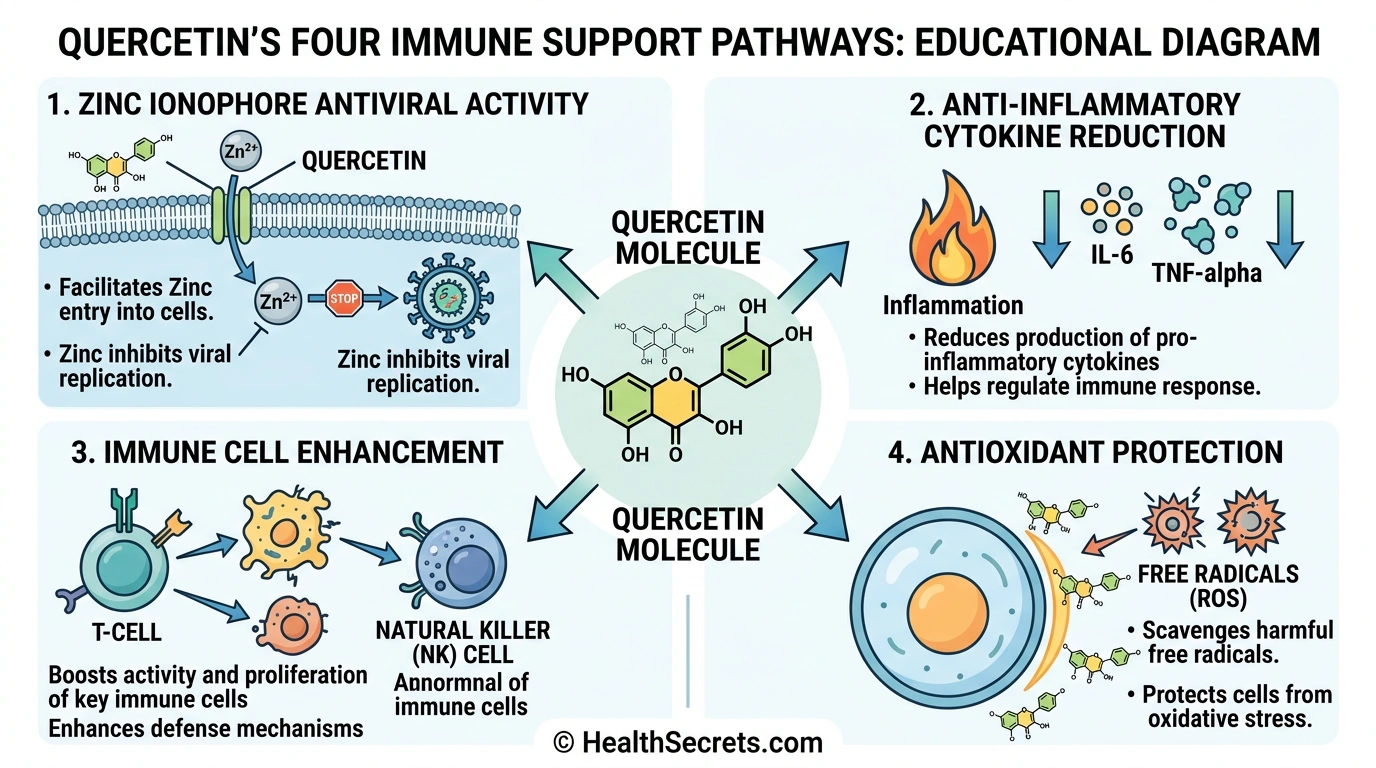
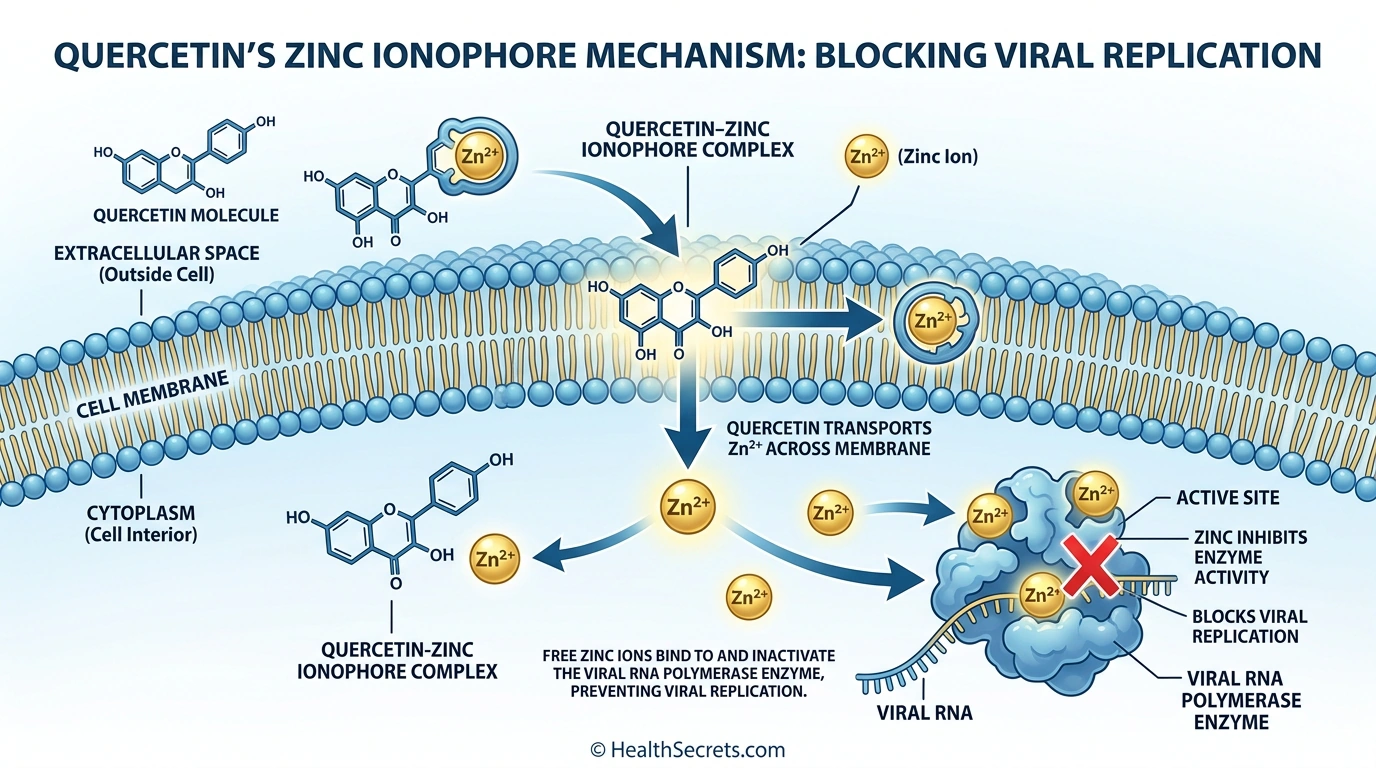
But quercetin isn't just an antioxidant. What really set the research world buzzing was the discovery that quercetin acts as a zinc ionophore. An ionophore is basically a molecular shuttle—it transports ions across cell membranes. In quercetin's case, it grabs zinc ions and carries them into cells ([1]). Why does that matter? Because once inside cells, zinc can directly inhibit viral RNA-dependent RNA polymerase—the enzyme viruses need to replicate.
Traditionally, quercetin has been consumed through diet. Red onions contain roughly 300mg per cup. Apples have around 10mg. Berries contribute 5–10mg per serving. Green tea adds another 10–25mg per cup. These amounts are beneficial for general health, but they're nowhere near the therapeutic doses used in clinical research—which is why supplements exist.
How Does Quercetin Support Your Immune System? (It's More Than Just Antioxidant Activity)
Quercetin supports immune function through multiple mechanisms: it acts as a zinc ionophore to enhance antiviral defense, reduces pro-inflammatory cytokines like IL-6 and TNF-alpha, enhances T-cell and natural killer cell activity, and provides direct antioxidant protection to immune cells. This multi-pathway approach makes it uniquely versatile among natural immune supplements.
How Does Quercetin Work as a Zinc Ionophore Against Viruses?
This is arguably quercetin's most exciting mechanism. Research published in the Journal of Agricultural and Food Chemistry demonstrated that quercetin rapidly increases intracellular zinc levels by transporting zinc cations across cell membranes ([1]). Once zinc accumulates inside cells, it inhibits viral RNA-dependent RNA polymerase—effectively jamming the replication machinery of RNA viruses including influenza, rhinovirus, and coronaviruses.
A 2024 study in ScienceDirect confirmed that quercetin's zinc ionophore activity enhanced anti-influenza effects synergistically—meaning quercetin plus zinc worked better than either compound alone ([10]). The practical takeaway? Always pair quercetin with zinc supplementation.
How Does Quercetin Reduce Inflammation and Prevent Cytokine Storms?
Quercetin inhibits the NF-κB signaling pathway—the master switch for inflammatory gene expression. It reduces production of pro-inflammatory cytokines including IL-6, IL-1β, and TNF-alpha. It also blocks cyclooxygenase (COX) and lipoxygenase (LOX) enzymes, reducing prostaglandins and leukotrienes that drive inflammation ([2]).
This matters for immune health because chronic inflammation actually weakens your immune response. And during acute infections, uncontrolled cytokine release—a cytokine storm—can cause more damage than the virus itself. Quercetin's ability to modulate (not suppress) immune activity means it helps your body fight infection without overreacting ([9]).
How Does Quercetin Enhance Immune Cell Function?
Quercetin directly supports several types of immune cells. It improves the Th1/Th2 balance—critical for appropriate immune responses—and suppresses excessive IgE antibody formation that drives allergic reactions. It stimulates T-cell proliferation, enhances natural killer (NK) cell activity, and supports macrophage function ([2]). Research in animal models showed quercetin reduced susceptibility to influenza infection following stressful exercise ([6]).
Quercetin also increases glutathione levels in the body—your master antioxidant that protects immune cells from oxidative damage during their pathogen-fighting activities ([8]).
How Well Is Quercetin Absorbed? (The Bioavailability Problem You Need to Solve)
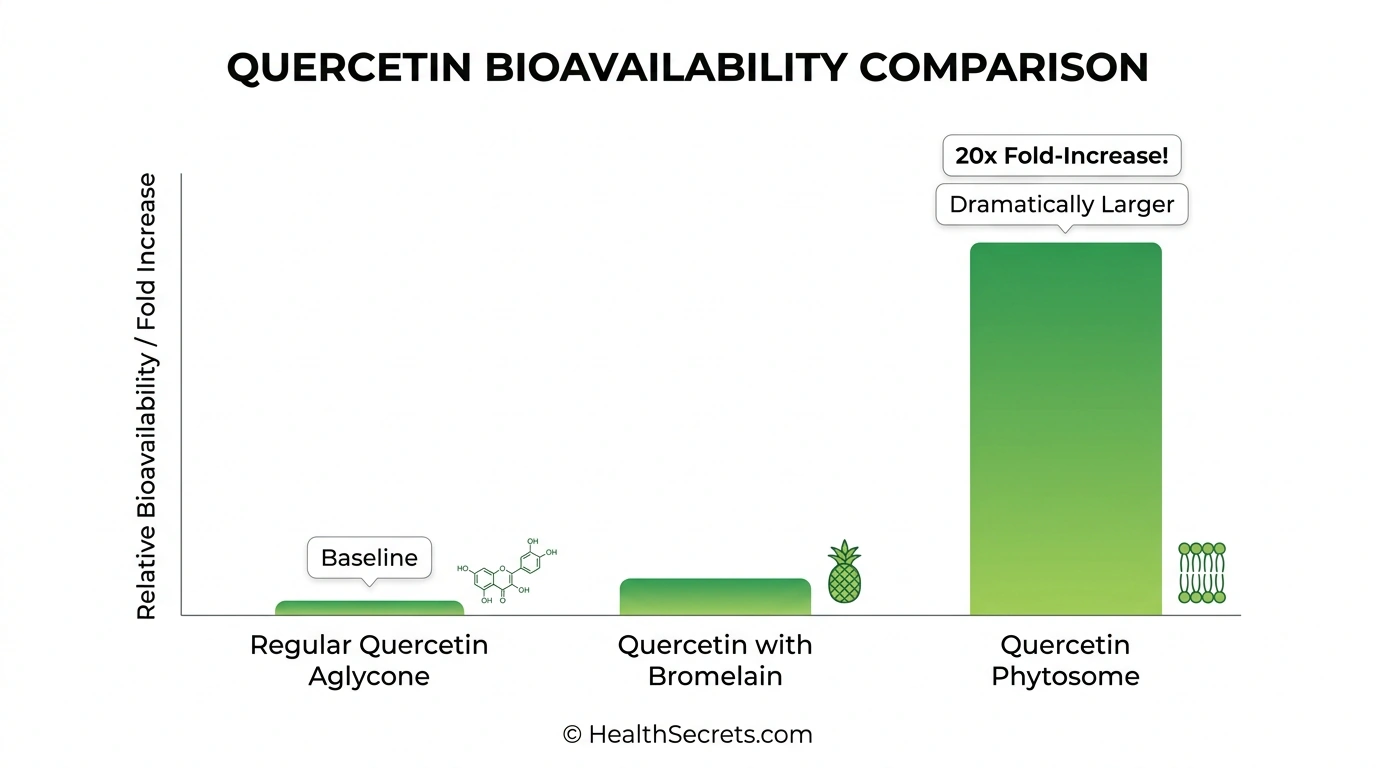
Standard quercetin aglycone has extremely poor oral bioavailability—less than 5% is absorbed, it's rapidly metabolized by the liver, and has a short half-life of just one to two hours. However, quercetin phytosome (lecithin-bound) formulations achieve up to 20 times greater plasma levels, making formulation choice critical for therapeutic benefit.
Honestly, this is where most people waste their money on quercetin. You can swallow 1,000mg of regular quercetin and maybe—maybe—50mg actually reaches your bloodstream. The rest passes through unabsorbed. That's frustrating.
Here's why: quercetin is poorly water-soluble. Your gut can't absorb what it can't dissolve. Plus, whatever does get absorbed gets rapidly conjugated by the liver (glucuronidation, sulfation) and eliminated. Short half-life means it doesn't stick around long enough to accumulate therapeutic levels.
The Solutions:
- Quercetin Phytosome (Lecithin-Bound): This is the gold standard. A clinical study showed Quercetin Phytosome® achieved plasma levels up to 20 times higher than unformulated quercetin in healthy volunteers, with no notable side effects ([4]). The lecithin creates a lipid-compatible complex that dramatically improves intestinal absorption.
- Vitamin C: Quercetin and vitamin C work synergistically. Vitamin C helps regenerate quercetin and may improve its stability and absorption. Researchers have proposed this combination specifically for antiviral prevention and treatment ([5]).
- Bromelain: This pineapple enzyme may enhance quercetin absorption and has its own anti-inflammatory properties.
- Take With Fat: Quercetin is fat-soluble. Taking it with meals containing dietary fat improves absorption significantly compared to an empty stomach.
Action Plan
How Much Quercetin Should You Take for Immune Support?
Follow the sequence below, work through each phase in order, and use the checklist as your practical implementation guide.
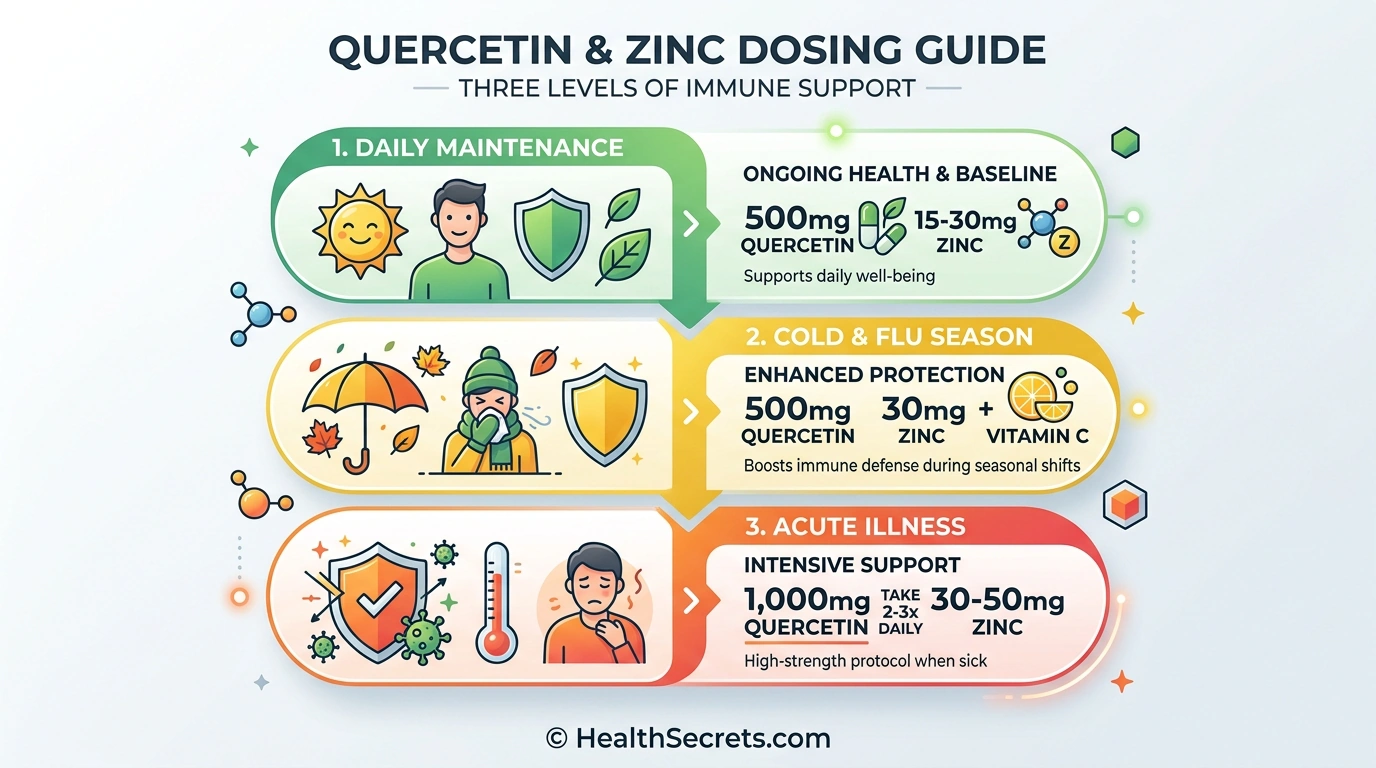
For daily immune maintenance, 500mg of quercetin phytosome with 15–30mg zinc is the most common evidence-based protocol. During acute illness, doses increase to 1,000mg two to three times daily with 30–50mg zinc for the first three to five days. Always take with meals containing fat to maximize absorption.
Prophylactic / Daily Immune Support:
- 500mg quercetin phytosome daily (equivalent to about 200mg pure quercetin in phytosome form)
- 15–30mg zinc (picolinate or bisglycinate)
- 500–1,000mg vitamin C (synergistic partner)
- Take with meals containing fat
- Use during cold and flu season or year-round
Acute Infection Protocol (First Signs of Illness):
- 1,000mg quercetin two to three times daily
- 30–50mg zinc daily (divided doses)
- 1,000mg vitamin C two to three times daily
- Continue for three to five days, then return to maintenance dose
- Take with meals
Important Dosing Notes:
- Divide doses throughout the day (two to three times) rather than taking one large dose—better absorption, more stable blood levels
- Phytosome forms require lower doses for equivalent effect
- Do not exceed 1,000mg daily long-term without medical supervision
- Takes four to eight weeks of consistent use for full immune-modulating benefits
- Effects during acute illness may be noticed within 24–48 hours
Thorne Quercetin Phytosome
Editor's ChoiceThorne Quercetin · Maximum absorption quercetin for serious immune support
NOW Foods Quercetin with Bromelain
Best ValueNOW Foods · Budget-friendly quercetin with absorption-enhancing bromelain
Life Extension Bio-Quercetin
Best BioavailabilityLife Extension · Enhanced absorption quercetin at a moderate price point
Jarrow Formulas Quercetin 500mg
Best Budget OptionJarrow Formulas · Affordable daily quercetin supplementation

Thorne Zinc Picolinate 30mg
Best Zinc PartnerThorne Zinc · Pairing with quercetin for synergistic antiviral immune support
Quercetin + Zinc + Vitamin C Immune Complex
Best All-in-OneQuercetin + · Convenience—quercetin, zinc, and vitamin C in one supplement
NOW Foods Vitamin C-1000 with Rose Hips
Best Vitamin C PartnerNOW Foods · Pairing with quercetin for synergistic antioxidant and immune support
Organic Red Onion Powder (Bulk)
Best Food SourceOrganic Red · Adding quercetin-rich flavor to daily cooking
Read the detailed review cards below before opening any retailer link
Top Recommended Products
Thorne Quercetin
Thorne Quercetin Phytosome
Thorne's phytosome technology delivers dramatically more quercetin to your bloodstream than standard formulations, making it the most effective option for immune support.
Pros
- + Best-in-class absorption
- + NSF certified
- + trusted brand
- + clean formulation
Cons
- - Higher price per bottle
- - lower mg number can be misleading (phytosome is more bioavailable)
Why we included it: Thorne's phytosome technology delivers dramatically more quercetin to your bloodstream than standard formulations, making it the most effective option for immune support.
Retailer link opens on Amazon after the review details above
NOW Foods
NOW Foods Quercetin with Bromelain
For those on a budget, NOW Foods delivers a solid quercetin dose with bromelain to help absorption—a proven, affordable daily immune supplement.
Pros
- + Excellent value
- + high dose
- + bromelain aids absorption and adds anti-inflammatory benefit
- + trusted brand
Cons
- - Standard quercetin form (not phytosome)
- - requires higher dose for equivalent blood levels
Why we included it: For those on a budget, NOW Foods delivers a solid quercetin dose with bromelain to help absorption—a proven, affordable daily immune supplement.
Retailer link opens on Amazon after the review details above
Life Extension
Life Extension Bio-Quercetin
Life Extension's bio-enhanced formula bridges the gap between budget standard quercetin and premium phytosome, offering improved absorption at a reasonable price.
Pros
- + Good bioavailability enhancement
- + moderate price
- + reputable brand
- + well-reviewed
Cons
- - Not full phytosome technology
- - one-capsule serving convenient but limits dose flexibility
Why we included it: Life Extension's bio-enhanced formula bridges the gap between budget standard quercetin and premium phytosome, offering improved absorption at a reasonable price.
Retailer link opens on Amazon after the review details above
Jarrow Formulas
Jarrow Formulas Quercetin 500mg
If you're trying quercetin for the first time on a tight budget, Jarrow offers a clean, affordable option—just pair it with zinc and take with a fatty meal.
Pros
- + Very affordable
- + high capsule count
- + reputable brand
- + simple formulation
Cons
- - Standard quercetin with poor absorption (<5%)
- - no bioavailability enhancers included
Why we included it: If you're trying quercetin for the first time on a tight budget, Jarrow offers a clean, affordable option—just pair it with zinc and take with a fatty meal.
Retailer link opens on Amazon after the review details above
Thorne Zinc
Thorne Zinc Picolinate 30mg
Zinc is essential for quercetin's ionophore mechanism. Thorne's picolinate form ensures the zinc actually gets absorbed and into your cells where quercetin can shuttle it.
Pros
- + Highly absorbable zinc form
- + NSF certified
- + trusted brand
- + perfect dose for quercetin pairing
Cons
- - Single-mineral supplement (need separate quercetin)
- - 60-count runs out in 2 months
Why we included it: Zinc is essential for quercetin's ionophore mechanism. Thorne's picolinate form ensures the zinc actually gets absorbed and into your cells where quercetin can shuttle it.
Retailer link opens on Amazon after the review details above
Quercetin +
Quercetin + Zinc + Vitamin C Immune Complex
For simplicity, an all-in-one quercetin-zinc-vitamin C formula covers all three synergistic immune nutrients in a single product—ideal for daily maintenance.
Pros
- + All three synergistic nutrients in one product
- + convenient
- + no need to buy separate bottles
Cons
- - May have lower individual doses than standalone supplements
- - less dosing flexibility
Why we included it: For simplicity, an all-in-one quercetin-zinc-vitamin C formula covers all three synergistic immune nutrients in a single product—ideal for daily maintenance.
Retailer link opens on Amazon after the review details above
NOW Foods
NOW Foods Vitamin C-1000 with Rose Hips
Vitamin C regenerates quercetin and enhances its stability. This affordable, high-quality option provides the synergistic partner quercetin needs for optimal immune support.
Pros
- + Excellent value
- + high dose
- + includes rose hips for additional bioflavonoids
- + trusted brand
Cons
- - Tablet form may be large for some
- - not buffered (may cause GI upset in sensitive individuals)
Why we included it: Vitamin C regenerates quercetin and enhances its stability. This affordable, high-quality option provides the synergistic partner quercetin needs for optimal immune support.
Retailer link opens on Amazon after the review details above
Organic Red
Organic Red Onion Powder (Bulk)
For a whole-food approach to daily quercetin intake, organic red onion powder is an easy way to boost your cooking with the richest common dietary source of this flavonoid.
Pros
- + Whole food source
- + easy to add to cooking
- + affordable
- + provides additional antioxidants
Cons
- - Quercetin content varies
- - not standardized
- - lower bioavailability than supplements
Why we included it: For a whole-food approach to daily quercetin intake, organic red onion powder is an easy way to boost your cooking with the richest common dietary source of this flavonoid.
Retailer link opens on Amazon after the review details above
Can You Get Enough Quercetin From Food Alone?
While quercetin-rich foods like red onions, apples, berries, and green tea provide meaningful dietary amounts (50–500mg daily depending on diet), therapeutic immune doses of 500–1,000mg require supplementation. A food-plus-supplement approach offers the best of both worlds—dietary quercetin for general antioxidant benefits and supplemental quercetin phytosome for targeted immune support.

| Food | Serving | Quercetin (mg) | Notes |
|---|---|---|---|
| Red onions | 1 cup chopped | ~300mg | Richest common source |
| Capers | 1 tablespoon | ~180mg | Highest per weight |
| Apples (with skin) | 1 medium | ~10mg | Skin contains most |
| Berries (mixed) | 1 cup | 5–15mg | Blueberries, cranberries |
| Green tea | 1 cup brewed | 10–25mg | Also contains EGCG |
- Eat quercetin-rich foods daily—red onions in cooking, an apple a day, berries, green tea (general antioxidant health)
- Add quercetin phytosome supplement 500mg daily for targeted immune support
- Increase supplement dose during illness (1,000mg two to three times daily, short-term)
- Always pair with zinc and vitamin C for synergistic benefits
Is Quercetin Safe? Side Effects and Drug Interactions You Should Know
Quercetin is generally recognized as safe (GRAS) at supplemental doses up to 1,000mg daily, with minimal reported side effects in clinical trials. The most common issues are mild GI upset and occasional headaches. However, quercetin does interact with certain medications, particularly blood thinners and fluoroquinolone antibiotics, so medical consultation is important.
Common Side Effects (Rare, Mild):
- Headache—one of the more commonly reported effects, usually mild
- GI upset: nausea, stomach discomfort—take with food to minimize
- These are generally dose-dependent and resolve with dose reduction
Drug Interactions:
- Blood thinners (warfarin): Quercetin may increase warfarin's effects and bleeding risk—monitor INR closely (WebMD [15])
- Fluoroquinolone antibiotics (ciprofloxacin, levofloxacin): Quercetin may interfere with absorption—separate by at least two hours
- Immunosuppressants: Quercetin's immune-modulating effects may theoretically counteract these drugs—consult your doctor
- Cyclosporine, everolimus: Quercetin may affect drug metabolism—consult oncologist
Contraindications:
- Pregnancy and breastfeeding: Insufficient safety data for supplemental doses (dietary amounts are fine)
- Kidney disease: Theoretical concern at very high doses (above 1,000mg long-term)—use caution
- Surgery: Stop quercetin one to two weeks before surgery due to potential antiplatelet effects
A comprehensive safety review noted that adverse effects from supplemental quercetin intake have been rarely reported and were mild in nature across numerous human intervention studies ([7]).
What Can Quercetin Actually Do for Your Immune System?
Quercetin can meaningfully support immune function by reducing inflammation, enhancing antiviral defense (especially paired with zinc), and modulating immune cell activity. Clinical evidence suggests it may reduce upper respiratory infection duration by one to two days and symptom severity by 20–30%. It is not a cure or guaranteed prevention—it's a science-backed tool that works best alongside healthy lifestyle habits.

What Quercetin Can Do:
- Reduce chronic low-grade inflammation (measurable CRP reduction in studies)
- Enhance antiviral defense through zinc ionophore activity
- Support immune cell function (T-cells, NK cells, macrophages)
- Potentially reduce duration and severity of colds and flu
- Act as a powerful antioxidant protecting immune cells
What Quercetin Cannot Do:
- Cure viral infections or replace antiviral medications
- Guarantee prevention of any specific illness
- Replace vaccination, hand hygiene, or healthy sleep habits
- Work effectively without addressing bioavailability (regular quercetin barely absorbed)
- Produce immediate results—full immune benefits take four to eight weeks of consistent use
Realistic Timeline:
- Week 1–2: Minimal noticeable effects (building systemic levels)
- Week 3–4: Some may notice reduced inflammation, improved recovery
- Week 5–8: Full immune-modulating benefits established
- During acute use: Effects may be noticed within 24–72 hours (at higher doses with zinc)
The Bottom Line: Quercetin is one of the most researched natural immune-support compounds available. The evidence is promising—especially for the quercetin-plus-zinc combination—but more large-scale randomized controlled trials are needed. Use it as part of a comprehensive approach that includes adequate sleep, balanced nutrition, exercise, and stress management.
Action Plan
What Should You Do First to Start Using Quercetin for Immune Health?
Follow the sequence below, work through each phase in order, and use the checklist as your practical implementation guide.
Start with a quercetin phytosome supplement at 500mg daily paired with 15–30mg zinc, taken with a meal containing fat. Add 500–1,000mg vitamin C for synergistic benefit. Increase to 1,000mg quercetin two to three times daily during acute illness. Always choose phytosome formulations over standard quercetin for dramatically better absorption.
Phase 1 — Start Smart (Week 1–2):
- Choose a quercetin phytosome supplement (not regular quercetin)
- Start at 500mg quercetin phytosome daily with breakfast or lunch
- Add zinc 15–30mg daily (picolinate or bisglycinate form)
- Add vitamin C 500–1,000mg daily
- Take all supplements with a meal containing fat
Phase 2 — Build Your Protocol (Week 3–4):
- Assess tolerance—any GI issues? Reduce dose or split into two daily doses
- Increase dietary quercetin—more onions, apples, berries, green tea
- Continue daily supplementation consistently
- Note any improvements in energy, recovery, or inflammation
Phase 3 — Maintain and Adjust (Week 5+):
- Continue 500mg quercetin phytosome daily as maintenance
- Have an acute protocol ready: 1,000mg quercetin 2–3x daily + 30–50mg zinc at first sign of illness
- Restock before cold and flu season begins
- Track any changes in infection frequency or severity over months
When to See a Doctor:
- If taking blood thinners, diabetes medications, or immunosuppressants
- If symptoms worsen despite supplementation
- If you experience unusual bleeding, bruising, or severe GI symptoms
- Before surgery (stop quercetin 1–2 weeks prior)

