
Resveratrol gets all the headlines—the "red wine compound," the darling of anti-aging research. And look, the science behind it is genuinely interesting. But here's something most people don't realize: your body barely absorbs the stuff. We're talking maybe 20% bioavailability on a good day. Which means most of that expensive resveratrol supplement you're taking? It's passing right through you.
Enter pterostilbene. It's resveratrol's lesser-known cousin, found naturally in blueberries, and it solves the one problem that's plagued resveratrol research for decades. Pterostilbene delivers roughly 80% bioavailability—four times what resveratrol manages. Same family of compounds, similar mechanisms, dramatically better absorption.
That matters more than you'd think. Because a compound can have all the promising lab data in the world, but if your body can't actually use it, what's the point?
In this guide, we'll dig into what pterostilbene actually is, how it activates longevity-related sirtuin pathways, why its bioavailability advantage is such a big deal for cognitive health and aging, and—critically—what the research does and doesn't support yet. Plus practical dosing, safety considerations, and quality benchmarks so you're not wasting money on subpar products.
Related reading: Complete Guide to Longevity & Anti-Aging · Resveratrol and Longevity · NAD+ and Cellular Aging
What Is Pterostilbene and How Does It Differ from Resveratrol?
Pterostilbene (pronounced "tero-STILL-bean") is a naturally occurring stilbene compound—a close structural relative of resveratrol—that delivers dramatically superior absorption thanks to two small molecular changes that make it far more fat-soluble. Found primarily in blueberries, it activates the same longevity-related sirtuin pathways as resveratrol but stays active in your body much longer.
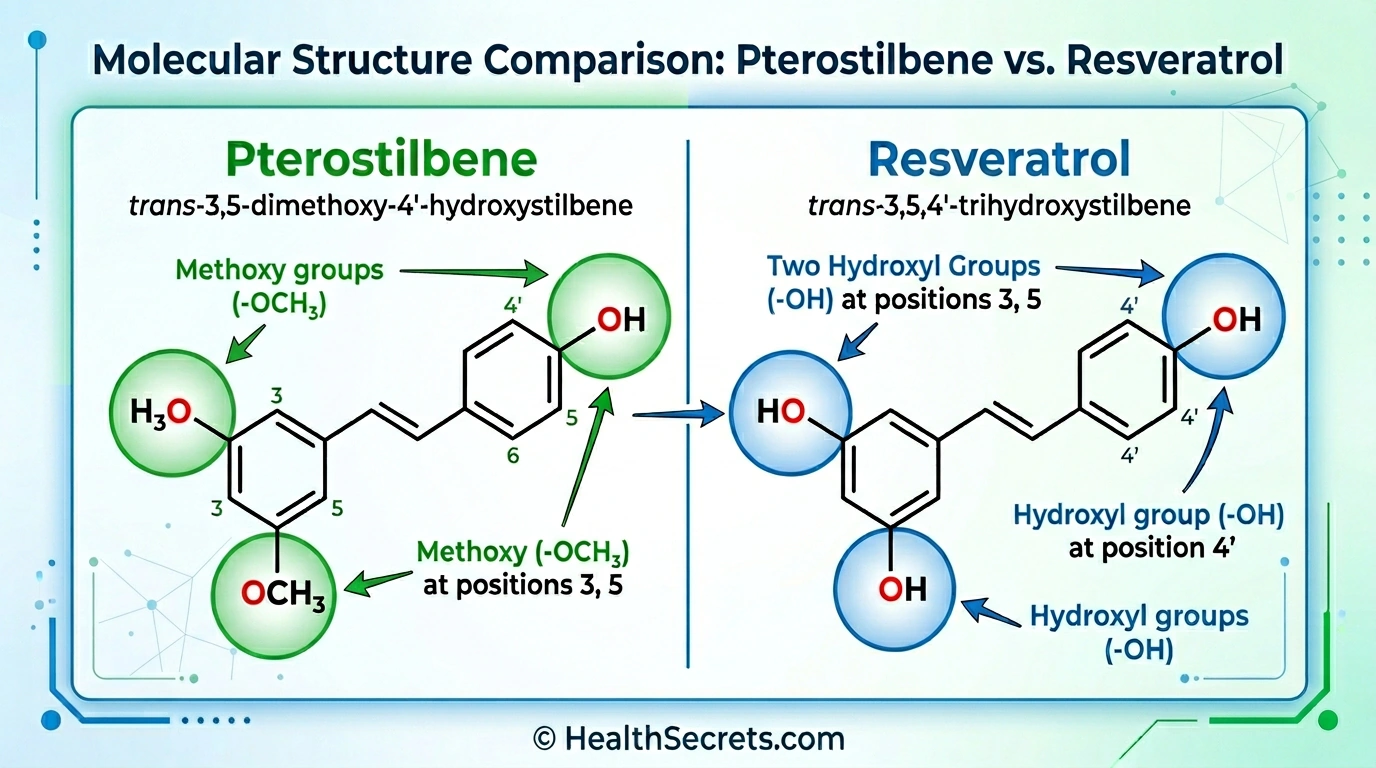
Both pterostilbene and resveratrol belong to the stilbene class of polyphenolic compounds. The critical structural difference? Pterostilbene has two methoxy groups (-OCH₃) where resveratrol has hydroxyl groups (-OH). That seemingly minor tweak changes everything about how your body handles the compound.
Resveratrol gets rapidly metabolized—your liver conjugates it and clears it within hours. Pterostilbene's methoxy groups make it more resistant to that metabolic breakdown. The result: it stays in your bloodstream longer and reaches tissues more effectively.
Where Does Pterostilbene Come From?
Natural sources include:
- Blueberries — highest concentration, especially wild varieties (though still only trace amounts)
- Muscadine grapes — moderate levels
- Cranberries — small amounts
- Pterocarpus marsupium bark — traditional Ayurvedic source
Here's the math problem, though. You'd need to eat an unrealistic quantity of blueberries daily to hit therapeutic doses. A cup of blueberries contains maybe 50–100 micrograms of pterostilbene. Supplement doses start at 50 milligrams—roughly 500 to 1,000 times what you'd get from a serving of berries. Supplementation is the only realistic route for meaningful doses.
Interest in pterostilbene surged after researchers recognized resveratrol's bioavailability problem was undermining its clinical potential. Pterostilbene offered a potential workaround—same compound class, radically better pharmacokinetics.
How Does Pterostilbene Work in the Body?
Pterostilbene activates multiple cellular defense pathways simultaneously—primarily through sirtuin enzyme activation, antioxidant activity, and anti-inflammatory signaling—making it a broad-spectrum compound for cellular health rather than a single-target molecule.
Does Pterostilbene Activate Longevity Genes?
Yes. Pterostilbene activates SIRT1—a key member of the sirtuin protein family often called "longevity genes." SIRT1 activation influences cellular stress resistance, mitochondrial biogenesis, DNA repair mechanisms, and inflammatory regulation. Research confirms pterostilbene acts as a sirtuin activator with anti-aging potential in preclinical models [1].
Sirtuins essentially coordinate your cells' response to stress. When they're active, cells shift into a protective, repair-oriented mode. Caloric restriction—the only intervention consistently shown to extend lifespan across species—works partly through sirtuin activation. Pterostilbene mimics some of those same signaling cascades.
How Does Pterostilbene Fight Oxidative Stress?
Pterostilbene is a potent antioxidant that neutralizes reactive oxygen species and upregulates endogenous antioxidant enzymes including superoxide dismutase (SOD) and catalase. It also activates the Nrf2 pathway—your cells' master antioxidant switch—and supports glutathione production.
Oxidative damage accumulates with age and drives mitochondrial dysfunction, DNA mutations, and cellular senescence. Compounds that can both scavenge free radicals directly and boost your body's own antioxidant machinery provide dual-layer protection [3].
Does Pterostilbene Reduce Inflammation?
Pterostilbene inhibits NF-κB signaling—the master inflammatory pathway—and reduces pro-inflammatory cytokines including IL-6 and TNF-alpha. A 2026 study demonstrated that pterostilbene protected brain endothelial cells against LPS-induced inflammation and blood-brain barrier disruption through NF-κB and MAPK pathway inhibition [4].
Chronic low-grade inflammation ("inflammaging") drives virtually every age-related disease. Anti-inflammatory compounds with good tissue penetration—especially brain penetration—are particularly valuable for longevity.

How Well Is Pterostilbene Absorbed Compared to Resveratrol?
Pterostilbene achieves approximately 80% oral bioavailability versus resveratrol's roughly 20%, with a substantially longer half-life. This fourfold absorption advantage means lower doses deliver more compound to target tissues, particularly the brain, making pterostilbene considerably more efficient per milligram.

Why the Dramatic Difference?
Lipophilicity. Pterostilbene's two methoxy groups make it significantly more fat-soluble than resveratrol. Fat-soluble compounds absorb better through the lipid-rich intestinal membrane, cross cell membranes more easily, and—critically—penetrate the blood-brain barrier more effectively [8].
Animal pharmacokinetic data shows pterostilbene achieves 95% bioavailability with a half-life of 105 minutes, compared to resveratrol's 20% bioavailability and 14-minute half-life [7]. While human pharmacokinetics may differ somewhat, the relative advantage is consistent.
Metabolic resistance. Resveratrol has two hydroxyl groups available for rapid glucuronidation (a liver detox process that inactivates it). Pterostilbene has only one hydroxyl group—meaning your liver can't clear it as quickly.
What Does This Mean Practically?
- Lower effective doses: 50–250 mg pterostilbene versus 500–1,000 mg resveratrol
- Better brain access: Superior blood-brain barrier penetration makes it more promising for cognitive applications
- Longer activity window: Sustained sirtuin activation and antioxidant activity between doses
- Potentially better cost-effectiveness: Higher per-milligram price but lower doses needed
How Much Pterostilbene Should You Take?
Based on available clinical research and supplement formulations, most adults start at 50–100 mg daily and may increase to 150–250 mg daily depending on goals. The only completed human safety trial confirmed tolerability at 250 mg per day taken as 125 mg twice daily for 6–8 weeks [2].
| Goal | Daily Dose | Timing | Notes |
|---|---|---|---|
| General antioxidant support | 50 mg | With fat-containing meal | Starting dose, assess tolerance |
| Sirtuin activation / longevity | 100–150 mg | Morning or lunch with fat | Most common supplement range |
| Cognitive support | 150–250 mg | Divided: morning + afternoon | Higher end for BBB penetration |
| Combination with resveratrol | 50–100 mg + 250–500 mg resv. | Together with fat | Complementary approach |
| Key practical notes: |
- Take with fat. Pterostilbene is fat-soluble. A meal containing avocado, olive oil, nuts, or eggs dramatically improves absorption.
- Give it time. Bioavailability is immediate, but functional benefits—if they occur—may take 8–12 weeks to notice.
- No established cycling protocol. Continuous daily use appears safe based on available data.
- Store properly. Pterostilbene degrades with light and heat. Keep in a cool, dark location.
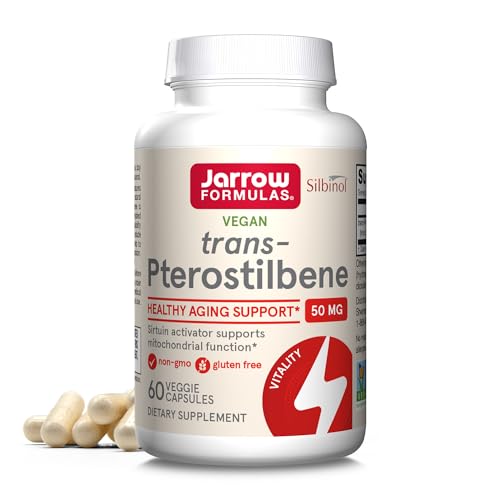
Jarrow Formulas Pterostilbene 50 mg
Editor's ChoiceJarrow Formulas · Quality-focused users wanting standalone pterostilbene with branded Silbinol source

Double Wood Supplements Pterostilbene 100 mg
Best ValueDouble Wood · Budget-conscious users wanting a mid-range pterostilbene dose with third-party verification

ProHealth Longevity Pterostilbene 250 mg
Best High-DoseProHealth Longevity · Experienced supplement users wanting maximum pterostilbene dosing within studied safety limits
NOW Foods Pterostilbene & Resveratrol
Best CombinationNOW Foods · Users wanting both pterostilbene and resveratrol in a single capsule for synergistic benefits

Life Extension Optimized Resveratrol
Best Multi-CompoundLife Extension · Users wanting a comprehensive polyphenol formula with pterostilbene, resveratrol, and additional phytonutrients

Thorne ResveraCel
Best Premium Longevity StackThorne ResveraCel · Serious longevity enthusiasts wanting NR + resveratrol + quercetin in a practitioner-grade formula

Swanson Pterostilbene 50 mg
Best BudgetSwanson Pterostilbene · Budget shoppers wanting an affordable entry point into pterostilbene supplementation
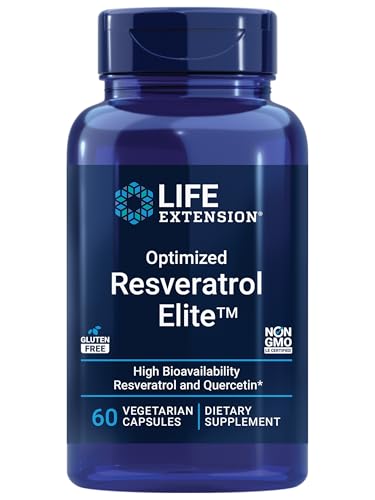
Life Extension Optimized Resveratrol Elite
Best BioavailabilityLife Extension · Users who want maximum resveratrol absorption with an advanced delivery system
Read the detailed review cards below before opening any retailer link
Top Recommended Products
Jarrow Formulas
Jarrow Formulas Pterostilbene 50 mg
Jarrow Formulas has produced this pterostilbene for years with consistent quality. The Silbinol branded source provides traceability, and 50 mg is a sensible starting dose that allows flexible titration.
Pros
- + Reputable brand with long track record
- + branded Silbinol source material
- + clean label
- + affordable per-capsule cost
Cons
- - Lower 50 mg dose may require multiple capsules for higher targets
Why we included it: Jarrow Formulas has produced this pterostilbene for years with consistent quality. The Silbinol branded source provides traceability, and 50 mg is a sensible starting dose that allows flexible titration.
Retailer link opens on Amazon after the review details above
Double Wood
Double Wood Supplements Pterostilbene 100 mg
Double Wood offers the best value in the pterostilbene market. Third-party testing adds confidence, and the 100 mg dose is right in the sweet spot for most users.
Pros
- + Excellent price-to-dose ratio
- + third-party tested for purity
- + 100 mg hits therapeutic range
- + made in USA
Cons
- - Not a branded pterostilbene source like pTeroPure or Silbinol
Why we included it: Double Wood offers the best value in the pterostilbene market. Third-party testing adds confidence, and the 100 mg dose is right in the sweet spot for most users.
Retailer link opens on Amazon after the review details above
ProHealth Longevity
ProHealth Longevity Pterostilbene 250 mg
ProHealth's 250 mg dose matches the upper limit tested in the only human clinical trial. Best for experienced users who want maximum dosing.
Pros
- + Matches highest dose tested in human trials
- + one capsule convenience
- + longevity-focused brand
- + 60-day supply
Cons
- - Higher dose may affect LDL cholesterol in some individuals
- - more expensive per bottle
Why we included it: ProHealth's 250 mg dose matches the upper limit tested in the only human clinical trial. Best for experienced users who want maximum dosing.
Retailer link opens on Amazon after the review details above
NOW Foods
NOW Foods Pterostilbene & Resveratrol
This combination formula provides both pterostilbene and resveratrol—potentially complementary stilbenes—from a trusted brand at a reasonable price point.
Pros
- + Combines both stilbenes in one capsule
- + NOW Foods trusted brand
- + good value for dual-compound formula
- + all-trans forms
Cons
- - Lower pterostilbene dose (50 mg) in combination format
Why we included it: This combination formula provides both pterostilbene and resveratrol—potentially complementary stilbenes—from a trusted brand at a reasonable price point.
Retailer link opens on Amazon after the review details above
Life Extension
Life Extension Optimized Resveratrol
Life Extension combines pterostilbene with resveratrol and other polyphenols in a formula designed for comprehensive longevity support. Great for people who want broad-spectrum coverage.
Pros
- + Well-rounded polyphenol formula
- + Life Extension is research-driven brand
- + 90-day supply
- + includes fisetin
Cons
- - Lower individual pterostilbene dose
- - more complex formula makes isolating effects difficult
Why we included it: Life Extension combines pterostilbene with resveratrol and other polyphenols in a formula designed for comprehensive longevity support. Great for people who want broad-spectrum coverage.
Retailer link opens on Amazon after the review details above
Thorne ResveraCel
Thorne ResveraCel
While not a pure pterostilbene product, Thorne's ResveraCel represents the premium end of stilbene-based longevity supplements. The combination of NR, resveratrol, and quercetin phytosome targets multiple aging pathways.
Pros
- + Multi-pathway longevity formula
- + NSF certified
- + practitioner-grade quality
- + NR for NAD+ support
Cons
- - Premium price
- - does not contain standalone pterostilbene
- - shorter supply per bottle
Why we included it: While not a pure pterostilbene product, Thorne's ResveraCel represents the premium end of stilbene-based longevity supplements. The combination of NR, resveratrol, and quercetin phytosome targets multiple aging pathways.
Retailer link opens on Amazon after the review details above
Swanson Pterostilbene
Swanson Pterostilbene 50 mg
Swanson provides the lowest cost entry point for trying pterostilbene. Good for people who want to test the compound before committing to premium products.
Pros
- + Most affordable pterostilbene option
- + Swanson is established supplement brand
- + easy 50 mg starting dose
Cons
- - Smaller bottle size
- - no branded pterostilbene source
- - limited third-party testing information
Why we included it: Swanson provides the lowest cost entry point for trying pterostilbene. Good for people who want to test the compound before committing to premium products.
Retailer link opens on Amazon after the review details above
Life Extension
Life Extension Optimized Resveratrol Elite
For those who prefer resveratrol but want to address the bioavailability gap, this hydrogel-coated formula offers a different approach than switching to pterostilbene entirely.
Pros
- + Advanced bioavailability technology
- + addresses resveratrol's absorption problem directly
- + Life Extension quality
- + 60-day supply
Cons
- - Focuses on resveratrol rather than pterostilbene
- - higher price than standard resveratrol
Why we included it: For those who prefer resveratrol but want to address the bioavailability gap, this hydrogel-coated formula offers a different approach than switching to pterostilbene entirely.
Retailer link opens on Amazon after the review details above
Can You Get Enough Pterostilbene from Food Alone?
No—not for therapeutic purposes. While blueberries are the richest dietary source, a typical serving provides only micrograms of pterostilbene versus the milligram doses used in research. Eating blueberries is excellent for overall health, but supplementation is necessary to reach doses that meaningfully activate sirtuin pathways.

| Food Source | Pterostilbene Content | Cups for 100 mg |
|---|---|---|
| Wild blueberries | ~99 µg per cup | ~1,010 cups |
| Cultivated blueberries | ~15–50 µg per cup | ~2,000–6,667 cups |
| Muscadine grapes | ~10–50 µg per cup | ~2,000–10,000 cups |
| Cranberries | Trace amounts | Not feasible |
| That said, don't skip the blueberries. They contain hundreds of other beneficial polyphenols, anthocyanins, and fiber. Think of dietary sources as a beneficial baseline and supplements as the therapeutic layer. |
The balanced approach: Eat blueberries and other colorful berries regularly for their broad polyphenol benefits. Supplement with pterostilbene if you specifically want sirtuin activation and targeted cognitive or longevity support.
Is Pterostilbene Safe to Take?
Pterostilbene appears safe for most healthy adults at doses up to 250 mg per day based on a completed human clinical trial. Animal toxicology studies show no adverse effects even at extremely high doses, and pTeroPure has achieved GRAS status from an independent scientific panel pTeroPure GRAS Status, ChromaDex.
The key human safety data comes from a randomized, double-blind, placebo-controlled trial of 80 adults taking 100–250 mg daily for 6–8 weeks. No serious adverse events were reported. However, pterostilbene monotherapy at 125 mg twice daily increased LDL cholesterol by about 17 mg/dL. This effect was not seen when combined with grape extract [2].
- Blood thinner users — Pterostilbene may have mild anticoagulant properties. Consult your doctor if you take warfarin, aspirin, or other anticoagulants.
- Cholesterol medication users — Given the LDL finding above, monitor lipids and discuss with your physician.
- Pregnant or breastfeeding — Insufficient safety data. Avoid unless specifically directed by your doctor.
- Pre-surgery — Discontinue 2 weeks before scheduled surgery due to potential blood-thinning effects.
Long-term safety: Unknown beyond 6–8 weeks in humans. The compound is relatively new as a standalone supplement.
What Can Pterostilbene Actually Do for You?
Pterostilbene's bioavailability advantage over resveratrol is well-established, and its neuroprotective effects in animal models are genuinely promising. But human longevity data simply doesn't exist yet, and expecting dramatic anti-aging results from any single supplement ignores how complex aging actually is.

What's supported by evidence:
- Superior bioavailability versus resveratrol (well-documented in pharmacokinetic studies)
- Sirtuin activation in preclinical models (consistent across studies)
- Neuroprotective effects in Alzheimer's disease animal models [6]
- Anti-inflammatory and antioxidant activity (robust in vitro and animal data)
- Safety at supplemental doses (one human trial, animal toxicology)
What's not proven in humans:
- Lifespan extension or biological age reversal
- Cognitive enhancement in healthy adults
- Cancer prevention or cardiovascular disease reduction
- Significant metabolic improvements (mixed results in clinical trial)
Realistic timeline: If pterostilbene works for you, subtle effects on energy, mental clarity, or inflammatory markers might emerge over 8–12 weeks. There won't be a dramatic overnight change.
The honest bottom line: Pterostilbene is a reasonable addition to a comprehensive longevity strategy for people who've already nailed the fundamentals—diet, exercise, sleep, stress management. It's not a substitute for any of those.
Action Plan
What Should You Do First If You're Considering Pterostilbene?
Follow the sequence below, work through each phase in order, and use the checklist as your practical implementation guide.
Start by evaluating whether pterostilbene fits your health goals and budget, then begin with a conservative dose of a quality product, track any changes over 8–12 weeks, and adjust based on your response and any discussions with your healthcare provider.
Phase 1 — Evaluate (Week 1):
- Determine your goal: sirtuin activation, cognitive support, or antioxidant protection
- Review any medications for potential interactions (blood thinners, statins)
- Choose a reputable product with pTeroPure, Silbinol, or third-party testing
- Get baseline bloodwork if possible (lipid panel, inflammatory markers)
Phase 2 — Start Low (Weeks 2–4):
- Begin with 50 mg daily with a fat-containing meal
- Monitor for any digestive upset or headaches (rare but possible)
- Note energy levels, mental clarity, sleep quality as subjective baselines
Phase 3 — Optimize (Weeks 5–12):
- If tolerated, increase to 100–150 mg daily
- Consider divided dosing (morning + afternoon) for cognitive goals
- Track any changes in a simple journal
- Recheck lipid panel at 8 weeks (given the LDL finding from clinical research)
Phase 4 — Assess (After 12 Weeks):
- Evaluate subjective and objective outcomes
- Decide whether to continue, adjust dose, or discontinue
- Discuss results with your healthcare provider


