 Pin It
 Adaptogens for Stress: Complete Guide
Who This Is For
Best for readers comparing mental wellness options and trying to avoid hype.
Who Should Be Careful
Not for replacing clinician guidance when symptoms, medications, or lab issues are involved.
Affiliate Disclaimer | This article may contain affiliate links to products we trust. If you choose to buy through them, we may earn a small commission at no extra cost to you. Full disclosure
Medical Disclaimer | For informational purposes only. Not a substitute for professional medical advice. Read full disclaimer
Key Takeaways
Nootropics Depot KSM-66 Ashwagandha
Editor’s ChoiceNootropics Depot · Overall stress and cortisol reduction
Doctor’s Best Ashwagandha with Sensoril
Best for SleepDoctor’s Best · Evening calming, sleep support, and stress relief
NOW Foods KSM-66 Ashwagandha
Best ValueNOW Foods · Budget-friendly stress support with clinical-grade KSM-66
Gaia Herbs Rhodiola Rosea
Best for FatigueGaia Herbs · Mental fatigue, burnout, and cognitive performance under stress
Read the detailed review cards below before opening any retailer link
Adaptogens are having a moment — you will find them in everything from supplement capsules to lattes and gummy vitamins. But behind the marketing hype, there is real science worth understanding. Adaptogens are a class of herbs that help the body resist and adapt to physical, chemical, and biological stressors, a concept rooted in centuries of Ayurvedic and Traditional Chinese Medicine and validated by modern clinical research for select herbs.
The herbal supplement market for mental health is projected to reach $27.73 billion by 2034, and adaptogens are driving much of that growth. But here is the honest picture: ashwagandha has the strongest clinical evidence, with multiple randomized controlled trials showing significant reductions in stress and cortisol levels. Rhodiola rosea has moderate evidence for fatigue and mental performance under stress. Other adaptogens — holy basil, schisandra, eleuthero — have extensive traditional use but limited clinical trial data.
This guide covers what adaptogens actually are and how they work, the clinical evidence for each major herb, proper dosing and quality standards, safety considerations, and realistic expectations. Whether you are exploring mental wellness strategies or looking for natural support alongside sleep optimization and stress management, understanding the evidence helps you make informed decisions.
What Are Adaptogens and What Do They Do for Stress?
Adaptogens are a class of herbs and mushrooms that increase the body's resistance to stress, have normalizing effects that restore physiological balance, are non-toxic with regular use, and work non-specifically across multiple biological systems. The term was coined by Soviet scientist Nikolai Lazarev in 1947 during research on substances that could enhance human performance under extreme conditions.
Where do adaptogens come from historically?
These herbs have been used for centuries across multiple traditional medicine systems. In
Ayurveda (Indian traditional medicine), ashwagandha and holy basil (tulsi) are foundational herbs for vitality and stress resilience. In
Traditional Chinese Medicine, ginseng, schisandra, and reishi have been prescribed for centuries for adaptogenic purposes.
Scandinavian folk medicine used rhodiola rosea (golden root) for endurance and stress resistance. Soviet-era researchers studied these herbs extensively for cosmonauts, athletes, and military personnel [1][2].
What are the most common adaptogens?
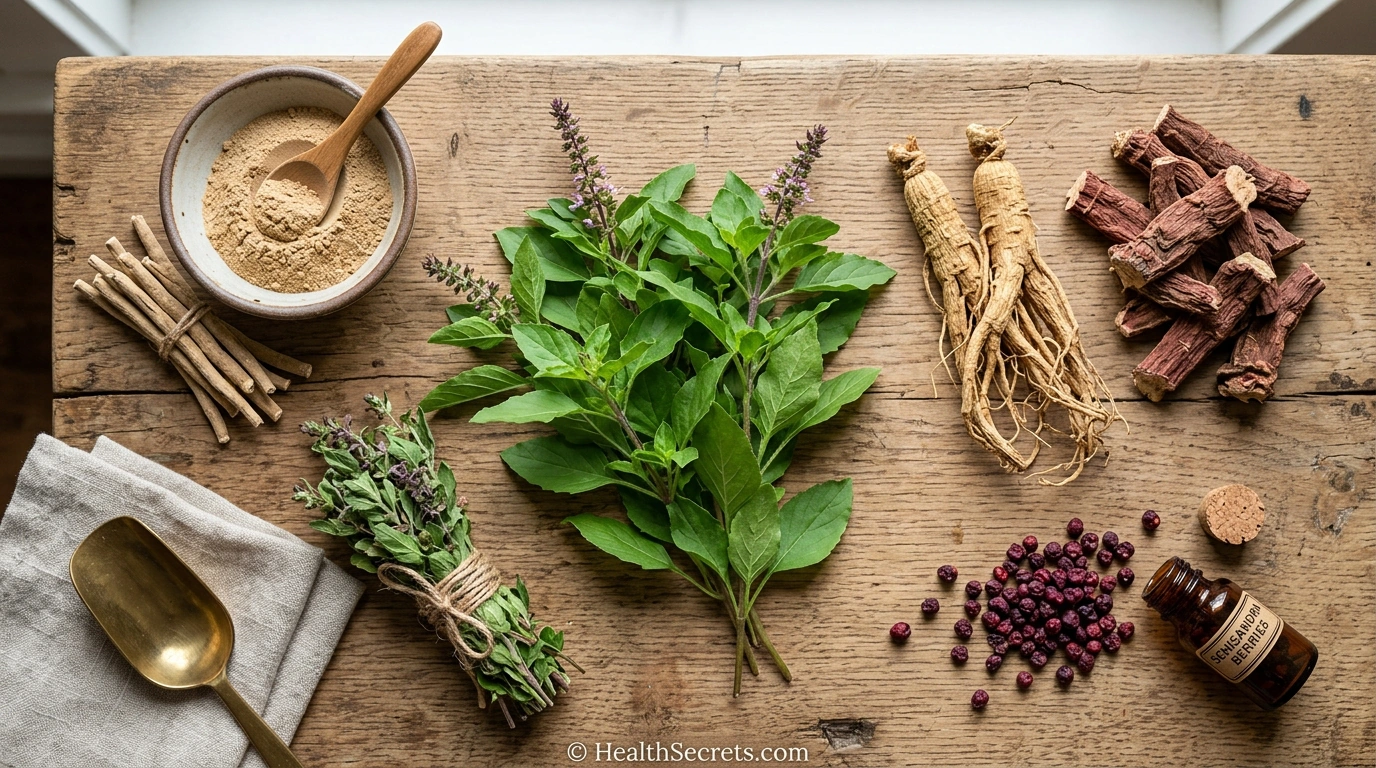
The major adaptogens studied for stress include:
- Ashwagandha (Withania somnifera) — strongest clinical evidence for stress and cortisol reduction
- Rhodiola rosea — moderate evidence for fatigue, mental performance, burnout
- Holy basil / Tulsi (Ocimum sanctum) — extensive traditional use, limited clinical trials
- Panax ginseng (Asian ginseng) — moderate evidence for energy and stress resilience
- Schisandra chinensis — traditional Chinese medicine use, limited Western research
- Eleuthero (Siberian ginseng) — Soviet-era research, mixed modern evidence
- Maca, reishi, cordyceps, bacopa — minimal specific stress evidence
It is important to understand what adaptogens are not: they are not stimulants, not sedatives, not magic bullets, and not replacements for therapy or stress management fundamentals [3].

How Do Adaptogens Work in the Body to Reduce Stress?
Adaptogens work through multiple interconnected mechanisms to help the body handle stress more effectively, primarily by modulating the HPA axis, reducing cortisol, and providing antioxidant and neuroprotective effects. Unlike pharmaceuticals that target a single pathway, adaptogens act non-specifically across several systems simultaneously.
How do adaptogens modulate the HPA axis?
The HPA (hypothalamic-pituitary-adrenal) axis is the body's central stress response system. When you experience stress, the hypothalamus releases CRH, the pituitary releases ACTH, and the adrenals release cortisol. Chronic stress dysregulates this system, keeping it constantly activated. Adaptogens help normalize HPA axis function by reducing excessive cortisol release, improving HPA axis sensitivity, and restoring appropriate stress response calibration [4].

How does ashwagandha reduce cortisol levels?
Ashwagandha is the most studied adaptogen for cortisol reduction. A 2024 systematic review and meta-analysis of 9 studies (558 patients) found that ashwagandha significantly reduced perceived stress scores (−4.72), anxiety scores (−2.19), and serum cortisol levels (−2.58) compared to placebo. The mechanisms include GABAergic activity (enhancing the calming neurotransmitter GABA), direct cortisol suppression, and antioxidant protection against stress-induced cellular damage [5][6].
Do adaptogens protect the brain from stress damage?
Several adaptogens demonstrate neuroprotective properties that protect brain cells from chronic stress. They reduce neuroinflammation, support neurotransmitter balance (serotonin, dopamine, norepinephrine), and protect the hippocampus — the memory center that is particularly vulnerable to cortisol-induced damage. Rhodiola rosea acts partly through MAO (monoamine oxidase) inhibition, increasing availability of mood-regulating neurotransmitters [7].
How Well Are Adaptogens Absorbed and Which Forms Work Best?
Bioavailability varies significantly between adaptogen forms and preparations. Standardized extracts with verified active compound concentrations consistently outperform raw herb powders in both absorption and clinical outcomes. The form you choose directly affects whether you get therapeutic benefit.
Ashwagandha: KSM-66 vs. Sensoril vs. generic
- KSM-66 is a full-spectrum root extract standardized to 5% withanolides, produced without chemical solvents. It has the most clinical trials (24+) and is considered the gold standard.
- Sensoril is a root-and-leaf extract with higher withanolide concentration (10%), potentially more sedating, and well-suited for evening use and sleep support.
- Generic ashwagandha powders vary wildly in withanolide content and may not deliver therapeutic doses. Always choose standardized extracts over raw powder [8].
Rhodiola: what standardization matters?
Look for extracts standardized to 3% rosavins and 1% salidroside — the ratio found in the natural root. The SHR-5 extract is the most studied form in clinical trials. Generic rhodiola products frequently contain insufficient active compounds or are adulterated with other species. Product quality is a significant concern in the rhodiola market due to overharvesting and limited supply [9].
Do food-form adaptogens work?
Adaptogen teas (tulsi tea, ginseng tea) and food preparations deliver lower concentrations of active compounds compared to standardized extracts. Holy basil tea (2–3 cups daily) has traditional backing but delivers modest doses. For therapeutic benefit, standardized extracts in capsule or powder form are more reliable.
How Much of Each Adaptogen Should You Take for Stress?
Proper dosing is critical for adaptogen effectiveness. Under-dosing is the most common reason people do not experience benefits. Clinical trials provide clear dosing ranges for the most studied herbs, and standardized extracts ensure you are getting consistent active compound levels with each dose.
Dosing guidelines by adaptogen
| Adaptogen | Daily Dose | Standardization | Timing |
|---|---|---|---|
| Ashwagandha | 300–600mg | KSM-66 (5%) or Sensoril (10%) | With food; evening for sleep |
| Rhodiola | 200–600mg | 3% rosavins, 1% salidroside | Morning; avoid evening |
| Holy Basil | 300–600mg or 2–3 cups tea | Full-spectrum extract | Morning or throughout day |
| Panax Ginseng | 200–400mg | Ginsenosides standardized | Morning; avoid evening |
| Eleuthero | 300–1,200mg | Eleutherosides B+E | Morning or early afternoon |

Calming adaptogens (ashwagandha, holy basil) can be taken in the evening or split between morning and evening.
Ashwagandha Sensoril is particularly suited for evening use.
Energizing adaptogens (rhodiola, ginseng, eleuthero) should be taken in the morning or early afternoon — evening dosing may interfere with sleep. Take most adaptogens with food to reduce stomach upset and improve absorption.
How long until adaptogens start working?
Allow 4–8 weeks of consistent daily use to assess effectiveness. Adaptogens build stress resilience gradually, not immediately. Track your stress levels and symptoms during this trial period. If no benefit after 8 weeks, that particular adaptogen may not work for you [10].
Can You Get Adaptogenic Benefits from Food Sources?
While the primary adaptogens are consumed as supplements, several have traditional food-form preparations that provide modest adaptogenic benefits. However, food sources generally deliver lower concentrations of active compounds compared to standardized extracts, making them complementary rather than primary approaches.
- Holy basil (Tulsi) tea is the most accessible food-form adaptogen. Consumed as 2–3 cups daily in traditional Ayurvedic practice, tulsi tea provides mild calming effects and antioxidant benefits, though the dose of active compounds is lower than capsule extracts.
- Ginseng tea and preparations are widely consumed across Asia. Fresh ginseng root can be sliced into soups, stews, and teas. Korean red ginseng preparations are traditional food-medicine products with centuries of use.
- Schisandra berries can be consumed as dried berries, teas, or tinctures in traditional Chinese medicine preparations.
- Maca root powder is commonly added to smoothies, oatmeal, and baked goods, providing mild energizing and mood-supporting effects.
- Reishi and cordyceps mushrooms are available as teas, powders, and food additives, though their primary adaptogenic research is limited.
For targeted stress support, standardized supplement extracts remain more reliable than food sources alone. However, incorporating adaptogenic teas and foods as part of a broader anti-inflammatory diet can provide complementary benefits alongside a comprehensive mental wellness approach.
Are Adaptogens Safe and What Are the Side Effects?
Adaptogens are generally well-tolerated at recommended doses, but important contraindications and potential drug interactions exist that require awareness. Safety profiles vary between herbs, and individual responses differ based on genetics, health conditions, and concurrent medications.
Ashwagandha safety
Common side effects: Mild digestive upset (take with food), drowsiness (adjust dose or take evening only), headache (rare). A 2024 meta-analysis confirmed ashwagandha is "safe and effective" with primarily mild side effects across clinical trials [5].
Contraindications:
- Thyroid disorders: Ashwagandha may increase thyroid hormone levels. Avoid with hyperthyroidism; consult your doctor if hypothyroid and taking medication. A 2026 case report highlighted potential HPA axis suppression with chronic high-dose use [11].
- Pregnancy and breastfeeding: Insufficient safety data. Avoid.
- Autoimmune conditions: May stimulate immune activity. Consult your doctor.
- Surgery: Discontinue 2 weeks before due to potential sedative effects.

Rhodiola safety
Common side effects: Jitteriness or agitation (reduce dose), insomnia (do not take in the evening), dry mouth (rare). Generally well-tolerated at 200–600mg daily.
Contraindications:
- Bipolar disorder: May trigger manic episodes. Avoid.
- Pregnancy and breastfeeding: Insufficient data. Avoid.
Drug interactions to watch
Adaptogens may interact with:
- Thyroid medications (especially ashwagandha)
- Immunosuppressants (may reduce effectiveness)
- Sedatives and anti-anxiety drugs (may enhance sedative effects)
- Blood thinners (holy basil, ginseng may affect clotting)
- Diabetes medications (some adaptogens affect blood sugar)
Always inform your healthcare provider if you are taking adaptogens alongside prescription medications [12].
What Can Adaptogens Actually Do for Your Stress Levels?
Adaptogens provide modest but measurable stress resilience support, typically a 10–20% improvement in stress metrics when used consistently for 4–8 weeks alongside healthy lifestyle habits. They are supportive tools, not miracle cures, and understanding this distinction is essential for making informed supplement decisions.
What adaptogens can realistically do
- Reduce cortisol levels by approximately 20–30% in chronically stressed adults (ashwagandha)
- Improve scores on validated stress and anxiety scales (Perceived Stress Scale, HAM-A)
- Reduce mental fatigue and improve cognitive performance under stress (rhodiola)
- Support better sleep quality when stress is the primary disruptor
- Complement lifestyle stress management strategies
What adaptogens cannot do
- Cure anxiety disorders or clinical depression
- Replace therapy, medication, or professional mental health treatment
- Eliminate the sources of your stress
- Work immediately (they require weeks of consistent use)
- Work for everyone (individual response varies considerably)
The hierarchy that actually matters
- Lifestyle fundamentals (sleep 7–9 hours, regular exercise, stress management) — most important
- Professional support (therapy, counseling) — if needed for anxiety or depression
- Adaptogens — supportive addition to a solid foundation
If you are not sleeping, not exercising, and not managing stress through other means, adaptogens alone will not solve these problems. Address the fundamentals first, then consider adaptogens as complementary support [13].

What Is the Best Way to Start Using Adaptogens for Stress?
The most effective approach is to start with the best-studied adaptogen at a conservative dose, give it adequate time, and build from there based on your individual response. Do not start multiple adaptogens simultaneously — you will not be able to identify which one is helping.
Phase 1: Weeks 1–4 (Single Herb Trial)
- Choose ashwagandha as your starting adaptogen (strongest evidence)
- Select a quality product: KSM-66 (daytime) or Sensoril (evening/sleep)
- Start at 300mg daily with food for the first week
- Increase to 600mg daily if well-tolerated
- Track stress levels, sleep quality, and any side effects daily
Phase 2: Weeks 5–8 (Assessment and Optimization)
- Assess whether ashwagandha is providing noticeable benefit
- If helpful, continue at effective dose
- If limited benefit, consider adding morning rhodiola (200–400mg) for energy and fatigue
- Ensure lifestyle fundamentals are in place: sleep, exercise, stress management
Phase 3: Ongoing (Maintenance)
- Continue effective adaptogen(s) at maintenance dose
- Consider cycling (8 weeks on, 2 weeks off) or continuous use based on response
- Re-evaluate every 3 months: are you still benefiting?
- Consult healthcare provider for long-term use, especially with ashwagandha and thyroid health

Top Recommended Products
Nootropics Depot
Nootropics Depot KSM-66 Ashwagandha
KSM-66 is the most clinically studied ashwagandha extract available, and Nootropics Depot is known for rigorous third-party testing and quality control across their product line.
Pros
- + Gold-standard KSM-66 extract with 24+ clinical trials
- + excellent price per serving
- + 90 servings per bottle
- + clean formulation
Cons
- - Single 300mg capsule requires doubling for 600mg dose
Why we included it: KSM-66 is the most clinically studied ashwagandha extract available, and Nootropics Depot is known for rigorous third-party testing and quality control across their product line.
Retailer link opens on Amazon after the review details above
Doctor’s Best
Doctor’s Best Ashwagandha with Sensoril
Sensoril is the preferred ashwagandha form for calming and sleep support, and Doctor’s Best delivers it at an unbeatable price point with reliable quality standards.
Pros
- + Sensoril extract with higher withanolide percentage
- + excellent for evening use and sleep
- + very affordable
- + trusted brand
Cons
- - Lower total ashwagandha per capsule (125mg vs 300-600mg in other products)
Why we included it: Sensoril is the preferred ashwagandha form for calming and sleep support, and Doctor’s Best delivers it at an unbeatable price point with reliable quality standards.
Retailer link opens on Amazon after the review details above
NOW Foods
NOW Foods KSM-66 Ashwagandha
Delivers the full 600mg clinical dose of KSM-66 in a single capsule from one of the most trusted supplement manufacturers in the industry.
Pros
- + Full 600mg clinical dose in one capsule
- + NPA A-rated GMP facility
- + vegan-friendly
- + family-owned company since 1968
Cons
- - Newer product with less individual brand recognition than Nootropics Depot
Why we included it: Delivers the full 600mg clinical dose of KSM-66 in a single capsule from one of the most trusted supplement manufacturers in the industry.
Retailer link opens on Amazon after the review details above
Gaia Herbs
Gaia Herbs Rhodiola Rosea
Gaia Herbs provides full supply chain transparency and uses a liquid extraction method that enhances bioavailability — important for rhodiola where product quality varies widely.
Pros
- + Reputable brand with seed-to-shelf transparency
- + liquid phyto-cap for bioavailability
- + standardized extract
- + purity-tested
Cons
- - Higher price point than generic rhodiola
- - specific rosavin/salidroside standardization not always listed
Why we included it: Gaia Herbs provides full supply chain transparency and uses a liquid extraction method that enhances bioavailability — important for rhodiola where product quality varies widely.
Retailer link opens on Amazon after the review details above
Further Reading
Further Reading
"Adaptogens: Herbs for Strength, Stamina, and Stress Relief"
by David Winston and Steven Maimes
Detailed profiles of major and minor adaptogens; traditional use and modern research for each herb; practical dosing and preparation guidance; safety and contraindication information
Why it adds value here
The most thorough and balanced guide to adaptogens available, written by one of the most respected herbalists in North America with decades of clinical experience.
Best for: Anyone wanting a comprehensive reference on individual adaptogens with traditional and modern evidence
View book detailsFurther Reading
"The Stress-Proof Brain: Master Your Emotional Response to Stress Using Mindfulness and Neuroplasticity"
by Melanie Greenberg
Neuroscience of stress response explained accessibly; practical mindfulness and cognitive techniques; strategies for building stress resilience; exercises for rewiring stress patterns
Why it adds value here
Adaptogens work best alongside comprehensive stress management. This book provides the behavioral and psychological tools that form the essential foundation adaptogens are designed to complement.
Best for: Readers who want evidence-based stress management strategies beyond supplements
View book detailsAEO FAQ
Frequently Asked Questions
10 common questions answered
Ashwagandha has the strongest clinical evidence for stress and anxiety reduction. A 2024 meta-analysis of 9 studies found it significantly reduced perceived stress, anxiety scores, and cortisol levels compared to placebo. Start with 300–600mg daily of a KSM-66 or Sensoril standardized extract and allow 4–8 weeks to assess effectiveness.
Most adaptogens require 4–8 weeks of consistent daily use before noticeable benefits appear. They build stress resilience gradually by modulating the HPA axis and reducing chronically elevated cortisol. Some people notice subtle improvements in sleep or mood within 1–2 weeks, but full effects develop over the trial period.
Yes, many practitioners recommend combining ashwagandha and rhodiola because they have complementary effects. Ashwagandha is calming and best for evening use, while rhodiola is energizing and best for morning use. Start with one herb first to assess your response, then add the second after 2–4 weeks if desired.
Short-term use (8–12 weeks) is well-supported by clinical trial data for ashwagandha and rhodiola. Long-term safety data is limited. Some practitioners recommend cycling (8 weeks on, 2 weeks off). A 2026 case report raised concerns about potential HPA axis suppression with chronic high-dose ashwagandha use, so periodic reassessment with your healthcare provider is recommended.
No. Adaptogens are dietary supplements with modest effects and should never replace prescribed medications without medical supervision. They may complement professional treatment, but they cannot treat clinical anxiety disorders, depression, or other mental health conditions. Always work with your healthcare provider before making changes to any medication regimen.
KSM-66 is a root-only extract standardized to 5% withanolides, with 24+ clinical trials and a more energizing/balancing profile suited for daytime use. Sensoril is a root-and-leaf extract with 10% withanolides, tends to be more calming, and is better suited for evening use and sleep support. Both are quality options — choose based on your primary goals.
Side effects are generally mild and uncommon at recommended doses. Ashwagandha may cause digestive upset or drowsiness. Rhodiola may cause jitteriness if the dose is too high or taken too late in the day. More serious concerns include ashwagandha's potential effect on thyroid hormones and rhodiola's risk of triggering mania in people with bipolar disorder.
Most adaptogens lack adequate safety data for pregnancy and breastfeeding. The general recommendation from healthcare providers is to avoid adaptogenic supplements during pregnancy and lactation. Holy basil tea in moderate amounts has traditional use during pregnancy in some cultures, but concentrated extracts should be avoided without medical guidance.
Yes, particularly ashwagandha. Studies show ashwagandha may increase thyroid hormone levels (T3 and T4), which could interfere with thyroid medication dosing. If you have any thyroid condition or take thyroid medication, consult your endocrinologist before using ashwagandha. Other adaptogens have less documented thyroid interaction.
Look for three things: standardized extracts (KSM-66 or Sensoril for ashwagandha, 3% rosavins and 1% salidroside for rhodiola), third-party testing verification (USP, NSF, or ConsumerLab), and reputable manufacturers with transparent sourcing. Avoid proprietary blends that hide individual doses, unbranded generic products, and supplements without standardization claims.
Was this article helpful?
Written & Reviewed By Experts
Author
Dr. James Rivera
Medical Reviewer
Dr. Sarah Chen
All content is evidence-based, peer-reviewed by qualified professionals, and updated regularly. Our editorial team follows strict guidelines for accuracy and transparency.
References & Citations
18 sources cited
Medical Disclaimer
This article is for informational purposes only and does not constitute medical advice. Read the full medical disclaimer. Always consult with a qualified healthcare provider before starting any new supplement, treatment, or major dietary change.