Here's something that genuinely surprised me when I started digging into the research: sleep might be a stronger predictor of how long you live than diet or exercise. I know—that sounds like an exaggeration. It's not.
A 2026 nationwide analysis from Oregon Health & Science University found that insufficient sleep was more closely tied to shorter life expectancy than poor diet, lack of exercise, or even loneliness. And we're not talking about a marginal effect. The connection was consistent year after year, across nearly every demographic studied.
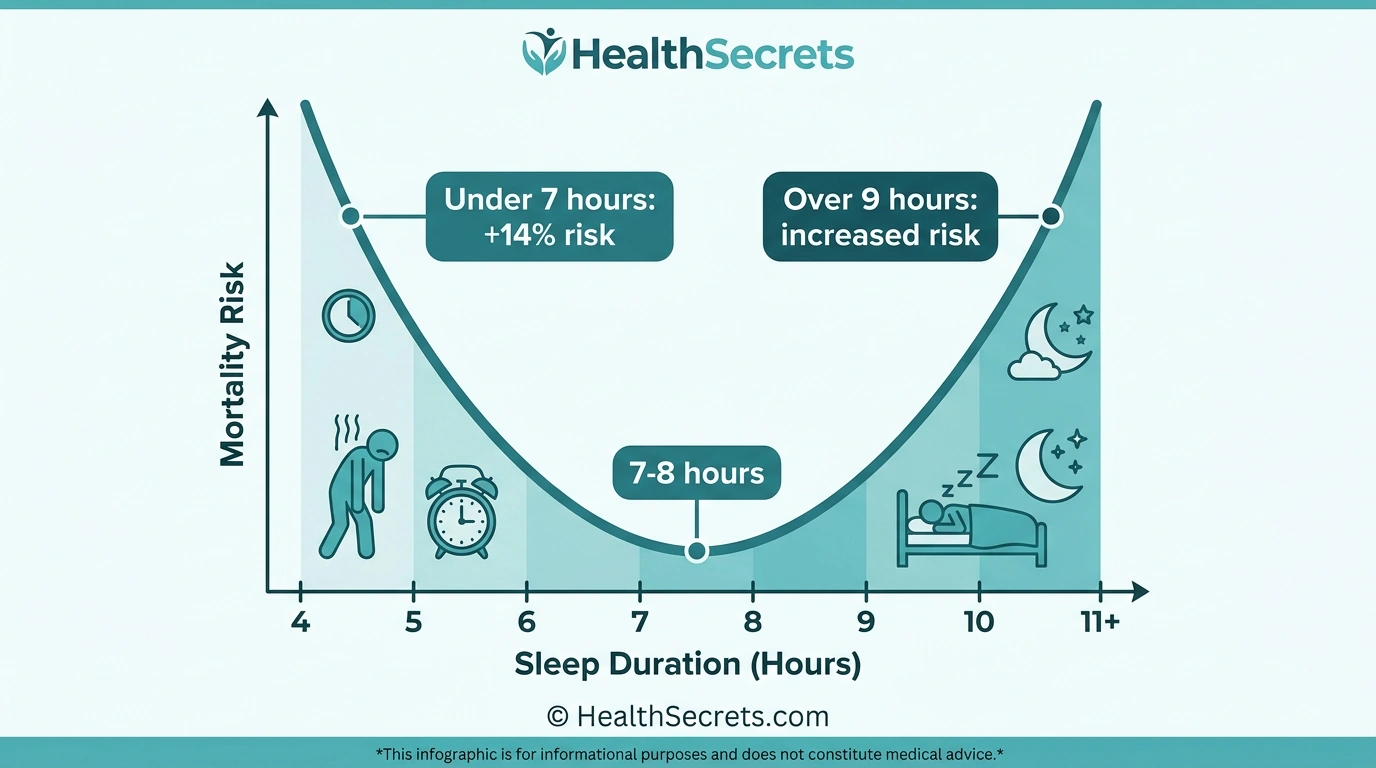
The relationship between sleep and longevity follows what researchers call a U-shaped curve—both too little and too much sleep increase your risk of dying prematurely. The sweet spot? Seven to eight hours. But here's where it gets interesting: how consistently you sleep matters even more than how long you sleep.
In this guide, we'll break down everything the science tells us about sleep and longevity—from the optimal duration to the dramatic decline in deep sleep as you age, from circadian rhythm disruption to the brain's waste-clearance system that only works while you're unconscious. We'll also cover sleep disorders that silently shorten lives and give you a practical, tiered action plan.
If you're exploring the broader picture of healthy aging, check out our longevity and anti-aging complete guide and our deep dive into cognitive aging and brain health.
What Is the Sleep-Longevity Connection and Why Should You Care?
The sleep-longevity connection refers to the well-established scientific relationship between sleep patterns and lifespan. Large population studies consistently show that sleep duration, quality, and regularity directly influence mortality risk, disease development, and biological aging rate. This isn't speculative—it's backed by decades of epidemiological data involving millions of participants.
So what exactly does the research tell us? Let's start with the basics.
How Much Sleep Do You Actually Need to Live Longer?
The answer is surprisingly precise. A systematic review and meta-analysis of prospective studies found a clear U-shaped association between sleep duration and all-cause mortality. People sleeping 7–8 hours had the lowest risk. Those sleeping under 7 hours faced approximately 14% increased mortality risk. Those sleeping over 8–9 hours? Also elevated risk—possibly because excessive sleep serves as a marker for underlying disease rather than a direct cause.
A 2026 study in Scientific Reports confirmed this pattern: participants sleeping more than 8 hours had significantly higher all-cause mortality compared to the 7–8 hour group (adjusted HR 1.27, 95% CI 1.04–1.54). Meanwhile, a separate 2026 analysis found a U-shaped relationship between sleep duration and cognitive decline, with the optimal nadir around 7.23 hours.
Why Does Sleep Regularity Matter More Than Duration?
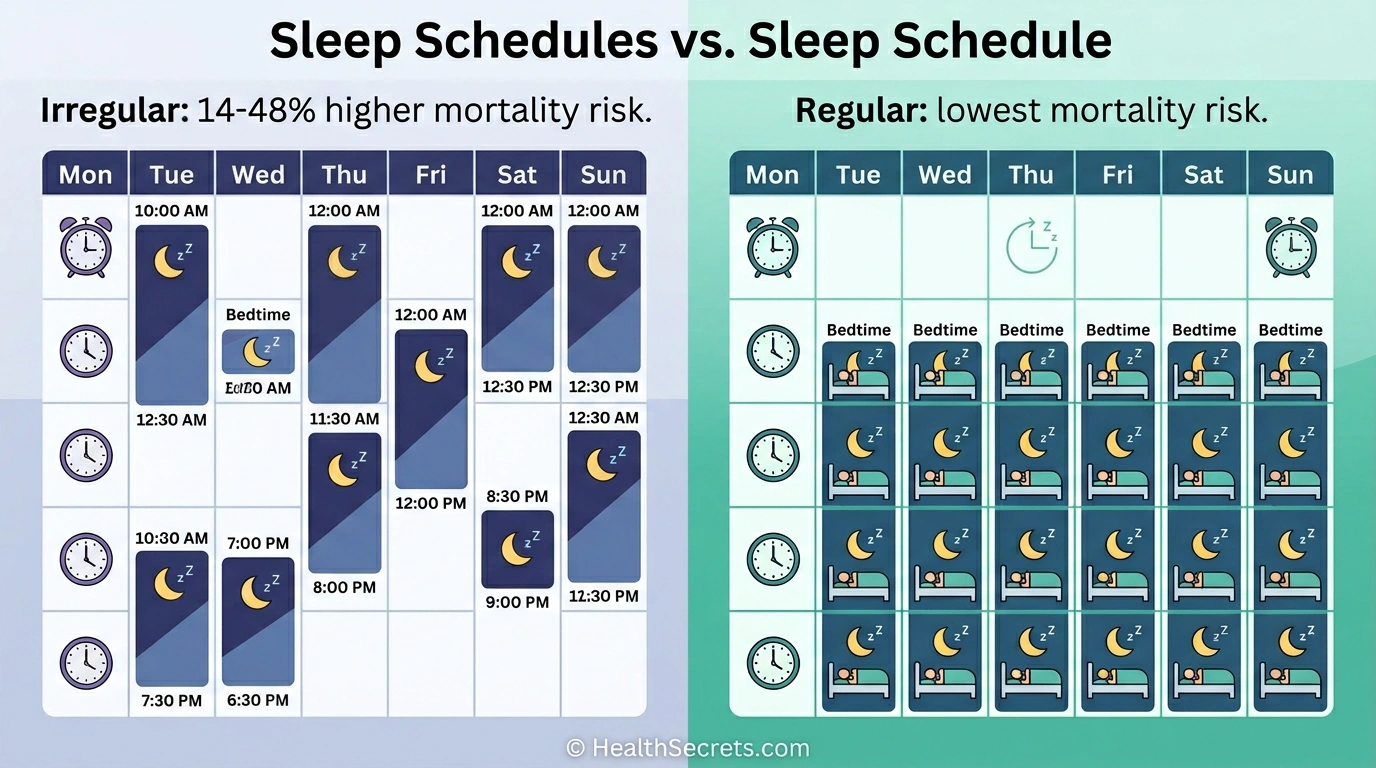
Here's something most people miss entirely. A prospective cohort study published in Sleep (2023) using UK Biobank data from over 60,000 participants found that sleep regularity was a stronger predictor of mortality risk than sleep duration. Higher sleep regularity was associated with 20–48% lower risk of all-cause mortality and 22–57% lower cardiometabolic mortality risk.
The researchers proposed that sleep regularity serves as a more direct proxy for circadian disruption—which experimental studies show has broad adverse effects on physiology. In animal models, circadian disruption induced by irregular light patterns causes premature mortality and profound cardiovascular disease.
Translation: going to bed and waking up at the same time every day—including weekends—may be more important than obsessing over exactly how many hours you get.
How Does Sleep Affect Your Body's Aging Process?
Sleep influences longevity through multiple biological mechanisms that operate simultaneously every night. During quality sleep, your body releases growth hormone for cellular repair, consolidates memories, regulates inflammation, clears brain waste, and resets metabolic and cardiovascular systems. Disrupting any of these processes accelerates biological aging.
Growth Hormone and Cellular Repair During Deep Sleep
Most growth hormone (GH) secretion occurs during deep sleep (slow-wave sleep, Stage 3). A landmark study demonstrated that plasma GH peaks of 13–72 mμg/ml appear with the onset of deep sleep, with the release pattern directly tied to sleep timing—delay sleep onset, and GH release delays correspondingly.
A 2026 UC Berkeley study revealed the neural circuitry explaining this relationship: sleep drives growth hormone release through specific brain pathways, and growth hormone feeds back to regulate wakefulness. This creates a tightly balanced system essential for muscle maintenance, bone strength, tissue regeneration, and metabolic health. Less deep sleep literally means less repair.
The Glymphatic System: Your Brain's Nighttime Cleaning Crew
Discovered in 2012, the glymphatic system flushes cerebrospinal fluid through channels around blood vessels in the brain, collecting metabolic waste and toxins. It's most active during deep sleep.
A groundbreaking 2026 randomized crossover trial published in Nature Communications provided the first direct human evidence that the glymphatic system clears amyloid-beta and tau proteins—the hallmarks of Alzheimer's disease—from brain to plasma during normal sleep. Sleep deprivation impaired this clearance. Meanwhile, Washington University researchers (2024) discovered that brain cell electrical activity during sleep literally propels fluid through the brain, actively cleaning it of debris.
This means chronic sleep deprivation may be silently contributing to neurodegeneration decades before symptoms appear.

Inflammation, Immunity, and Metabolic Regulation
Poor sleep increases inflammatory markers including C-reactive protein (CRP), interleukin-6 (IL-6), and tumor necrosis factor-alpha (TNF-alpha)—all drivers of accelerated aging. Sleep deprivation impairs immune cell function, reduces vaccine effectiveness, and disrupts appetite hormones (ghrelin and leptin), promoting weight gain and insulin resistance. Your cardiovascular system also relies on sleep for blood pressure dipping and heart rate variability recovery.
What Are the Key Benefits of Optimizing Sleep for Longevity?
Optimizing sleep duration, quality, and regularity provides measurable benefits across virtually every organ system. The evidence shows reduced mortality risk, improved brain health, stronger cardiovascular function, better metabolic health, enhanced immunity, and slower biological aging. These aren't theoretical—they're documented in large prospective studies.
Does Better Sleep Really Reduce Your Risk of Dying?
Yes—and the numbers are striking. The UK Biobank sleep regularity study showed that individuals in the most regular sleep quintile had 20–48% lower all-cause mortality compared to the least regular sleepers. A meta-analysis confirmed that imbalanced sleep (both short and long) increases mortality risk by 14–34%. The 2026 OHSU study found that sufficient sleep was more strongly tied to life expectancy than diet or exercise.
How Does Sleep Protect Your Brain as You Age?
Deep sleep is when memory consolidation occurs and the glymphatic system clears neurotoxic waste. The U-shaped cognitive decline study (2026) found that sleep duration below 7.23 hours increased cognitive decline risk, while duration above this threshold also elevated risk (OR 1.31). Maintaining adequate deep sleep preserves cognitive function, emotional processing (via REM sleep), and may reduce Alzheimer's risk through consistent waste clearance.
Can Good Sleep Habits Improve Your Heart Health?
Absolutely. Blood pressure naturally dips during sleep—a phenomenon called "nocturnal dipping." Non-dipping patterns are associated with increased cardiovascular events. Sleep apnea—which causes repeated oxygen deprivation—dramatically increases cardiovascular risk. Studies show that CPAP treatment for sleep apnea reduces total cardiovascular events, with untreated severe sleep apnea showing hazard ratios up to 5.2 for cardiovascular mortality.
Does Sleep Quality Affect Your Immune System and Metabolism?
Sleep deprivation impairs cytokine production, reduces natural killer cell activity, and diminishes antibody responses to vaccines. Metabolically, insufficient sleep disrupts insulin sensitivity and appetite regulation—people who sleep poorly eat more, crave more sugar, and gain more weight. These effects compound over years, accelerating the aging process from multiple directions simultaneously.
What Happens When Sleep Goes Wrong? Risks and Disorders to Know
Sleep disorders are common, frequently undiagnosed, and carry serious health consequences. Obstructive sleep apnea affects 10–30% of adults and increases all-cause mortality substantially. Chronic insomnia elevates risk for depression, cardiovascular disease, and cognitive decline. Ignoring persistent sleep problems isn't just uncomfortable—it's genuinely dangerous.

Sleep Apnea: The Silent Longevity Killer
Obstructive sleep apnea (OSA) involves repeated airway collapse during sleep, causing breathing pauses and oxygen drops. The Busselton Health Study found that severe sleep apnea was an independent risk factor for all-cause mortality. About 42% of deaths in people with severe OSA were attributed to cardiovascular disease or stroke. When regular CPAP users were removed from the analysis, the cardiovascular mortality hazard ratio soared from 2.9 to 5.2.
Symptoms include loud snoring, gasping during sleep, morning headaches, and daytime fatigue despite adequate time in bed. If any of these sound familiar—get evaluated. CPAP treatment is effective and significantly reduces cardiovascular risk.

Insomnia and Other Sleep Disorders
Chronic insomnia increases risk for depression, anxiety, cardiovascular disease, and cognitive decline. Cognitive Behavioral Therapy for Insomnia (CBT-I) is the first-line treatment—more effective long-term than sleeping pills, which disrupt sleep architecture and lose effectiveness over time.
Other disorders including restless leg syndrome, periodic limb movement disorder, and circadian rhythm disorders all warrant professional evaluation if persistent.
How Do You Optimize Sleep for Maximum Longevity?
The most effective sleep optimization follows a tiered approach: consistency first, then environment, then daytime habits, then evening routine, and finally supplements if needed. Prioritizing consistency—same bedtime and wake time every day—delivers the biggest longevity return based on current research.
Tier 1 — Consistency (Most Important):
- Go to bed and wake up at the same time every day, including weekends
- Target 7–8 hours; calculate your bedtime from your required wake time
- Set a bedtime alarm, not just a morning alarm
- Variation of more than 1–2 hours disrupts your circadian rhythm
Tier 2 — Sleep Environment:
- Complete darkness (blackout curtains or sleep mask)
- Cool temperature: 65–68°F (18–20°C)—your body must cool to enter deep sleep
- Minimize noise (earplugs or white noise machine)
- Quality mattress and pillows—you spend one-third of your life here
Tier 3 — Daytime Habits:
- Morning bright light within 1–2 hours of waking (10–30 minutes outdoors)
- Regular exercise improves sleep quality and deep sleep—but not within 3 hours of bedtime
- No caffeine after 2 PM (half-life is 5–6 hours; it reduces deep sleep even if you fall asleep)
Tier 4 — Evening Routine:
- No screens 1–2 hours before bed; blue light suppresses melatonin
- Dim household lights in the evening
- 30–60 minute wind-down: reading, gentle stretching, warm bath
- Finish eating 2–3 hours before bed
- Avoid alcohol—it suppresses deep sleep and REM despite causing drowsiness
Tier 5 — Supplements (If Needed):
- Magnesium glycinate 300–400 mg before bed if deficient
- Melatonin 0.5–3 mg for circadian issues (jet lag, shift work)—not for chronic insomnia
- Avoid chronic sleep medication dependence; CBT-I is more effective long-term
What Lifestyle Factors Support Better Sleep as You Age?
Deep sleep declines approximately 75% between ages 20 and 70, making proactive lifestyle interventions increasingly critical. Morning light exposure, regular physical activity, stress management, and circadian-aligned meal timing all support better sleep architecture throughout the aging process.

Circadian Rhythm Maintenance
Your suprachiasmatic nucleus (SCN) synchronizes primarily through light exposure. Morning sunlight anchors your rhythm; evening blue light disrupts it. Shift work—the most extreme circadian disruption—increases cardiovascular disease risk by 40–50%, plus elevated diabetes, cancer, and cognitive decline risk.
Time-restricted eating (finishing dinner by 7–8 PM) supports circadian health. Late-night meals disrupt metabolic rhythms and impair sleep quality.
Age-Related Sleep Changes: What's Normal
As you age, expect less deep sleep, more nighttime awakenings, earlier sleep timing, and reduced sleep efficiency. These changes are normal—but not inevitable in their severity. Strategies include:
- Increased exercise (even more critical for sleep quality with age)
- Prioritized morning outdoor light exposure
- Sleep disorder screening (apnea becomes more common with age)
- Medication review with your doctor (many medications disrupt sleep)
- Short naps only (20–30 minutes, early afternoon—never late)
If you're sleeping 10+ hours and still exhausted, or you can't sleep despite good hygiene, see a doctor. Normal aging doesn't cause severe insomnia or excessive daytime sleepiness.
For more on how stress accelerates aging and how hormonal balance affects longevity, explore our related guides.

Action Plan
What Should You Do First to Improve Sleep for Longevity?
Follow the sequence below, work through each phase in order, and use the checklist as your practical implementation guide.
Start with the highest-impact, lowest-effort intervention: locking in a consistent sleep-wake schedule. Research shows this single change has a greater effect on mortality risk than increasing sleep duration. Then layer in environment and habit changes over the following weeks.
Phase 1 — This Week (Consistency Foundation):
- Set a fixed bedtime and wake time (same every day, including weekends)
- Calculate 7–8 hours backward from your required wake time
- Set a bedtime alarm on your phone
- Remove your phone from the bedroom
Phase 2 — Weeks 2–3 (Environment Optimization):
- Install blackout curtains or get a quality sleep mask
- Set bedroom temperature to 65–68°F (18–20°C)
- Get a white noise machine or earplugs if noise is an issue
- Cut caffeine after 2 PM
Phase 3 — Weeks 4–6 (Habit Integration):
- Add 10–30 minutes morning outdoor light exposure daily
- Establish a 30-minute screen-free wind-down routine
- Stop eating 2–3 hours before bed
- Eliminate or significantly reduce alcohol consumption
Phase 4 — Ongoing (Monitor and Adjust):
- Track subjective sleep quality (how do you feel waking up?)
- Consider magnesium supplementation if sleep quality remains poor
- Get evaluated for sleep apnea if you snore loudly or feel exhausted despite adequate time in bed
- Review medications with your doctor for sleep-disrupting effects