
If you have ever felt uncomfortably bloated hours after a meal, struggled with chronic constipation, or been told you might have SIBO, there is a good chance your gut motility needs attention. Gut motility is the rhythmic, wave-like muscular activity that moves food from your mouth all the way to elimination — and when it stalls, problems pile up fast.
The good news? You do not need prescription drugs to get things moving again. Research shows that targeted diet changes, specific supplements, exercise, and simple vagus nerve techniques can measurably improve digestive transit. In this guide, you will learn a step-by-step protocol grounded in current gastroenterology research so you can take action today.
If you are new to digestive health, start with our complete gut health guide for foundational knowledge. For those dealing with bacterial overgrowth, our SIBO treatment guide covers the motility connection in depth.
What Do You Need to Know Before Improving Gut Motility?
Gut motility involves coordinated muscle contractions — peristalsis, segmentation, and mass movements — controlled by your enteric nervous system, often called the "second brain." Total digestive transit time ranges from 24 to 72 hours depending on diet, hydration, stress, and individual physiology. Understanding these basics helps you target the right interventions.
Your digestive tract uses three main types of movement.
- Peristalsis creates wave-like contractions that propel food forward.
- Segmentation mixes contents in the small intestine for better absorption.
- Mass movements are powerful colonic contractions that occur 1–3 times daily, moving waste toward the rectum.
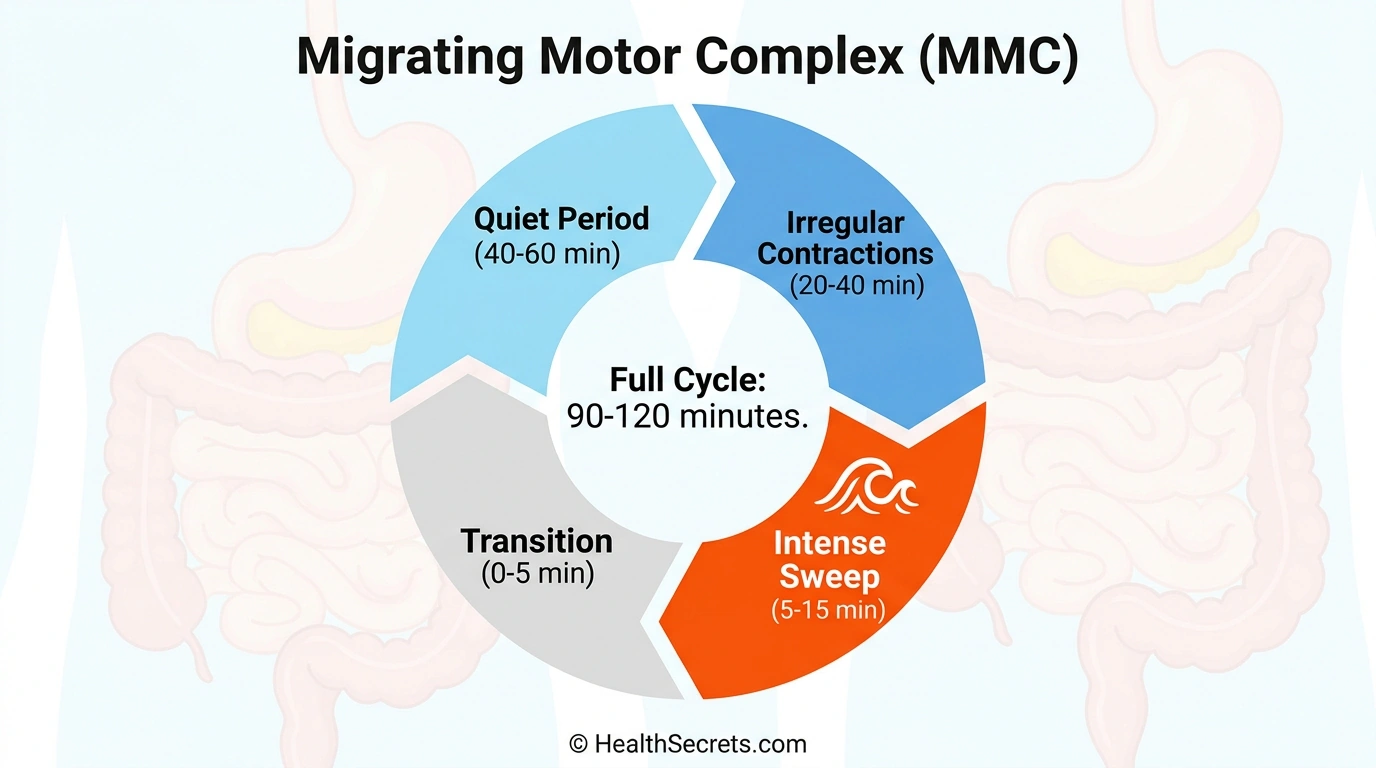
The most important motility mechanism you have probably never heard of is the migrating motor complex (MMC). This cyclical pattern of electrical activity occurs only during fasting and sweeps undigested food, bacteria, and debris through your intestines every 90–120 minutes. Research published in the Journal of Smooth Muscle Research confirmed that the MMC cycle is mediated through the interaction between motilin and serotonin (5-HT) via a positive feedback mechanism [1]. When the MMC is disrupted — by frequent snacking, stress, or certain medications — bacterial overgrowth and bloating often follow. In fact, one study found that 86% of people with an abnormal MMC also had bacterial overgrowth [2] in the duodenum [2].
- Signs of poor gut motility include: chronic constipation (fewer than 3 bowel movements per week), bloating after meals, early satiety, nausea, belching, and undigested food in stool. Conditions like gastroparesis, SIBO, and IBS-C are all linked to impaired motility.
- Who this guide is for: Anyone experiencing sluggish digestion, chronic constipation, or post-meal bloating who wants to improve transit naturally before or alongside medical treatment. If you have IBS with constipation, these strategies can complement your existing plan.
- Expected timeline: Hydration and exercise improvements can show results within days. Dietary and supplement changes typically take 1–2 weeks. Full lifestyle optimization takes 4–8 weeks of consistent effort.
How Do You Optimize Meal Spacing to Support the MMC?
Space your meals 4–5 hours apart and aim for a 12–14 hour overnight fast. The MMC only activates during fasting — every time you eat, even a small snack, the cleaning cycle resets. Protecting these fasting windows is the single most impactful habit for preventing bacterial buildup and improving intestinal transit.
The MMC completes a full cycle every 90–120 minutes and includes four phases. Phase 3 — the intense, rhythmic "sweep" lasting 5–15 minutes — is the critical housekeeping phase that clears debris from the small intestine [1]. Eating interrupts this cycle immediately.
How should you structure your daily eating schedule?
Aim for three meals per day with no snacking between them. A sample schedule might be breakfast at 8 AM, lunch at 12:30 PM, and dinner at 6 PM — giving your MMC ample fasting windows to complete its cleaning cycles. Finish dinner at least 3 hours before bed so your overnight fast reaches 12–14 hours, a period when MMC activity peaks [3].
What disrupts the MMC: Frequent eating or grazing, chronic stress, opioid medications, anticholinergics, gut infections, diabetes (nerve damage), and hypothyroidism.

How Do You Build a Motility-Boosting Diet?
Focus on three pillars: adequate fiber (25–35 g daily), prokinetic foods like ginger and prunes, and proper hydration (at least 8 glasses of water per day). Fiber adds bulk and stimulates intestinal contractions, prokinetic foods directly accelerate transit, and water is essential for fiber to work effectively.
Which high-fiber foods improve digestive transit?
Both soluble fiber (oats, beans, apples, psyllium) and insoluble fiber (whole grains, vegetables, wheat bran) support motility. Soluble fiber softens stool while insoluble fiber adds bulk. Increase intake gradually — jumping from 10 g to 35 g overnight will cause gas and bloating. Add 5 g per week until you reach your target. For more on fiber's role, see our prebiotic foods guide.
Which prokinetic foods naturally stimulate gut motility?
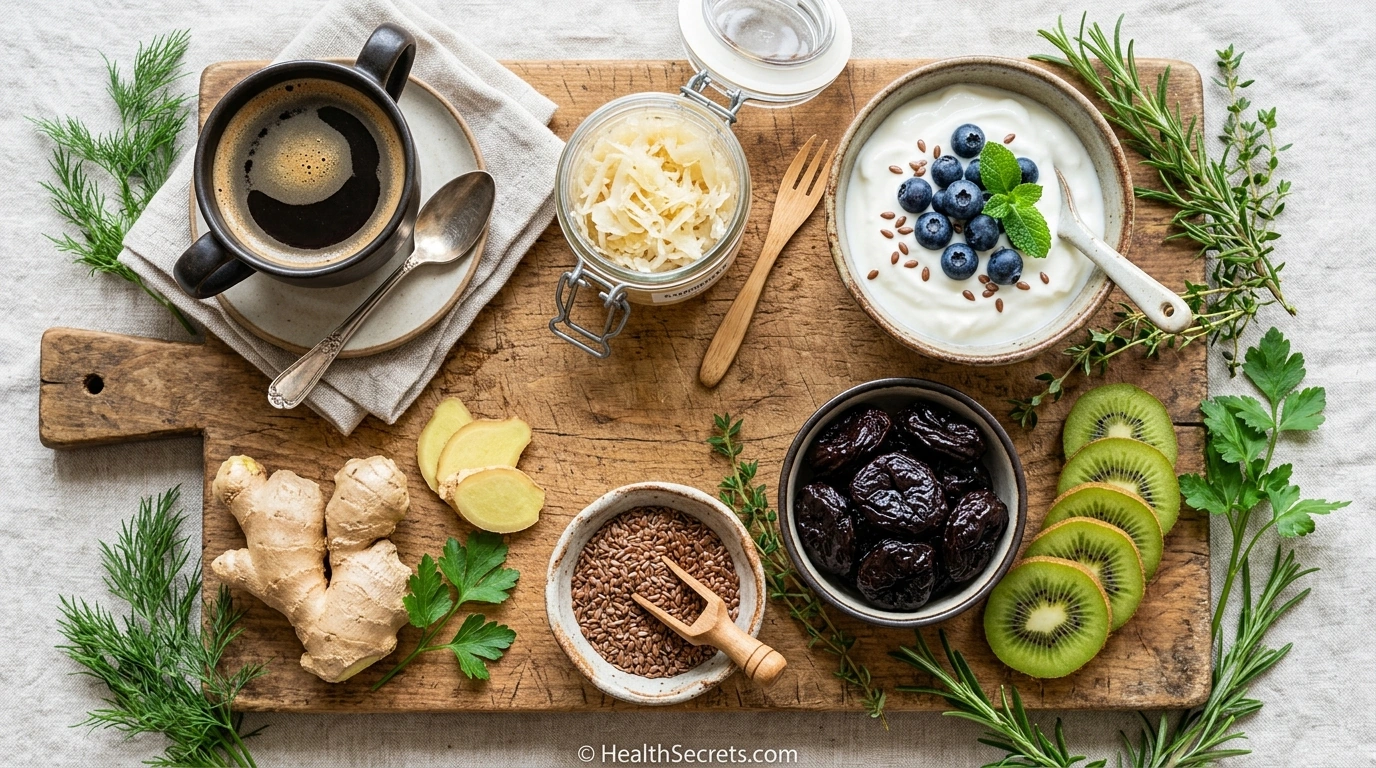
| Food | Mechanism | Amount | Evidence |
|---|---|---|---|
| Ginger | Stimulates gastric emptying, antral contractions | 1–2 g fresh or supplement daily | Strong — multiple RCTs |
| Coffee | Stimulates colonic contractions via chlorogenic acid and caffeine | 1–2 cups morning | Moderate |
| Prunes | High fiber + sorbitol (natural osmotic laxative) | 3–6 prunes daily | Strong |
| Kiwi | Actinidin enzyme + fiber improves bowel frequency | 2 kiwis daily | Strong — RCTs |
| Fermented foods | Support SCFA-producing bacteria that stimulate motility | 1 serving daily | Moderate |
| Healthy fats from olive oil, avocados, and fatty fish stimulate gallbladder contraction and bile release, which acts as a natural laxative. Aim for 1–2 tablespoons of extra virgin olive oil daily. For a deeper dive into gut-supportive eating, explore our gut-healing foods guide. |
Which Prokinetic Supplements Improve Gut Motility?
The most evidence-based natural prokinetics are ginger extract (1–2 g daily), artichoke leaf extract (300–640 mg three times daily), magnesium citrate (300–500 mg daily), and the herbal formula Iberogast (20 drops three times daily). Each targets different motility mechanisms, and they can be combined under practitioner guidance for stronger effects.
- Ginger (Zingiber officinale) is the standout performer. A clinical trial found that ginger reduced gastric half-emptying time from 26.7 minutes (placebo) to 13.1 minutes — nearly a 50% acceleration — while significantly increasing the frequency of antral contractions [4]. A 2023 study in patients with functional dyspepsia confirmed that ginger supplementation significantly improved gastric emptying and gastrointestinal motility [5].
- Artichoke leaf extract stimulates bile production and supports MMC activity. Clinical evidence shows it improves symptoms of IBS and functional dyspepsia by enhancing upper GI motility [6].
- 5-HTP (5-Hydroxytryptophan) at 50–200 mg daily is a serotonin precursor — and roughly 90% of your body's serotonin resides in the gut, where it plays a central role in MMC regulation [1]. The serotonin-gut health connection explains this mechanism in detail.
- Caution: Do not combine 5-HTP with SSRIs or other serotonergic medications.
- Magnesium citrate (300–500 mg daily) draws water into the intestines through osmotic action, softens stool, and relaxes smooth muscle. A randomized, double-blind, placebo-controlled trial demonstrated that magnesium significantly improved defecation status and shortened colonic transit time in patients with chronic constipation [7].
- Iberogast (STW 5) is a nine-herb formula with over 50 years of clinical use. Multiple controlled trials show it improves GI symptoms by 70–80%, with region-specific effects — relaxing the fundus while increasing antral contractions [8][9]. A 2024 meta-analysis confirmed STW 5-II significantly improves functional dyspepsia symptoms after 4 and 8 weeks of treatment [10].
- Triphala (500–1,000 mg before bed) is an Ayurvedic formula with gentle laxative and motility-supporting properties, best suited for long-term maintenance.

How Does Exercise Improve Digestive Transit?
Moderate aerobic exercise for 30 minutes most days directly stimulates colonic contractions, increases blood flow to digestive organs, and activates the parasympathetic nervous system. A 10–15 minute walk after meals is one of the simplest and most effective motility interventions — it reduces post-meal bloating and accelerates gastric emptying.
What are the best exercises for gut motility?
- Aerobic exercise (walking, jogging, cycling, swimming) — 30 minutes most days at moderate intensity. This is the most well-studied exercise type for stimulating colonic motility.
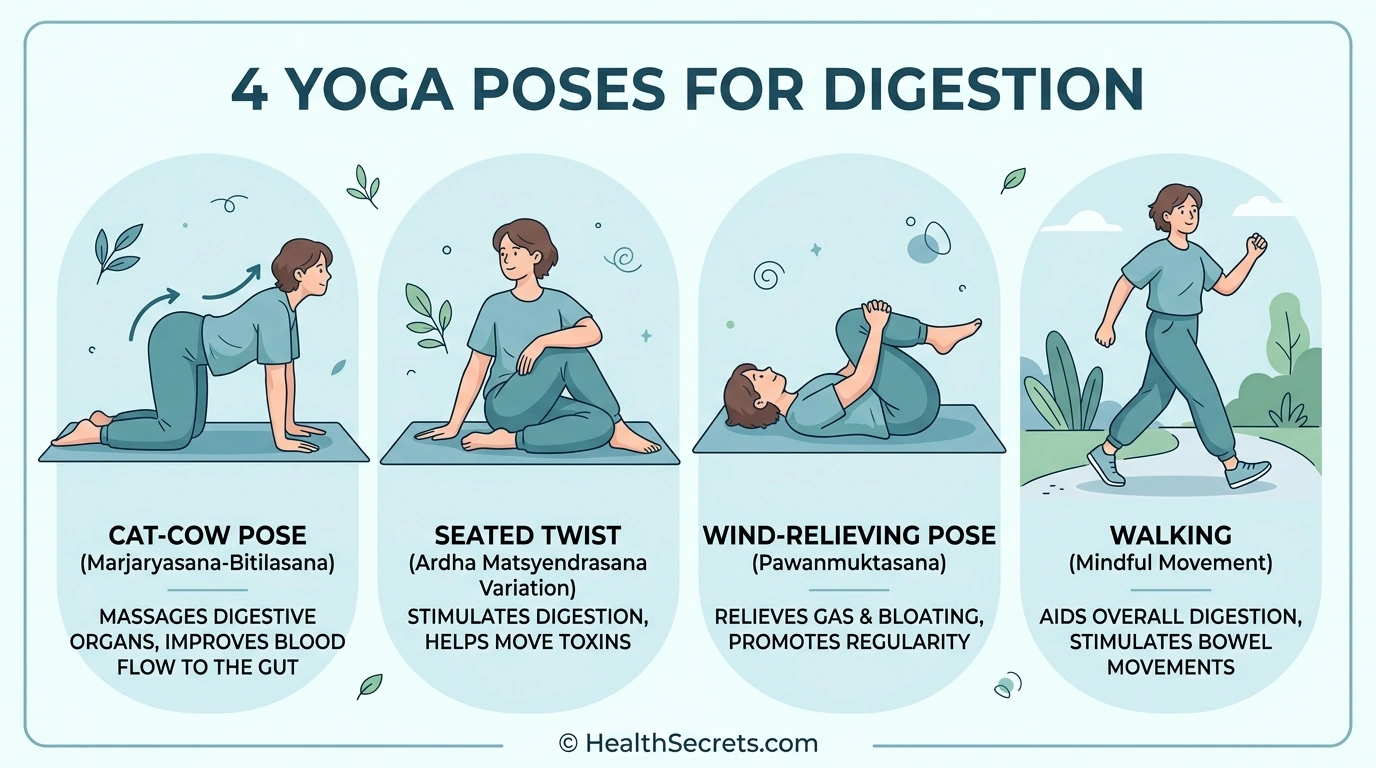
- Yoga — twists compress and massage abdominal organs, forward folds compress the abdomen, and specific poses like Cat-Cow, Seated Twist, and Wind-Relieving Pose target digestion directly.
- Abdominal self-massage — 5–10 minutes daily in a clockwise direction (following the path of the colon) mechanically stimulates peristalsis.
- Deep diaphragmatic breathing — 5–10 minutes, 2–3 times daily. The diaphragm physically massages internal organs while activating vagal tone.

NOW Supplements Ginger Root Extract 250 mg
Editor's ChoiceNOW Supplements · Overall gut motility support and gastric emptying
Jarrow Formulas Artichoke Extract 500 mg
Best for Bile FlowJarrow Formulas · Upper GI motility and bile-related sluggishness
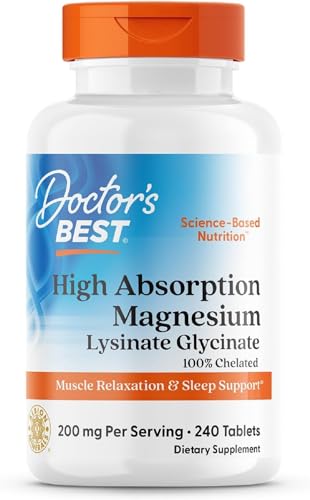
Doctor's Best High Absorption Magnesium Glycinate 200 mg
Best for ConstipationDoctor's Best · Constipation relief and muscle relaxation
Organic India Triphala
Best for Long-Term MaintenanceOrganic India · Gentle, ongoing motility support
Iberogast Digestive Symptom Relief Drops
Best Clinical EvidenceIberogast Digestive · Functional dyspepsia and comprehensive motility support
NOW Supplements 5-HTP 100 mg
Best for MMC SupportNOW Supplements · Serotonin-mediated MMC activation
Read the detailed review cards below before opening any retailer link
Top Recommended Products
NOW Supplements
NOW Supplements Ginger Root Extract 250 mg
Ginger is the most well-researched natural prokinetic, shown to cut gastric emptying time nearly in half. NOW's standardized extract ensures consistent gingerol content for reliable results.
Pros
- + Clinically supported dosing
- + affordable
- + standardized extract for consistent potency
- + vegan-friendly
Cons
- - May need 2–4 capsules daily for therapeutic dose
Why we included it: Ginger is the most well-researched natural prokinetic, shown to cut gastric emptying time nearly in half. NOW's standardized extract ensures consistent gingerol content for reliable results.
Retailer link opens on Amazon after the review details above
Jarrow Formulas
Jarrow Formulas Artichoke Extract 500 mg
Artichoke extract enhances bile flow and upper GI motility, making it an excellent complement to ginger for comprehensive digestive support.
Pros
- + High-dose artichoke extract
- + stimulates bile production
- + supports MMC
- + large bottle for value
Cons
- - Avoid if you have gallstones or bile duct obstruction
Why we included it: Artichoke extract enhances bile flow and upper GI motility, making it an excellent complement to ginger for comprehensive digestive support.
Retailer link opens on Amazon after the review details above
Doctor's Best
Doctor's Best High Absorption Magnesium Glycinate 200 mg
Magnesium supplementation has been shown in a double-blind RCT to significantly improve defecation status and shorten colonic transit time. The glycinate chelate offers superior absorption with fewer GI side effects.
Pros
- + Well-absorbed form
- + gentle on stomach
- + supports both motility and muscle relaxation
- + excellent value
Cons
- - Glycinate form is less osmotically active than citrate
- - may need higher dose for laxative effect
Why we included it: Magnesium supplementation has been shown in a double-blind RCT to significantly improve defecation status and shorten colonic transit time. The glycinate chelate offers superior absorption with fewer GI side effects.
Retailer link opens on Amazon after the review details above
Organic India
Organic India Triphala
Triphala has been used for thousands of years in Ayurvedic medicine as a gentle digestive regulator. It is best suited for long-term maintenance after acute motility issues have been addressed.
Pros
- + Organic and sustainably sourced
- + traditional Ayurvedic formula
- + gentle laxative effect
- + supports long-term digestive regularity
Cons
- - Limited Western clinical trials
- - effects are subtle and gradual
Why we included it: Triphala has been used for thousands of years in Ayurvedic medicine as a gentle digestive regulator. It is best suited for long-term maintenance after acute motility issues have been addressed.
Retailer link opens on Amazon after the review details above
Iberogast Digestive
Iberogast Digestive Symptom Relief Drops
Iberogast is one of the most clinically validated herbal formulas for GI motility disorders, with a unique mechanism that relaxes the fundus while stimulating antral contractions — exactly what the stomach needs for efficient emptying.
Pros
- + Over 50 years of clinical use
- + multiple RCTs showing 70–80% symptom improvement
- + targets both upper and lower GI
- + region-specific action on stomach
Cons
- - Higher price point
- - alcohol-based liquid
- - taste may be unpleasant for some
Why we included it: Iberogast is one of the most clinically validated herbal formulas for GI motility disorders, with a unique mechanism that relaxes the fundus while stimulating antral contractions — exactly what the stomach needs for efficient emptying.
Retailer link opens on Amazon after the review details above
NOW Supplements
NOW Supplements 5-HTP 100 mg
Since 90% of serotonin resides in the gut and plays a central role in MMC regulation, 5-HTP offers targeted support for the cleaning cycle that prevents bacterial overgrowth — but only for those not on serotonergic medications.
Pros
- + Directly supports serotonin production in the gut
- + well-absorbed
- + supports both motility and mood
- + affordable
Cons
- - Must NOT be combined with SSRIs or MAOIs
- - can cause nausea at higher doses
- - requires medical guidance
Why we included it: Since 90% of serotonin resides in the gut and plays a central role in MMC regulation, 5-HTP offers targeted support for the cleaning cycle that prevents bacterial overgrowth — but only for those not on serotonergic medications.
Retailer link opens on Amazon after the review details above
How Do You Stimulate the Vagus Nerve for Better Gut Motility?
The vagus nerve is the longest cranial nerve and the primary controller of your parasympathetic "rest and digest" response. A 2026 systematic review confirmed that transcutaneous vagus nerve stimulation relieves abdominal pain, improves GI symptoms, and accelerates GI motility by enhancing vagal activity [11]. You can activate your vagus nerve at home with simple daily techniques.
Research using real-time MRI demonstrated that high-frequency transcutaneous auricular vagus nerve stimulation significantly increased gastric motility — specifically the amplitude of peristaltic waves — compared to low-frequency stimulation [12]. While clinical devices deliver precise frequencies, these at-home techniques activate the same nerve:
- Deep breathing: Slow diaphragmatic breathing using the 4-7-8 technique (inhale 4 seconds, hold 7, exhale 8) directly activates the parasympathetic response.
- Cold exposure: Splash cold water on your face or hold a cold pack to your neck for 1–2 minutes. Sudden cold stimulates the vagus nerve, slows heart rate, and can trigger digestive enzyme release.
- Singing, humming, and gargling: Vibrations from vocalization stimulate the vagus nerve through the laryngeal branches. Gargle water vigorously for 30 seconds, or hum for several minutes daily.
- Meditation and mindfulness: 10–20 minutes daily increases vagal tone and reduces the stress response that inhibits motility. Research shows tai chi and moderate interval training also enhance vagal modulation [13].
For a comprehensive look at how the brain and gut communicate, see our gut-brain axis guide.

What Lifestyle Changes Support Healthy Digestive Transit?
Stress management, quality sleep (7–9 hours nightly), a consistent daily routine, and proper toilet posture create the foundation that makes every other motility strategy more effective. Chronic stress inhibits the parasympathetic nervous system and directly suppresses MMC activity, making it one of the most overlooked causes of sluggish digestion.
- Stress management is non-negotiable. Meditation, yoga, therapy, and journaling all activate the parasympathetic nervous system. Even 10 minutes of daily breathwork can shift your autonomic balance.
- Sleep optimization: The MMC is most active during sleep. Poor sleep disrupts motility and lowers your pain threshold, worsening symptoms. Aim for 7–9 hours on a consistent schedule.
- Establish a routine: Regular meal times and a consistent morning bathroom time train your digestive system. Never ignore the urge to defecate — doing so trains the colon to become less responsive over time.
- Proper toilet posture: Elevate your feet on a stool to approximate a squatting position. This straightens the anorectal angle and allows easier, strain-free elimination.
- Avoid motility inhibitors: Discuss with your doctor if you take opioids, anticholinergics, or excessive antacids — all of which significantly slow gut motility.
What Are the Most Common Mistakes That Slow Gut Motility?
The biggest mistakes people make are constant snacking (which prevents the MMC from ever completing a cleaning cycle), increasing fiber too quickly without enough water, and relying solely on supplements without addressing stress and meal timing. Fixing these three errors often produces more improvement than any single supplement.
- Snacking between meals: Even a handful of nuts resets your MMC cycle. Commit to defined meals only.
- Too much fiber too fast: Adding 20 g of fiber overnight causes gas, bloating, and can actually worsen constipation. Increase by 5 g per week.
- Dehydration: Fiber without water creates a concrete-like mass in your colon. Drink at least 8 glasses daily — more if you are increasing fiber.
- Ignoring stress: No amount of ginger capsules will overcome a chronically activated sympathetic nervous system. Address stress first.
- Expecting overnight results: Natural motility strategies take 1–4 weeks. Track progress with a symptom diary rather than giving up after 3 days.
- Combining 5-HTP with SSRIs: This combination risks serotonin syndrome. Always consult your prescriber before adding serotonergic supplements.
Is It Safe to Use Natural Prokinetics? When Should You Stop?
Most natural prokinetic supplements — ginger, artichoke, magnesium, triphala — have strong safety profiles at recommended doses. However, chronic or worsening motility issues can signal serious conditions like gastroparesis, hypothyroidism, diabetes-related neuropathy, or even intestinal obstruction, which require medical evaluation rather than self-treatment.
- See a doctor if you experience: constipation lasting more than 3 weeks despite interventions, severe abdominal pain, blood in stool, unexplained weight loss, vomiting, inability to pass gas, or symptoms that interfere with daily life.
- Medical conditions to rule out: hypothyroidism (check thyroid function), diabetes (can damage enteric nerves), Parkinson's disease, scleroderma, and SIBO. Common diagnostic tests include gastric emptying studies, colonic transit studies, anorectal manometry, and SIBO breath tests [14].
- Supplement safety notes: 5-HTP should never be combined with SSRIs or MAOIs. High-dose magnesium can cause diarrhea and should be avoided in kidney disease. Artichoke extract should be avoided with gallstones or bile duct obstruction. Always start one supplement at a time to identify what works and monitor for side effects.
Action Plan
What Should You Do First to Improve Gut Motility?
Follow the sequence below, work through each phase in order, and use the checklist as your practical implementation guide.
Start with the highest-impact, lowest-effort changes in Week 1, then layer in supplements and advanced techniques over the following weeks. This phased approach prevents overwhelm and lets you identify which strategies work best for your body.
Phase 1 — Foundation (Week 1):
- Space meals 4–5 hours apart — eliminate all snacking
- Increase water intake to 8+ glasses daily
- Take a 10–15 minute walk after each meal
- Begin 5 minutes of deep diaphragmatic breathing twice daily
- Establish a consistent morning bathroom routine
Phase 2 — Diet Optimization (Weeks 2–3):
- Gradually increase fiber to 25–35 g daily (add 5 g per week)
- Add prokinetic foods: ginger tea with meals, 3–6 prunes daily, 2 kiwis daily
- Include 1–2 tablespoons extra virgin olive oil daily
- Start overnight fast of 12–14 hours
Phase 3 — Targeted Supplements (Weeks 3–4):
- Add ginger extract (1–2 g daily) or Iberogast (20 drops 3x daily)
- Consider magnesium citrate (300–500 mg) in the evening
- Add artichoke extract if bile flow is a concern
- Start daily vagus nerve exercises (cold water splash, humming, gargling)
Phase 4 — Advanced Optimization (Weeks 4–8):
- Add 30 minutes of moderate aerobic exercise most days
- Incorporate yoga for digestion 2–3 times weekly
- Begin daily abdominal self-massage (5–10 minutes, clockwise)
- Address stress with meditation, therapy, or journaling
- Optimize sleep to 7–9 hours nightly

