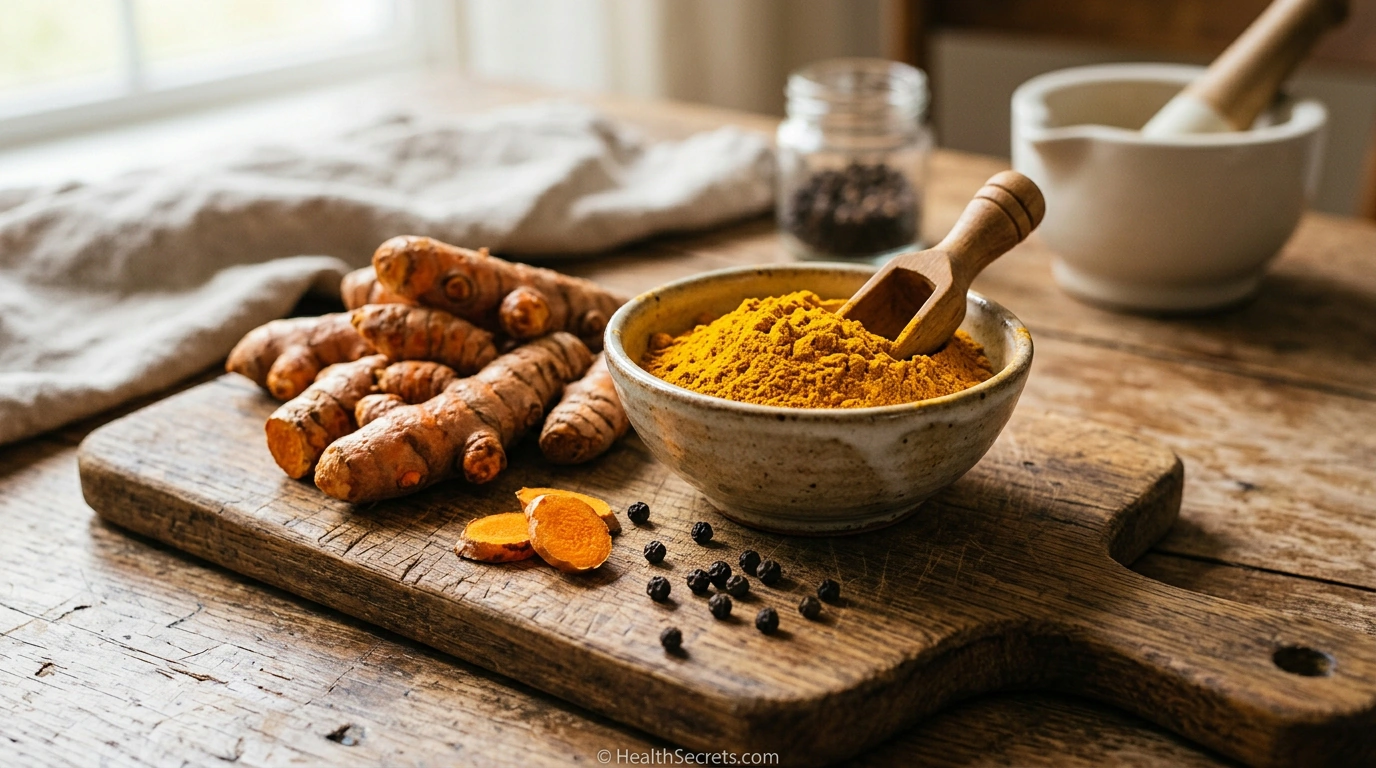
 Pin It
 Turmeric for Inflammation: Curcumin Complete Guide
Who This Is For
Best for readers comparing supplements options and trying to avoid hype.
Who Should Be Careful
Not for replacing clinician guidance when symptoms, medications, or lab issues are involved.
Affiliate Disclaimer | This article may contain affiliate links to products we trust. If you choose to buy through them, we may earn a small commission at no extra cost to you. Full disclosure
Medical Disclaimer | For informational purposes only. Not a substitute for professional medical advice. Read full disclaimer
Key Takeaways
Doctor's Best High Absorption Curcumin with C3 Complex and BioPerine
Best OverallDoctor's Best · General anti-inflammatory support and daily wellness
BioSchwartz Turmeric Curcumin 1500mg with BioPerine
Best High-PotencyBioSchwartz Turmeric · Therapeutic anti-inflammatory dosing in fewer capsules
NOW Foods Curcumin Phytosome with Meriva
Best PhytosomeNOW Foods · Maximum clinically-studied absorption without piperine
Jarrow Formulas Curcumin 95
Best ValueJarrow Formulas · Budget-friendly daily curcumin supplementation
Pure Encapsulations Curcumin 500 with BioPerine
Best PremiumPure Encapsulations · Those wanting hypoallergenic, physician-recommended quality
Thorne Curcumin Phytosome 1000mg (Meriva)
Best Clinical GradeThorne Curcumin · Therapeutic use for arthritis and serious inflammatory conditions
Liposomal Curcumin Liquid Supplement
Best AbsorptionLiposomal Curcumin · Maximum bioavailability and those who prefer liquid supplements
Organic Turmeric Powder (for Cooking and Golden Milk)
Best Whole FoodOrganic Turmeric · Daily culinary use and golden milk preparation
Read the detailed review cards below before opening any retailer link
Here's something that still catches people off guard: turmeric — that golden-yellow spice you've probably seen in curries and lattes — contains only about 3–5% of the compound actually responsible for its anti-inflammatory benefits. That compound is curcumin. And while turmeric has been used in Ayurvedic and traditional Chinese medicine for over 4,000 years, modern research has zeroed in on curcumin as the real powerhouse behind turmeric for inflammation relief.
The science is genuinely impressive. We're talking about a natural compound that inhibits NF-κB (the master switch for inflammation), reduces COX-2 enzymes the same way ibuprofen does, and lowers inflammatory markers like IL-6 and TNF-alpha by 25–40% in clinical studies. Multiple meta-analyses have found curcumin comparable to NSAIDs for osteoarthritis pain — without the stomach ulcers or kidney damage.
But there's a catch. A big one, actually. Curcumin on its own is terribly absorbed — less than 1% makes it into your bloodstream. Which means most of that expensive supplement you're swallowing? It passes right through you. The good news: there are proven solutions to this problem, and once you understand them, curcumin becomes genuinely useful.
In this guide, you'll learn exactly how curcumin fights inflammation at the molecular level, why bioavailability matters more than dose, how to choose a supplement that actually works, and what the clinical evidence says about conditions like arthritis, IBD, and metabolic syndrome. Whether you're dealing with chronic inflammation or just want to understand what the research actually supports, this is your complete, evidence-based resource.
What Is Turmeric and How Is Curcumin Different from the Whole Spice?
Turmeric is the ground root of the Curcuma longa plant, a member of the ginger family used for millennia in cooking and traditional medicine. Curcumin is the primary bioactive compound extracted from turmeric, standardized to 95% curcuminoids in supplement form. While turmeric contains hundreds of compounds including essential oils and turmerones, curcumin is responsible for most documented anti-inflammatory and antioxidant effects.
What exactly is in turmeric?
Turmeric root contains three main curcuminoids: curcumin (the most abundant and studied), demethoxycurcumin, and bisdemethoxycurcumin. Together, these make up only 3–5% of the spice by weight. That means one teaspoon of turmeric powder (roughly 3 grams) delivers about 90–150 mg of curcuminoids — well below the 500–2,000 mg therapeutic range used in clinical trials [1].
Turmeric also contains volatile oils (turmerones), fiber, minerals, and other polyphenols that may have synergistic effects. This is why some researchers argue whole turmeric has value beyond isolated curcumin — the BCM-95 formulation, for instance, recombines curcumin with turmeric essential oils to boost absorption without piperine.
When should you use turmeric powder versus curcumin supplements?
For daily cooking and general wellness, turmeric powder works well — especially with black pepper and fat (the traditional golden milk approach). But for therapeutic purposes — managing arthritis pain, reducing specific inflammatory markers, or supporting IBD remission — you need concentrated curcumin supplements standardized to 95% curcuminoids with an absorption enhancer. The math simply doesn't work otherwise: you'd need 25–100 teaspoons of turmeric powder daily to match supplement doses [2].

How Does Curcumin Reduce Inflammation in the Body?
Curcumin targets multiple inflammatory pathways simultaneously — it inhibits the NF-κB transcription factor, suppresses COX-2 and LOX enzymes, reduces pro-inflammatory cytokines IL-6 and TNF-alpha by 25–40%, and boosts antioxidant defenses. This multi-target approach is why curcumin shows benefits across such a wide range of inflammatory conditions, from arthritis to cardiovascular disease.
How does curcumin block the NF-κB inflammatory pathway?
NF-κB is often called the "master switch" of inflammation — it activates hundreds of genes involved in inflammatory responses, immune function, and cell survival. When triggered by stress, toxins, or infection, NF-κB ramps up production of inflammatory cytokines, adhesion molecules, and enzymes like COX-2. Curcumin directly inhibits NF-κB activation by blocking IκB kinase (IKK), preventing the inflammatory cascade before it starts [3]. This mechanism is central to curcumin's broad anti-inflammatory profile and has been confirmed in over 100 studies across cell, animal, and human models.
Does curcumin work like ibuprofen against COX-2 enzymes?
Curcumin inhibits both COX-2 (cyclooxygenase-2) and LOX (lipoxygenase) enzymes — the same targets that NSAIDs like ibuprofen and aspirin hit. COX-2 produces prostaglandins that drive pain and swelling, while LOX produces leukotrienes involved in allergic and inflammatory responses. The critical difference: curcumin doesn't significantly inhibit COX-1, which protects your stomach lining [16]. This selectivity is why curcumin doesn't cause the GI bleeding and ulcers associated with long-term NSAID use.
How much does curcumin lower inflammatory markers like IL-6 and CRP?
A 2026 dose-response meta-analysis of randomized controlled trials found curcumin supplementation significantly reduced C-reactive protein (CRP), TNF-alpha, and IL-6 in patients with prediabetes and type 2 diabetes [9]. Across broader populations, meta-analyses consistently show 25–40% reductions in IL-6 and 20–35% reductions in TNF-alpha with curcumin doses of 500–1,500 mg daily over 8–12 weeks. Curcumin also increases antioxidant enzymes like superoxide dismutase (SOD), catalase, and glutathione peroxidase, helping break the inflammation-oxidative stress cycle.
Can curcumin modulate immune cell function?
Curcumin shifts macrophages from the pro-inflammatory M1 phenotype toward the anti-inflammatory M2 phenotype, reduces Th17 cell activity (which drives autoimmune inflammation), and increases regulatory T cells (Tregs) that keep immune responses in check. This immune-modulating effect is particularly relevant for autoimmune conditions like rheumatoid arthritis and inflammatory bowel disease, where the immune system attacks the body's own tissues [10].
How Well Is Curcumin Absorbed and Why Does Bioavailability Matter So Much?
Standard curcumin has notoriously poor bioavailability — less than 1% reaches your bloodstream after oral consumption. It's rapidly metabolized by the liver, converted to inactive conjugates, and excreted before it can exert systemic effects. Without an absorption enhancer, even high doses of curcumin produce minimal blood levels, which is why choosing the right formulation is arguably more important than the dose itself.


Why is curcumin so poorly absorbed on its own?
Three factors conspire against curcumin absorption: poor aqueous solubility (it's fat-soluble, not water-soluble), rapid phase II metabolism in the liver and intestinal wall (glucuronidation and sulfation convert it to inactive forms), and limited intestinal permeability. The landmark study by Shoba et al. found that curcumin alone had barely detectable plasma levels even at 2 g doses [4]. This explains why early curcumin research often produced disappointing results — they simply weren't addressing bioavailability.
How does black pepper (piperine) increase curcumin absorption by 2,000%?
Piperine, the active alkaloid in black pepper, inhibits glucuronidation enzymes in both the liver and intestinal wall — the same enzymes that rapidly inactivate curcumin. By slowing this metabolism, piperine keeps curcumin in its active form longer, allowing it to reach the bloodstream. The often-cited 2,000% increase comes from a human pharmacokinetic study showing that 20 mg piperine co-administered with 2 g curcumin dramatically increased plasma curcumin levels at the 45-minute mark [4]. Most curcumin supplements now include 5–20 mg BioPerine (standardized piperine extract) for this reason. One caution: piperine also increases absorption of many medications, so check for drug interactions.
Which enhanced curcumin formulations offer the best absorption?
- Liposomal curcumin encapsulates curcumin in lipid spheres that protect it from degradation and deliver it directly to cells — absorption increases 10–30x compared to standard curcumin.
- Meriva (curcumin phytosome) binds curcumin to phosphatidylcholine (soy or sunflower lecithin), achieving 29x better absorption in clinical studies and the strongest evidence base among enhanced forms [5].
- BCM-95 recombines curcumin with turmeric essential oils for approximately 7x absorption without piperine.
- NovaSOL uses a micellar formulation claiming 185x better bioavailability. Each approach has tradeoffs between cost, evidence quality, and practicality — but any enhanced form dramatically outperforms standard curcumin.
Always take curcumin with a fat-containing meal regardless of formulation — curcumin is fat-soluble, and dietary fat improves absorption an additional 7–8 fold compared to an empty stomach.
How Much Curcumin Should You Take for Inflammation?
For general anti-inflammatory support, 500–1,000 mg of curcumin daily with piperine is the standard recommendation. For therapeutic use in conditions like osteoarthritis or rheumatoid arthritis, clinical trials typically use 1,000–1,500 mg daily in divided doses. Enhanced formulations (liposomal, Meriva, BCM-95) allow lower effective doses due to superior absorption.
| Purpose | Curcumin Dose | Form | Duration |
|---|---|---|---|
| General wellness | 500 mg daily | With BioPerine | Ongoing |
| Mild inflammation | 500–1,000 mg daily | With BioPerine or enhanced | 8–12 weeks |
| Osteoarthritis | 1,000–1,500 mg daily | Any enhanced form | 8–12 weeks minimum |
| Rheumatoid arthritis | 500–1,000 mg 2x daily | Enhanced, adjunct to DMARDs | 12+ weeks |
| IBD maintenance | 1,000–2,000 mg daily | With mesalamine | Long-term |
| Timing tips: Divide doses into 2–3 servings daily to maintain blood levels (curcumin has a short half-life). Always take with a fat-containing meal. Effects are cumulative — expect 4–8 weeks before noticeable anti-inflammatory benefits. Consistency matters more than occasional high doses. |

Can You Get Enough Curcumin from Turmeric in Food?
While cooking with turmeric provides meaningful antioxidant and mild anti-inflammatory benefits, the curcumin content is too low for therapeutic effects. One teaspoon of turmeric delivers only 6–10 mg of curcumin — you'd need dozens of teaspoons daily to match supplement doses. Food-based turmeric is best viewed as a complement to supplementation, not a replacement.
How does golden milk deliver curcumin?
Traditional golden milk — turmeric simmered in coconut milk with black pepper — actually gets the absorption science right. The fat from coconut milk enhances curcumin solubility, the heat increases bioavailability, and the black pepper provides piperine. A daily golden milk habit delivers roughly 10–30 mg curcumin per cup — beneficial for general wellness but far below therapeutic doses.
Golden Milk Recipe: 1 cup coconut milk, 1 tsp turmeric powder, ¼ tsp black pepper, ½ tsp cinnamon, ¼ tsp ginger, 1 tsp honey. Heat and simmer 5 minutes.
What's the balanced approach to food and supplements?
Use turmeric generously in cooking (curries, soups, stir-fries, smoothies) — always with black pepper and fat — for daily low-dose anti-inflammatory benefit. Add a curcumin supplement (500–1,000 mg with BioPerine) for therapeutic support. This combination provides both whole-food synergy and concentrated curcumin at effective levels. For more on anti-inflammatory foods, see our complete food guide.
Is Curcumin Safe and What Are the Side Effects?
Curcumin is generally well-tolerated at doses up to 8,000 mg daily in short-term studies, with minimal side effects at standard therapeutic doses of 500–2,000 mg daily. However, it has clinically relevant interactions with blood thinners and diabetes medications, and is contraindicated in gallbladder disease. Understanding these safety boundaries is essential before starting supplementation.

What are the common side effects of curcumin?
Gastrointestinal upset — nausea, diarrhea, bloating — is the most frequently reported side effect, typically at doses above 2,000 mg daily. Taking curcumin with food usually resolves this. Harmless yellow discoloration of stool is normal. Piperine-containing supplements may cause additional stomach irritation in sensitive individuals. A 2022 meta-analysis of 29 RCTs involving 2,396 participants confirmed curcumin's favorable safety profile across multiple arthritis types [16].
What drug interactions should you know about?
- Blood thinners (warfarin, aspirin, clopidogrel): Curcumin has antiplatelet effects and may increase bleeding risk. Monitor INR closely if on warfarin and consult your physician.
- Diabetes medications: Curcumin improves insulin sensitivity and may lower blood sugar — monitor glucose levels, especially when starting.
- Immunosuppressants: Curcumin modulates immune function and could theoretically interfere with immunosuppressive therapy.
- Piperine amplifies drug absorption: BioPerine increases bioavailability of many pharmaceutical drugs, not just curcumin — discuss with your pharmacist [11].
Who should avoid curcumin supplements?
- Gallbladder disease or gallstones: Curcumin stimulates bile production and gallbladder contractions — avoid if you have gallstones or bile duct obstruction.
- Kidney stone history: Turmeric (not curcumin extract) contains oxalates that may contribute to calcium oxalate stones.
- Pre-surgery: Stop curcumin 2 weeks before scheduled surgery due to antiplatelet effects.
- Pregnancy (high doses): Culinary amounts of turmeric are safe, but high-dose curcumin supplements lack sufficient safety data during pregnancy.
What Can Curcumin Actually Do for Inflammation — and What Can't It Do?
Curcumin is a well-researched anti-inflammatory compound with strong clinical evidence for osteoarthritis pain relief (comparable to NSAIDs), moderate evidence for rheumatoid arthritis and ulcerative colitis maintenance, and emerging evidence for metabolic inflammation and exercise recovery. It is not a cure for any disease and works best as part of a comprehensive anti-inflammatory lifestyle.
- What the evidence supports: Multiple meta-analyses confirm curcumin reduces osteoarthritis pain scores by approximately 50% and improves function comparably to ibuprofen 800 mg daily [8]. For rheumatoid arthritis, curcumin (500 mg twice daily) reduced disease activity scores in a 2023 systematic review [7]. Curcumin (1–2 g daily) maintained remission in ulcerative colitis patients as adjunct to mesalamine [12]. A 2026 meta-analysis showed curcumin with piperine significantly improved lipid profiles in metabolic disorders [13].
- What it won't do: Curcumin won't replace prescription medications for serious inflammatory conditions. It won't produce overnight results — expect 4–12 weeks for meaningful effects. It won't overcome a pro-inflammatory diet high in processed foods and sugar. And without proper bioavailability enhancement, even large doses may do very little.
- Realistic timeline: Weeks 1–2, minimal noticeable change. Weeks 3–4, some reduction in stiffness and mild inflammation. Weeks 6–8, measurable improvements in pain scores and inflammatory markers. Weeks 8–12+, full therapeutic benefit if consistent.
What Should You Do First to Start Using Curcumin for Inflammation?
Start with a quality curcumin supplement (500 mg with BioPerine), take it with a fat-containing meal twice daily, and commit to at least 8 weeks of consistent use before evaluating results. Combine with anti-inflammatory dietary changes for best outcomes.
Phase 1 — Foundation (Week 1–2):
- Choose a curcumin supplement standardized to 95% curcuminoids with BioPerine or enhanced formulation
- Start at 500 mg once daily with a fat-containing meal
- Add daily turmeric to cooking (with black pepper and fat)
- Note baseline symptoms (pain levels, stiffness, energy)
Phase 2 — Therapeutic (Week 3–4):
- Increase to 500 mg twice daily if well-tolerated
- Adopt anti-inflammatory dietary patterns — more vegetables, fatty fish, olive oil
- Track symptom changes weekly
- If GI upset occurs, take with larger meals or switch to liposomal form
Phase 3 — Optimization (Week 5–12):
- Assess results at 8 weeks — pain reduction, mobility, inflammatory markers if tested
- Adjust dose up to 1,500 mg daily if needed for therapeutic purposes
- Consider enhanced formulation (Meriva, liposomal) if standard curcumin + BioPerine isn't producing results
- Maintain consistency — curcumin's effects are cumulative and require daily use


Top Recommended Products
Doctor's Best
Doctor's Best High Absorption Curcumin with C3 Complex and BioPerine
Doctor's Best uses the C3 Complex — the same curcumin extract used in many clinical trials — combined with BioPerine for enhanced absorption at an unbeatable price point.
Pros
- + Proven C3 Complex curcumin
- + includes BioPerine
- + excellent value per capsule
- + well-studied formulation
- + 120-count bottle lasts 2 months at standard dose
Cons
- - Standard absorption (not liposomal or phytosome level)
Why we included it: Doctor's Best uses the C3 Complex — the same curcumin extract used in many clinical trials — combined with BioPerine for enhanced absorption at an unbeatable price point.
Retailer link opens on Amazon after the review details above
BioSchwartz Turmeric
BioSchwartz Turmeric Curcumin 1500mg with BioPerine
One of Amazon's best-selling turmeric supplements for good reason — high potency, standardized curcuminoids, and BioPerine make this a solid choice for anyone needing therapeutic doses.
Pros
- + High potency 1
- + 500 mg per serving
- + 95% curcuminoids
- + top-selling turmeric supplement
- + third-party tested
- + includes BioPerine
Cons
- - Requires 3 capsules per serving
- - 30-day supply only
Why we included it: One of Amazon's best-selling turmeric supplements for good reason — high potency, standardized curcuminoids, and BioPerine make this a solid choice for anyone needing therapeutic doses.
Retailer link opens on Amazon after the review details above
NOW Foods
NOW Foods Curcumin Phytosome with Meriva
Meriva is the most clinically studied enhanced curcumin formulation, and NOW Foods delivers it at a reasonable price — ideal for those who need to avoid piperine due to medication interactions.
Pros
- + Meriva phytosome technology with 29x better absorption
- + no piperine needed (fewer drug interaction concerns)
- + well-studied form
- + trusted NOW Foods brand
Cons
- - Lower curcumin dose per capsule than some competitors
- - may need 2–4 capsules daily
Why we included it: Meriva is the most clinically studied enhanced curcumin formulation, and NOW Foods delivers it at a reasonable price — ideal for those who need to avoid piperine due to medication interactions.
Retailer link opens on Amazon after the review details above
Jarrow Formulas
Jarrow Formulas Curcumin 95
A no-frills, high-quality curcumin from a trusted supplement brand — perfect for budget-conscious users who don't mind adding their own piperine source.
Pros
- + Excellent price per milligram
- + reputable Jarrow Formulas brand
- + standardized 95% curcuminoids
- + clean formulation
Cons
- - Does not include BioPerine (add your own black pepper extract or take with black pepper)
- - smaller bottle size
Why we included it: A no-frills, high-quality curcumin from a trusted supplement brand — perfect for budget-conscious users who don't mind adding their own piperine source.
Retailer link opens on Amazon after the review details above
Pure Encapsulations
Pure Encapsulations Curcumin 500 with BioPerine
Pure Encapsulations is one of the most physician-recommended supplement brands — their curcumin is ideal for sensitive individuals or those wanting the cleanest possible formulation.
Pros
- + Hypoallergenic formulation free from common allergens
- + physician-trusted brand
- + includes BioPerine
- + pure ingredients with no unnecessary additives
Cons
- - Higher price point
- - smaller count per bottle
Why we included it: Pure Encapsulations is one of the most physician-recommended supplement brands — their curcumin is ideal for sensitive individuals or those wanting the cleanest possible formulation.
Retailer link opens on Amazon after the review details above
Thorne Curcumin
Thorne Curcumin Phytosome 1000mg (Meriva)
Thorne's Meriva formulation delivers the highest single-capsule phytosome dose with NSF sport certification — the gold standard for anyone serious about therapeutic curcumin use.
Pros
- + NSF Certified for Sport
- + 1
- + 000 mg Meriva per capsule (highest single-capsule dose)
- + clinically studied absorption
- + Thorne's rigorous quality standards
Cons
- - Premium price
- - available primarily through practitioners and online
Why we included it: Thorne's Meriva formulation delivers the highest single-capsule phytosome dose with NSF sport certification — the gold standard for anyone serious about therapeutic curcumin use.
Retailer link opens on Amazon after the review details above
Liposomal Curcumin
Liposomal Curcumin Liquid Supplement
Liposomal technology delivers curcumin directly to cells with 10–30x better absorption — ideal for those who haven't responded to standard capsule forms or need maximum anti-inflammatory support.
Pros
- + Highest bioavailability of any curcumin form
- + no piperine needed
- + fast absorption
- + lower effective doses needed
Cons
- - More expensive per serving
- - requires refrigeration
- - shorter shelf life
- - taste may be strong
Why we included it: Liposomal technology delivers curcumin directly to cells with 10–30x better absorption — ideal for those who haven't responded to standard capsule forms or need maximum anti-inflammatory support.
Retailer link opens on Amazon after the review details above
Organic Turmeric
Organic Turmeric Powder (for Cooking and Golden Milk)
Organic turmeric powder is the perfect complement to curcumin supplements — use it daily in golden milk, curries, and smoothies for the full spectrum of turmeric's beneficial compounds.
Pros
- + Whole food with synergistic compounds beyond curcumin
- + versatile for cooking
- + affordable
- + USDA Organic available
- + traditional preparation method
Cons
- - Very low curcumin content (3–5%)
- - not therapeutic without supplements
- - stains everything yellow
Why we included it: Organic turmeric powder is the perfect complement to curcumin supplements — use it daily in golden milk, curries, and smoothies for the full spectrum of turmeric's beneficial compounds.
Retailer link opens on Amazon after the review details above
Further Reading
Further Reading
"The Complete Guide to Turmeric Curcumin: The Ultimate Anti-Inflammatory Handbook"
by Various (search for latest editions)
Evidence-based health benefits of curcumin; practical dosing guidelines; golden milk and cooking recipes; supplement selection guidance; safety information
Why it adds value here
Provides the complete picture of turmeric for inflammation — from traditional uses to modern clinical evidence — in an accessible, practical format.
Best for: Readers wanting a comprehensive overview of turmeric's health benefits, dosing, and recipes
View book detailsFurther Reading
"The Anti-Inflammation Cookbook: The Delicious Way to Reduce Inflammation and Stay Healthy"
by Various (multiple quality options available)
Anti-inflammatory meal plans; turmeric-rich recipes; inflammation-reducing food lists; practical kitchen strategies; science-backed dietary guidelines
Why it adds value here
Curcumin works best as part of a comprehensive anti-inflammatory lifestyle — this book provides the dietary foundation to maximize results from supplementation.
Best for: Anyone wanting to combine curcumin supplementation with an anti-inflammatory diet approach
View book detailsAEO FAQ
Frequently Asked Questions
12 common questions answered
Turmeric is the whole spice (ground root of Curcuma longa) containing 3–5% curcuminoids. Curcumin is the primary active curcuminoid responsible for most anti-inflammatory benefits. Supplements use concentrated curcumin standardized to 95% curcuminoids for therapeutic doses that whole turmeric can't provide.
Most people notice initial improvements in 4–6 weeks, with full anti-inflammatory benefits developing over 8–12 weeks of consistent daily use. Curcumin's effects are cumulative, so daily consistency matters more than occasional high doses.
Curcumin generally does not interact significantly with blood pressure medications, but it can affect absorption of some drugs when taken with piperine. Consult your healthcare provider before combining curcumin supplements with any prescription medications.
Curcumin supplements are better for arthritis pain because they deliver therapeutic doses (1,000–1,500 mg) that turmeric powder cannot match. Meta-analyses show curcumin reduces osteoarthritis pain comparably to ibuprofen at these doses.
Black pepper contains piperine, which inhibits liver enzymes that rapidly metabolize curcumin. Without piperine, less than 1% of curcumin reaches your bloodstream. Piperine increases curcumin absorption by approximately 2,000%, making it essential for standard curcumin supplements.
For mild to moderate osteoarthritis, clinical trials show curcumin can be as effective as ibuprofen for pain relief with fewer side effects. However, curcumin works more slowly (weeks vs. hours) and should not replace NSAIDs for acute pain without medical guidance.
Yes, daily curcumin supplementation at doses up to 2,000 mg has been studied for periods up to 12 months with a favorable safety profile. Long-term use is generally considered safe for most adults, though periodic check-ins with your healthcare provider are advisable.
No, curcumin is heat-stable and actually becomes more bioavailable with cooking. Heating turmeric in oil or fat-containing liquids increases curcumin's solubility. Traditional preparations like curry and golden milk optimize this naturally.
Curcumin shows promising evidence for inflammatory bowel disease (IBD), particularly ulcerative colitis maintenance. For IBS specifically, evidence is more limited, though curcumin's anti-inflammatory properties may benefit some IBS patients. Work with a gastroenterologist for IBD management.
For therapeutic purposes, capsules or softgels with an absorption enhancer (BioPerine, Meriva, or liposomal) are most effective and convenient. Liquid liposomal curcumin offers the highest bioavailability. Turmeric powder is best for culinary use, not therapeutic dosing.
Always take curcumin with food, preferably a meal containing healthy fats (olive oil, avocado, coconut, nuts). Curcumin is fat-soluble, and dietary fat increases absorption by 7–8 fold compared to an empty stomach. Taking it with food also reduces GI side effects.
Curcumin may interfere with certain chemotherapy drugs due to its antioxidant effects, which could theoretically reduce the oxidative mechanisms some treatments rely on. Always consult your oncologist before taking curcumin during cancer treatment — timing and specific drug interactions matter.
Was this article helpful?
Written & Reviewed By Experts
Author
Dr. Marcus Webb
Medical Reviewer
Dr. Sarah Chen
All content is evidence-based, peer-reviewed by qualified professionals, and updated regularly. Our editorial team follows strict guidelines for accuracy and transparency.
References & Citations
20 sources cited
Medical Disclaimer
This article is for informational purposes only and does not constitute medical advice. Read the full medical disclaimer. Always consult with a qualified healthcare provider before starting any new supplement, treatment, or major dietary change.