Your brain is the most metabolically demanding organ in your body — consuming 20% of your total energy despite being only 2% of your body weight. So it makes sense that the right nutrients and compounds can meaningfully impact how well it performs.
Nootropics — sometimes called "smart drugs" or cognitive enhancers — have been used for millennia in traditional medicine systems. Bacopa monnieri has been an Ayurvedic staple for memory enhancement for over 3,000 years. Ginkgo biloba has centuries of use in traditional Chinese medicine. Today, modern research is catching up, validating many of these traditional compounds while revealing exactly how they work at the molecular level.
But here's the reality check: nootropics aren't the "limitless pill" from Hollywood. Research shows modest but meaningful improvements — typically 10-30% gains in specific cognitive domains like memory, attention, or processing speed. The real magic happens when you combine evidence-based supplementation with a strong lifestyle foundation of quality sleep, regular exercise, and proper nutrition.
This guide cuts through the hype to deliver what the science actually says about natural nootropics — which ones work, how to use them, and how to build a personalized cognitive enhancement protocol.
For more on building a strong foundation for cognitive health, explore our mental wellness guide and sleep optimization guide.
What Should You Look for in a Natural Nootropic Supplement?
The best natural nootropic supplements use standardized extracts with verified active compound levels, carry third-party certifications like USP or NSF, and provide transparent dosing. Look for products that match clinically studied doses, avoid proprietary blends that hide individual ingredient amounts, and choose reputable brands with documented quality testing.
Does Standardization Matter for Nootropic Effectiveness?
Standardization is critical because it guarantees consistent levels of the active compounds responsible for cognitive benefits. For example, bacopa monnieri should be standardized to at least 50% bacosides, and rhodiola rosea should contain 3% rosavins and 1% salidroside. Without standardization, you cannot know whether you're getting a therapeutic dose.
What Red Flags Should You Watch for When Buying Nootropics?
Avoid products with proprietary blends, as these hide individual ingredient dosages and often underdose key compounds. Be wary of products making dramatic cognitive claims, those without third-party testing verification, and brands that combine too many ingredients at sub-clinical doses. Also check for unnecessary fillers, artificial colors, and allergens.
Key quality markers to look for:
- Standardized extracts with specified active compound percentages
- Third-party testing seals (USP, NSF for Sport, ConsumerLab)
- Transparent labeling with individual ingredient amounts
- Doses that match clinical research (e.g., 300mg bacopa, not 50mg)
- GMP-certified manufacturing facilities
- No proprietary blends masking individual doses
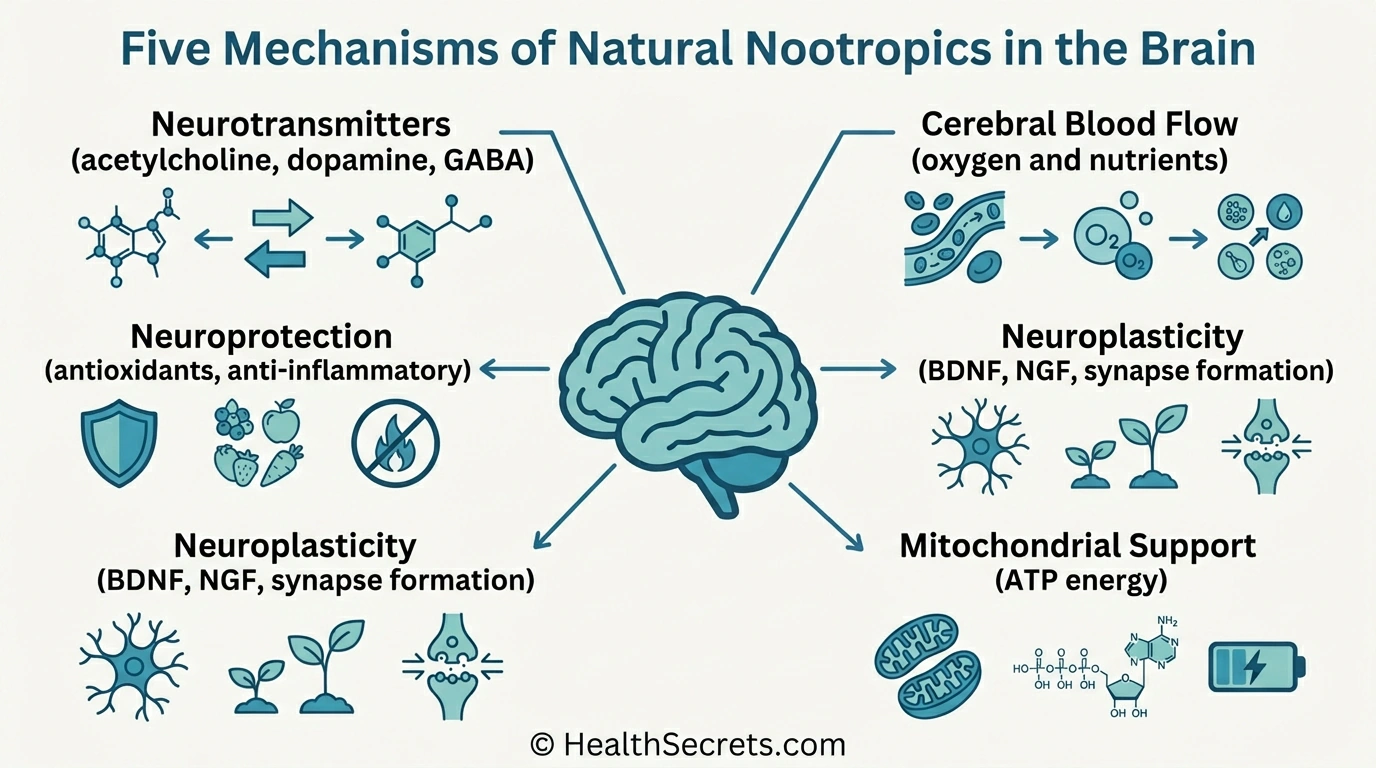
How Did We Evaluate These Nootropic Supplements?
We evaluated over 30 natural nootropic supplements based on five criteria: clinical evidence supporting the active ingredients, third-party testing and certifications, dose alignment with published research, ingredient transparency, and cost per effective serving. Products with proprietary blends or doses below clinical thresholds were excluded from our final recommendations.
Our evaluation criteria:
- Clinical evidence (40% weight): Does the primary ingredient have peer-reviewed, placebo-controlled human trials supporting cognitive benefits? We prioritized compounds with multiple positive trials from 2018-2025 [1, 11, 12].
- Dose accuracy (25% weight): Does the product deliver the dose used in clinical research? Many supplements use sub-clinical doses to reduce costs.
- Quality and purity (20% weight): Third-party certifications (USP, NSF, ConsumerLab), GMP manufacturing, standardized extracts, and heavy metal testing.
- Transparency (10% weight): Clear labeling, no proprietary blends, disclosed sourcing, and published certificates of analysis.
- Value (5% weight): Cost per serving relative to quality and dose, including count per container.
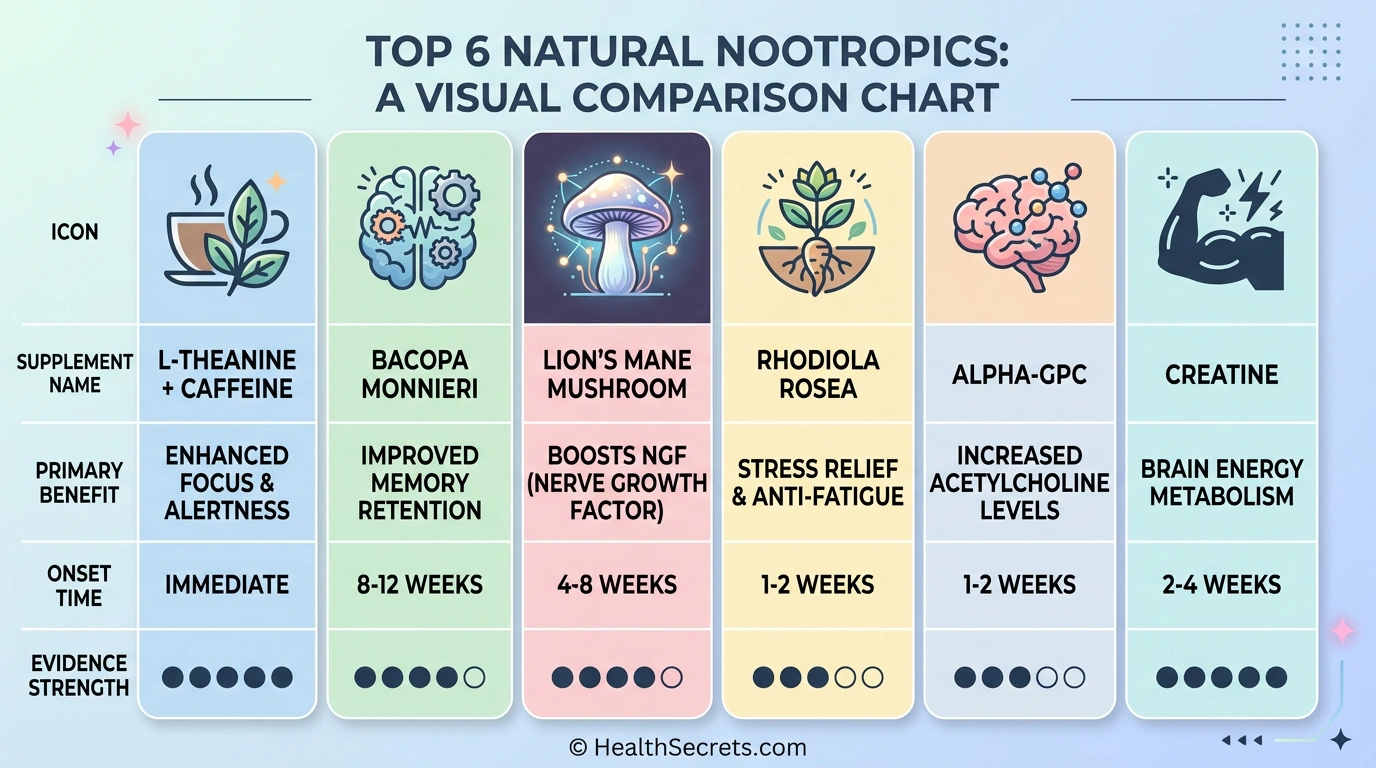

Sports Research L-Theanine + Caffeine
Editor's ChoiceSports Research · Focused productivity without caffeine jitters or crash
Himalaya Organic Bacopa Monnieri
Best for MemoryHimalaya Organic · Long-term memory enhancement and learning support
Real Mushrooms Lion's Mane Extract
Best Mushroom NootropicReal Mushrooms · Nerve growth factor (NGF) stimulation and neuroprotection

NutraChamps Rhodiola Rosea
Best AdaptogenNutraChamps Rhodiola · Stress resilience, mental stamina, and focus under pressure

Nutricost Alpha-GPC 300mg
Best Choline SourceNutricost Alpha-GPC · Acetylcholine support, memory, and learning

Nootropics Depot Bacopa Monnieri (BaCognize)
Best Standardized ExtractNootropics Depot · Precise, research-matched bacopa dosing for memory

Double Wood Supplements Lion's Mane
Best ValueDouble Wood · Budget-friendly lion's mane supplementation

Thorne Creatine
Best for Brain EnergyThorne Creatine · Working memory, reasoning, and mental energy
Nordic Naturals Ultimate Omega
Best Omega-3Nordic Naturals · Brain structure, anti-inflammatory neuroprotection, and long-term cognitive health
Jarrow Formulas KSM-66 Ashwagandha
Best for Stress + CognitionJarrow Formulas · Cortisol reduction, stress resilience, and cognitive performance under pressure
Read the detailed review cards below before opening any retailer link
Top Recommended Products
Sports Research
Sports Research L-Theanine + Caffeine
The L-theanine + caffeine combination is the most studied nootropic synergy, with systematic reviews confirming improved attention and reduced reaction time without the anxiety or crash of caffeine alone [2, 3].
Pros
- + Clinically studied 2:1 ratio
- + eliminates caffeine jitters
- + immediate effects
- + well-tolerated
- + affordable per serving
Cons
- - Contains caffeine (not suitable for caffeine-sensitive individuals)
Why we included it: The L-theanine + caffeine combination is the most studied nootropic synergy, with systematic reviews confirming improved attention and reduced reaction time without the anxiety or crash of caffeine alone [2, 3].
Retailer link opens on Amazon after the review details above
Himalaya Organic
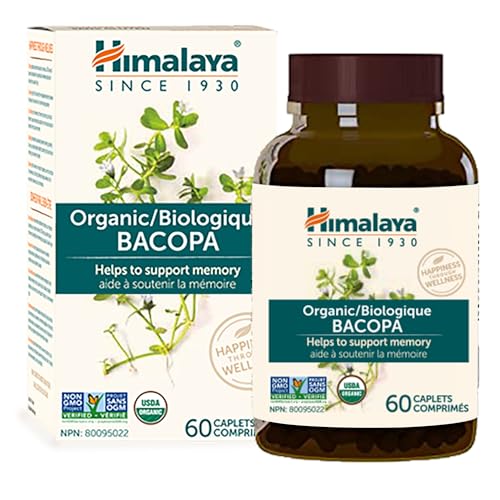
Himalaya Organic Bacopa Monnieri
Bacopa monnieri has the strongest evidence for memory enhancement among natural nootropics, with meta-analyses showing significant improvements in memory consolidation, recall, and information processing after 12 weeks [4, 5, 17].
Pros
- + USDA Organic certified
- + well-established brand with 90+ years
- + whole herb approach
- + affordable
- + gentle on stomach
Cons
- - Requires 8-12 weeks for full memory benefits (not immediate)
Why we included it: Bacopa monnieri has the strongest evidence for memory enhancement among natural nootropics, with meta-analyses showing significant improvements in memory consolidation, recall, and information processing after 12 weeks [4, 5, 17].
Retailer link opens on Amazon after the review details above
Real Mushrooms
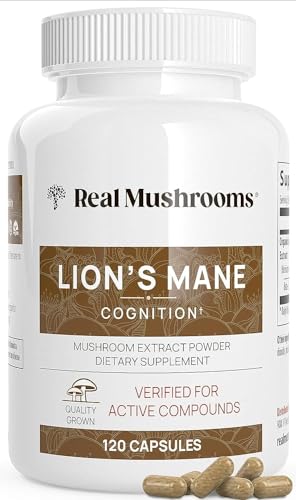
Real Mushrooms Lion's Mane Extract
Real Mushrooms uses only fruiting bodies with verified beta-glucan content, ensuring you get the hericenones and erinacines shown to stimulate NGF production in clinical trials [6, 7].
Pros
- + Verified beta-glucan content
- + fruiting body only (no grain filler)
- + USDA Organic
- + transparent testing
- + 60-day supply
Cons
- - Premium price compared to mycelium-based alternatives
Why we included it: Real Mushrooms uses only fruiting bodies with verified beta-glucan content, ensuring you get the hericenones and erinacines shown to stimulate NGF production in clinical trials [6, 7].
Retailer link opens on Amazon after the review details above
NutraChamps Rhodiola
NutraChamps Rhodiola Rosea
Rhodiola rosea is one of the best-studied adaptogens for mental performance under stress, with clinical evidence showing reduced fatigue and improved cognitive function in stressed individuals [8, 9].
Pros
- + Properly standardized to 3% rosavins and 1% salidroside
- + high potency
- + 120-day supply at 1 capsule daily
- + affordable
Cons
- - 600mg is at the upper end of clinical dosing (some may prefer starting lower)
Why we included it: Rhodiola rosea is one of the best-studied adaptogens for mental performance under stress, with clinical evidence showing reduced fatigue and improved cognitive function in stressed individuals [8, 9].
Retailer link opens on Amazon after the review details above
Nutricost Alpha-GPC
Nutricost Alpha-GPC 300mg
Alpha-GPC is the most bioavailable choline source for brain health, efficiently crossing the blood-brain barrier to increase acetylcholine — the neurotransmitter essential for learning and memory [14].
Pros
- + Clinical dose per capsule
- + crosses blood-brain barrier efficiently
- + 120 capsules for flexible dosing
- + clean formula
- + affordable
Cons
- - May cause headaches at higher doses in sensitive individuals ("choline headache")
Why we included it: Alpha-GPC is the most bioavailable choline source for brain health, efficiently crossing the blood-brain barrier to increase acetylcholine — the neurotransmitter essential for learning and memory [14].
Retailer link opens on Amazon after the review details above
Nootropics Depot
Nootropics Depot Bacopa Monnieri (BaCognize)
BaCognize is the exact standardized bacopa extract used in many clinical trials demonstrating memory improvement, making it the most research-validated form available [4, 5].
Pros
- + Uses BaCognize patented extract matching clinical trials
- + precise standardization
- + 240 capsules for extended supply
- + from trusted nootropic retailer
Cons
- - Lower dose than some whole-herb alternatives (but more precisely standardized)
Why we included it: BaCognize is the exact standardized bacopa extract used in many clinical trials demonstrating memory improvement, making it the most research-validated form available [4, 5].
Retailer link opens on Amazon after the review details above
Double Wood
Double Wood Supplements Lion's Mane
Double Wood offers an affordable way to try lion's mane for cognitive support, with a competitive price that makes it accessible for those new to mushroom nootropics [6].
Pros
- + Affordable entry point for lion's mane
- + 60-day supply
- + simple formula
- + reputable supplement brand
Cons
- - Uses fruiting body and mycelium blend (less potent than fruiting body only)
Why we included it: Double Wood offers an affordable way to try lion's mane for cognitive support, with a competitive price that makes it accessible for those new to mushroom nootropics [6].
Retailer link opens on Amazon after the review details above
Thorne Creatine
Thorne Creatine
Creatine is one of the few nootropics with meta-analytic evidence showing improved working memory and reasoning, particularly effective in vegetarians and during sleep deprivation or stress [11, 12, 13].
Pros
- + NSF Certified for Sport (highest testing standard)
- + Creapure German-sourced
- + no fillers or additives
- + flavorless mixing
- + proven for both brain and body
Cons
- - Premium price for creatine
- - requires daily use for cognitive benefits
Why we included it: Creatine is one of the few nootropics with meta-analytic evidence showing improved working memory and reasoning, particularly effective in vegetarians and during sleep deprivation or stress [11, 12, 13].
Retailer link opens on Amazon after the review details above
Nordic Naturals
Nordic Naturals Ultimate Omega
DHA makes up 60% of brain fat and is essential for neuronal membrane integrity. Systematic reviews confirm omega-3 supplementation supports cognitive function, with dose-response benefits for memory and processing speed [10, 16].
Pros
- + USP Verified (gold standard testing)
- + triglyceride form for better absorption
- + sustainably sourced
- + lemon-flavored to reduce fishy taste
- + high EPA+DHA per serving
Cons
- - Requires 2 softgels per serving
- - moderate price point
Why we included it: DHA makes up 60% of brain fat and is essential for neuronal membrane integrity. Systematic reviews confirm omega-3 supplementation supports cognitive function, with dose-response benefits for memory and processing speed [10, 16].
Retailer link opens on Amazon after the review details above
Jarrow Formulas
Jarrow Formulas KSM-66 Ashwagandha
Chronic stress is one of the biggest barriers to cognitive performance. KSM-66 ashwagandha has been shown to reduce cortisol by 28% while improving memory, attention, and information processing speed [18].
Pros
- + KSM-66 is the most clinically studied ashwagandha extract
- + reduces cortisol up to 28%
- + 120-day supply
- + affordable
- + well-tolerated
Cons
- - May cause drowsiness in some individuals (best taken in evening)
Why we included it: Chronic stress is one of the biggest barriers to cognitive performance. KSM-66 ashwagandha has been shown to reduce cortisol by 28% while improving memory, attention, and information processing speed [18].
Retailer link opens on Amazon after the review details above
How Do You Use Natural Nootropics Effectively?
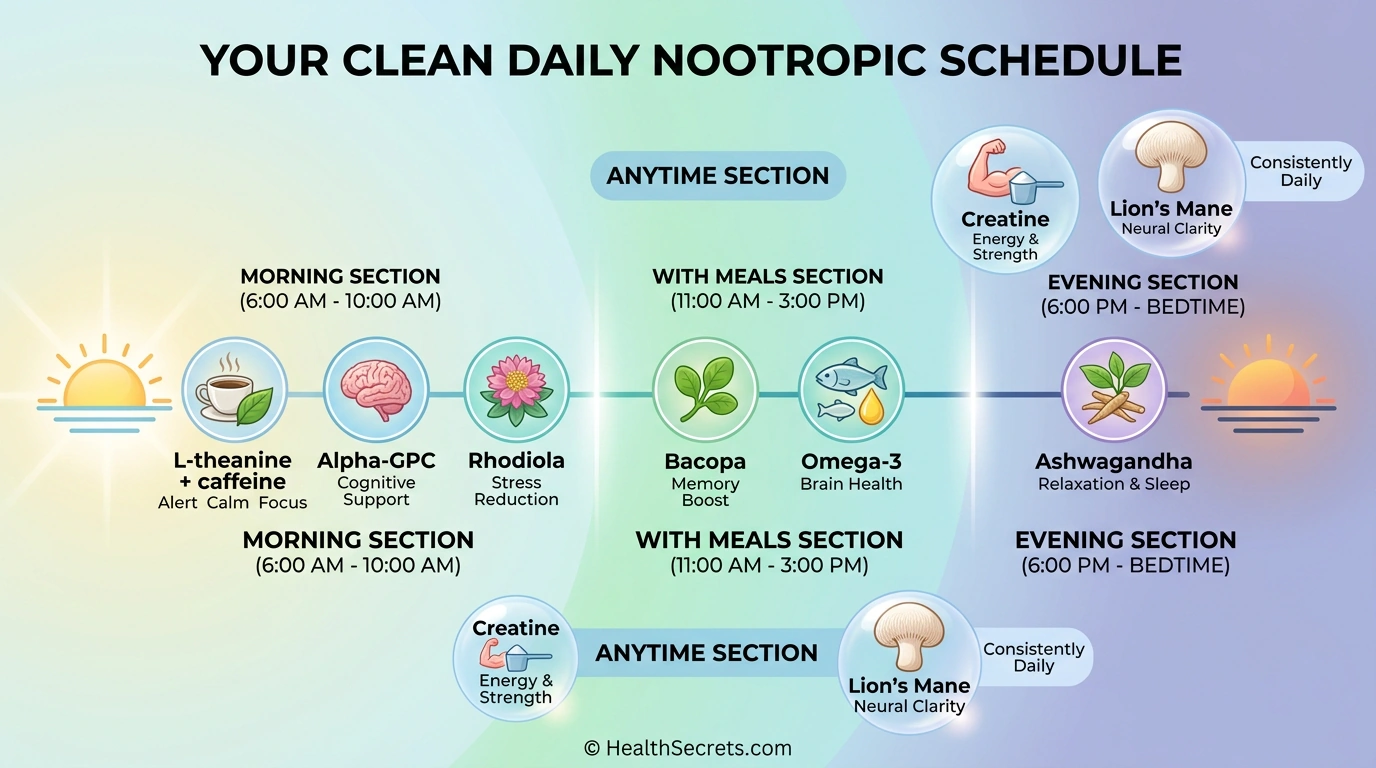
Start with a single well-studied nootropic like L-theanine plus caffeine at clinically tested doses. Take stimulating nootropics in the morning, fat-soluble supplements with meals, and calming adaptogens in the evening. Allow 4-12 weeks for cumulative compounds like bacopa and lion's mane to reach their full cognitive effect.
What Is the Best Nootropic Timing Schedule?
Morning (stimulating, focus-enhancing):
- L-theanine + caffeine: 100-200mg L-theanine + 50-100mg caffeine
- Alpha-GPC or citicoline: 300mg
- Rhodiola rosea: 200-600mg
With meals (fat-soluble, better absorption):
- Bacopa monnieri: 300mg (standardized to 50% bacosides)
- Omega-3 DHA: 1-2g
- Ginkgo biloba: 120mg
Evening (calming, stress-reducing):
- Ashwagandha: 300-600mg
- Phosphatidylserine: 100mg (if not causing insomnia)
Anytime:
- Creatine monohydrate: 5g
- Lion's mane: 1-3g
How Do You Build a Nootropic Stack Safely?
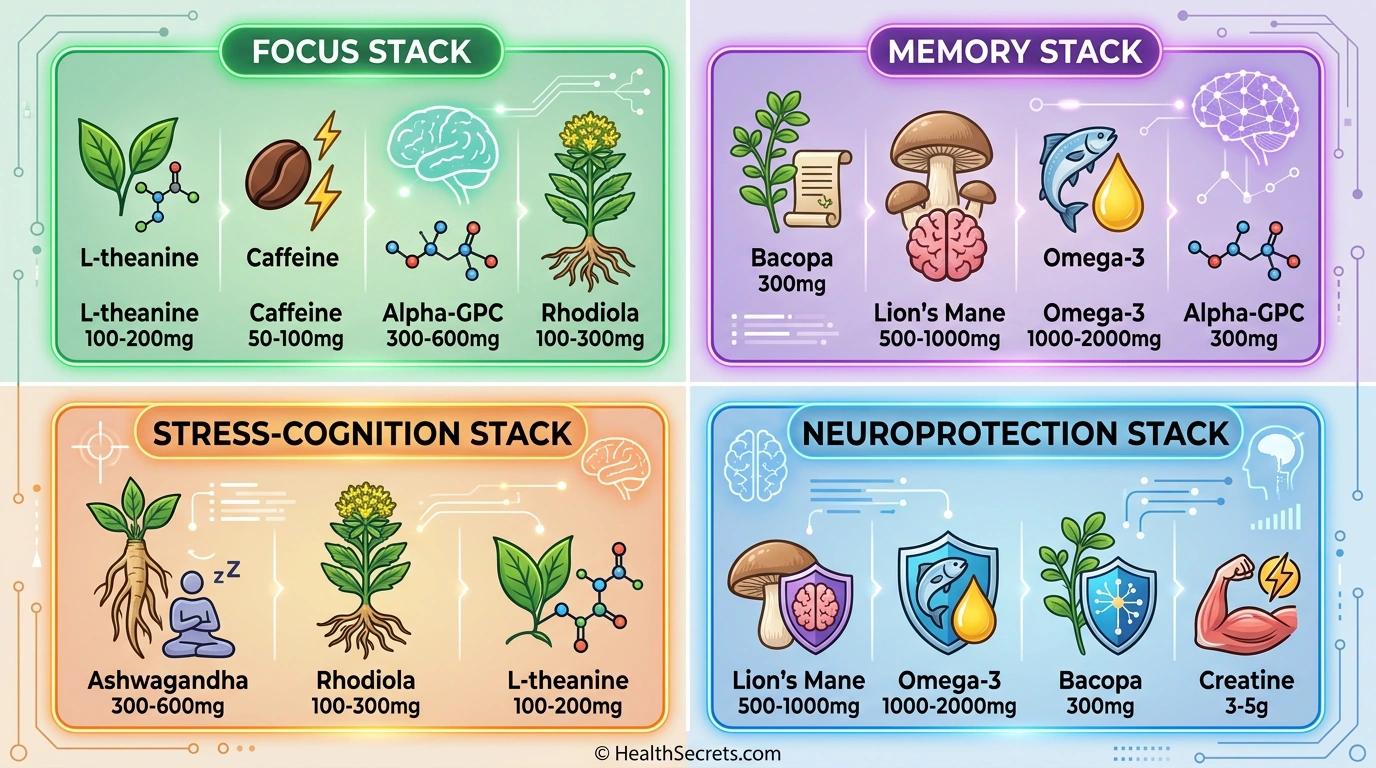
Nootropic stacking means combining complementary compounds for synergistic effects. The most important rule is to start with a single ingredient, assess tolerance for 2-4 weeks, then add one new compound at a time [1]. Popular evidence-based stacks include:
- Focus stack: L-theanine 100mg + caffeine 50mg + alpha-GPC 300mg
- Memory stack: Bacopa 300mg + lion's mane 1g + omega-3 2g DHA
- Stress-cognition stack: Ashwagandha 300mg + rhodiola 200mg + L-theanine 200mg
- Neuroprotection stack: Lion's mane 1g + omega-3 2g + bacopa 300mg + creatine 5g
Are There Any Safety Concerns with Natural Nootropic Supplements?
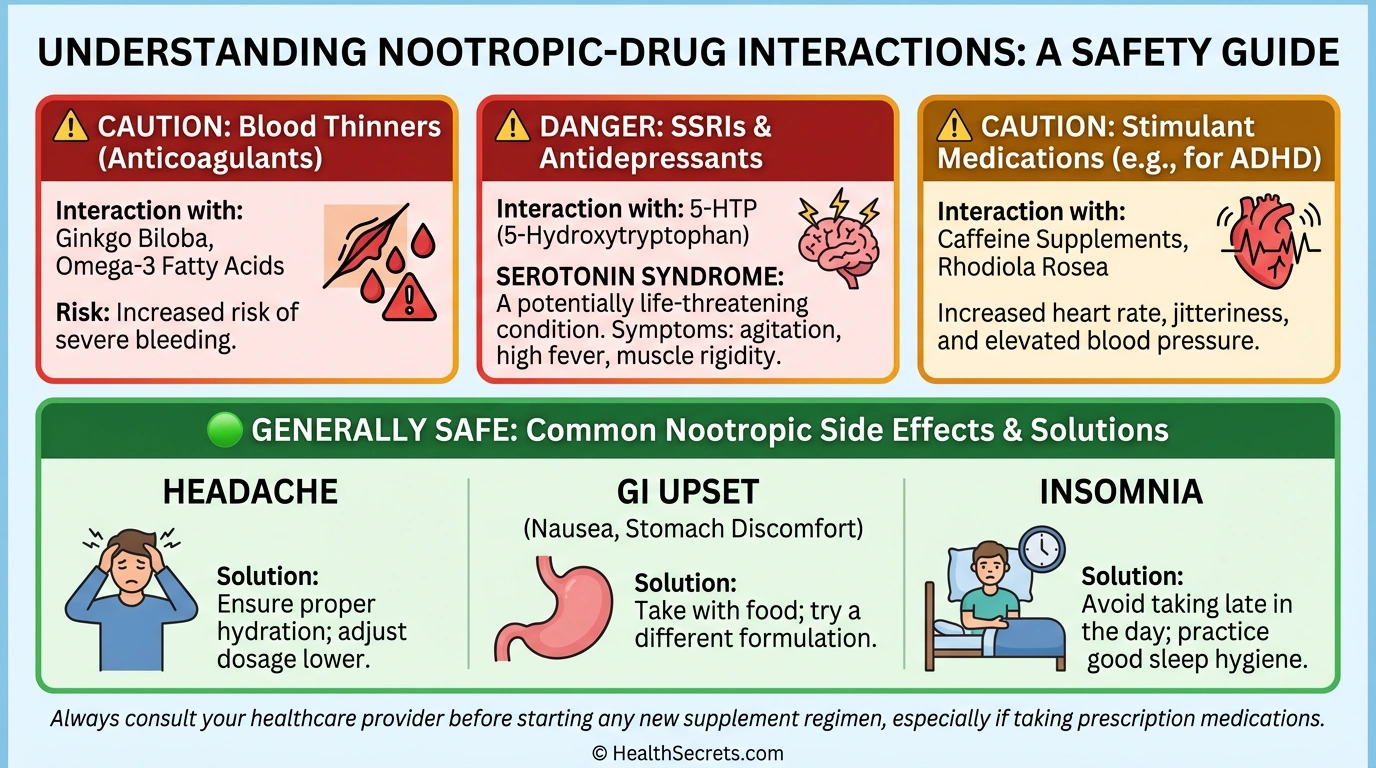
Natural nootropics are generally safe for healthy adults, with mild side effects like headache, digestive upset, or insomnia being most common. However, serious interactions can occur with blood thinners, SSRIs, and stimulant medications. Pregnant or breastfeeding individuals and those with psychiatric or cardiovascular conditions should consult a doctor first.
Which Nootropics Interact with Medications?
- Blood thinners (warfarin, aspirin): Ginkgo biloba and high-dose omega-3 may increase bleeding risk. Discontinue 2 weeks before surgery [1].
- SSRIs and antidepressants: 5-HTP and L-tryptophan can increase serotonin levels dangerously when combined with SSRIs, risking serotonin syndrome. Avoid this combination without medical supervision.
- Stimulant medications (Adderall, Ritalin): Caffeine, rhodiola, and L-tyrosine may amplify stimulant effects, increasing heart rate and blood pressure. Monitor carefully.
What Are the Most Common Nootropic Side Effects?
- Choline headaches: Alpha-GPC and citicoline can cause headaches at higher doses — reduce dose or take with food
- GI upset: Bacopa, ashwagandha, and ginkgo on an empty stomach — always take with meals
- Insomnia: Rhodiola, caffeine, and alpha-GPC taken too late in the day — use before 2 PM
- Tolerance: Adaptogens (rhodiola, ginseng) and caffeine — cycle 2-3 weeks on, 1 week off [8, 9]
What Is the Best Way to Start Using Nootropics?
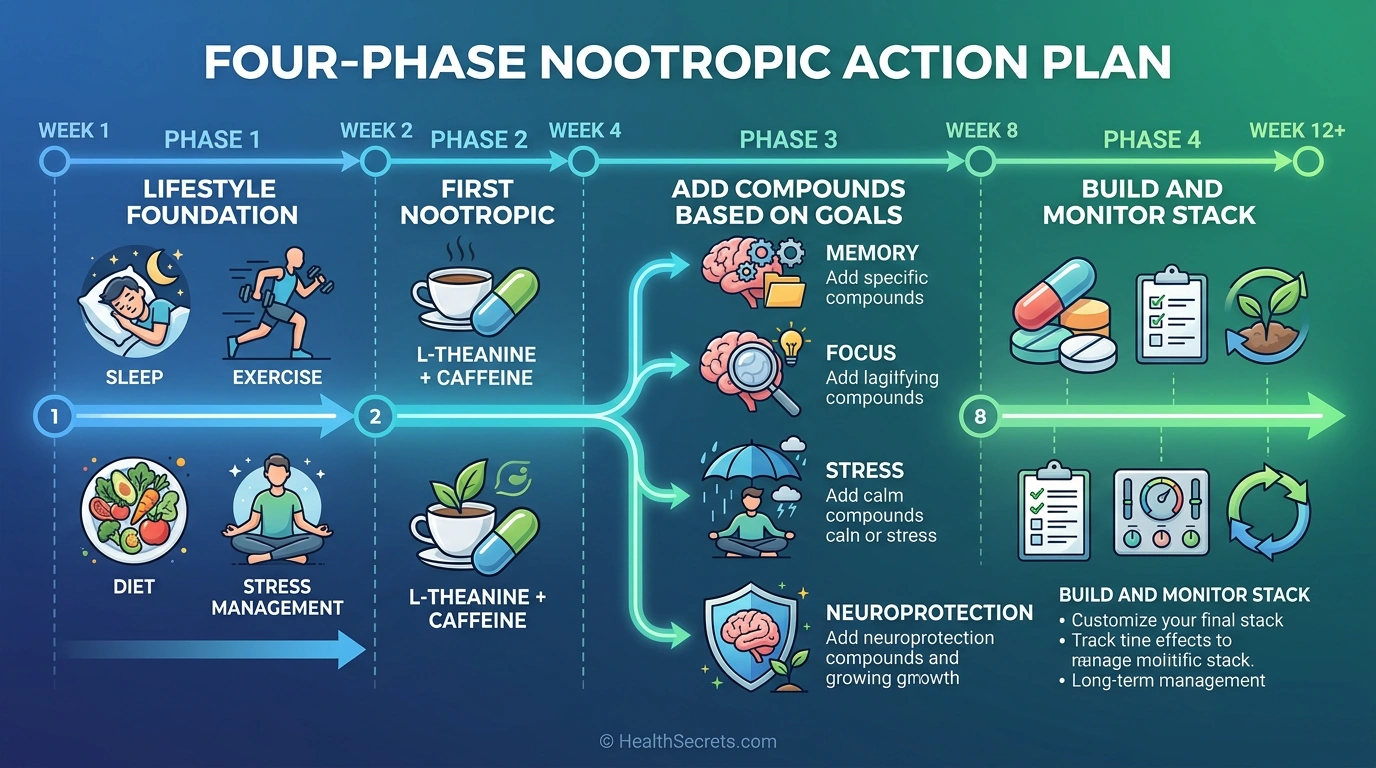
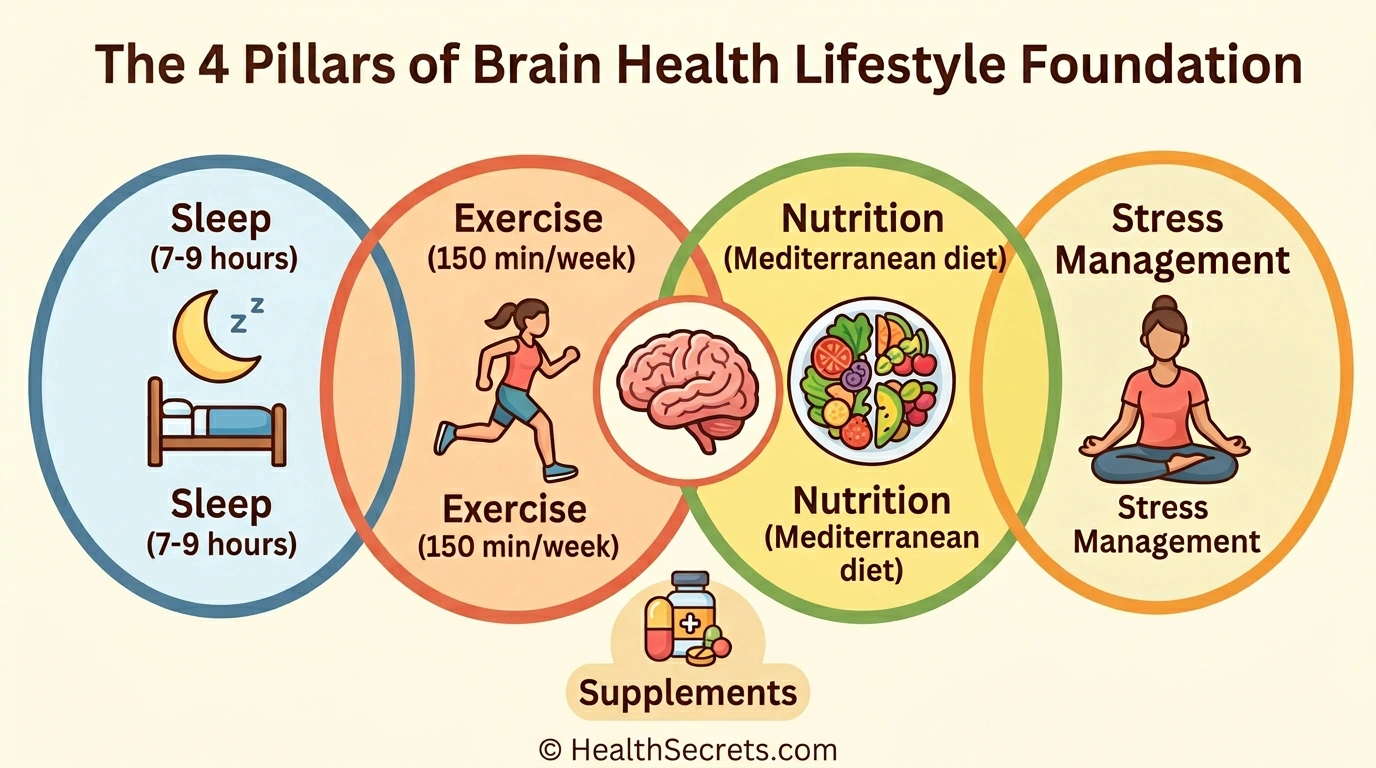
Begin by optimizing your lifestyle foundation — sleep, exercise, and nutrition matter more than any supplement. Then start with L-theanine plus caffeine as your first nootropic, assess tolerance for two weeks, and gradually add one new ingredient every 2-4 weeks based on your specific cognitive goals.
Phase 1: Optimize Lifestyle Foundation (Weeks 1-4)
- Prioritize 7-9 hours of quality sleep nightly — no supplement replaces sleep for cognitive function
- Exercise at least 150 minutes per week (aerobic + resistance training increases BDNF and cerebral blood flow)
- Adopt a Mediterranean-style diet rich in omega-3 fatty acids, antioxidants, and whole foods
- Practice stress management: 10-20 minutes of daily meditation or deep breathing
Phase 2: Start Single Nootropic (Weeks 2-4)
- Begin with L-theanine 100mg + caffeine 50mg once daily in the morning
- Track focus, energy, and any side effects for 2 weeks
- Adjust dose if well-tolerated (up to 200mg L-theanine + 100mg caffeine)
Phase 3: Add Compounds Based on Goals (Weeks 4-12)
- For memory: Add bacopa monnieri 300mg daily with meals (allow 8-12 weeks)
- For neuroprotection: Add lion's mane 1-3g daily (allow 4-8 weeks)
- For stress resilience: Add rhodiola 200mg or ashwagandha 300mg
- For brain energy: Add creatine monohydrate 5g daily
Phase 4: Build and Monitor Stack (Weeks 8-12+)
- Combine 3-4 complementary nootropics based on response
- Cycle adaptogens (2-3 weeks on, 1 week off)
- Take periodic breaks from stimulating compounds (1-2 weeks every 3 months)
- Track cognitive performance subjectively or with online cognitive tests