 Pin It
 Turmeric for Immune Health: Curcumin's Immune Benefits
Who This Is For
Best for readers comparing immune system options and trying to avoid hype.
Who Should Be Careful
Not for replacing clinician guidance when symptoms, medications, or lab issues are involved.
Affiliate Disclaimer | This article may contain affiliate links to products we trust. If you choose to buy through them, we may earn a small commission at no extra cost to you. Full disclosure
Medical Disclaimer | For informational purposes only. Not a substitute for professional medical advice. Read full disclaimer
Key Takeaways
BioSchwartz Turmeric Curcumin with BioPerine 1500mg
Best Overall ValueBioSchwartz Turmeric · General immune support, daily anti-inflammatory use, first-time curcumin users
NOW Foods Turmeric Curcumin with BioPerine Veg Capsules
Best Budget OptionNOW Foods · Budget-conscious daily users, long-term maintenance dosing
Jarrow Formulas Curcumin 95 500mg
Best Pure CurcuminJarrow Formulas · Those who want pure curcumin extract without additional ingredients
Thorne Curcumin Phytosome (Meriva)
Best Absorption TechnologyThorne Curcumin · Therapeutic use, chronic inflammation, maximum bioavailability seekers
Life Extension Curcumin Elite Turmeric Extract
Best Advanced FormulaLife Extension · Those wanting cutting-edge absorption technology with immune and heart support
Doctor's Best High Absorption Curcumin with BioPerine
Best High-Potency OptionDoctor's Best · Therapeutic dosing, chronic pain, those wanting 1,000mg per tablet
Simply Organic Ground Turmeric Root
Best Organic Turmeric PowderSimply Organic · Cooking, golden milk, whole-food approach to daily turmeric intake
Gaia Herbs Golden Milk Supplement Powder
Best Golden Milk MixGaia Herbs · Convenient golden milk ritual, evening relaxation, daily anti-inflammatory support
Read the detailed review cards below before opening any retailer link
Turmeric. That bright golden-yellow spice sitting in your cabinet—the one that stains everything it touches and somehow ended up in lattes. You've probably heard the hype. Maybe you've even tried a golden milk at some trendy café and wondered if it was actually doing anything.
Here's what caught my attention, though. This ancient root has been used in Ayurvedic medicine for over 4,000 years. Four thousand. And modern science? It's finally catching up to what traditional healers figured out centuries ago.
The compound responsible for most of turmeric's health benefits—curcumin—is one of the most researched natural anti-inflammatory compounds we have. We're talking thousands of published studies at this point. And when it comes to the turmeric immune system connection? The research is actually pretty compelling.
But—and this is a big but—there are catches. Several of them, actually.
The biggest one? Your body barely absorbs curcumin. Less than 1% of what you swallow actually makes it into your bloodstream. That golden milk? Delicious. Therapeutic? Probably not at those doses. I know that's frustrating to hear, but understanding this absorption problem is the key to actually getting benefits from turmeric.
In this guide, we'll dig into how curcumin supports immune function—from taming chronic inflammation to activating your natural killer cells. We'll tackle the bioavailability problem head-on (there are solutions, I promise), walk through evidence-based dosing, and sort through which supplements are actually worth your money.
For a broader look at immune health foundations, check out our complete immune system guide.
What Is the Difference Between Turmeric and Curcumin for Immune Health?
Turmeric is the golden-yellow root spice from the Curcuma longa plant, while curcumin is its primary bioactive compound—responsible for most immune-supporting and anti-inflammatory effects. Curcumin makes up only 3–5% of turmeric by weight, which means one teaspoon of turmeric powder delivers just 6–10mg of curcumin—far below the 500–2,000mg therapeutic range.
So here's the math that matters. And honestly, this is where most people get confused.
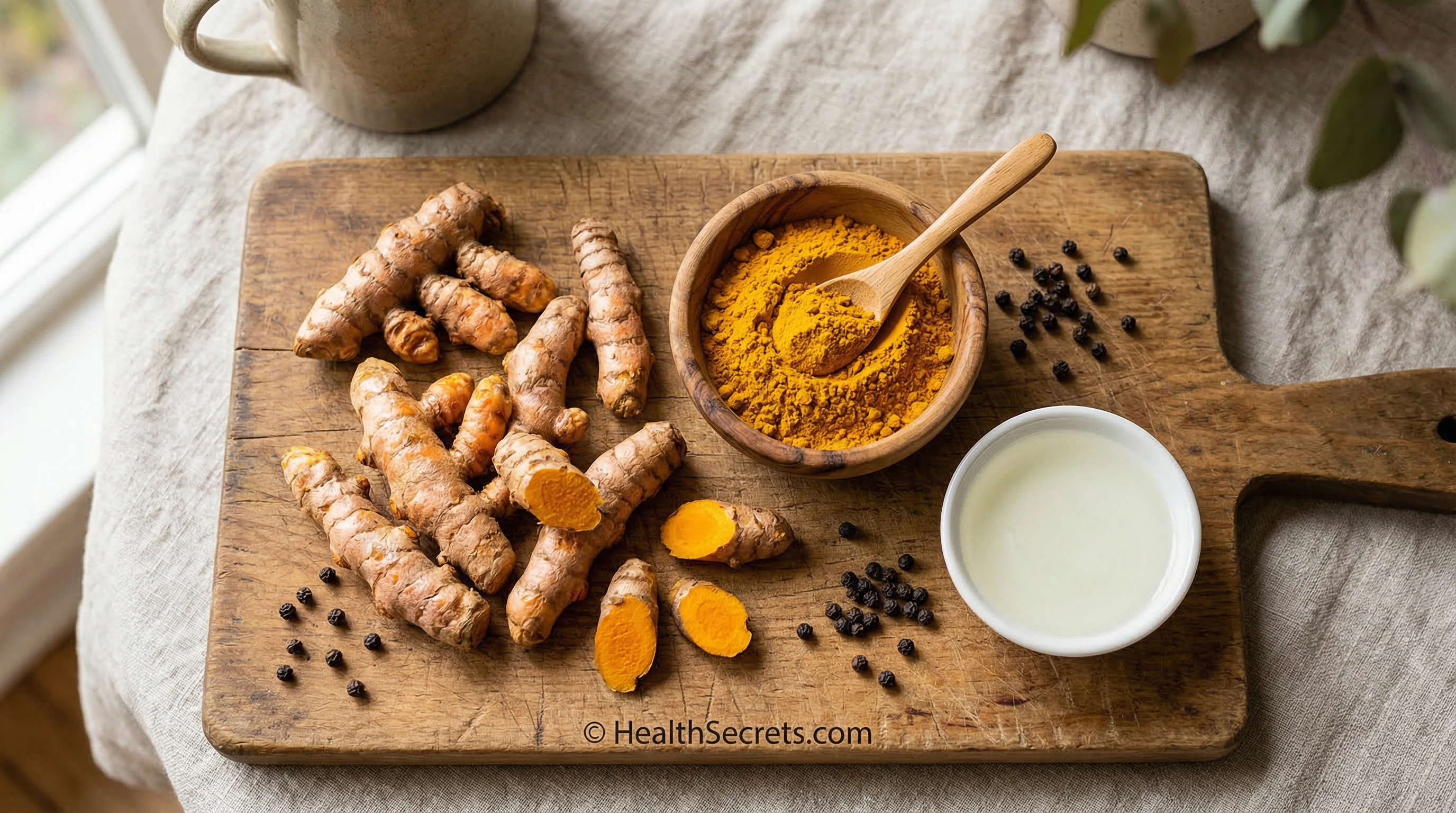
Turmeric is the whole root—a member of the ginger family, used for millennia in cooking and traditional medicine across India and Southeast Asia. It's the thing that makes curry yellow and permanently stains your countertops. The curcuminoids in turmeric are what give it that intense golden color, and they include three compounds: curcumin (the main one doing the heavy lifting), demethoxycurcumin, and bisdemethoxycurcumin ([1]).
Now, curcumin specifically? It's responsible for the majority of turmeric's researched health benefits—the anti-inflammatory action, the antioxidant protection, the immune modulation. But it's only about 3–5% of turmeric by weight.
Let me put that in practical terms. One teaspoon of turmeric powder weighs roughly 2,000mg. At 3–5% curcumin content, that gives you maybe 6–10mg of actual curcumin. For therapeutic immune effects, you'd need somewhere around 500–2,000mg of curcumin daily. That's... 50 to 200 teaspoons of turmeric. You'd turn orange before you got therapeutic benefits.
This is exactly why curcumin supplements exist—they're concentrated and standardized to 95% curcuminoids, giving you therapeutic doses in a capsule or two.
Traditional Ayurvedic practitioners somehow intuited this thousands of years ago. They combined turmeric with black pepper and fat in preparations—which, as we'll see, dramatically increases absorption. Ancient wisdom, modern validation ([2]).

How Does Curcumin Actually Support Your Immune System?
Curcumin supports immunity through four interconnected mechanisms: it suppresses chronic inflammation by blocking the NF-κB pathway, enhances immune cell function (T-cells, macrophages, NK cells), provides potent antioxidant protection for immune cells, and demonstrates antimicrobial properties against bacteria, viruses, and fungi in laboratory studies.
How Does Curcumin Reduce Chronic Inflammation That Weakens Immunity?
This is the big one. Chronic low-grade inflammation is essentially kryptonite for your immune system—it exhausts immune cells and keeps them in a constant state of activation that leaves you vulnerable.
Curcumin's primary mechanism is inhibiting the NF-κB pathway—basically the master switch for inflammation in your body. When NF-κB gets activated (which happens constantly from stress, poor diet, environmental toxins), it triggers a cascade of pro-inflammatory cytokines: IL-6, IL-1β, TNF-alpha. Too much of these, and your immune system starts working against you ([3]).
Research shows curcumin reduces these inflammatory markers by 20–40% in clinical studies. What surprised me when I dug into this—curcumin's anti-inflammatory potency is actually comparable to NSAIDs like ibuprofen, but without the gastrointestinal side effects that come with long-term NSAID use ([13]).
And here's a nuance most articles miss: curcumin doesn't just suppress inflammation—it helps resolve it. There's a difference. Suppression masks the problem. Resolution actually clears the inflammatory process so tissues can heal.
How Does Curcumin Modulate Immune Cell Activity?
This part is fascinating. Curcumin doesn't just boost immunity—it balances it. And that distinction matters enormously.
On the enhancement side, curcumin increases T-cell proliferation and activity (your adaptive immune system's soldiers), enhances antibody production, activates macrophages so they engulf pathogens more effectively, and ramps up Natural Killer cell activity—your body's frontline defense against infected and cancerous cells ([5]).
But—and this is where curcumin gets really interesting—it simultaneously prevents immune overactivation. It balances the Th1/Th2 immune response, which is critical for preventing autoimmune reactions and cytokine storms. A 2026 meta-analysis found curcumin supplementation significantly reduced inflammatory markers in rheumatoid arthritis patients, suggesting real-world immune-modulating benefits ([6]).

What Antioxidant and Antimicrobial Effects Does Curcumin Have?
Your immune cells produce free radicals as weapons against pathogens—but they need protection from their own arsenal. Curcumin is a potent free radical scavenger that also upregulates your body's own antioxidant enzymes: superoxide dismutase (SOD), catalase, and glutathione ([7]).
On the antimicrobial front, laboratory studies show curcumin inhibits the growth of Staphylococcus aureus, E. coli, and H. pylori, disrupts viral replication of influenza and hepatitis viruses, and demonstrates antifungal activity against Candida species. I want to be honest here, though—most of this antimicrobial research is in vitro (test tube studies). Human trials are limited, and curcumin shouldn't replace antibiotics or antivirals.
For more on how inflammation impacts your overall health, we've put together a comprehensive breakdown.

Why Does Most Curcumin Get Wasted—And How Do You Fix the Bioavailability Problem?
Less than 1% of standard curcumin actually gets absorbed into your bloodstream due to poor water solubility, rapid liver metabolism, and a short half-life of just 1–2 hours. The solution involves bioavailability enhancers: black pepper extract (piperine) increases absorption by 2,000%, while advanced formulations like liposomal and phytosome curcumin offer 10–29x better absorption.

OK, this is the section that honestly frustrates me every time I research curcumin. Because the science on curcumin's benefits is genuinely impressive—but none of it matters if the compound never reaches your bloodstream.
Here's the brutal reality. You can swallow 2,000mg of standard curcumin, and only about 10–20mg actually gets absorbed. The rest? Passes straight through your digestive tract, gets rapidly metabolized by your liver, and gets excreted unchanged. You're essentially flushing money ([8]).
Black Pepper (Piperine)—The Game Changer
This is the most well-validated solution. Piperine—the active compound in black pepper—increases curcumin absorption by 2,000%. Yes, two thousand percent. The landmark 1998 study by Shoba et al. demonstrated this definitively, and it remains one of the most-cited papers in supplement research with nearly 3,000 citations ([9]).
The mechanism? Piperine inhibits the liver enzymes (glucuronidation) that normally break down curcumin before it can enter circulation. Just 5–20mg of piperine with your curcumin dose changes the game entirely.
Look for "Curcumin with BioPerine" or "with piperine" on labels. This is the most affordable and effective enhancement strategy.

Fat and Heat—Traditional Wisdom Validated
Curcumin is fat-soluble—it dissolves in fat, not water. Taking it with meals containing coconut oil, olive oil, avocado, or nuts increases absorption 7–8x compared to an empty stomach. And traditional golden milk? Turmeric plus warm milk plus fat plus black pepper. The ancient recipe got the bioavailability formula exactly right ([10]).
Heating turmeric also increases curcumin's solubility—another reason cooking with it (in curries, soups, stews) is more effective than tossing raw powder into a cold smoothie.
Advanced Formulations Worth the Premium
- Liposomal curcumin encapsulates the compound in lipid spheres, delivering 10–20x better absorption without needing piperine.
- Curcumin phytosome (like Meriva) binds curcumin to phosphatidylcholine, achieving 29x better absorption with extensive clinical trial backing.
- Nanoparticle curcumin uses ultra-small particles for increased surface area—promising but less studied.
These cost more. But you need less per dose, and more actually reaches your cells. For therapeutic purposes—chronic inflammation, serious immune support—the premium formulations are genuinely worth considering.
How Much Curcumin Should You Take Daily for Immune Support?
For general immune maintenance, take 500–1,000mg of curcumin daily (standardized to 95% curcuminoids) with BioPerine or in an enhanced-absorption formulation. Always take with a meal containing fat. Divide into 2–3 doses for optimal blood levels, and expect 4–8 weeks of consistent use before experiencing full anti-inflammatory benefits.
Let me break this down by purpose, because dosing really depends on what you're trying to accomplish.
General Immune Support (Daily Maintenance):
- 500–1,000mg curcumin daily with 5–20mg BioPerine/piperine
- Take with meals containing fat—breakfast or dinner, whatever's consistent
- Safe for long-term daily use
Anti-Inflammatory Therapeutic (Chronic Issues):
- 1,000–2,000mg curcumin daily, divided into 2–3 doses
- Example: 500–1,000mg with breakfast, 500–1,000mg with dinner
- Continue for weeks to months—chronic inflammation takes time to resolve
- Work with your doctor for autoimmune or chronic pain conditions
Acute Inflammation/Infection (Short-Term):
- 2,000–3,000mg curcumin daily, divided into 3 doses
- During colds, flu, acute injury—3 to 7 days maximum
- Then return to maintenance dosing
Key timing tips: Dividing doses matters because curcumin has a short half-life (1–2 hours). Two 500mg doses spread across the day maintains steadier blood levels than one 1,000mg dose. And consistency is everything—this compounds over time. Be patient. Most people notice meaningful changes around weeks 4–8.
Quality markers to look for: standardized 95% curcuminoids, BioPerine or enhanced formulation, third-party testing (USP, NSF, ConsumerLab), and reputable brands like Thorne, Life Extension, NOW Foods, or Jarrow.
Should You Use Turmeric in Food or Take Curcumin Supplements for Immunity?
Both have a place, but they serve different purposes. Cooking with turmeric (1–2 teaspoons daily with black pepper and fat) provides general anti-inflammatory benefits and other beneficial compounds, while curcumin supplements (500–2,000mg standardized to 95% curcuminoids) deliver the therapeutic doses required for meaningful immune modulation.

I think the honest answer here is: do both. They're not competing strategies.
Cooking with turmeric gives you the whole-food package—not just curcumin but also turmerones and other compounds that have their own modest health benefits. Add it to curries, scrambled eggs, soups, roasted vegetables. Always pair it with black pepper and some fat. A daily habit of 1–2 teaspoons is great for general health maintenance.
Golden milk deserves special mention. The traditional Ayurvedic recipe—1 teaspoon turmeric powder, 1 cup warm milk (dairy or coconut), a pinch of black pepper, half a teaspoon each of cinnamon and ginger, honey to taste—is genuinely delicious and mildly anti-inflammatory. It delivers maybe 10–15mg curcumin per cup. Not a therapeutic dose, but a wonderful daily ritual.
Here's the reality check, though. For therapeutic immune support? The math simply doesn't work with food alone. You'd need 25–100 teaspoons of turmeric daily to hit therapeutic curcumin levels. That's... not happening.
The balanced approach I'd recommend:
- Daily cooking with turmeric (1–2 tsp with black pepper and fat)—general health
- Golden milk as an evening ritual—enjoyable, mildly anti-inflammatory
- Curcumin supplement (500–1,000mg with BioPerine)—therapeutic immune support
- Increase to 1,000–2,000mg during illness—short-term acute support
For ideas on integrating more anti-inflammatory foods into your routine, our detox and cleansing guide covers complementary dietary strategies.
Is Curcumin Safe? What Are the Side Effects and Drug Interactions?
Curcumin has an excellent safety profile, with research showing tolerability at doses up to 8,000–12,000mg daily. Common side effects are rare and mild (occasional GI upset at high doses). However, curcumin has clinically significant interactions with blood thinners, diabetes medications, and immunosuppressants that require medical supervision.
The good news first: curcumin is remarkably safe. Four thousand years of traditional use and extensive modern research support this. At recommended doses (500–2,000mg daily), side effects are uncommon.
Occasional side effects (usually at higher doses): mild nausea, diarrhea, or stomach upset. Taking with food typically resolves this. Yellow stool or urine? Completely normal—curcumin is intensely yellow, and that's just the pigment passing through. Not a concern.
Drug interactions—this part is important:
- Blood thinners (warfarin, aspirin, clopidogrel): Curcumin has mild antiplatelet effects. Combined with anticoagulants, bleeding risk increases. Monitor INR if on warfarin, and watch for unusual bruising or bleeding (Drugs.com[23])
- Diabetes medications: Curcumin may lower blood sugar and improve insulin sensitivity—which sounds good until it stacks with your diabetes medication and drops glucose too low. Monitor blood sugar closely
- Immunosuppressants (cyclosporine, tacrolimus): Since curcumin enhances immune function, it could theoretically counteract immunosuppressive therapy. Consult your doctor—this may not be appropriate after organ transplant
- Chemotherapy drugs: Complex interactions—curcumin's antioxidant properties may interfere with certain chemo mechanisms. Some oncologists recommend it, others don't. Always consult your oncologist
Contraindications—when to avoid curcumin supplements:
- Gallbladder disease/bile duct obstruction: Curcumin stimulates bile production, which can worsen gallstones
- Kidney stones: Turmeric contains oxalates (curcumin extracts are lower in oxalates)
- Surgery: Stop 2 weeks before any scheduled procedure due to bleeding risk
- Pregnancy: Culinary amounts are fine; high-dose supplements should be avoided (may stimulate uterine contractions)
For guidance on navigating supplement-drug interactions, see our liver detox guide which covers how the liver processes supplements.

What Can Curcumin Actually Do (and Not Do) for Your Immune System?
Curcumin is a well-researched anti-inflammatory and immune-modulating compound that can reduce chronic inflammation by 20–40%, enhance immune cell function, and provide meaningful antioxidant protection. It is not, however, a cure for any disease, and benefits require consistent daily use for 4–8 weeks with proper bioavailability enhancement.

I want to be straight with you here, because the supplement industry often oversells and underdelivers.
What curcumin genuinely does:
- Reduces chronic inflammation (research-validated, clinically significant)
- Supports immune cell function (T-cells, NK cells, macrophages)
- Provides antioxidant protection for immune cells
- May reduce infection frequency and severity (emerging evidence)
- Complements a healthy lifestyle—diet, sleep, exercise, stress management
What curcumin does NOT do:
- Cure infections, autoimmune diseases, or cancer
- Guarantee prevention of any illness
- Work immediately (patience required—4 to 8 weeks minimum)
- Replace prescribed medications (work with your doctor)
- Provide benefits without addressing bioavailability (regular curcumin without enhancers is mostly wasted)
Realistic timeline:
- Weeks 1–2: Minimal noticeable effects (building up in your system)
- Weeks 3–4: Some may notice reduced joint stiffness, improved recovery
- Weeks 5–8: Meaningful anti-inflammatory effects, better immune resilience
- Weeks 9–12+: Full benefits for those who respond well
Some people respond dramatically. Others see modest benefits. A few notice very little. Genetics, baseline inflammation levels, diet quality, and absorption all play roles. Consistency matters more than anything—daily use over months, not occasional mega-doses.
The bottom line? Curcumin is one of the most well-researched natural anti-inflammatory compounds available. It's not a miracle cure, but it's a genuinely valuable tool in your immune-supporting toolkit—especially when you solve the bioavailability problem and pair it with healthy lifestyle fundamentals.
What Is the Best Step-by-Step Plan to Start Using Curcumin for Immune Health?
Start with a quality curcumin supplement (500mg with BioPerine), take it daily with a fatty meal, incorporate turmeric into your cooking, and build up gradually over 4–8 weeks while monitoring how you feel. Always check for drug interactions before starting.
Phase 1 — Foundation (Weeks 1–2):
- Consult your healthcare provider, especially if you take blood thinners, diabetes meds, or immunosuppressants
- Choose a curcumin supplement with BioPerine (95% curcuminoids, 500mg)
- Start with 500mg once daily with your largest fatty meal
- Begin adding turmeric to cooking (1 tsp daily with black pepper and fat)
Phase 2 — Build Up (Weeks 3–4):
- Increase to 500mg twice daily if tolerated (morning and evening meals)
- Start a golden milk evening ritual (turmeric + warm milk + pepper + cinnamon)
- Track any changes in joint stiffness, energy, recovery from exercise
Phase 3 — Optimize (Weeks 5–8):
- Assess results—notice any reduction in inflammation, improved immune resilience?
- Consider upgrading to liposomal or phytosome formulation if standard curcumin isn't delivering results
- Maintain consistent daily dosing—this is where cumulative benefits emerge
Phase 4 — Maintain (Ongoing):
- Continue 500–1,000mg daily as maintenance
- Increase to 1,000–2,000mg during acute illness (3–7 days)
- Restock before running out—consistency gaps reset progress
- Annual check-in with healthcare provider about supplement regimen

Top Recommended Products
BioSchwartz Turmeric
BioSchwartz Turmeric Curcumin with BioPerine 1500mg
This is the best entry point for curcumin supplementation—affordable, well-reviewed, includes BioPerine for proper absorption, and backed by a reputable brand with transparent third-party testing. The 95% curcuminoid standardization ensures consistent potency.
Pros
- + Excellent value per serving
- + 95% standardized curcuminoids
- + includes BioPerine
- + over 100
- + 000 Amazon reviews with 4.6 rating
- + globally sourced and third-party tested
Cons
- - Requires 3 capsules per serving which some find inconvenient
- - higher turmeric dose but curcumin content per capsule is moderate
Why we included it: This is the best entry point for curcumin supplementation—affordable, well-reviewed, includes BioPerine for proper absorption, and backed by a reputable brand with transparent third-party testing. The 95% curcuminoid standardization ensures consistent potency.
Retailer link opens on Amazon after the review details above
NOW Foods
NOW Foods Turmeric Curcumin with BioPerine Veg Capsules
NOW Foods delivers reliable quality at the best price point in the curcumin category. One capsule gives you a solid maintenance dose, and the BioPerine inclusion addresses the critical bioavailability issue. Hard to beat for daily use.
Pros
- + Excellent price per serving
- + one capsule per dose
- + 95% curcuminoids
- + trusted brand with 50+ years in supplements
- + includes BioPerine
Cons
- - Single capsule provides moderate dose—may need two daily for therapeutic levels
- - no advanced absorption technology beyond piperine
Why we included it: NOW Foods delivers reliable quality at the best price point in the curcumin category. One capsule gives you a solid maintenance dose, and the BioPerine inclusion addresses the critical bioavailability issue. Hard to beat for daily use.
Retailer link opens on Amazon after the review details above
Jarrow Formulas
Jarrow Formulas Curcumin 95 500mg
Jarrow Formulas is a science-driven brand known for quality. This is ideal if you prefer a clean, pure curcumin product and will pair it with black pepper and fatty foods yourself. Great option for those who experience stomach sensitivity with piperine.
Pros
- + Pure curcumin extract
- + affordable
- + reputable brand with research focus
- + clean ingredient list
- + good for those sensitive to piperine
Cons
- - Does not include piperine or absorption enhancer (take with black pepper and fat)
- - lower absorption without enhancement technology
Why we included it: Jarrow Formulas is a science-driven brand known for quality. This is ideal if you prefer a clean, pure curcumin product and will pair it with black pepper and fatty foods yourself. Great option for those who experience stomach sensitivity with piperine.
Retailer link opens on Amazon after the review details above
Thorne Curcumin
Thorne Curcumin Phytosome (Meriva)
If you're serious about therapeutic curcumin use—chronic inflammation, autoimmune support, athletic recovery—this is the gold standard. Meriva phytosome technology is backed by more clinical trials than any other enhanced curcumin form. Thorne's NSF certification adds an extra layer of trust.
Pros
- + 29x absorption vs standard curcumin
- + NSF Certified for Sport
- + used in multiple clinical trials
- + Thorne's pharmaceutical-grade quality
- + no piperine needed
Cons
- - Premium price point
- - lower curcumin mg per capsule (but 29x absorption compensates)
- - recommended dose is 2 capsules twice daily
Why we included it: If you're serious about therapeutic curcumin use—chronic inflammation, autoimmune support, athletic recovery—this is the gold standard. Meriva phytosome technology is backed by more clinical trials than any other enhanced curcumin form. Thorne's NSF certification adds an extra layer of trust.
Retailer link opens on Amazon after the review details above
Life Extension
Life Extension Curcumin Elite Turmeric Extract
Life Extension consistently delivers research-backed formulations, and the Curcumin Elite uses an innovative fenugreek fiber approach that protects curcuminoids from conjugation—meaning more active curcumin reaches your tissues for longer. Impressive absorption data at a very reasonable price.
Pros
- + Exceptional bioavailability (45x free curcuminoids)
- + innovative fenugreek-based technology
- + excellent price for the absorption level
- + supports inflammation
- + heart
- + and immune health
Cons
- - Newer technology with fewer clinical trials than Meriva phytosome
- - contains fenugreek (allergen consideration for some)
Why we included it: Life Extension consistently delivers research-backed formulations, and the Curcumin Elite uses an innovative fenugreek fiber approach that protects curcuminoids from conjugation—meaning more active curcumin reaches your tissues for longer. Impressive absorption data at a very reasonable price.
Retailer link opens on Amazon after the review details above
Doctor's Best
Doctor's Best High Absorption Curcumin with BioPerine
If you need therapeutic doses without swallowing multiple capsules, this delivers 1,000mg curcumin plus BioPerine in a single tablet. Doctor's Best uses independent lab testing and has built a strong reputation for quality at accessible prices. Excellent choice for chronic inflammation management.
Pros
- + High 1
- + 000mg dose per single tablet
- + includes BioPerine
- + excellent reviews (4.6 stars)
- + cost-effective per mg
- + independent lab tested
Cons
- - Tablet form rather than capsule (some prefer capsules)
- - large tablet size
- - slight aftertaste reported by some users
Why we included it: If you need therapeutic doses without swallowing multiple capsules, this delivers 1,000mg curcumin plus BioPerine in a single tablet. Doctor's Best uses independent lab testing and has built a strong reputation for quality at accessible prices. Excellent choice for chronic inflammation management.
Retailer link opens on Amazon after the review details above
Simply Organic
Simply Organic Ground Turmeric Root
For daily cooking and golden milk rituals, a quality organic turmeric powder is essential. Simply Organic delivers clean, certified organic turmeric without fillers. Use this alongside a curcumin supplement for the best of both worlds—whole-food benefits plus therapeutic dosing.
Pros
- + Certified organic
- + pure turmeric root powder
- + versatile for cooking and golden milk
- + affordable
- + no additives or fillers
Cons
- - Low curcumin content (3-5% by weight)
- - not therapeutic dose on its own
- - requires pairing with black pepper and fat for absorption
Why we included it: For daily cooking and golden milk rituals, a quality organic turmeric powder is essential. Simply Organic delivers clean, certified organic turmeric without fillers. Use this alongside a curcumin supplement for the best of both worlds—whole-food benefits plus therapeutic dosing.
Retailer link opens on Amazon after the review details above
Gaia Herbs
Gaia Herbs Golden Milk Supplement Powder
This is the easiest way to make golden milk without measuring out individual spices. Gaia Herbs includes black pepper for absorption and adds ashwagandha for stress support. Perfect as an evening wind-down ritual that complements your curcumin supplement regimen.
Pros
- + Convenient pre-blended formula
- + includes black pepper for absorption
- + organic ingredients
- + delicious flavor without added sugar
- + relaxing evening ritual
Cons
- - Lower curcumin dose than dedicated supplements
- - premium price for a powder mix
- - not a therapeutic replacement for curcumin supplements
Why we included it: This is the easiest way to make golden milk without measuring out individual spices. Gaia Herbs includes black pepper for absorption and adds ashwagandha for stress support. Perfect as an evening wind-down ritual that complements your curcumin supplement regimen.
Retailer link opens on Amazon after the review details above
Further Reading
Further Reading
"The Turmeric Trail: Recipes and Remedies from Around the World"
by Various authors
Traditional Ayurvedic turmeric uses; golden milk recipes and variations; practical health applications backed by modern research
Why it adds value here
This guide bridges the gap between ancient turmeric wisdom and current science, helping you incorporate turmeric into cooking and daily rituals for general immune and anti-inflammatory support.
Best for: Readers wanting a whole-food approach to turmeric alongside supplementation
View book detailsFurther Reading
"The Anti-Inflammation Cookbook: The Delicious Way to Reduce Inflammation and Stay Healthy"
by Various authors
Anti-inflammatory recipes featuring turmeric prominently; practical meal plans; evidence-based food strategies for immune and inflammatory support
Why it adds value here
A quality anti-inflammatory cookbook complements curcumin supplementation by helping you build an anti-inflammatory diet foundation—the balanced approach this article recommends.
Best for: Anyone looking to reduce inflammation through diet, not just supplementation
View book detailsAEO FAQ
Frequently Asked Questions
6 common questions answered
Yes, research supports that curcumin—the active compound in turmeric—modulates immune function through multiple mechanisms. It enhances T-cell and Natural Killer cell activity, increases antibody production, and activates macrophages. However, "boost" is somewhat misleading—curcumin modulates immunity, meaning it enhances underperforming immune responses while preventing dangerous overactivation. This bidirectional effect is what makes it particularly valuable. For meaningful immune benefits, you need 500–1,000mg of curcumin daily with a bioavailability enhancer like BioPerine.
Most people need 4–8 weeks of consistent daily curcumin supplementation to notice meaningful immune and anti-inflammatory benefits. Some may experience mild improvements in weeks 2–3 (reduced joint stiffness, better recovery), but the full anti-inflammatory and immune-modulating effects accumulate over time. Curcumin isn't a quick fix—consistency matters far more than occasional high doses. Take it daily with fatty meals for best absorption.
Curcumin supplements are significantly more effective for immune support than turmeric powder alone. Turmeric contains only 3–5% curcumin by weight, so you'd need 25–100 teaspoons daily to reach therapeutic doses. Supplements standardized to 95% curcuminoids deliver 500–2,000mg curcumin per serving. That said, cooking with turmeric daily (with black pepper and fat) provides complementary whole-food benefits. The ideal approach is both—turmeric in food for general health plus a curcumin supplement for therapeutic immune support.
Yes, daily long-term curcumin use is considered safe based on extensive research. Studies show curcumin is well-tolerated at doses up to 8,000–12,000mg daily, and it has a 4,000-year track record in traditional medicine. At standard supplemental doses (500–2,000mg daily), side effects are rare and mild. However, if you take blood thinners, diabetes medication, or immunosuppressants, consult your healthcare provider before starting long-term curcumin supplementation.
Yes, this is one of the most well-validated findings in supplement research. A landmark 1998 study by Shoba et al., cited nearly 3,000 times, demonstrated that piperine (the active compound in black pepper) increases curcumin bioavailability by 2,000% in humans. Piperine works by inhibiting liver enzymes that normally metabolize curcumin before it enters circulation. Most quality curcumin supplements now include BioPerine (standardized piperine extract) for this reason. Just 5–20mg of piperine is sufficient.
People with gallbladder disease or bile duct obstruction should avoid curcumin (it stimulates bile production). Those with a history of kidney stones should use caution due to oxalates in turmeric. Anyone taking blood thinners, diabetes medications, or immunosuppressants needs medical supervision. Stop curcumin 2 weeks before scheduled surgery due to mild antiplatelet effects. Pregnant individuals should avoid high-dose supplements (culinary turmeric amounts are safe). Always consult your healthcare provider if you have any medical conditions.
Was this article helpful?
Written & Reviewed By Experts
Author
Dr. Sarah Chen
Medical Reviewer
Dr. Sarah Chen
All content is evidence-based, peer-reviewed by qualified professionals, and updated regularly. Our editorial team follows strict guidelines for accuracy and transparency.
References & Citations
23 sources cited
Medical Disclaimer
This article is for informational purposes only and does not constitute medical advice. Read the full medical disclaimer. Always consult with a qualified healthcare provider before starting any new supplement, treatment, or major dietary change.